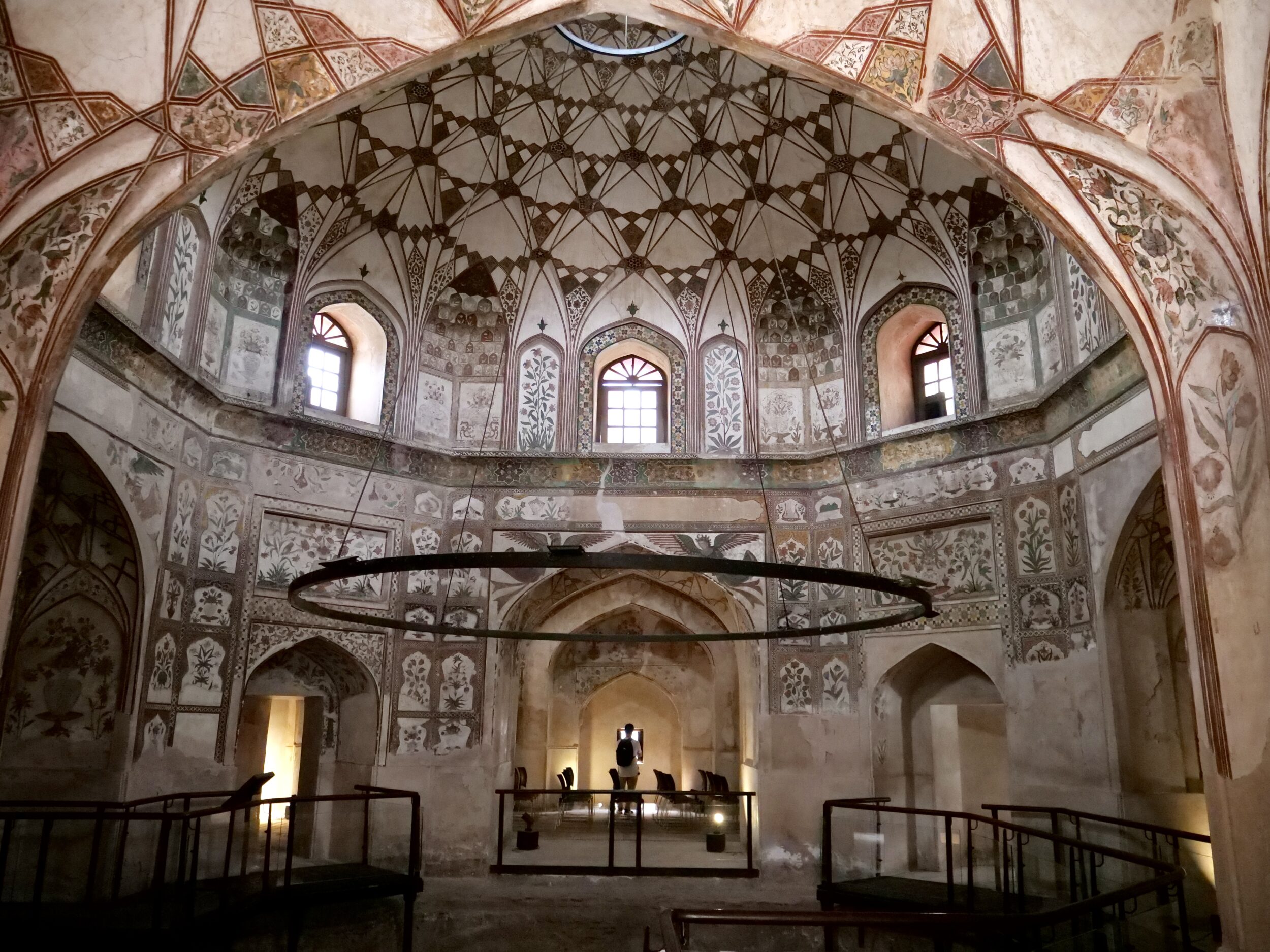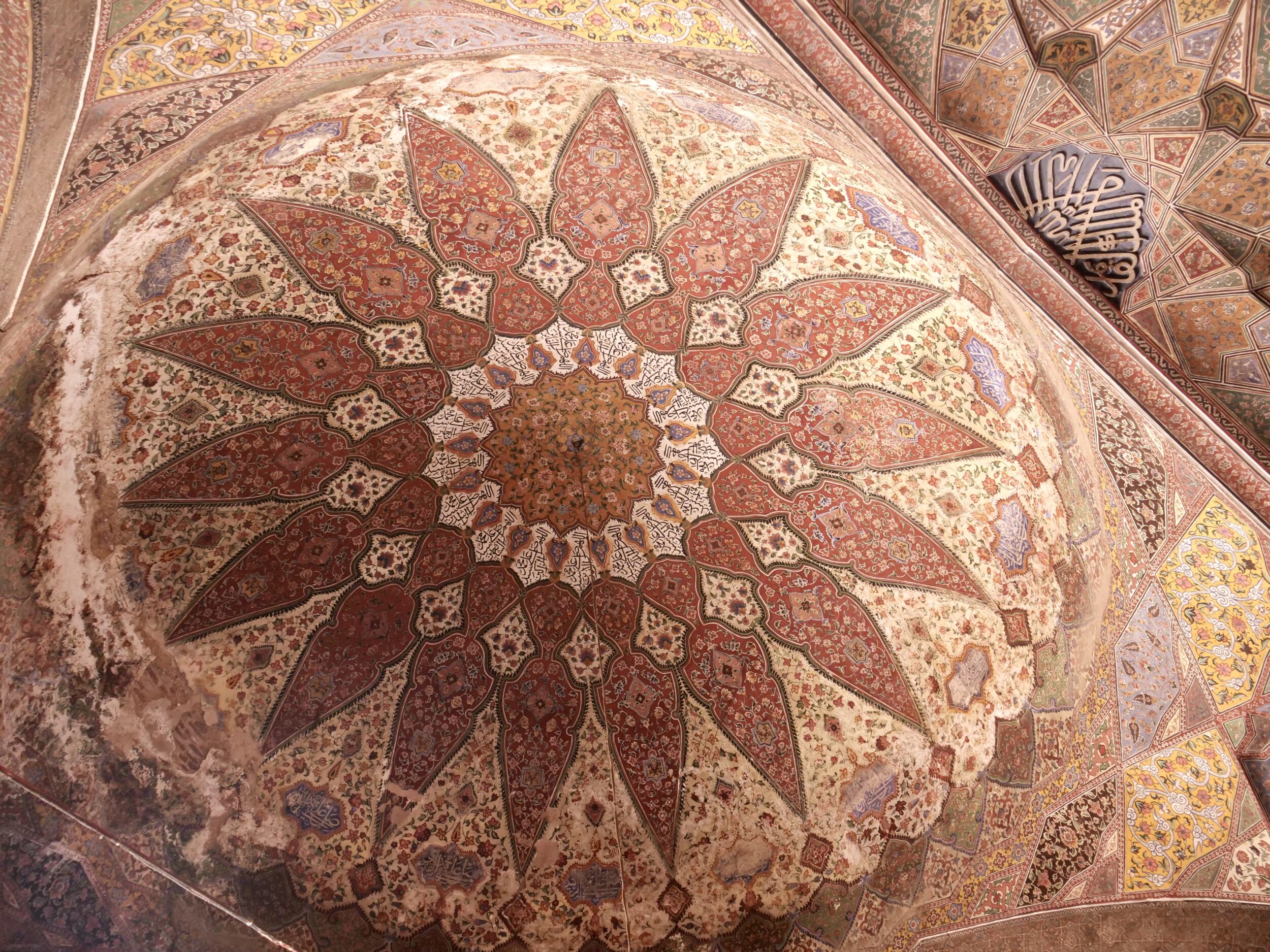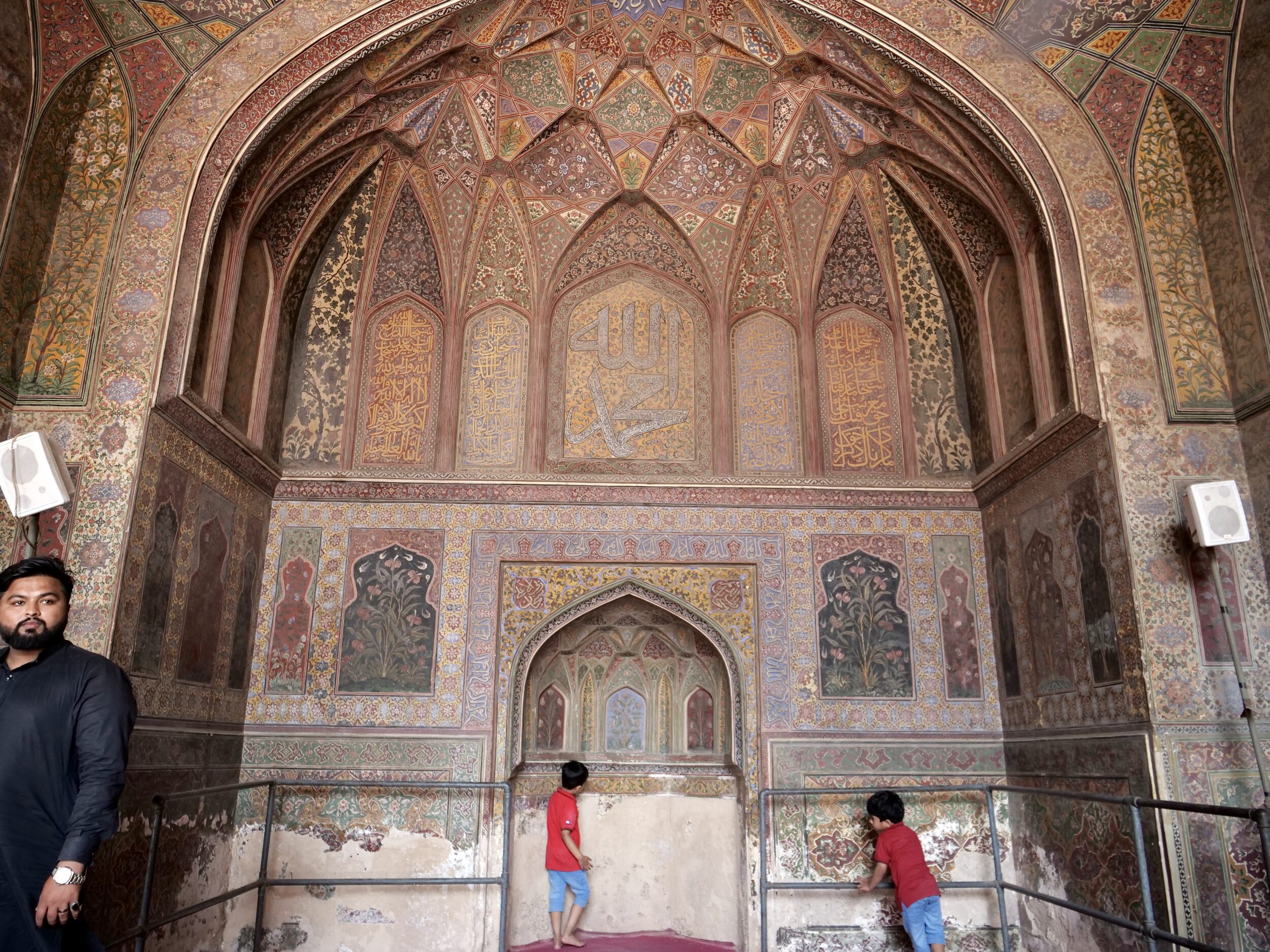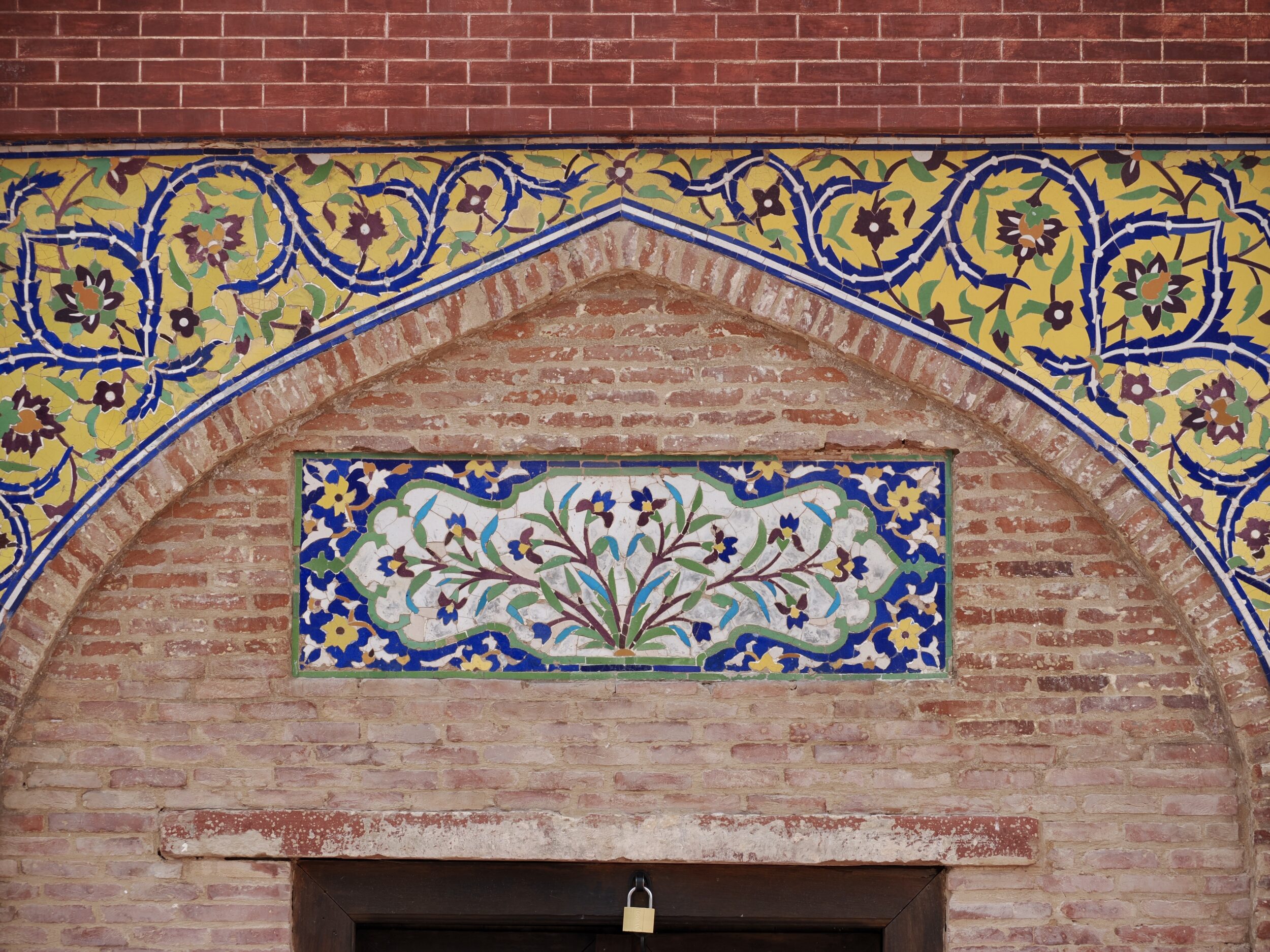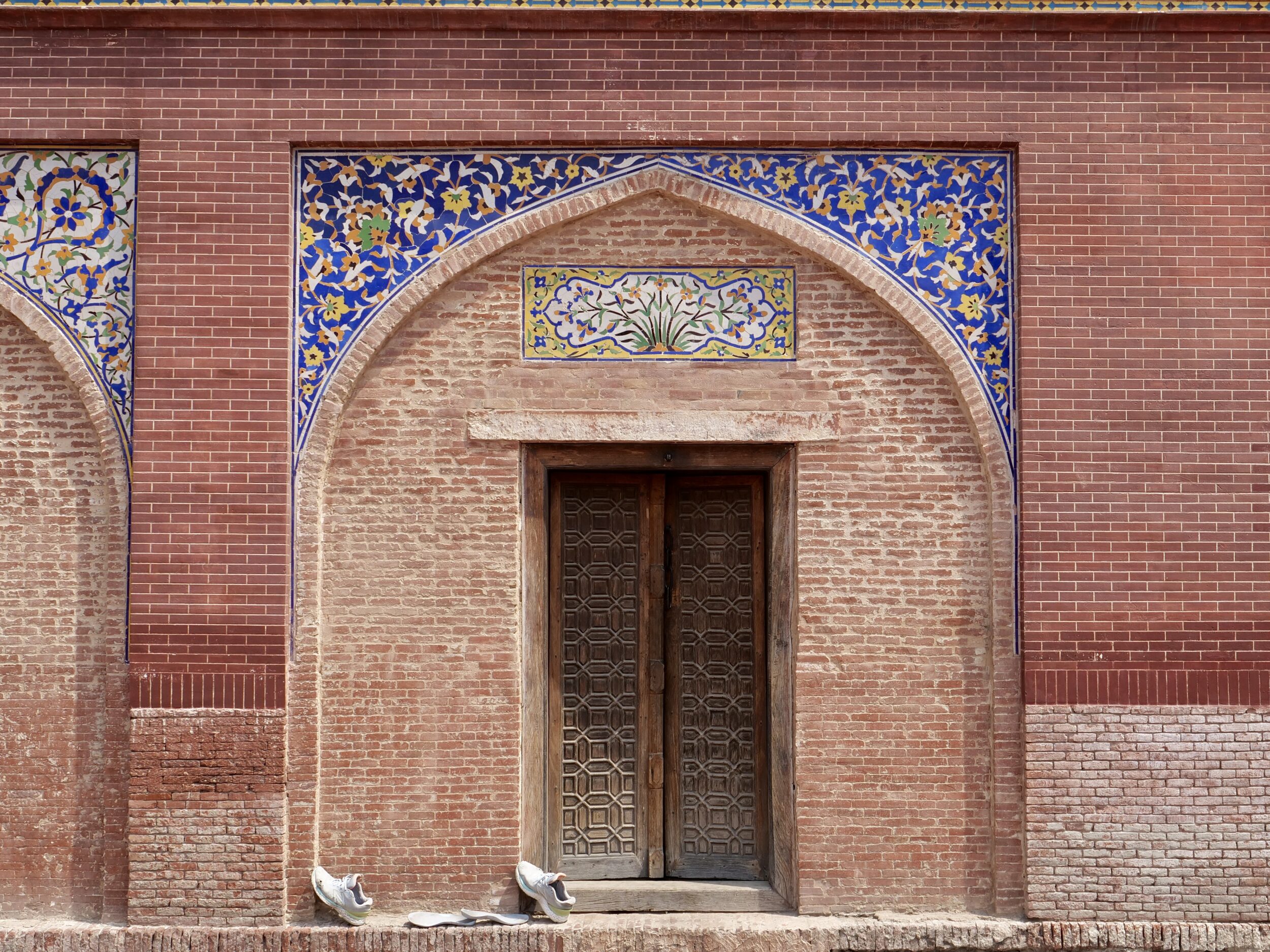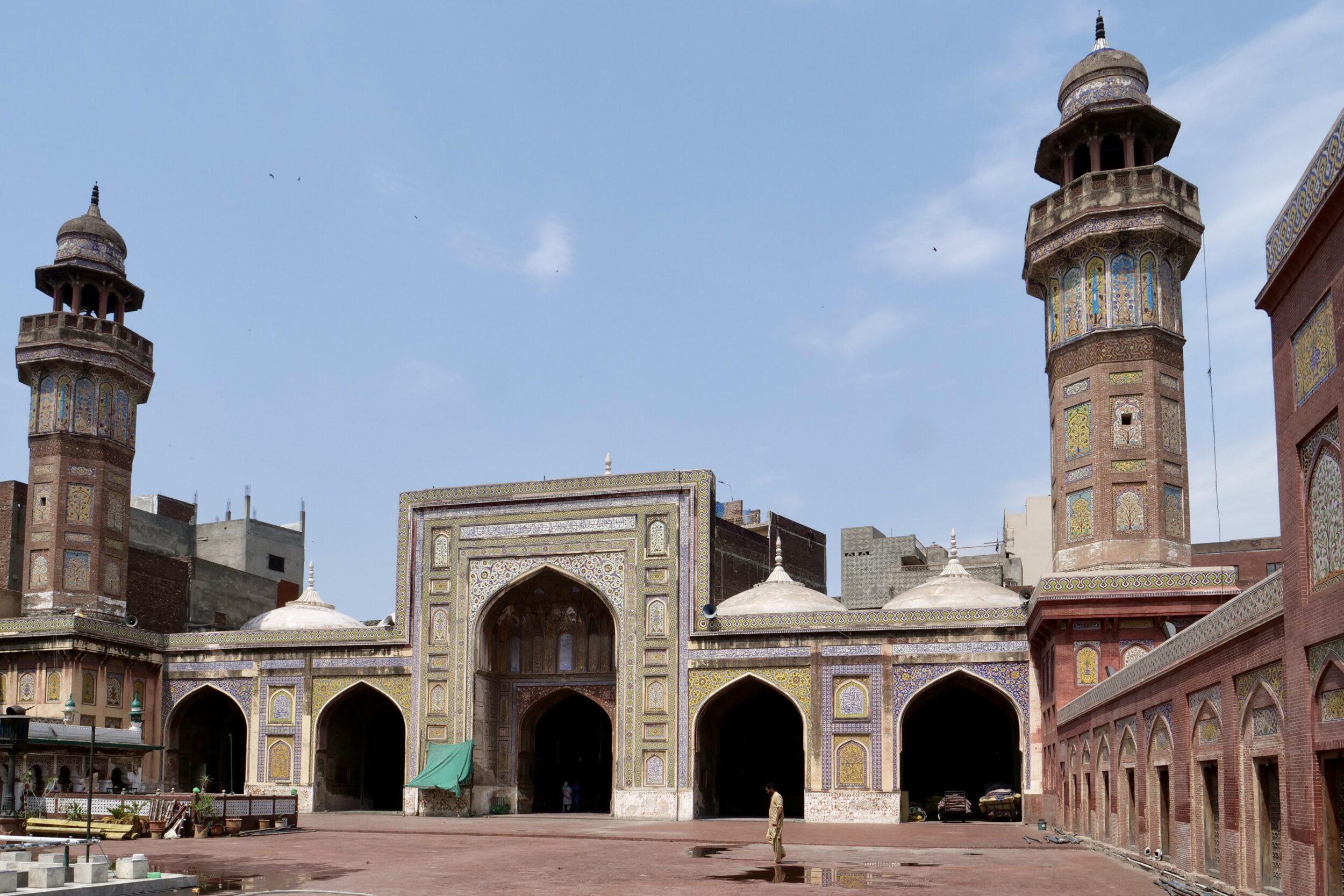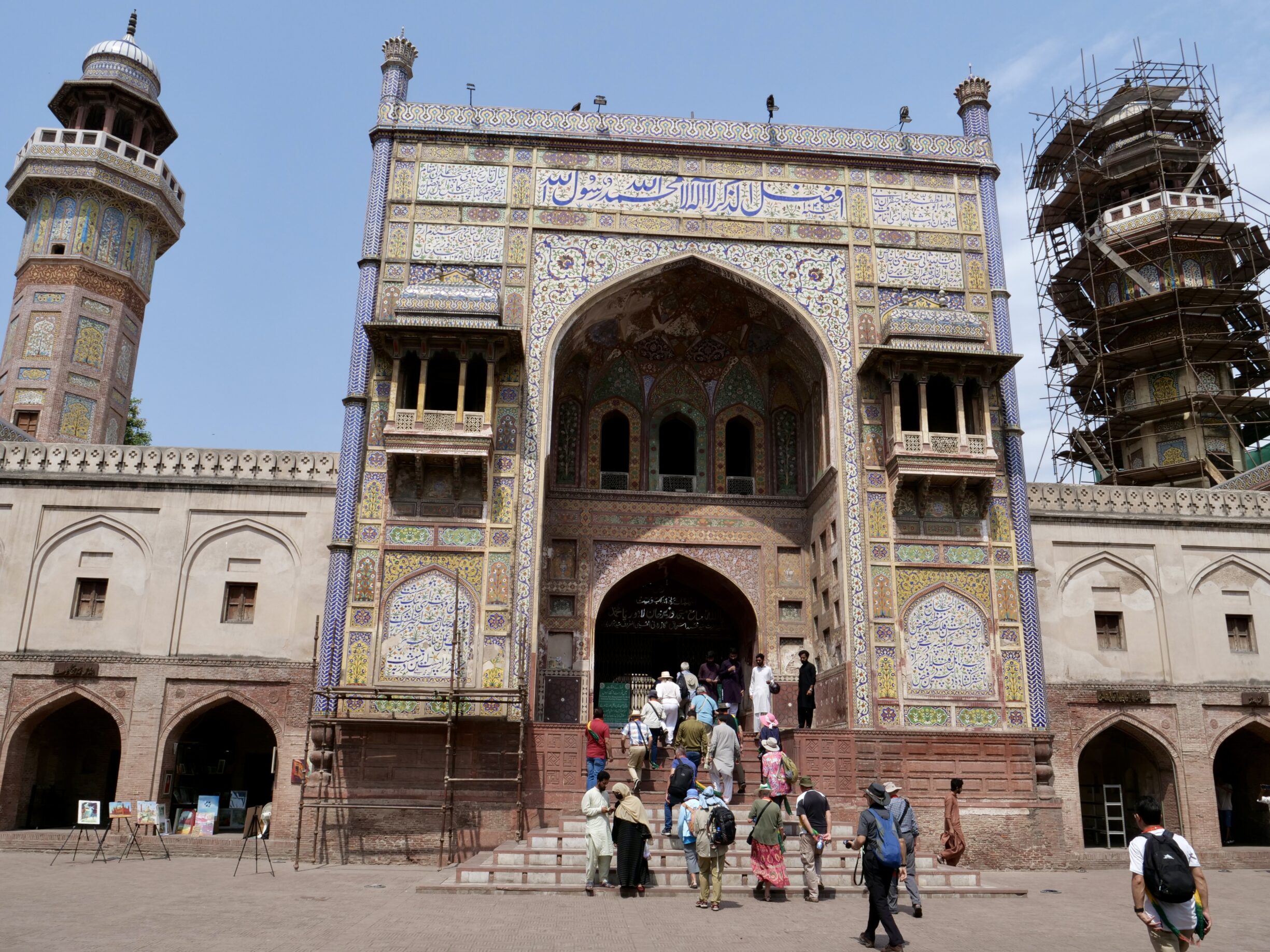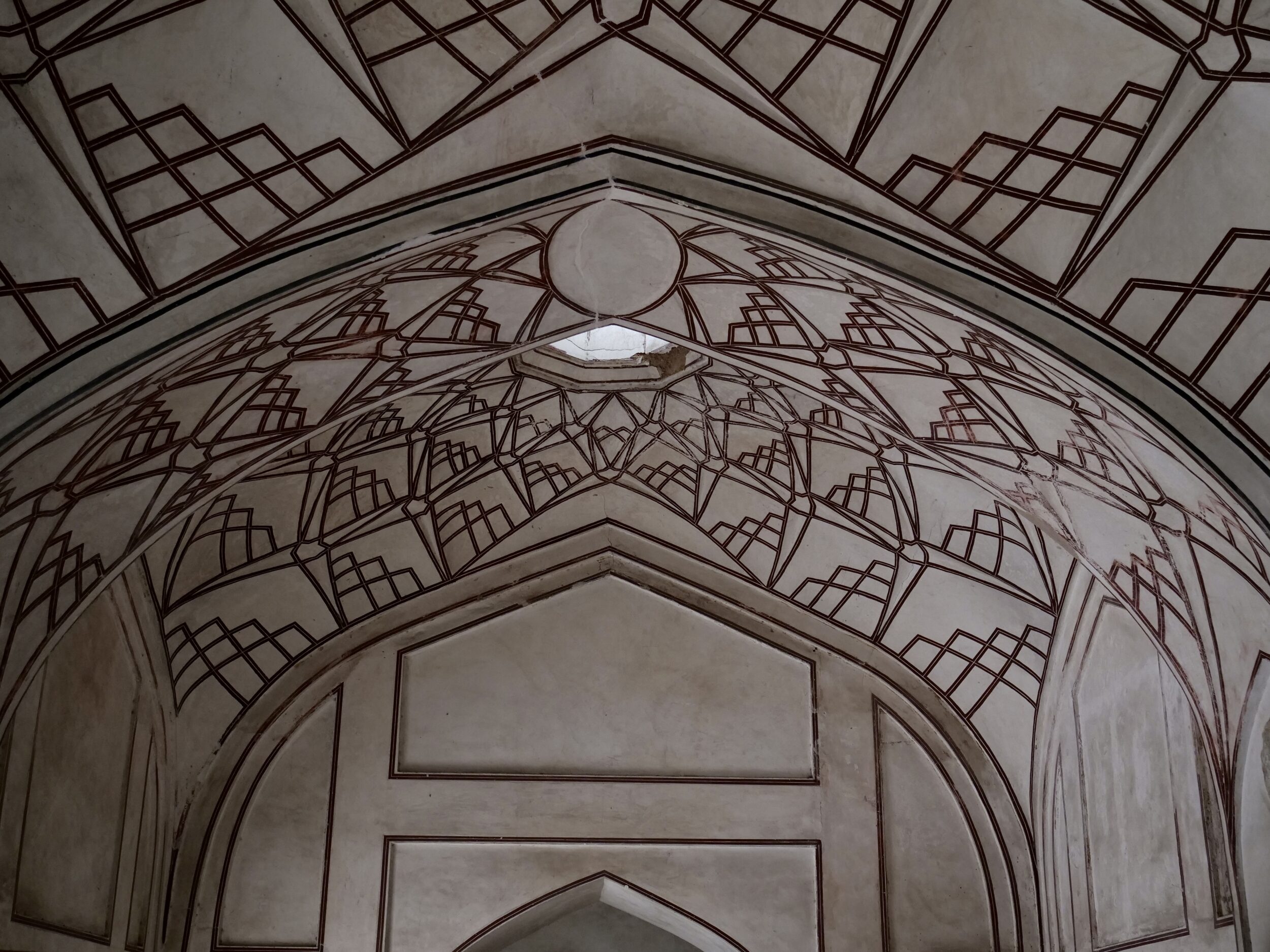
The Shahi Hammam’s smaller rooms’ decorative frescoes – as illustrated in this post’s featured image – are geometric/“abstract” and very “spare”.
They are no less beautiful than the big rooms’ much more elaborate and oft-“representational” frescoes.
Contrary to widespread belief, Islam does not impose a blanket ban on “representational” visual art in general, nor on the depiction of humans, specifically.
For instance, “Persian miniature” – one of the best-loved, most influential forms of visual art – was fostered by Muslim rulers; a key feature of the genre is its depiction of (non -sainted) human beings.
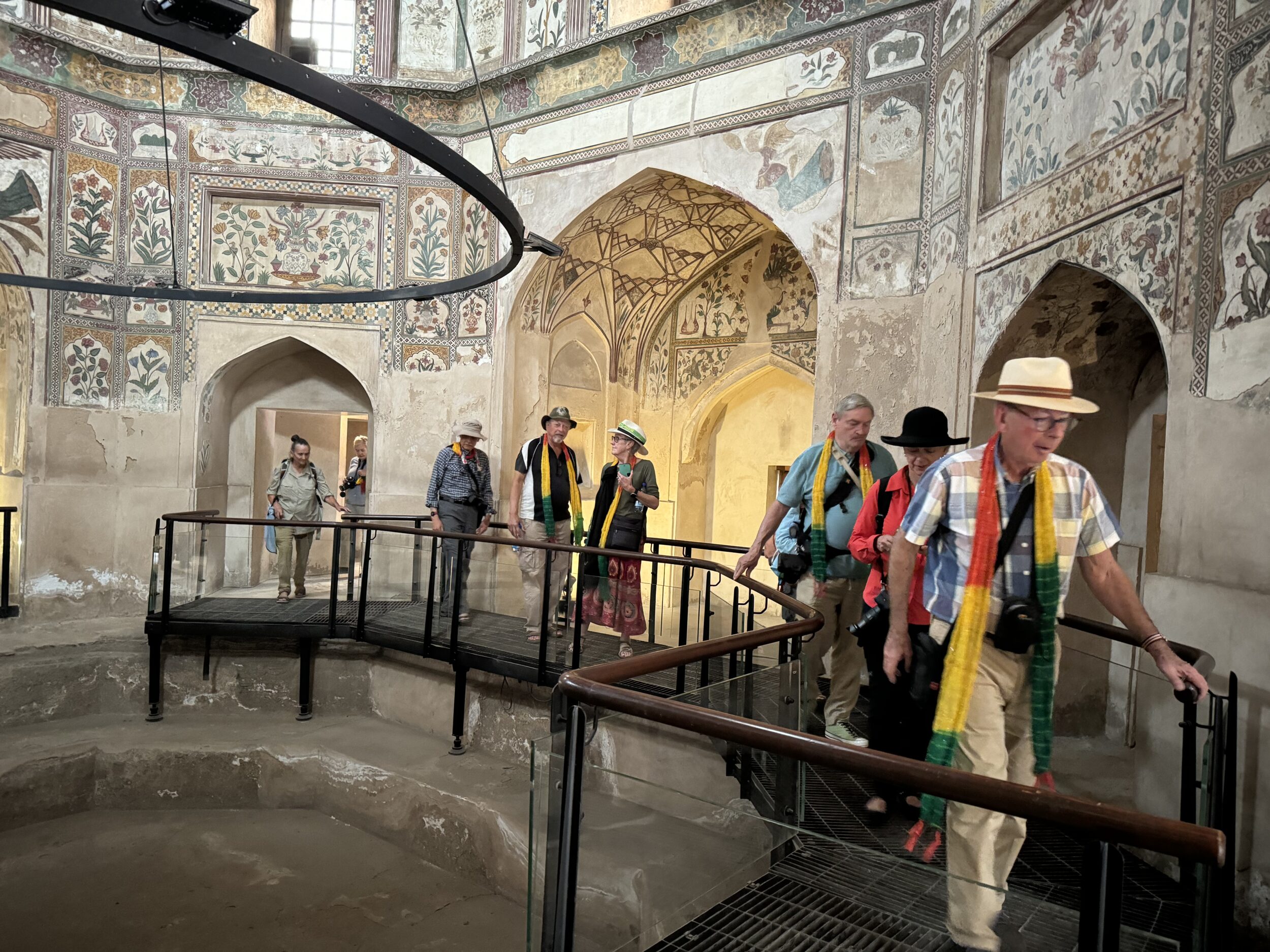
That said, what you can see below is something that would never have been approved.
It is a cheeky, “improper” bit of egocentricity on the part of one anonymous artist/artisan.
Comments closed