Skip to content →

Month: October 2025

Spring 2025 in Perth (#11 in series: “mushy”…but pushy)


Even a suburban building site can contain examples of how so many living things “really get going in spring.”

Looked at closely, the “eruption” of a fungal fruiting body can be a surprisingly violent event.

A “mushy” can move a deal of earth, along with the “litter” thereon.

Comments closed

Spring 2025 in Perth (#10 in series: blue sun-worshippers)


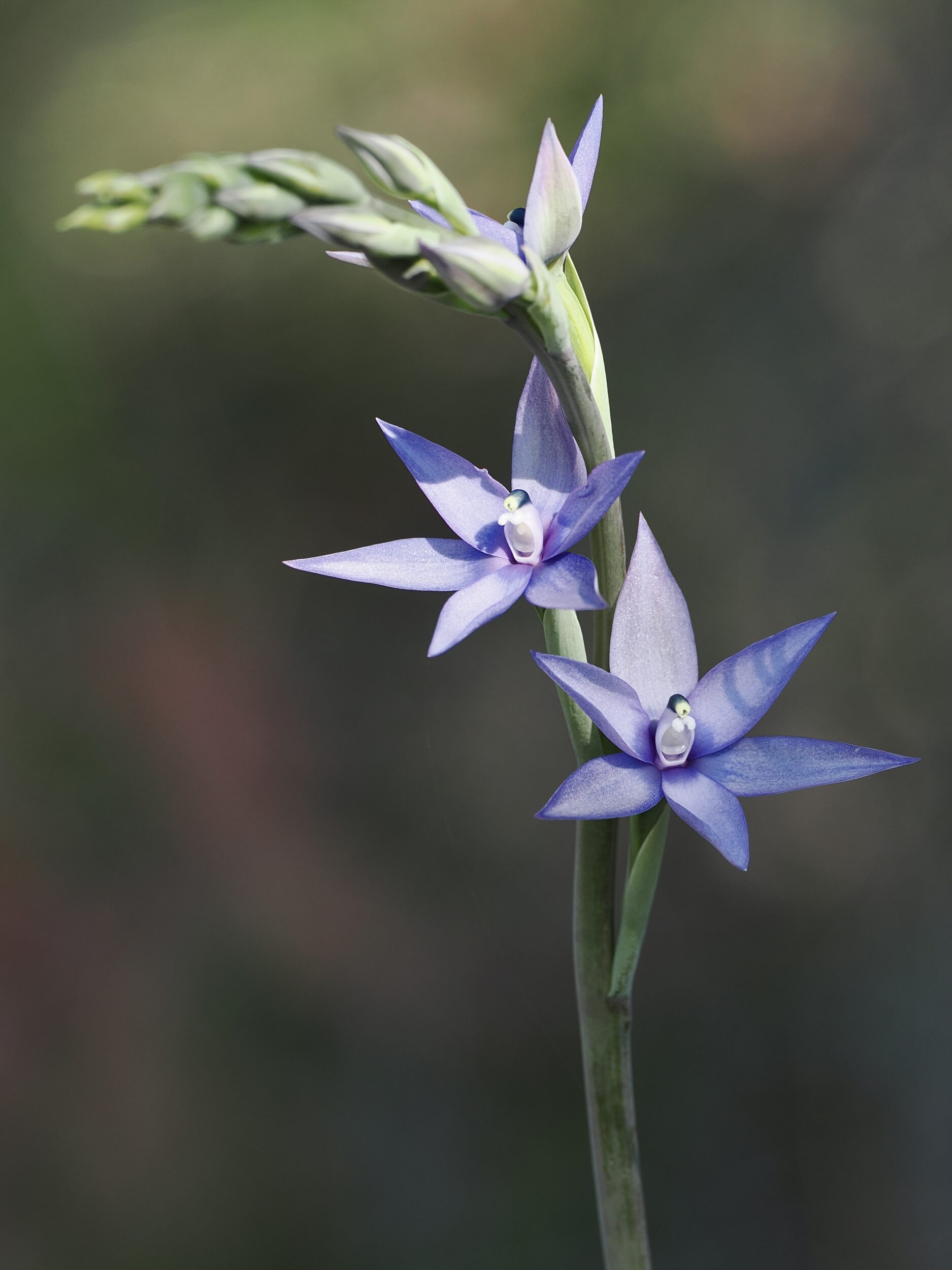
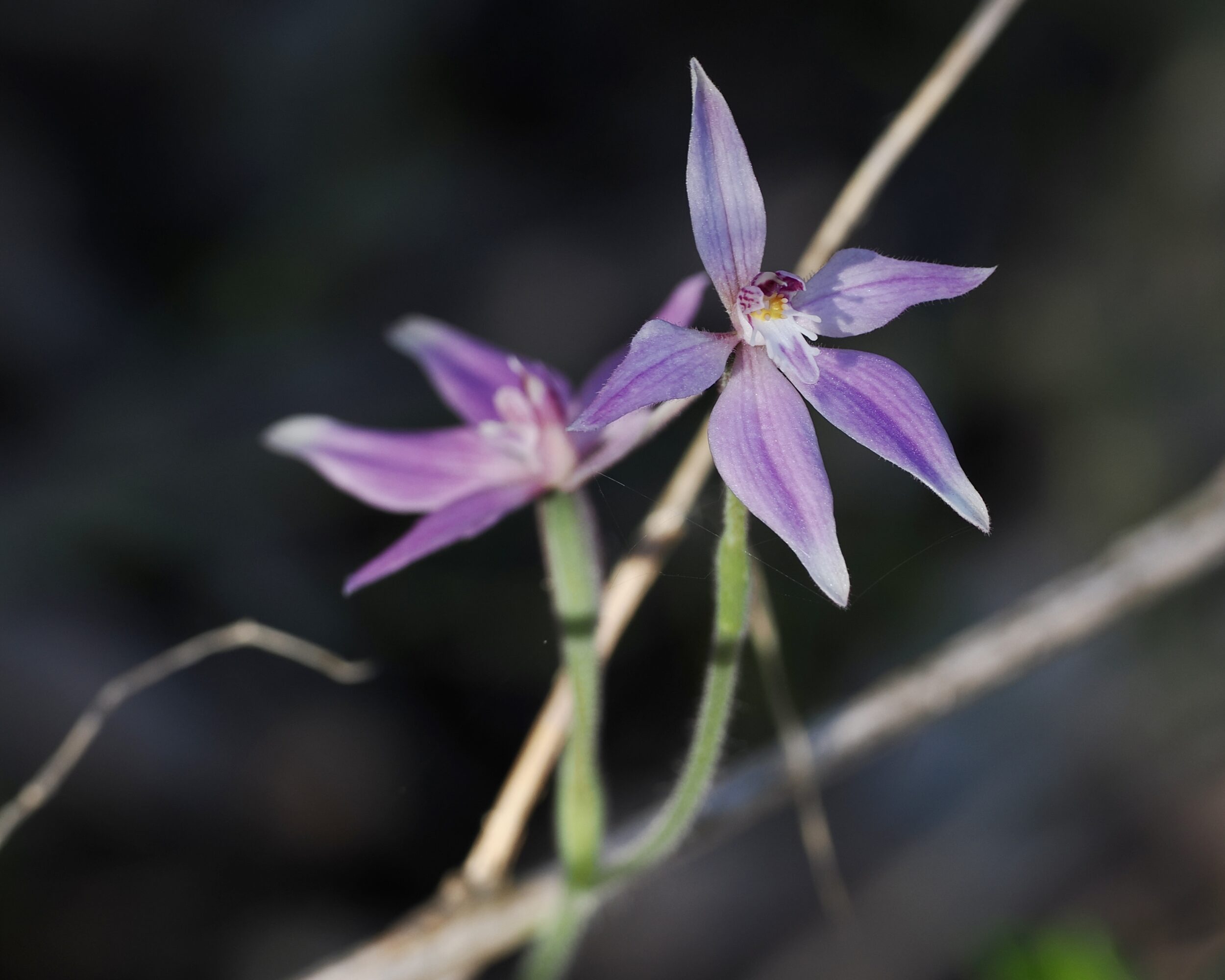
Generally, sun orchids – the 100+ members of the genus Thelymitra – are true to their common name.

They orient their flowers to the sun, open them only when it shines brightly upon them, and always close them before nightfall.

I am no botanist, but am 90 percent certain that there is just one kind of time and place to enjoy an entirely-natural encounter with the pictured, very elegant blue sun orchid species: on a sunny day in southwestern WA.

Comments closed

Spring 2025 in Perth (#9 in series: “common” donkey orchid)


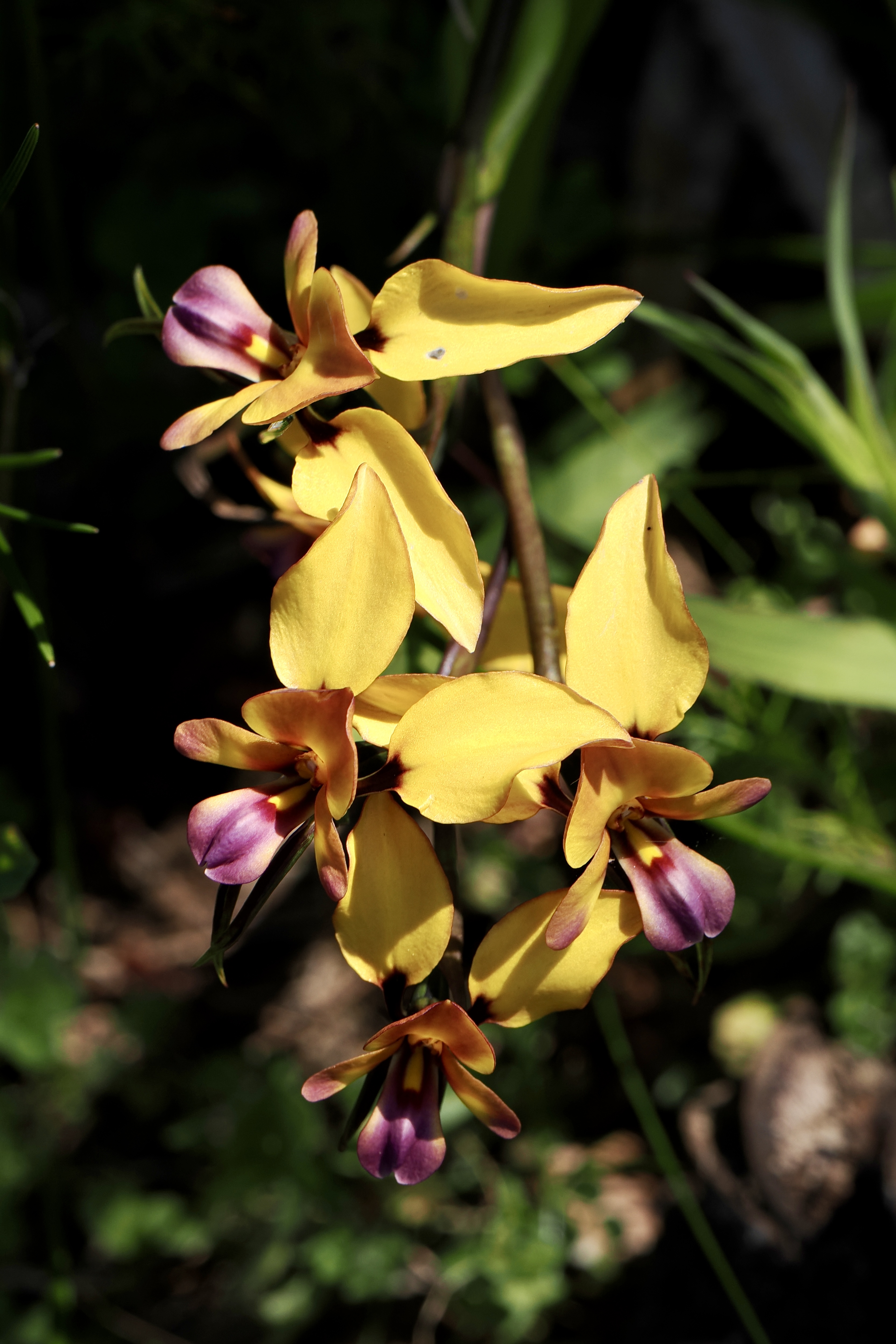
In Perth the pictured species is indeed common, but Perth is the only Australian capital city which is within its home range

In springtime in Perth Diuris corymbosa – the common donkey orchid, aka “wallflower orchid” – is usually conspicuously present in just about any “bushy” location.

Spring 2025 is a bumper one for this species.

Inevitably, some folks fail to appreciate its beauty, simply because it is so common in Perth, so easy to see.

Comments closed

Spring 2025 in Perth (#8 in series: Willie wagtail owner-builders)


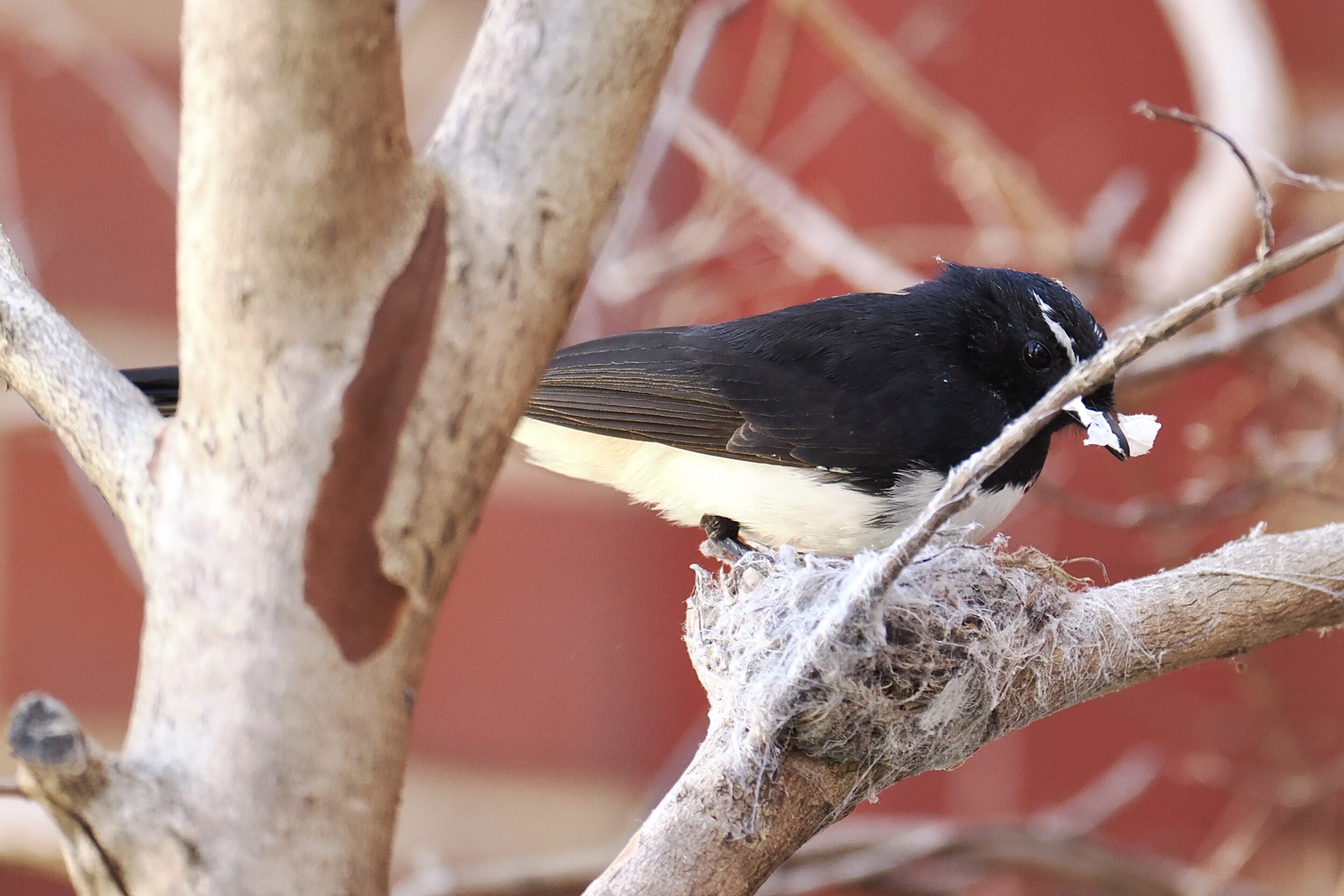
Most Australian humans regard willie wagtails (Rhipidura leucophrys) fondly and encounter them frequently.

They are also well-liked in the rest of their range – Melanesia and eastern Indonesia.

On 21 September we – and circa 100 other people – enjoyed lunch at a popular Shenton Park eatery.

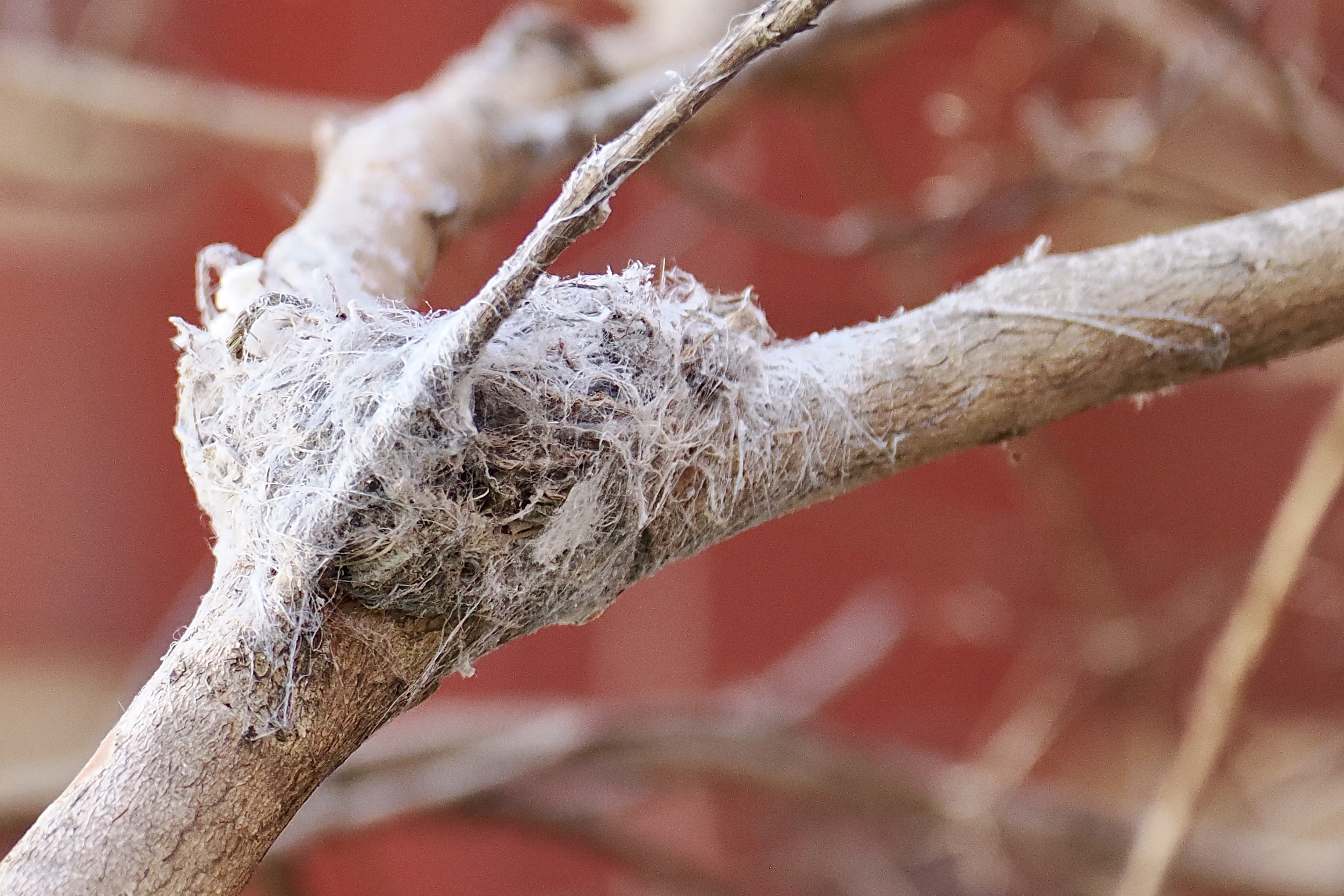
From our almost-outside table, just inside an open door, we watched two very industrious wagtails construct a substantial portion of their next nest.

To say the least, their choice of building materials was highly eclectic!

Comments closed

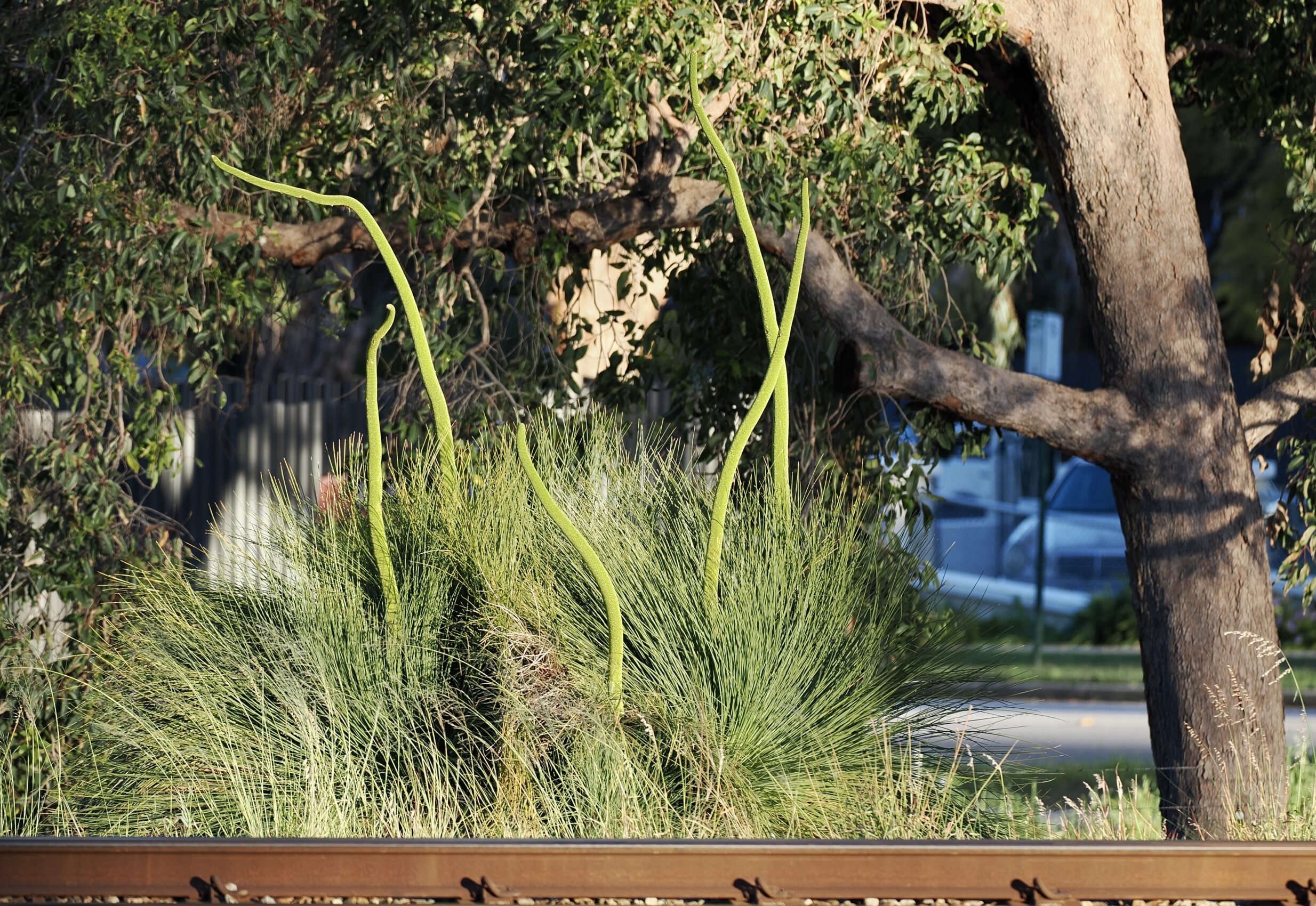
Spring 2025 in Perth (#6 in series: inner-urban, surprisingly “wild”)


In global terms, Australia’s major cities – Perth, most especially –  are surprisingly rich in “wild”-ish, “bushy”, quasi-“natural” locations.

They are not all in parks and reserves.

Some are just a few square metres apiece – vibrant, tiny “Islands” within an otherwise-stolid “sea” of cement, asphalt, lawns, graceless buildings, etc.

Comments closed

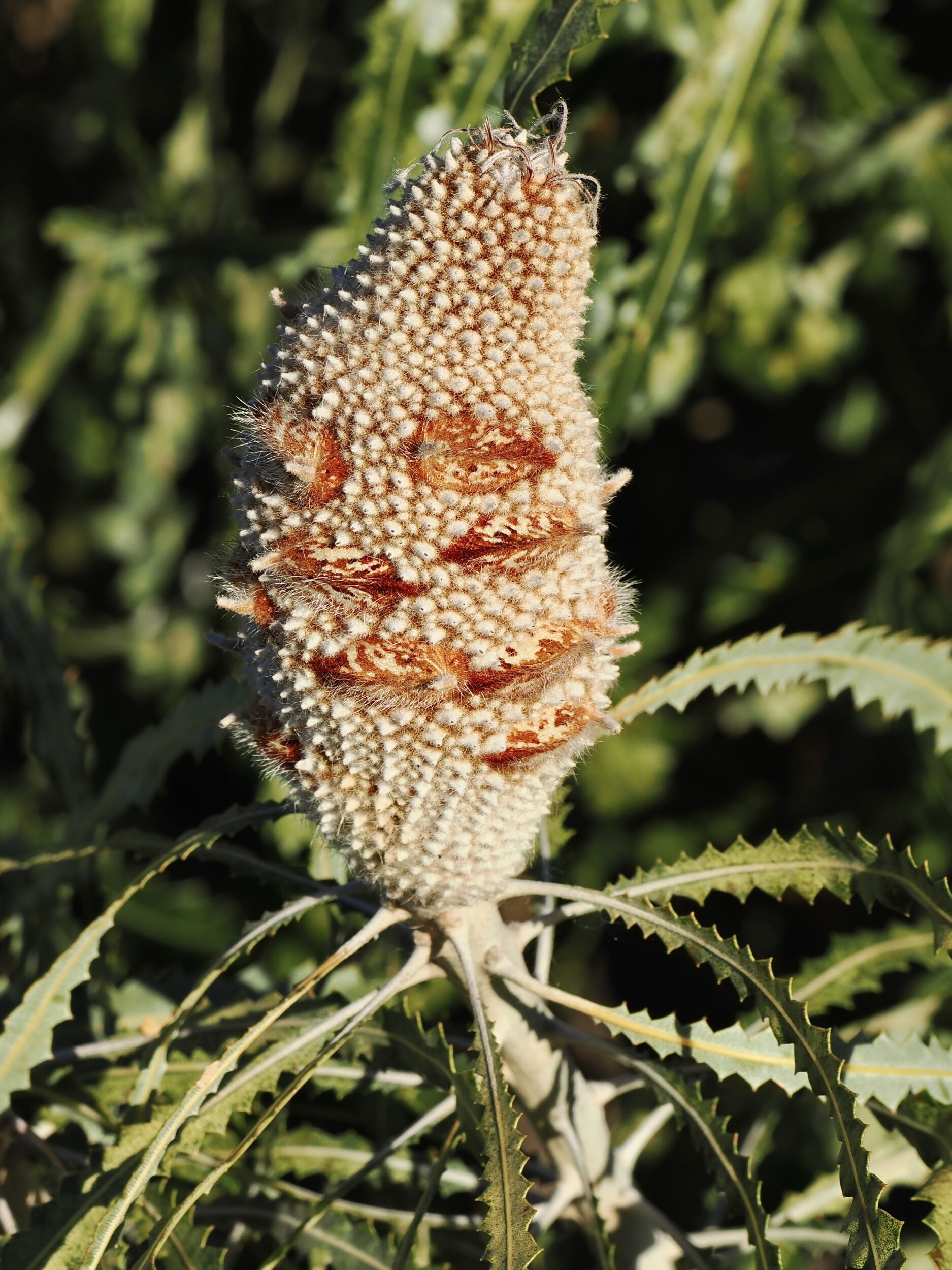
Spring 2025 in Perth (#5 in series: Infructescence, Banksia-style)


A clear majority of Australia’s Banksia species occur naturally in southwest Western Australia, exclusively.

One of the most arresting is Banksia prionoties.

Its common name – Acorn Banksia – refers to the appearance of its large flower spikes during the early stages of their flowering.

As you can see here, at that stage the flower spike is both elegant and spectacular, with each spike/“cone” exquisitely clad with hundreds of flowers. (many people are unaware of this reality. They misperceive each spike as “the flower”, singular)

As this post’s photo illustrates, the spike’s  “post-flowering” appearance is every bit as spectacular, but rather less elegant.
Comments closed

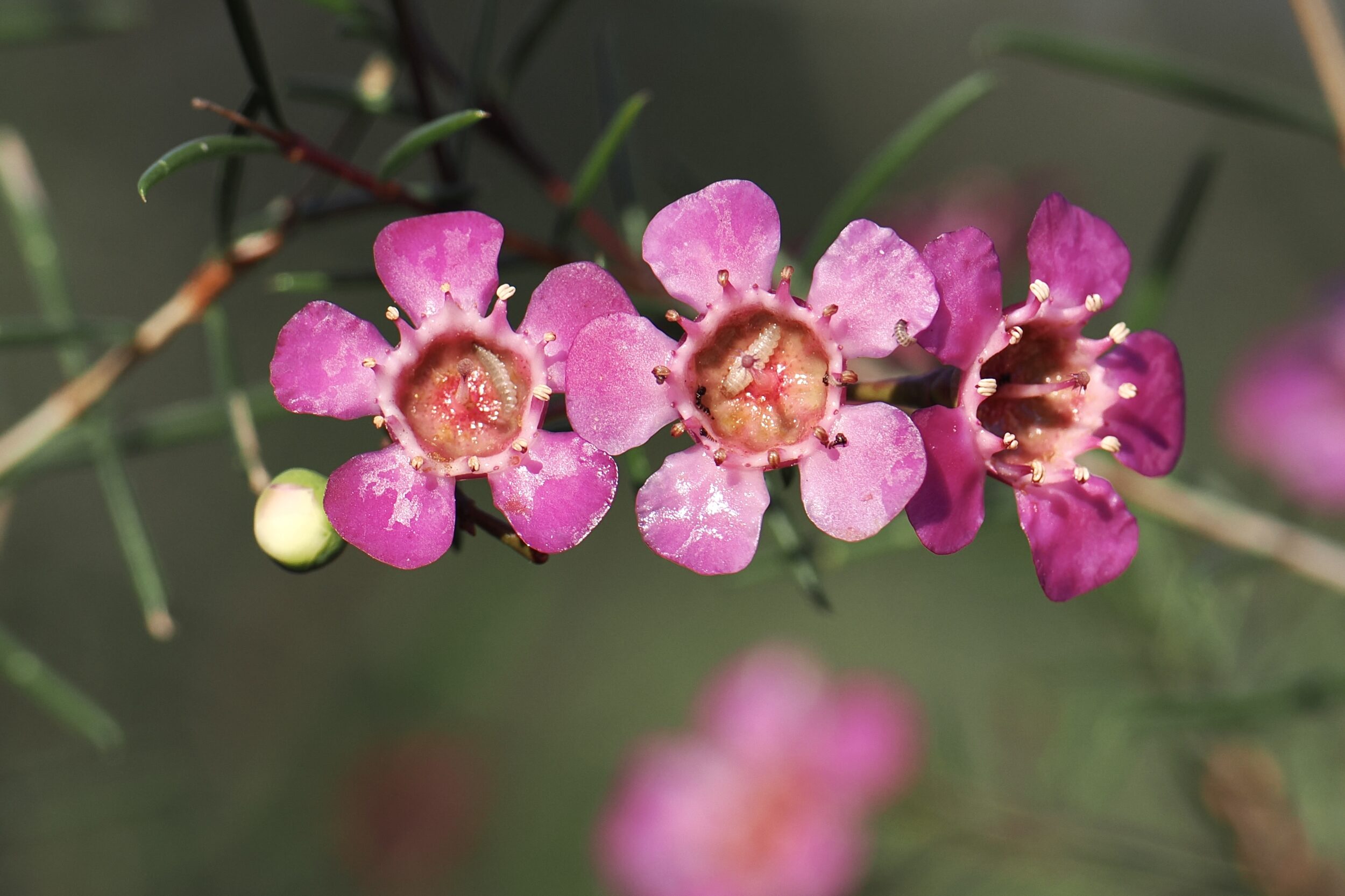
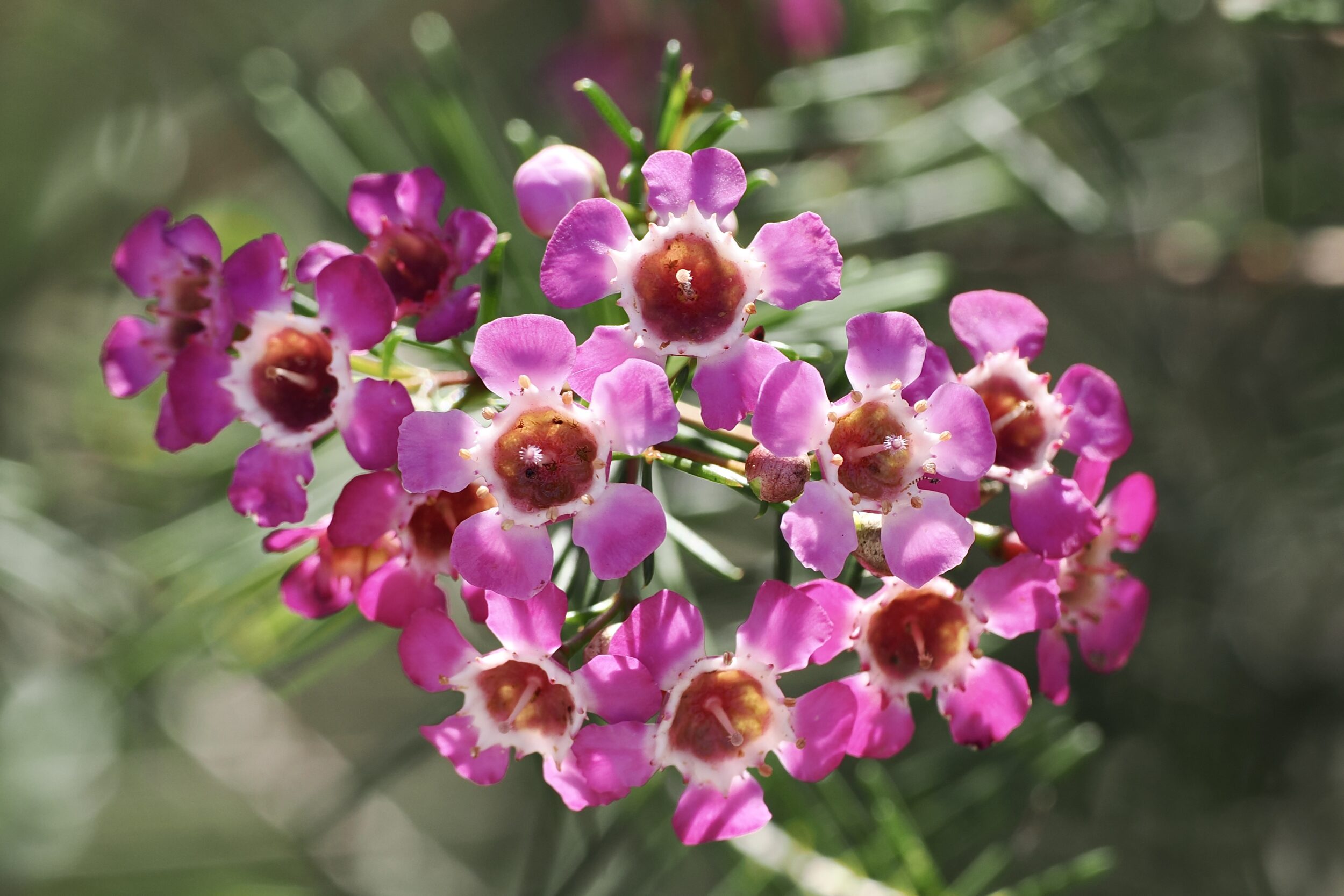
Spring 2025 in Perth (#4 in series: waxflowers, “2” of 2)


Very often, much more is going on within a single flower than is readily apparent to an observing human’s naked eye.

The deployment of a long or macro lens will often yield a surprise – sometimes lovely, sometimes startling.

If you zoom in on/enlarge the image below you will see two beetles.

They are at/near the top of the photo’s most prominent pistil – the white one, in sharp focus.

For a more “macabre” experience, look at the munching/nectar-sipping young animals that have “invaded” the very heart of two of the three flowers in the featured image, above.

Comments closed

Spring 2025 in Perth (#3 in series: waxflowers, “1” of 2 )


Chamelaucium – the genus known as waxflowers – has fourteen generally-recognised species.

They are members of the Myrtle family.

Some – most especially Geraldton wax, Chamelaucium uncinatum – are highly prized, globally, by florists and gardeners.

However, as is true of so many highly distinctive flowering plants, the natural range for all members of this genus is entirely confined to parts of southwestern Western Australia.

Comments closed

Spring 2025 in Perth, WA (#2 in series: Pink fairies at Lake Claremont)


The relevant “fairies” are Caladenia Latiffolia – an Australian orchid species, commonly known as “pink fairy orchids”, or simply “pink fairies”.

I took the photo near the western side of Lake Claremont at 3.46 pm on 19 September.

The floral diversity in southwest WA is phenomenal, globally.

Many of the region’s beautiful, often wondrous-strange flowering plants are endemic – in the wild, they occur nowhere else on earth.

Not a few are endemic to just a tiny portion of WA; for a few species, their entire “home range” is a single hill in The Stirling Range.

Comments closed