Skip to content →

Month: January 2026

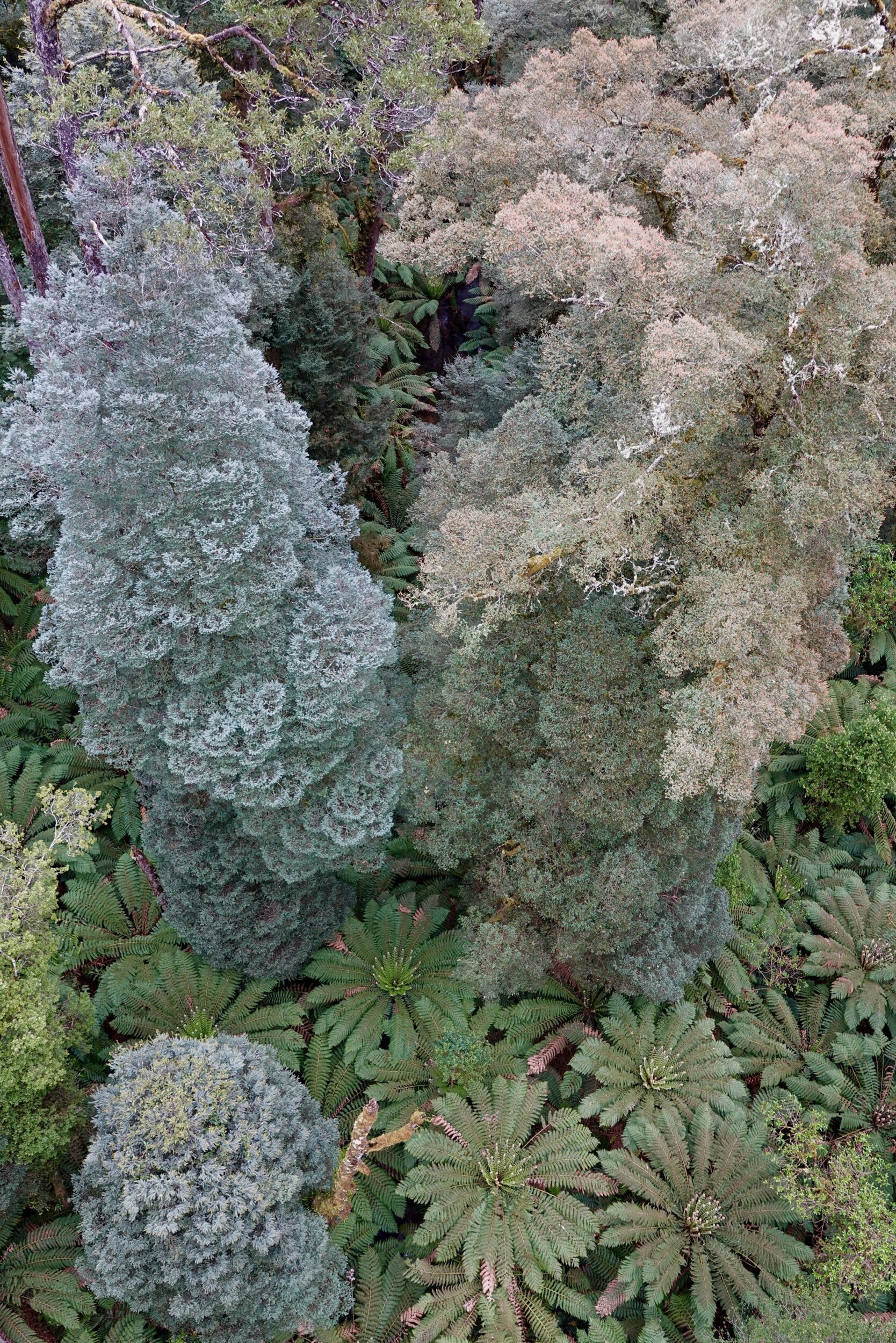
Looking down (#11 in series – trees “4” – Spring Gully)


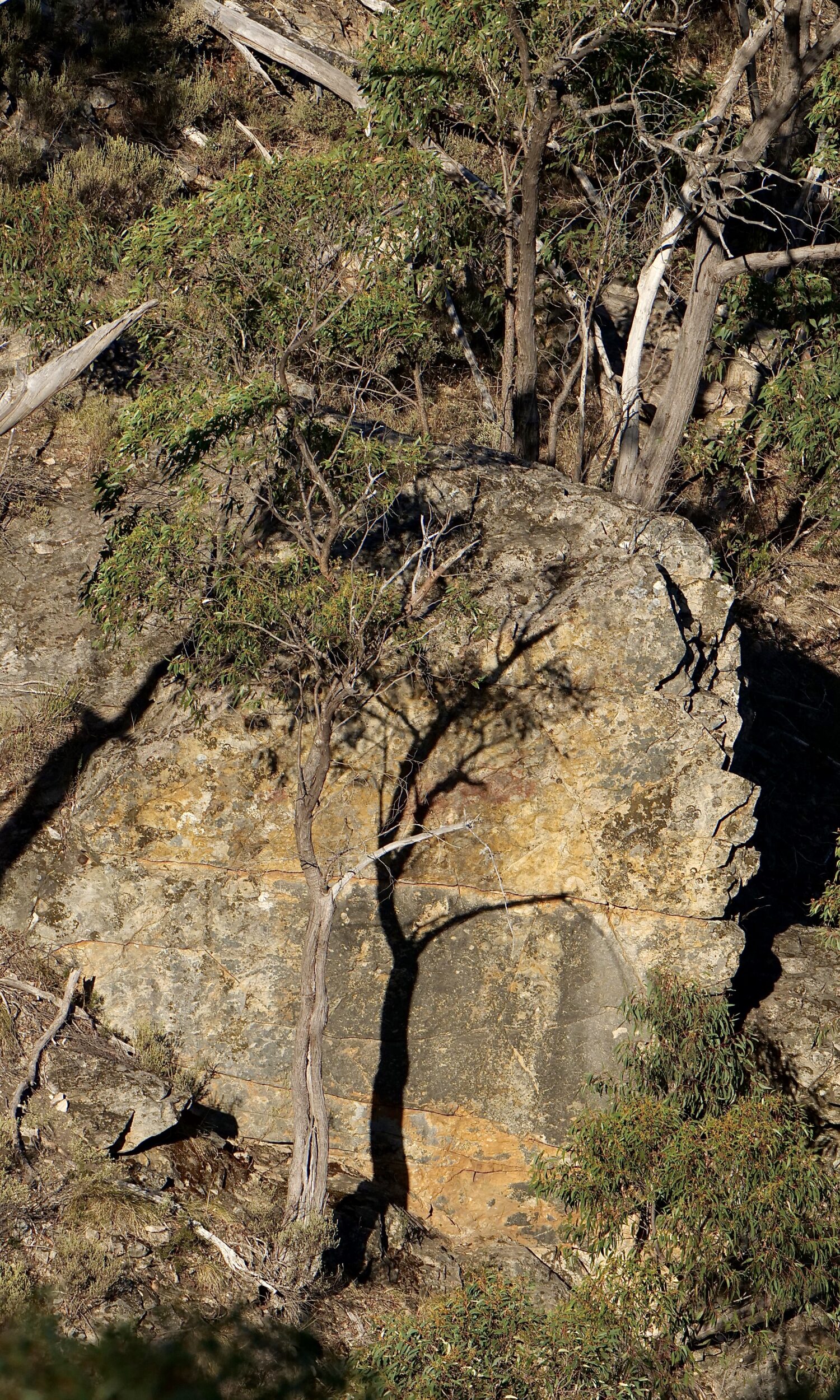
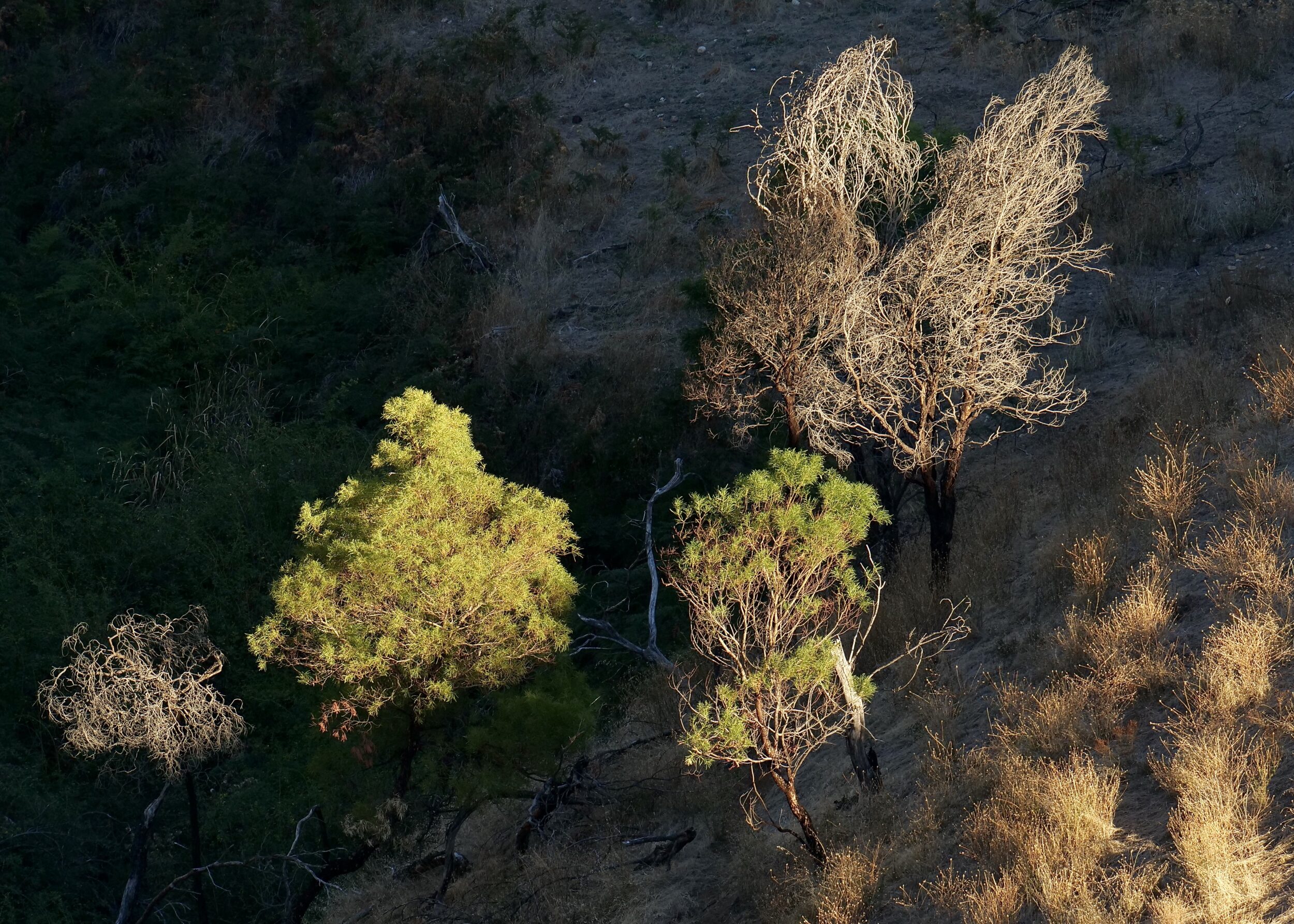
This sequel to #10 in this series looks down into the actual gully in Spring Gully Conservation Park.

Its  own website  explains the Park’s raison d’être:

Spring Gul­ly Con­ser­va­tion Park was set aside to con­serve the west­ern­most pop­u­la­tion of the red stringy­bark Euca­lyp­tus macrorhyn­cha. This park is the only reserve in South Aus­tralia to con­tain this par­tic­u­lar species. 

Alas, Spring Gully’s “hero” species is now in serious trouble in its sole South Australian “refuge”.

Leave a Comment
Looking down (#10 in series – trees “3”: Spring Gully, South Australia)


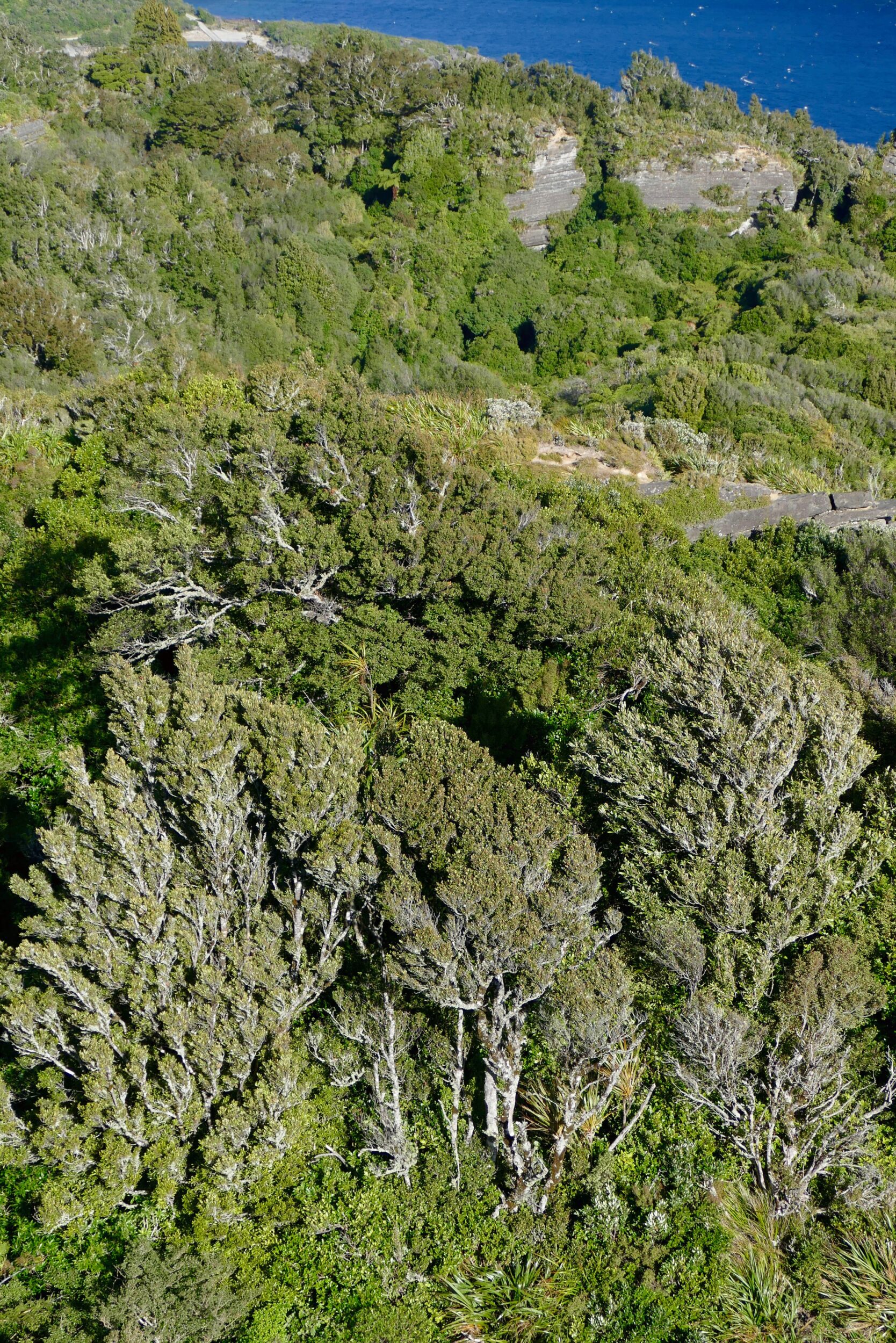
Spring Gully Conservation Park is 8 kilometres south of Clare, in South Australia’s mid-north.

From Adelaide, it is a little less than a two hour drive; day-tripping from the city is feasible.

However, the so-called “Clare Valley” (in truth, this distinctive region has more than one valley) is such a rewarding destination that it is a much better idea to base yourself there for at least several days.

As the next post will further explain, Spring Gully is of great “conservation value”, and it is more than a little “vulnerable”.

Meanwhile, enjoy what a ridgetop vantage point can do, late on an autumn day…

Leave a Comment

Looking down (#9 in series: trees “2”, Lake Waikaremoana)


This post’s featured image is another example of how remarkably “different” trees and forests can appear when one is able to look down on them…literally.

I took the above photo from a hilltop/outcrop near the edge of the deepest lake on New Zealand’s North Island.

At 54 square kilometres, Waikaremoana it is that island’s fourth largest lake by surface area, but is #2 in water volume. (#1, in both respects on the North Island, is Lake Taupo. Taupo has the largest surface of any NZ lake. Several of the South Island’s glacially-gouged lakes contain more water)

Waikaremoana is very beautiful, but sees remarkably few tourists, thanks to its “remote” location.

Most of the lake’s rugged surrounds have temperate rainforests that have never been logged.

An astonishing fact: until circa 2,200 years ago this lake simply did not exist!

Leave a Comment

Looking down (#8 in series – trees “1”: temperate rainforest, Australia)


Walking on a forest’s or woodland’s floor often yields a great deal of visual delight, as most living humans have directly experienced.

However, relatively few humans have experienced the pleasure of looking down to a forest’s floor, from forest canopy height, or higher.

The view from “up there” is usually a visual treat in its own right.

In recent decades – across a growing number of nations – the construction of elevated walkways has made that experience newly/readily-accessible to millions.

(such walkways also spare tree roots from the potentially-lethal impact of too-many tourists’ feet compacting the relevant soil)

The very same forest looks astonishingly different, when one’s feet are more than 20 metres above the ground.

Leave a Comment

Looking Down (#7 in series: Kaikoura “4” – a short, speedy journey)


If one were to stand atop the summit of Manakau – the Seaward Kaikoura Range’s highest peak – one would be 2,608 metres above the Pacific Ocean.

In a straight line, that Ocean’s shore would be just 12 kilometres away.

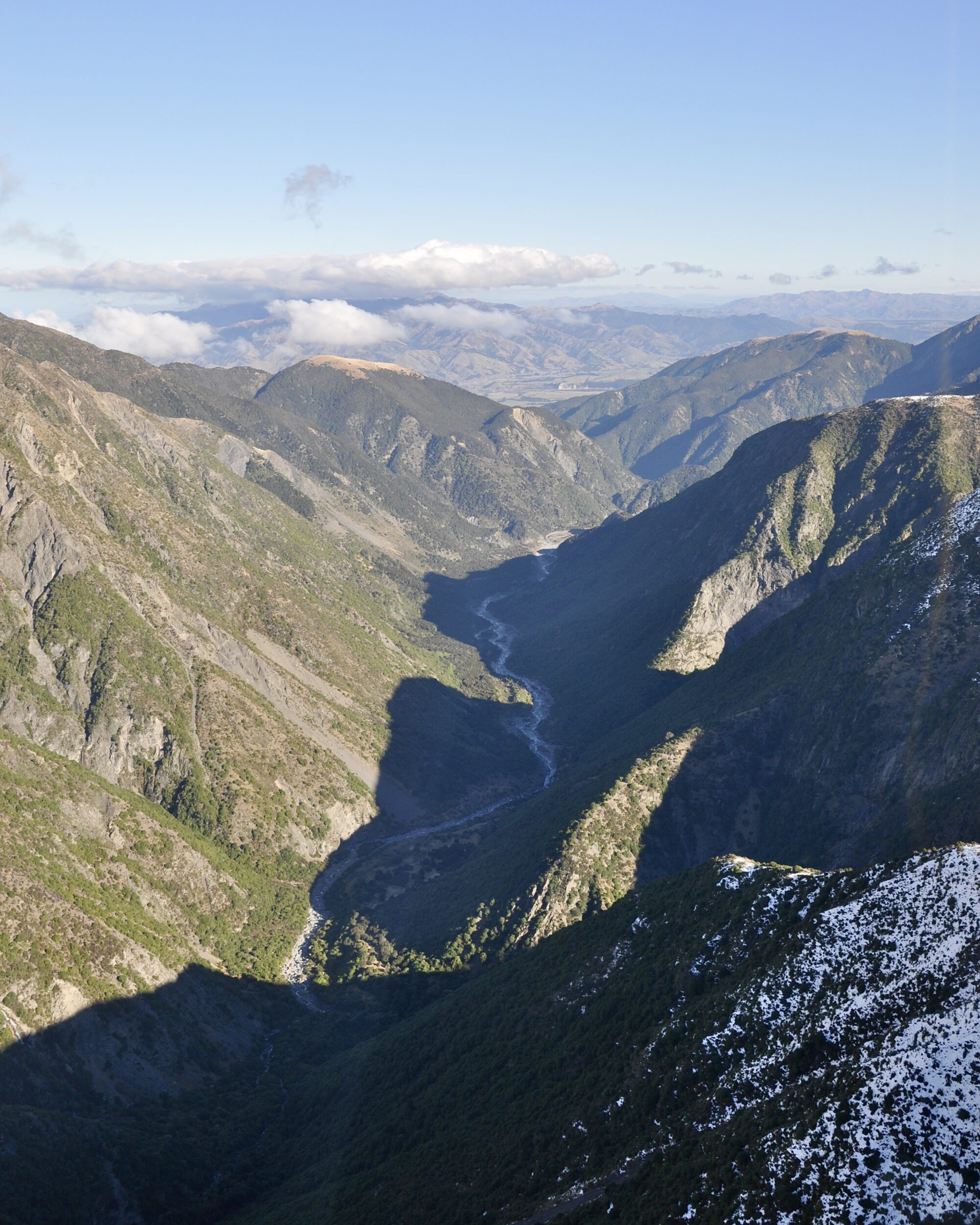
Rivers that rush down steep mountains and then meander across a coastal plain, do not flow in straight lines, but the Kaikoura’s rivers are all very short.

If I have correctly identified the pictured one, it is very steep indeed –  descending 1,900 metres in just 26 kilometres!

(Australia’s longest river – the Murray – descends 1430 metres, over more than 2,500 kilometres)

Leave a Comment

Looking Down (#6 in series: Kaikoura “3” – Seaward Kaikouras in winter)


Unavoidably, a helicopter “joyride” is noisy, expensive, brief.

However, over several decades, every one I have undertaken has been a wonderful experience.

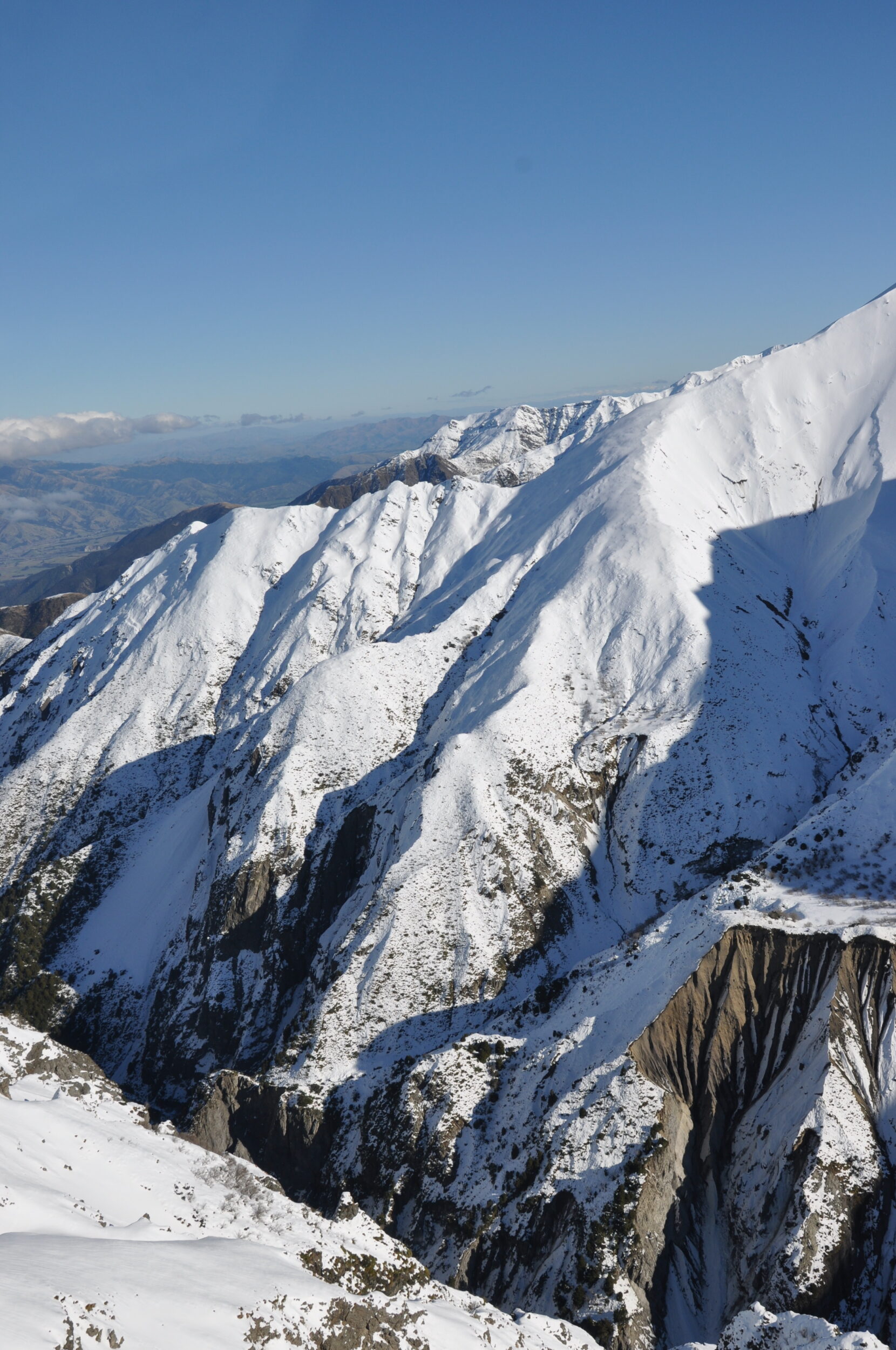
On the afternoon of 14 July 2010 our luck was “bad” – too-strong winds arrived ahead of “schedule”, so our eagerly-anticipated “landing in the snow” was ruled out.

It was, nonetheless, a glorious flight…all less-than-thirty minutes of it.

Leave a Comment

Looking Down (#5 in series: Kaikoura “2” – looking south to town & peninsula)

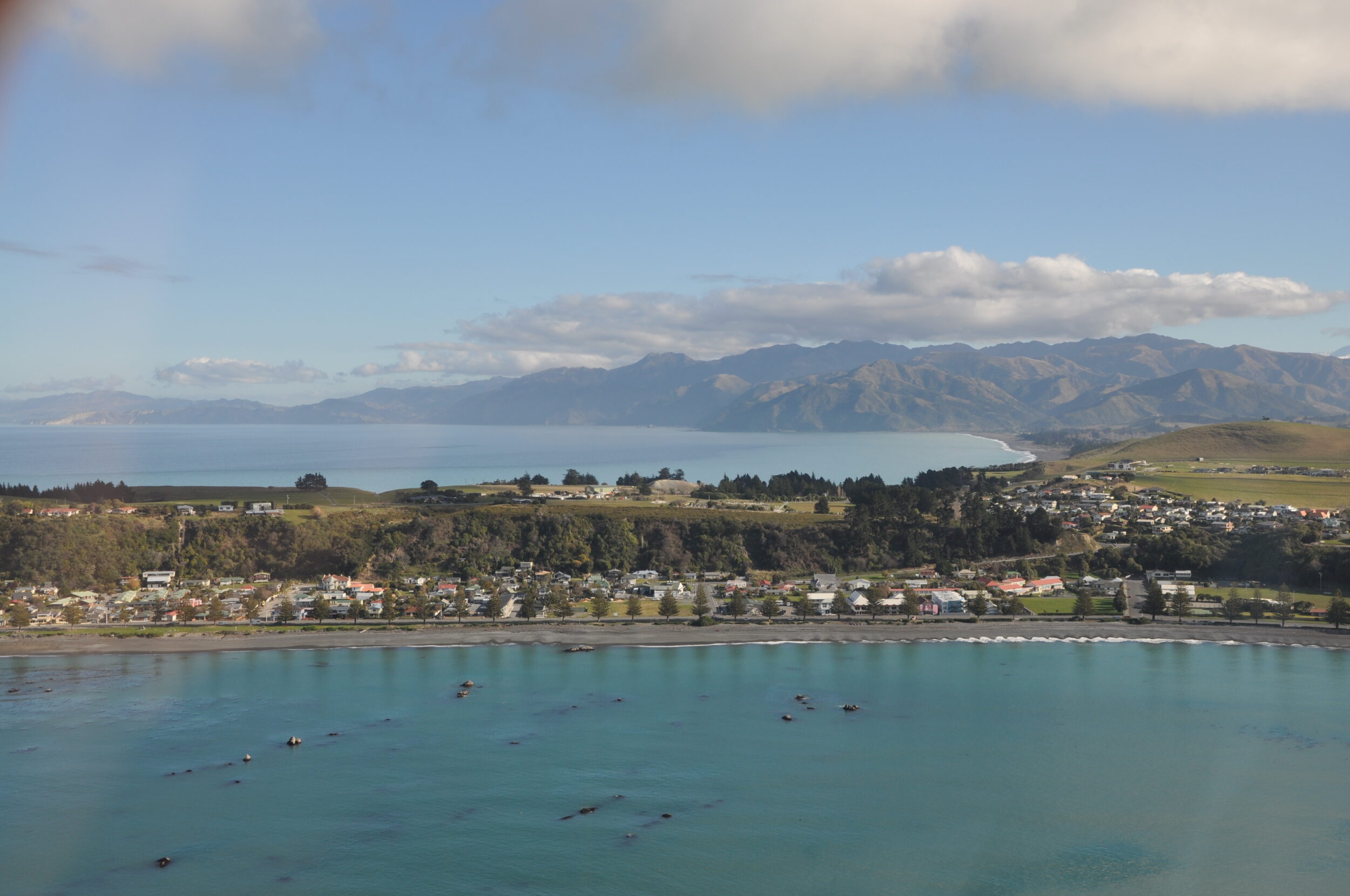
The featured image was taken from a modest altitude, as “our” helicopter was returning to its base, not far from Kaikoura township.

My photo shows the less spectacular (landward) end of Kaikoura Peninsula and town, the bay on the far (southern) side, and the hills (Australians would call them “mountains”) behind it.

Inland from town and peninsula, the northern side of the local terrain is very much more spectacular, especially in winter and spring.

Leave a Comment

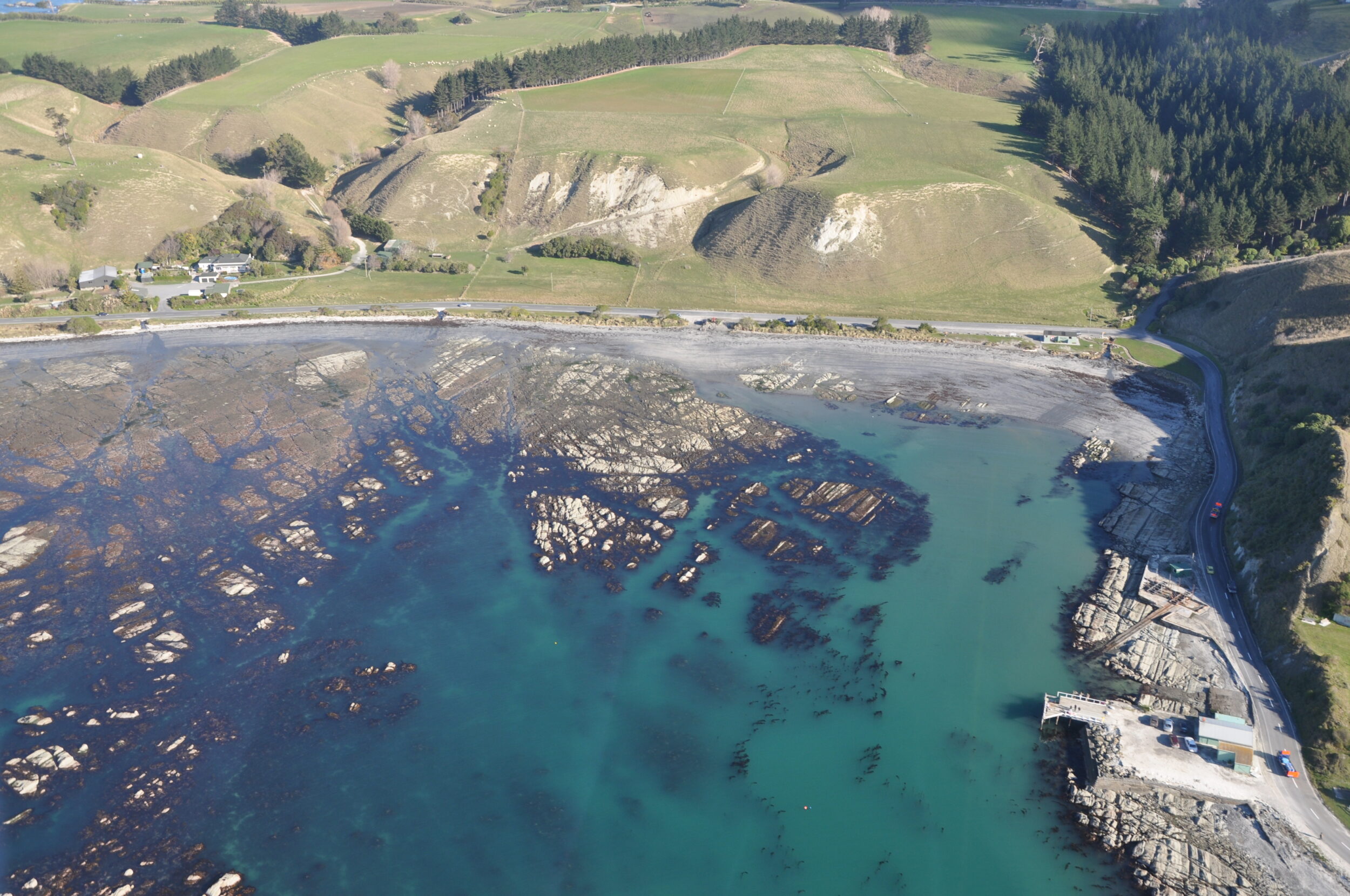
Looking Down (#4 in series: Kaikoura “1” – terraces)


Kaikoura is the name of a peninsula, the town thereon, two spectacular mountain ranges, and a hugely “productive”, very deep marine canyon.

The aforementioned all sit within the compact region of the same name, on/off the east coast of New Zealand’s South Island; “kaikoura’ is a Māori term which means “to eat crayfish/”.

(the local  “crayfish”/lobsters are excellent, albeit pricey, and they are “in season” year-round)

The Kaikoura Peninsula protrudes five kilometres into the Pacific Ocean, and is noted for the remains of Māori forts, atop…and for the “terraces” in (and rising out of) the adjacent waters, below.

A helicopter provided the vantage point, on 14 July, 2010.

Leave a Comment

Looking Down (#3 in series: …whilst they looked up)


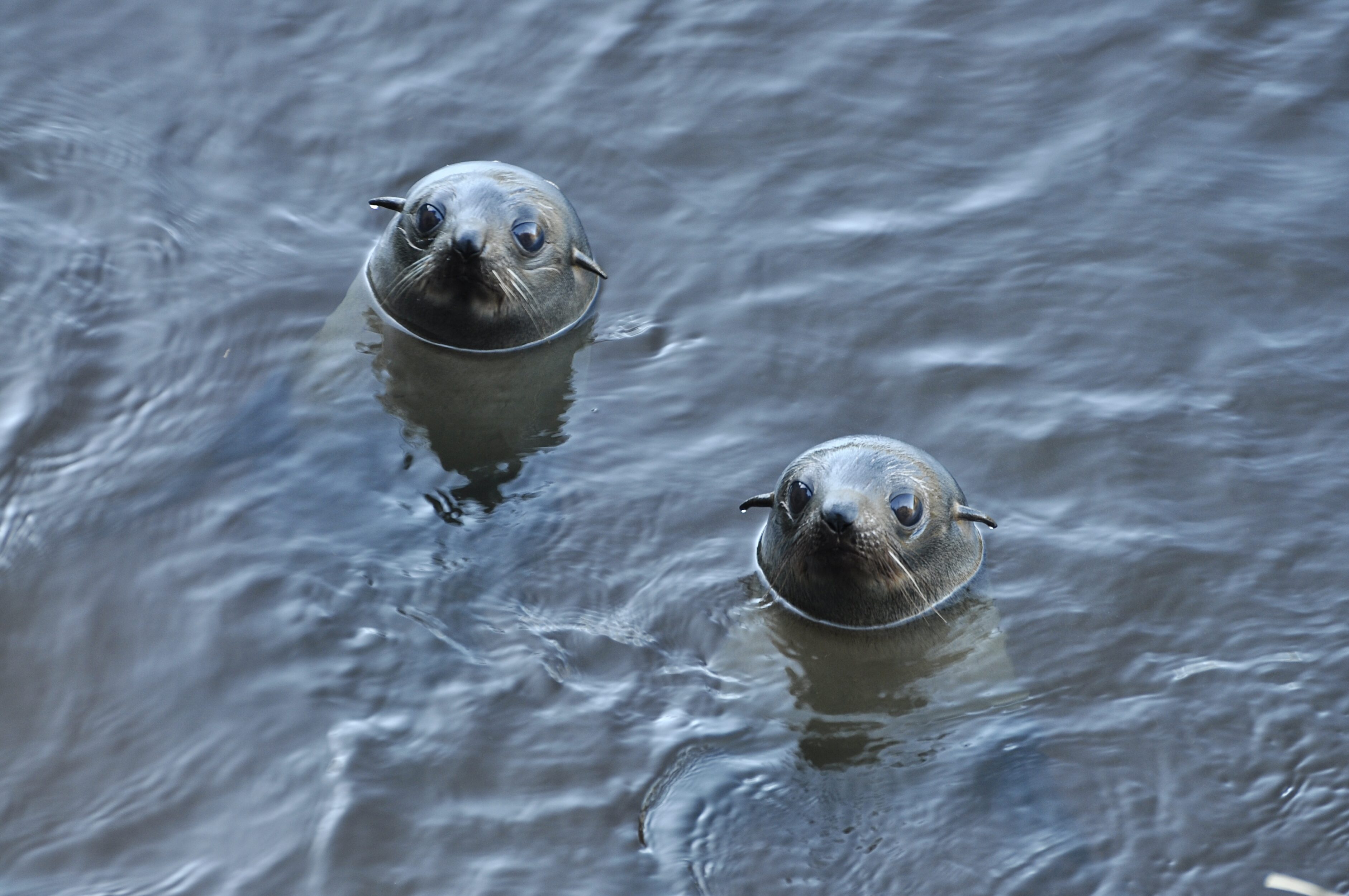
“They” were seal pups, in a tidal creek near a beach on which surprisingly few humans have walked, but which is “familiar” to millions – perhaps, billions – of human eyes.

The species Arctocephalus forsteri has many “common” names. “Long-nosed fur seal” is now the “preferred” one. (“New Zealand fur seal” is a misnomer. It calls Australia “home”, too)

The pups were typically curious, confident and playful.

However, as they looked up to the humans who were looking down, the pups bore a surprising resemblance to older members of Homo sapiens!

Leave a Comment

Looking Down (#2 in series: Arthurs Pass, New Zealand)


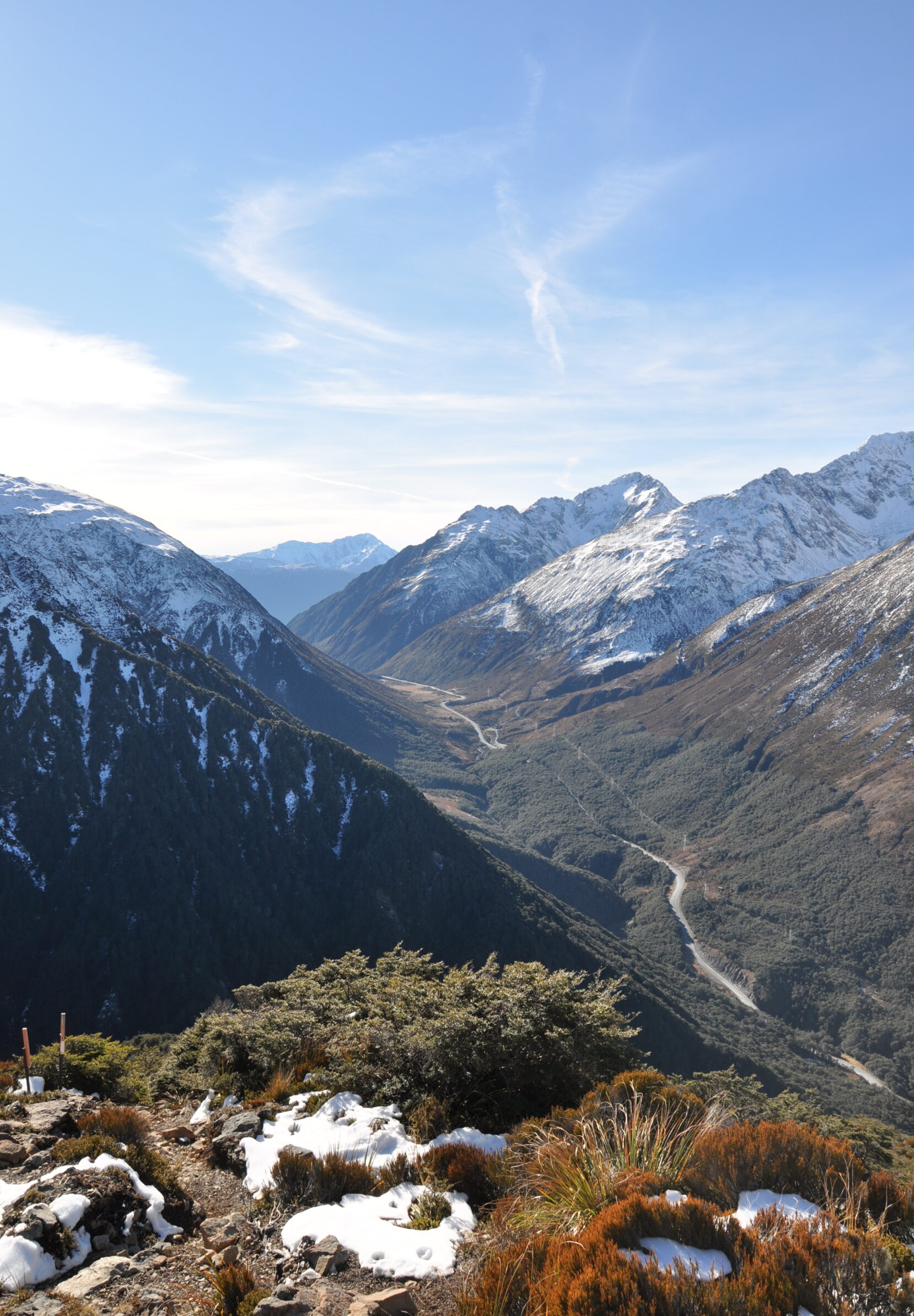
A suggestion to anyone lucky enough to be standing – with camera in hand – atop a suitably elevated vantage point, contemplating an “epic” alpine landscape:

don’t forget to remember that your “grand panorama” photo may well benefit enormously from it including what is immediately in front of your feet!

One Comment