Skip to content →

Category: Australia (not WA)

Flinders Island, March ‘25 (#4 in series: high points) + post-election “Word Power” teaser


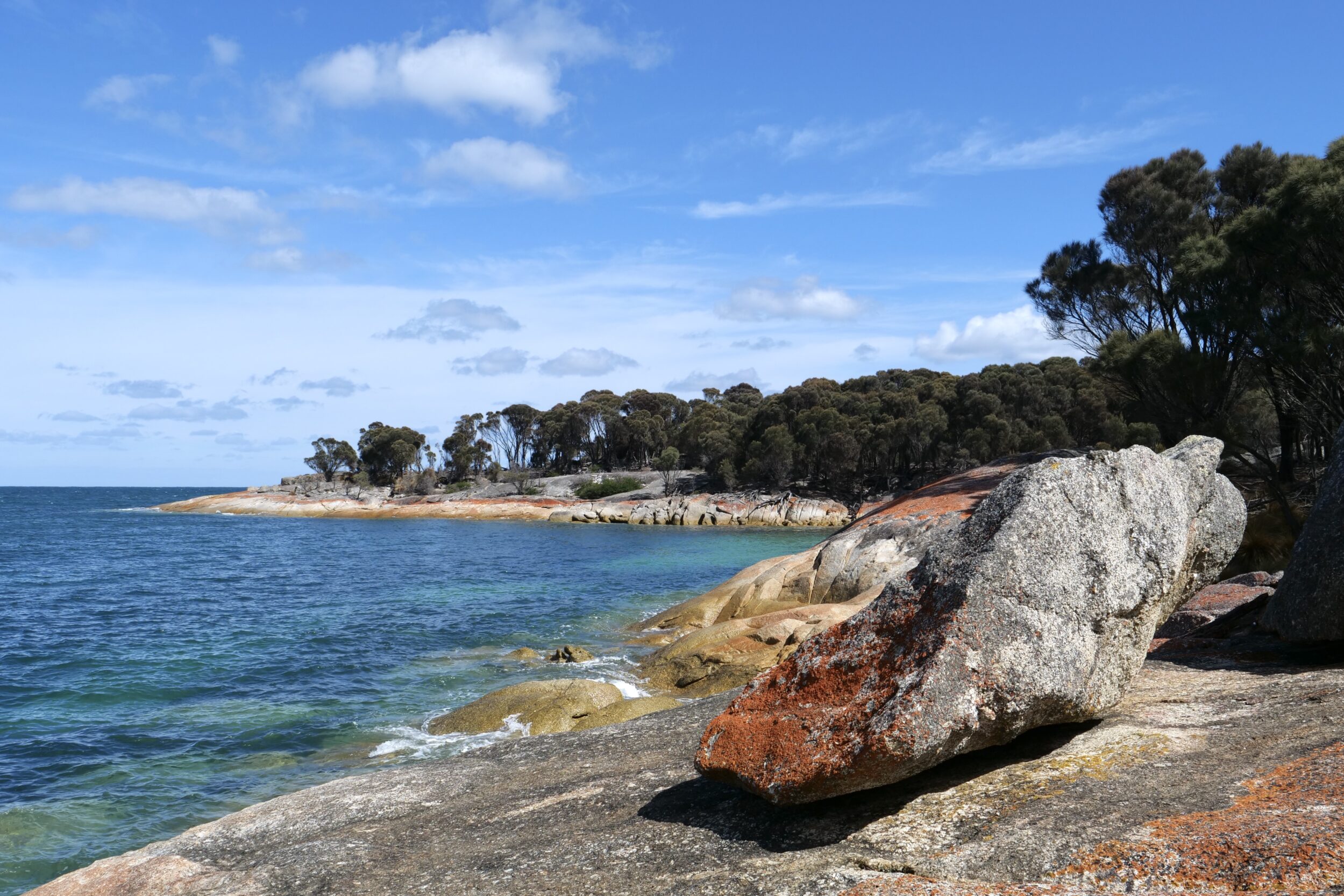
An hour earlier, I had been standing in brilliant sunshine, as my eyes and camera gazed across intensely blue water, a rocky shoreline, coastal scrub, and colourful, granite-loving lichens.

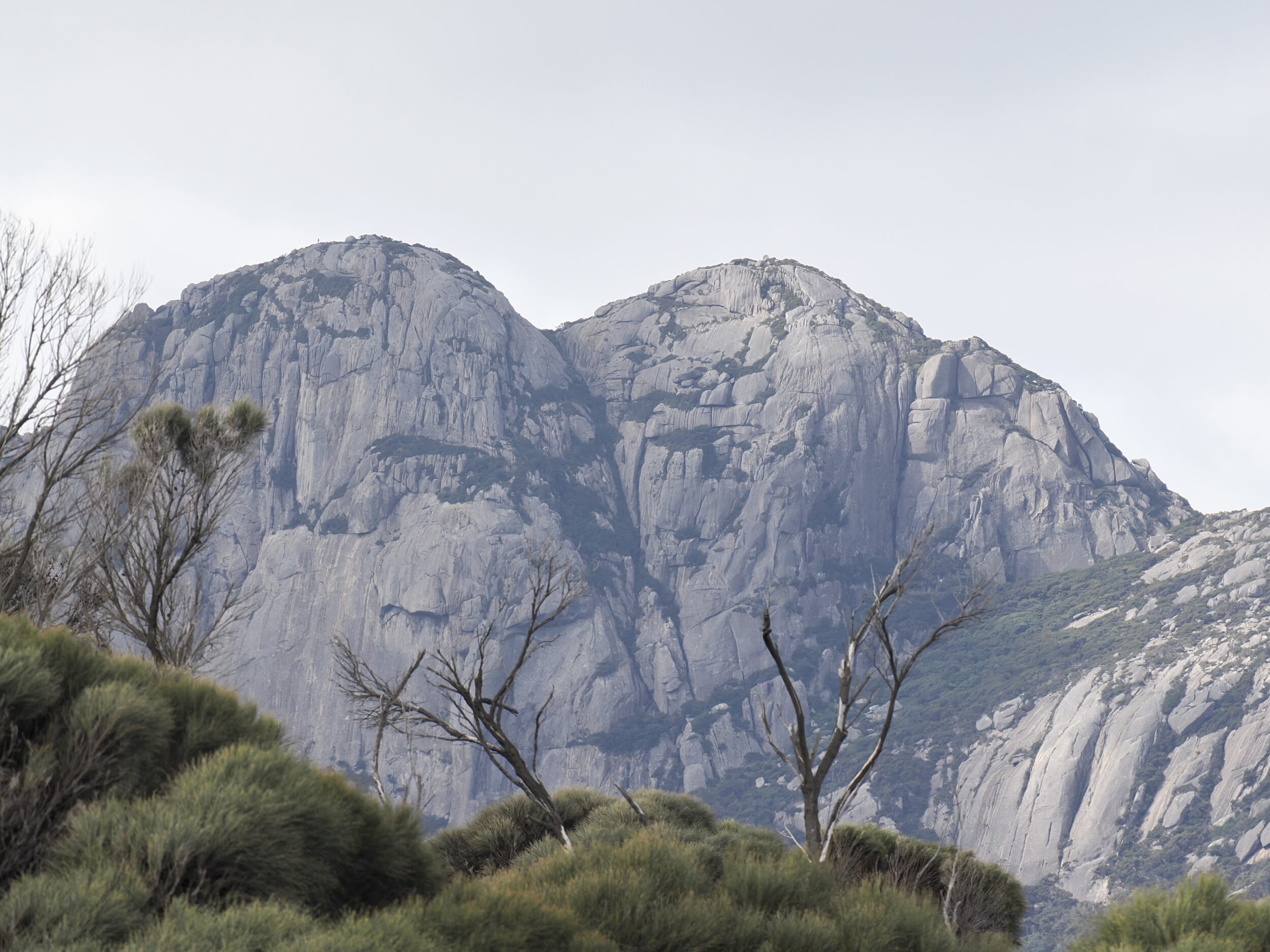
By 2.45 pm, however, our little group was walking under a light grey sky, and heading just a little inland.

It was no longer pointless to point a camera lens at the “roof” of Flinders Island.

Comments closed
Flinders Island, March ‘25 (#3 in series: Trousers Point)


I took this post’s photo an hour or so after we had landed on Flinders Island.

Luggage collected, our little group proceeded to the picnic shelter which is adjacent to Trousers Point Beach.

I am keenly aware that “good” light can disappear or shift, quickly.

So, whilst everyone else started to eat, I ducked down to the shoreline, where I  took the featured image, at 1.49 pm on 17 March 2025,

The island’s most celebrated beach was just behind my left shoulder, with Flinders’ most spectacular peaks rising above it.

The sun, however, was in exactly the “wrong” place –  there was no point in pointing a camera lens at Trousers Point Beach and the mountains.

As you can see, the “lesser view” – looking the other way, working with the available light – was still splendid.

Comments closed

Flinders Island, March ‘25 (#2 in series: spine)


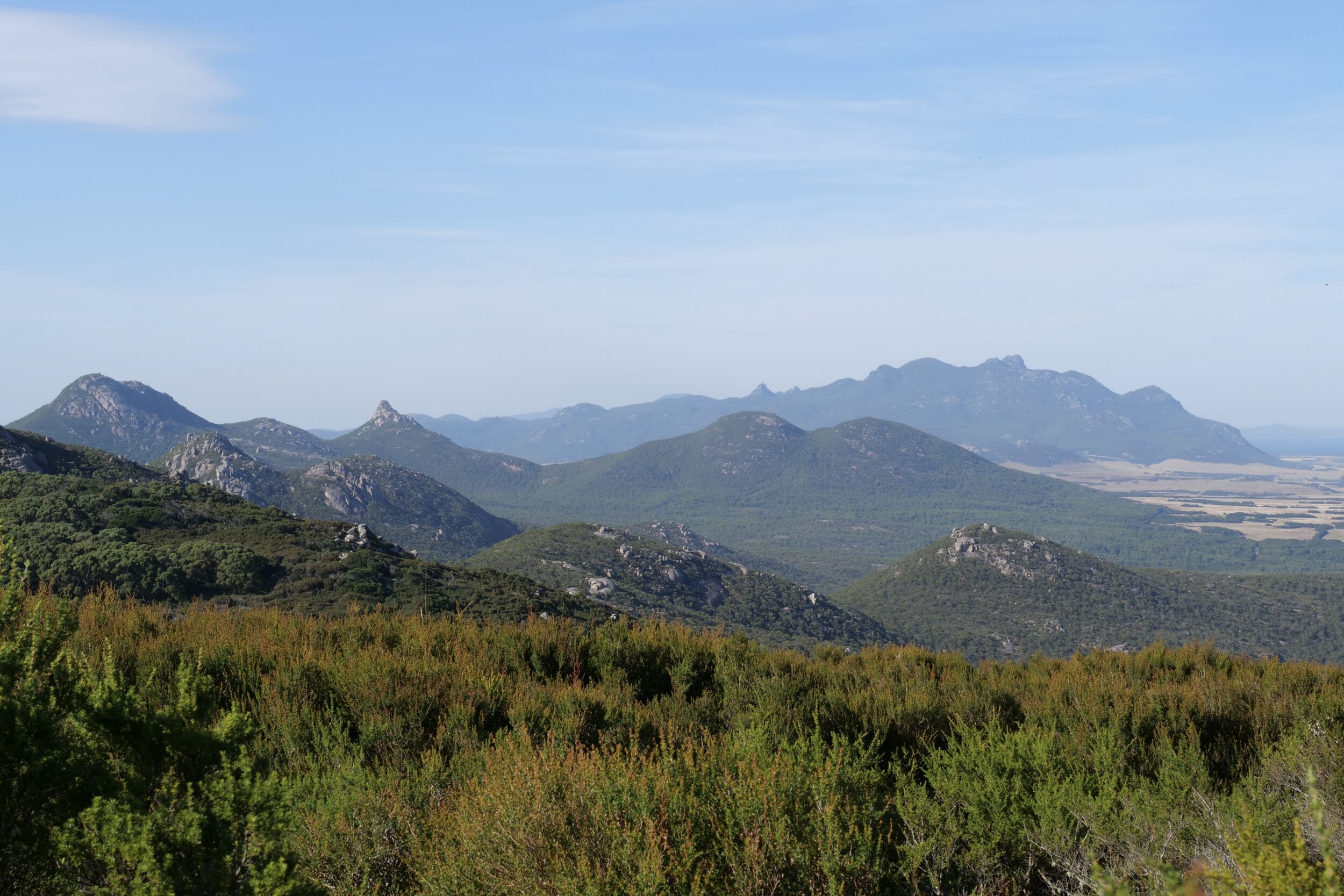
All photos in this post were taken from Walkers Lookout.

(actually, from just slightly below it, which is the better choice, if you are looking south)

Near to the centre of Flinders Island, Walkers Lookout offers sweeping vistas in every direction, as you can see, here.

The best views look south, across the Darling Range and then to the much higher Strzelecki Peaks which dominate Flinders Island’s southwestern “corner”…and define the featured image’s horizon.

Comments closed

Word Power: on the dining room wall at The Missing Goose


The Missing Goose is a cafe/restaurant on Flinders Island, in Bass Strait, north of the northeastern edge of “mainland” Tasmania.

(its Slovenian proprietor/chef rescued an orphaned Cape Barren gosling. She took delight in its return to the wild, but fondly hopes that its adult self may, eventually, choose her venue’s backyard as its nesting site)

Comments closed

Grand sands (#51 in series: “sur la plage” at Goolwa, South Australia)


Vive la différence!

Goolwa does not aspire to be “the Saint-Tropez of the Southern Hemisphere”.

No wannabe “Brigitte Bardot” is ever likely to strut, mince or pout her way along this strand.

“Chic” and “Goolwa” are two words I have never seen or heard within the same sentence.

However, I am sure the “relaxed and contented” index is very much higher on its ocean beach than on any “Riviera” strand.

Comments closed

Grand sands (#47 in series: Lake Eyre Basin [2 of 2] + musical bonus)


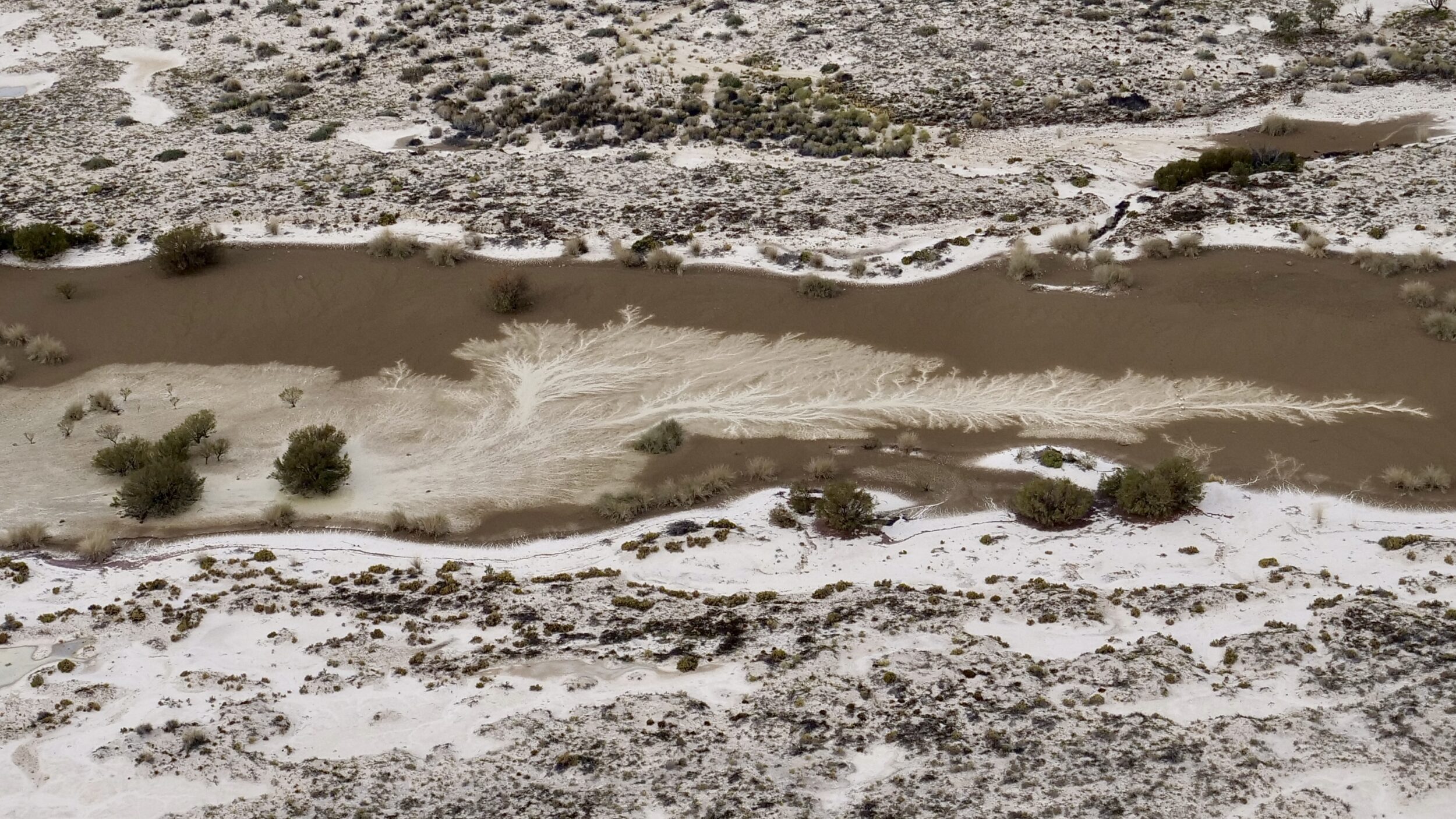
Many millions of years before any words were spoken on “our” planet, it was already being “adorned”, “painted” and “sculpted” by the greatest of all “abstract artists”.

Relative to a human’s lifespan – or an empire’s or a civilisation’s – some of Nature’s creations are “permanent”.

Others are “ephemeral”, even fleeting.

Uluru is “permanent”, a crisp morning’s hoar frost is “fleeting”.

In an arid landscape, the interactions between sand, wind and water can produce particularly beautiful “abstracts”.

Most of these “artworks” are ephemeral or fleeting.

Comments closed

Grand sands (#46 in series: Lake Eyre Basin [1 of 2])


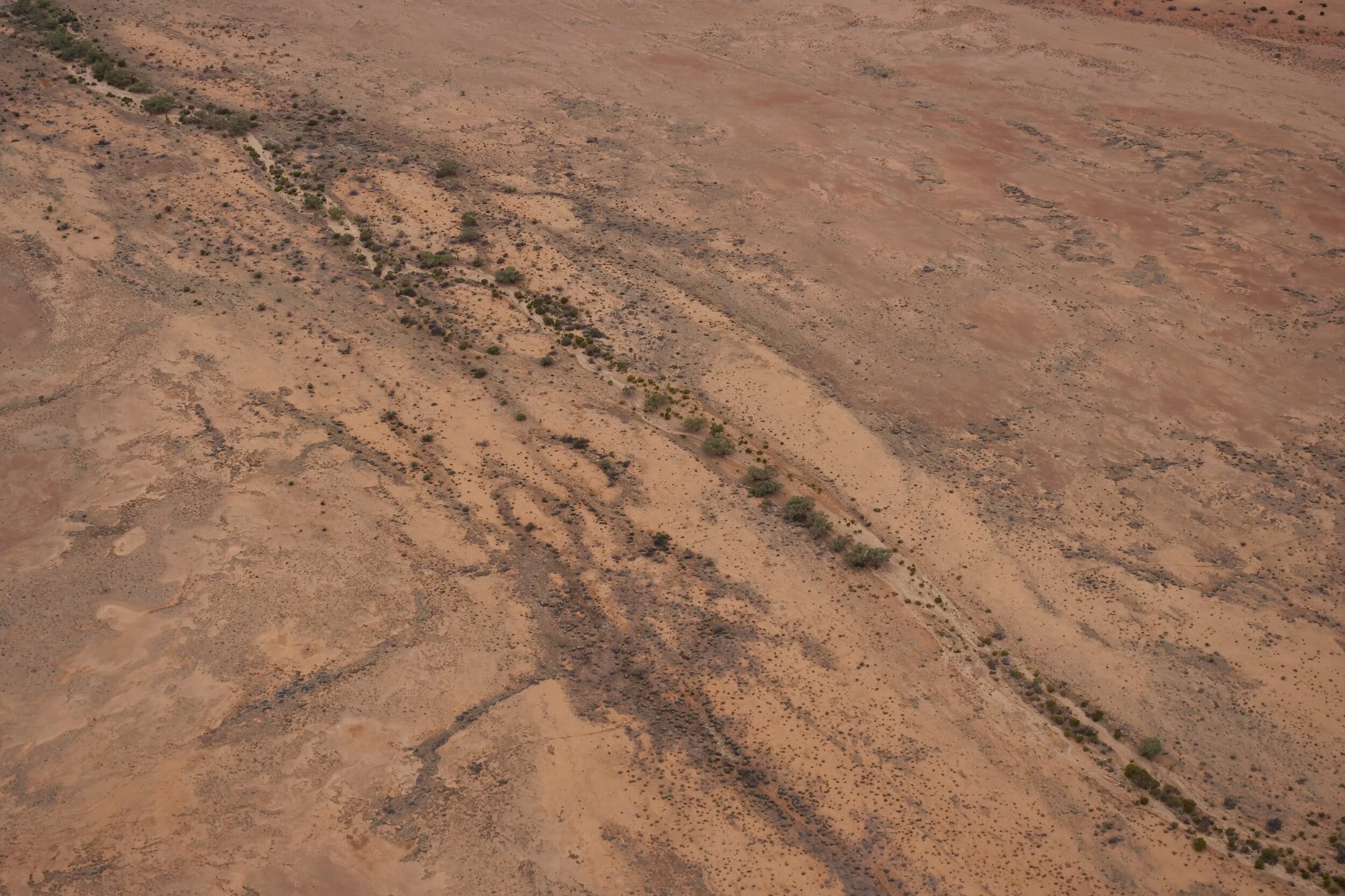
Even a flat, harsh, arid landscape – the kind some humans regard as “ugly” or “boring”, when they experience it only at ground level – is likely to prove “amazing” and “beautiful” to the very same humans, if ever they fly over it.

This “revelation” is very nearly an inevitability if the relevant aircraft flies when the sun is “low”.

One winter morning in 2023 my beloved and I flew over just such a landscape – the one in which sits Australia’s most extensive lake.

Comments closed

Grand sands (#45 in series: idyllic beach, sans ocean)


Desirable qualities in a beach:

1. A glorious, entirely natural setting, not ruined by “development”.

2: Uncrowded, clean sand.

3: Unpolluted water in which to swim.

4: An abundance of sunshine and shade.

5: A location within two hours’ 2WD driving distance of comfortable accommodation and decent dining.

In this instance, all five qualities are present, notwithstanding the fact that the nearest ocean beach is more than 1,5000 kilometres away.

Comments closed

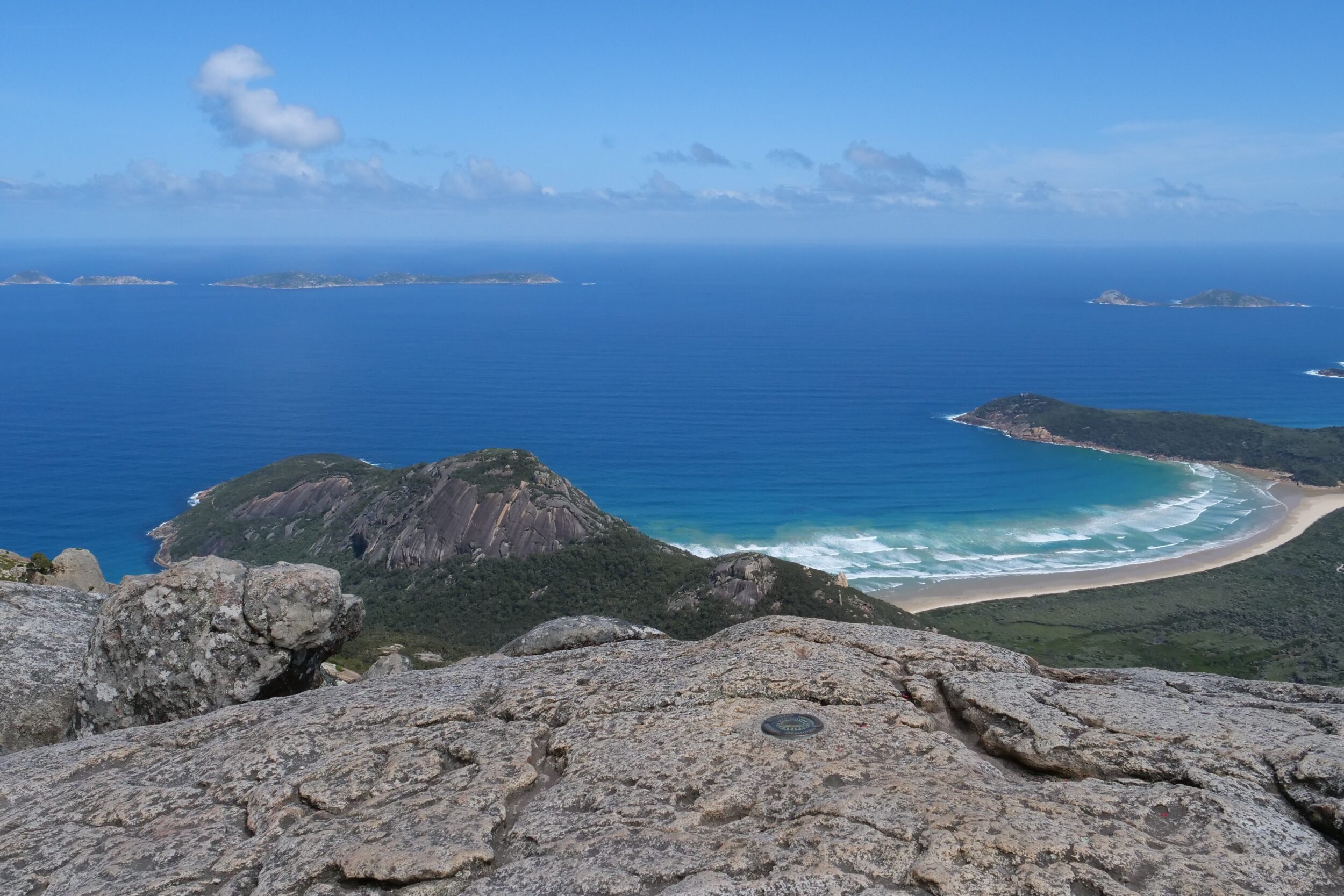
Grand sands (#44 in series: on “The Prom”, looking down from Mount Oberon)


Wilsons Promontory is as far south – 39°00′48″ – as mainland Australia goes:

Its “convenient” location – a whisker more than 200 ks southeast of Melbourne  – ensures that a great many people do go to “the Prom”.

Still, if one avoids weekends and school holidays, and one gets more than a kilometre away from the National Park’s hub/quasi-town at Tidal River, one’s  “Prom” experience is unlikely to be afflicted by overcrowding.

Its magnificence is readily apparent, substantially intact, and there are many excellent and varied walking trails.

Both of this post’s photos were taken from the summit of Mount Oberon, 558 metres ASL

Comments closed

Grand sands (#34 in series: “looking down” on Aldinga Beach)

This post’s photo was taken shortly before sunset, at 8.11 pm on 21 January 2023.

Near the southernmost kink in Aldinga Beach’s Lower Esplanade, I was standing on the top of the stairs to Silver Sands – the southern section of Aldinga’s long strand.

As had been true at the same time on the previous day, a cooling breeze was blowing.

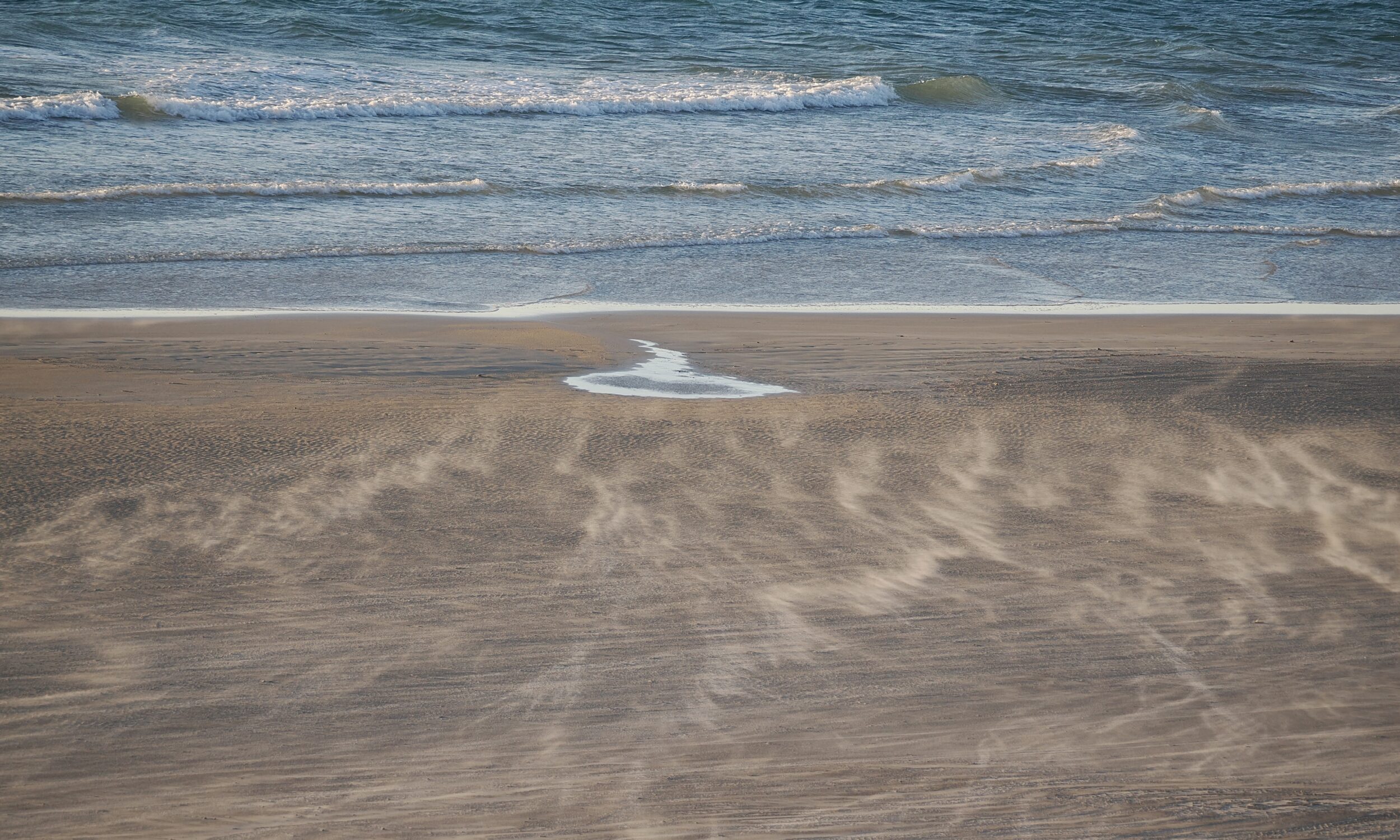
Accordingly, sandgrains were dancing;  click here to see a photo, taken at beach level, with a wide-angle (24 mm) rather than a telephoto (146 mm) lens.

Comments closed