Skip to content →

Category: Western Australia

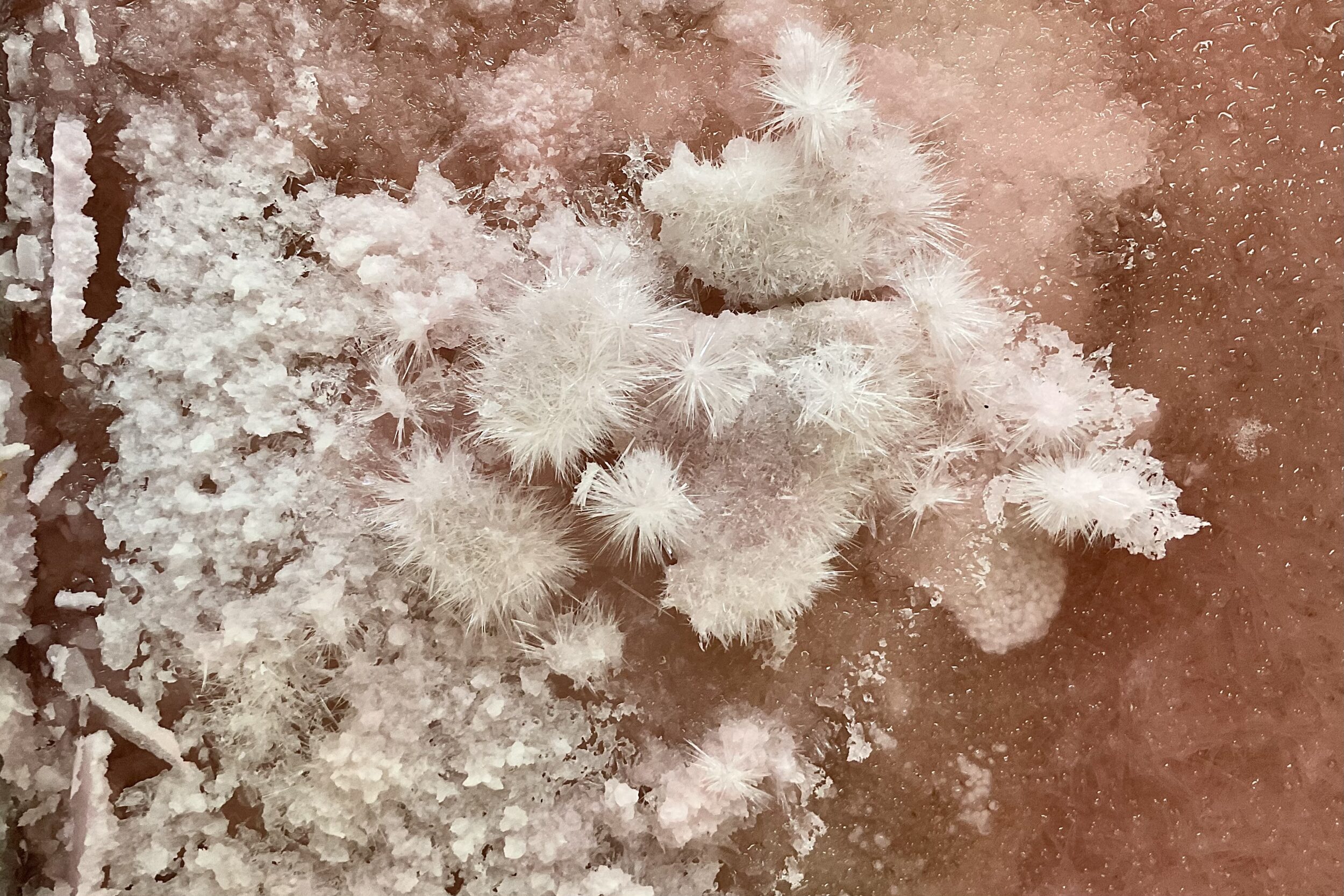
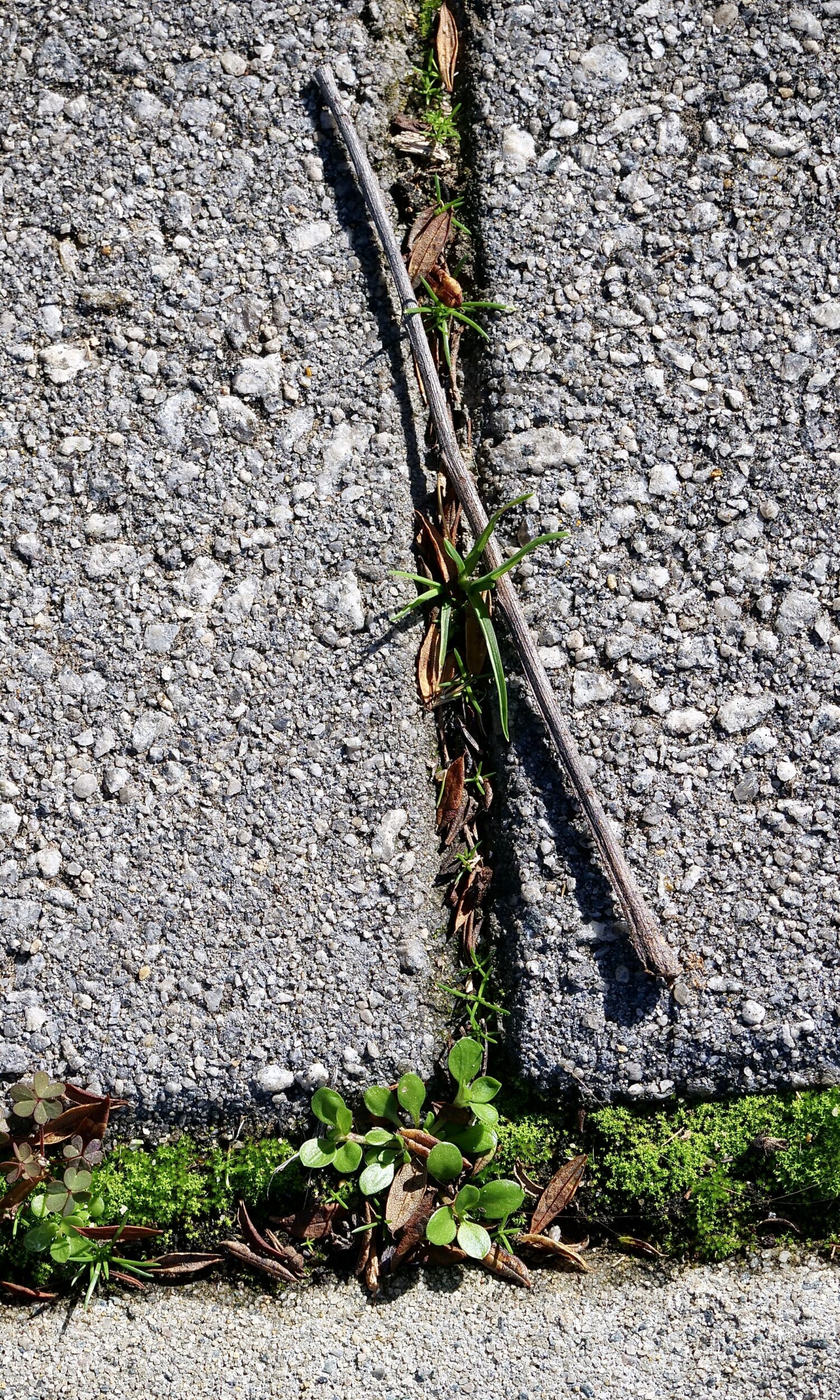
Looking down (#22 in series) at a Perth footpath, in winter


The West Australian Perth is enormously bigger, much hotter, and very much sunnier than the Scottish Perth.

”Surprisingly”, the Australian city’s average annual rainfall is only moderately lower, although its rain falls on (mostly, straight through) nutrient-poor sand rather than fertile, moisture-retaining Scottish soil.

The Australian Perth is also one of the world’s windiest cities, and almost all of its rain falls quickly, in winter.

In summer a Perth (WA) pedestrian who looks straight down at a footpath will usually see only “lifeless” sealed/paved surfaces, edged with bare sand.

In a “proper” winter, however….

Leave a Comment
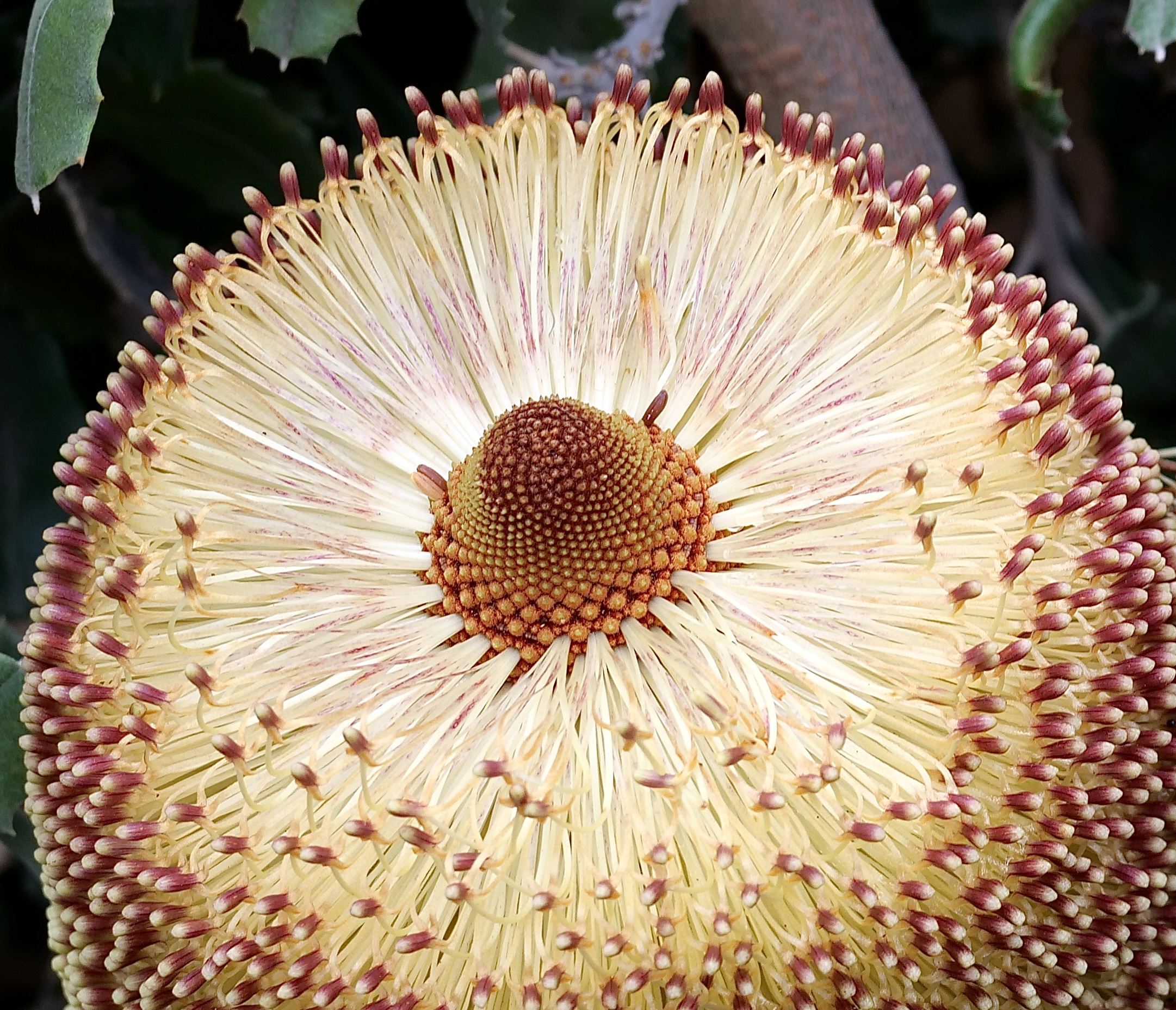
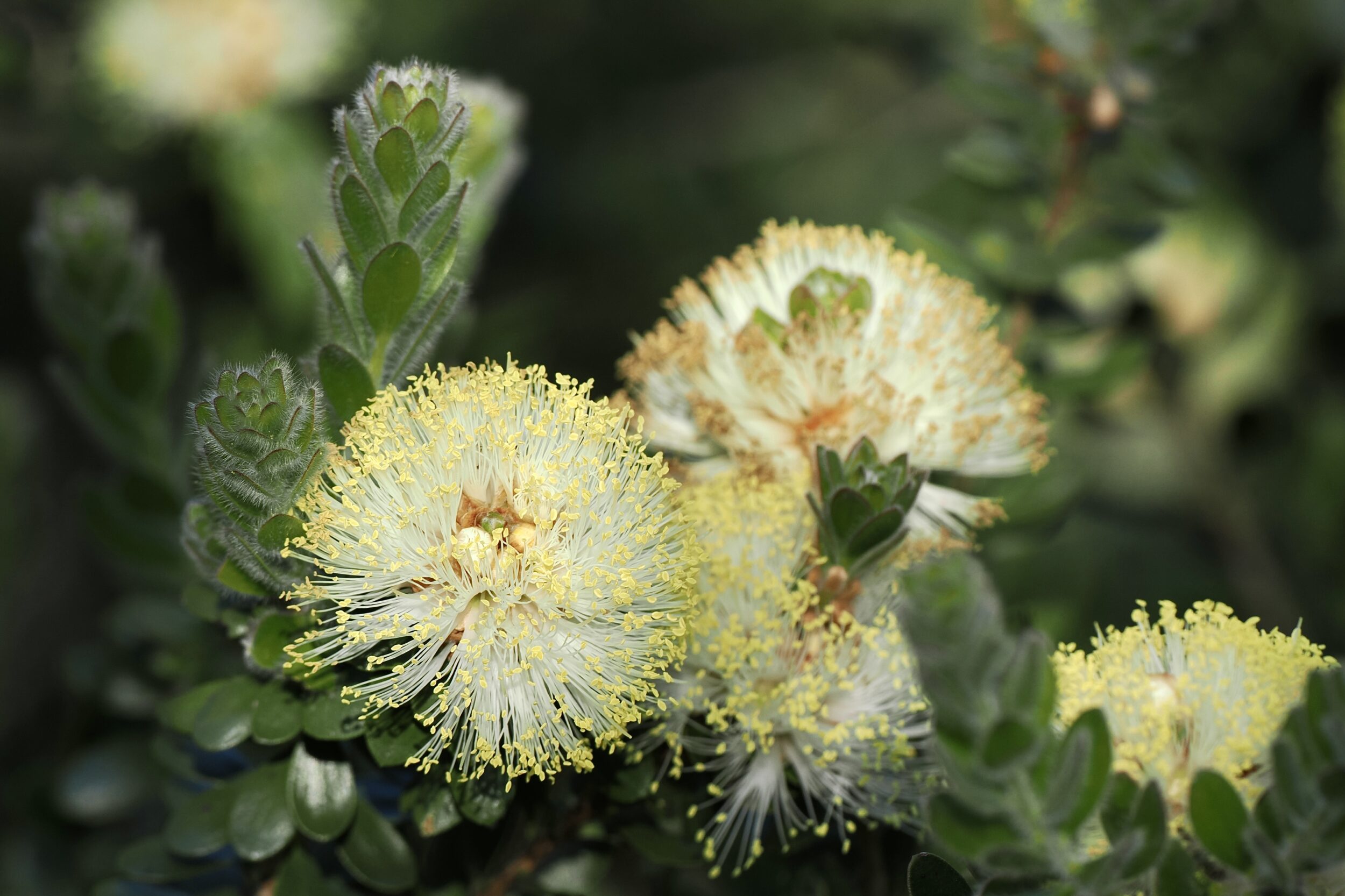
Looking down (#20 in series) on a Banksia


Membership of the genus is hotly debated – should Dryandras be included, or not? – but, however defined, Banksias are extraordinary plants.

These members of the Protea family are unique to Australia.

The overwhelming majority naturally occur only in certain parts of Western Australia’s southwest.

Depending on when one encounters it, a banksia’s flower spike can be prodigiously shaggy, “untidy”, and drab…. or a glorious example of perfect symmetry, Fibonacci sequences, and subtle colouration.

Each flowering “spike”/“cone” bears many – sometimes, several thousand – individual flowers.

I particularly love the appearance of some banksia flower spikes when viewed from directly above.

Leave a Comment

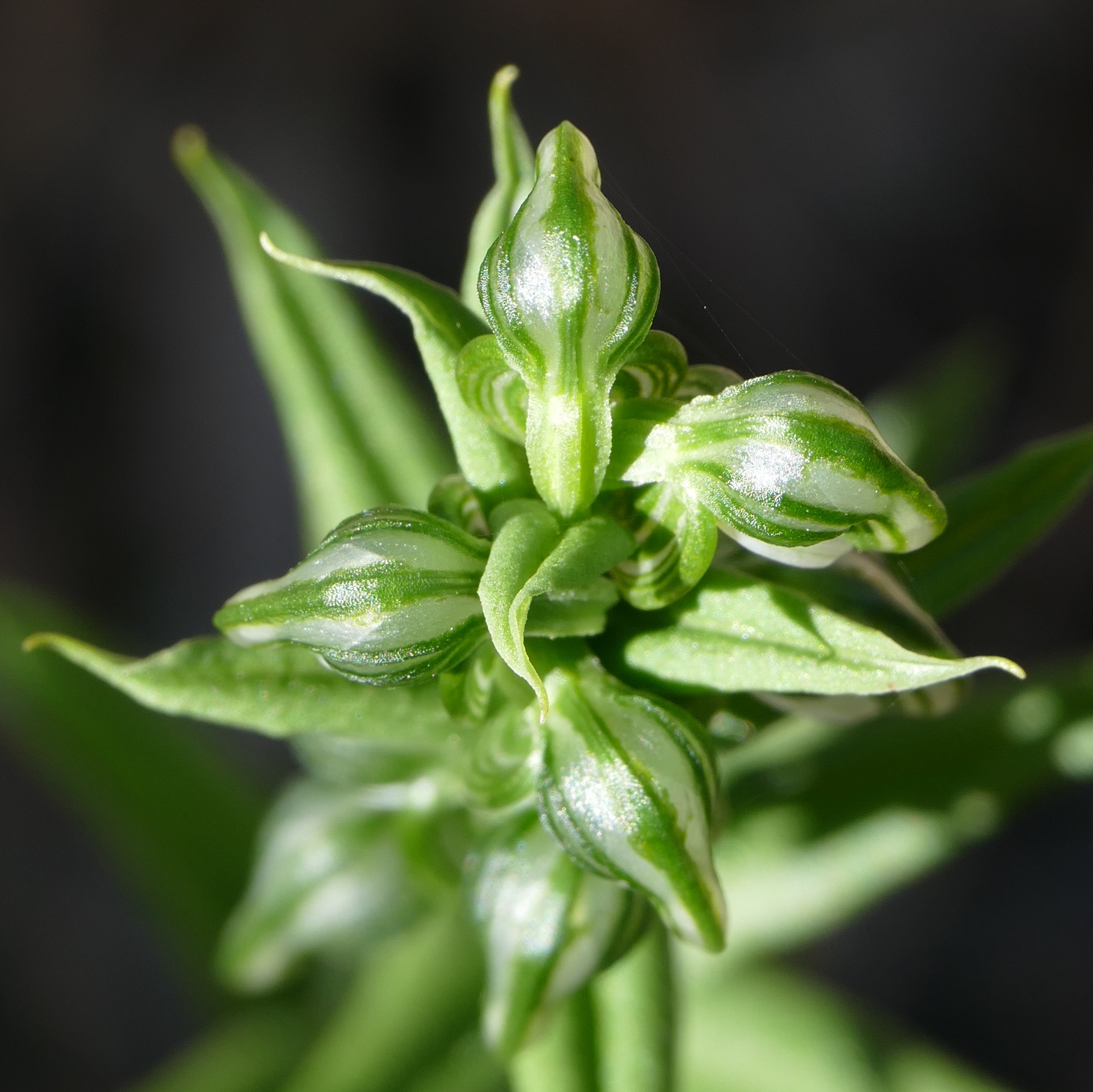
Looking down (#19 in series) on winter-flowering WA orchids)


Generally, with flowers, the best strategy is as per the generally-best approach to photographing people and most other living subjects….

1: try to be in (or very near to) the same horizontal plane as your subject.

2: point the lens straight at its eye/s or “face”.

3: ideally, do this when the sun is low, and behind you –  nicely illuminating the subject rather than turning it into a black silhouette or a mere scatteration of light.

Sometimes, however, the better plan – or at least, something worth trying – is to flout some or all such rules.

This post’s image looks straight down at the top of its subject, in “poor” light, in the middle of a winter day.

Leave a Comment

Looking down (#12 in series…on Australia Day)


As you probably know, on Australia Day 2026 circa 2,500 people took part in an entirely peaceful “Invasion Day” rally/protest in Perth’s Forrest Place.

Adjacent to Forrest Place, and overlooking it, is Forrest Chase’s elevated walkway – from which an IED (improvised explosive device) was hurled.

Had it worked as intended, the probable consequence would have been multiple injuries…perhaps, fatalities too.

By virtue of the bomb-throwing occurring in Perth, rather than in Sydney or Melbourne – and the bomb’s failure to detonate – Australia’s Sydney-centric, so-called “national” media were regrettably but predictably slow to grasp the seriousness of this profoundly disturbing incident.

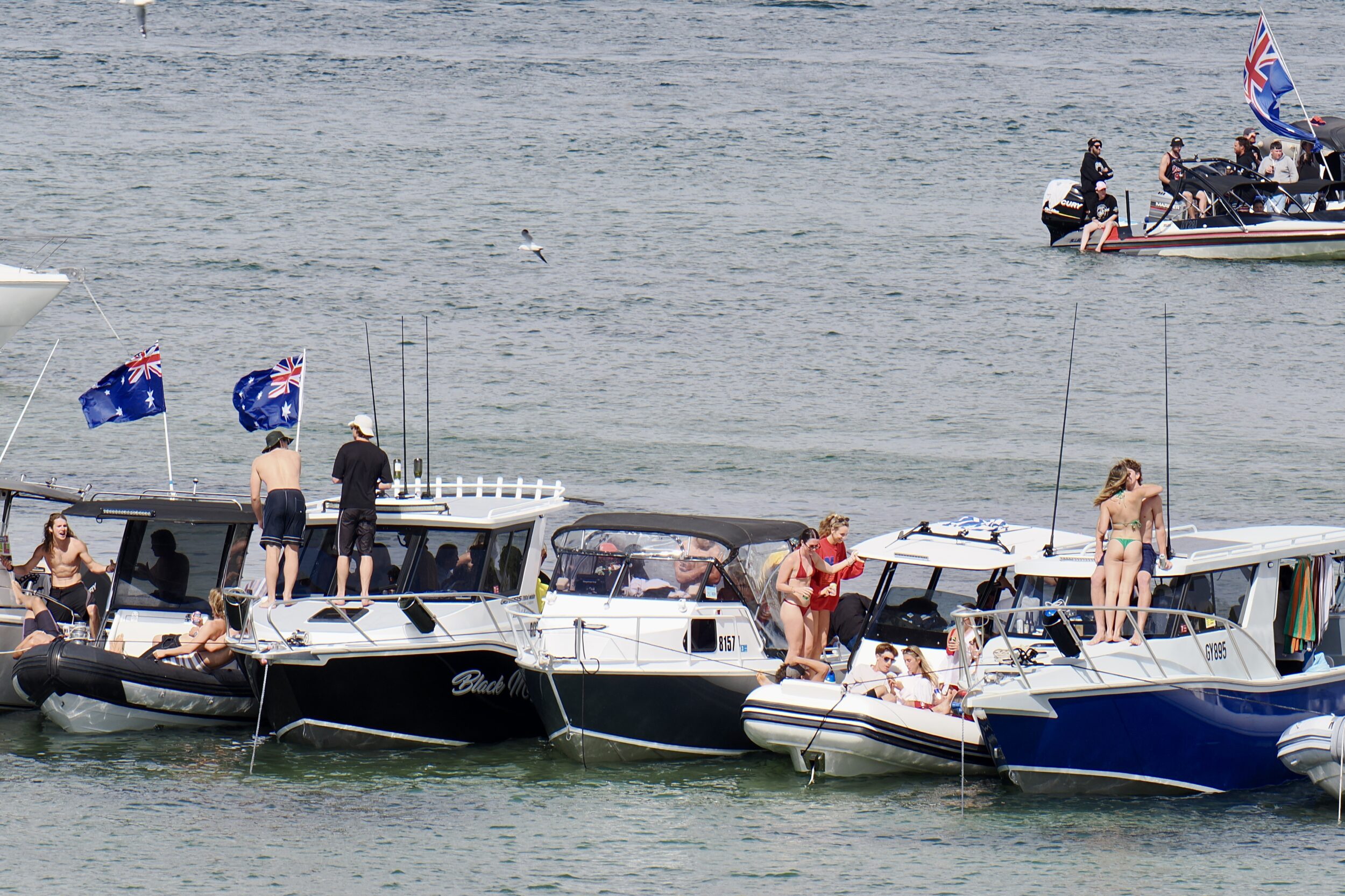
Meanwhile, that afternoon, my beloved and I were blissfully ignorant of what had happened, as we enjoyed a long walk along the Rocky Bay cliff line, above the Swan River.

The waters immediately below the North Fremantle cliffs (where river and ocean are  separate, but very close to each other) were thronged with Australia Day revellers, and many millions of dollars worth of boats.

Goodwill abounded.

Leave a Comment

Seasonal Greetings, with appropriate “decorations”


Pelican Yoga
wishes you all a happy and safe festive season.

You may imagine that the pictured “decorations” involve snow and ice, either directly or as inspiration source, and that they express nostalgia for – or romantic notions about – the “properly Christmassy” Decembers of Santa’s homeland, deep in the northern hemisphere.

If so, you would be wrong on all counts!

Comments closed

Signage & Signification: (#1 in series: “Thou shalt not..”)


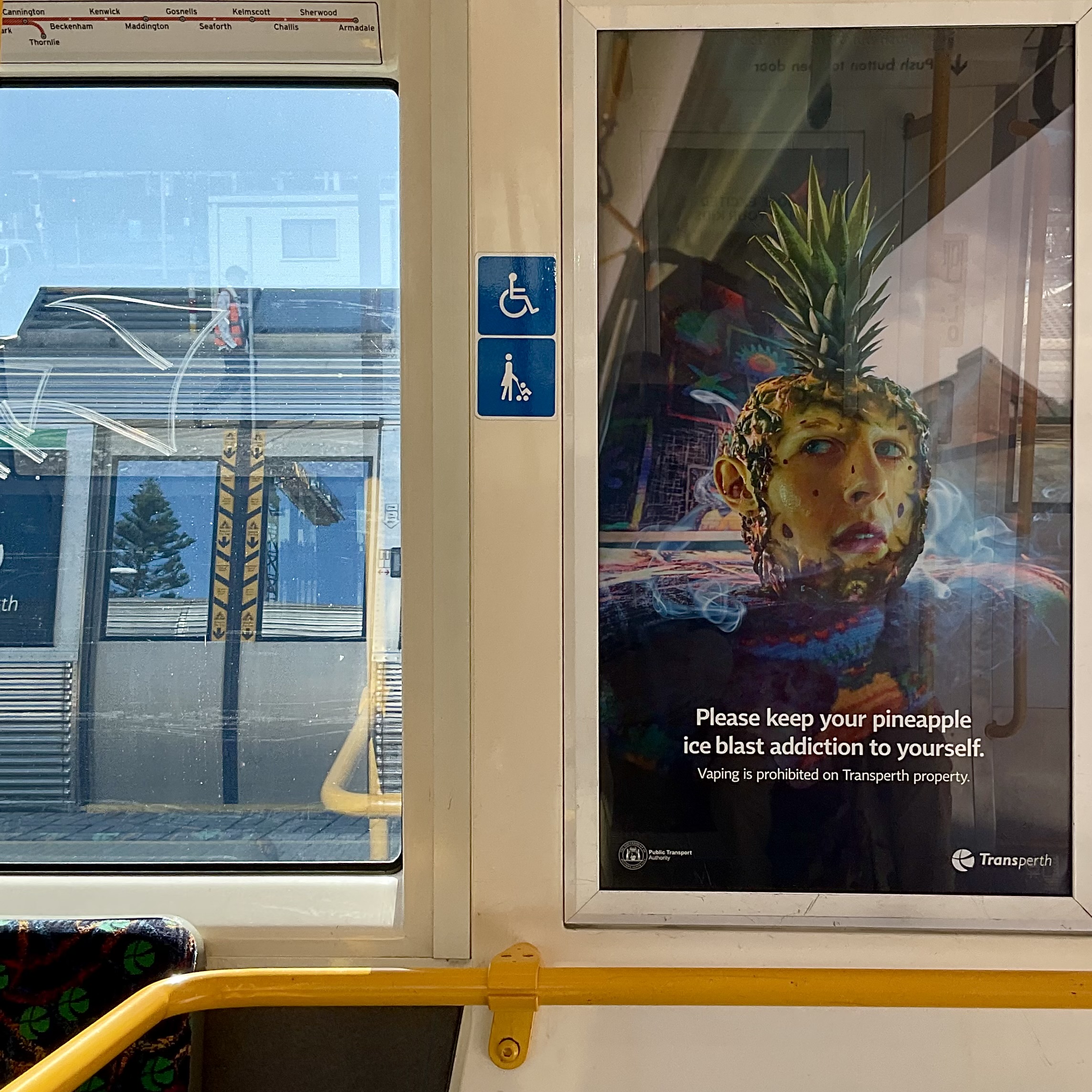
Typically, signs of the “Do not…”/Strictly prohibited…” kind are dull and stern.

Rarely does one encounter even a failed attempt at humour.

So hats off to Transperth – the Perth (Western Australia) public transport authority – and to whomever won the advertising contract for the “no vaping on trains, buses, ferries and their stations” campaign!

Comments closed

Spring 2025 in Perth ( final in series: late afternoon delight)


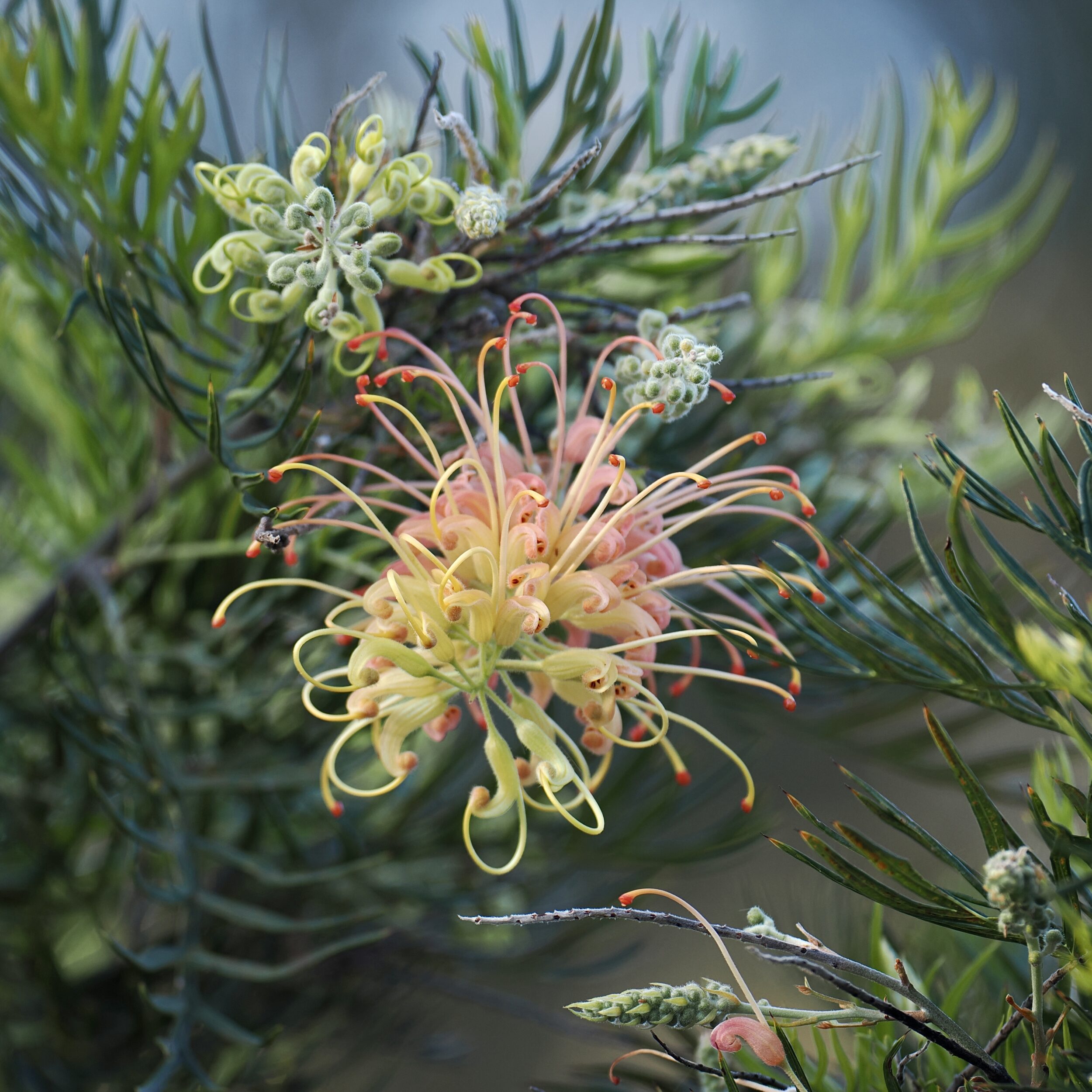
For wildflowers – most especially if one is photographing them – intensely bright sunshine is definitely NOT the “best” kind of light.

In the middle of the day, a lightly overcast sky is likely to prove a much better friend to a wildflower photographer – or to your naked eyes –  than an intensely bright blue sky.

Generally, if you wish to capture a wildflower’s full natural beauty, the ideal circumstance is soft, late afternoon light.

This post’s hero was photographed with a longish (400 mm) lens in just such light,  on 29 September 2025, in Perth’s Karrakatta Cemetery.

Comments closed

Spring 2025 in Perth (#20 in series: UFO in Hollywood)


Full disclosure: I do not know the name of the featured plant; in this instance the “UFO” is an “unidentified flowering organism” – unidentified by yours truly, at least.

The relevant “Hollywood” does sit within a wealthy city, but not in L.A.; Perth’s Hollywood Reserve is adjacent to the “far end” (i.e. furthest distant from main entry) of Perth’s Karrakatta Cemetery.

i think that this post’s hero is a member of the Proteaceae Family.

Comments closed

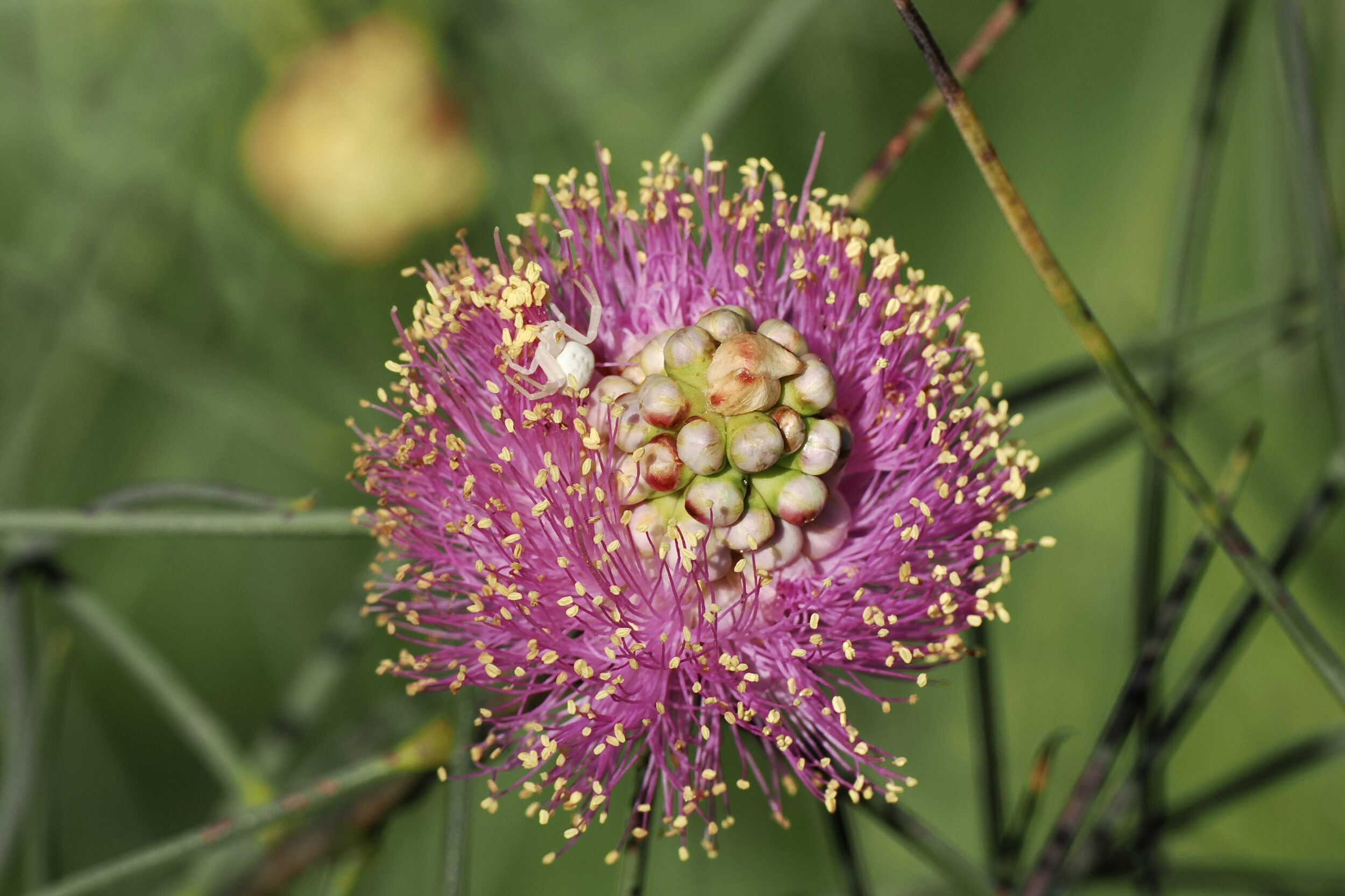
Spring 2025 in Perth (#19 in series: “inhabited” flower head)


This post shows the same species of flowering plant as in #18.

The location is only a few footsteps distant, and just three more minutes had passed.

This flower head, however, has a resident, venomous, ambush predator.

S/he is a member of the Family Thomisidae, which includes the “flower spiders” (aka “crab flower spiders” or “crab spiders”. “Crab spiders” is an umbrella term which also includes Thomisdae members who do not inhabit flowers/flower heads)

Comments closed

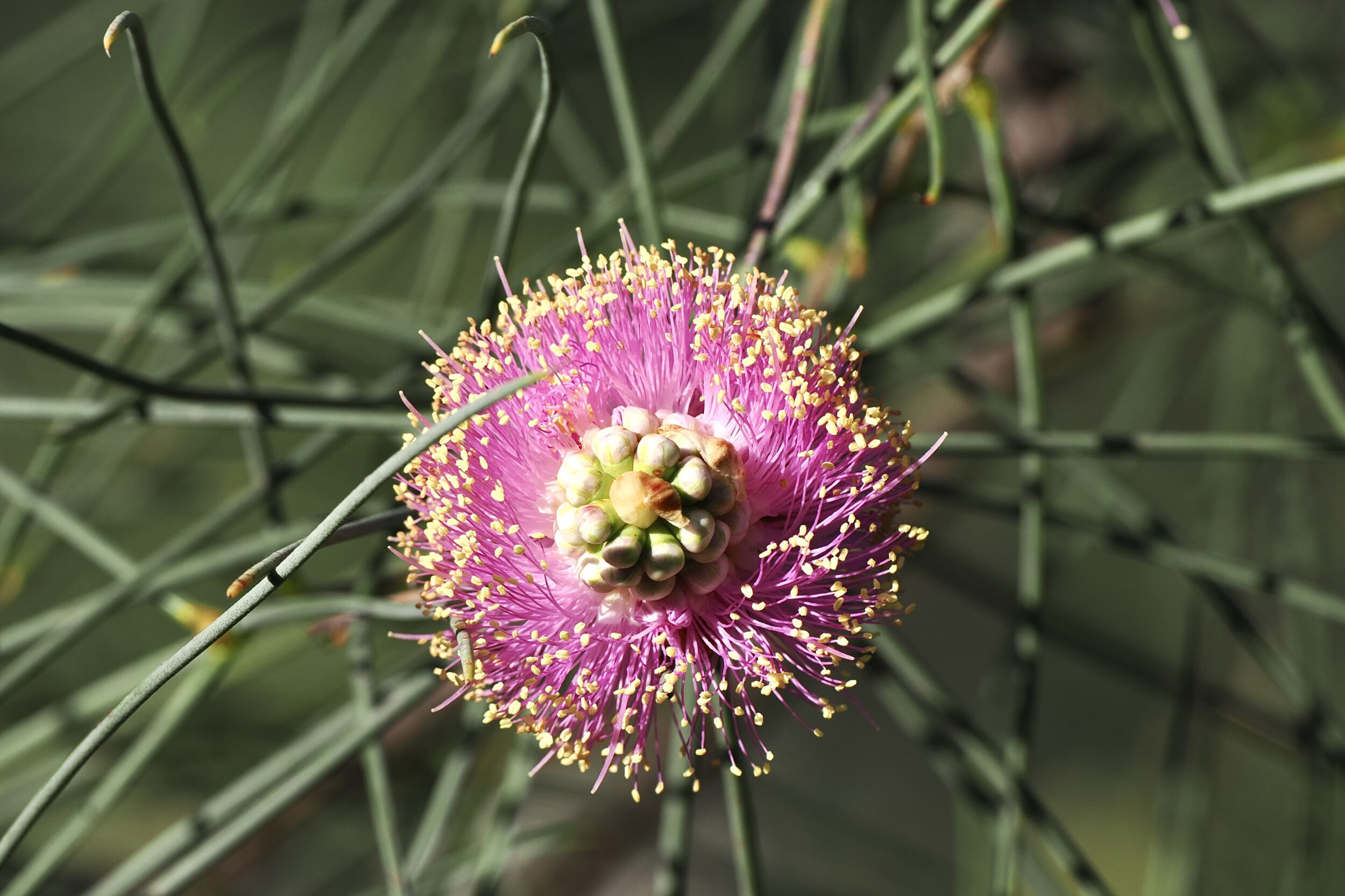
Spring 2025 in Perth (#18 in series: “uninhabited” flower head)


You are looking at the flower head of one of several Melaleuca species that are commonly known as “honey myrtles”.

The Melaleuca genus has more than 300 members, most of them endemic to Australia;  it also includes all of the bottlebrushes and paperbarks, plus some of the so-called tea-trees.

The genus is part of the Myrtle family.

I am pretty sure that the picture shows Melaleuca nesophilaa WA-endemic which naturally occurs only in the Albany-Esperance region.

It is however, a popular garden plant, commonly found in Australian gardens and parks.

Comments closed