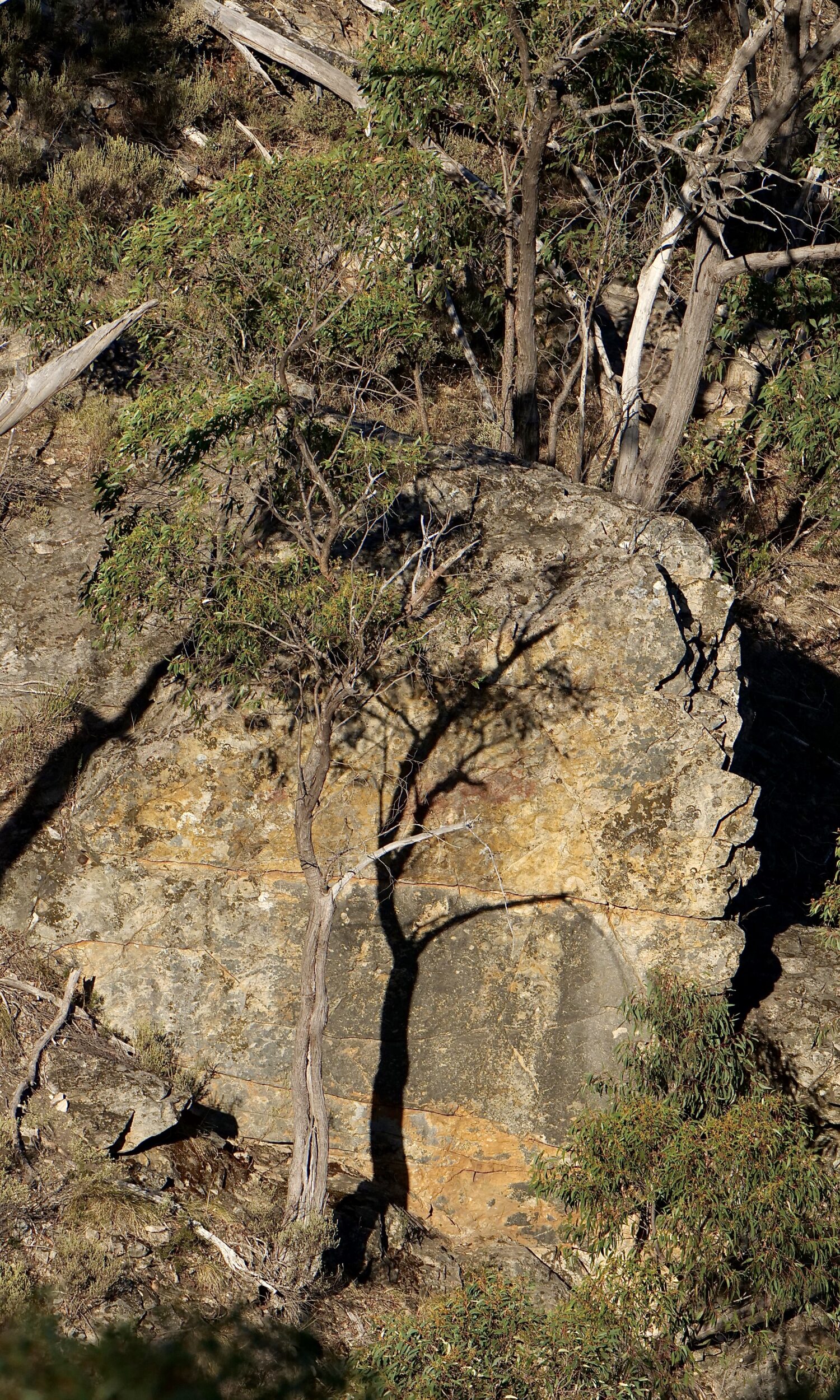
This sequel to #10 in this series looks down into the actual gully in Spring Gully Conservation Park.
Its own website explains the Park’s raison d’être:
Spring Gully Conservation Park was set aside to conserve the westernmost population of the red stringybark Eucalyptus macrorhyncha. This park is the only reserve in South Australia to contain this particular species.
Alas, Spring Gully’s “hero” species is now in serious trouble in its sole South Australian “refuge”.
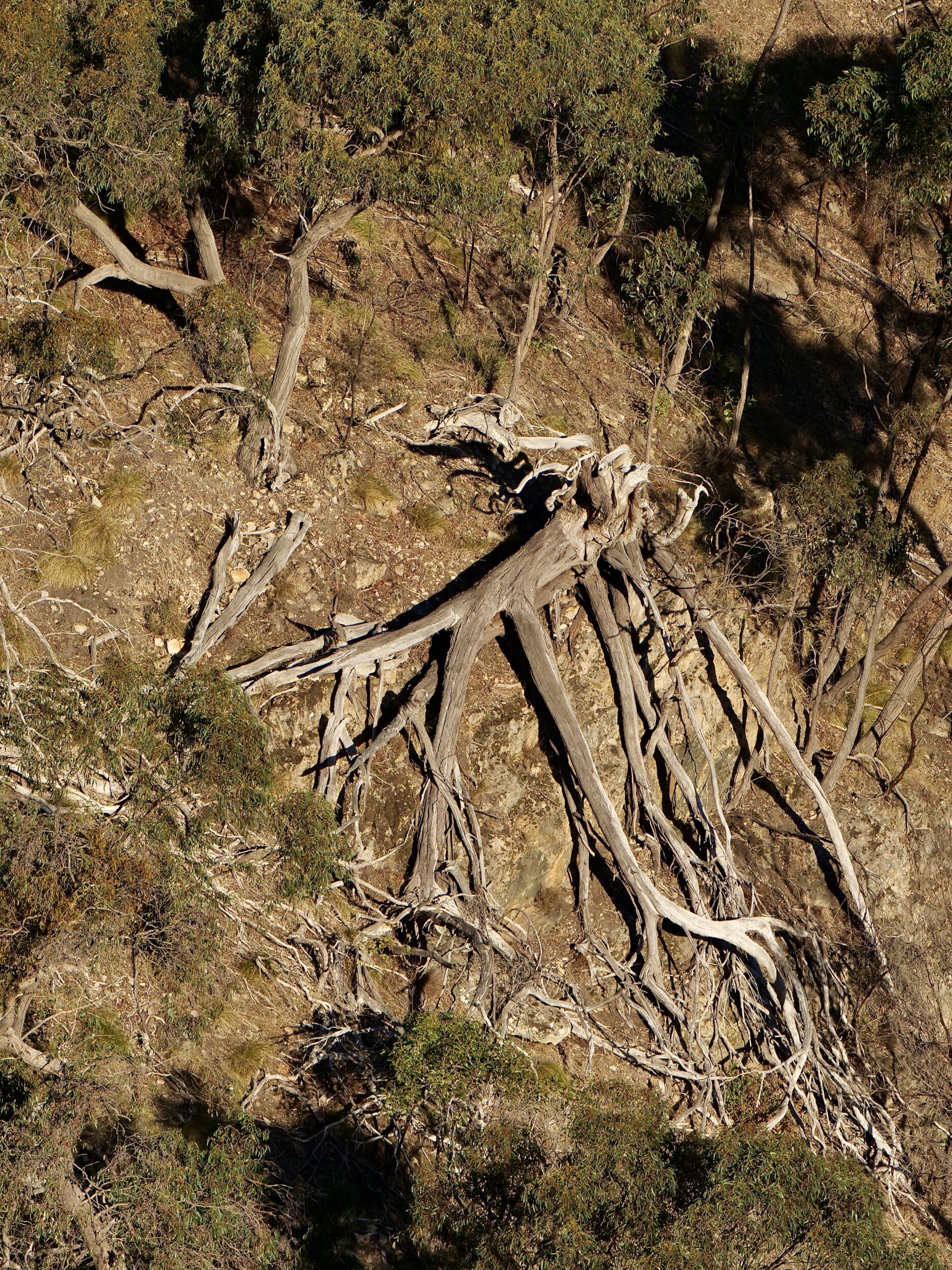
The amount of dieback recorded by our surveys is staggering (Fig. 2). More than 40% of all trees (Fig. 3) and of the above-ground biomass have been lost. The total amount of biomass lost is around 250 tons per hectare. In areas that experienced complete mortality, drooping she-oaks (Allocasuarina verticillata) remain as the only trees (Fig. 2), suggesting that the red stringybark ecosystem could be in the process of being replaced by a more open drooping she-oak woodland.
The italicised paragraph, published in April 2023, is from a brief summary of research undertaken by a team drawn from two South Australian universities, the State Herbarium, and Adelaide’s Botanic Gardens.
Its headline asks – but cannot yet answer – the key question:
Dieback of Eucalyptus trees: end of the line or holding on for a new beginning?
Comments