In global terms, Australia’s major cities – Perth, most especially – are surprisingly rich in “wild”-ish, “bushy”, quasi-“natural” locations.
They are not all in parks and reserves.
Some are just a few square metres apiece – vibrant, tiny “Islands” within an otherwise-stolid “sea” of cement, asphalt, lawns, graceless buildings, etc.
#5 in this series focused on a spectacular WA-endemic flowering species which flourishes, right beside Shenton Park railway station.
Shenton Park is an affluent inner suburb; by train, the heart of Perth’s CBD is less than 10 minutes away.
#6’s vantage point was just a couple of footsteps distant from #5’s, also on the “to Perth” side of Shenton Park station, late in the afternoon of 26.09.2025.
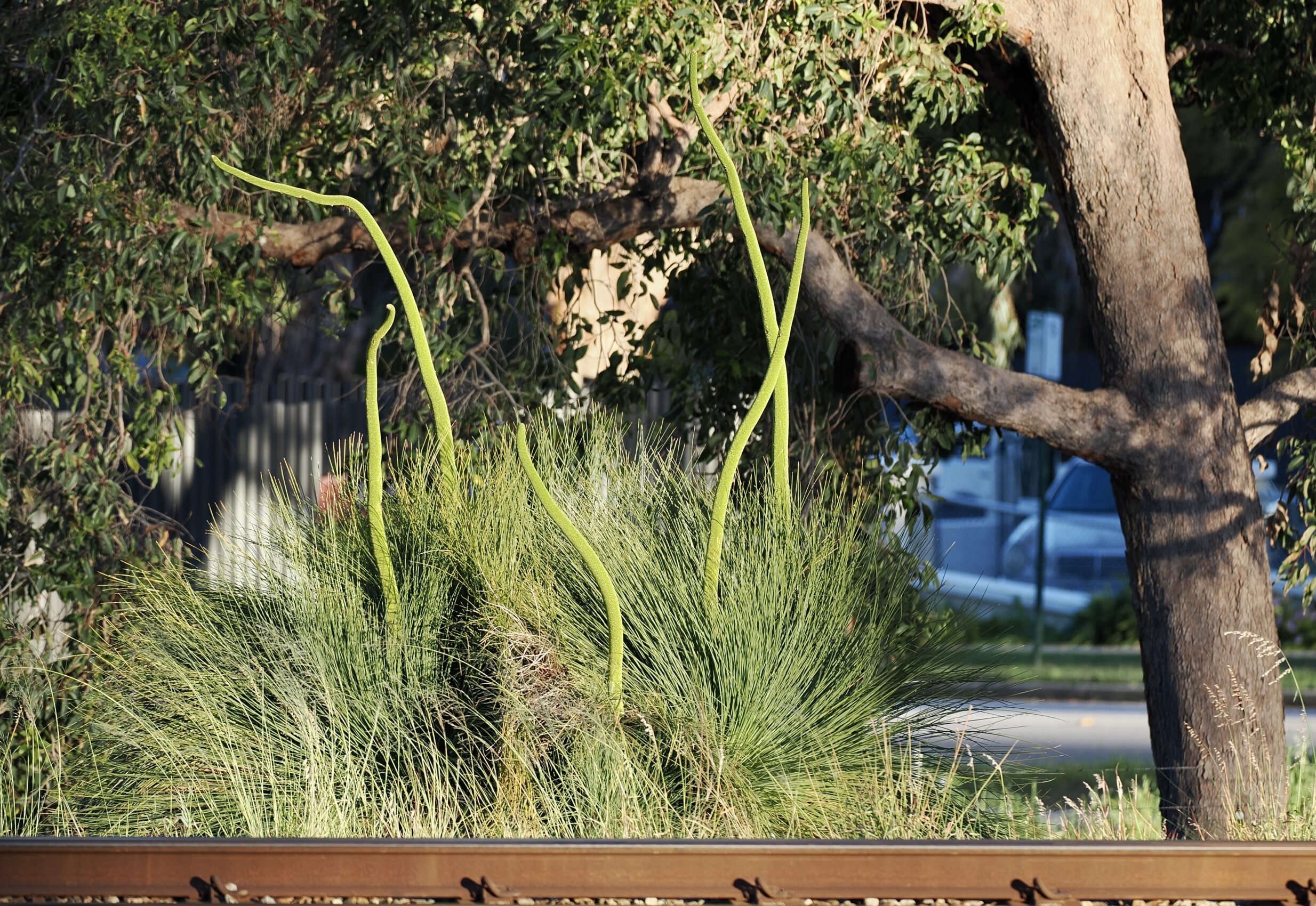
For this post, however, my camera looked to the tracks’ other side, and focused on what was growing beside the “to Fremantle” rails.
Every day, many Shenton Park commuters walk or cycle by, within touching distance of Acorn banksias and various other WA-endemic flowering plants.
On both sides of the tracks, thousands of motorists glide by them.
The featured image’s “heroes” are the flower spikes (pre-flowering) on a member of the Australian endemic genus, Xanthorrhoea.
These so-called “grass trees” are neither grasses nor trees.