Most Australian humans regard willie wagtails (Rhipidura leucophrys) fondly and encounter them frequently.
They are also well-liked in the rest of their range – Melanesia and eastern Indonesia.
On 21 September we – and circa 100 other people – enjoyed lunch at a popular Shenton Park eatery.
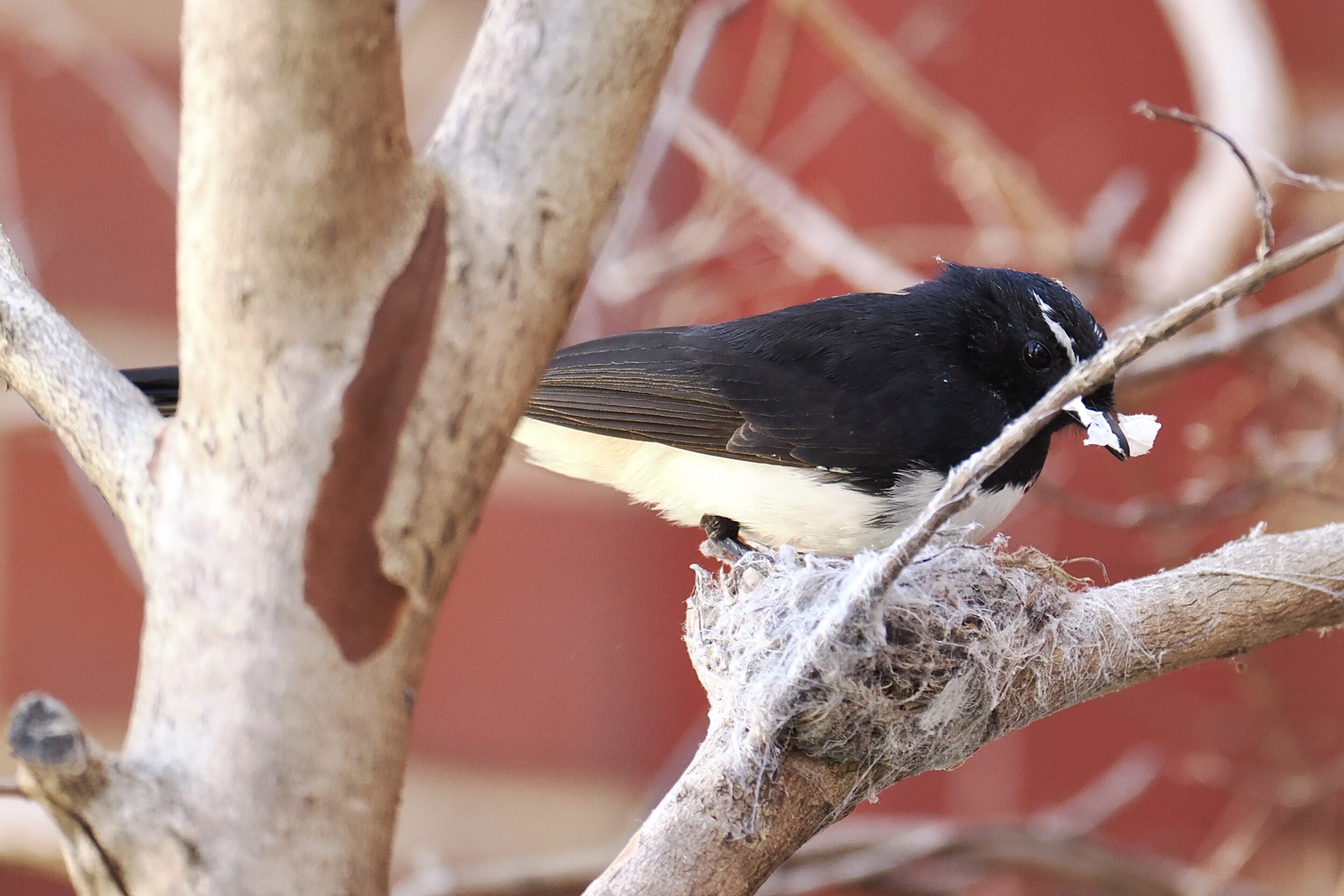
From our almost-outside table, just inside an open door, we watched two very industrious wagtails construct a substantial portion of their next nest.
To say the least, their choice of building materials was highly eclectic!
In the featured image, one of the nest-builders has a piece of paper in his or her beak.
Invariably, spider webs provide much of a wagtail nest’s structural strength and “binding”.
Otherwise, the list of “suitable” materials is remarkably varied: all manner of mammalian hair or fur, threads/fibres of almost any kind, fabric scraps, leaf litter, fine twiggy bits, down, wool – even alpaca wool – may be deployed to make a snug, warm but ventilated “nursery”.
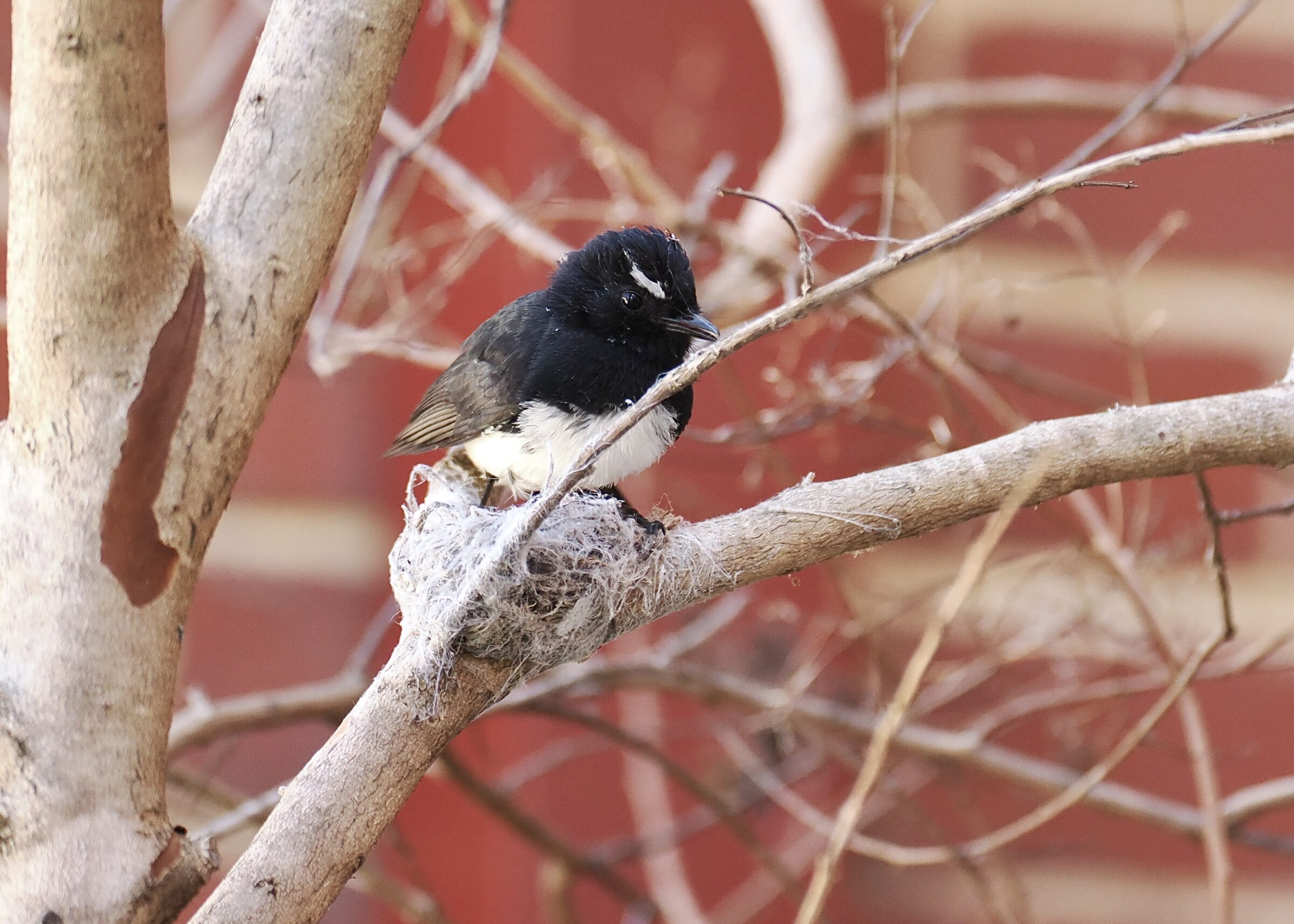
Willie wagtails are hyper-territorial, very aggressive, seemingly-fearless and highly adaptable.
I have twice witnessed a wagtail “take on” a wedge-tailed eagle; in both cases the wagtail won.
Ravens “defeat” most other birds whenever conflict arises, but not willie wagtails; as I have observed countless times, the wagtail always wins.
Their persistence is unrelenting, their “beakmanship” astonishingly accurate.
A happy consequence of such precision beak-work; if a willie wagtail trusts you enough to eat out of your hand, you need have no fear – its beak will inflict zero pain.
They are not at all closely related to the “wagtails” of the so-called “Old World”.
Willie wagtails usually pair up for life and are prolific breeders; between July & December they may raise up to four broods.