Skip to content →

Tag: banksia

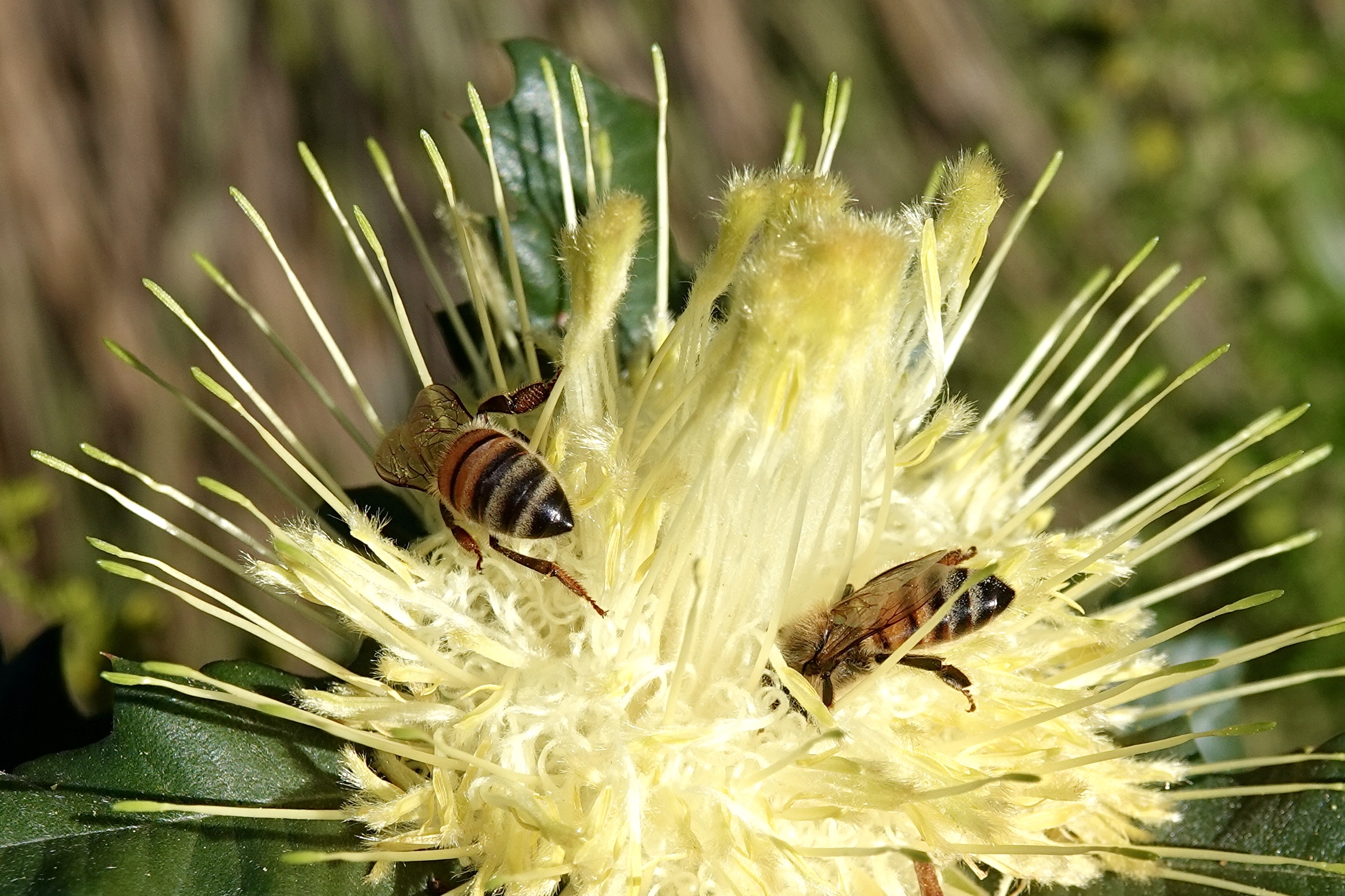
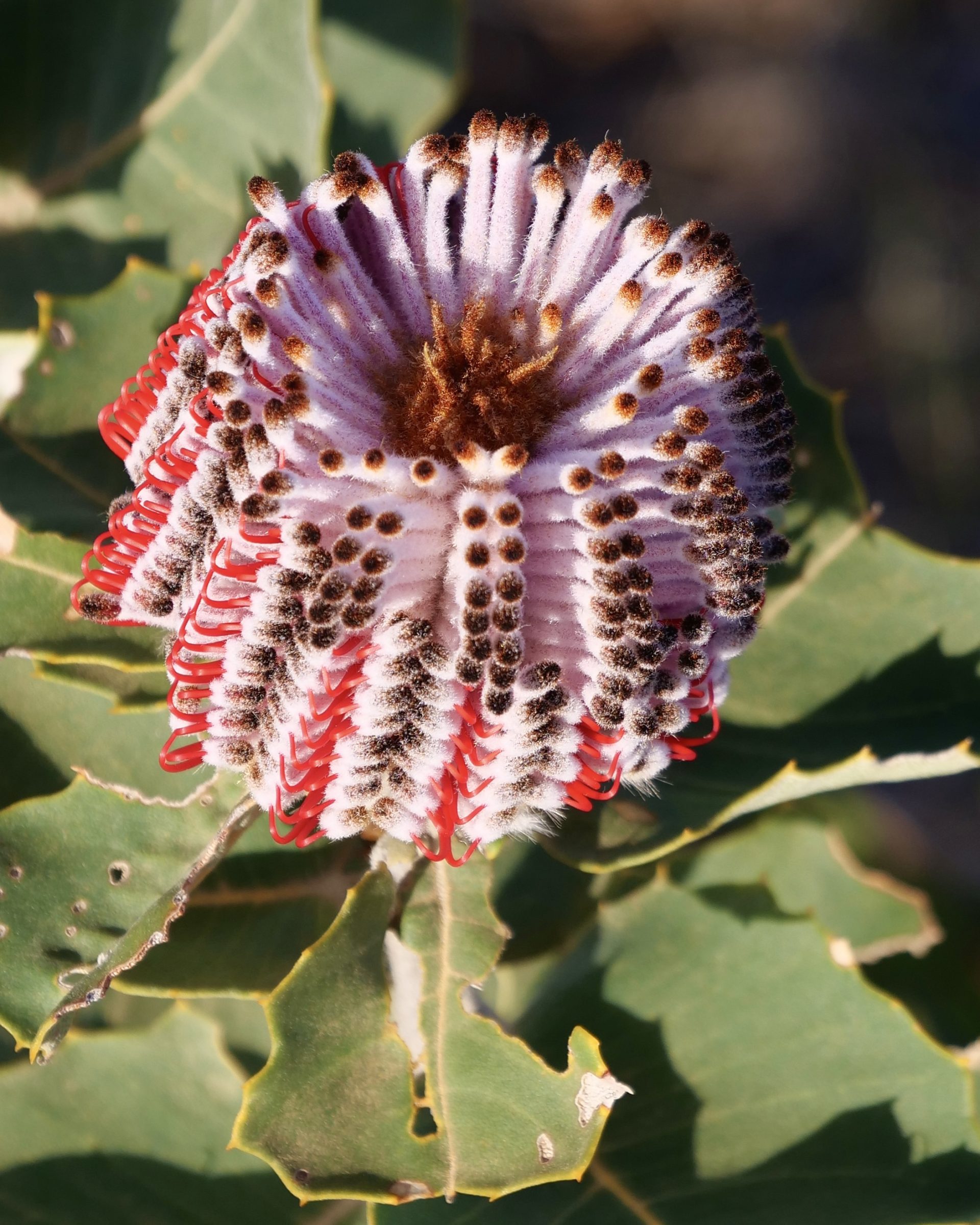
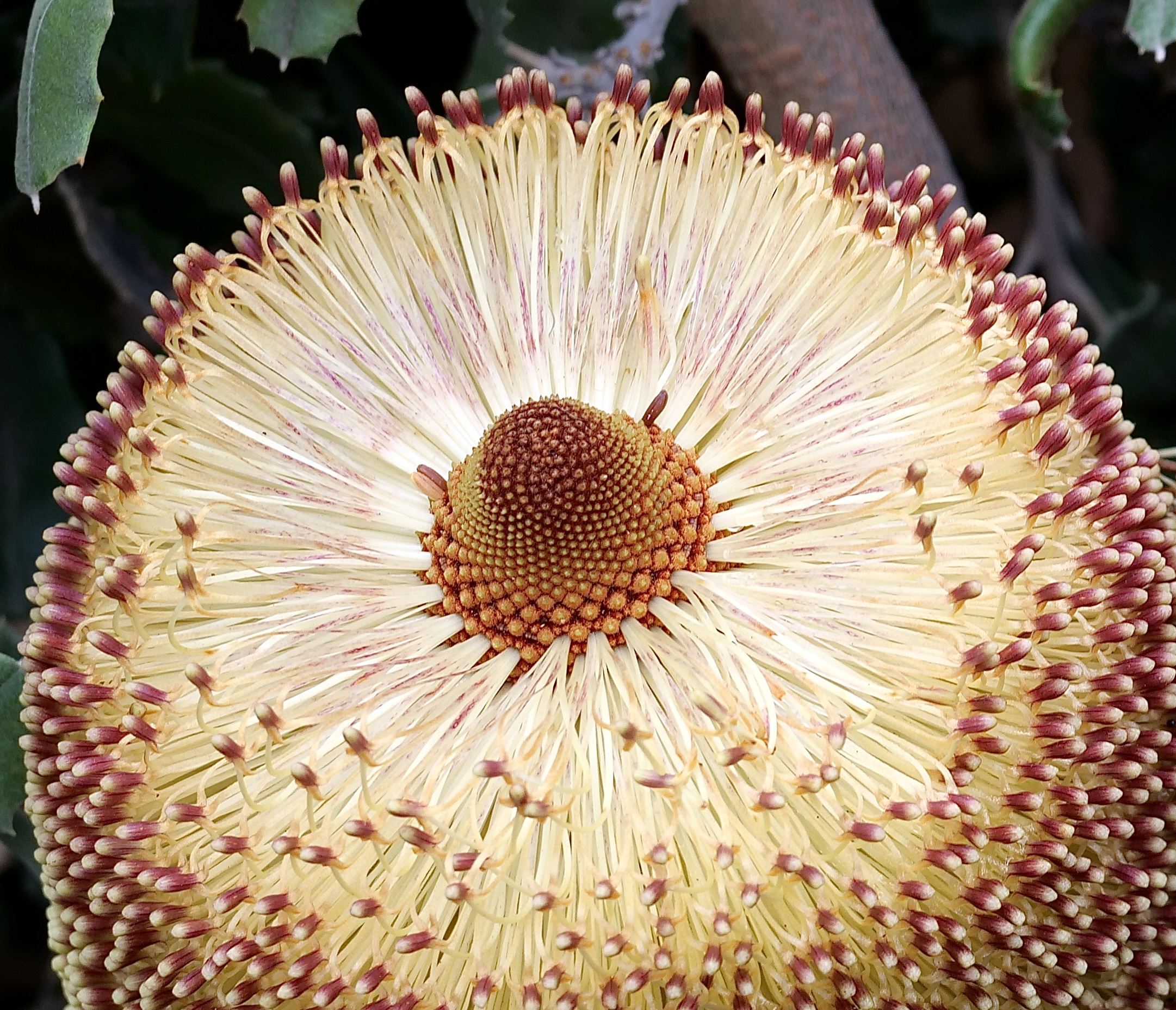
Looking down (#20 in series) on a Banksia


Membership of the genus is hotly debated – should Dryandras be included, or not? – but, however defined, Banksias are extraordinary plants.

These members of the Protea family are unique to Australia.

The overwhelming majority naturally occur only in certain parts of Western Australia’s southwest.

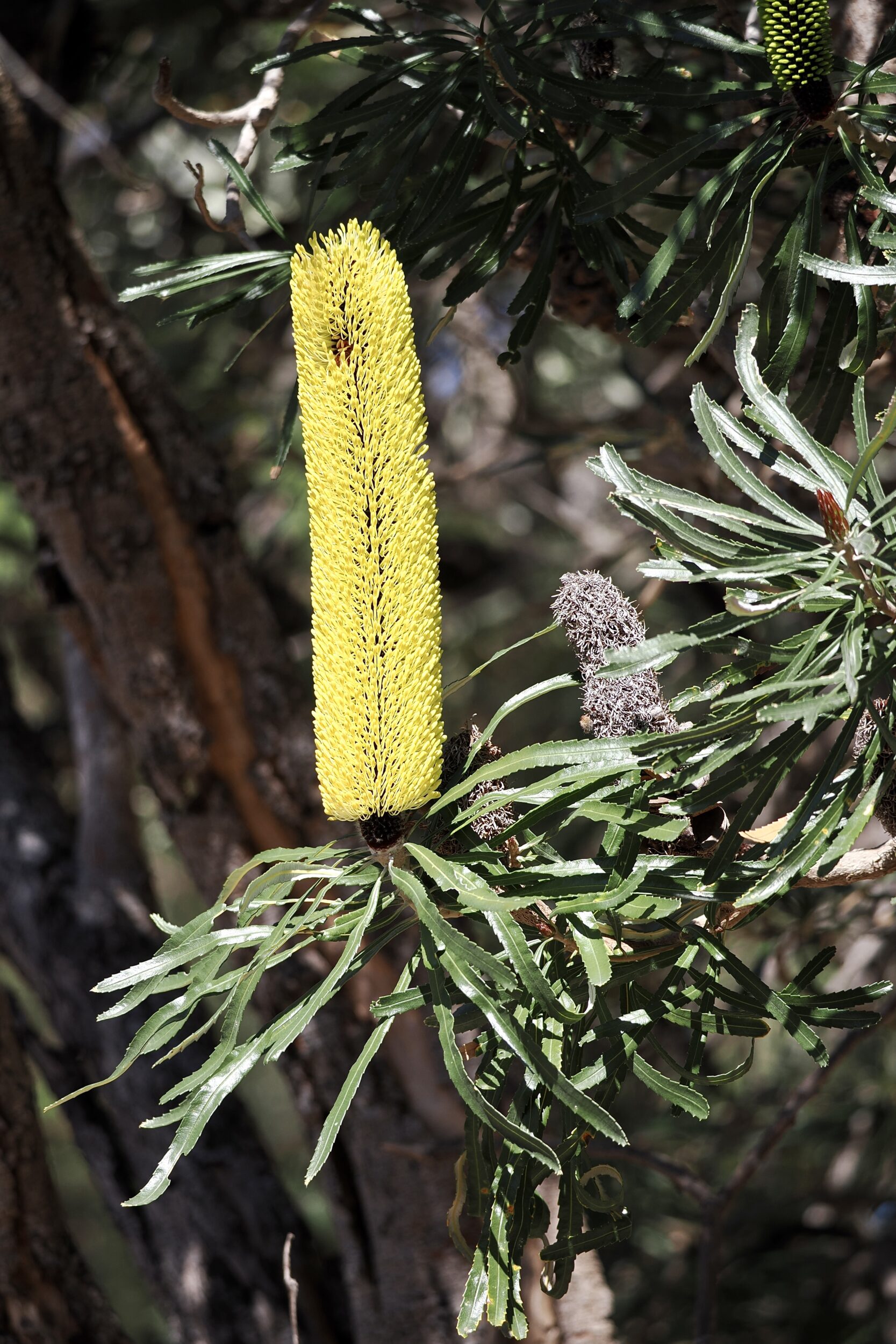
Depending on when one encounters it, a banksia’s flower spike can be prodigiously shaggy, “untidy”, and drab…. or a glorious example of perfect symmetry, Fibonacci sequences, and subtle colouration.

Each flowering “spike”/“cone” bears many – sometimes, several thousand – individual flowers.

I particularly love the appearance of some banksia flower spikes when viewed from directly above.

Leave a Comment
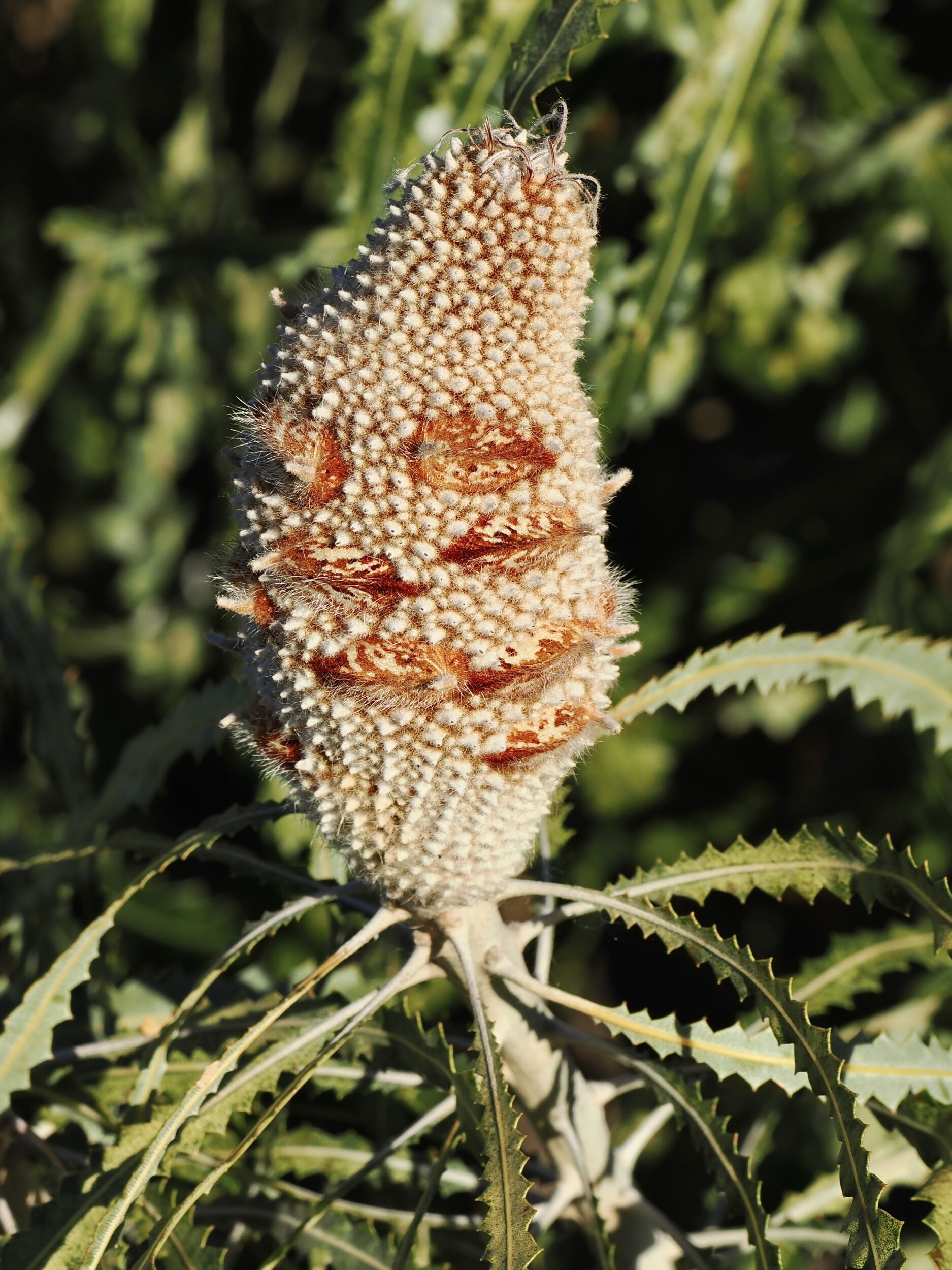
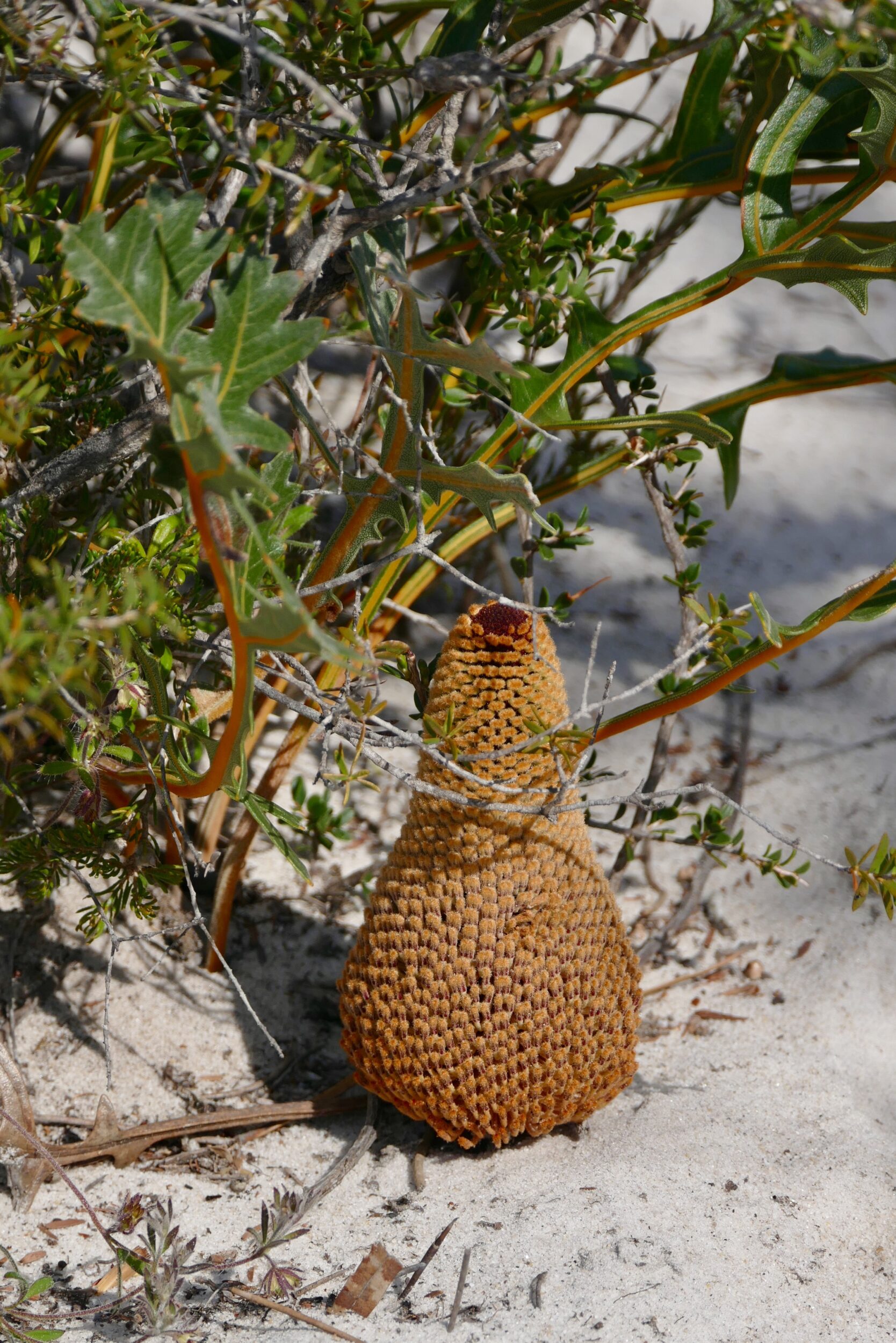
Spring 2025 in Perth (#5 in series: Infructescence, Banksia-style)


A clear majority of Australia’s Banksia species occur naturally in southwest Western Australia, exclusively.

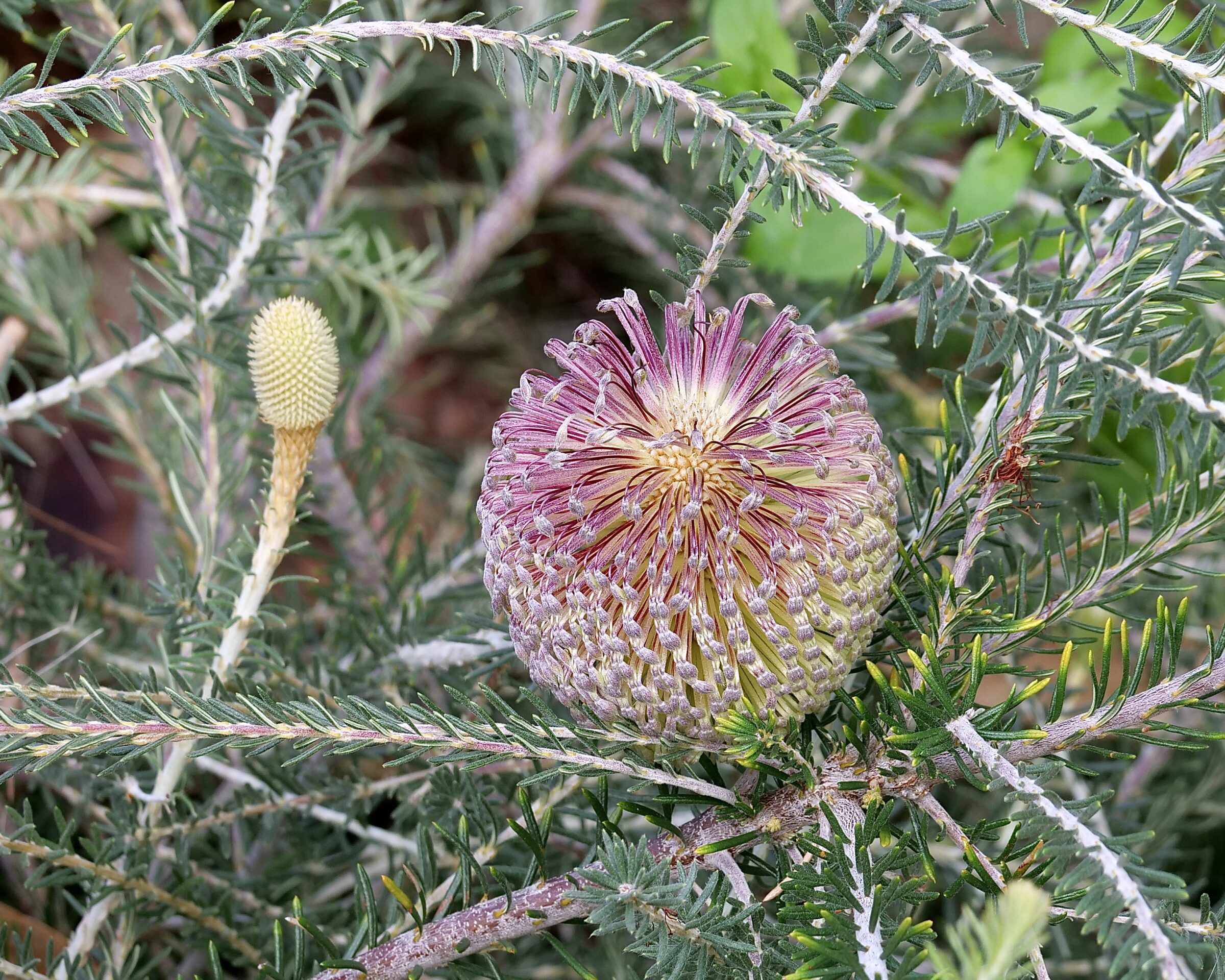
One of the most arresting is Banksia prionoties.

Its common name – Acorn Banksia – refers to the appearance of its large flower spikes during the early stages of their flowering.

As you can see here, at that stage the flower spike is both elegant and spectacular, with each spike/“cone” exquisitely clad with hundreds of flowers. (many people are unaware of this reality. They misperceive each spike as “the flower”, singular)

As this post’s photo illustrates, the spike’s  “post-flowering” appearance is every bit as spectacular, but rather less elegant.

Comments closed

Grand sands (#40 in series: “looking down” on prostrate plants [2 of 2])


Collectively and individually, members of the genus Banksia are among the world’s more spectacular and surprising flowering plants.

If one accepts the reclassification that brought the 94 Dryandra species into the Banksia fold, the genus has circa 170 members; if one does not, there are 79 named Banksia species.

Either way, all but one species are endemic to Australia.

The overwhelming majority naturally occur only in Western Australia, and most of those have very small ranges, in near-coastal parts of WA’s southwest.

Even by Banksia standards, the six prostratae species are “wondrous strange”.

Comments closed

Wireless Hill – feathers & flower spikes (#1 of 3)


This little series celebrates a favourite place, as it was on Sunday, 27 October 2024 – our first fully-waking day after our return to home turf.

(coming soon to Pelican Yoga: a teaser-series devoted to two contrasting parts of Indonesia. One is very sparsely populated. The other is “our” planet’s most-populous large island )

”European” calendars suggest it is still springtime in Perth.

In fact, the world’s greatest substantial-city, entirely-natural springtime flower-show ended some weeks ago.

Here, however, some wonderful plants are in flower at any time of year…plants which naturally occur only in WA’s southwest.

This post’s hero is one of them.

Comments closed

150th Birthday today: Kings Park


On the first day of October in 1872 the British Parliament declared a Reserve on Perth’s Mount Eliza,

The new Perth Park overlooked the then decidedly modest capital of the Colony of Western Australia.

In 1901 Perth Park was renamed Kings Park, following the coronation of King Edward VII.

Until more than a decade into the 1900s, Perth was smaller than not a few of eastern Australia’s country towns.

Paradoxically, one reason why Perth managed to have a bigger, wilder – and, arguably, more wonderful, and equally central  – city park than New York’s Central Park is that when it was p/reserved, Kings Park’s site would have been viewed as utterly superfluous to Perth’s future urban expansion.

Comments closed

McGowangrad, winter ‘22: series finale (perpetual flower show)


WA’s emblematic flower may be synonymous with Springtime, but it is no slave to the calendar.

Well before Winter 2022’s alleged end, it – and not a few other “iconic”, “Spring-flowering”  WA endemics – were already very evidently flowering in the quasi-natural bushland section of Perth’s Kings Park.

It is an easy walk – or an even shorter free bus trip’s distance – from the CBD.

Comments closed

Younger flower spike (“Aspects of Waychinicup” #15)


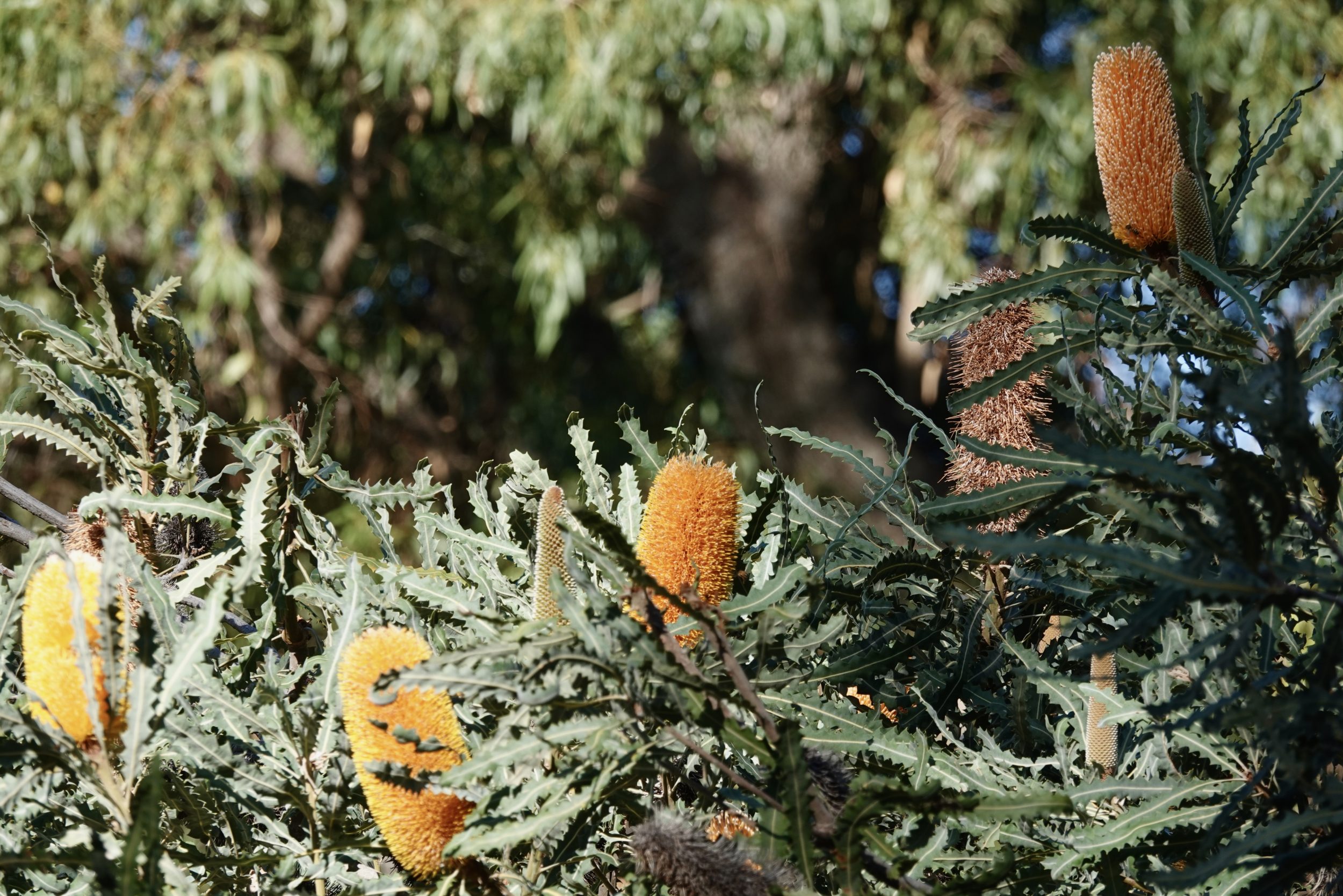
The (very) different phases of an individual Banksia flower spike’s development are astonishing.

Over time, the very same spike’s appearance can range from “perfectly symmetrical, colourful, immaculately neat”  through to “grotesque, seemingly shambolic and almost monochrome”, and from “petite” to “gigantic”.

In some species, an individual bush’s different spikes can simultaneously exhibit all of the aforementioned qualities.

Comments closed

Beautiful, surprisingly “odourless” (“Aspects of Waychinicup” #14)


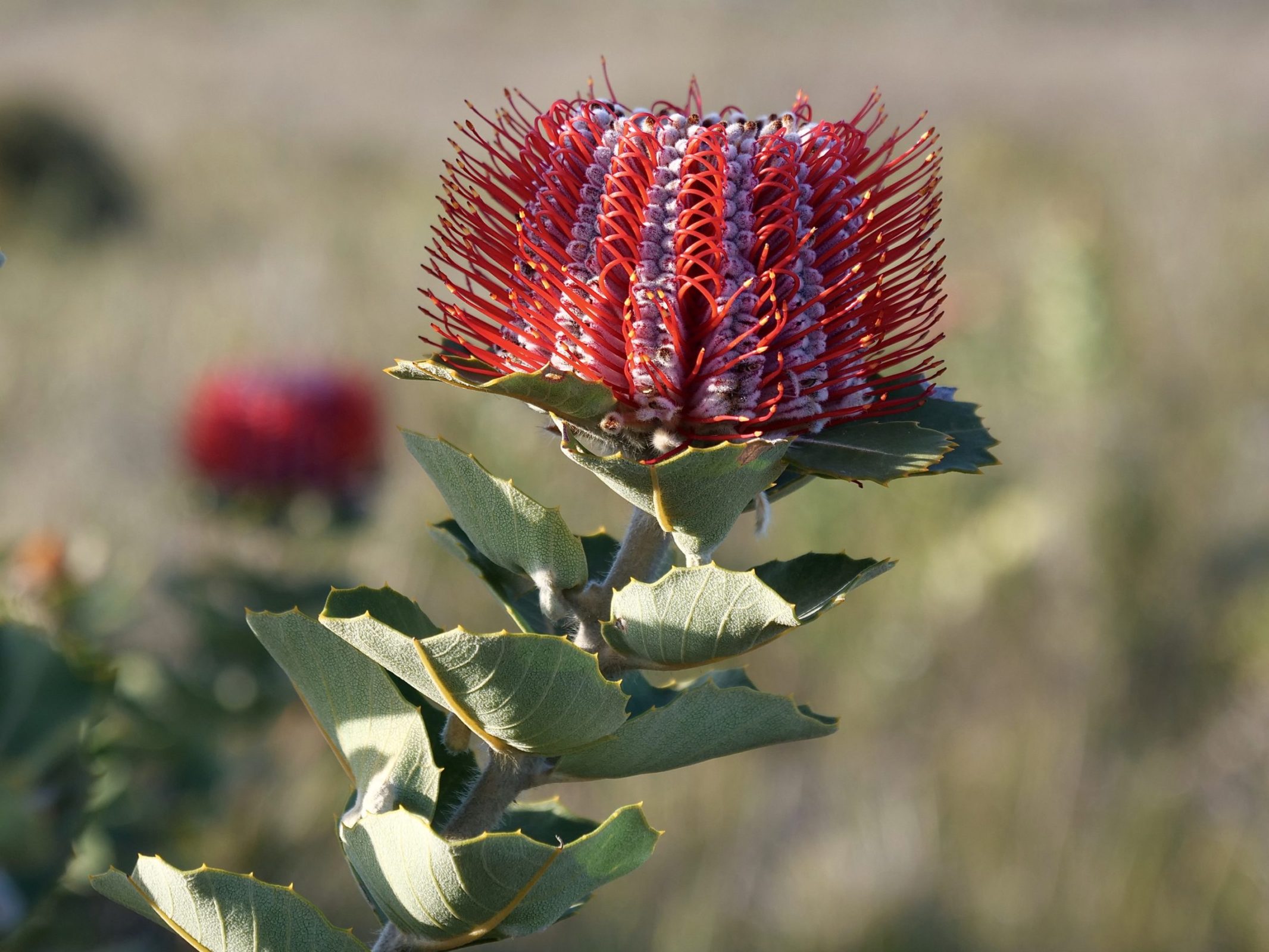
Banksia coccinea
– Scarlet Banksia, also known as “Albany Banksia” or “Waratah Banksia” – is globally popular with gardeners and florists.

Its natural range, however, covers a mere smidgeon of near-coastal southern Western Australia.

Australia has 79 Banksia-proper species.

61 of them occur naturally only in WA’s southwest.

Comments closed

Kings Park Banksia Garden, May 2021

This post, the two recent Boab posts, and two future posts are all fruits of the afternoon of the same day – 20.05.21.

Southwestern Australia’s Spring flowering is indeed one of the world’s most astonishing and beautiful natural phenomena, and Kings Park in Spring is guaranteed to leave any Northern Hemisphere resident’s jaws agape.

It is, however, a BIG mistake to pay attention in Spring, only.

In southwest WA generally, and Kings Park specifically, you can easily see some extraordinary endemic species, in full bloom, at any time; Kings Park’s Banksia Garden never disappoints.

Comments closed