Skip to content →

Tag: environment

Looking down (#23 in series) on Juneau


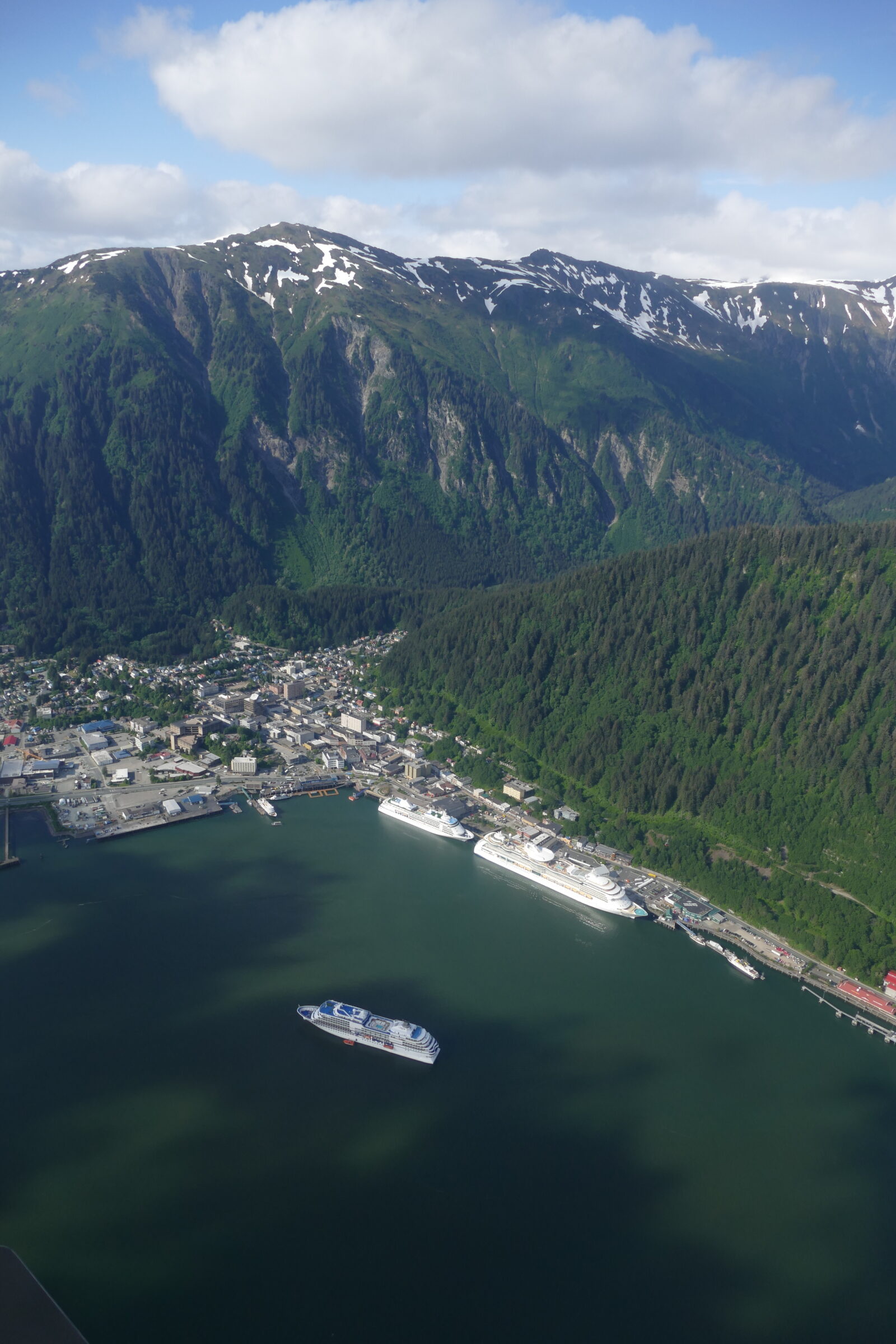
On the afternoon of 24 May 2015 “our” floatplane took off from the Gastineau Channel – the fiord adjacent to Alaska’s capital city.

Juneau is a surprising place, as is true of all of the low-lying, coast-adjacent terrain on southeastern Alaska’s “panhandle”.

This “strip” is not a cold place, by northern North American standards, at least.

Snow falls are infrequent, usually modest. Much of the natural vegetation is temperate rainforest.

In “the season”, cruise ships disgorge huge numbers of tourists onto Juneau’s tourist-tacky foreshore.

In terms of permanent residents, however, Alaska’s capital city is a small town;  if it were in China, it would be a “village”.

Australia calls the likes of Mount Gambier, Albany, and Bathurst “cities”; Juneau is a little more populous than “The Mount”, but a deal less so than Albany or Bathurst.

Juneau is unique among capital cities in one crucial respect: no roads connect it to anywhere more than a few kilometres distant.

The mountains and glaciers just inland of “the strip” are so formidable that all visitors – and all supplies – reach Juneau via sea or air.

Leave a Comment
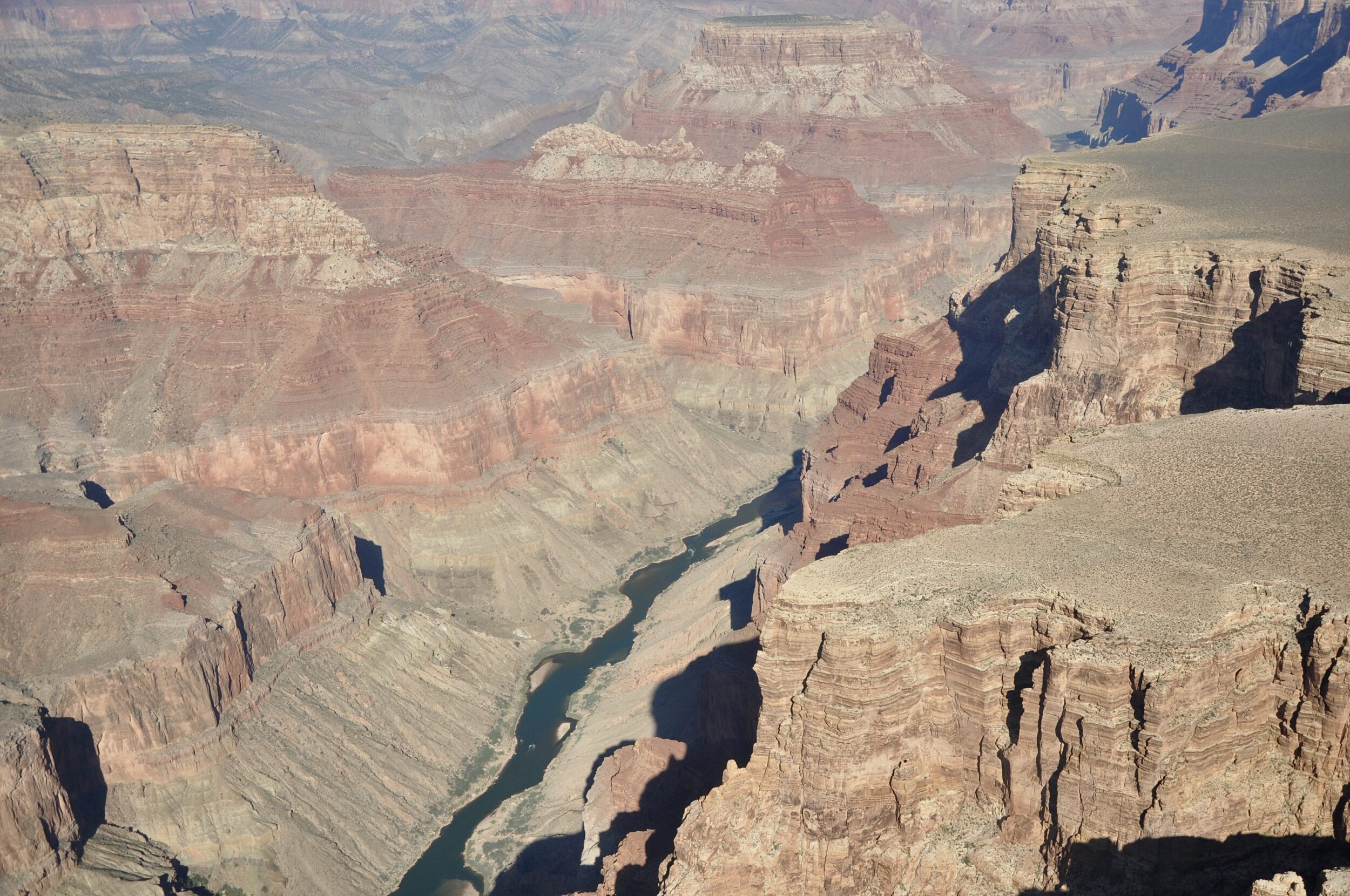
Looking down (#14 in series) …to the Colorado

The first three of this post’s four photos were all taken from a helicopter, looking down into the Grand Canyon.

That canyon’s “lead author” runs along its “floor” – the Colorado River.

As the Colorado’s excellent Wikipedia entry notes, the United States’ fifth-longest river is one of the most controlled and litigated river systems in the world.

This once-wild, formerly much-mightier river has become an ailing shadow of its former self; irrigators and thirsty cities have tamed, maimed and nearly drained it.

One Comment

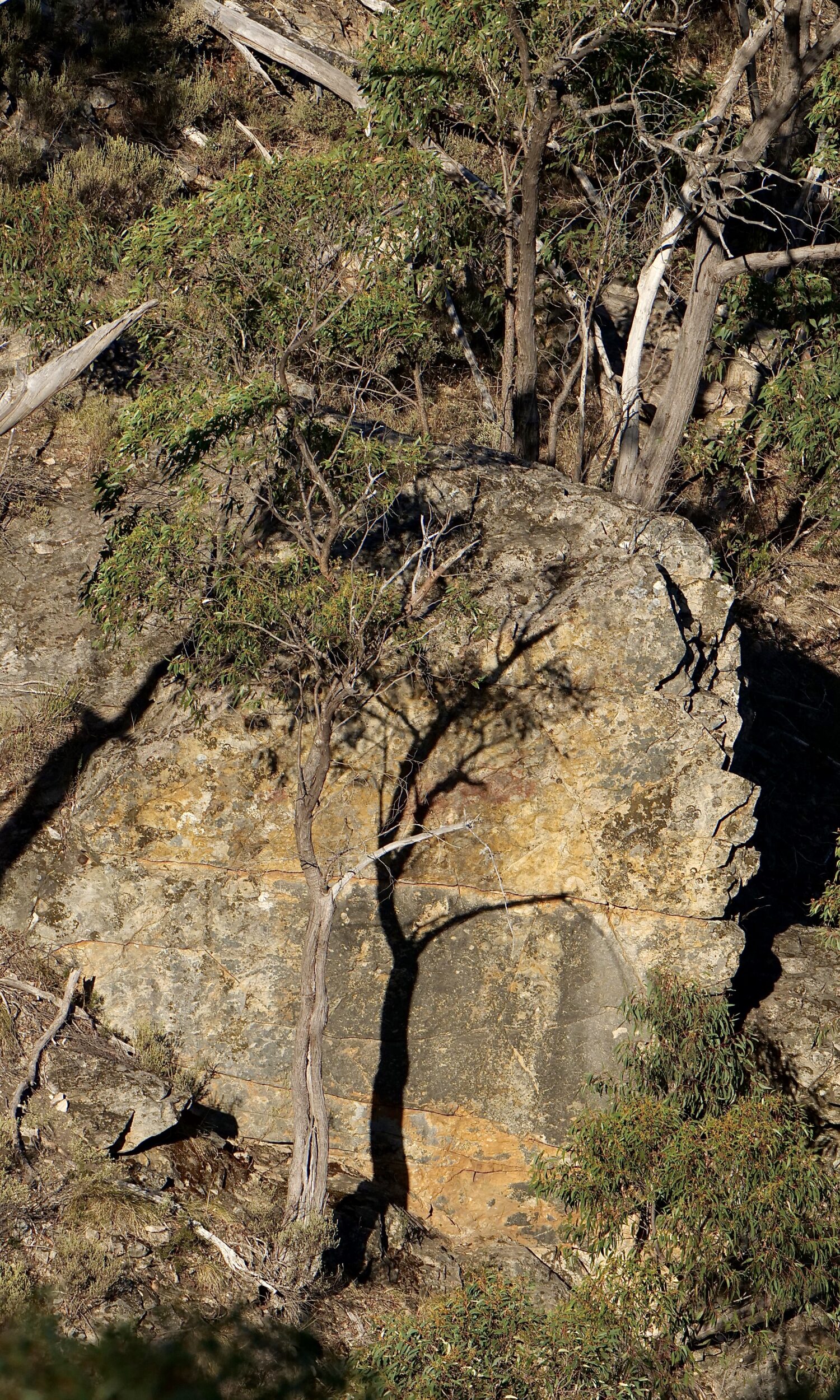
Looking down (#11 in series – trees “4” – Spring Gully)


This sequel to #10 in this series looks down into the actual gully in Spring Gully Conservation Park.

Its  own website  explains the Park’s raison d’être:

Spring Gul­ly Con­ser­va­tion Park was set aside to con­serve the west­ern­most pop­u­la­tion of the red stringy­bark Euca­lyp­tus macrorhyn­cha. This park is the only reserve in South Aus­tralia to con­tain this par­tic­u­lar species. 

Alas, Spring Gully’s “hero” species is now in serious trouble in its sole South Australian “refuge”.

Leave a Comment

Seasonal Greetings, with appropriate “decorations”


Pelican Yoga
wishes you all a happy and safe festive season.

You may imagine that the pictured “decorations” involve snow and ice, either directly or as inspiration source, and that they express nostalgia for – or romantic notions about – the “properly Christmassy” Decembers of Santa’s homeland, deep in the northern hemisphere.

If so, you would be wrong on all counts!

Comments closed

Spring 2025 in Perth (#16 in series: attractive pest)


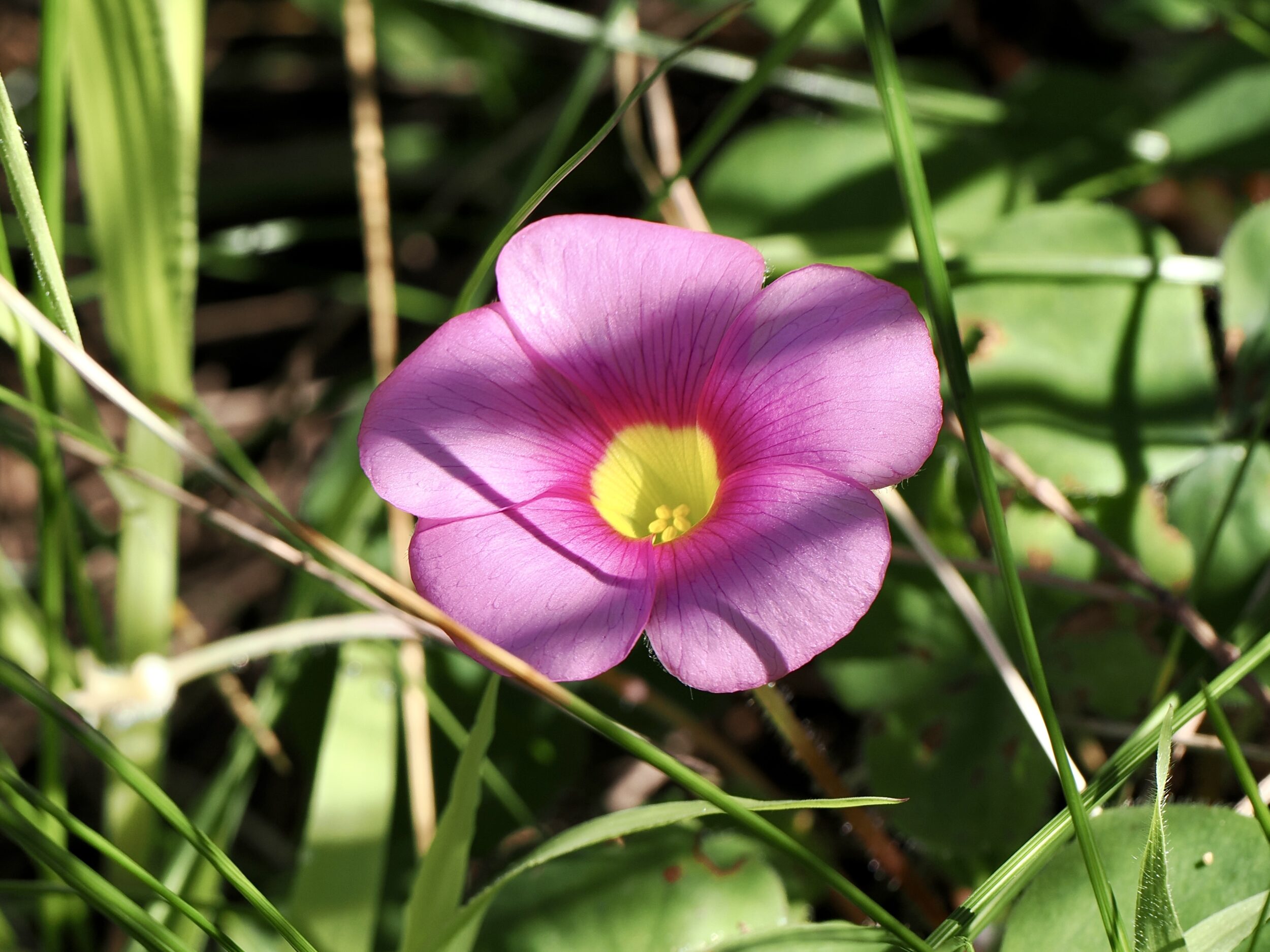
You are looking at a plant which is widely cultivated because it is pretty, very easy to grow, and is now available in a range of flower-colour options.

Oxalis purpurea is one of many “alien invaders” from Southern Africa.

They displace native species.

Alas, they (and other weed species from southern Africa) now proliferate even in places dedicated to the conservation and showcasing of Australian native flora.

Comments closed

Grand sands (#50 in series: “catch” lands on Madagascan beach)


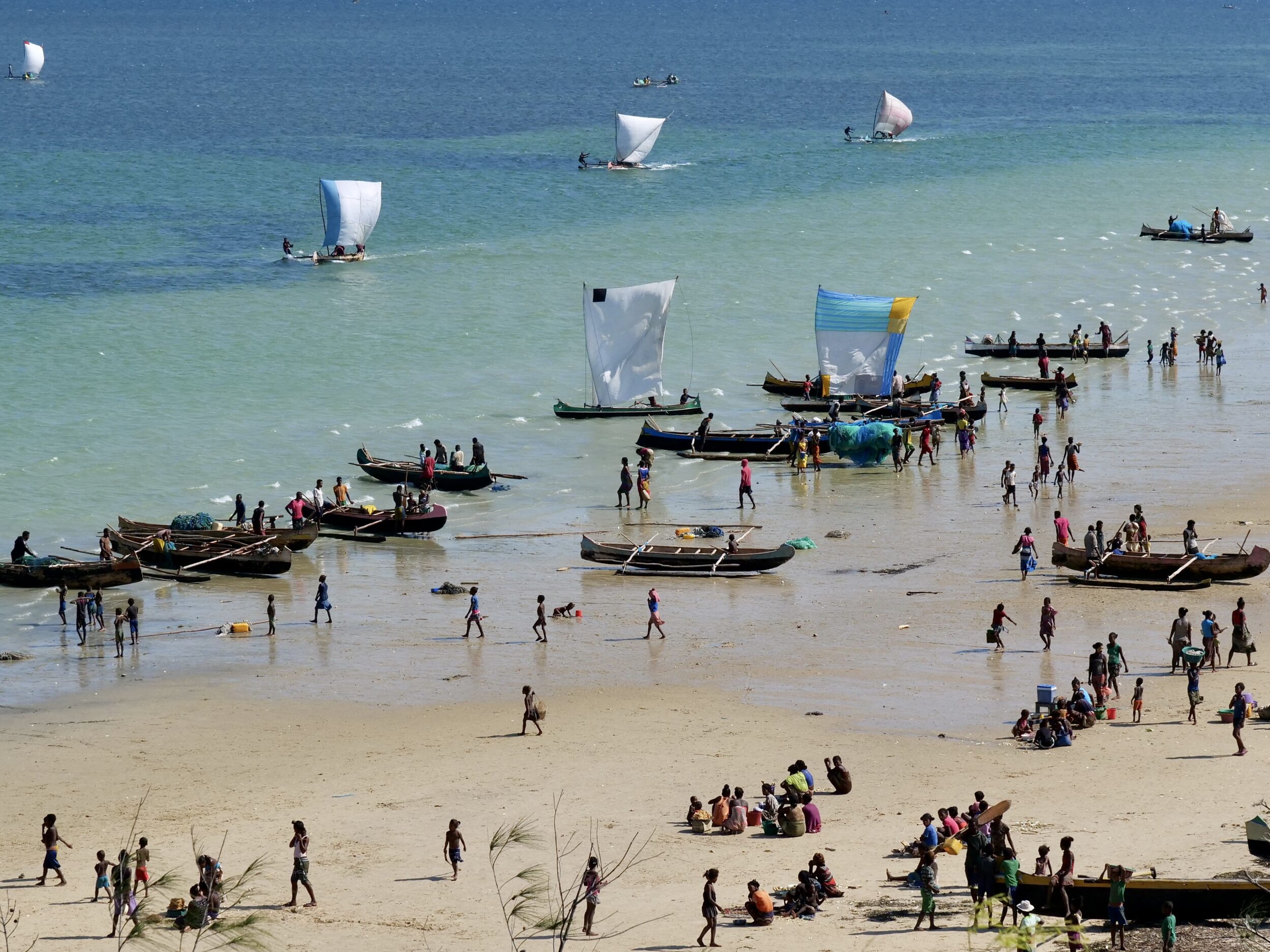
Hoteliers and tour operators like to describe the pictured beach as “idyllic”.

Ifaty is a village in southwestern Madagascar; fishing is its raison d’être., although tourism has become increasingly significant in recent years.

Its seafront “lagoon” is sheltered by one of the world’s major coral reefs.

On the reef’s far side is the Mozambique Channel, which is 1,700 ks long, 419 ks wide at its narrowest point, and surprisingly deep – up to nearly 3,300 metres, with an average depth of around 2,700 metres.

I took the photo just before midday on 19 May 2018, as the big daily event was unfolding.

Comments closed

Grand sands (#11 in series: “River of Death”)


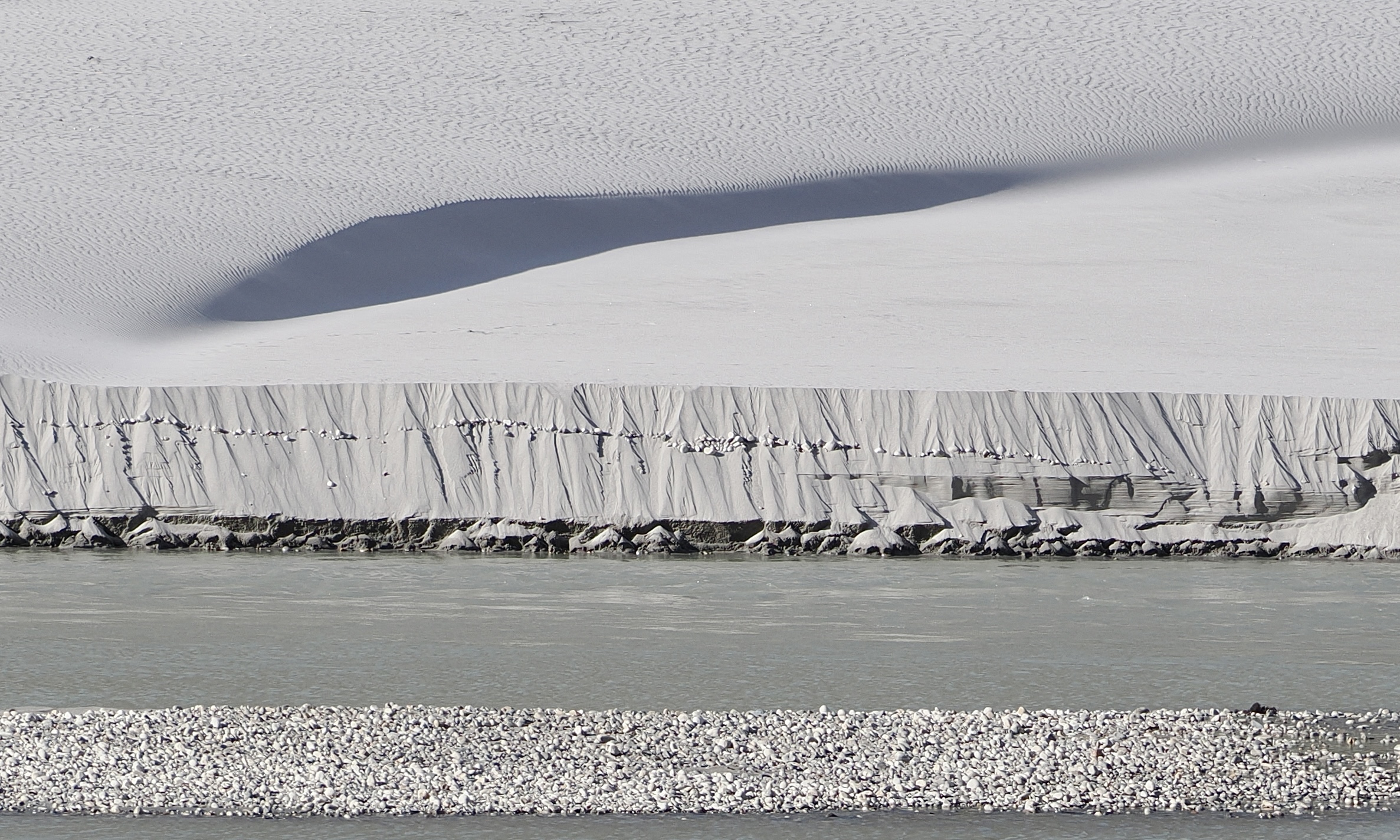
As in #10 in this series, you are looking at a photo which illustrates the power of the Shyok River.

By road, we were now 35 minutes further upstream, closer to Khaplu.

At 4.49 pm on 15 May 2024, the fast-flowing, largely glacier-fed river’s flow was relatively low.

The Shyok’s width, depth and flow-rate are hugely variable; the river transported and deposited all of the photograph’s silt, sand, gravel and rocks.

My telephoto lens zoomed in on just a very small portion of what my naked eyes could see in a single glance, with head still.

One translation of the Shyok’s name: river of death. 

Its floods have killed many people, drowned trees and crops too, and destroyed/removed many formerly-arable fields, even some of the houses that had been built above and behind the fields, on what used to be “safe” ground.

Comments closed

Word Power: on humans acting irresponsibly, idiotically…knowingly


This post is a pointer to two opinion pieces.

Both are particularly worth reading in light of the re-election – as leader of “our” planet’s most powerful “democracy” – of an incorrigible liar, felon, bully, ignoramus, narcissist, jingoist, misogynist (probably, also a “sex offender”) and racist.

Just published by ABC News, Carrington Clarke’s is an immediate response to Donald Trump’s victory.

The October 2024 edition of The Monthly published Tim Winston’s more finely-crafted essay, which makes absolutely no direct reference to the American presidential election.

Comments closed

Winter Light, Flinders Ranges, 05/06/2023 (#4 in series: fully-qualified survivor)


Clearly evident: this tree is no youngster, it has not merely seen fire and rain, and is still alive, probably some centuries on from the relevant seed’s germination.

Commonly known as the river red gum, Eucalyptus camaldulensis is the most widely-distributed of any eucalyptus species; it is almost-proverbially hardy/“enduring”.

River red gums are the “gum tree” best-beloved by Australian members of Homo sapiens.

In 21st century Australia, this “iconic” species is in big trouble.

Comments closed

Port River (#4 in series: good [?] ship BBC Venus)


Britain’s now severely-underfunded national broadcaster may well be looking – urgently –  for “new means of generating revenue”.

The BBC Venus is not one of them.

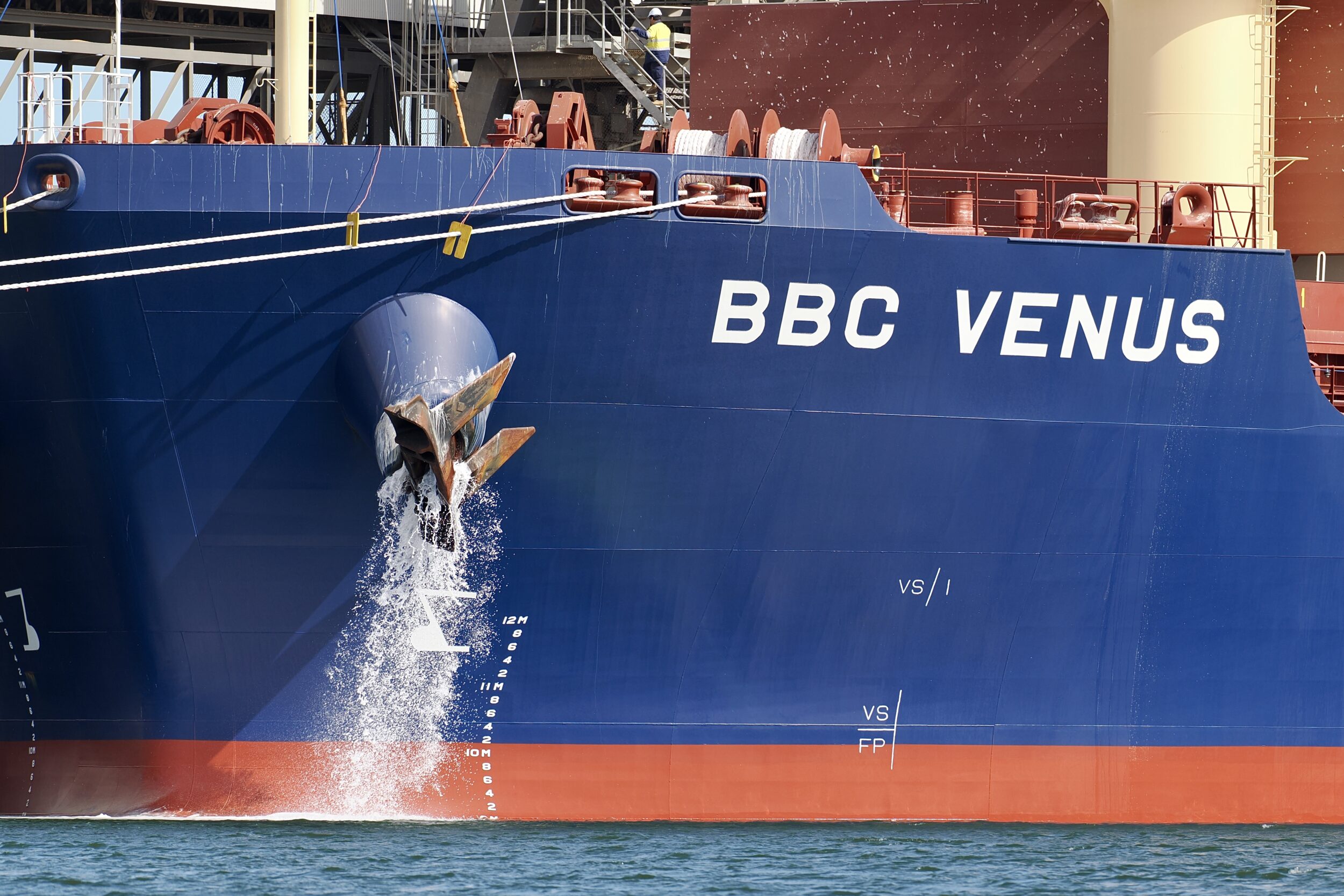
Very obviously the youngest ship berthed at Port Adelaide on 07 March 2024, this bulk carrier was launched in 2023.

Under its current “flag of convenience”, the vessel’s ostensible “home” is Liberia.

Comments closed