Skip to content →

Tag: Honeyeater

Deep South WA, Feb ‘25 (#31 in series: “rush hour” at the birdbath)


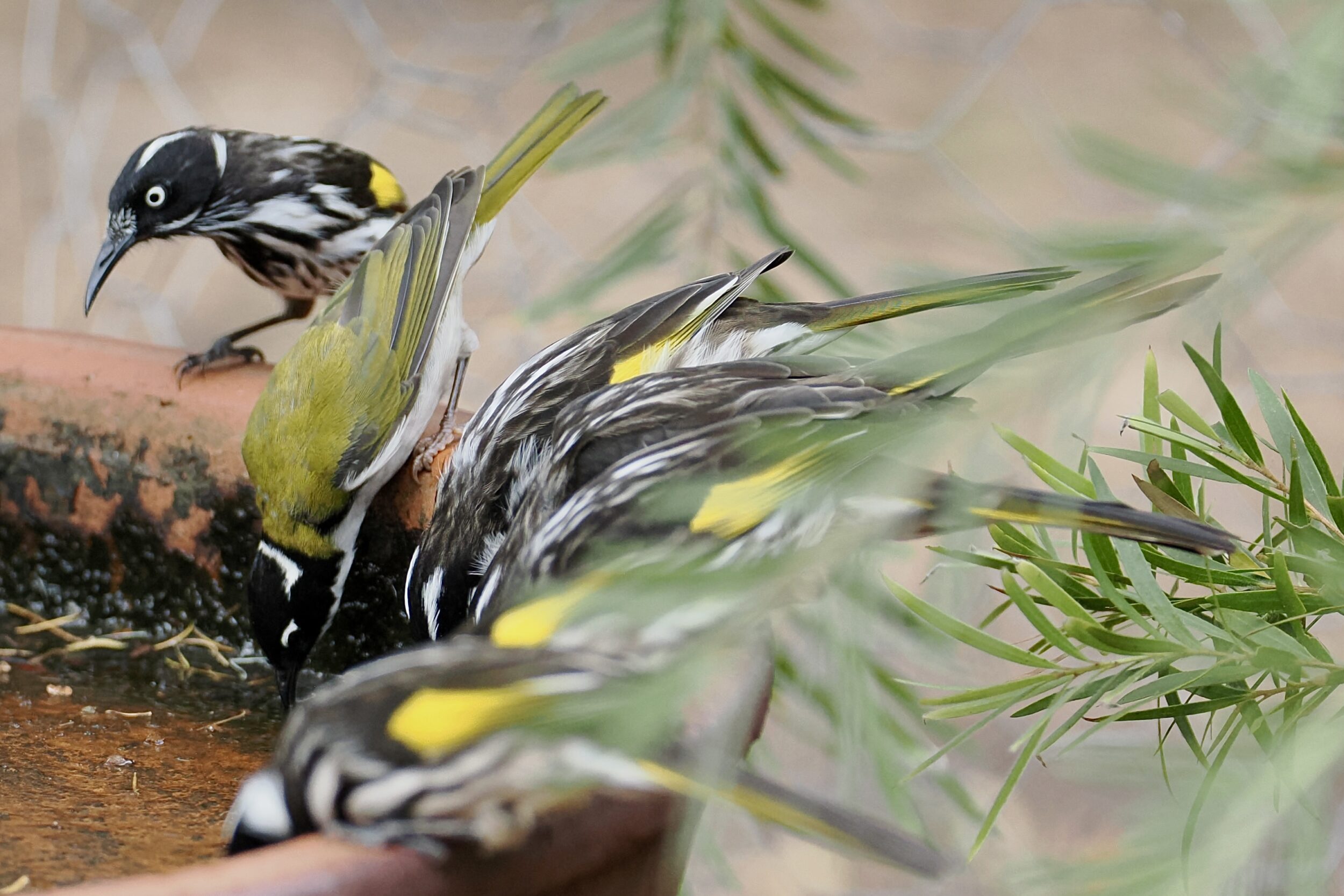
As is true of humans’ bathrooms, bathhouses and drinking venues, other species’ “watering holes” can be a “serene place of refuge” at one time of day, and “mayhem” at another.

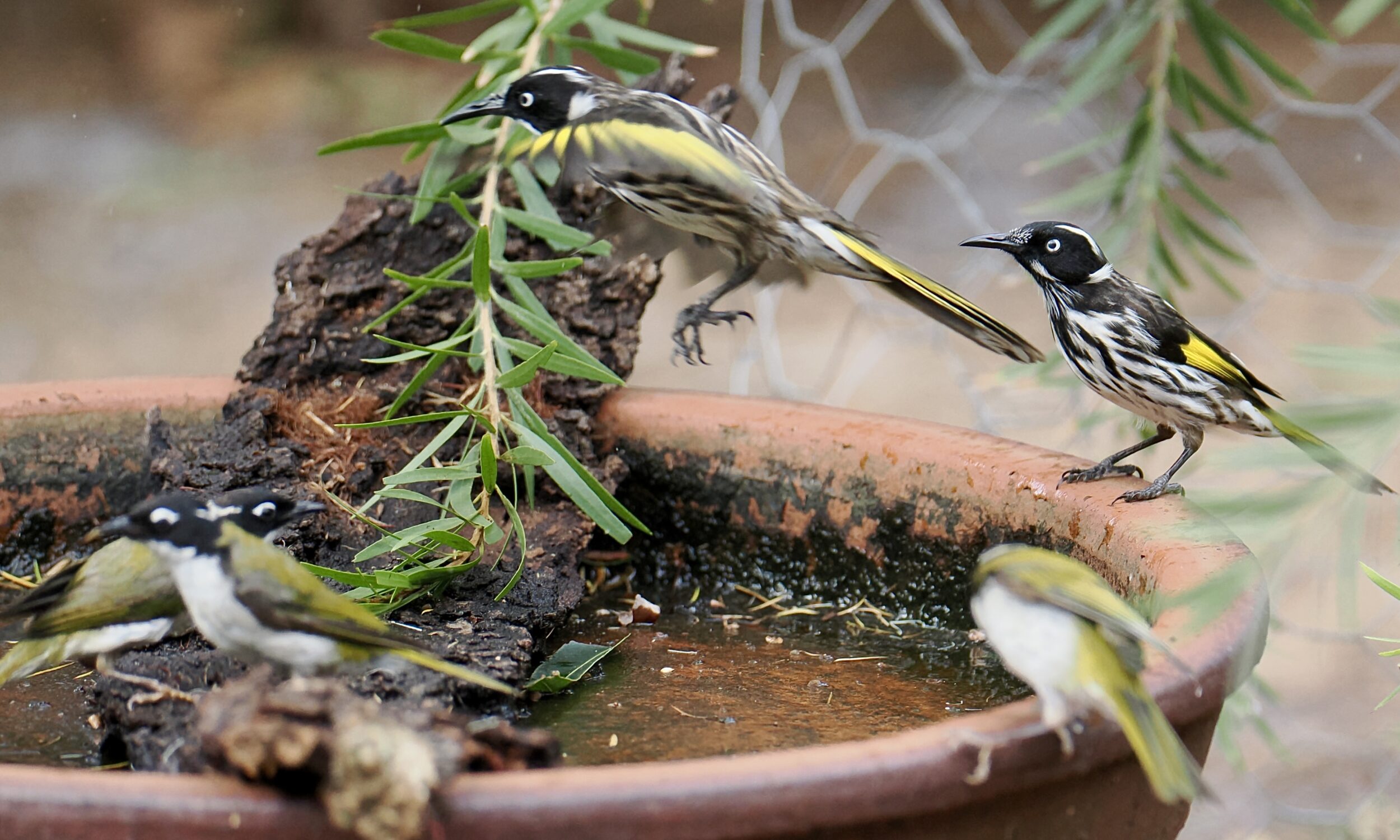
On 08 February 2025, 3pm to 4 pm was “peak hour” at the birdbath in front of “our” cottage near Youngs Siding.

It looked sorely in need of an Air Traffic Control Tower!

Comments closed
Deep South WA, Feb ‘25 (#30 in series: two species, sharing “3”)


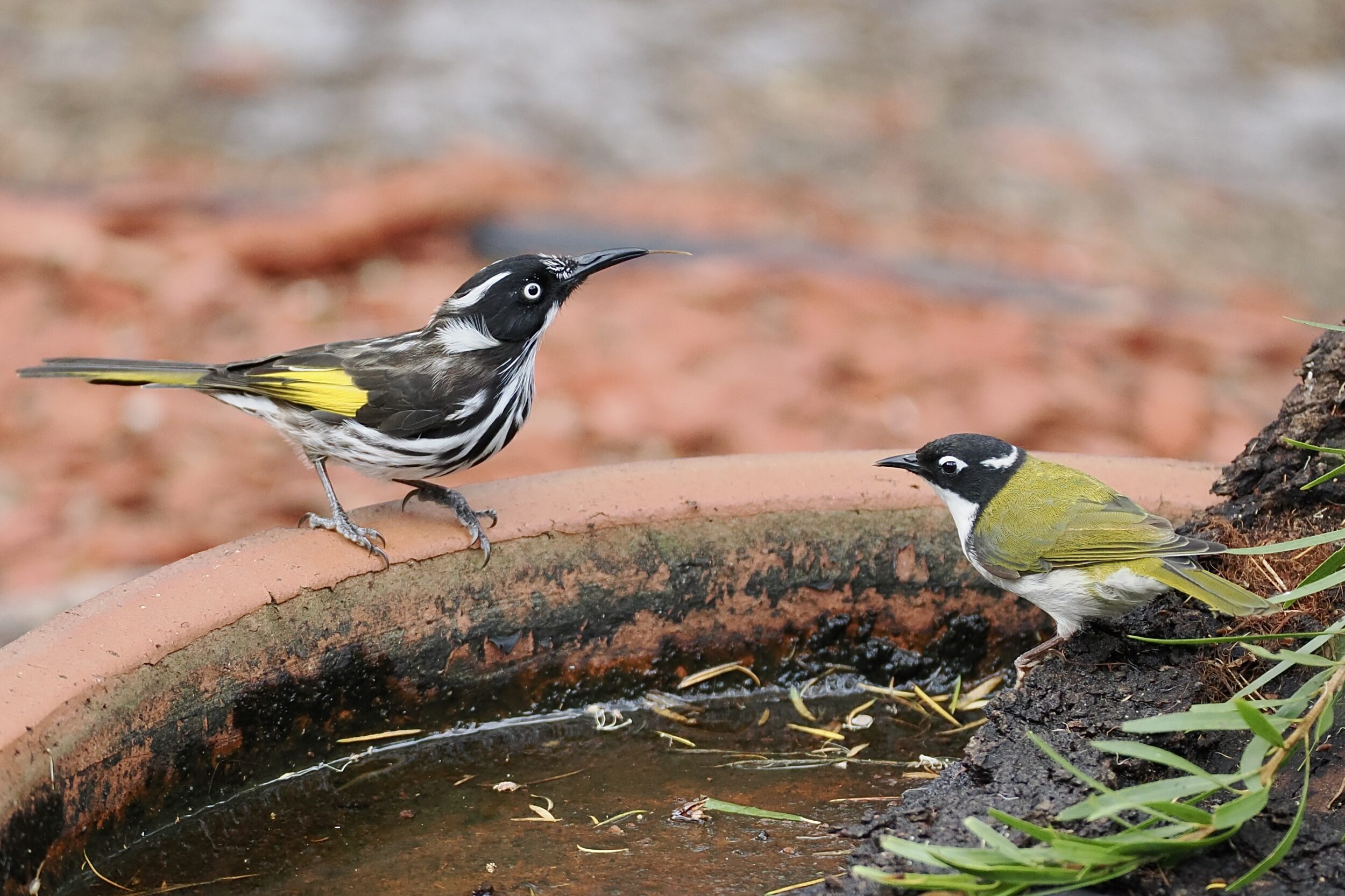
At least between the pictured species, “Two honeyeater species, sharing a birdbath” is a perfectly unremarkable, “normal” event.

On the left – sticking out his or her long, “brush-tipped” nectar-collecting tongue – is a New Holland honeyeater, Phylidonyris novaehollandiae.

On the right is a bird that is very clearly a species in its own right, but was not recognised as such until 2010.

It never really was a subspecies of the (eastern Australian) White-naped honeyeater, Melithreptus lunatus.

At last blessed with a single, “proper” common name – and its own “Latin” species name – Gilbert’s honeyeater, Melithreptus chloropsis, lives only in Western Australia’s southwest.

Comments closed

Deep South WA, Feb ‘25 (#8 in series: honeyeaters, drinking)


Some birds – individuals & species – prefer to be alone, when drinking or bathing.

Others are happy to “share the facilities”…or they have to share them; flocking birds may be within a group of many – even many thousands – of individuals.

On some afternoons in February 2025 (near Youngs Siding, between Albany & Denmark) the “line up” at the birdbath reminded me of “the six o’clock swill” – an unlovely feature of most Australasian pub “culture” for surprisingly much of the 20th century.

Comments closed

Wireless Hill – feathers & flower spikes (#3 of 3)


In appearance, Lichmera indistincta – the brown honeyeater – is a strong contender for an “undesirable” title: Australia’s most plain/drab/nondescript honeyeater.

This species’ song, however, is widely considered the finest of any Australian honeyeater’s; clear recordings of it are here. (the second grab is the better one)

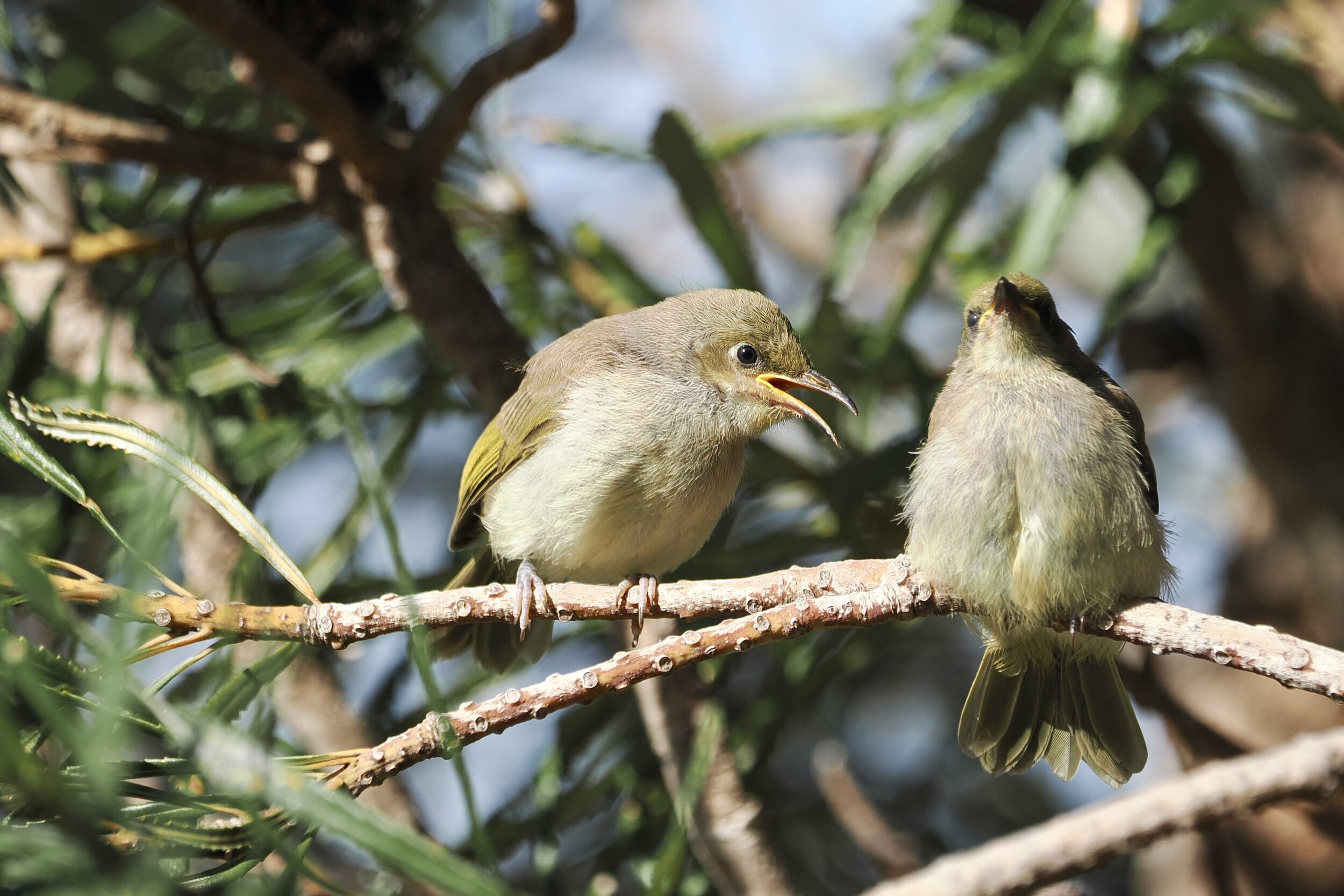
The pictured brown honeyeaters are young individuals who dine on pollen & nectar from plants that naturally occur only in southwest Western Australia.

However, brown honeyeaters are highly adaptable; they live across parts of all mainland Australian states and territories, except Victoria;

Comments closed