Skip to content →

Tag: Italy

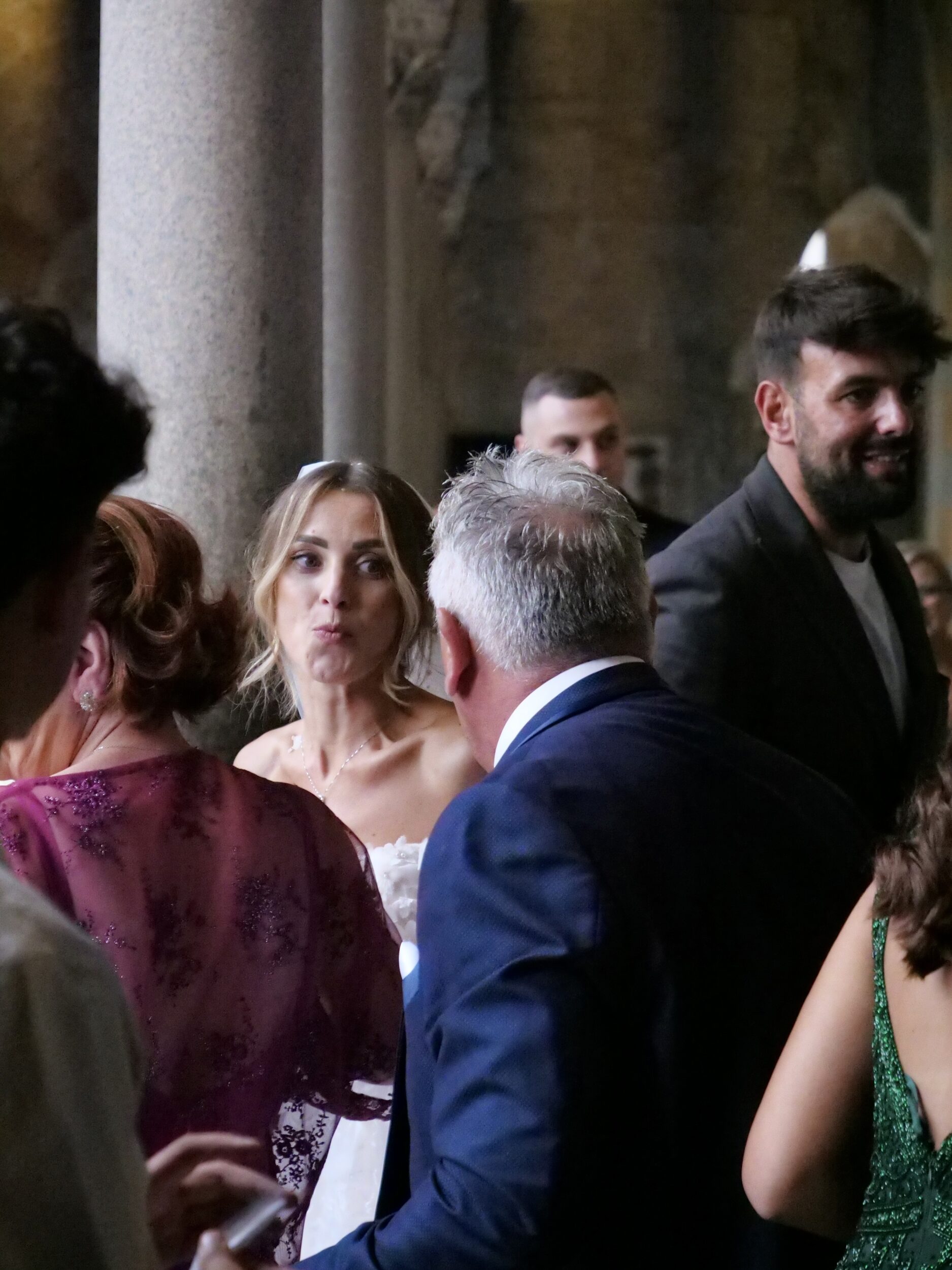
Just married, in Amalfi (#2 in series: bride shares “moment” with father)


I love the fact that very “public” events contain so many “private” moments.

Presumably, my photo captures the bride and her father, relishing a moment of mutual, wry amusement – one that looks like it verges on “complicity”. (If he is not her father, the bride already enjoys a close bond with the man who has just become her father-in-law)

Comments closed
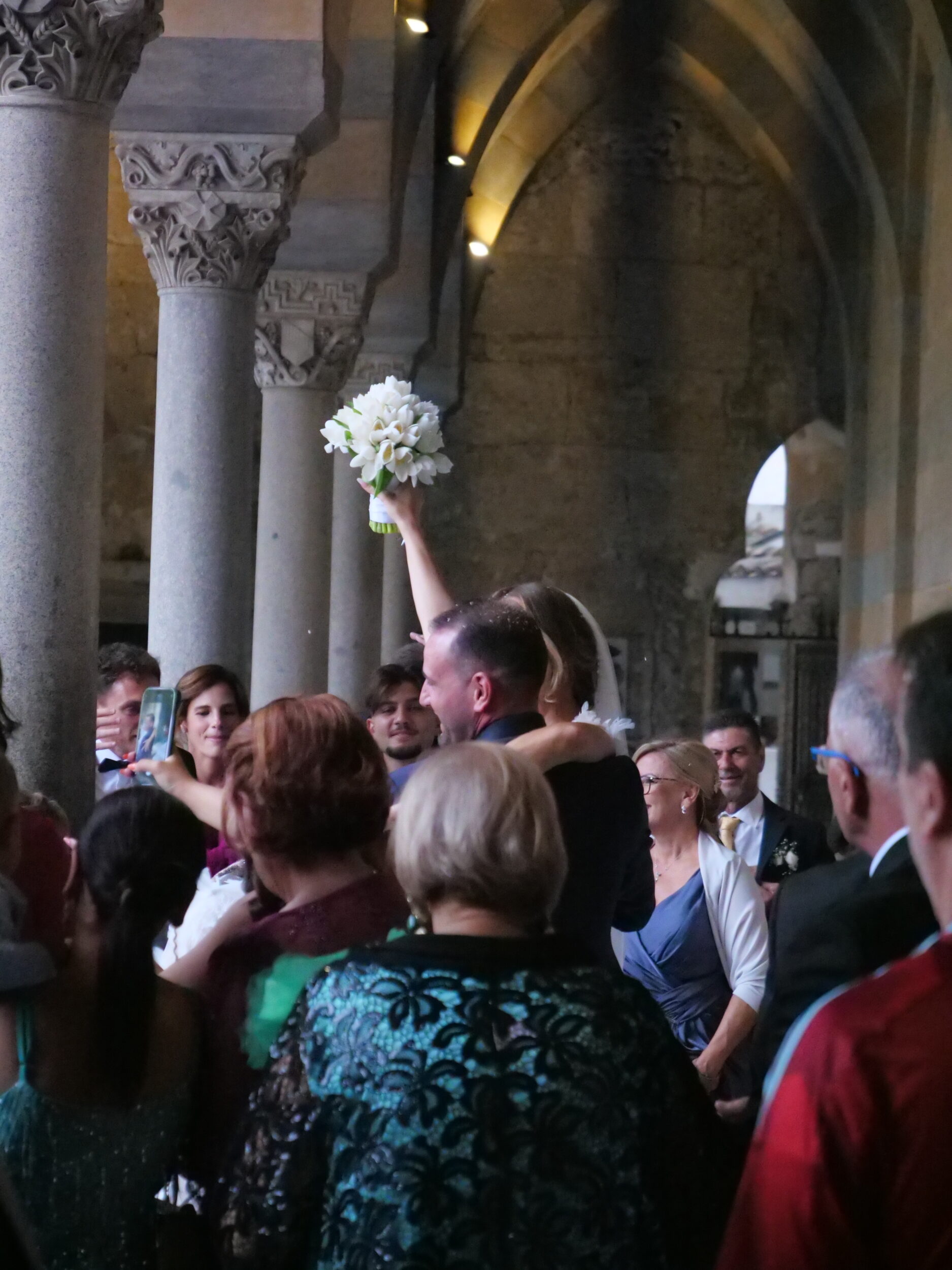
Just married, in Amalfi (#1 in series: emerging, triumphant)


On entering the cathedral, we soon realised that we had walked into the latter part of a “big” Italian wedding.

Our presence was not in any way “discouraged”; an interesting event it certainly was, but I thought it would be inappropriate for me to photograph it.

The wedding-proper completed, the newlyweds, their families and friends then walked out into the wider world.

At that point, I thought it would be “socially acceptable” for me to attempt to “capture” the scene. (and it soon became apparent that “strangers” paying non-intrusive attention to their “big day” was enthusiastically welcomed by those directly involved in it)

Comments closed

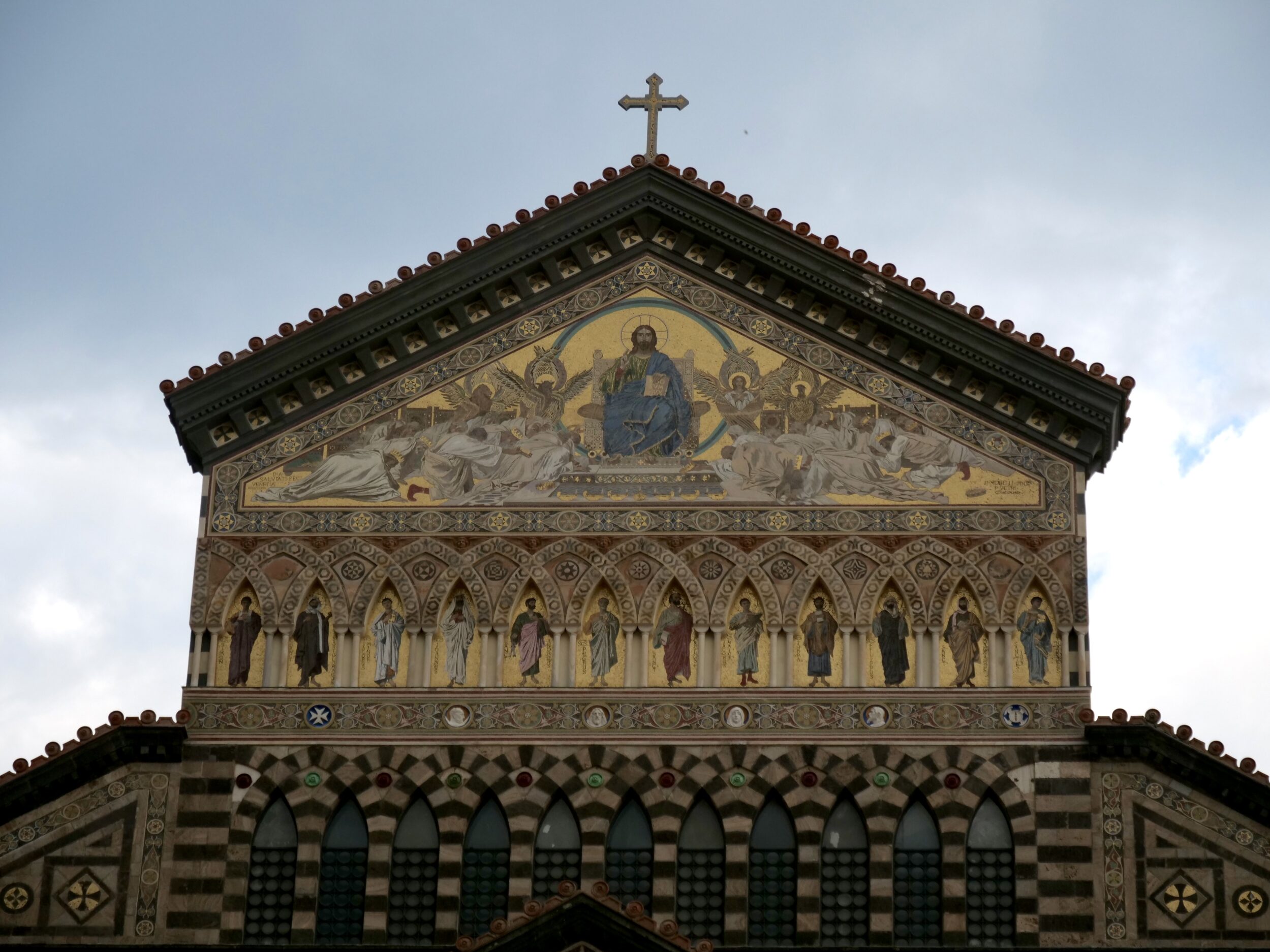
Amalfi Cathedral (closer view of upper part of facade)


Description, courtesy of Wikipedia:

In 1861, part of the facade collapsed, damaging the atrium. The whole front of the church was then rebuilt to a design by architect Errico Alvino in a richly decorated manner drawing on Italian Gothic and especially Arab-Norman styles, similar to but more ornate than the original.

Comments closed

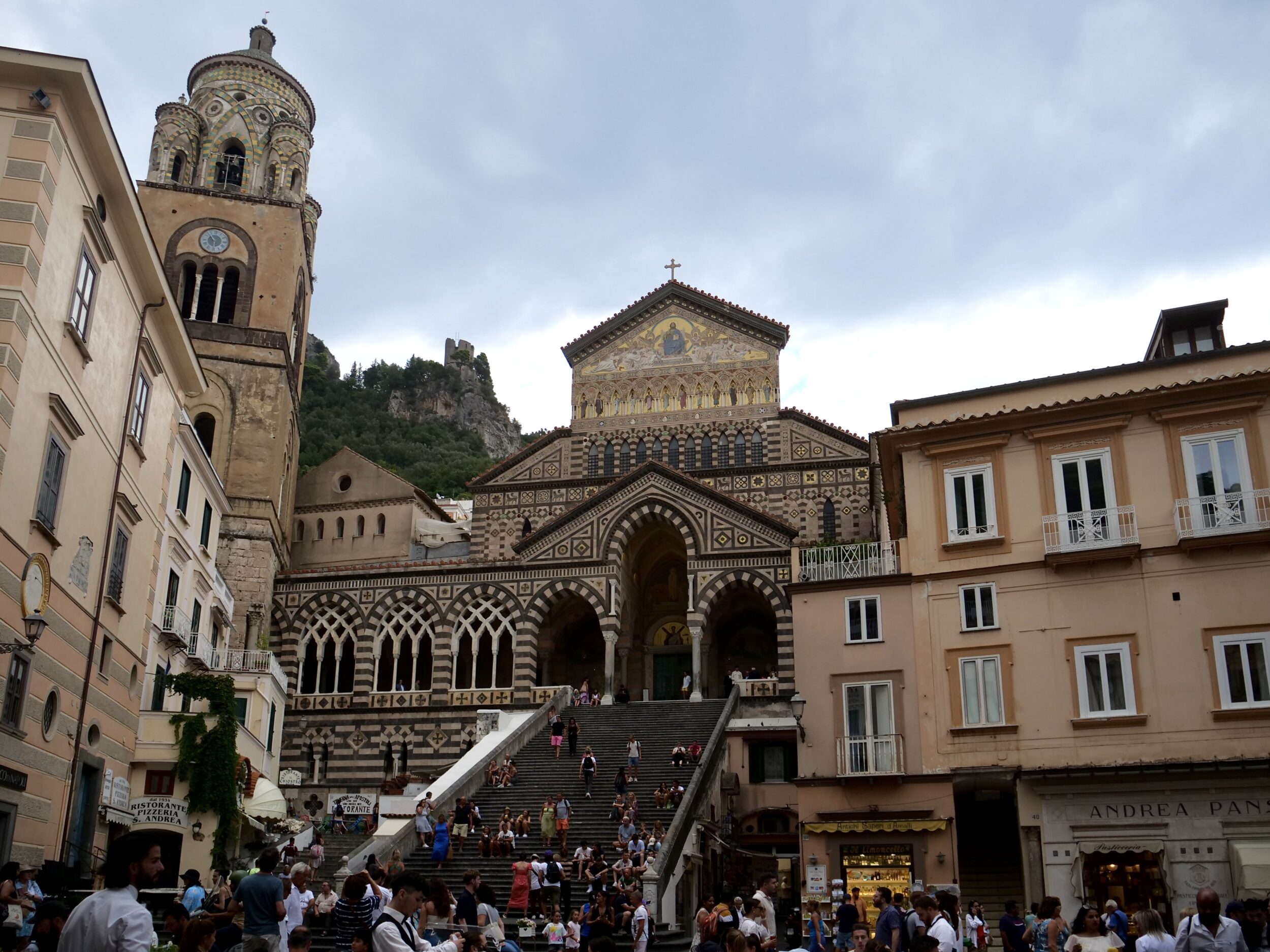
Amalfi’s cathedral/duomo


Construction began around twelve centuries ago, but most of what a 21st century visitor sees when looking at Amalfi Cathedral (aka “Duomo di Amalfi” and “Duomo di Sant’Andrea”) is of much more recent vintage.

Allegedly, it has housed the “relics” of St Andrew (Sant’Andrea) since not long after “Crusaders” delivered them from Constantinople to Amalfi in 1206 CE.

Many a “landmark” Italian church has a “medieval” exterior, now ill-matched with a lavishly reworked, much more ornate, “Baroque” interior.

Over the centuries, Amalfi’s cathedral has become a riotously eclectic hybrid of very different styles. (and of different buildings, joined together, repaired, and re-imagined)

Comments closed

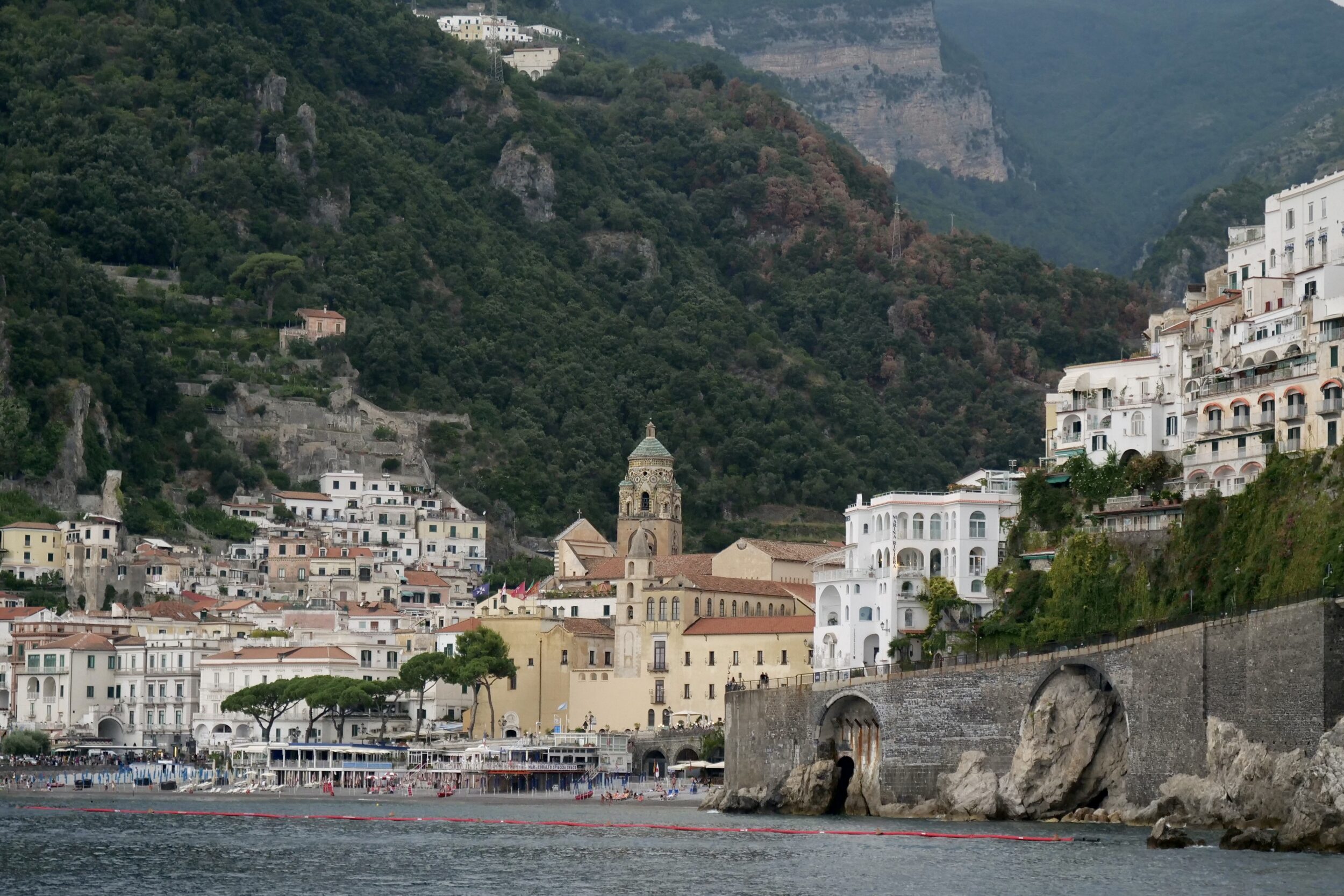
Recognise this town?


Its “permanent” population of circa 5,000 people is around the same size as Naracoorte’s, or circa half that of the Australian Portland.

Naracoorte is a prosperous South Australian country town; Portland is Victoria’s oldest “European” settlement.

The post’s actually-European town is very much older than any Australian one.

its population and power peaked circa one thousand years ago.

Its eponymous republic was then a significant maritime power, trading in many “things”, including enslaved humans.

Tourism-wise, its “peak” is circa right now, and it is stratospherically beyond Naracoorte’s or Portland’s wildest dreams…or nightmares.

Comments closed

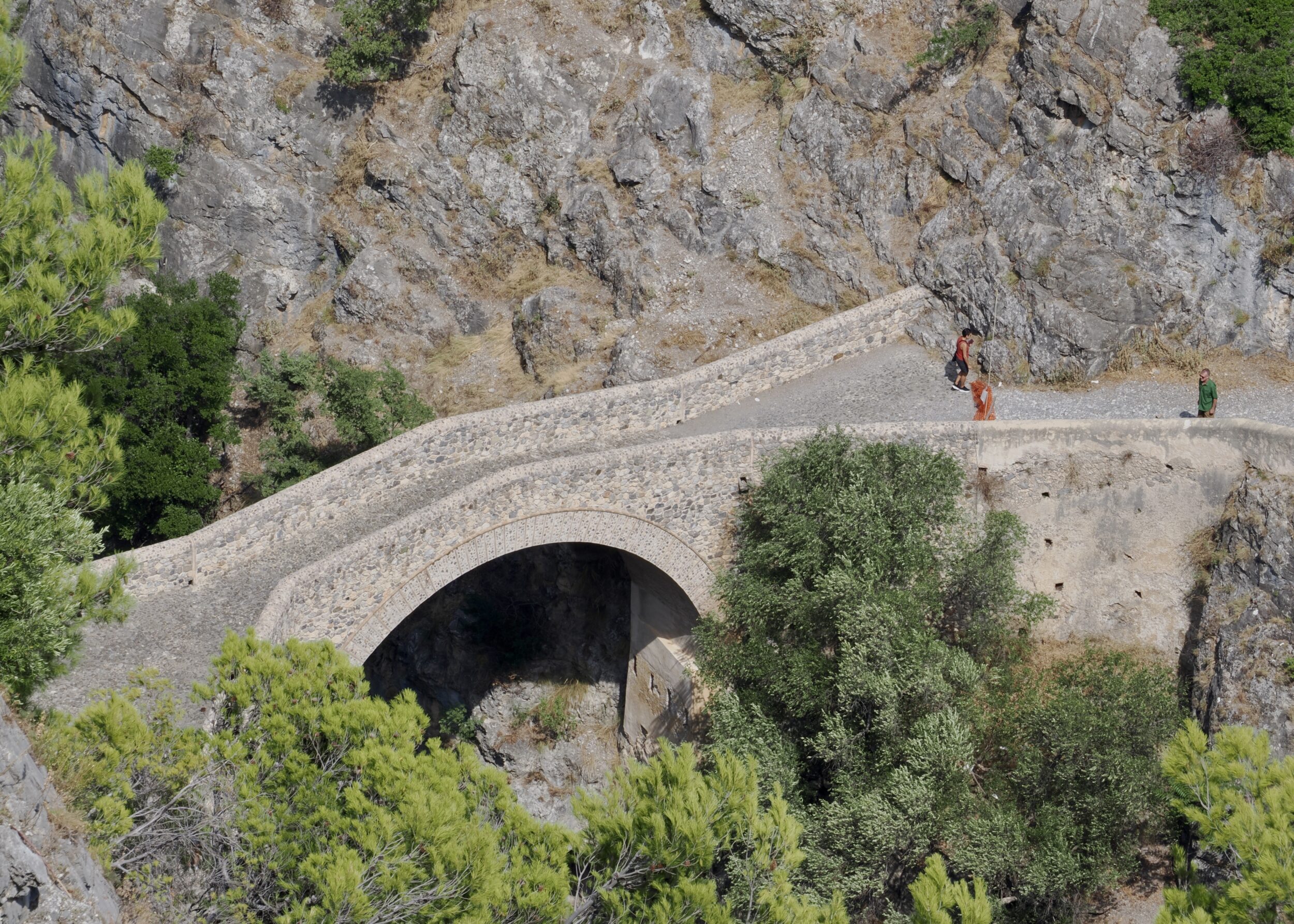
“Landscape” view/ much closer view (#16B in series: Devil’s Bridge, Raganello Gorge)


We had limited time, so my longer zoom lens did all the “walking”.

My vantage point was almost the same as per “16A”, but the focal length was nearly 18 times greater.

Comments closed

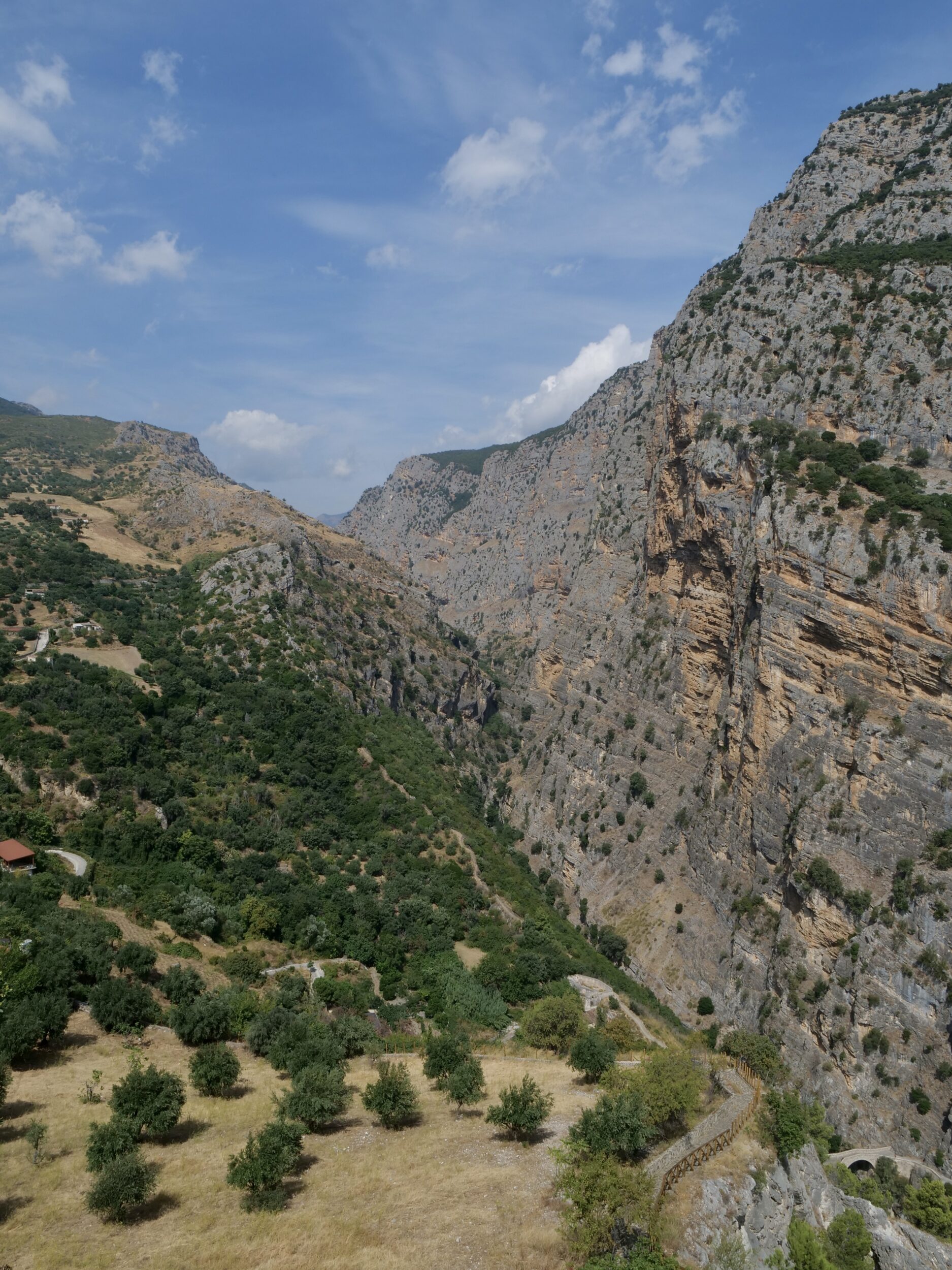
“Landscape” view/ much closer view (#16A in series: Devil’s Bridge, Raganello Gorge)


Chances are excellent that you have never heard of Civita – a southern Italian mountain village which sits within Calabria’s spectacular Raganello Gorge.

It is a very rewarding destination, both scenically and culturally…and there is adventure tourism” too, for climbers, kayakers and “white water” enthusiasts.

Civita is sometimes referred to as “the village of the Devil’s Bridge”.

The higher rim of the Raganello River’s gorge towers above Civita, but from village’s edge to Devil’s Bridge – which spans the river – it is still a long way down.

Comments closed

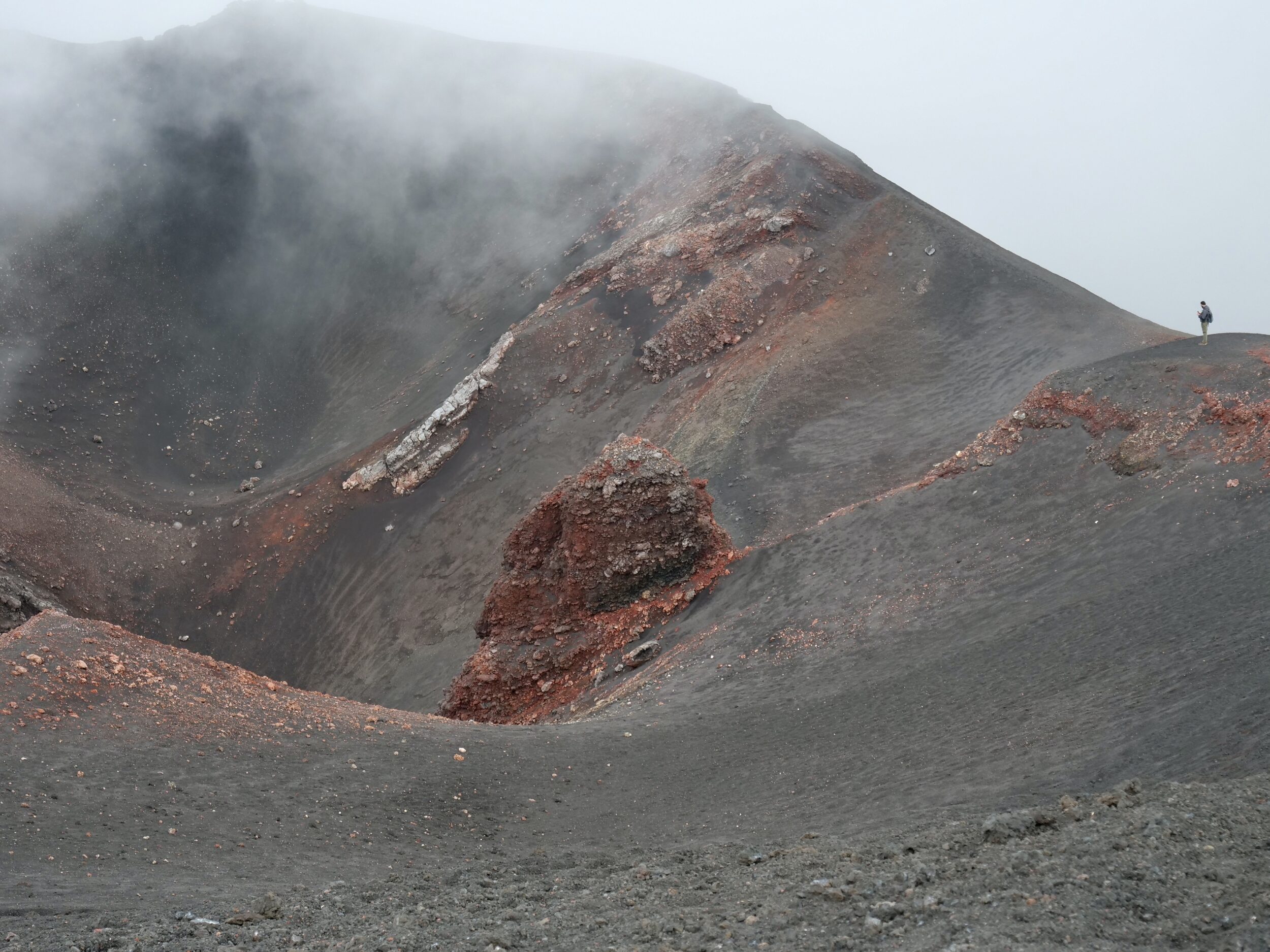
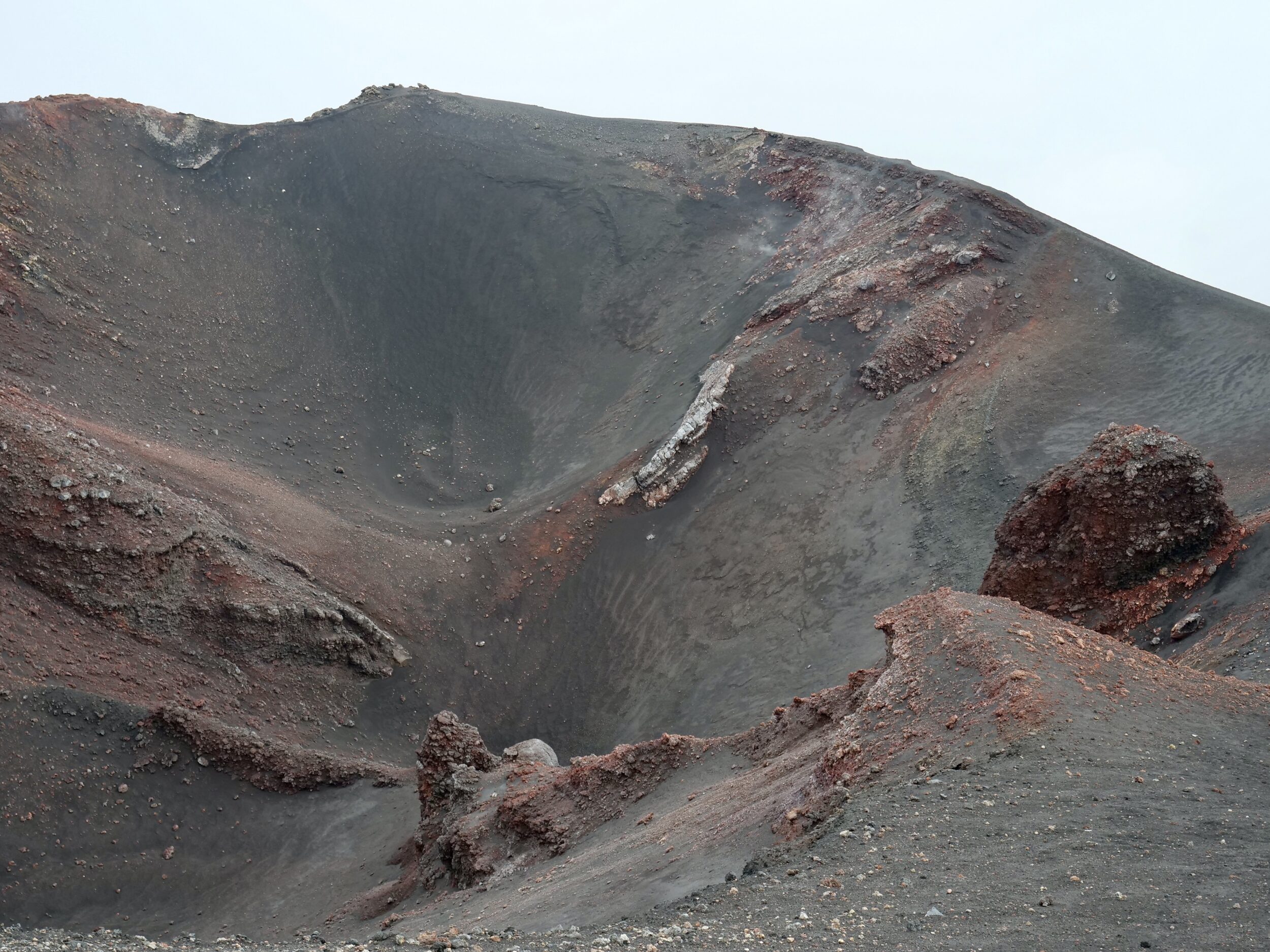
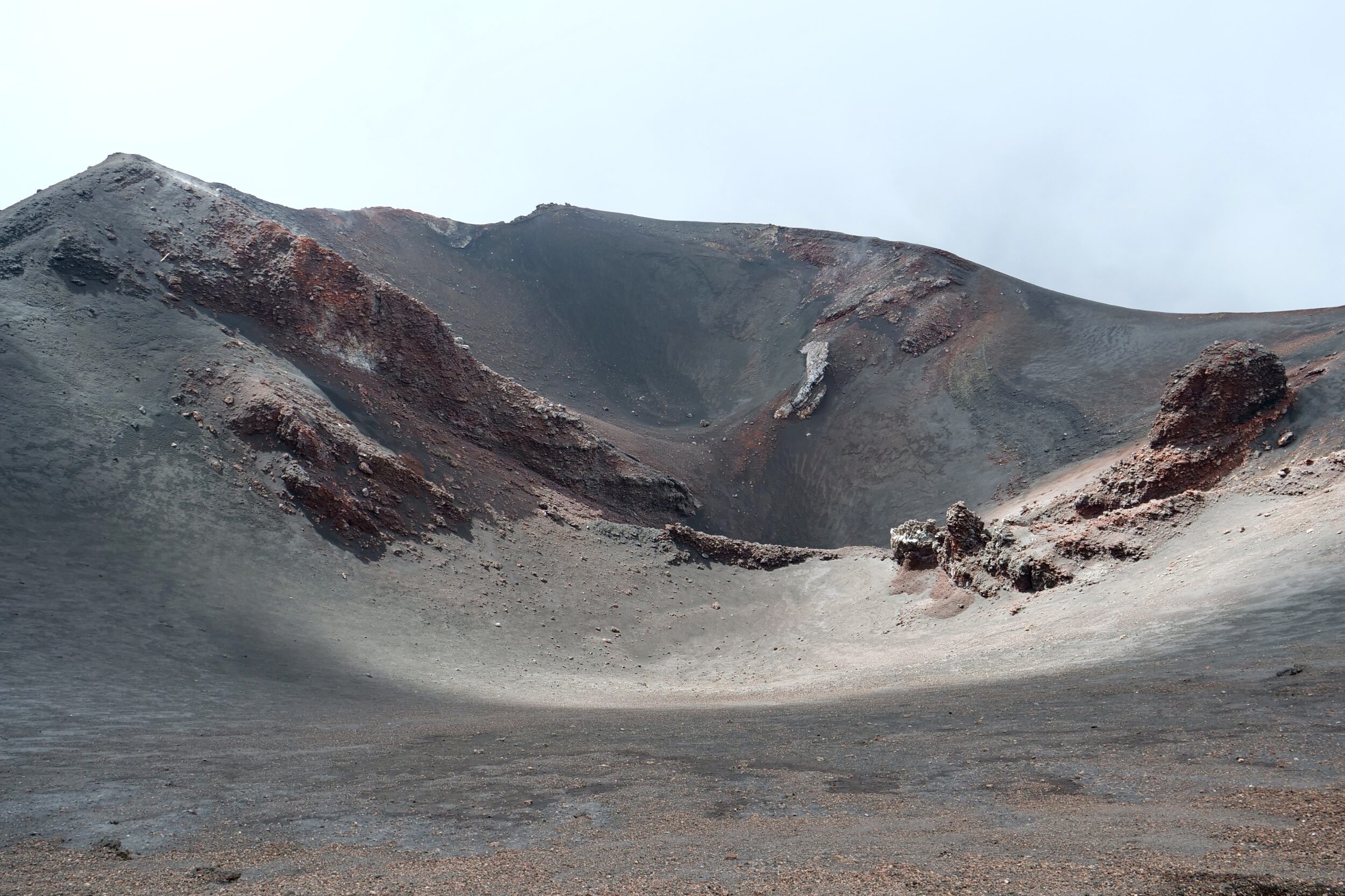
Aspects of Etna (#17 in series: cloudless, suddenly, briefly)


The big volcano is very dynamic, always engaged in a closely monitored – but not entirely predictable – “dance” of destruction, construction, collapse, erosion and “quieter periods”.

The cloud-dance on Etna’s upper slopes is even more quickly-shifting – variously, arriving, departing, thinning, thickening, “setting in”, and “burning off”/“dissolving”.

Just a couple of minutes earlier – when I took the previous post’s photos – we were yet to enjoy more than fleeting glimpses of small parts of this post’s crater-scape.

Comments closed