Skip to content →

Tag: King’s Park

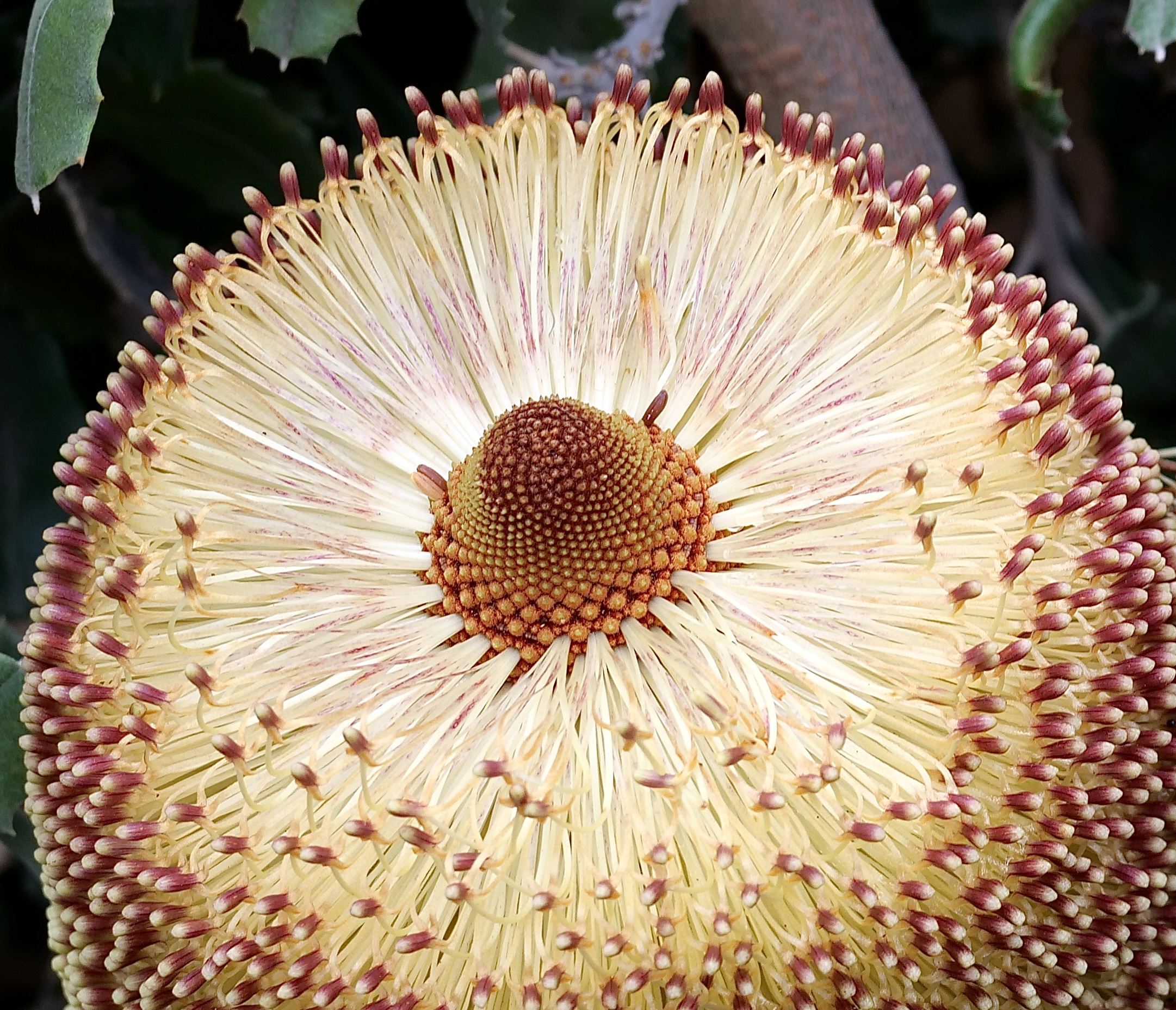
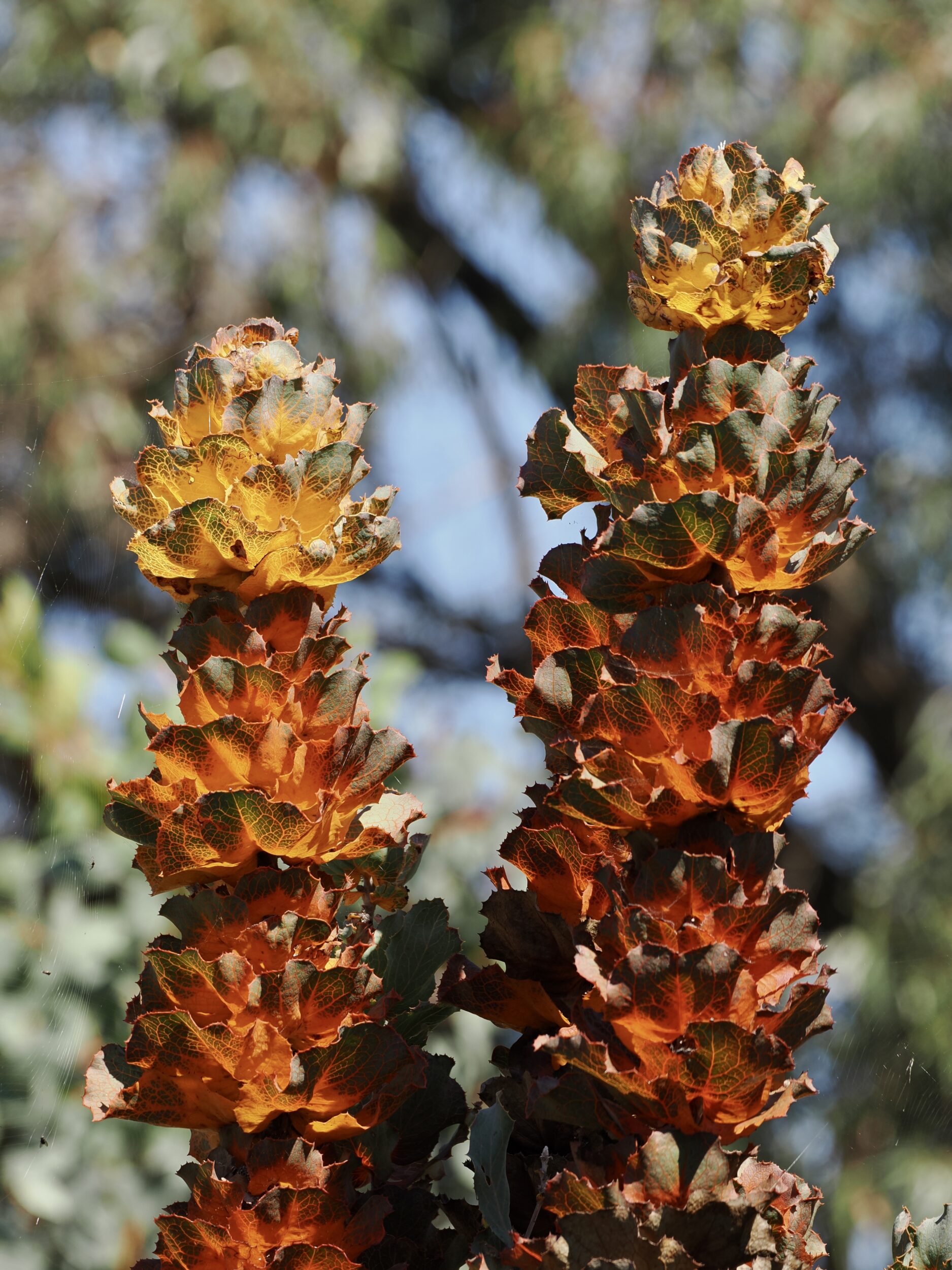
Looking down (#20 in series) on a Banksia


Membership of the genus is hotly debated – should Dryandras be included, or not? – but, however defined, Banksias are extraordinary plants.

These members of the Protea family are unique to Australia.

The overwhelming majority naturally occur only in certain parts of Western Australia’s southwest.

Depending on when one encounters it, a banksia’s flower spike can be prodigiously shaggy, “untidy”, and drab…. or a glorious example of perfect symmetry, Fibonacci sequences, and subtle colouration.

Each flowering “spike”/“cone” bears many – sometimes, several thousand – individual flowers.

I particularly love the appearance of some banksia flower spikes when viewed from directly above.

Leave a Comment
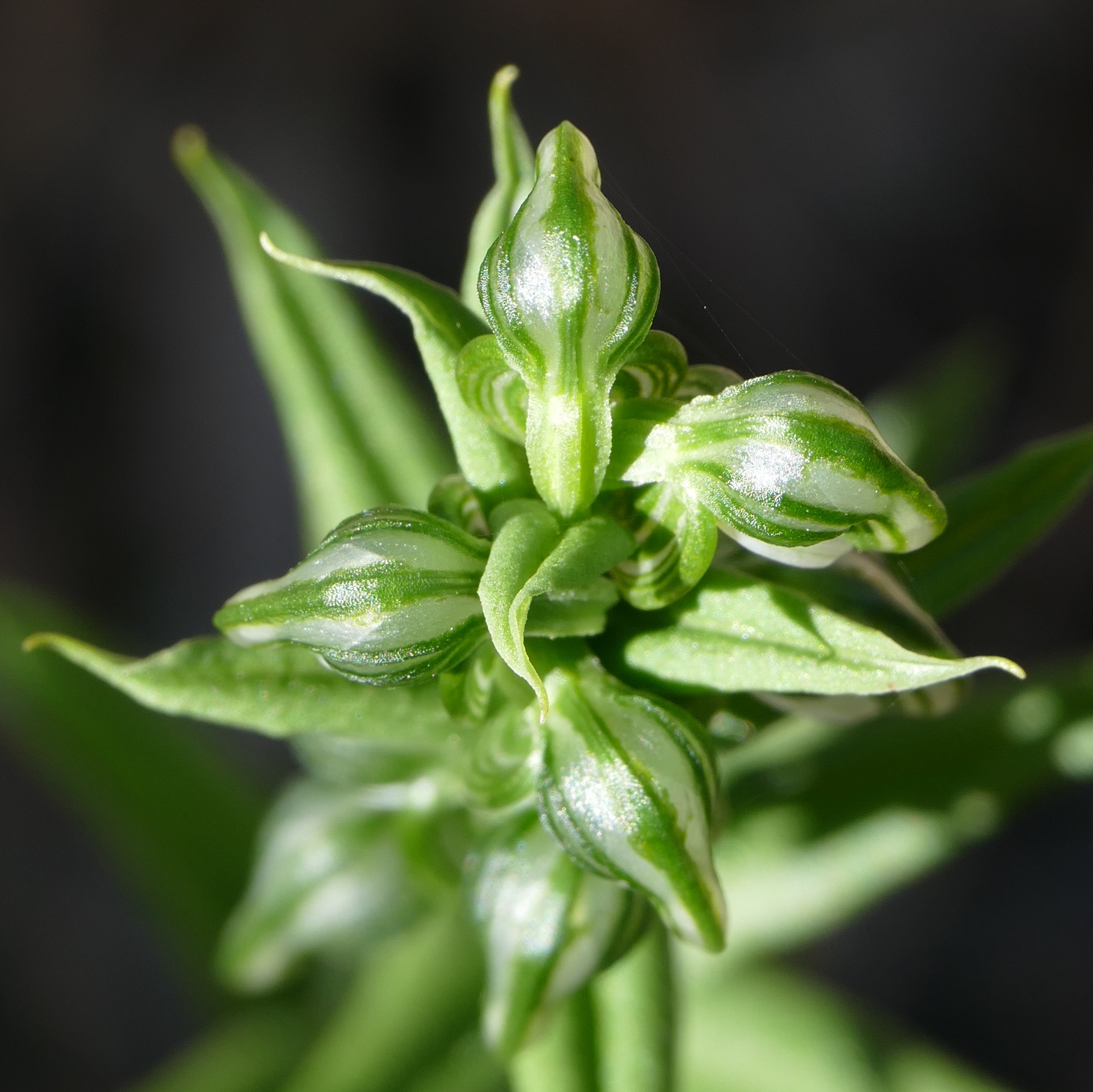
Looking down (#19 in series) on winter-flowering WA orchids)


Generally, with flowers, the best strategy is as per the generally-best approach to photographing people and most other living subjects….

1: try to be in (or very near to) the same horizontal plane as your subject.

2: point the lens straight at its eye/s or “face”.

3: ideally, do this when the sun is low, and behind you –  nicely illuminating the subject rather than turning it into a black silhouette or a mere scatteration of light.

Sometimes, however, the better plan – or at least, something worth trying – is to flout some or all such rules.

This post’s image looks straight down at the top of its subject, in “poor” light, in the middle of a winter day.

Leave a Comment

Spring 2025 in Perth (#17 in series: Hakea Victoria)


Commonly known as Royal Hakea, Hakea victoria is one of “our” planet’s most visually arresting plants.

Generally, it is their flowers that make certain flowering plants globally-celebrated, and keenly sought by gardeners.

With Hakea victoria, however, it is the leaves.

Comments closed

Spring 2025 in Perth (#16 in series: attractive pest)


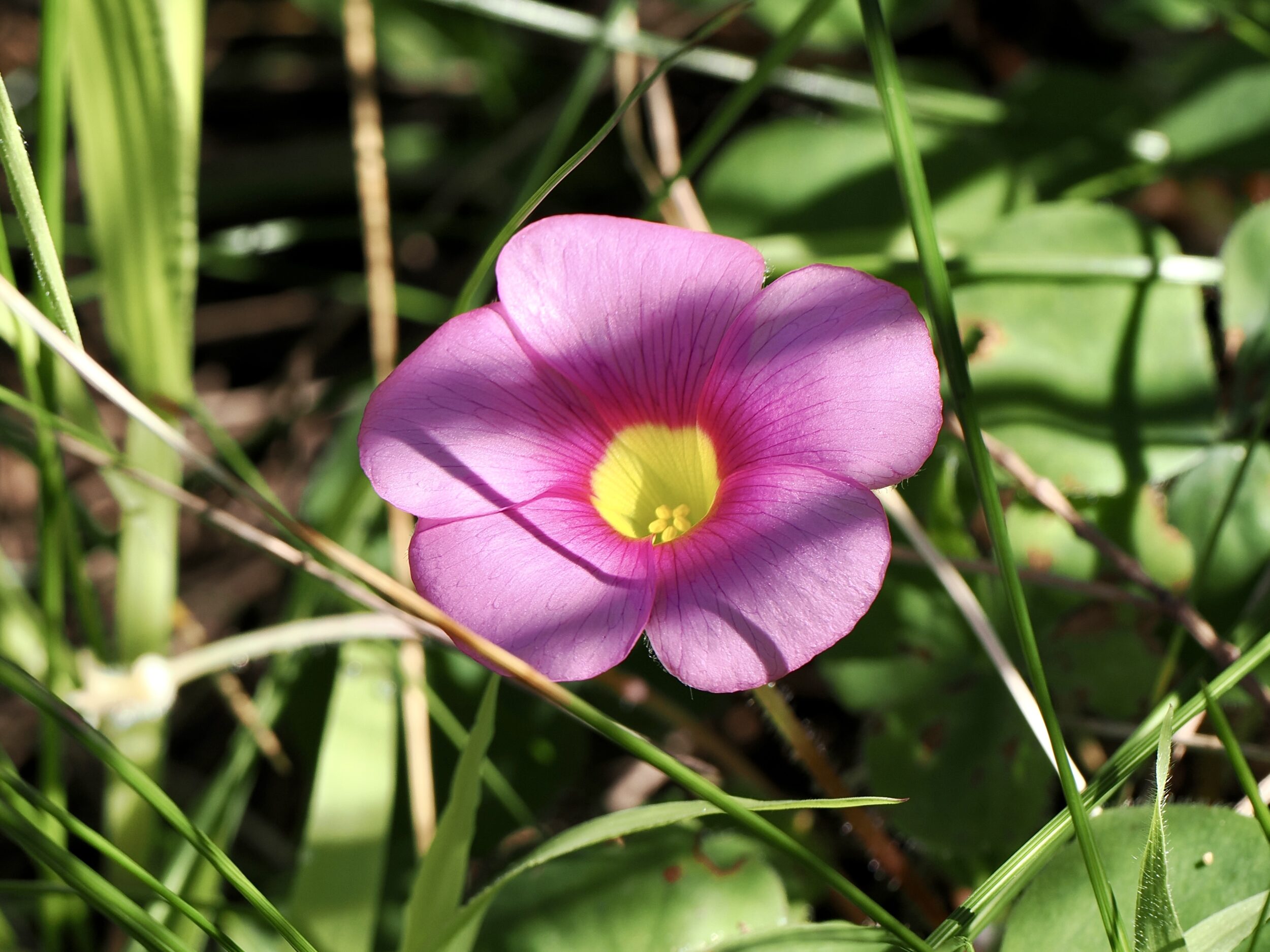
You are looking at a plant which is widely cultivated because it is pretty, very easy to grow, and is now available in a range of flower-colour options.

Oxalis purpurea is one of many “alien invaders” from Southern Africa.

They displace native species.

Alas, they (and other weed species from southern Africa) now proliferate even in places dedicated to the conservation and showcasing of Australian native flora.

Comments closed

Spring 2025 in Perth (#15 in series: “spiders” in Kings Park)


There are indeed a huge number of arachnids in Perth’s Kings Park, but they are not uppermost in the minds of many visiting  humans.

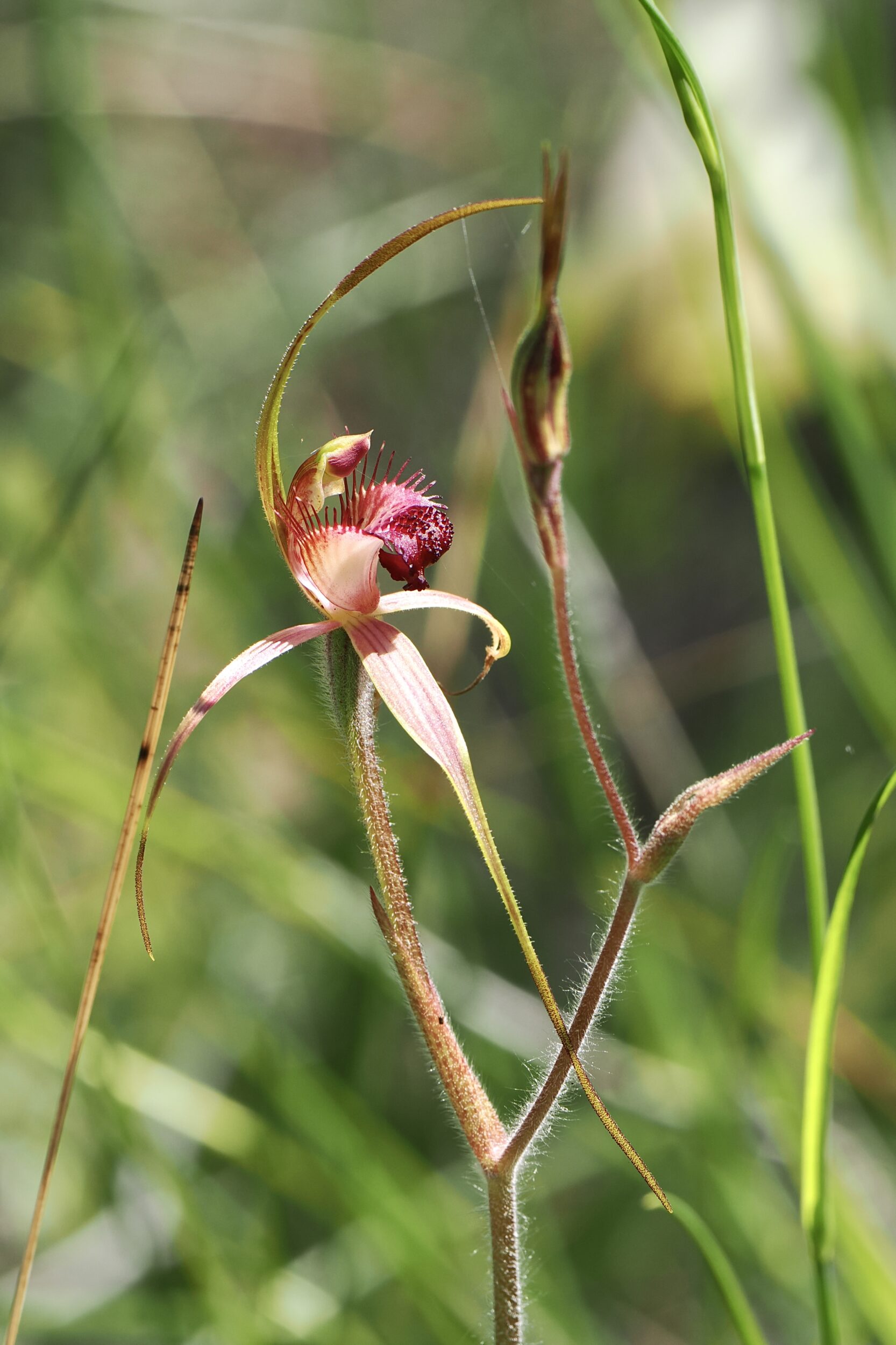
In springtime, it is spider orchids that draw many people.

Many of those humans wish to photograph them.

In their photos of spider orchids, actual spiders’ webs, and/or individual threads of spider’s silk, are often clearly visible; one such filament is present in the featured image, above.

Comments closed

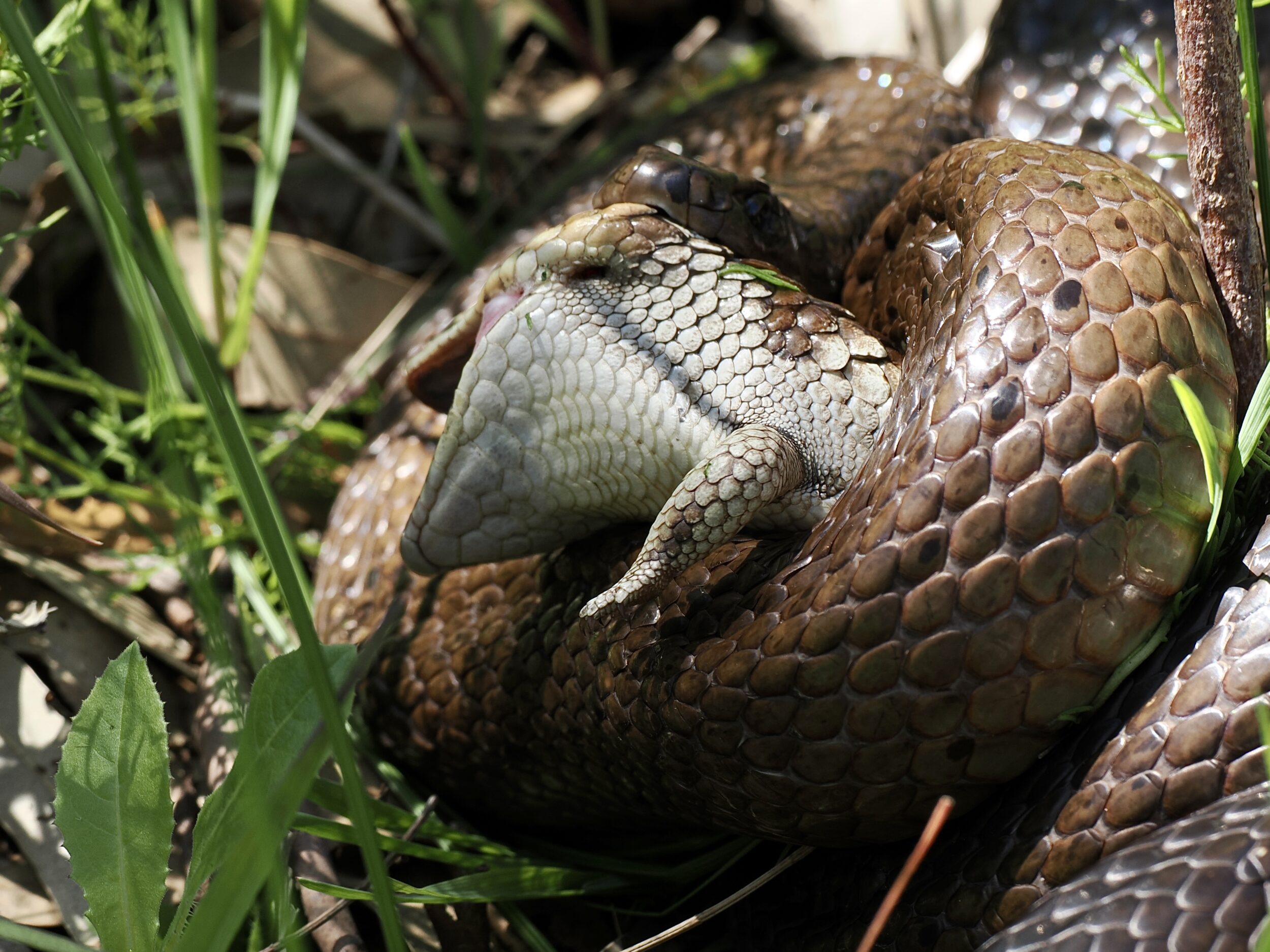
Spring 2025 in Perth (#14 in series: reptile v reptile “2” of 2)


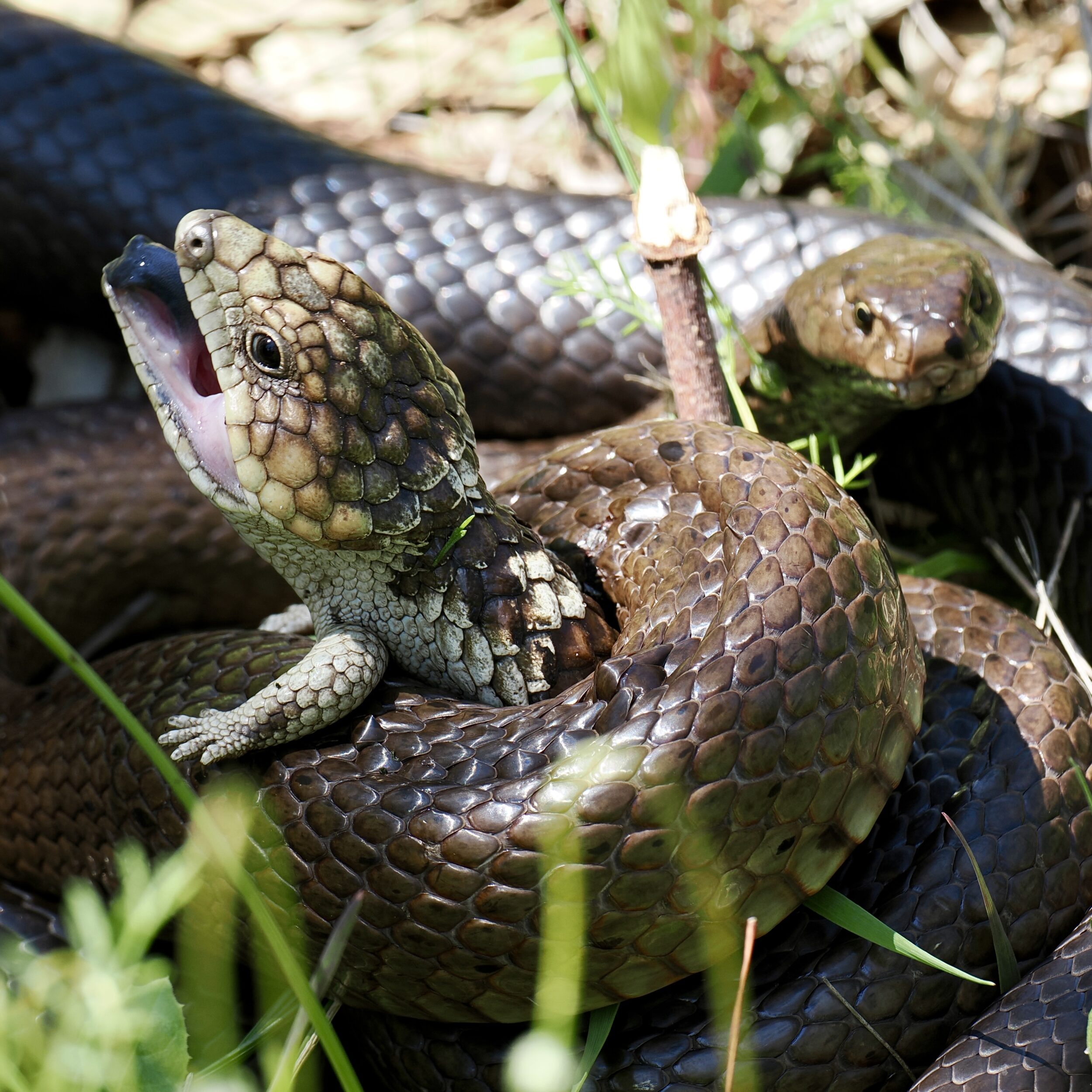
This post’s featured image was taken five minutes after the immediately-previous chapter’s.

As you can see, the bobtail was still abiding by an instruction famously issued by the most celebrated 20th century Welsh poet: Do not go gentle into that good night

Comments closed

Spring 2025 in Perth (#13 in series: reptile v reptile. (“1” of 2)


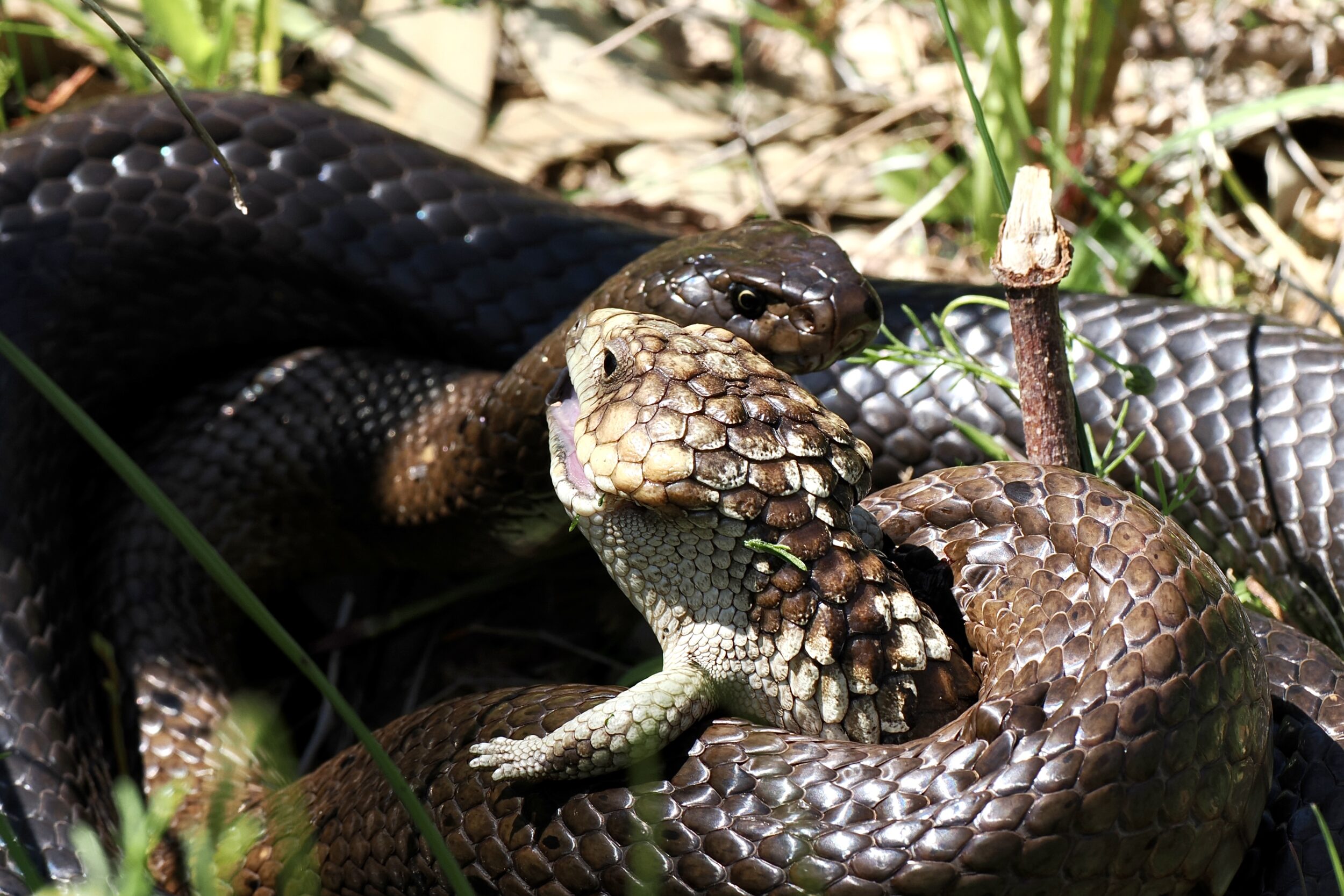
The Dugite is a highly venomous brown snake.

Pseudonaja affinis does very well in 21st century Perth, where house mice (“kindly”/accidentally introduced by European colonists) have become the species’ preferred prey.

Dugites, however do still target “traditional” prey: lizards, rodents and other snakes, including fellow dugites.

On 20 September 2025 a close encounter of the “dugite v bobtail” kind provided the most dramatic experience of our 42 years as frequent visitors to Kings Park.

We were in “wildflower” mode, and had not expected a “safari” experience!

Comments closed

Spring 2025 in Perth (#12 in series: killing in city’s best-loved park)


Photographic Exhibit “A” was taken at 11.31 am on 21 September 2025.

We were on a walking trail within the bushland section of one of the world’s greatest urban parks.

Had we wished to walk from the Kings Park “murder scene” to the very centre of Perth’s CBD, it would not have taken us more than 30 minutes.

Comments closed

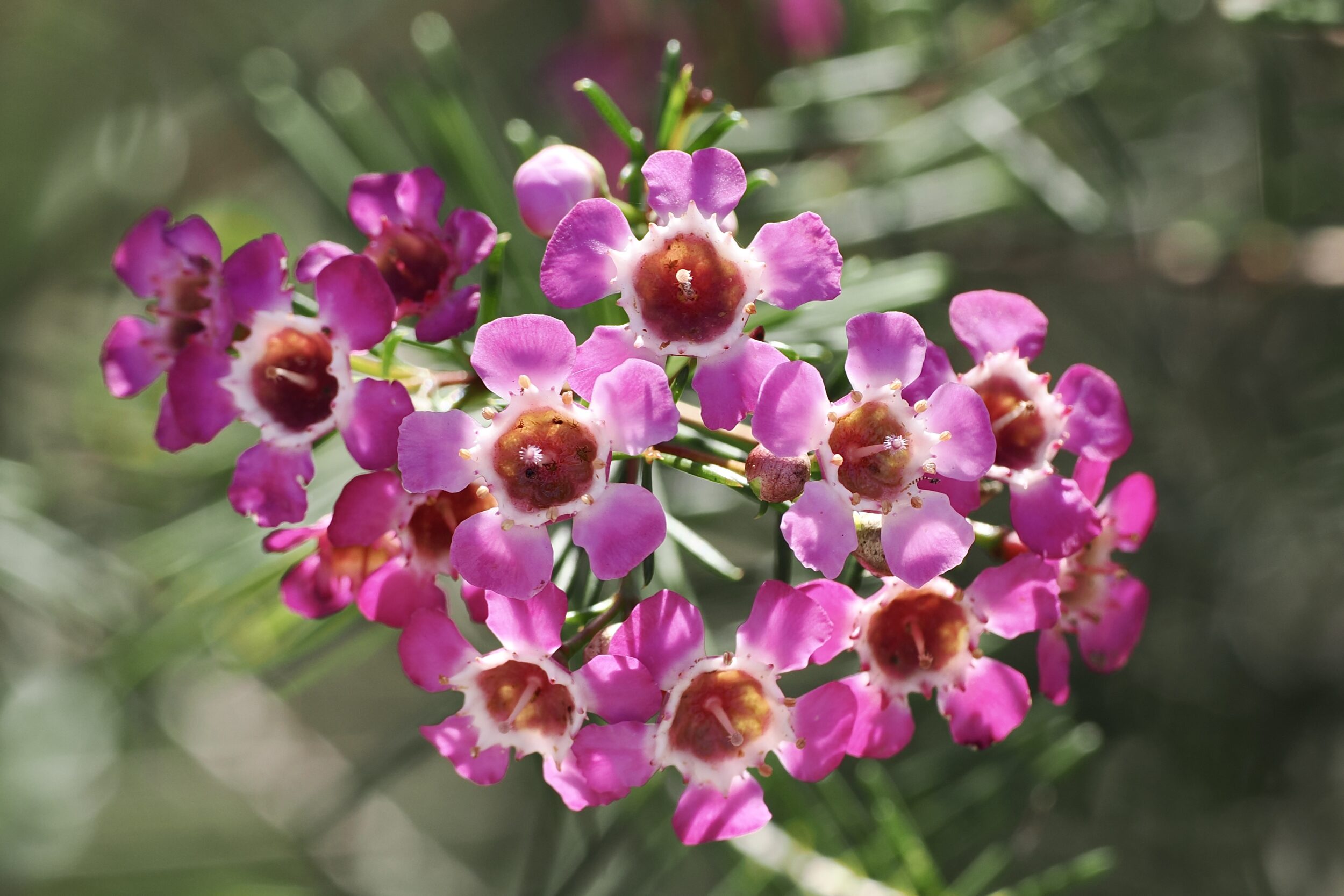
Spring 2025 in Perth (#3 in series: waxflowers, “1” of 2 )


Chamelaucium – the genus known as waxflowers – has fourteen generally-recognised species.

They are members of the Myrtle family.

Some – most especially Geraldton wax, Chamelaucium uncinatum – are highly prized, globally, by florists and gardeners.

However, as is true of so many highly distinctive flowering plants, the natural range for all members of this genus is entirely confined to parts of southwestern Western Australia.

Comments closed

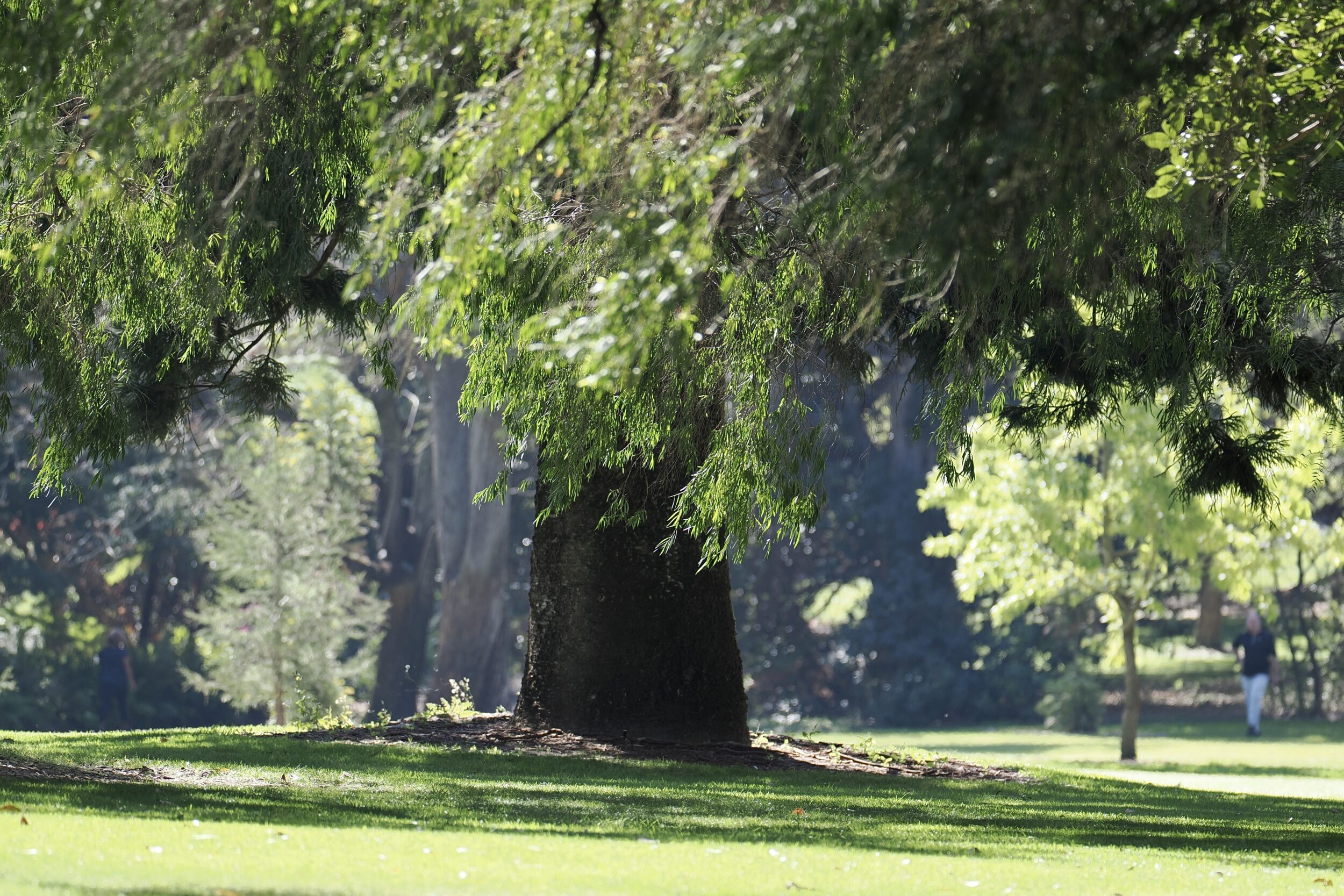
Kings Park, late August 2023


Perth’s Kings Park is really three parks in one… plus “lookouts”.

The “lookouts” offer sweeping views from the rim of the scarp on Kings Park’s eastern and southern sides.

Looking east, they flatter the adjacent CBD, and look across the Swan Coastal Plain to the Darling Scarp.

Looking south, they show the full splendour of the Swan-Canning estuary, around which Perth’s wealthier suburbs sit.

If you walk (or catch a free bus) from the CBD – or West Perth – into Kings Park, the loveliness of its manicured, “picnic-friendly”, well-treed, grassed parkland is immediately obvious, as you can see in the featured image, above.

Every pleasant, sunny weekend, thousands of people take advantage of Kings Park’s generous supply of that kind of parkland.

However, what makes Kings Park so very special are its two other kinds of “park”:  a superb botanical garden (which showcases WA’s extraordinary flora, conducts internationally significant research, and provides useful information to the general public) and its astonishingly expansive, essentially “natural” bush/woodland section.

Comments closed