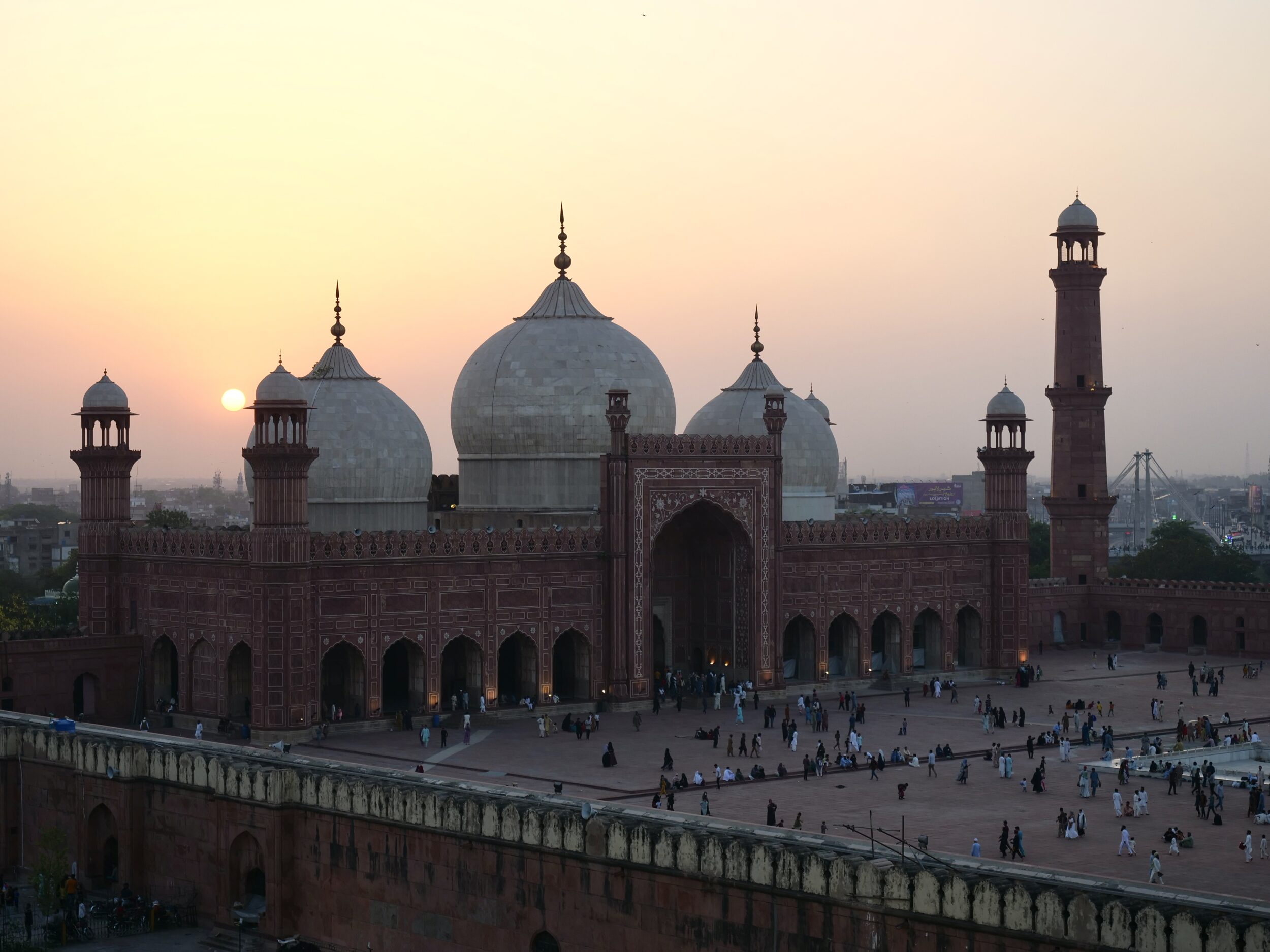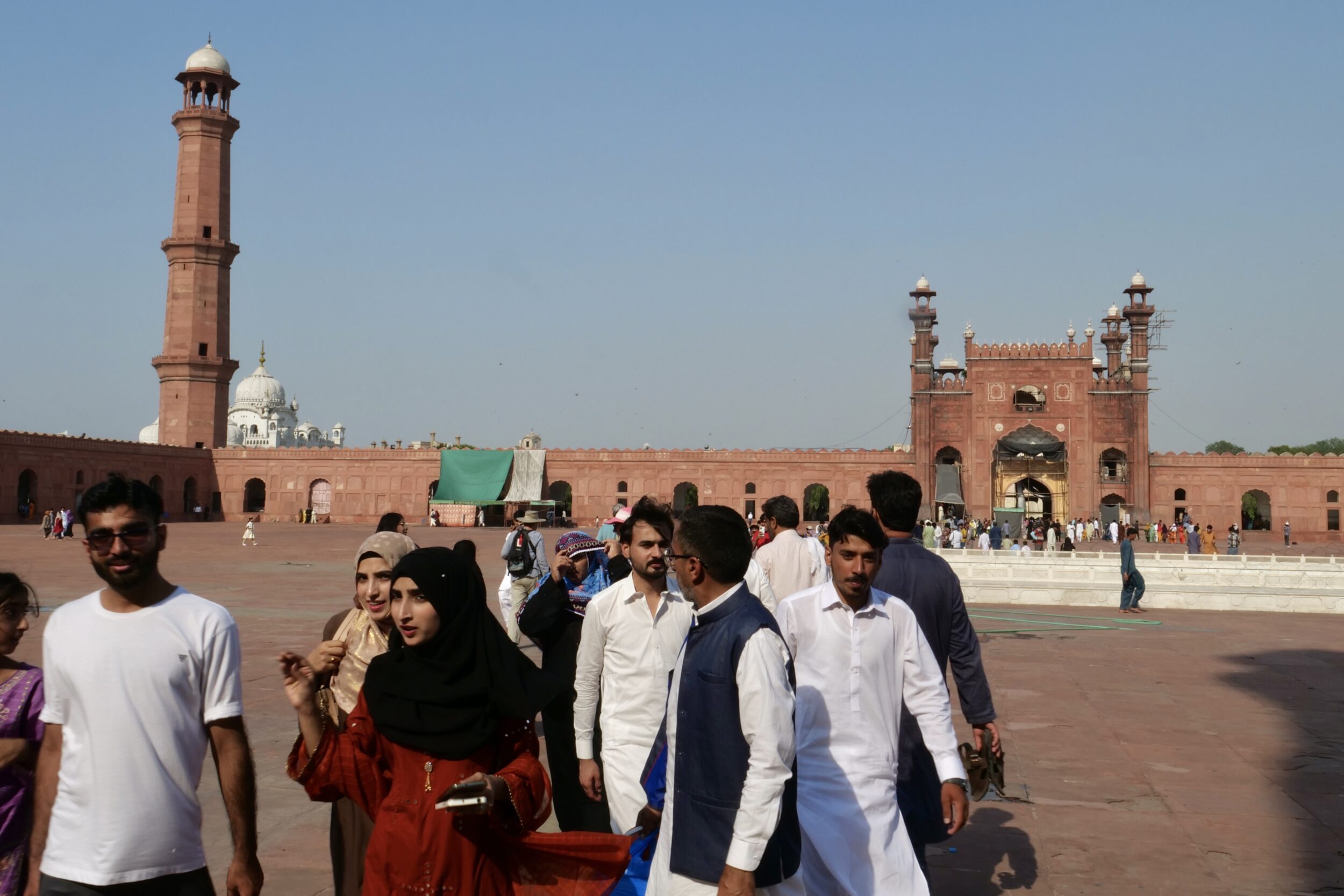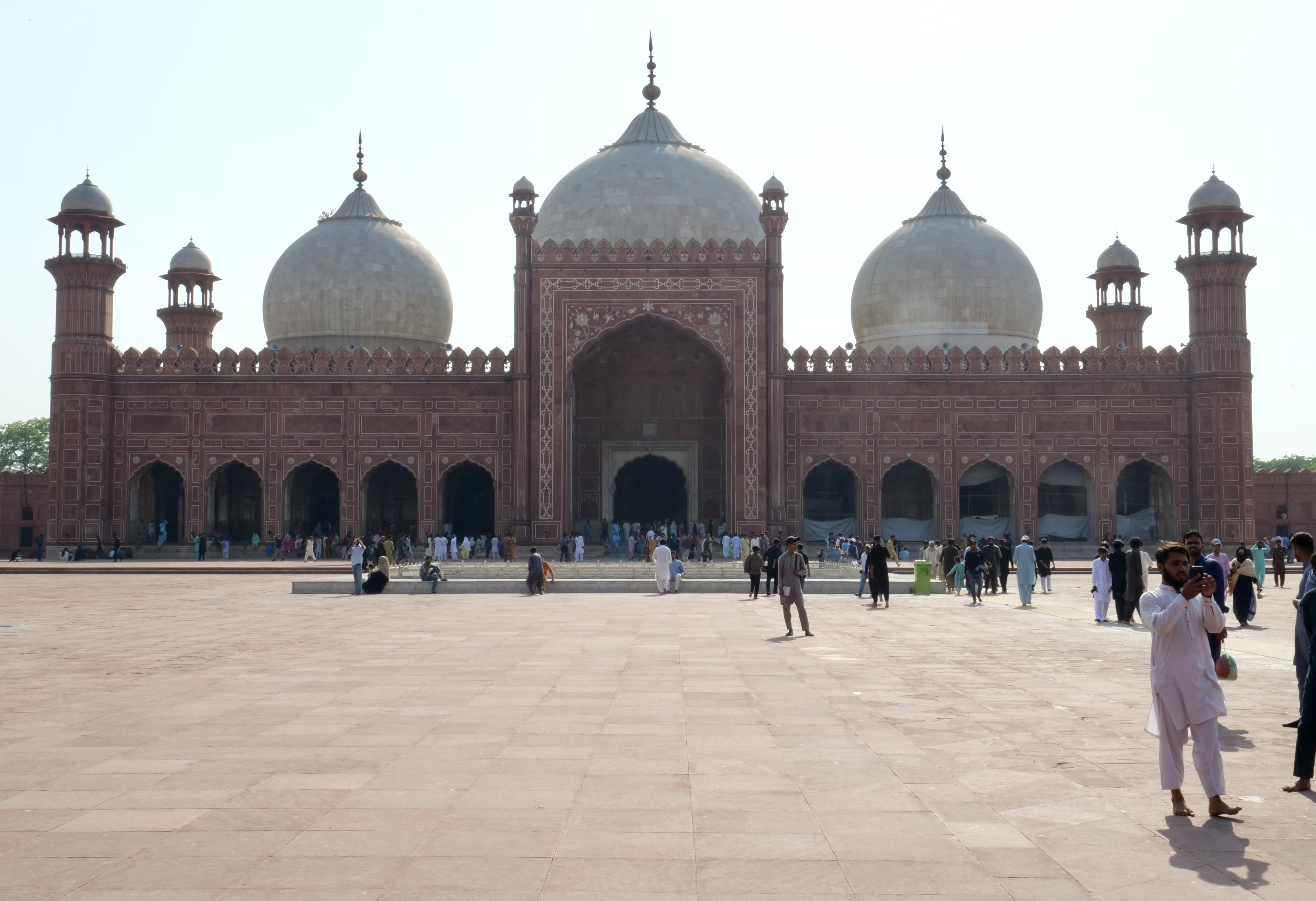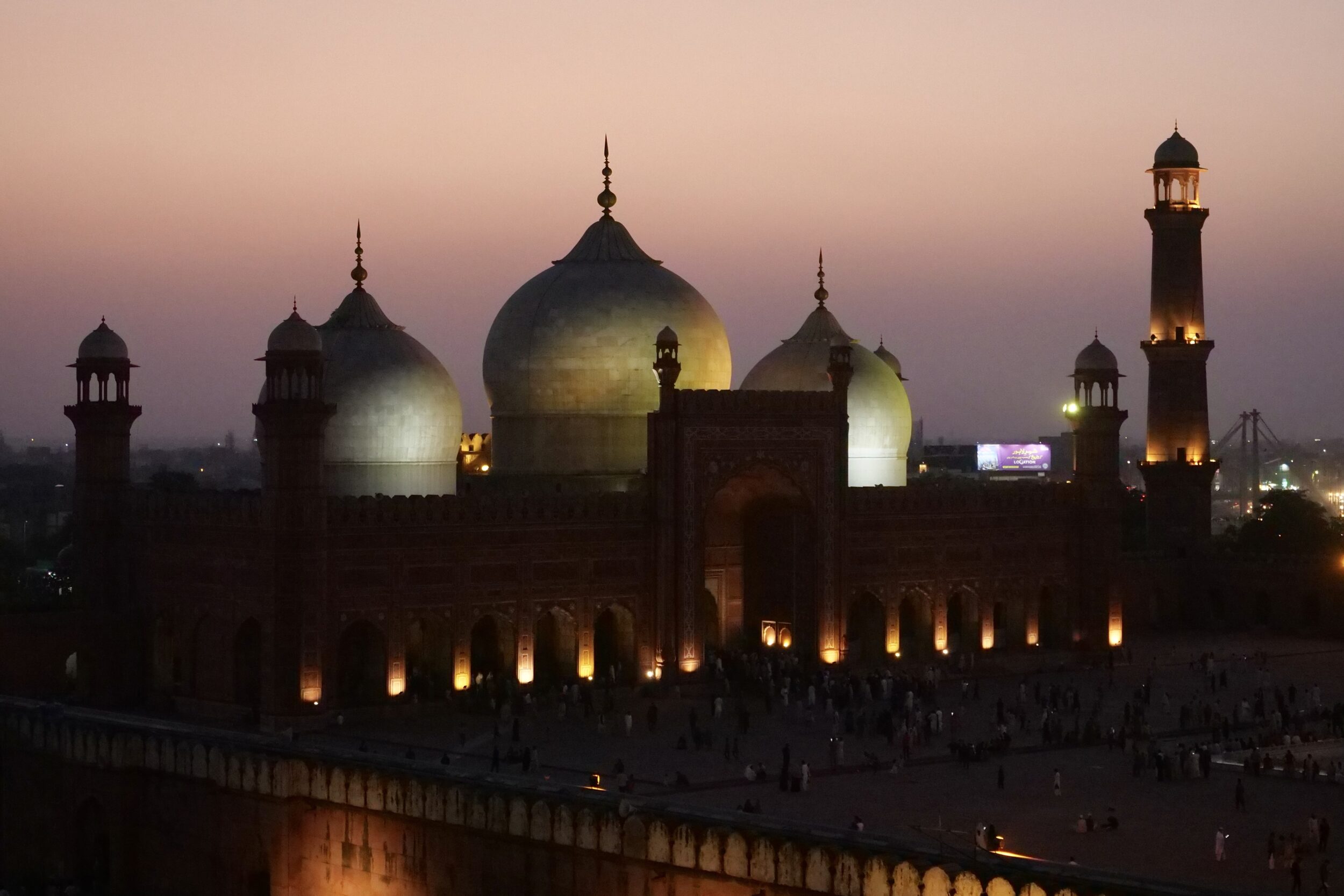
On 12 May 2024 in Lahore sunset was at 6.50 pm.
Shortly thereafter, the relevant lights at Badshahi Mosque were switched on.
This post’s photos were taken within sixty seconds of each other, from Haveli Restaurant’s terrace.
Comments closedNatural splendour, real musics, wines, wordpower
On 12 May 2024 in Lahore sunset was at 6.50 pm.
Shortly thereafter, the relevant lights at Badshahi Mosque were switched on.
This post’s photos were taken within sixty seconds of each other, from Haveli Restaurant’s terrace.
Comments closed
Following its completion in 1673, Lahore’s Badshahi Mosque remained the world’s biggest mosque/masjid for nearly three centuries.
Size-wise, it is now #3 in Pakistan.
Globally, it sits at the lower end of the “top 20”, or has recently lost that status.
Aesthetically, however, Badshahi Mosque is forever unlikely to have more than a very few peers.
Comments closed
The featured image (immediately above) was taken at 3.47 pm on 12 May 2024; the main building was behind me, as I looked east-ish, across part of Badshahi Mosque’s courtyard.
That paved courtyard’s 25,600 square metres account for most of the mosque’s “footprint”.
Lahore Fort and Badshahi Mosque are almost adjacent.
Their main gates face each other, respectively, from the eastern and western sides of the Hazuri Bagh – a formerly-“royal” garden which is now a well-loved “public” space.
Comments closed
You are looking at Pakistan’s most “emblematic” building.
At the time of its astonishingly swift construction, Lahore’s Badshahi Mosque (“Badshahi Masjid”, to locals) was the world’s largest mosque/masjid.
Construction began in 1671.
It opened two years later.
342 years on, the Mughal Empire’s final large-scale architectural marvel still inspires awe.
Its main building – pictured above – is the key visual presence on every Pakistan 500 rupee banknote.
Comments closed
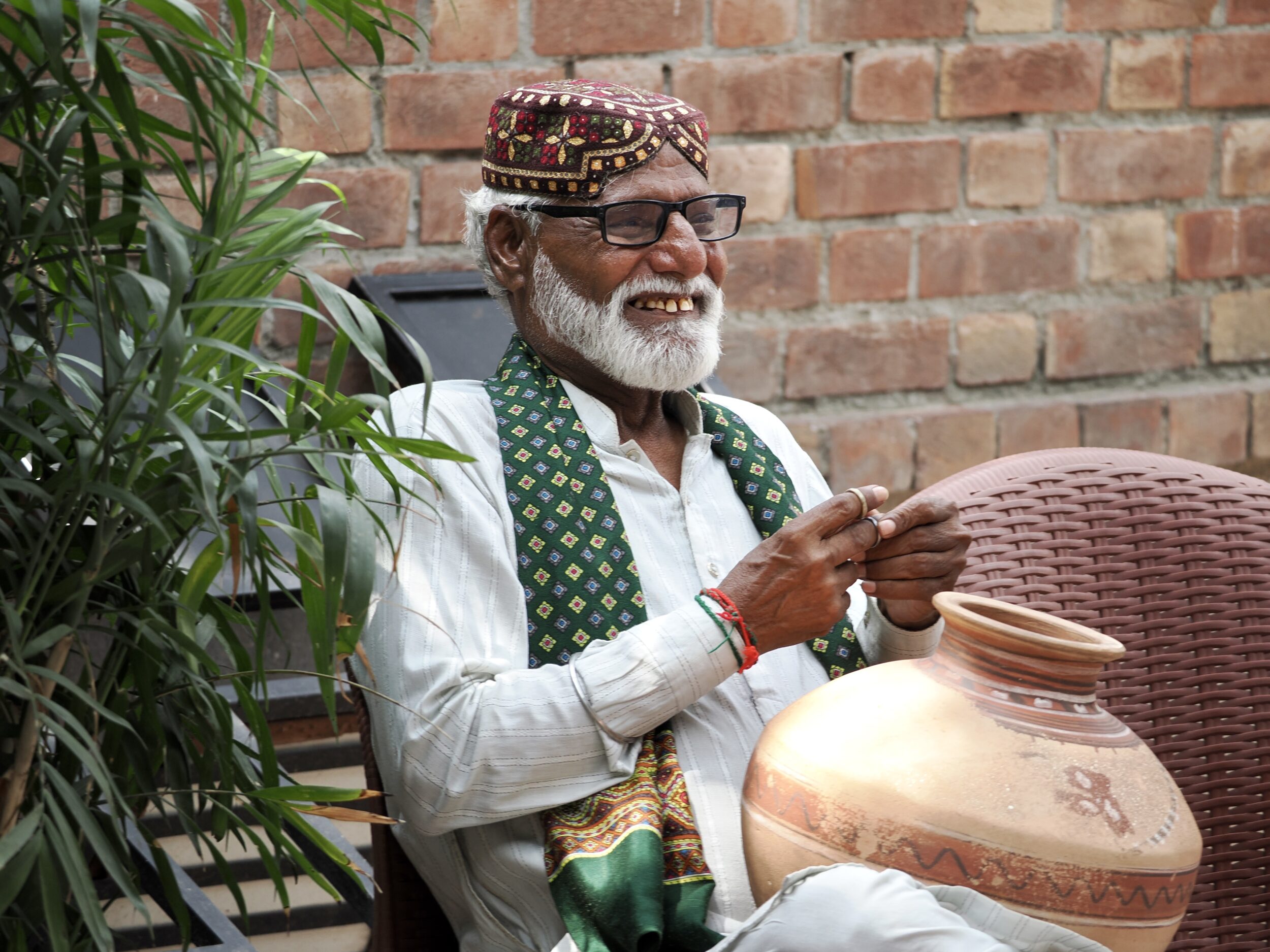
In the “western” world most drums are made from metal, wood and “skin” (although that “skin” is now usually synthetic) and they are usually played with sticks, mallets, or brushes.
In Asia and Africa, however, many drummers hold no stick or mallet, and their instrument is a clay pot or a vegetable gourd.
Doubtless, some “westerners” imagine that music played by a hand drummer on a clay pot is necessarily simple, crude, “unrefined”.
That assumption is dead wrong…as is strikingly illustrated by this post’s “musical bonus”.
Comments closed
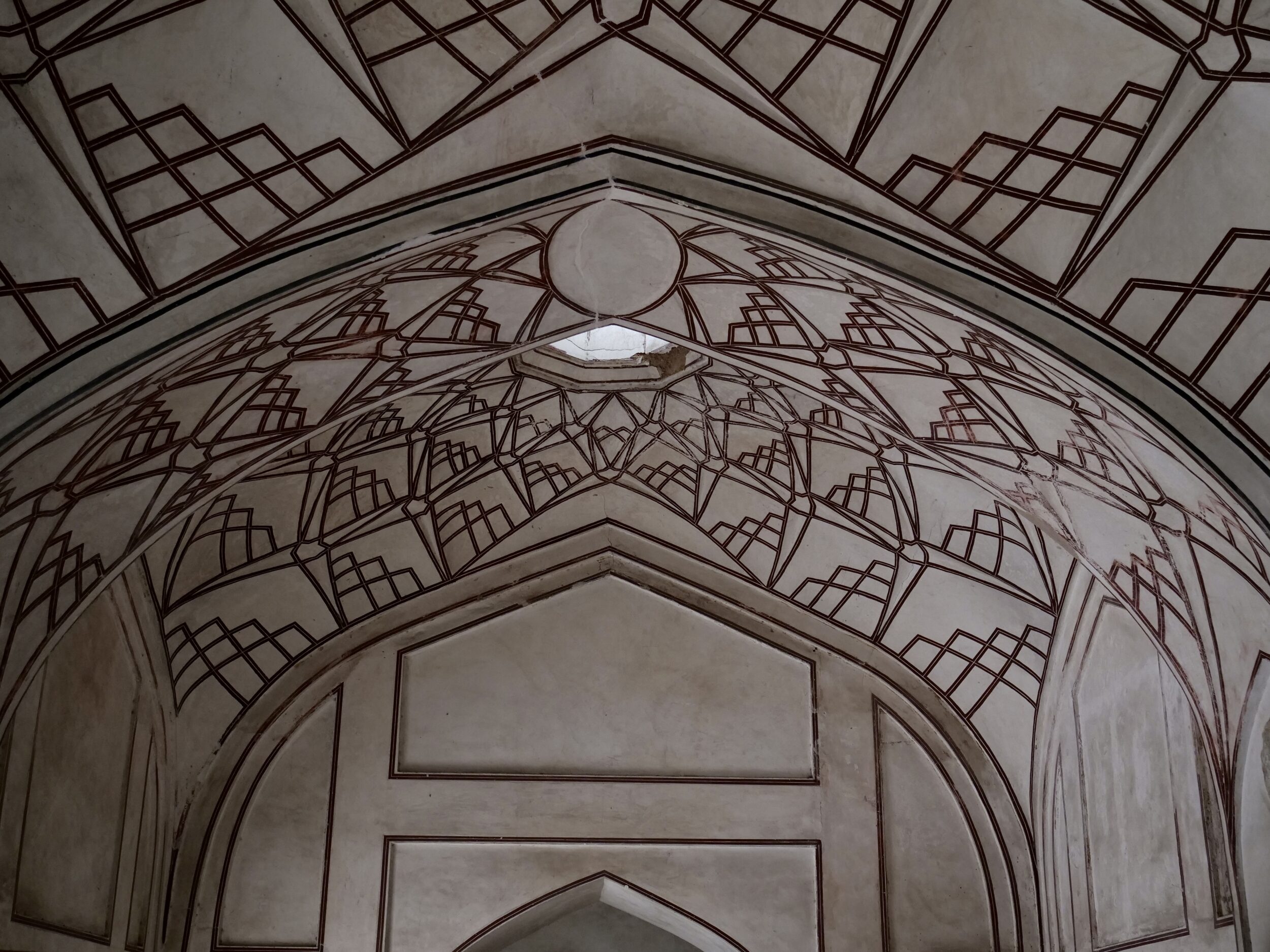
The Shahi Hammam’s smaller rooms’ decorative frescoes – as illustrated in this post’s featured image – are geometric/“abstract” and very “spare”.
They are no less beautiful than the big rooms’ much more elaborate and oft-“representational” frescoes.
Contrary to widespread belief, Islam does not impose a blanket ban on “representational” visual art in general, nor on the depiction of humans, specifically.
For instance, “Persian miniature” – one of the best-loved, most influential forms of visual art – was fostered by Muslim rulers; a key feature of the genre is its depiction of (non -sainted) human beings.
That said, what you can see below is something that would never have been approved.
It is a cheeky, “improper” bit of egocentricity on the part of one anonymous artist/artisan.
Comments closed
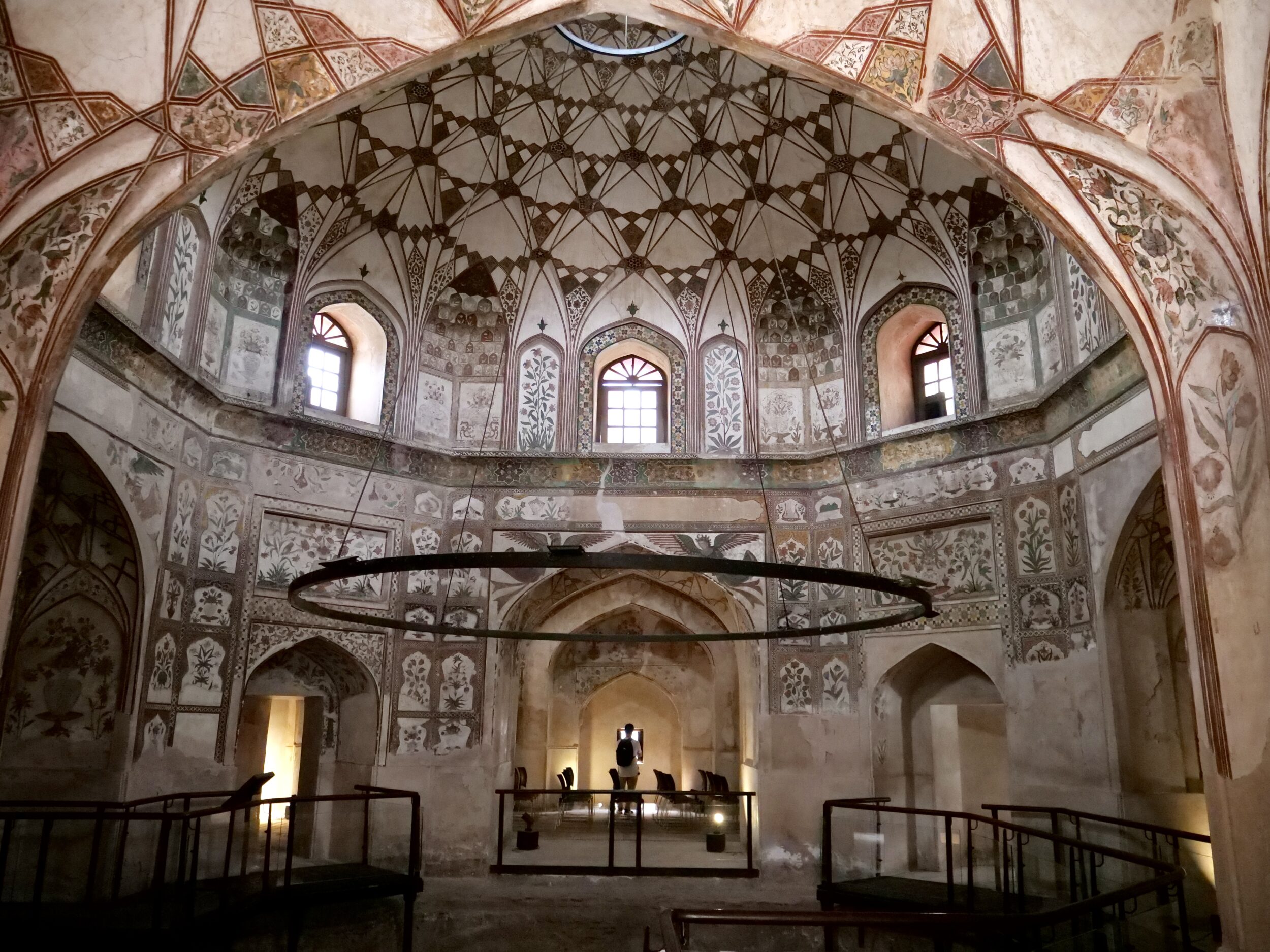
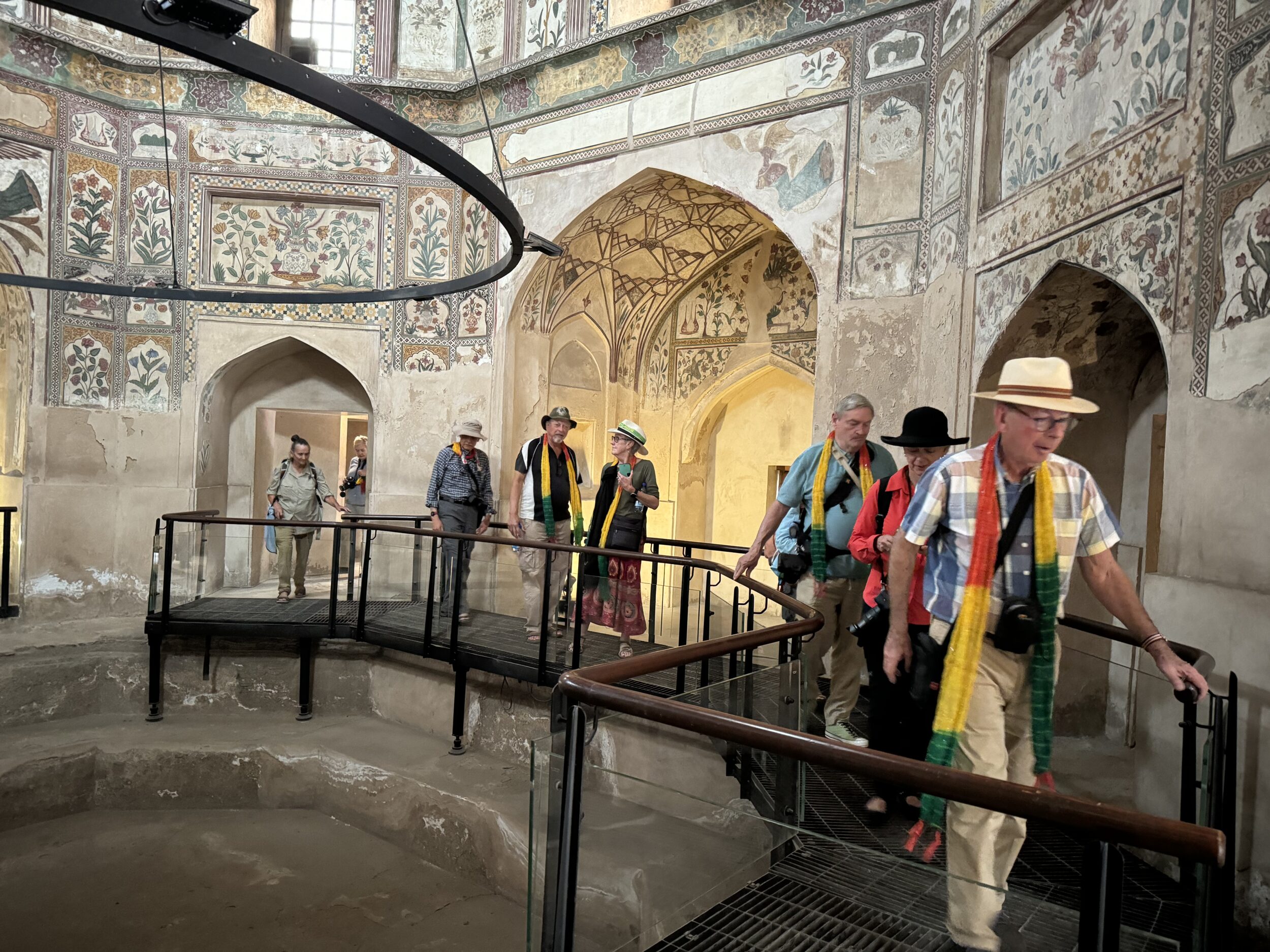
My photo shows the grandest of this monumental bathhouse’s 21 rooms.
The “cold room” was the “entry statement” – the place where public “occasions” and gatherings could occur, separate from the actual baths, their steam, their heat and their need for “privacy”.
Westerners tend to call any such building a “Turkish Bath”.
Turkey, however, never had a monopoly on public hot baths. (nor did Asia. For example, the English city of Bath is so-named after the public baths constructed by its Roman conquerors)
As tended to be true of Mughal Empire structures on the Indian subcontinent, this building’s aesthetics are somewhat eclectic, but the predominant “accent” of the Shahi Hammam is “Persian”…definitely not “Turkish”.
Comments closed
The Shahi Hammam was constructed in the 1630s CE, in conjunction with the nearby Wazir Khan mosque.
Both a “royal” and a “public” bathhouse, the gloriously decorated Shahi Hammam was very much more than an “ablution block”; it was a meeting place, a social hub, and it provided a large portion of the mosque’s income.
However, the Mughal Empire soon declined and fell.
Comments closed
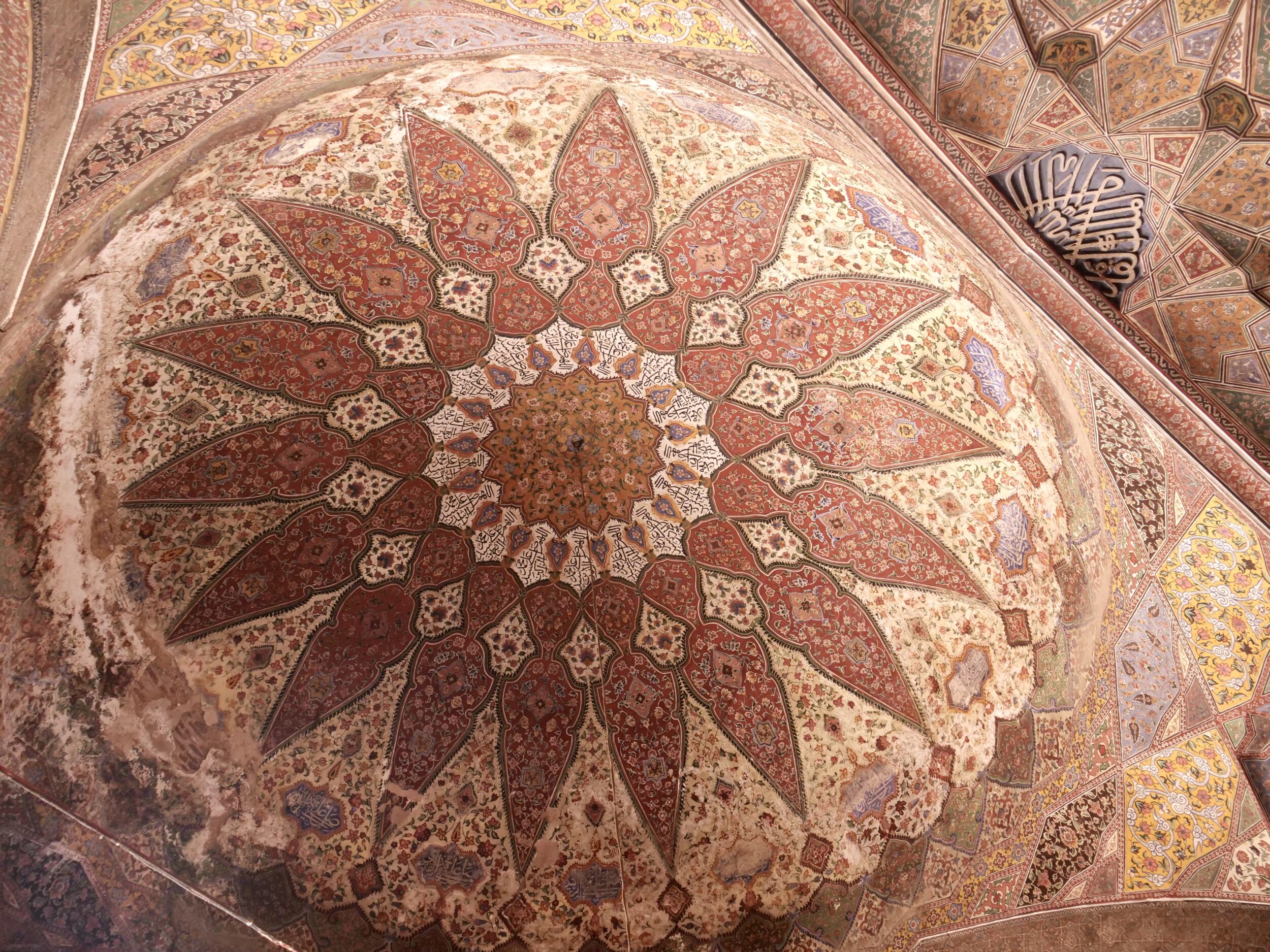
No photograph can do them justice.
(and “serious” attempts to do so would require equipment that very few people possess)
However, the frescoes which adorn this mosque’s domes are guaranteed to amaze and delight almost anyone who looks up at them.
Comments closed
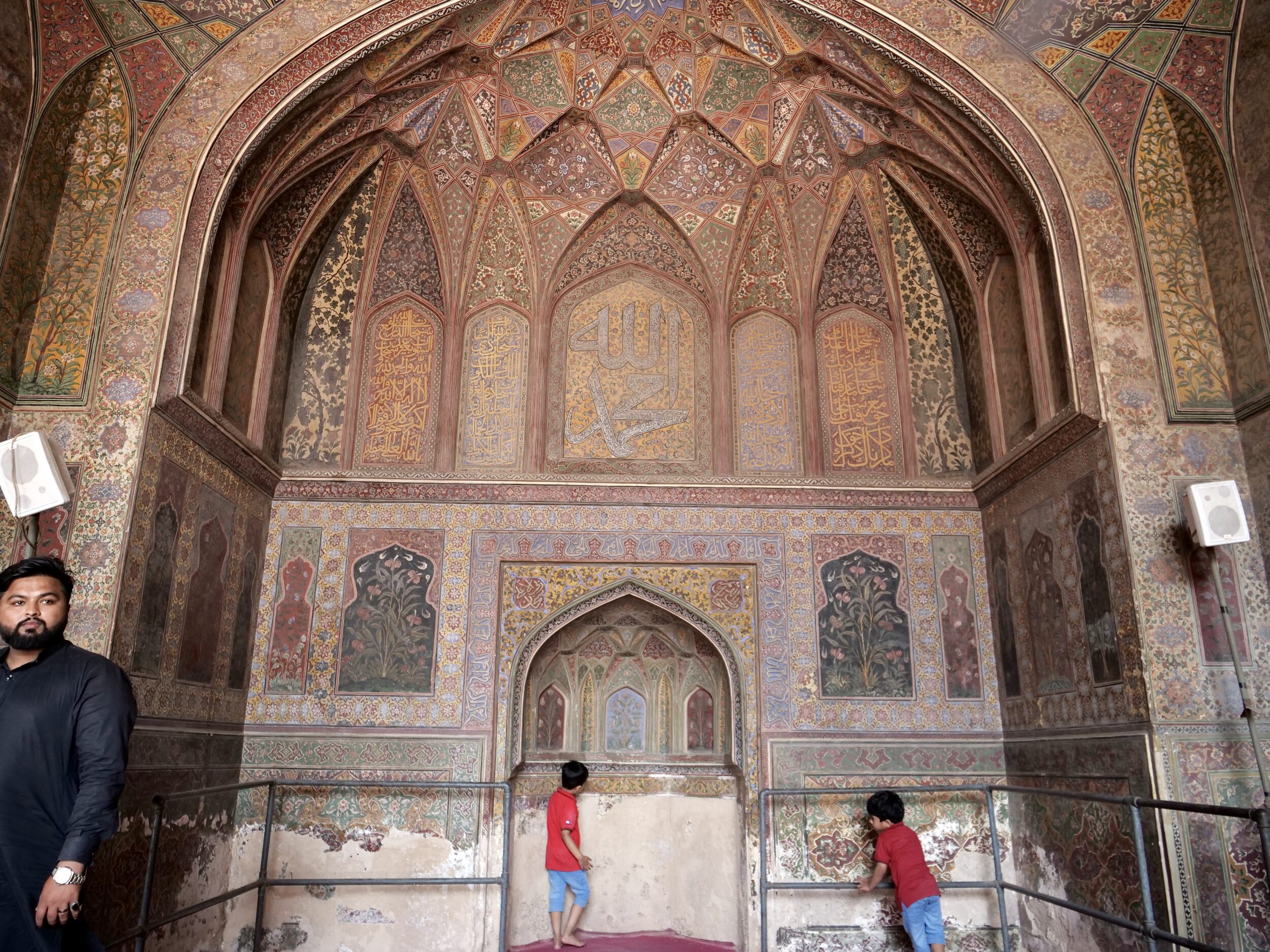
The featured image is a wide-angle (24 mm) shot of one of several such niches in Wazir Khan mosque’s prayer hall; each sits under one of its domes.
They are exquisitely and elaborately decorated, as is even more evident in the closer views, below.
The musical bonus takes us back to a time when US governments would send on tour to a predominantly Muslim nation some of the greatest American musicians…and then – upon their return to the USA – broadcast to a nationwide television audience those musicians’ admiring response to Islamic art and architecture.
(not coincidentally, the style of the decorative art that you are now looking at is, essentially, “Persian”)
Comments closed