Skip to content →

Tag: Morocco

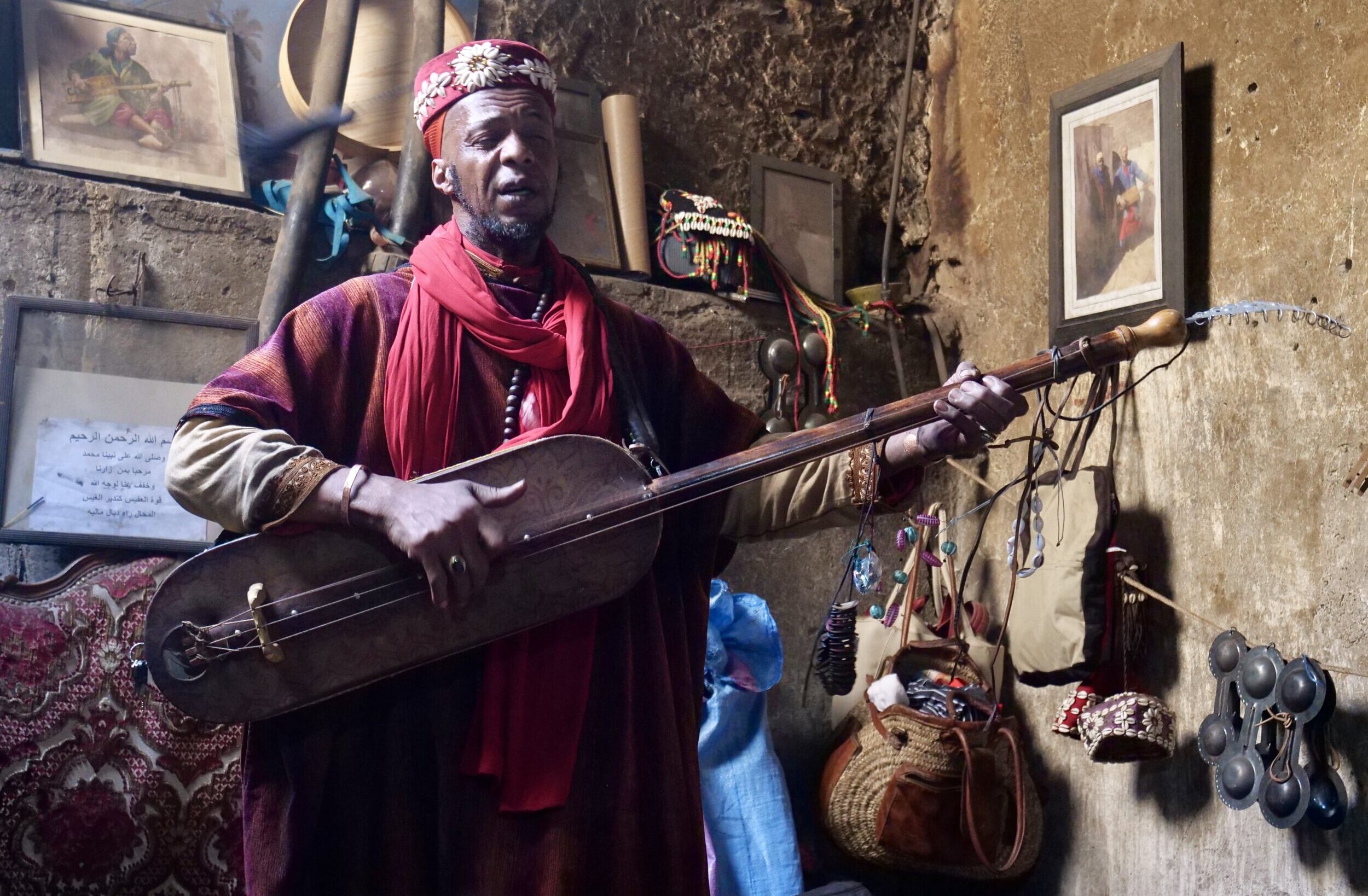
Morocco & Andalucia: “characteristic” (#16 in series: Gnawa)


“Gnawa” is the most common of various transliterations into English.

The word refers to a so-called “ethnic group” (albeit one whose members’ ethnicity is not in fact singular), a member thereof, the Sufi brotherhood to which many Gnawa men belong, and – most especially – to a musical genre which is distinctive, mesmeric and usually (simultaneously) both “devotional” and “funky”.

As “Flamenco” is to the global perception of Spanish music, “Gnawa” is to how the world perceives Morocco’s: “emblematic”.

For many foreigners, flamenco is the only Spanish musical form that rings a “bell”.

Most foreigners cannot name any Moroccan genre; if they can, chances are it will be Gnawa music.

In each case, the genre’s emblematic national status is highly paradoxical.

Comments closed
Morocco & Andalucia: “characteristic” (#14 in series: ornamentation “1”)


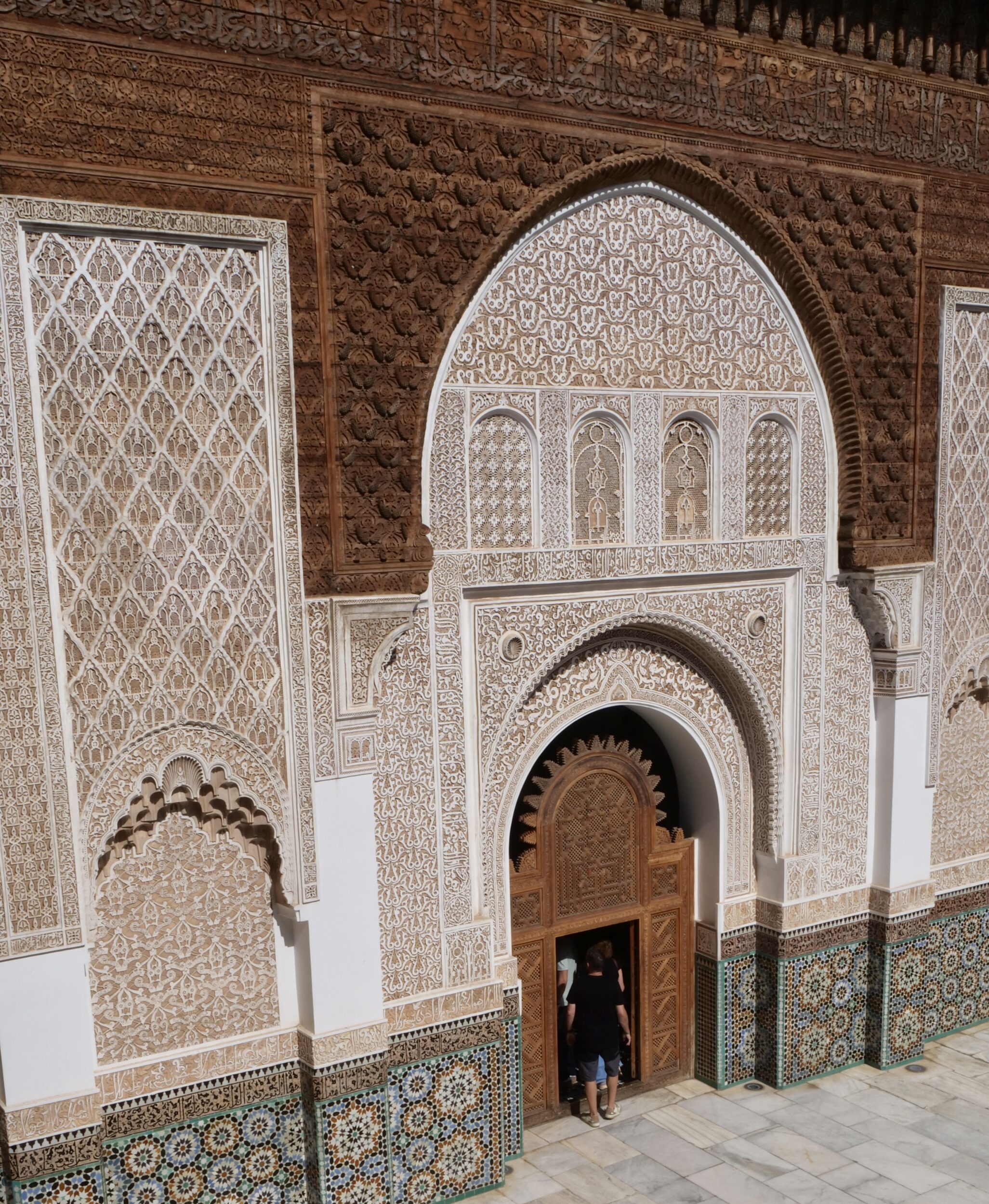
Morocco and Andalucia contain some of the world’s most exquisitely detailed interior surfaces.

A single site can include equally jaw-dropping examples across completely different surface types – wood, plaster and tile in the pictured madrasa, in Marrakech.

Madrasa (also commonly transliterated into English as “madrassa” or “madrasah”. In Morocco it is usually transliterated as “medersa”) is the Arabic term for any educational institution, whether secular or religious.

Comments closed

Morocco & Andalucia: “characteristic” (#13 in series: mighty walls “2”)


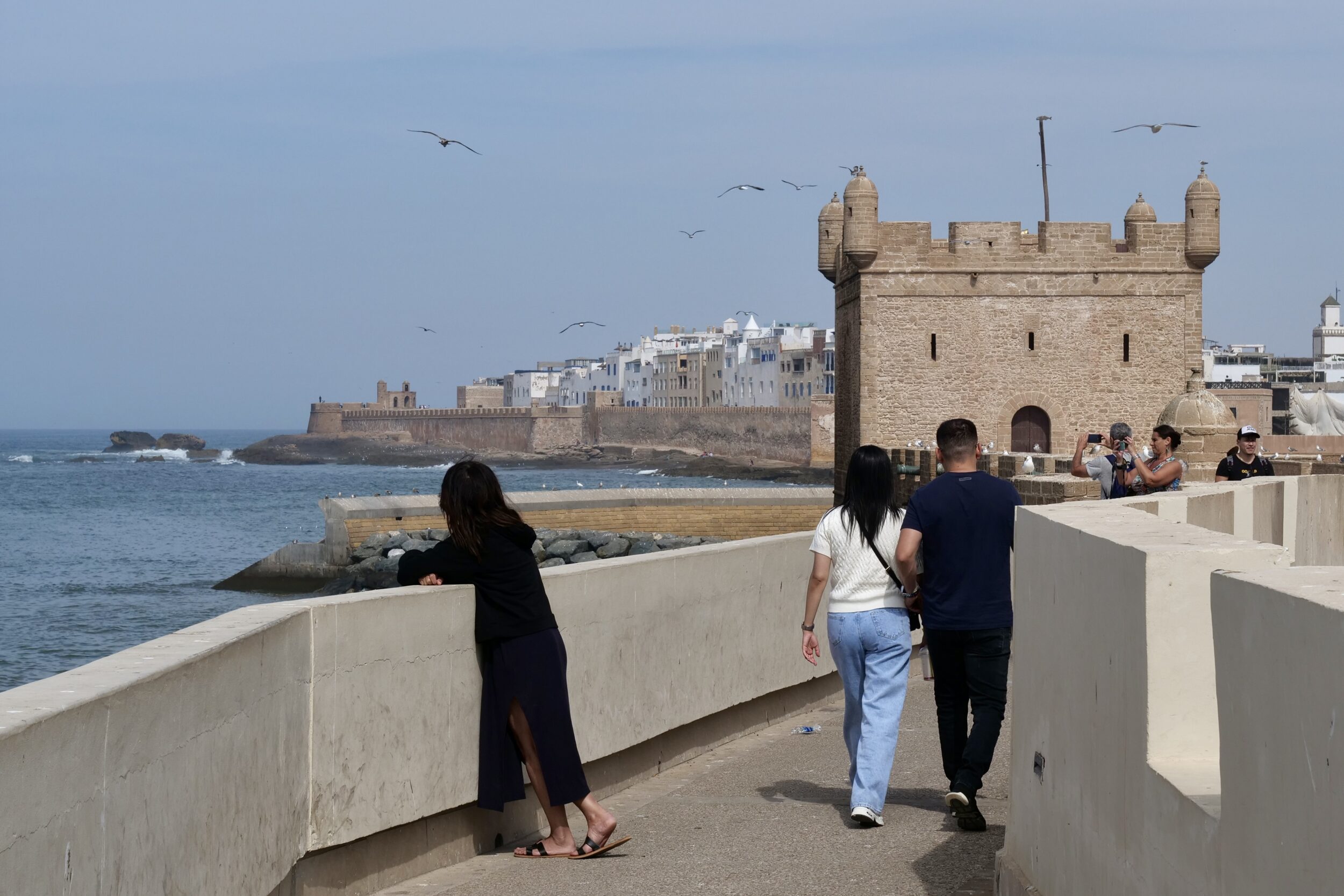
Essaouira is a very likeable city on Morocco’s Atlantic coast.

For many centuries it was highly “strategic”, and during the 19th century it was Morocco’s primary seaport.

Unsurprisingly, it has “changed hands” more than a few times.

Morocco and Spain are very richly endowed with impressive defensive structures.

Some were built by “conquerors”, others by “locals” who were trying to repel would-be conquerors.

All (or nearly all) such structures “failed”; they eventually fell into “the enemy’s” hands, and were then modified by the victor, who would later become the vanquished..and so on, over centuries.

Comments closed

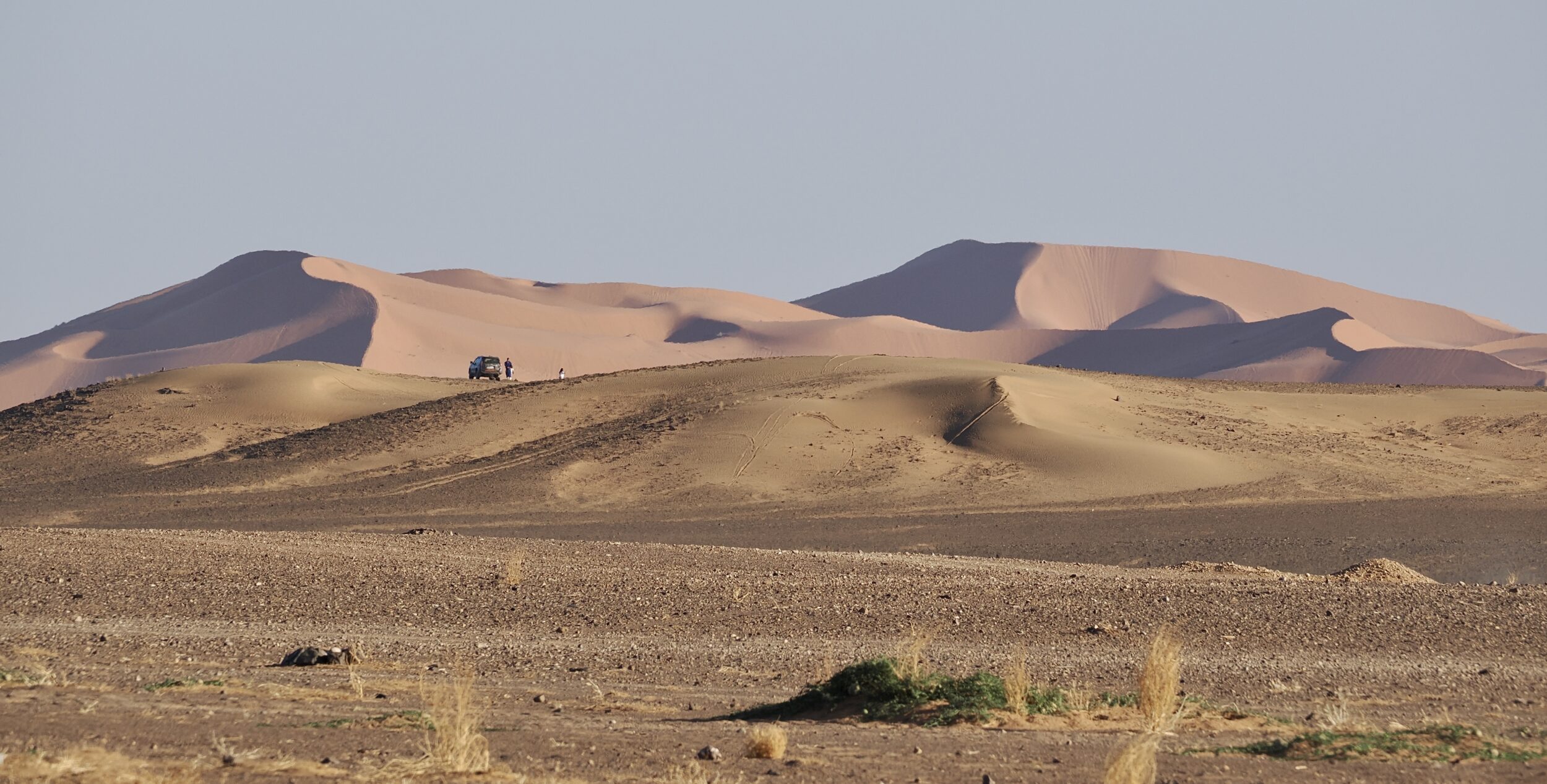
Morocco & Andalucia (#11 in series: Sahara’s edge)


Southeastern Morocco affords tourists their easiest and safest access to the world’s largest desert.

For most of them, the Sahara’s dunes provide a capital “e”  “Exotic” experience.

Saharan tourism generates a lot of revenue and provides employment to many Moroccans.

It also creates a whole lot of unsolved “management issues” and environmental problems.

Comments closed

Morocco & Andalucia: “characteristic” (#10 in series: much older than “the oldest”)


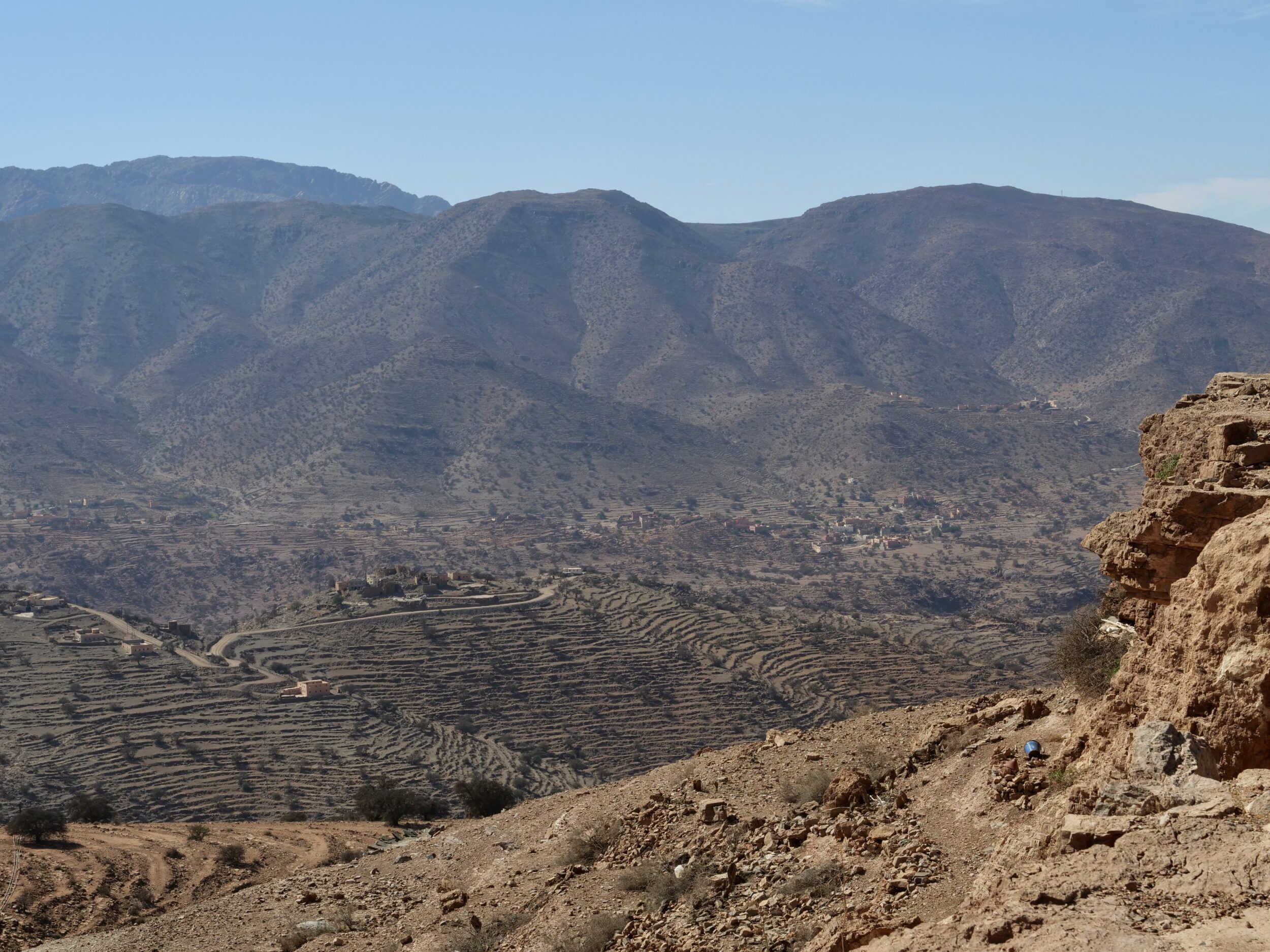
I took this post’s photo at 3.16 pm on 14 October 2025.

My vantage point was a ridge-top in Morocco’s Anti-Atlas – the southwestern part of the Atlas Mountains.

This region’s climate is very harsh, but the pictured valley has “traditionally” received enough water to support agriculture, which is why there is so much terracing.

Over the last several years, however, drought has rendered the terraces (temporarily?) useless.

Immediately behind me was a strategically-located, solid and venerable structure.

Effectively, it used to be a bank – a bank which was fully operational several centuries before the establishment of certain Italian and German financial institutions which are routinely described as “the world’s oldest banks”.

Comments closed

Morocco & Andalucia: “characteristic” (altitude & climate “2”)


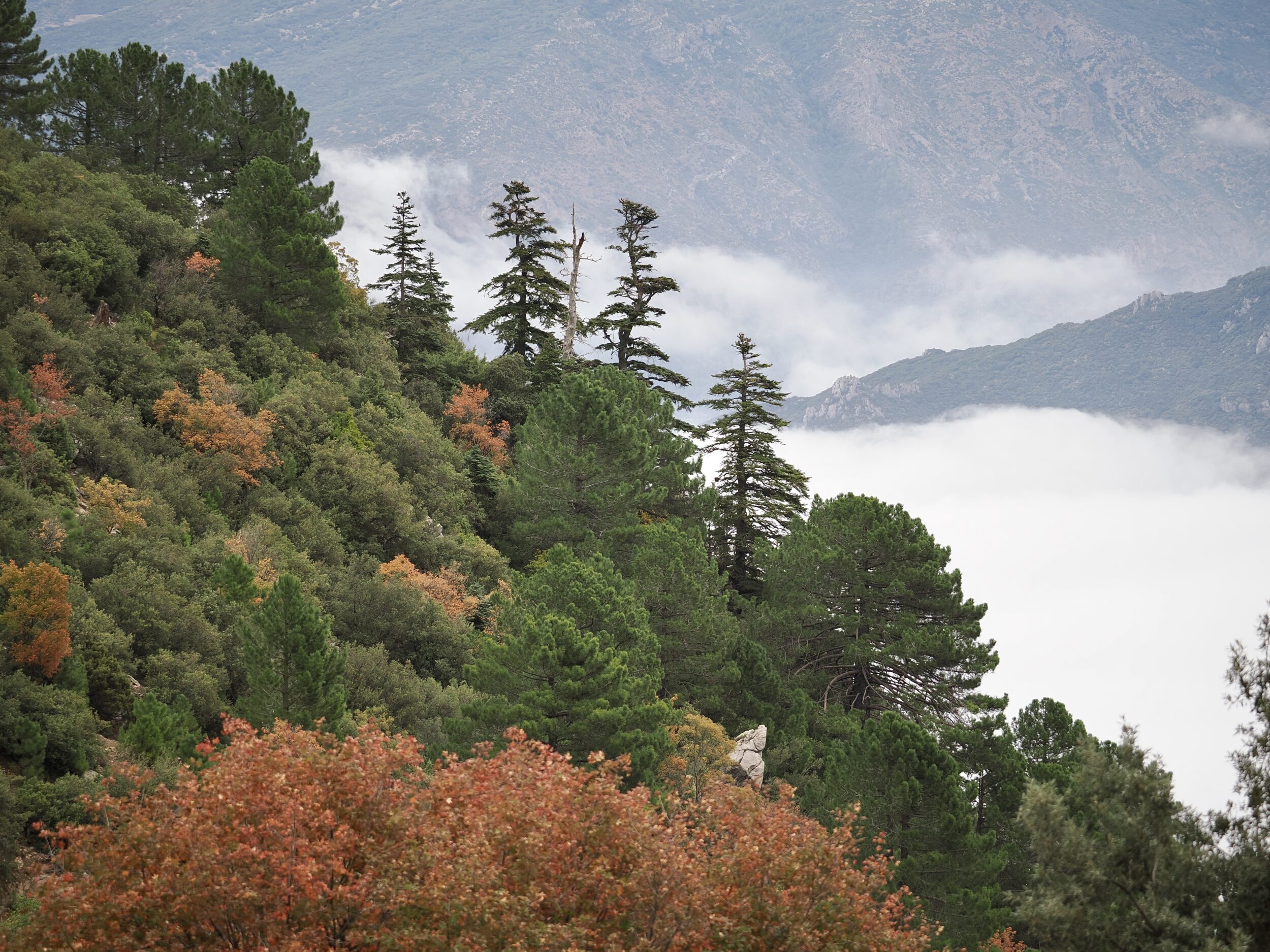
The pictured location is not in the Atlas Mountains, but is in Morocco.

Morocco’s northernmost mountain range rises to 2,456 metres above sea level – a deal more modest than the Atlas, but still 228 metres higher than the Australian continent’s high point.

The Rif Mountains’ western end is very much wetter than is any other part of Morocco.

In most winters the Rif’s upper slopes are probably the nation’s snowiest; at any time of year they offer dramatic vistas and some beautiful (albeit threatened/remnant) forests.

The Rif is “very Moroccan”, but its wetter, higher parts do not at all resemble most visitors’ preconceptions of what Morocco “should” look like.

Comments closed

Morocco & Andalucia: “characteristic” (#5 in series: delicious fish & shellfish)


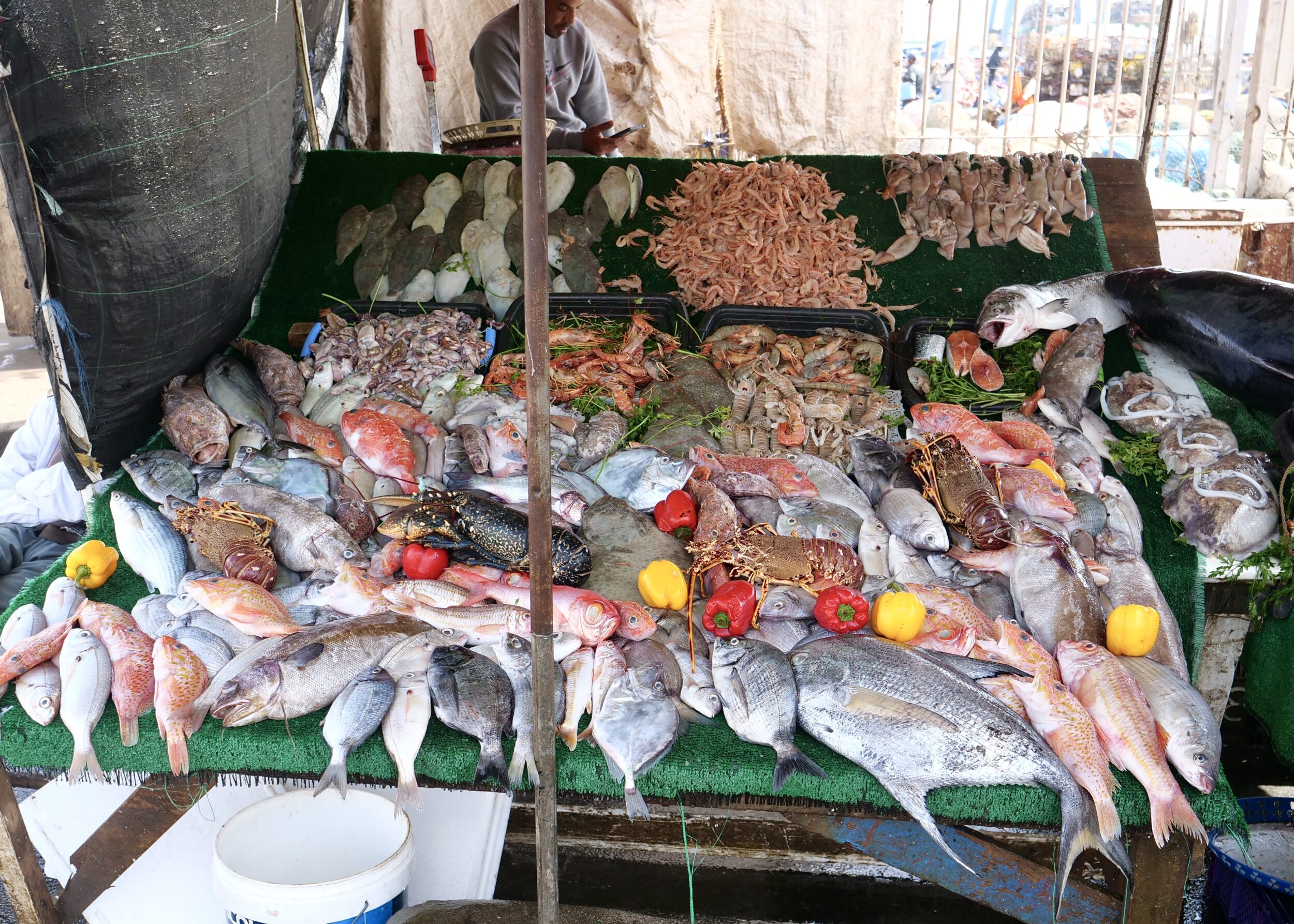
Our October/November 2025 travels confirmed that something we already “knew” – from previous experience – still held true: Spain is a wonderful destination if you love to eat fresh seafood.

We also learned something we did not already know: that Morocco is similarly wonderful in this respect.

Both nations’ “catch” is richly varied, and both lands have many citizens who really know how to “plate it up”.

In Morocco that is most especially true of places on or near to its western (Atlantic) shores.

Such a place is the historic, long-fortified, port city of Essaouira.

I took this post’s photo there on 17 October, shortly after a teeth-squeakingly-fresh seafood lunch.

Comments closed

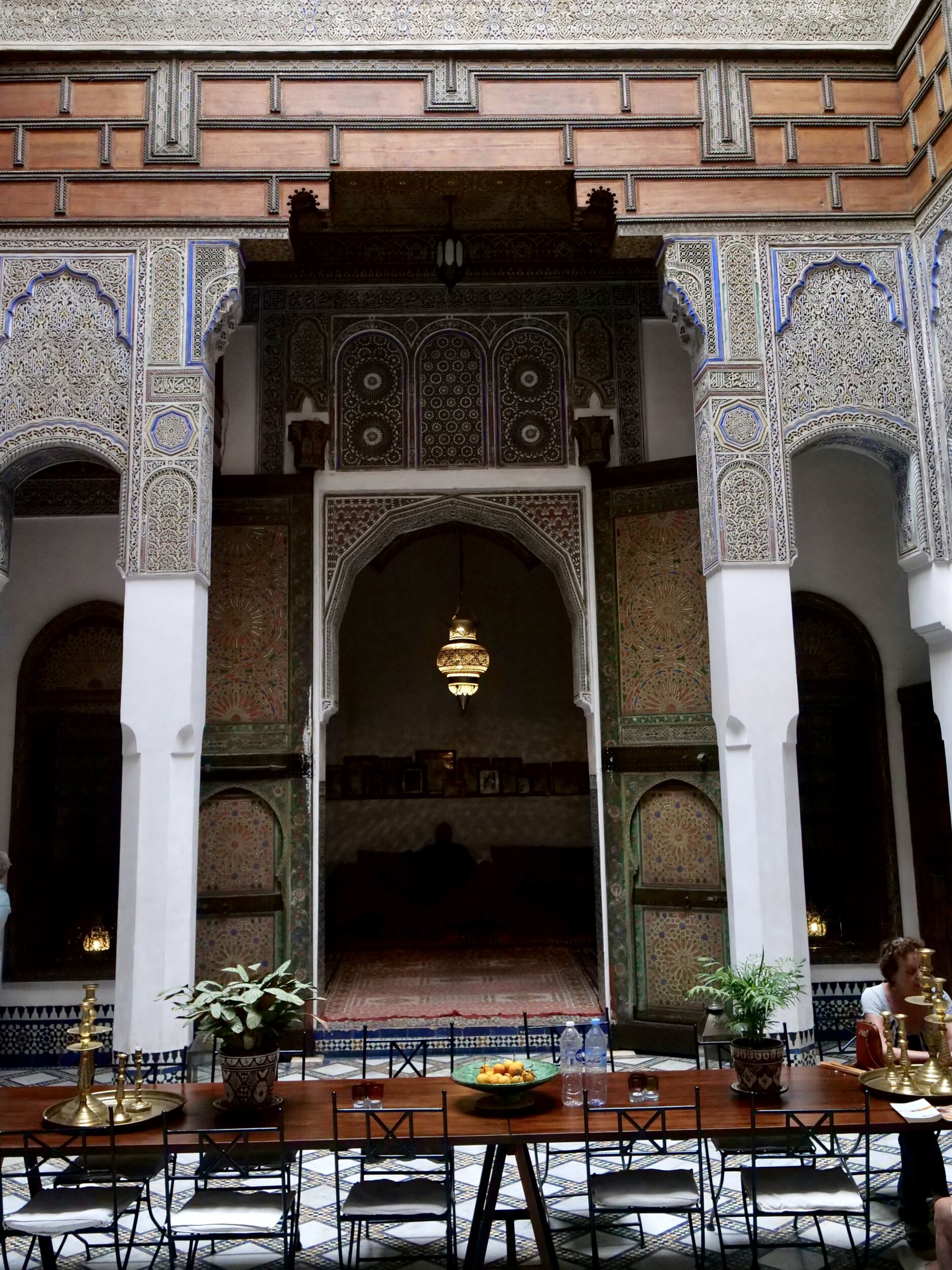
Morocco & Andalucia: “characteristic” (#4 in series: inward-looking “2” – Fez)


The Arabic word which is transliterated into English as “riad” or “riyadh” originally signified a garden or courtyard/ enclosed garden/patio of the formal, Islamic, so-called “paradise garden” type.

In current common usage “riad” (in Morocco, especially) is the word for a house/guesthouse/building in which its heart is such an open-aired but otherwise fully enclosed patio/courtyard.

Most such riads were originally the houses of wealthy merchants, built within the walls of a city’s “medina” – what is now its “old”/“walled” city.

The pictured example is surely one of the most exquisite.

Comments closed

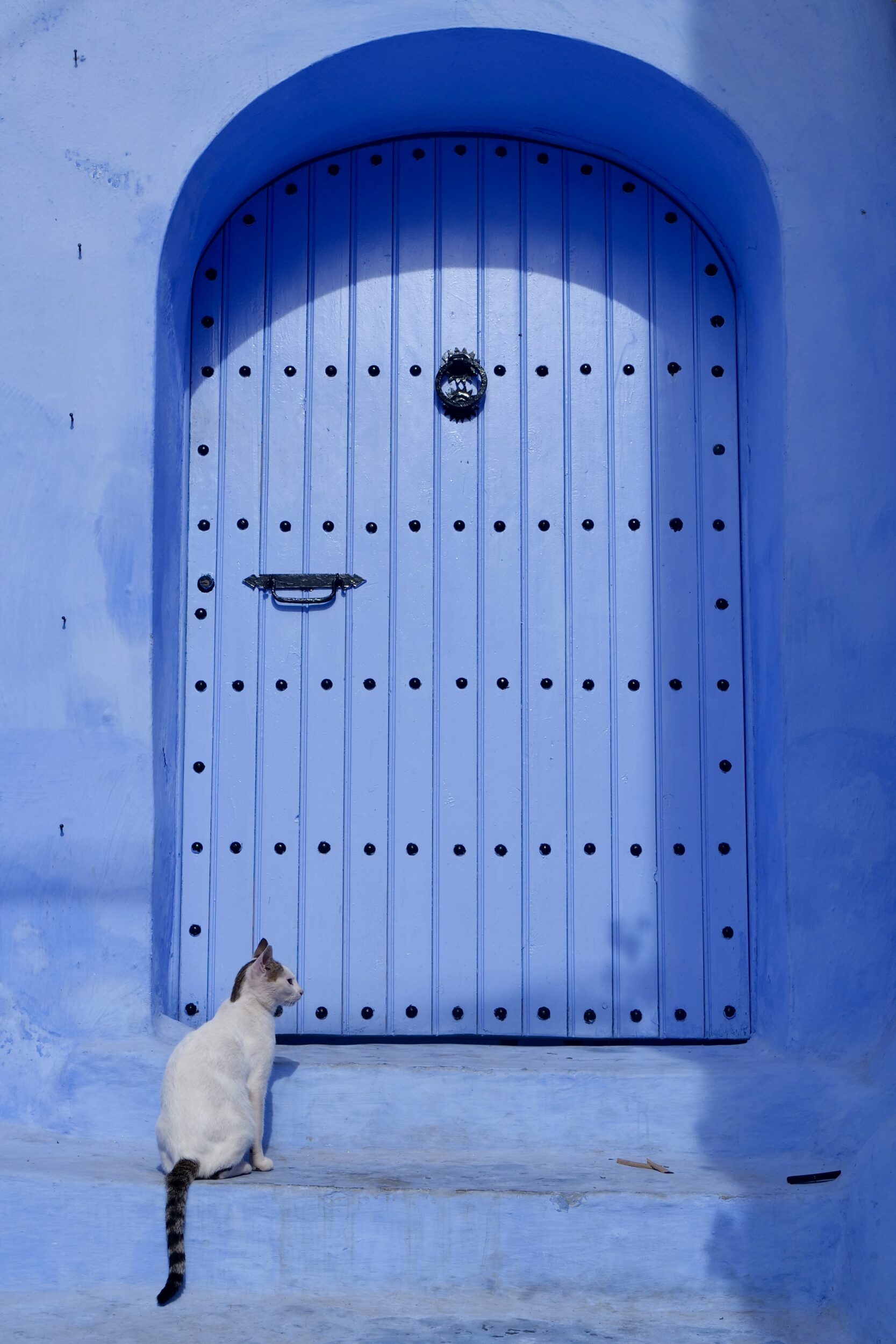
Morocco & Andalucia: “characteristic” (#1 in teaser series)


We have just spent the second half of October in Morocco, and the first part of November in southern Spain.

This little single-image series highlights key aspects of those places.

We had expected/already knew of some of them.

Others surprised us.

This post’s photo covers both categories.

Comments closed

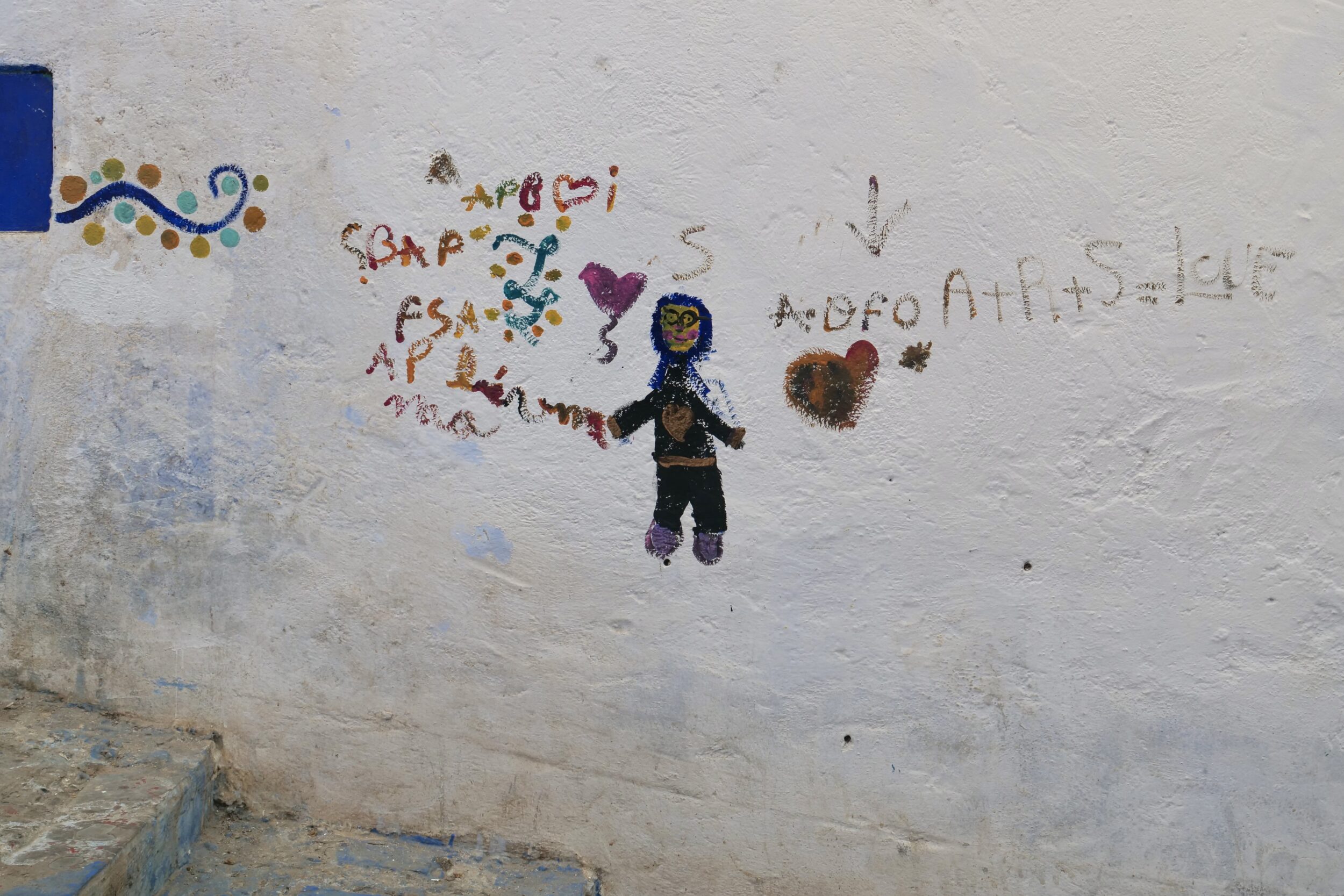
Signage & Signification (#12 in series: Moroccan graffiti/street art)

To a local resident, the meaning was probably perfectly clear.

To these visitors to Chefchaouen (Morocco’s famously “blue” city) it was a mystery, but we enjoyed looking at the pictured wall, which is on one of the city’s many narrow, cobbled, very steep streets and laneways.

Comments closed