Skip to content →

Tag: reptiles

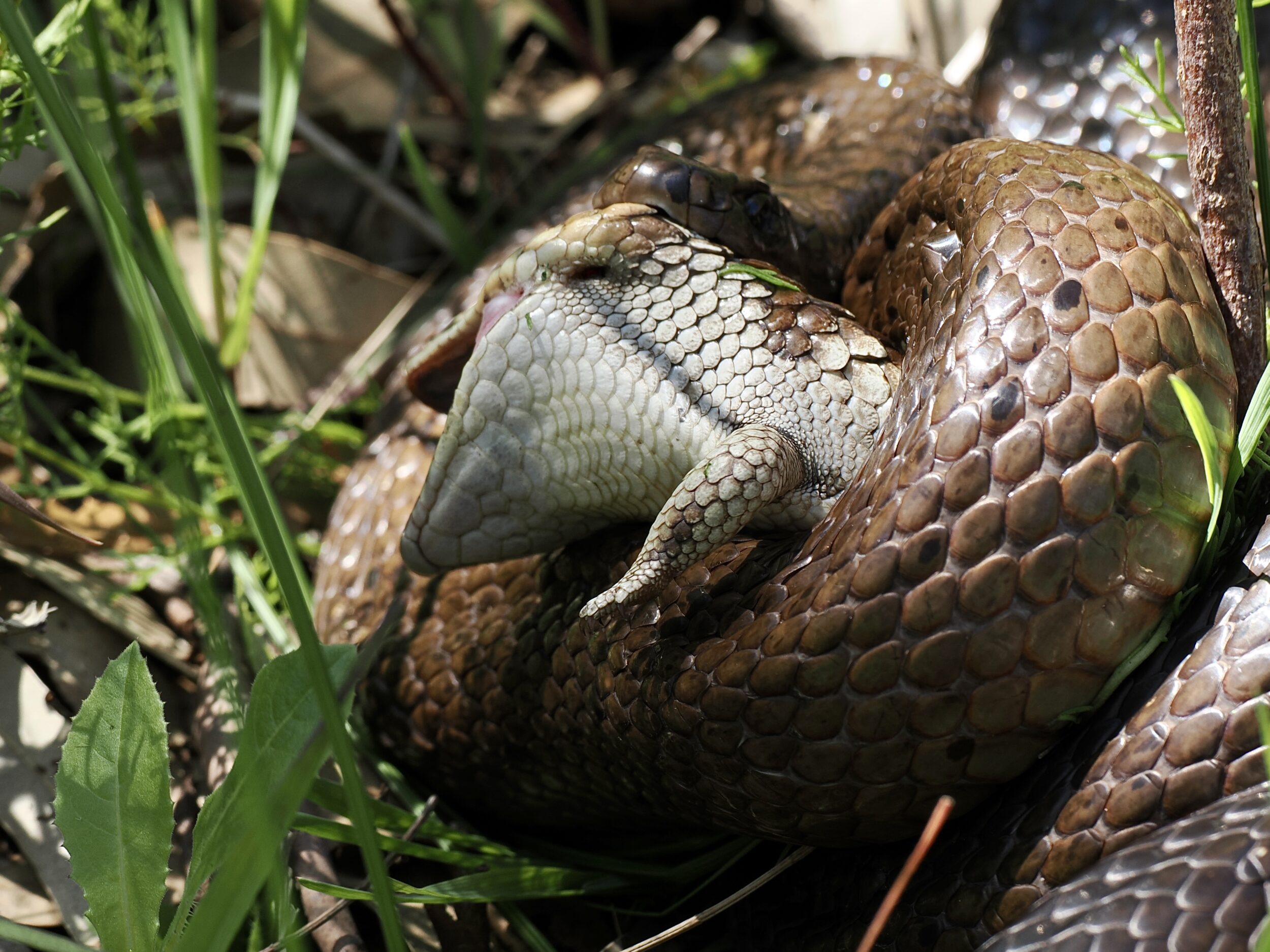
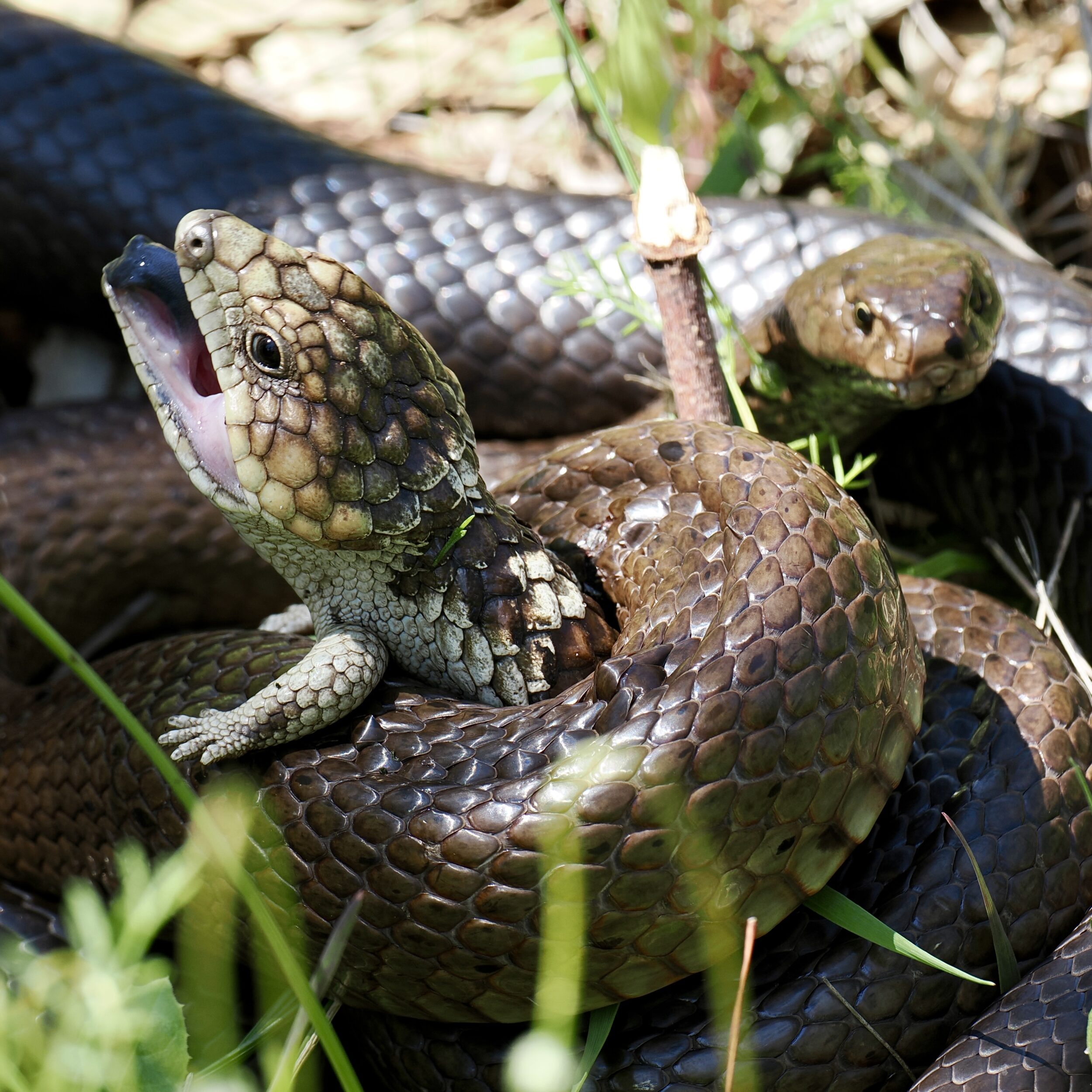
Spring 2025 in Perth (#14 in series: reptile v reptile “2” of 2)


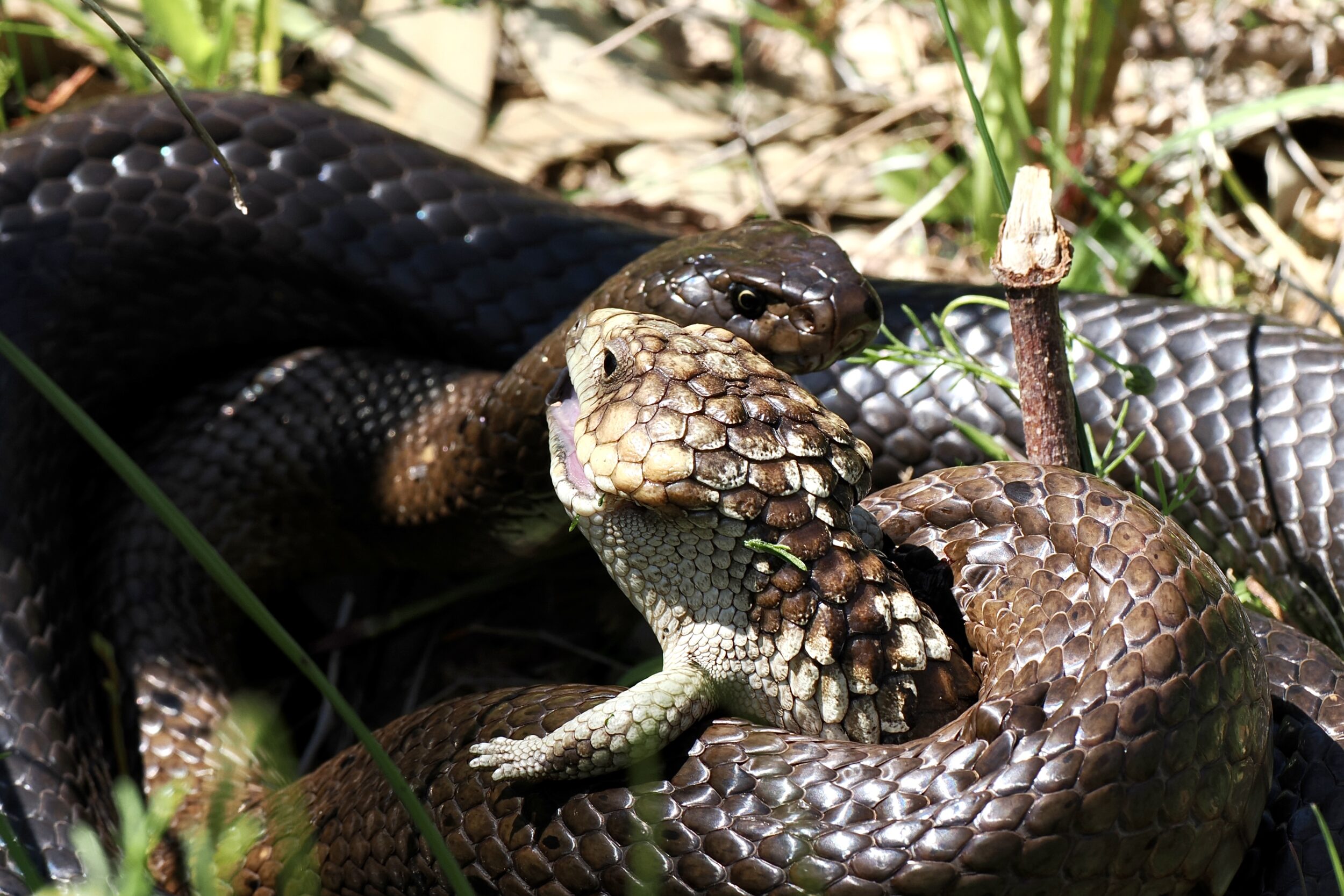
This post’s featured image was taken five minutes after the immediately-previous chapter’s.

As you can see, the bobtail was still abiding by an instruction famously issued by the most celebrated 20th century Welsh poet: Do not go gentle into that good night

Comments closed

Spring 2025 in Perth (#13 in series: reptile v reptile. (“1” of 2)


The Dugite is a highly venomous brown snake.

Pseudonaja affinis does very well in 21st century Perth, where house mice (“kindly”/accidentally introduced by European colonists) have become the species’ preferred prey.

Dugites, however do still target “traditional” prey: lizards, rodents and other snakes, including fellow dugites.

On 20 September 2025 a close encounter of the “dugite v bobtail” kind provided the most dramatic experience of our 42 years as frequent visitors to Kings Park.

We were in “wildflower” mode, and had not expected a “safari” experience!

Comments closed

Spring 2025 in Perth (#12 in series: killing in city’s best-loved park)


Photographic Exhibit “A” was taken at 11.31 am on 21 September 2025.

We were on a walking trail within the bushland section of one of the world’s greatest urban parks.

Had we wished to walk from the Kings Park “murder scene” to the very centre of Perth’s CBD, it would not have taken us more than 30 minutes.

Comments closed

Grand sands (#30 in series: thermal “dancer”/ sand-diver)


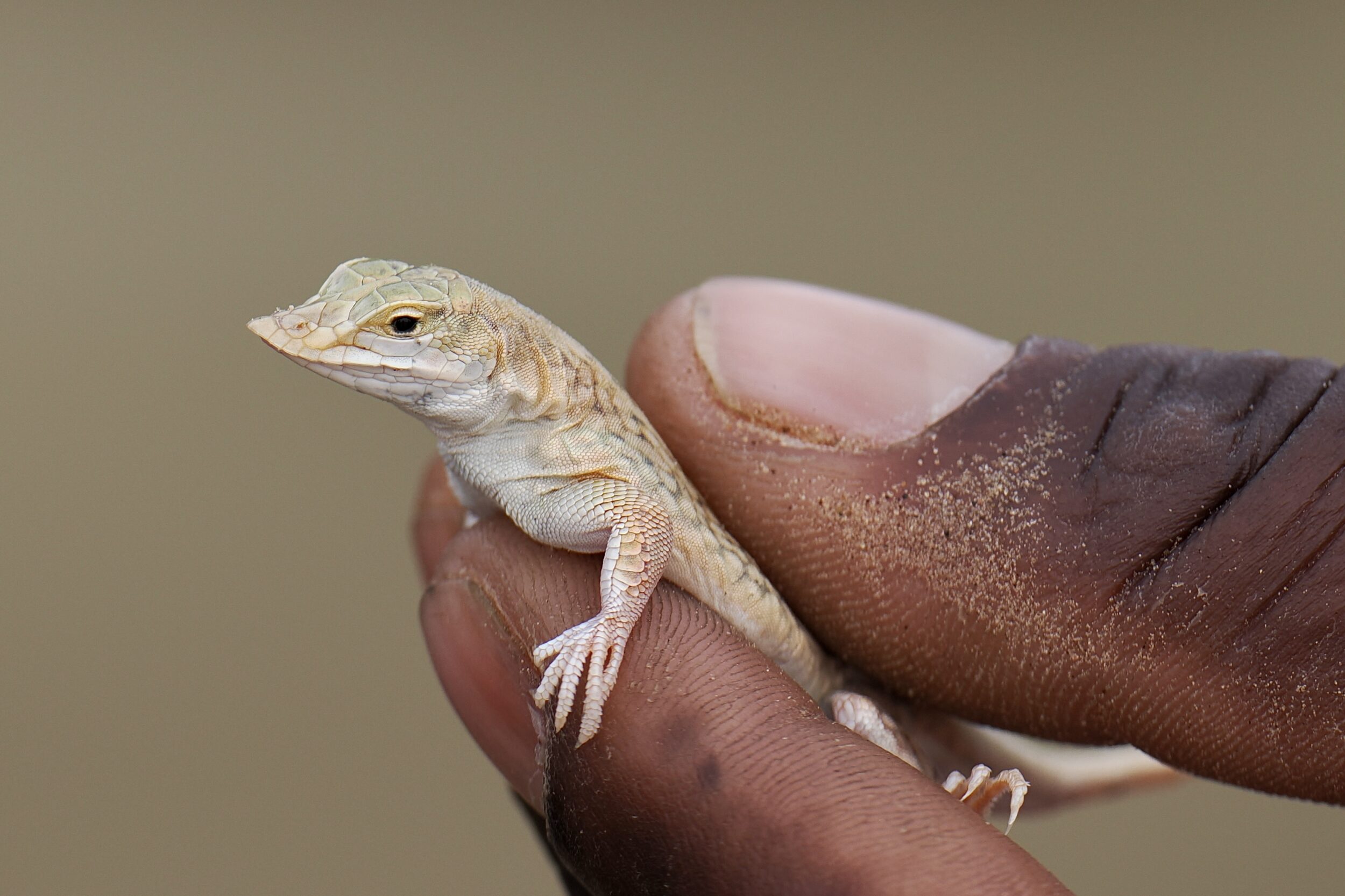
Meroles anchietae 
– the shovel-snouted lizard – is endemic to the Namib Desert’s dunes.

Its signature behaviours – “dancing” atop the sand’s surface on a hot day, and diving into the cooler sand, below – are adaptations developed in order to survive an imminent, lethal threat.

As illustrated in #27 of this series, we were lucky enough to witness its astonishingly speedy sand-diving – a feat in which the key factor is its “shovel”.

Just inland from Swakopmund, and only a few kilometres from the Atlantic Ocean, the afternoon of 19 November 2022 was cool.

Accordingly, whilst our hero did deploy his “shovel” snout in order to escape predators/us, he did not need to dance!
Comments closed

Grand sands (#29 in series: Namibia’s loveliest lizard)


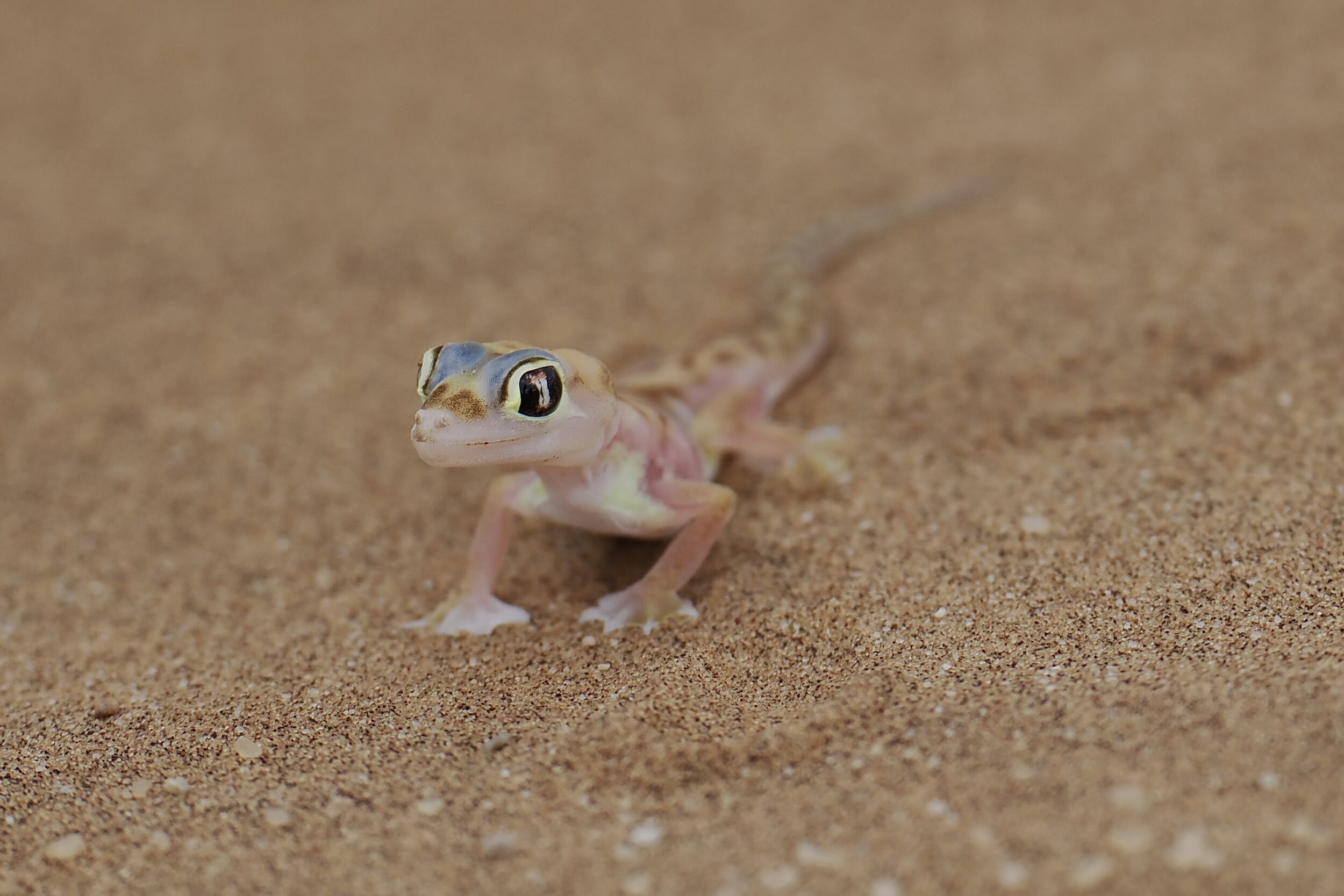
Palmatogecko rangei
  (aka Pachydactylus rangei) is petite – less than 7cm long.

Endemic to the Namib desert, this dune-dwelling hunter of small invertebrates is commonly known as the “Namib sand gecko”, or the (Namib) “web-footed gecko”

Its skin is almost translucent, but exquisitely coloured.

Relative to its body, its feet are very big; its eyes are HUGE.

Comments closed

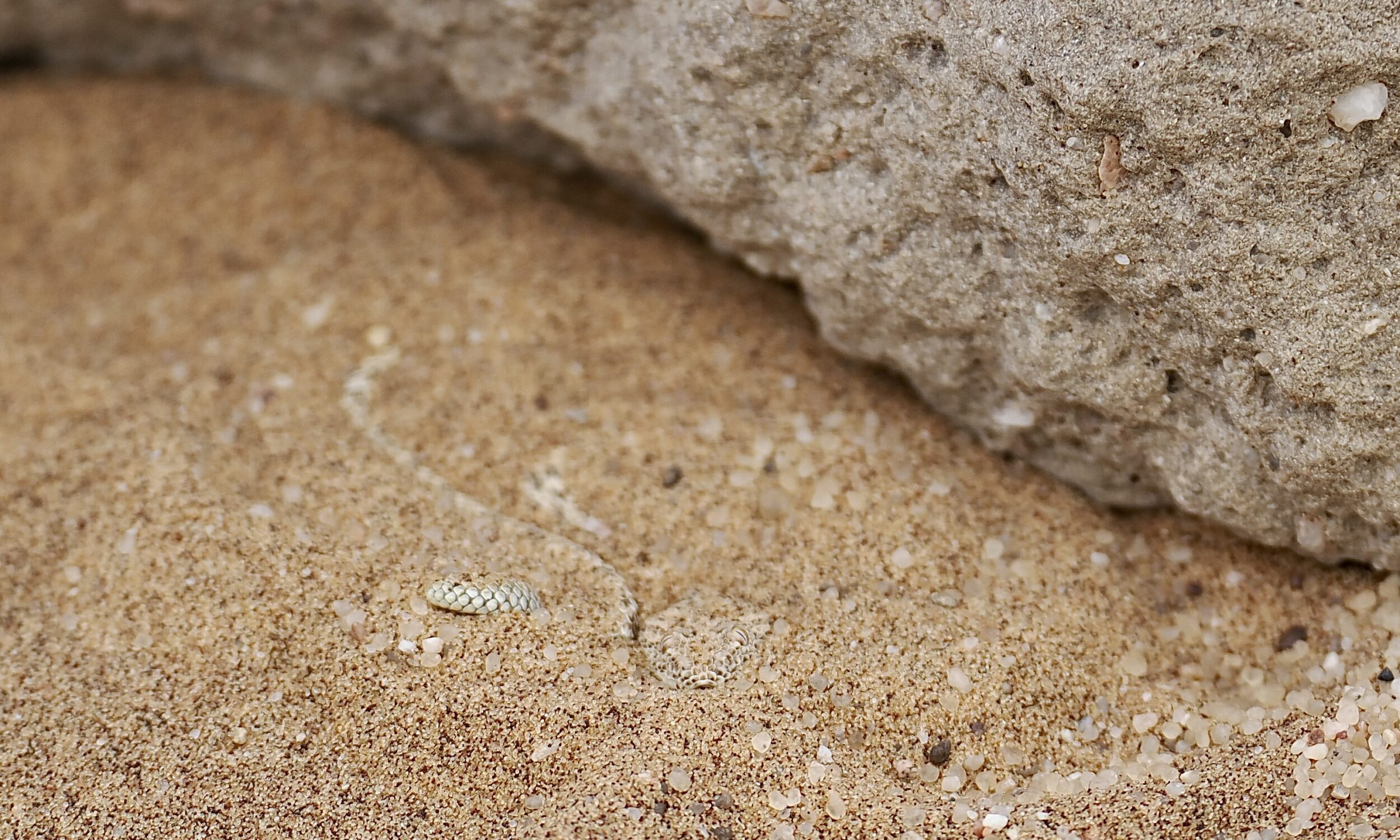
Grand sands (#28 in series: Namib Desert “lizard specialist”)


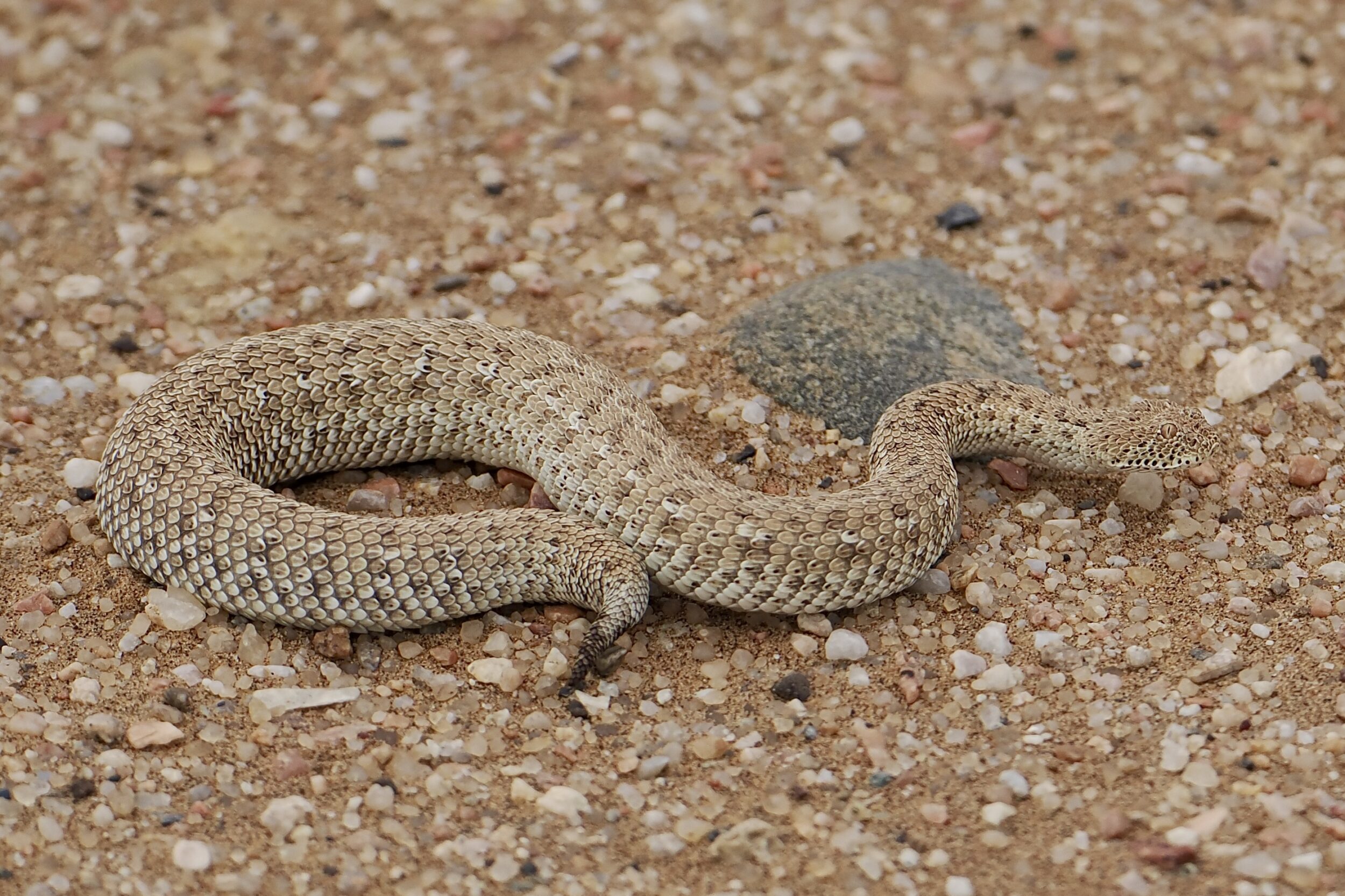
This post stars the very same species – and, I think, the same individual – as did the featured image in this series’ immediately-preceding chapter.

I took this post’s photo at 3.56 pm on 19 November 2022.

Q: why was this usually-stealthy snake out in the open, on a relatively rare patch of rockier/more gravelly ground?

Comments closed

Bigger than a Komodo Dragon – South Perth’s “big lizard” weighs 9 tonnes…

…and it’s “companion animal” is a 5.6 tonne numbat!

Together, they make one hell of an “entry statement” – or “exit statement” – for those who travel by ferry to and/or from the South Perth foreshore.

Not coincidentally, South Perth’s major attraction is Perth Zoo, which is within easy walking distance of the ferry station.

Comments closed

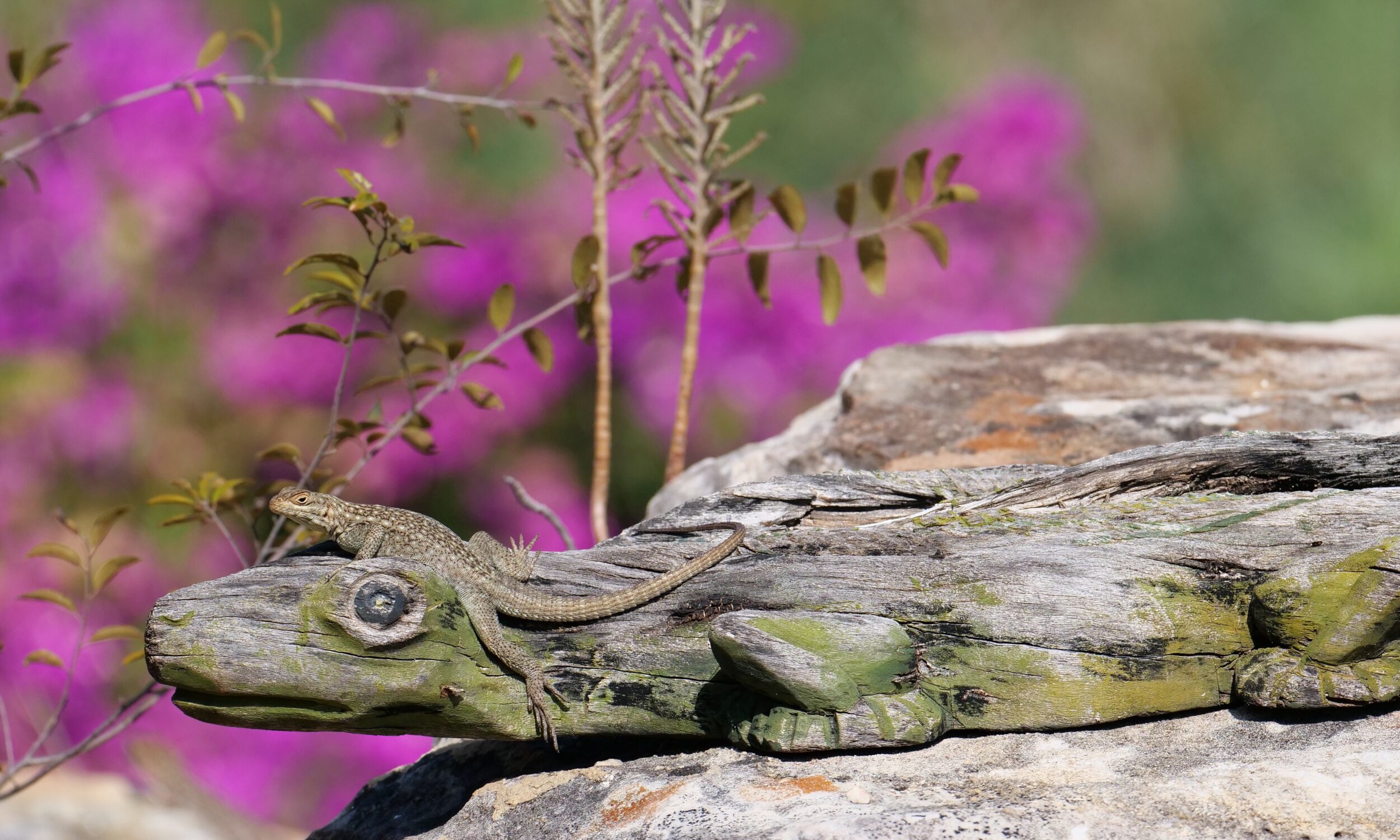
Quirky moments (#8 in series: Madagascan lizard atop Madagascan “lizard”, with musical bonus)


Presumably, the living lizard had no sense of the pictured circumstance’s synchronicity, let alone any awareness that a human passer-by might find it quirky or amusing.

Comments closed

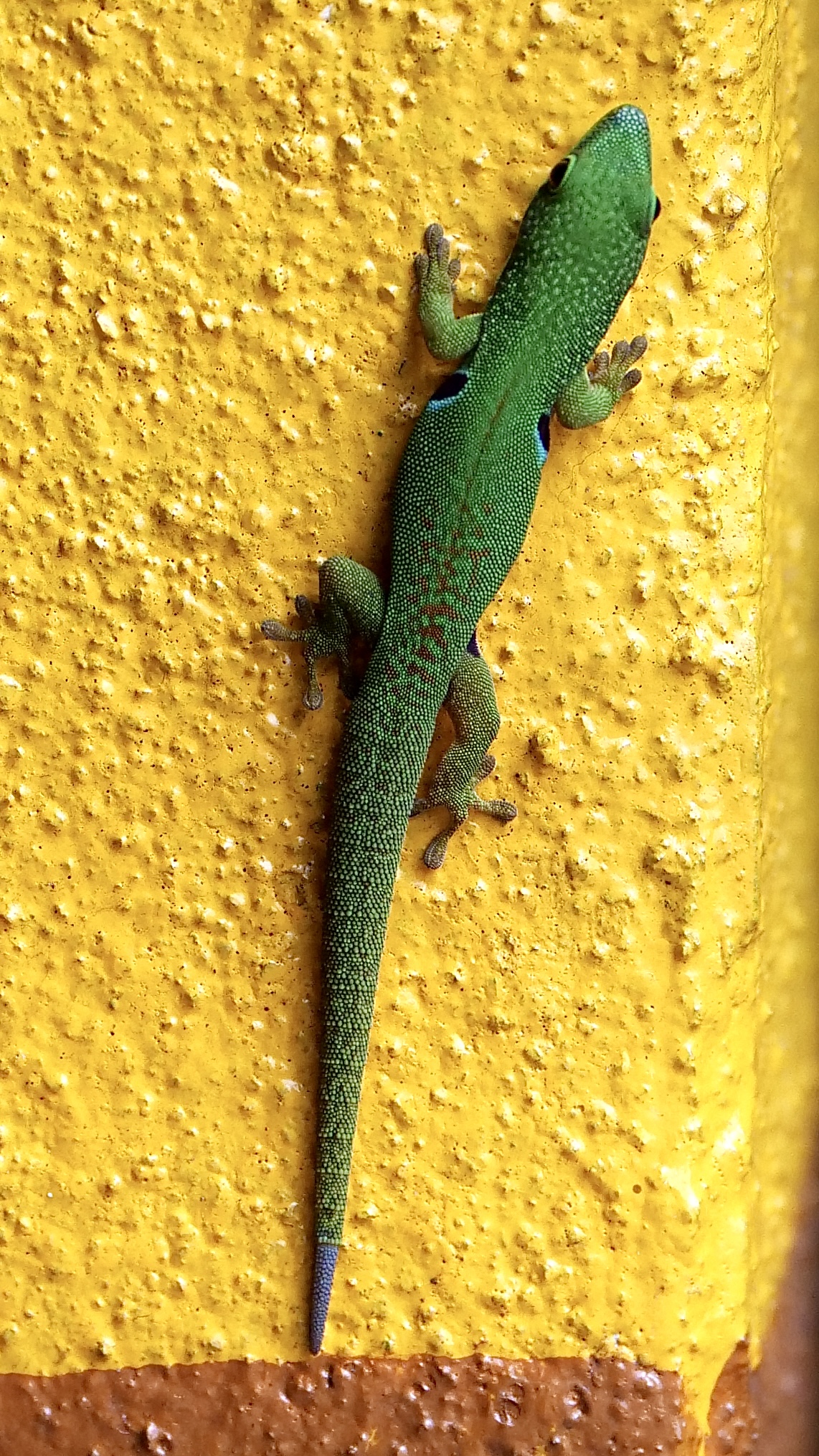
“From behind” (#4 in single-image series: a Madagascan gecko)


Most gecko species are nocturnal.

The 50+ known species in the genus Phelsuma are an exception, as per their common name: day geckos.

If you are lucky enough to see a day gecko, you will be able to see it under natural light.

For most of these mostly very colourful species, if you wish to see them in the wild, you will have to visit Madagascar…

Comments closed