Skip to content →

Tag: trees

Looking down (#13 in series – trees “5”: grand, surprising)


One of the world’s most famous, most oft-photographed natural attractions can still greatly surprise even an allegedly “well-informed” first-time visitor.

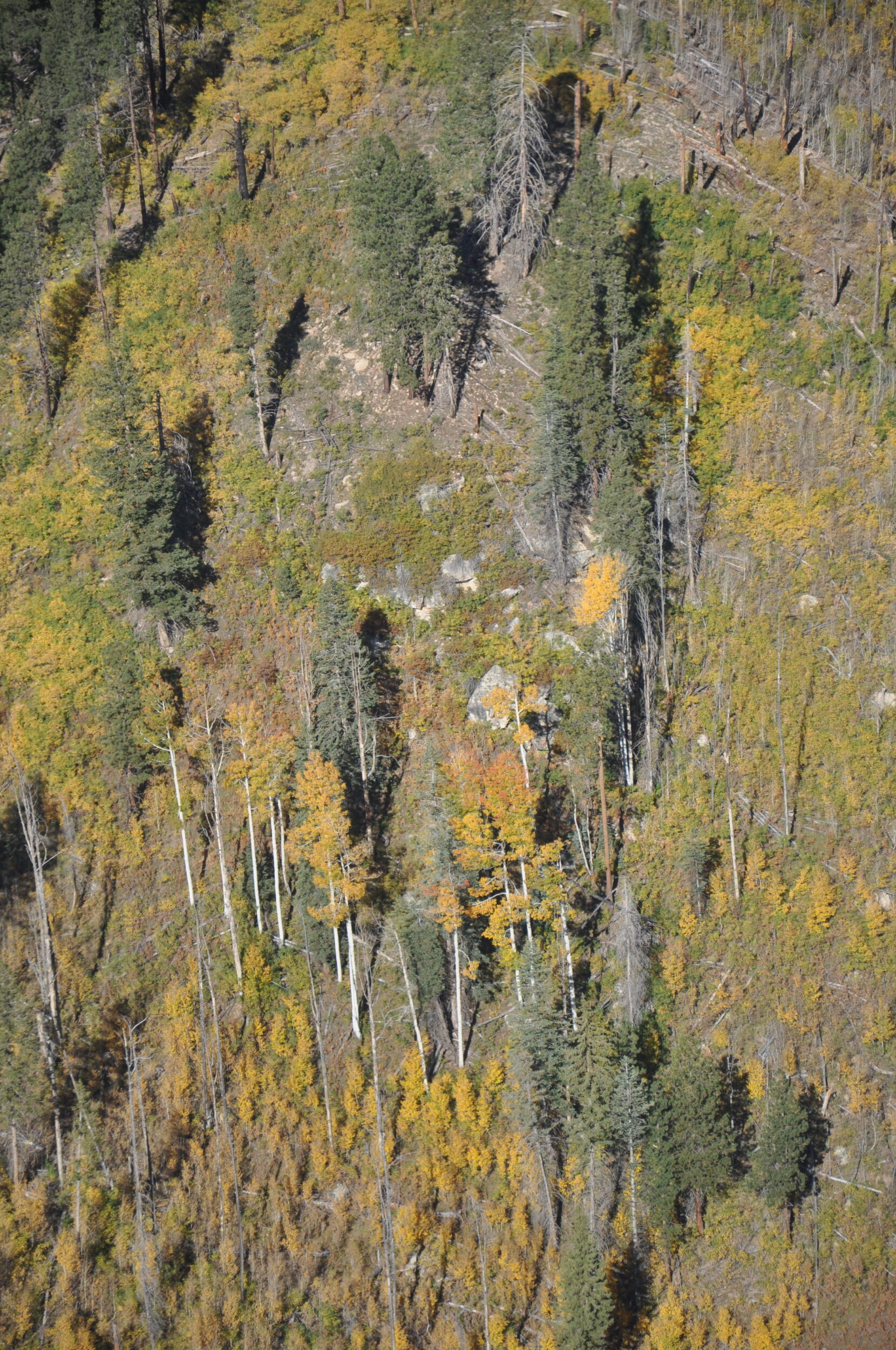
This post’s photos were both taken from a helicopter, looking down at the northern “wall” of  what many humans (wrongly) believe is “our” planet’s biggest and/or deepest canyon.

The Grand Canyon is neither the biggest in volume, nor the deepest, nor the longest, nor the widest, but it is very grand.

Some parts of the Grand Canyon are a deal “leafier”, cooler, and wetter than most people imagine.

Leave a Comment
Looking down (#11 in series – trees “4” – Spring Gully)


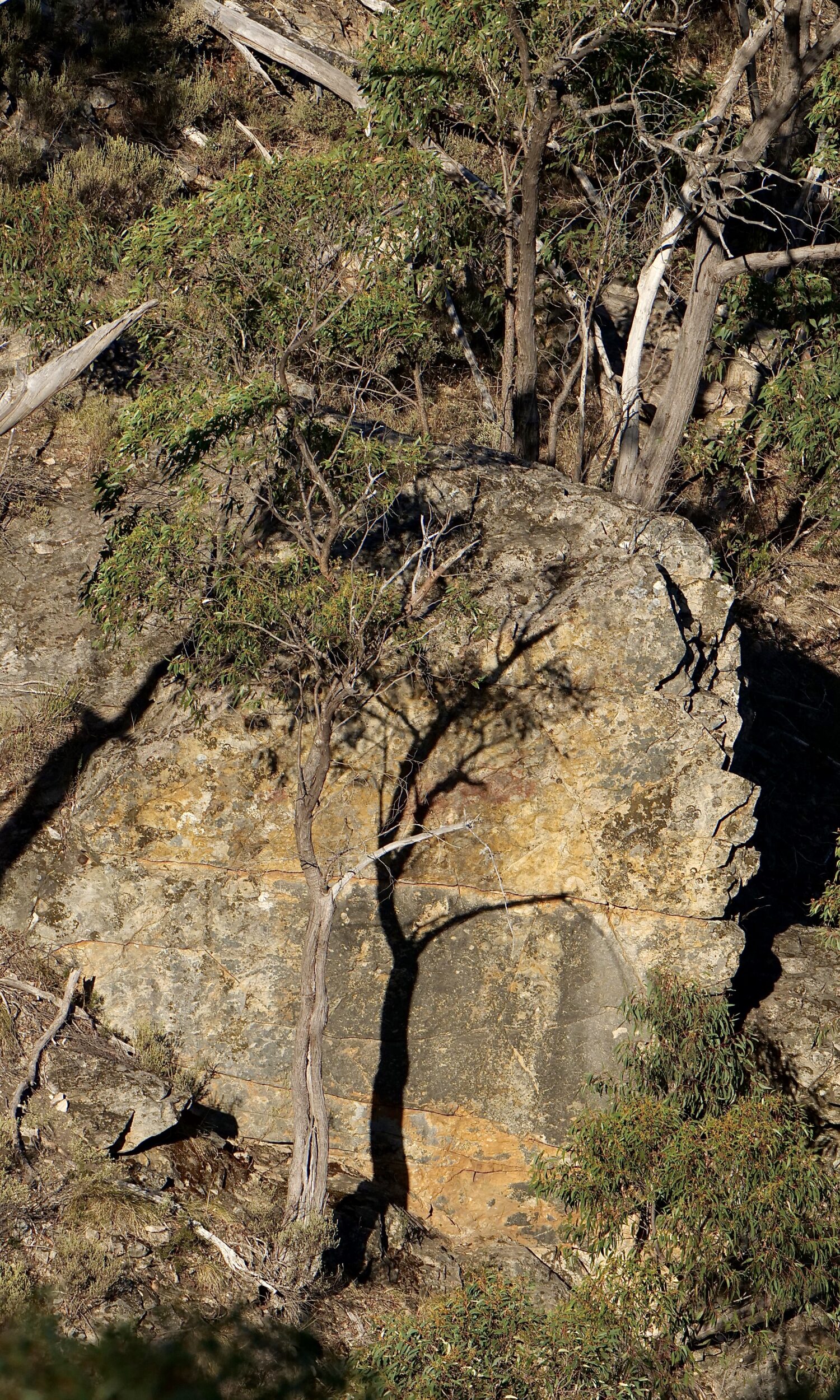
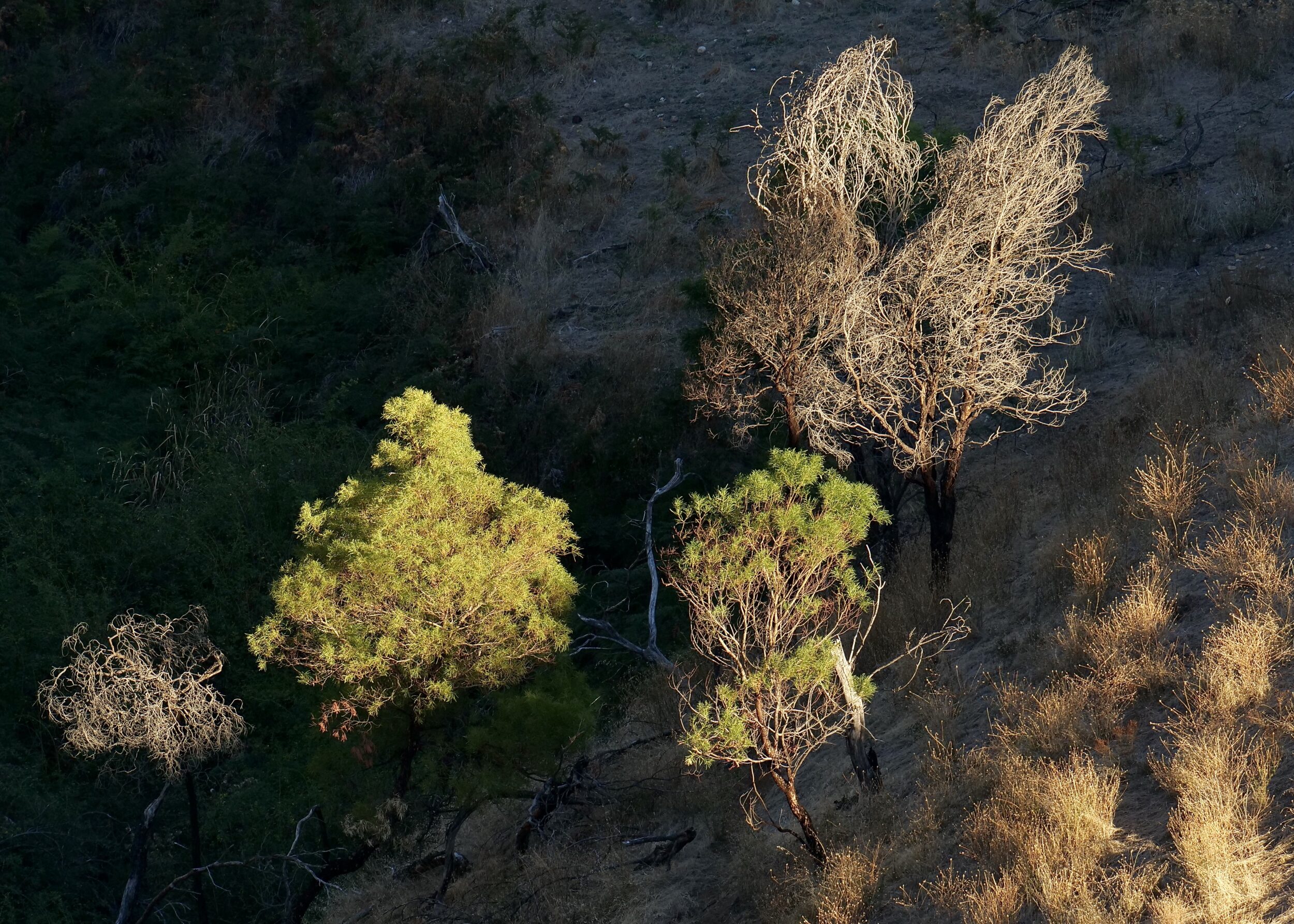
This sequel to #10 in this series looks down into the actual gully in Spring Gully Conservation Park.

Its  own website  explains the Park’s raison d’être:

Spring Gul­ly Con­ser­va­tion Park was set aside to con­serve the west­ern­most pop­u­la­tion of the red stringy­bark Euca­lyp­tus macrorhyn­cha. This park is the only reserve in South Aus­tralia to con­tain this par­tic­u­lar species. 

Alas, Spring Gully’s “hero” species is now in serious trouble in its sole South Australian “refuge”.

Leave a Comment

Looking down (#10 in series – trees “3”: Spring Gully, South Australia)


Spring Gully Conservation Park is 8 kilometres south of Clare, in South Australia’s mid-north.

From Adelaide, it is a little less than a two hour drive; day-tripping from the city is feasible.

However, the so-called “Clare Valley” (in truth, this distinctive region has more than one valley) is such a rewarding destination that it is a much better idea to base yourself there for at least several days.

As the next post will further explain, Spring Gully is of great “conservation value”, and it is more than a little “vulnerable”.

Meanwhile, enjoy what a ridgetop vantage point can do, late on an autumn day…

Leave a Comment

Grand sands (#12 in series: paradoxical sands)


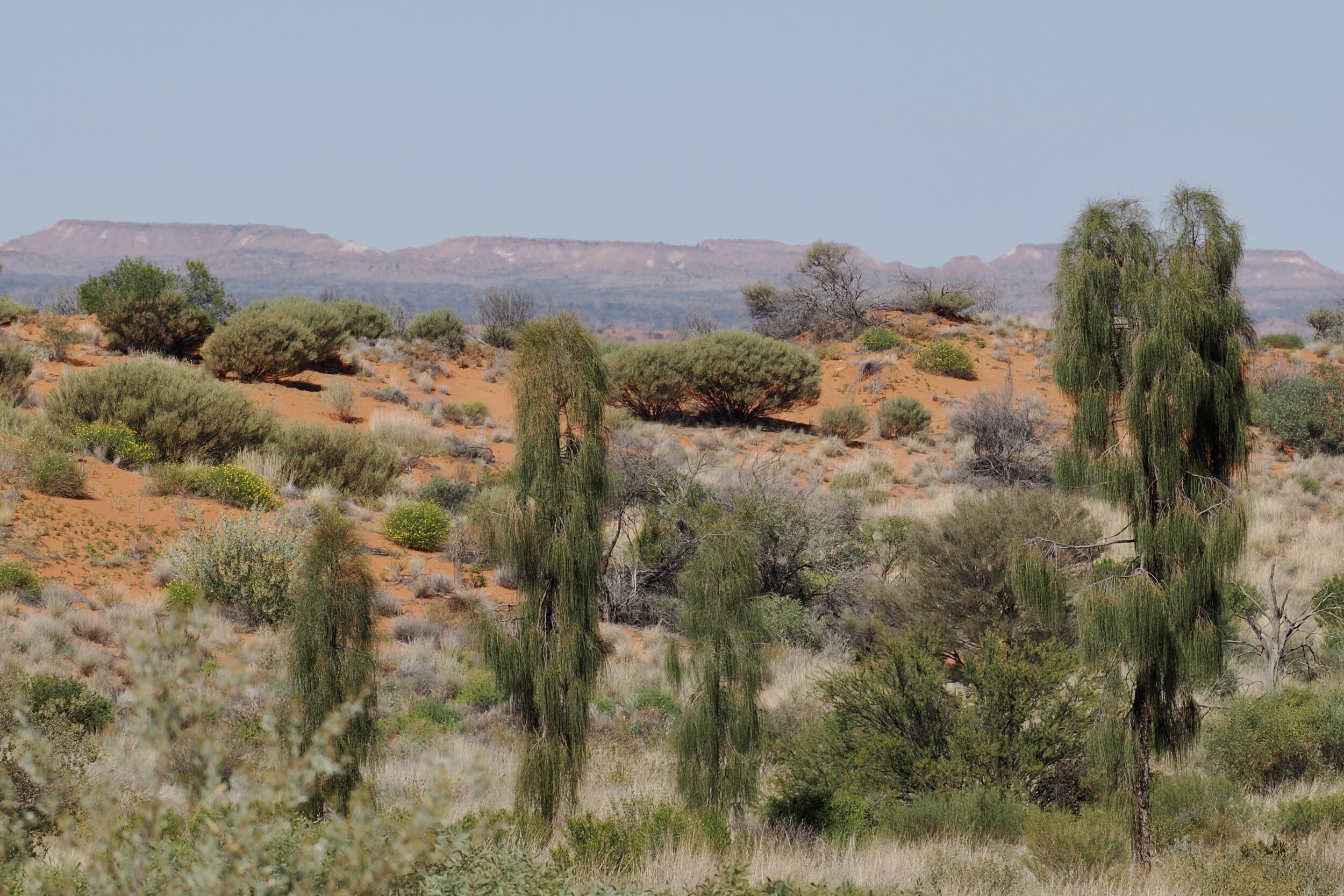
By their very nature, sandy soils are “poor” – low in nutrients and unable to retain much moisture.

Yet in some places where rain often falls and the sun often shines – including some of Amazonia and parts of the world’s largest sand island – rainforest flourishes.

That island is Australian.  (Queensland’s Fraser Island/K’gari)

So too is this post’s sandy, “desert” location, which is circa 900 kilometres distant from any ocean’s shore.

Even an ignoramus would never mistake the Simpson Desert for rainforest, but s/he would almost certainly be hugely surprised to discover just how beautifully vegetated is so much of it. (as are a great many other sandy, “arid” Australian places)

Comments closed

Winter light, Flinders Ranges, 05/06/2023 (final in series: the “Cazneaux Tree”)


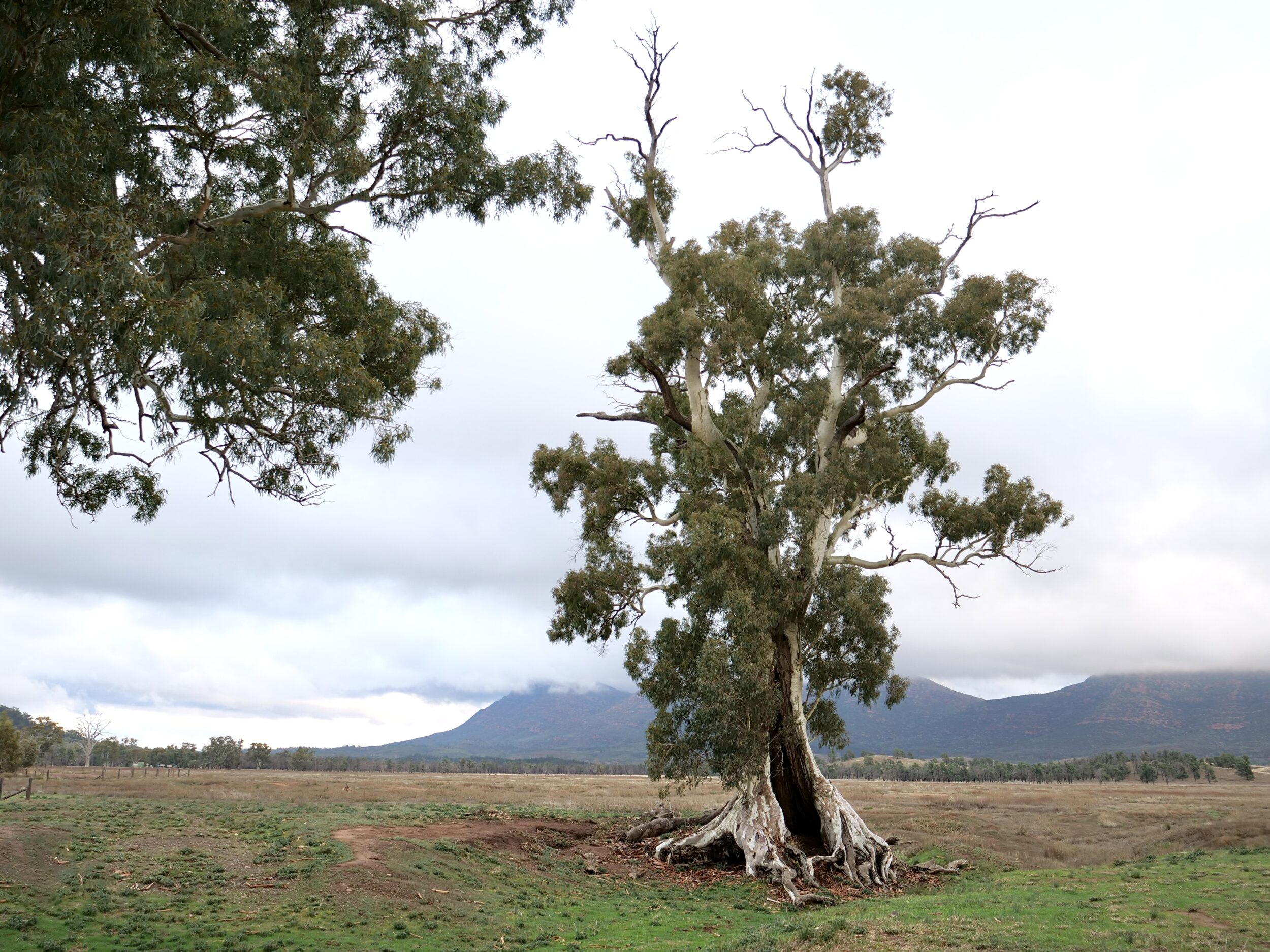
Venerable and majestic as it is, the pictured river red gum is neither the tallest, nor most massive, nor oldest example of the Australian mainland’s most widely distributed and most widely-loved eucalypt species.

The pictured tree, however was “the hero” in the most famous photograph ever taken of Eucalyptus camaldulensis.

87 years ago one of the most influential Australian photographers saw this tree, standing on a sparsely vegetated plateau, with Wilpena Pound’s flanks behind it.

The tree has stood there for at least several centuries; “the Pound” is circa 800 million years older.

Harold Cazneaux (aka “H.P. Cazneaux”) captioned his 1937 tree portrait, The Spirit of Endurance.

Comments closed

Winter light, Flinders Ranges, 05/06/2023 (#6 in series: the “floor”)


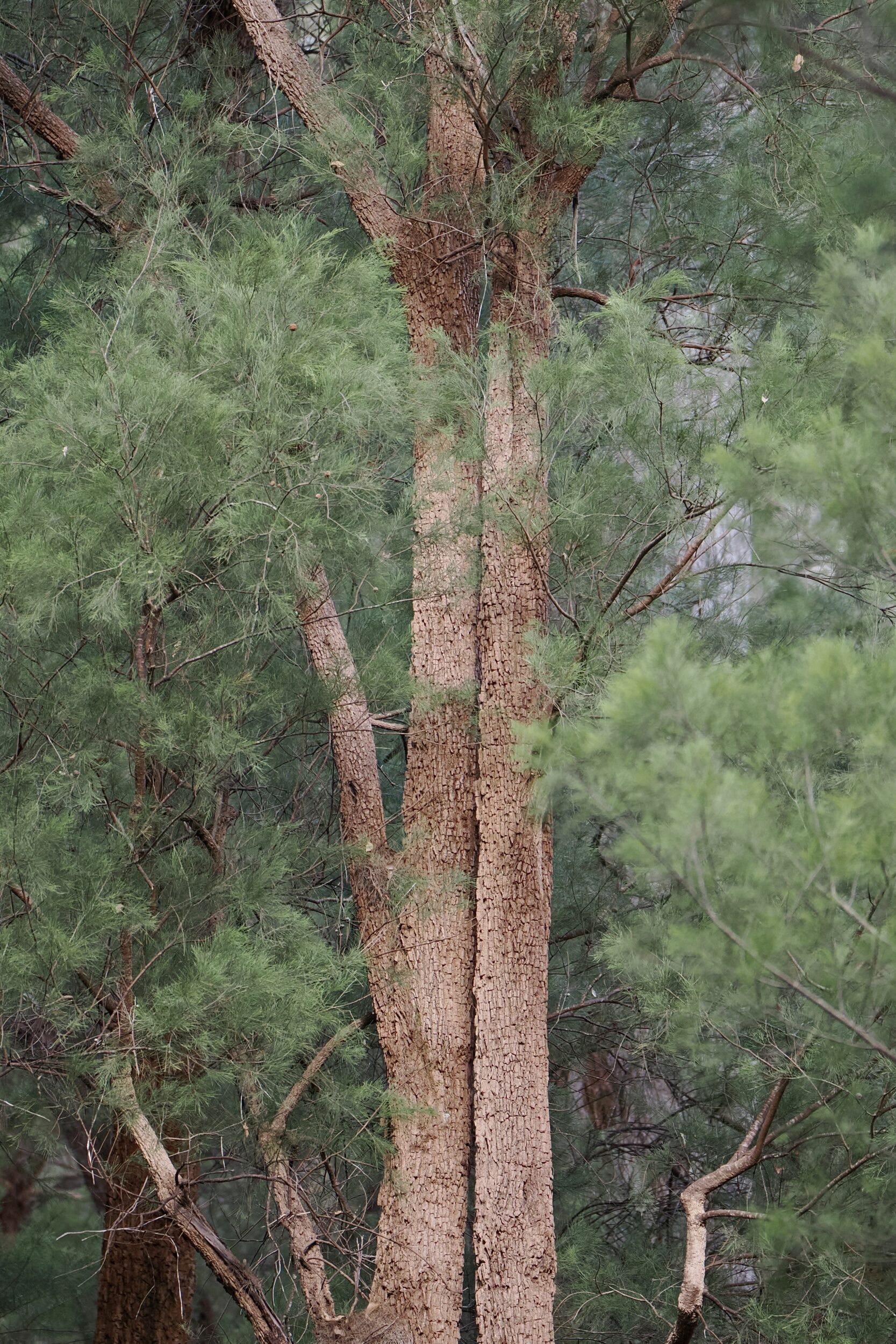
Conifers and eucalypts both tend to be domineering – they are particularly adept at excluding other kinds of trees.

In the Flinders Ranges, however, one sometimes sees “pines” and “gum trees” thriving, surprisingly near to each other.

Comments closed

Winter light, Flinders Ranges, 05/06/2023 (#5 in series: river red gum’s “skin”)


At 8.56 am we were just beginning to walk away from Wilpena Creek, and uphill, towards the “lip” of the actual Wilpena Pound.

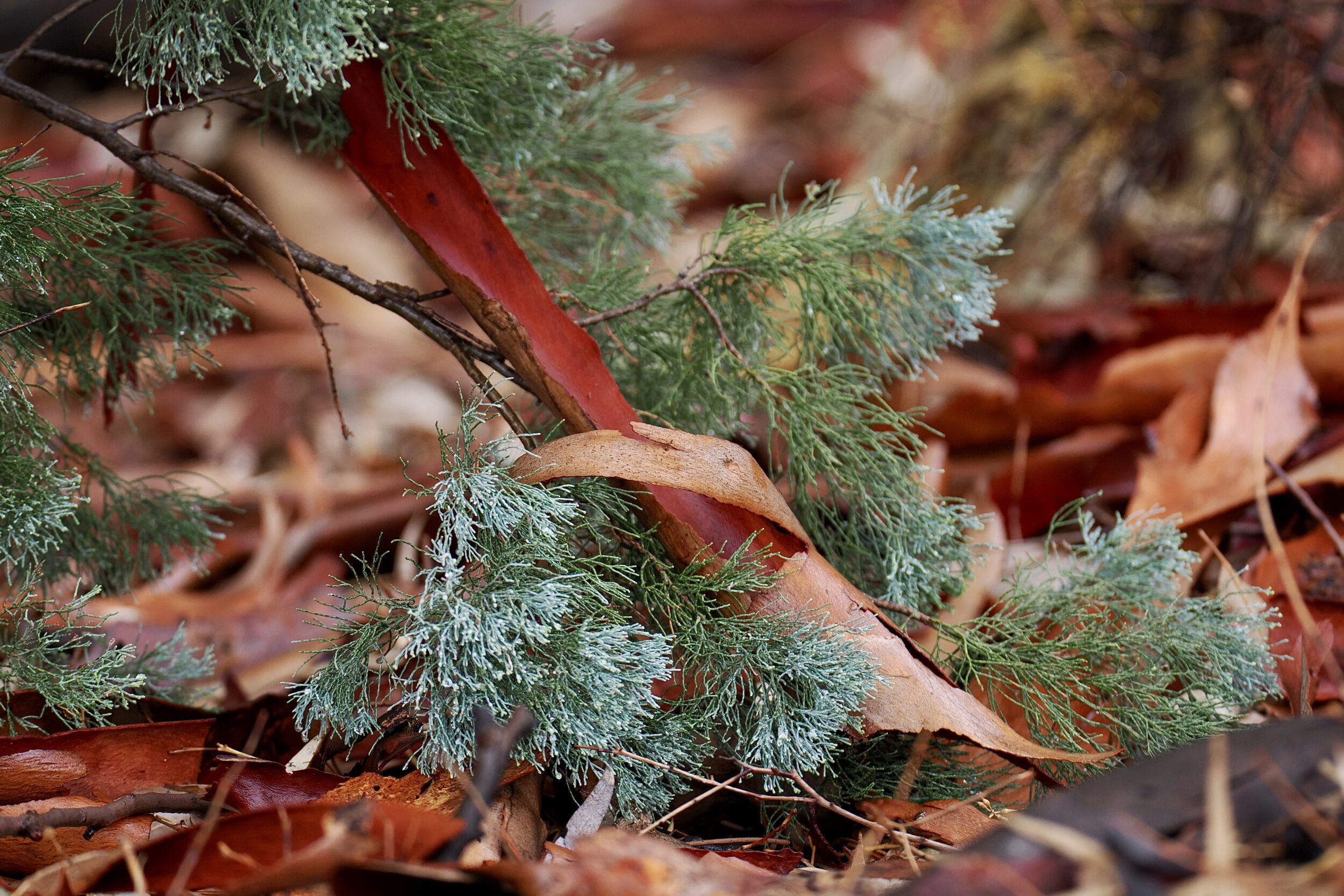
As is true of many Eucalyptus species, river red gums are forever-engaged in a cycle of growing and shedding their bark and leaves.

Comments closed

Winter Light, Flinders Ranges, 05/06/2023 (#4 in series: fully-qualified survivor)


Clearly evident: this tree is no youngster, it has not merely seen fire and rain, and is still alive, probably some centuries on from the relevant seed’s germination.

Commonly known as the river red gum, Eucalyptus camaldulensis is the most widely-distributed of any eucalyptus species; it is almost-proverbially hardy/“enduring”.

River red gums are the “gum tree” best-beloved by Australian members of Homo sapiens.

In 21st century Australia, this “iconic” species is in big trouble.

Comments closed