This post includes both musical and “word power” bonuses.
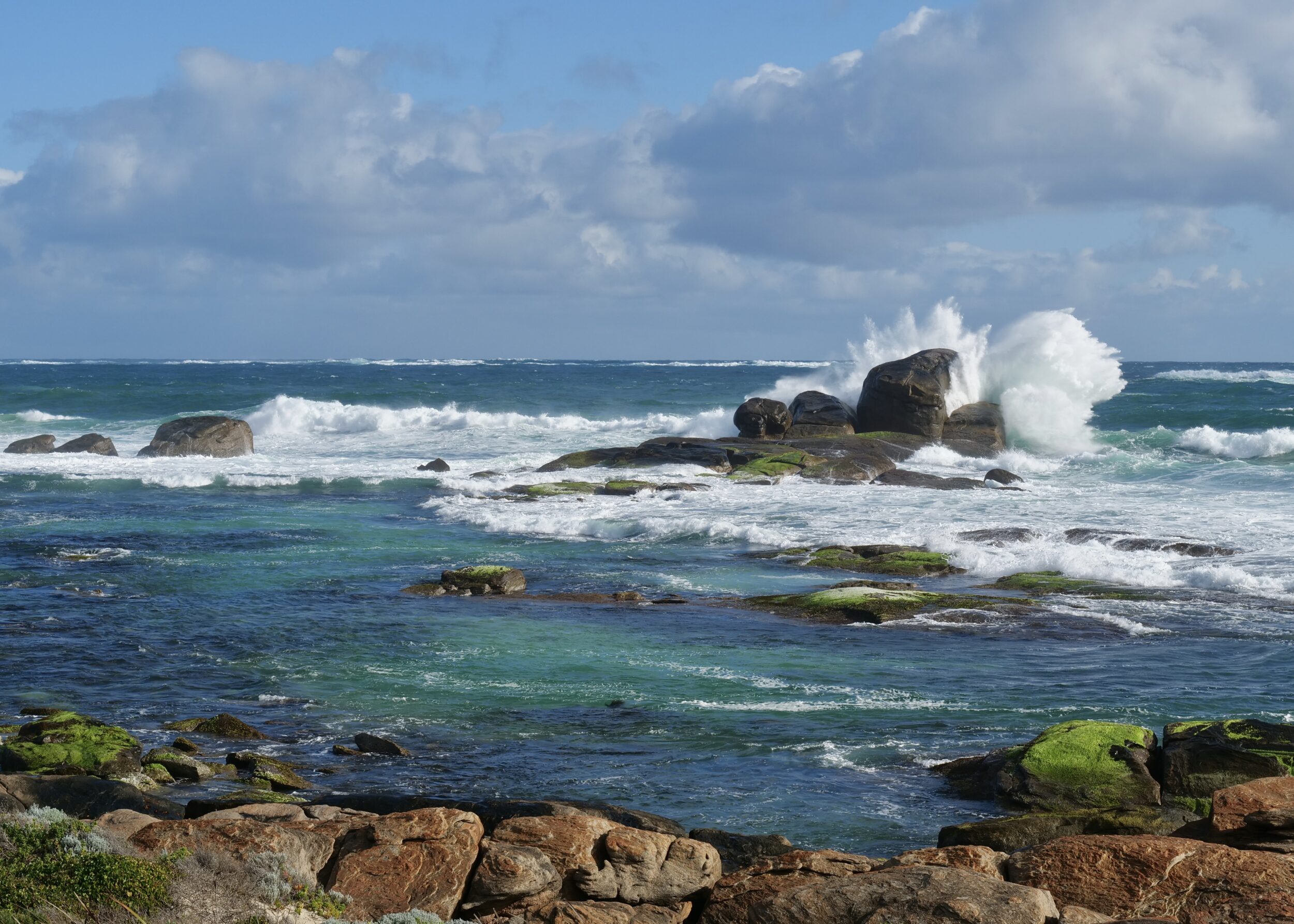
The afternoon of 21 August 2025 was not “stormy” in the Margaret River region, but local waters were turbulent.
In 1876 this was also true, as November transitioned to December…and the SS Georgette developed an irreparable leak
Over the ensuing hours a lifeboat was smashed, several people drowned, and several others were successfully transferred to the captain’s gig (ship’s boat/tender) which then managed to reach another Margaret River beach.
Meanwhile, the other fifty or so passengers and crew were heading south, on a sinking ship.
Its captain then attempted to strand the Georgette on Calgardup Bay’s Redgate Beach.
Here, a “miraculous”/“heroic” rescue was undertaken by two equally courageous local people.
The white one’s heroism was hailed, worldwide.
It was in fact the older, black person who had observed the ship in distress and set off to raise the alarm; this was almost certainly quite some hours before the Georgette stranded in Redgate Beach’s surf, although not all published accounts recognise that.
Sam Isaacs – the Bussell family’s indigenous stockman – rode 20 kilometres to the Bussell homestead.
He and 16 year-old Grace Bussell (it appears she was at the time the only member of the family “at home”) then rode down to Calgardup Bay, and proceeded to rescue all survivors.
The story may have become “more dramatic” in its telling, but anyone familiar with Redgate Beach, with horses, with ropes – and with humans – knows that Sam and Grace were uncommonly courageous and competent.
Click here for a fuller account of the rescue, and of the contemporary press coverage.
In short, Grace was internationally celebrated as a “heroine” and “darling”, whilst Sam’s role was downplayed.
At least one account described Sam as the family’s “black servant”.
Grace received a royal silver medal.
Sam was awarded a bronze one.
These days, Sam’s role is properly acknowledged.
There is no reason to believe that Grace had actively sought to downplay his role or to exaggerate her own.
Although under-credited, Sam Lovell did benefit from his heroism; he became the first indigenous West Australian to receive a land grant. (of 100 acres)
He lived until 1920, and became a well-respected local farmer and bushman.
—
Musical bonus
When resident in Margaret River during the latter part of the 20th century, Louisa Wise wrote the definitive song on this subject.
On this 2015 “live” performance of The Ballad of Grace and Sam, Louisa’s daughters are her bandmates.
I suggest you start listening at 1’ 43” into the video:
—
“Word power” bonus
Reportedly, Ian McEwan’s latest novel is remarkable, even by his own (high) standards.
Among other things, What We Can Know imagines what humans living in 2120 – in an “after the climate apocalypse” world – might make of the world as it was in the first quarter of the “previous” (21st) century.
The italicised words below are Ian McEwan’s.
If only every pretend-omniscient, “20-20 hindsight” history “warrior” would heed them!
Of course, they won’t.
Alas, Donald Trump is far from singular in his hubristic conviction that he is “always right” and that he “knows everything that needs to be known”.
You often hear, “history will be my judge,’”But history will just have its own obsessions, prejudices and amnesia. We don’t get to climb some sort of mountain of truth and stand on the top and know everything.
The above is from an excellent, interview-based article, published by The New York Times last week.
If you are not an NYT subscriber, you should easily find the article, via this search:
Ian McEwan Knows History is an imperfect judge New York Times