Skip to content →

Category: nature and travel

Tidal creek (teaser)


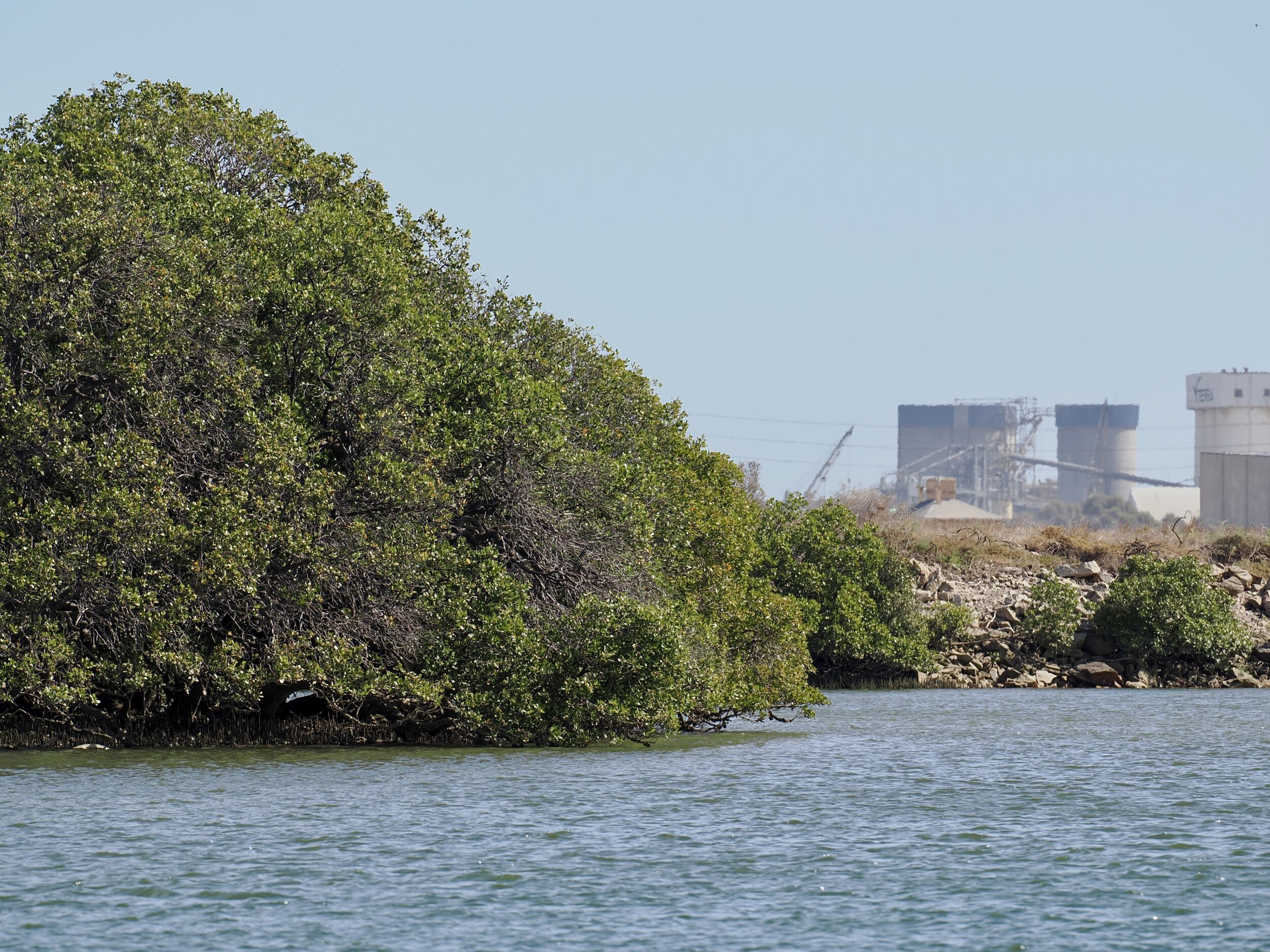
Mangroves thrive here.

Heavy industry is also here.

This river is also part of a substantial port, within a metropolis of circa 1.4 million humans; the heart of its CBD is just 14 kilometres inland from the featured photo’s vantage point.

Your eyes are probably telling you that the location is somewhere within the tropics.

But where, exactly?

Comments closed

Namib Desert’s northwest (#29 in series: riverbed to ridge tops)


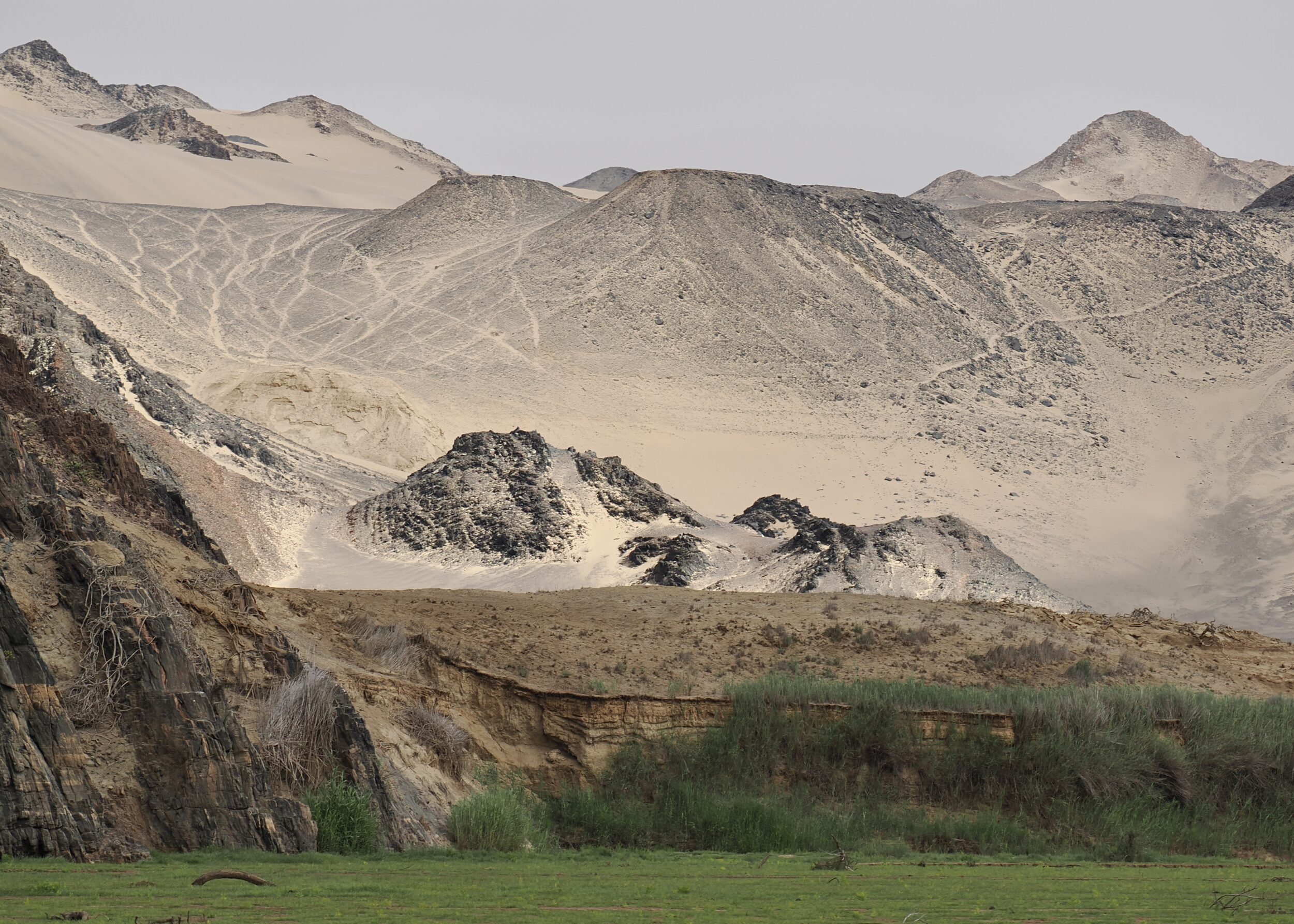
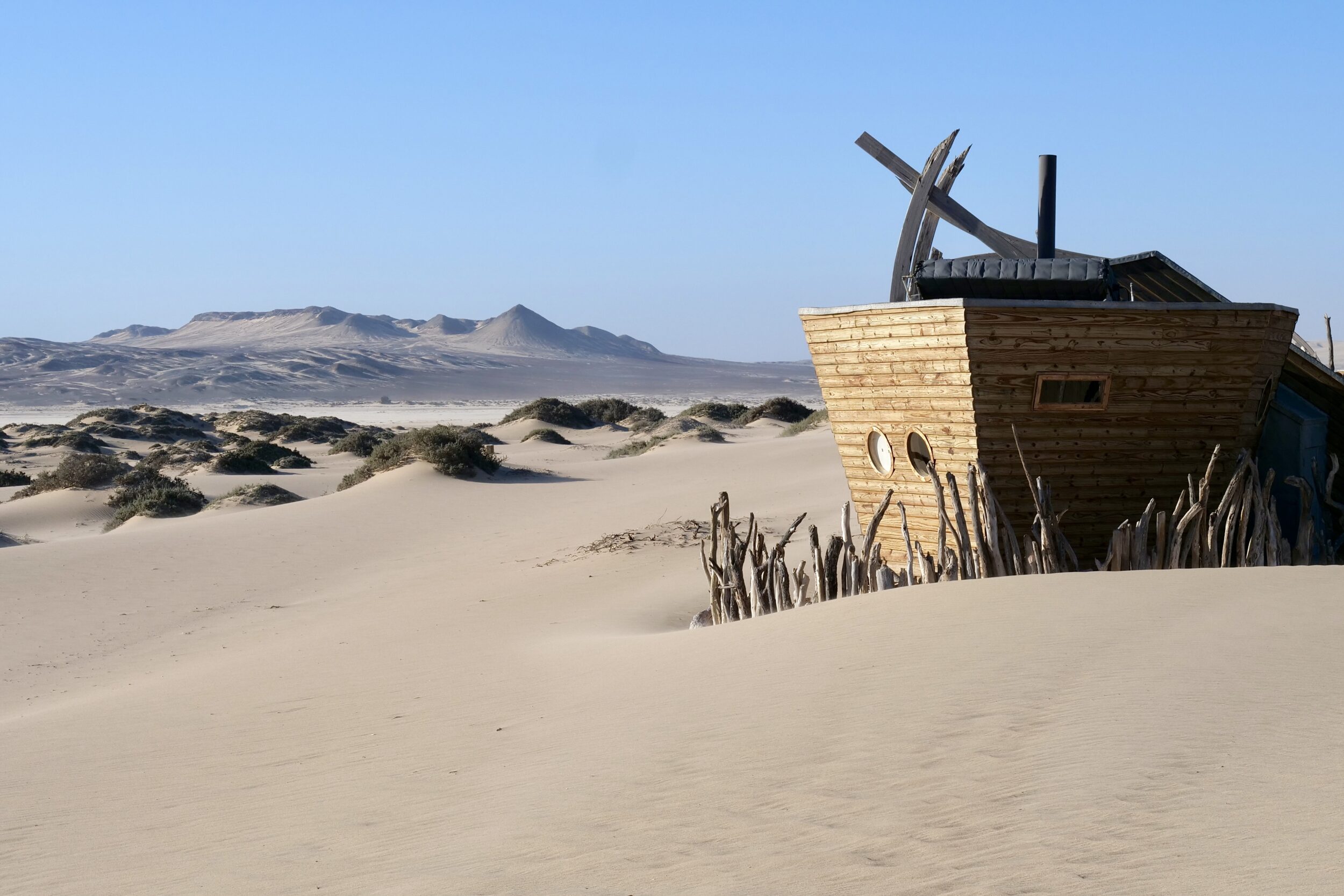
This is the current series’ final trio of images taken from the bed of the (mostly dry-surfaced, but intermittently greened/vegetated) Hoarusib.

Only on very infrequent occasions is flowing water readily evident; usually, parts of the riverbed double as road.

All three photos were taken within a single “window” of less than two minutes, as I walked a very short distance, and pointed my 400mm lens north/ish.

At this point the Hoarusib’s source is circa 280 kilometres further inland.

The Atlantic’s “skeleton coast” is less than 20 kilometres distant.

Here, I think, is one of “our” planet’s singular places.

Arguably, no other (relatively) accessible location so richly deserves to be described as “pristine wilderness”…
Comments closed

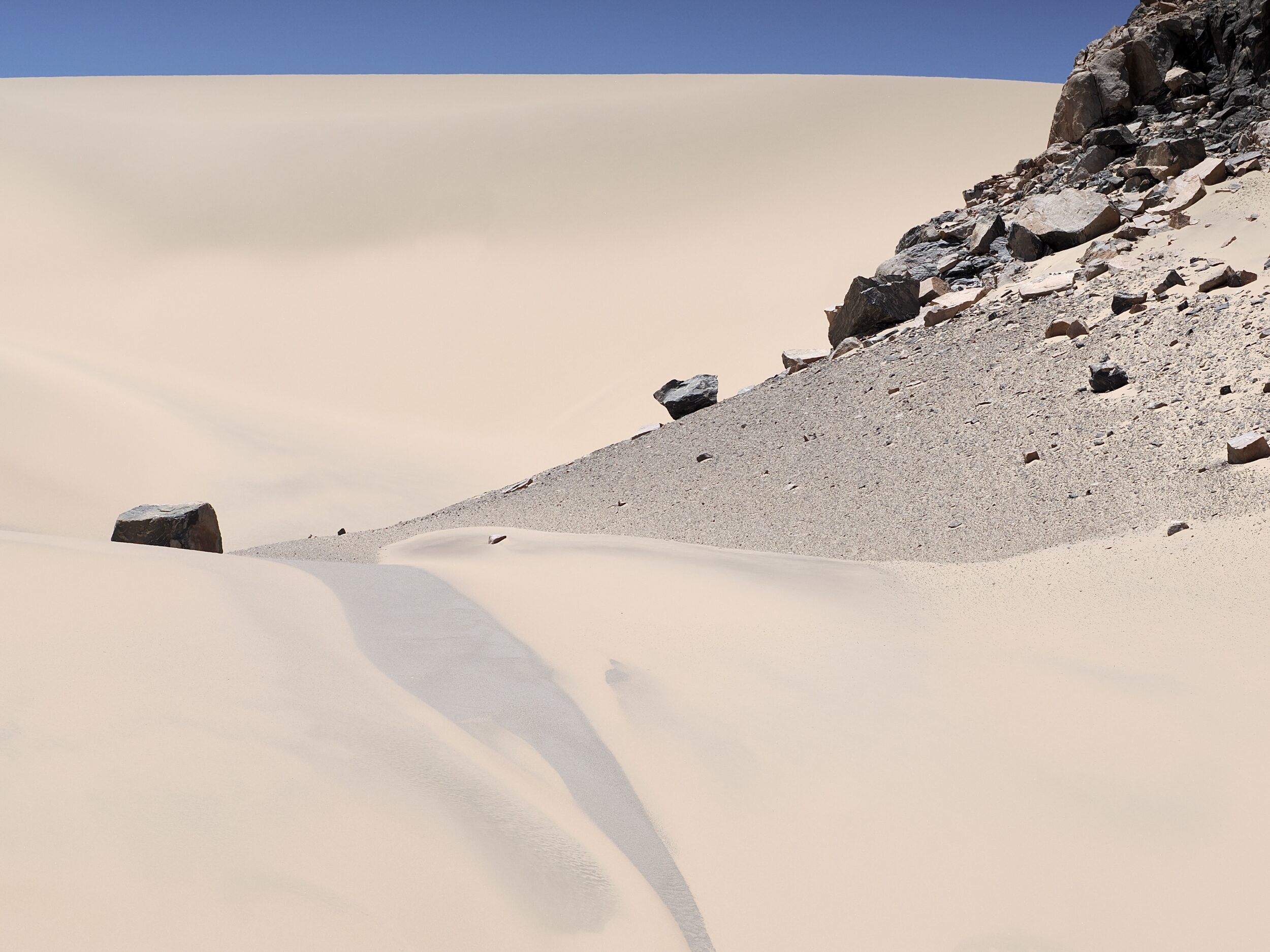
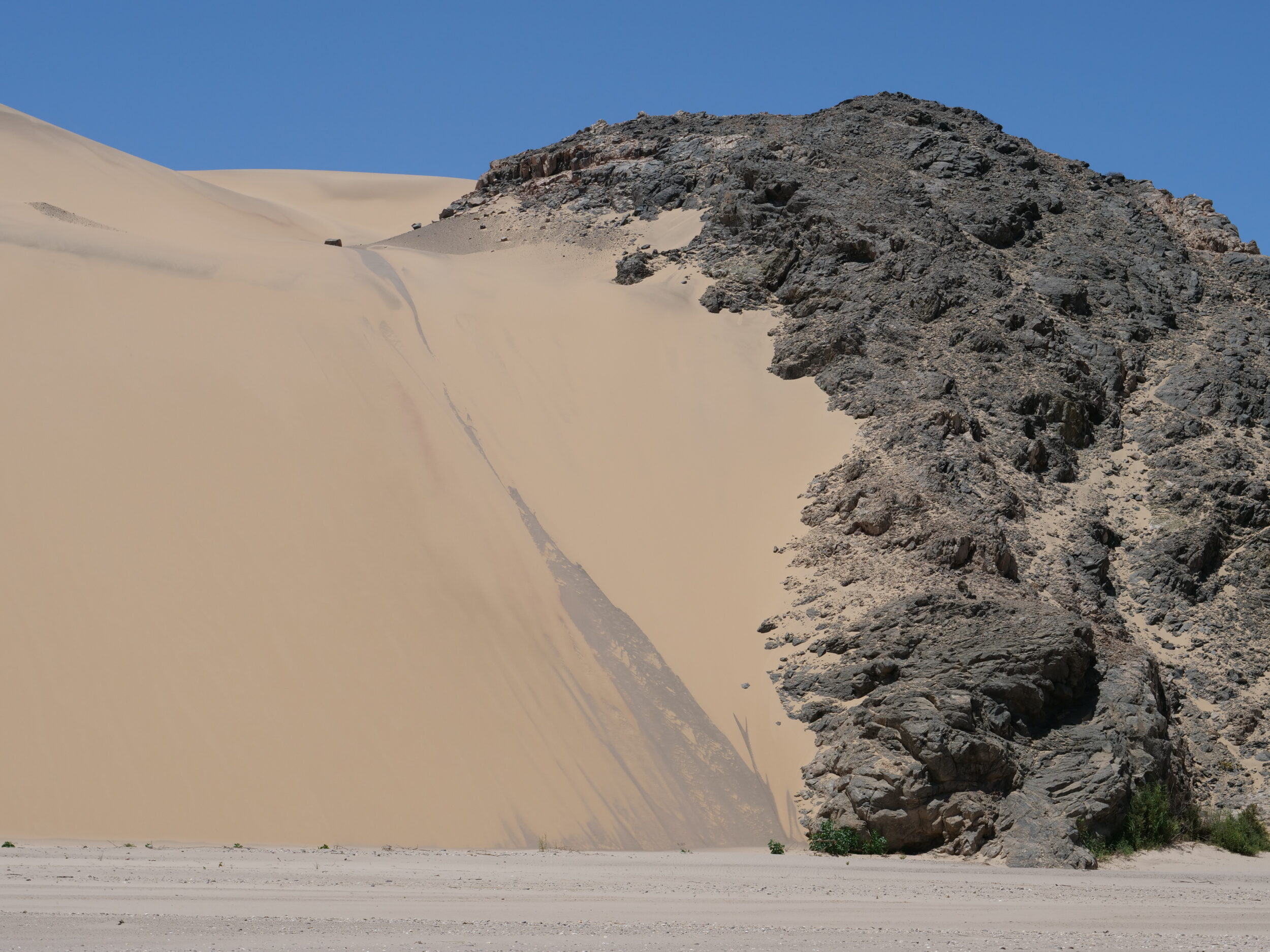
Namib Desert’s northwest (#25 in series: one dune, three views)


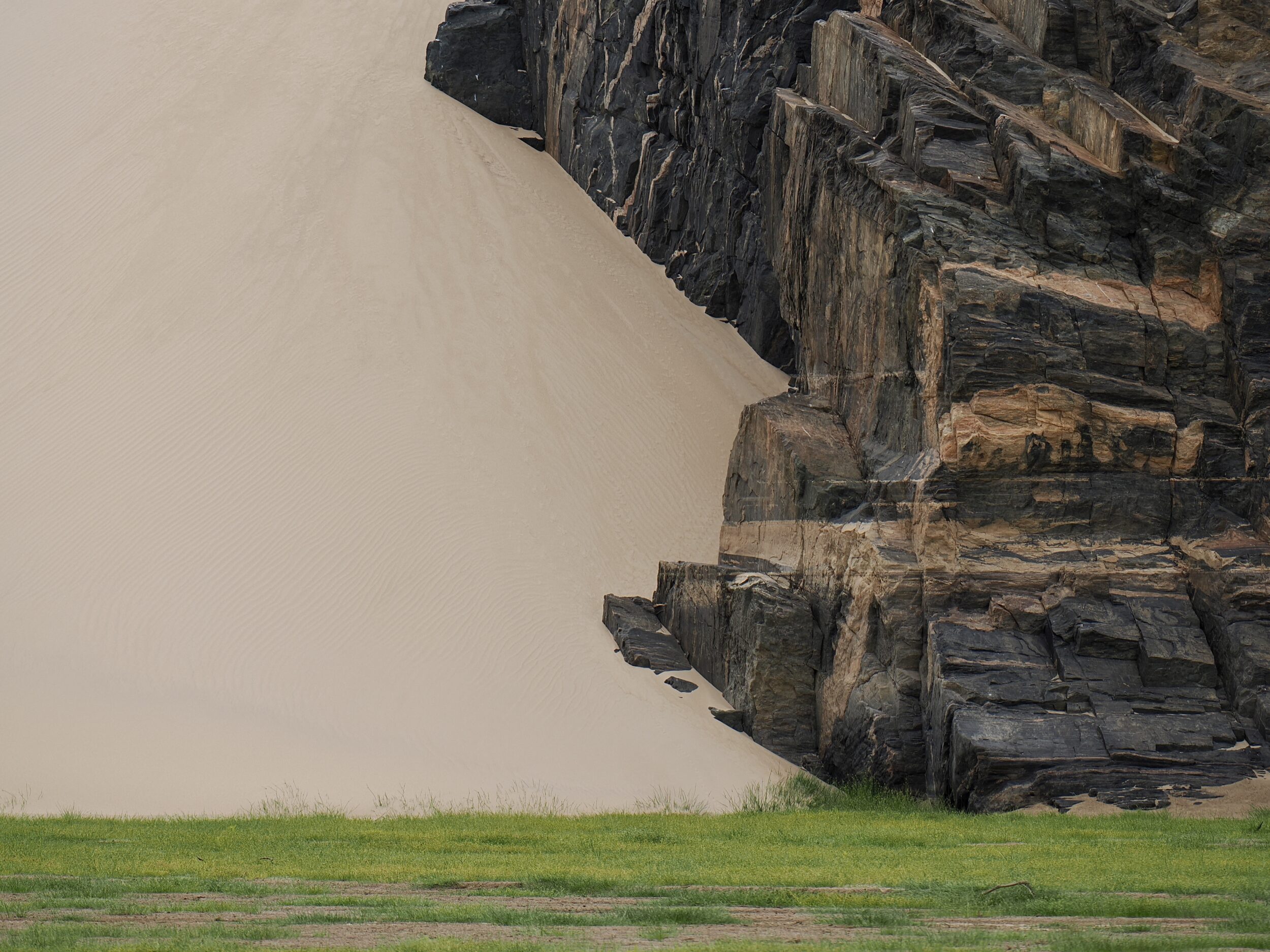
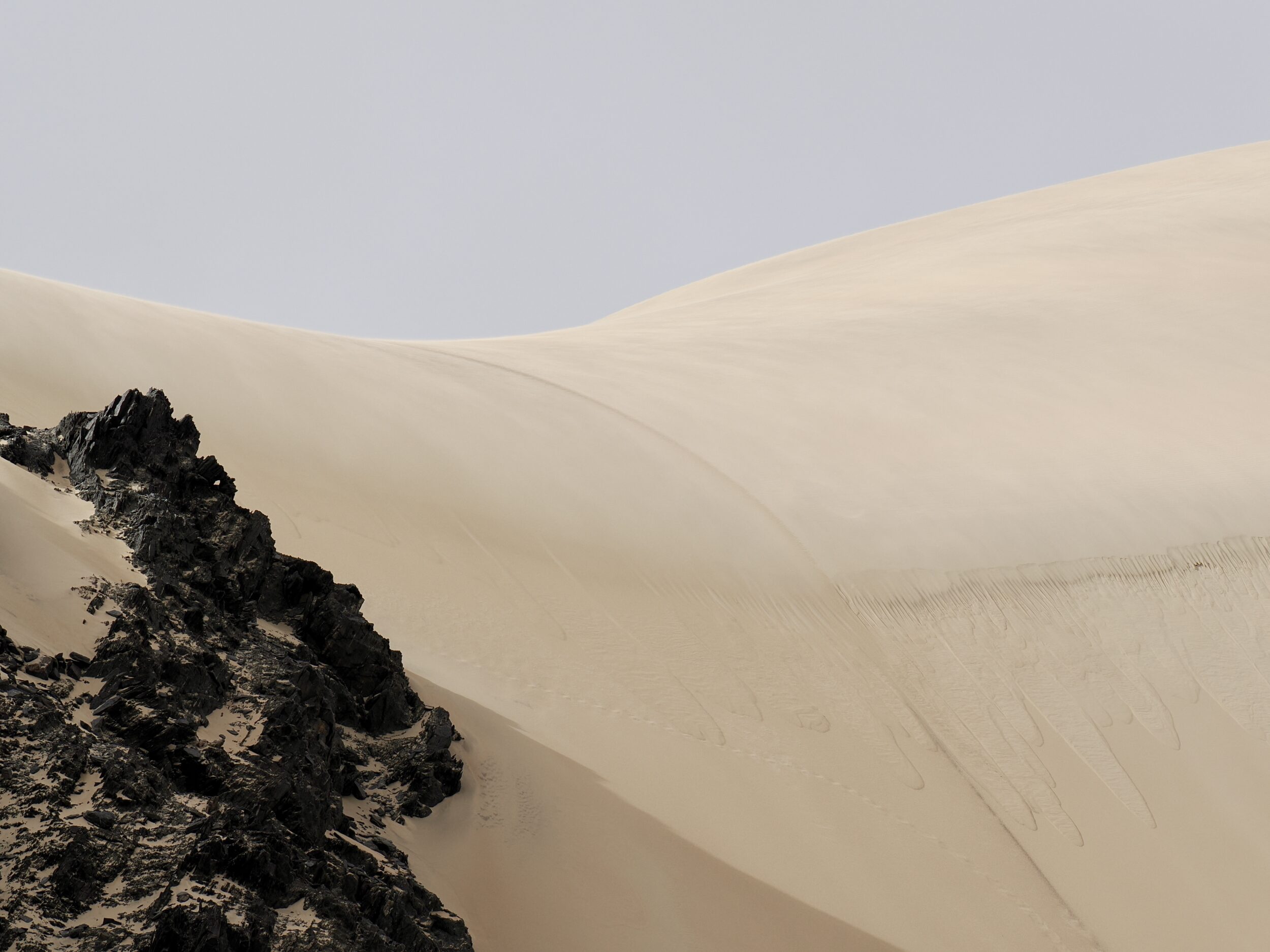
All three images involve the same dune, as viewed from the bed of the Hoarusib – the river the dune was “meeting”, at 9.06/9.07 am on 14 November 2022.

I shot all three within circa 90 seconds, with a 400 mm lens.

You will see more within these images if you enlarge them /zoom in on their details.

Comments closed

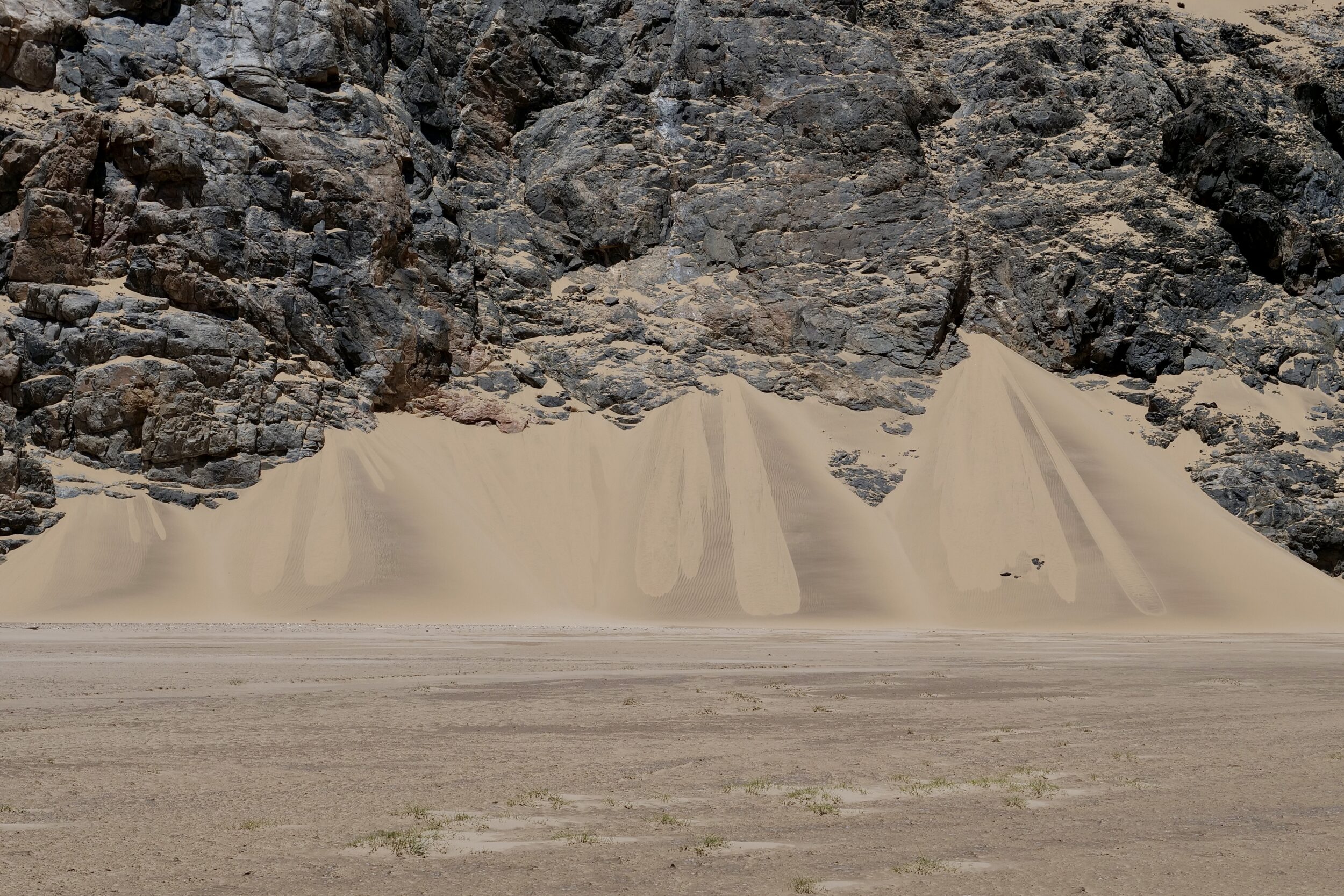
Namib Desert’s northwest (#22 in series: sands, plural…rocks, ditto)


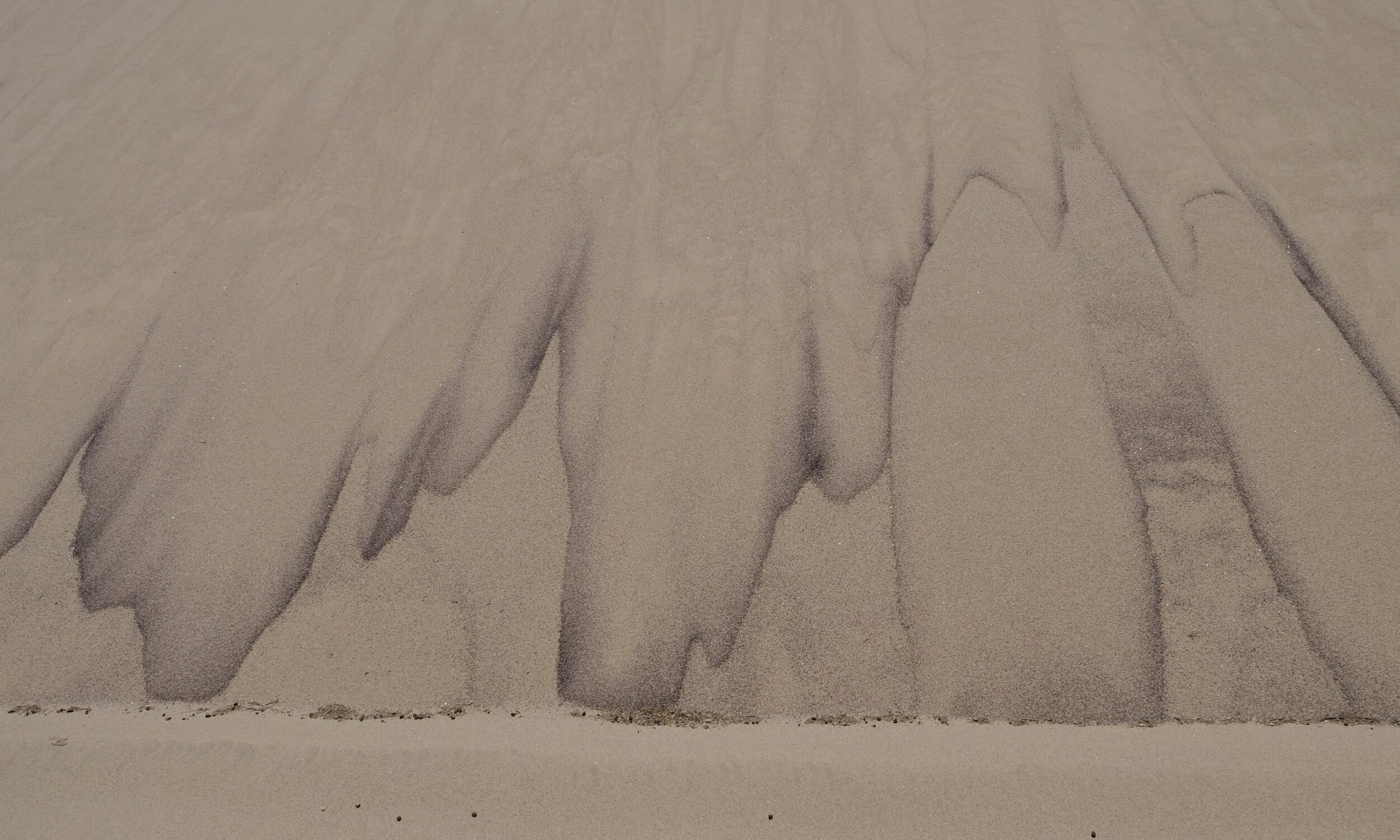
In this part of the Namib – its western edge, adjacent to the Atlantic’s “skeleton coast” – its dunes are often generally-lighter in colour than are those further inland and further south.

Here, also, variations in colour and texture are more readily-evident/common on the dunes’ surfaces.

Their “sands” are not all of the same kind, colour and density; accordingly, winds “sift”, “sort” and shift them, differentially.

The results are oft-exquisite: “sand mandalas”, sans any human role in their creation.

I especially love what happens when shifting sands meet rocks and/or riverbeds; they, too, are far from “uniform”.

Comments closed

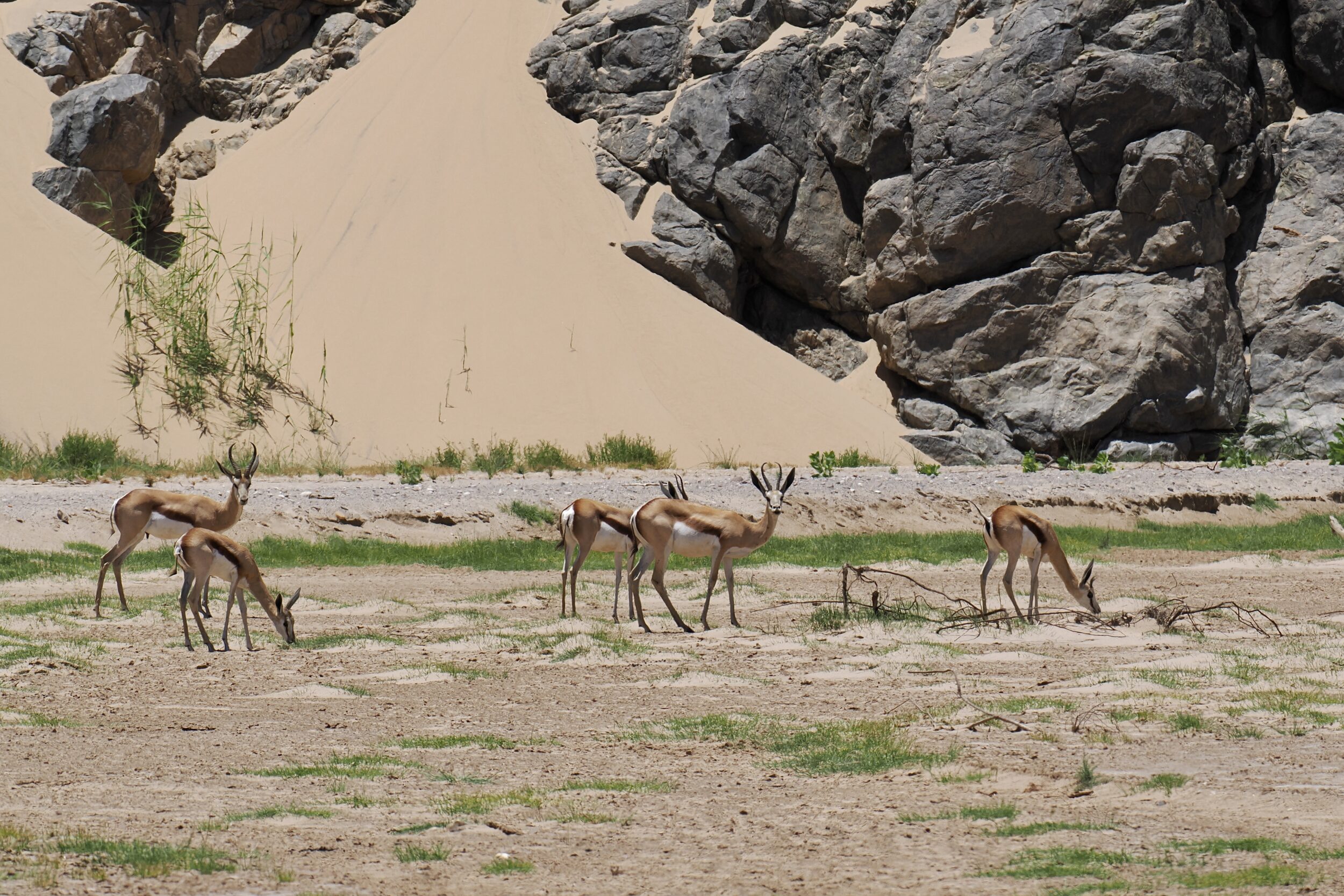
Namib Desert’s northwest (#21 in series: another win for the Springboks)


For Australian followers of Test Matches across two “major” sporting codes, this post’s subtitle will recall at least several decades of all-too-familiar, unwelcome headlines

The actual SpringbokAntidorcas marsupialis –  is South Africa’s heraldic beast.

However, this charismatic antelope is similarly abundant in Namibia and Botswana, and its range extends into the drier, southwest corner of Angola.

(Namibia’s emblematic mammal returns the compliment; gemsbok also thrive in South Africa and Botswana)

Comments closed