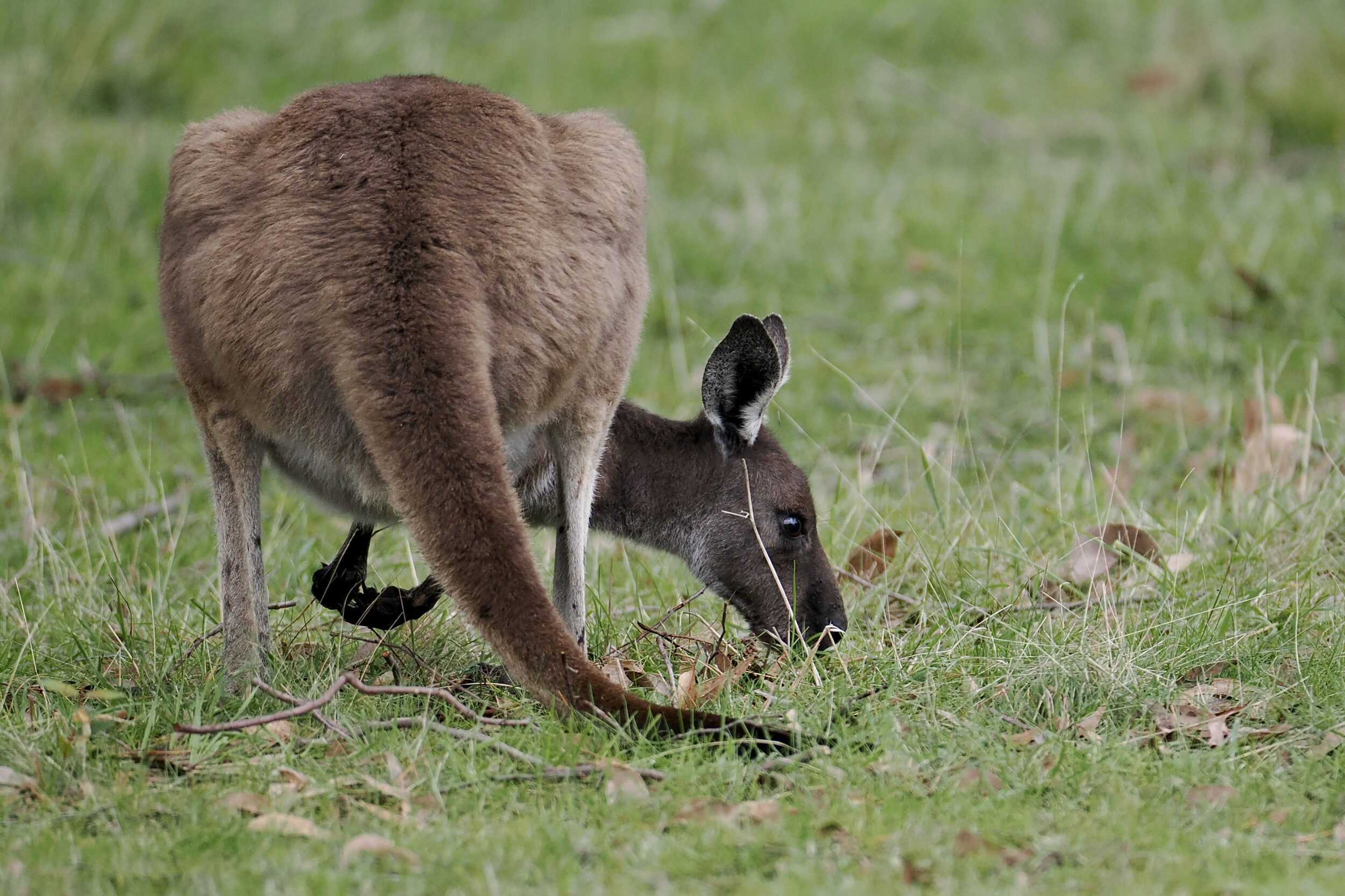
In South Australia’s Deep Creek Conservation Park, those who hire Goondooloo Cottage can expect to see Western grey kangaroos, just outside the walls and windows.
This is especially likely in the first and final hours of daylight.
Comments closedNatural splendour, real musics, wines, wordpower
In South Australia’s Deep Creek Conservation Park, those who hire Goondooloo Cottage can expect to see Western grey kangaroos, just outside the walls and windows.
This is especially likely in the first and final hours of daylight.
Comments closed
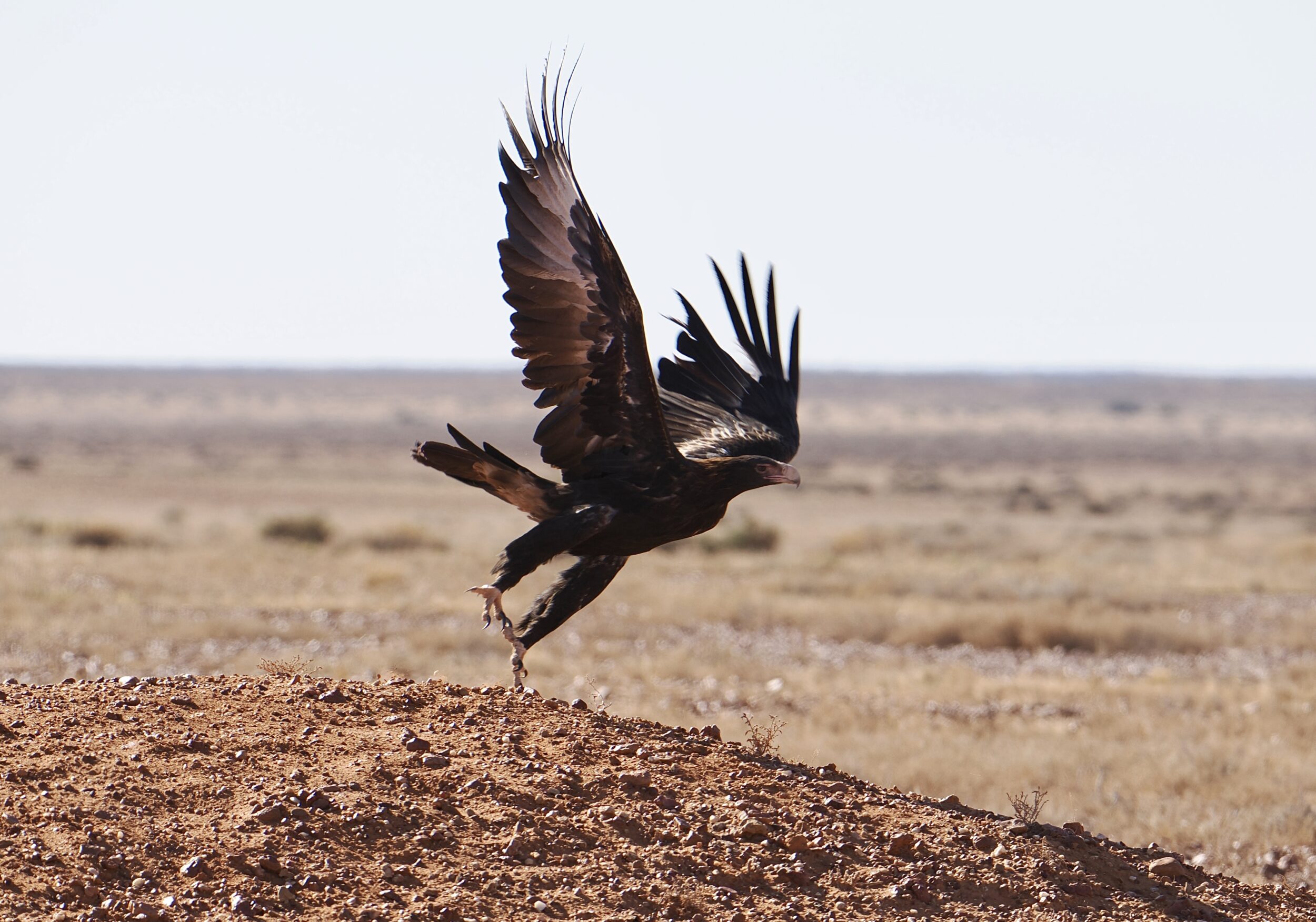
Once aloft, a wedge-tailed eagle generally appears “effortless”.
However, on the ground, wedge-tails are quite “clumsy”, and getting airborne again is decidedly (and obviously) effortful for any eagle in flattish terrain.
Comments closed
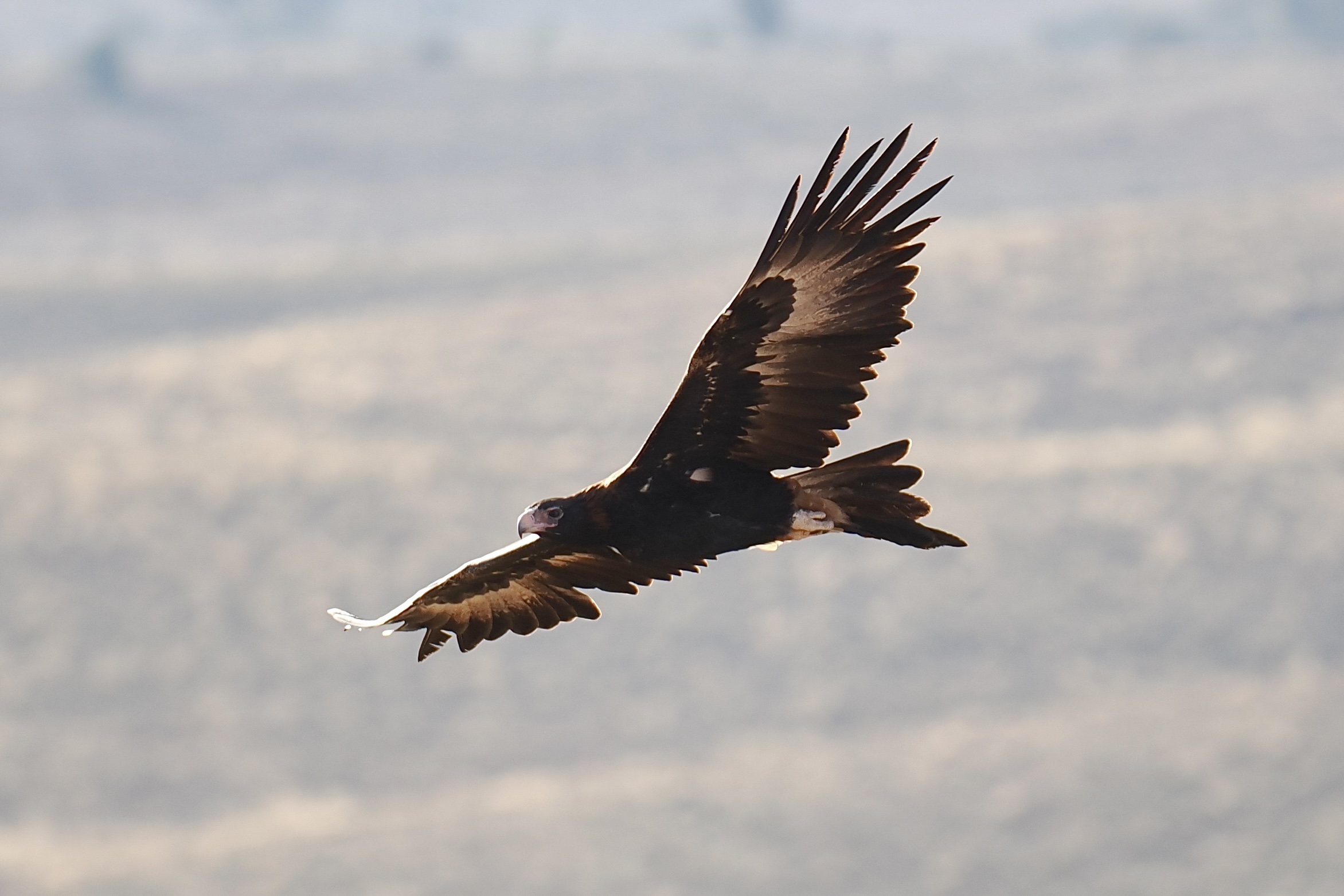
The wedge-tailed eagle is Australia’s largest raptor.
It is one of the world’s largest raptors, and is almost certainly the most abundant of any of the world’s big eagles.
Wedge-tails range across almost all of Australia.
They are, however, very “difficult”, photographically speaking.
Until the fifth afternoon of June 2023 I had never taken a “successful” photo of an airborne wedge-tail.
One Comment
Certain moments/circumstances – and/or an image which “captures” one of them, without seeking to “manipulate” it – have a “waking dream” quality.
That quality is hugely dependent on how the particular observer responds to the particular moment or image.
Certainly, however, a “waking dream” moment or image does not require the obvious presence of “conflict”, “high drama”, “hilarity”, “tragedy” or “somebody famous/infamous”.
To me, this post’s image captures a “waking dream” circumstance, but another pair of equally “perceptive” eyes could find “nothing special to see, here”.
Comments closed
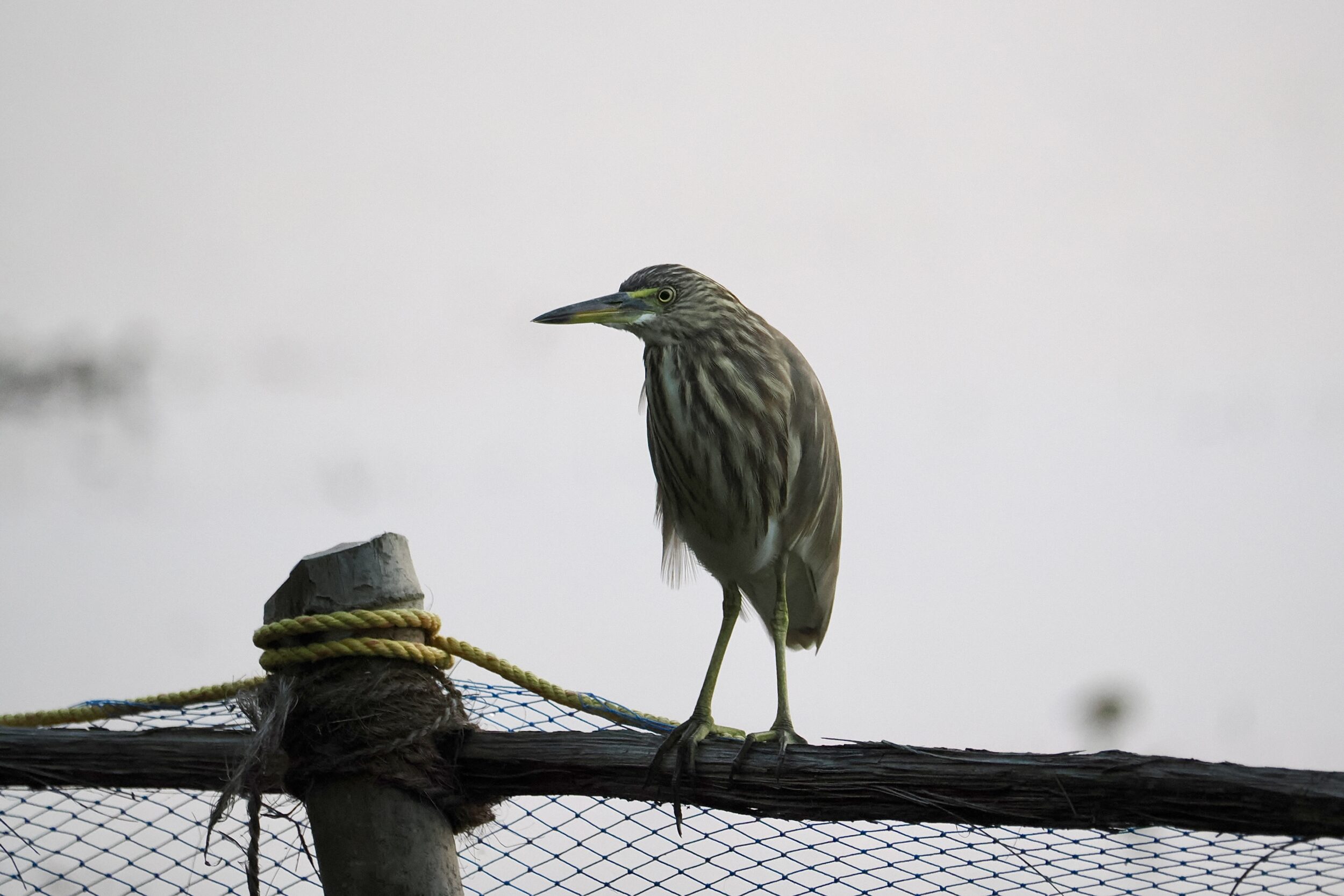
Most human observers cannot accurately “read” a bird’s face.
So, the “quirkiness” of a particular bird species – or the “quirkiness” of a particular bird’s appearance/demeanour at a particular moment – is usually all about human perception/misperception.
Typically, it has little or no informed connection to the bird’s actual nature/intent/emotional state.
That said, to this human observer at least, the pictured individual looked marvellously quirky at 6.29 pm on 20 February 2023.
Both of us were on the shoreline of India’s longest lake, shortly before darkness fell.
Comments closed
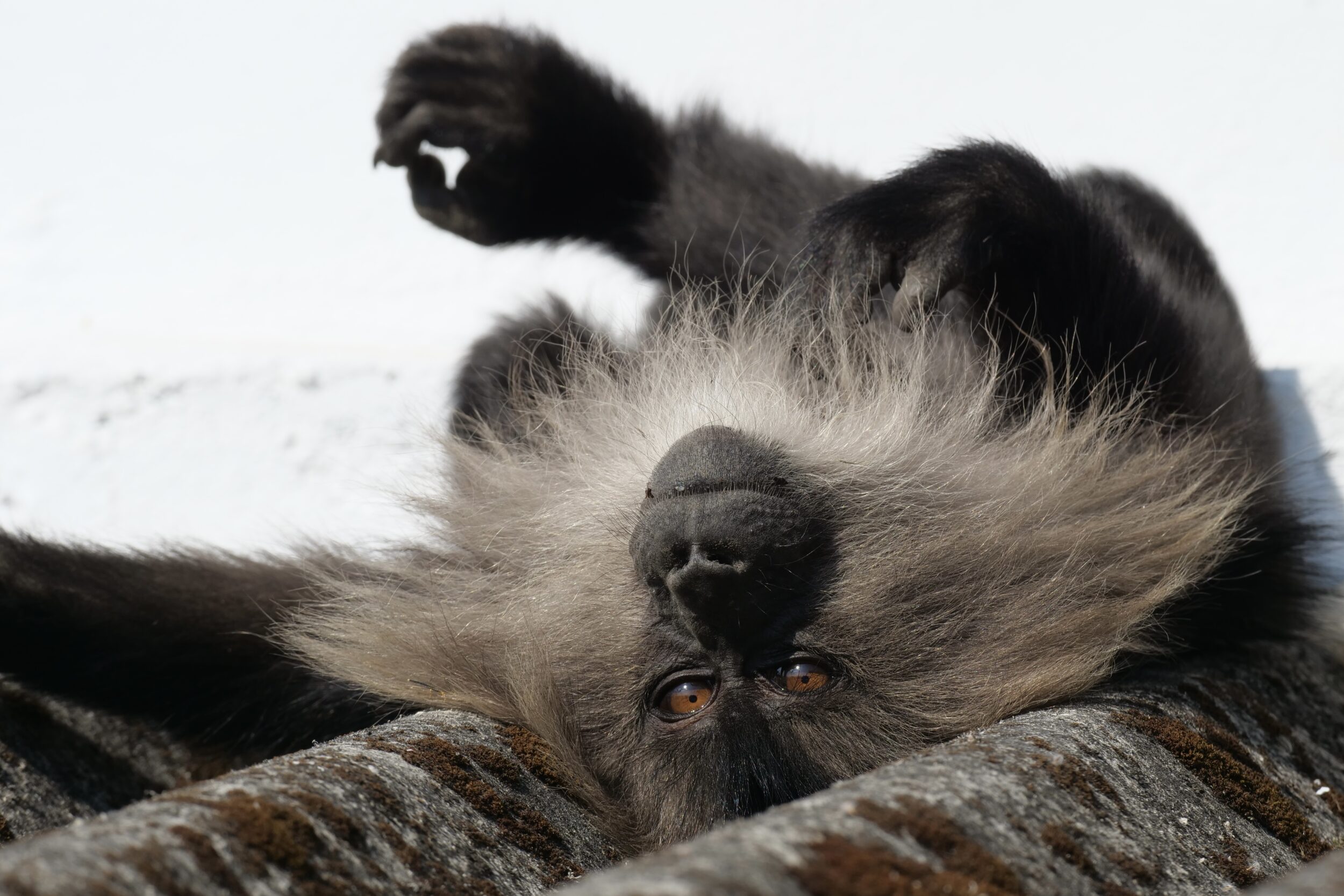
As you can see, the featured image shows a young primate, looking very relaxed, on a rooftop.
Obviously, the pictured individual was well aware of my (very close) presence.
At the time – 9.26 am on 28 February 2023 – the relevant two species had a couple of dozen mutually-visible members present, in a village near Coonoor in the Nilgiri Hills, south India.
Yours truly belongs to the world’s most abundant primate species.
My photo’s subject is a wild member of one of the rarest, most endangered primate species.
Its rapidly-vanishing natural rainforest habitat is confined to small, scattered locations in India’s Western Ghats.
Allegedly, that species’ members are elusive creatures (who) usually occupy the tallest, shadowy rainforest canopies, far from human sight.
However much I loved my experience of the “endearing moment” pictured above, it was in fact a moment that should never happen – a symptom of how very desperate has become the plight of Macaca silenus, the lion-tailed macacque.
Comments closed
On the 5th day of March 2023 my beloved and I ate a delicious lunch, al fresco, just outside a tiger sanctuary in southern India.
On the 18th of March 2018 in southern Tasmania, the food, the winery’s Pinot Noir and our lunch’s quasi-natural setting were all lovely.
However, as so often proves true, in both the above cases it was one of our fellow diners who made our lunch unforgettable.
Neither of them had made a booking.
We were unable to converse.
We never discovered their names…
Comments closed
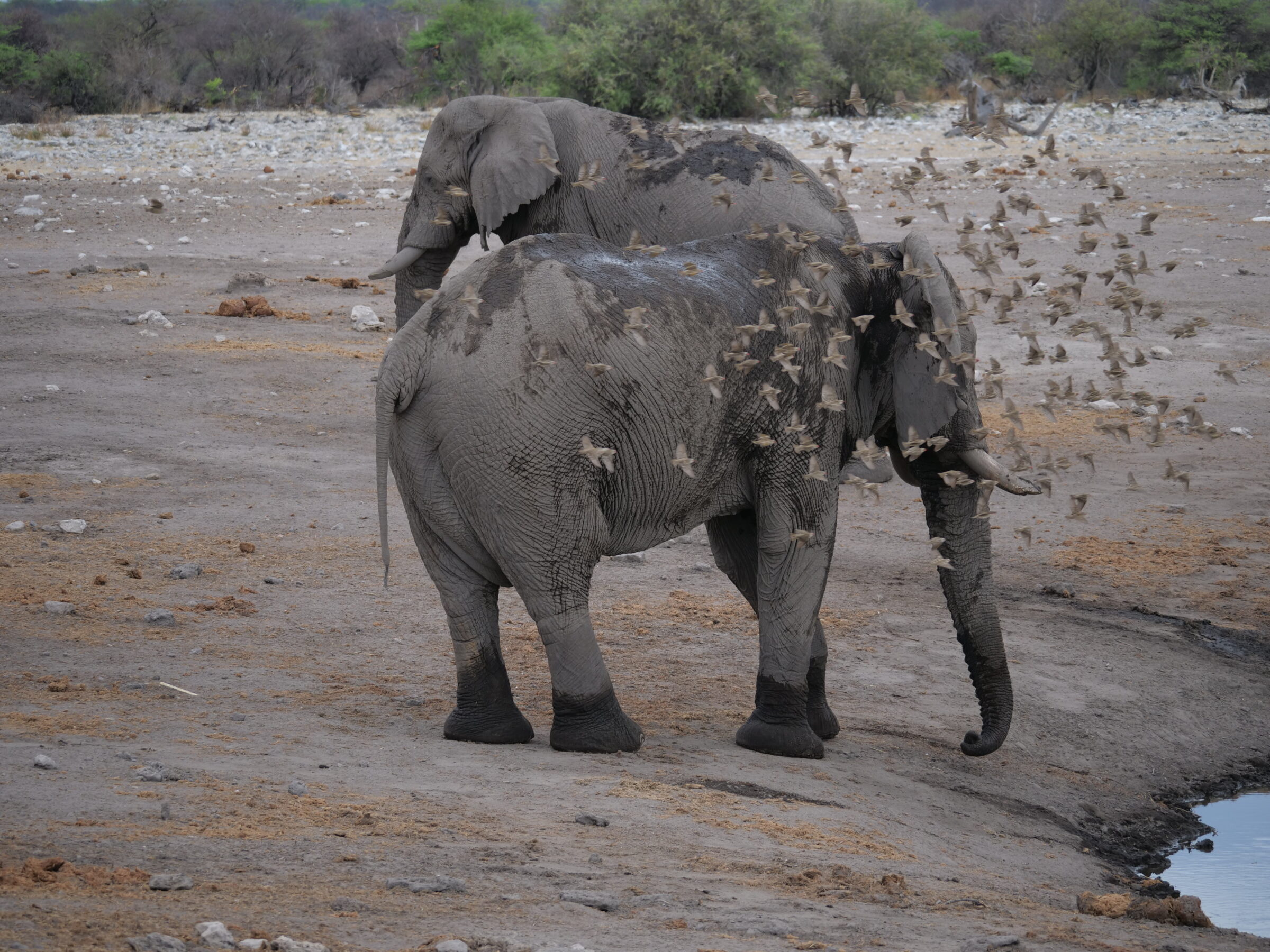
This post’s featured image was taken beside a waterhole in Etosha National Park in northern Namibia.
Visible are two members of one species, and more than hundred of another.
A mature African elephant is currently “our” planet’s most massive terrestrial animal.
Imagine this:
On one side of a colossal pair of scales you place one of the pictured elephants.
In order to balance those scales you would then need at least forty thousand of the pictured birds…and if a substantial flock of red queleas was present, forty thousand would not be an unusually high number!
Comments closed
If you are a Pelican Yoga regular, you have already seen Barbara Cartland’s and Barbie’s avian avatars. (in #10 of the “quirky moments” series)
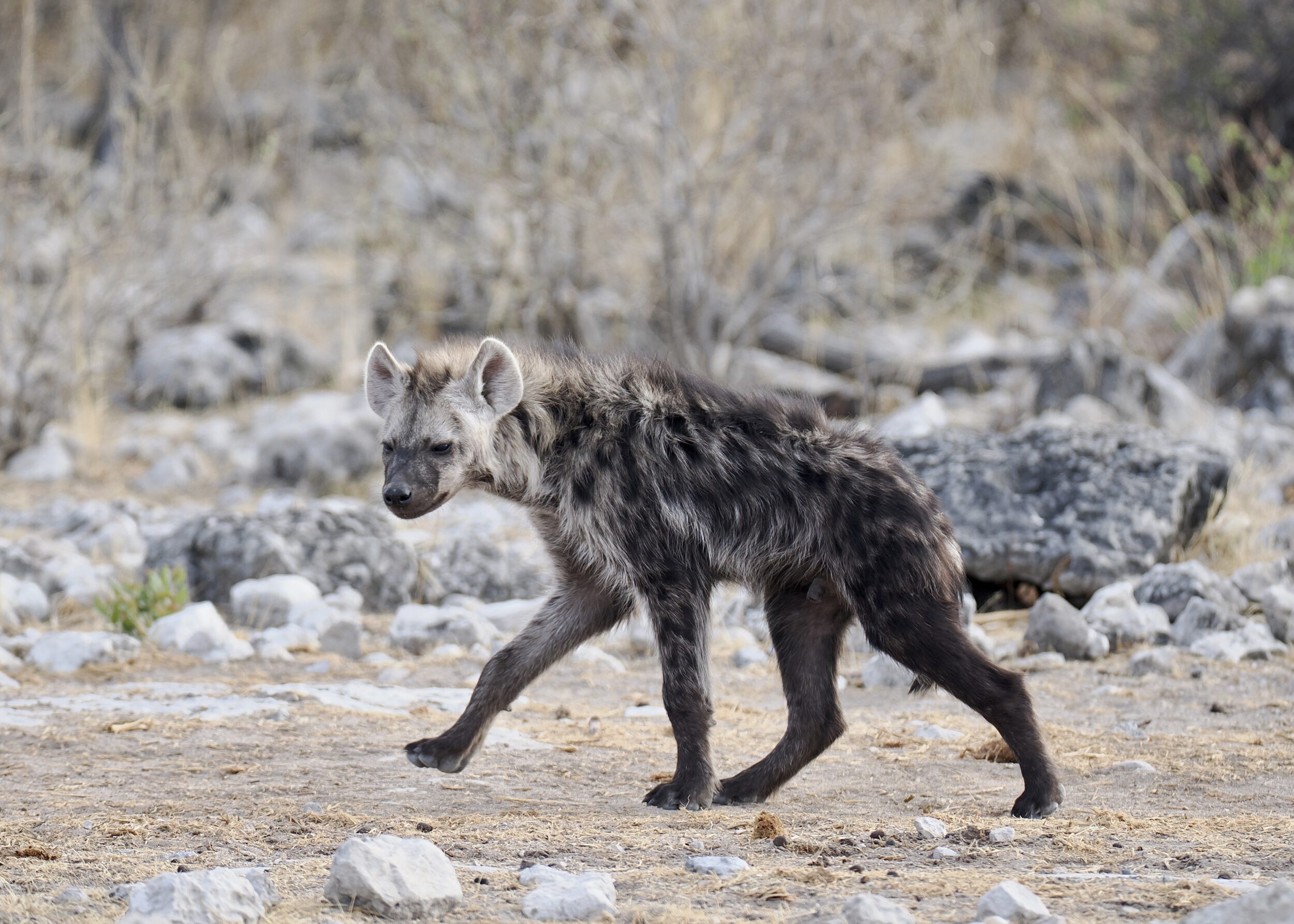
This post’s “punkish” cub is a member of Africa’s most oft-misrepresented mammal species.
His kind are very much smarter and much more “social” than most humans realise.
Contrary to common human belief, spotted hyenas are primarily predators rather than scavengers.
Lions are much more likely to “steal” from hyenas than vice versa, and spotted hyenas are much the more efficient hunters.
Over the last several thousand years hyenas have had rotten “press”, but they are not rotters.
Nonetheless, the young hero of this post’s appearance and demeanour were decidedly “Rottenesque”.
Comments closed
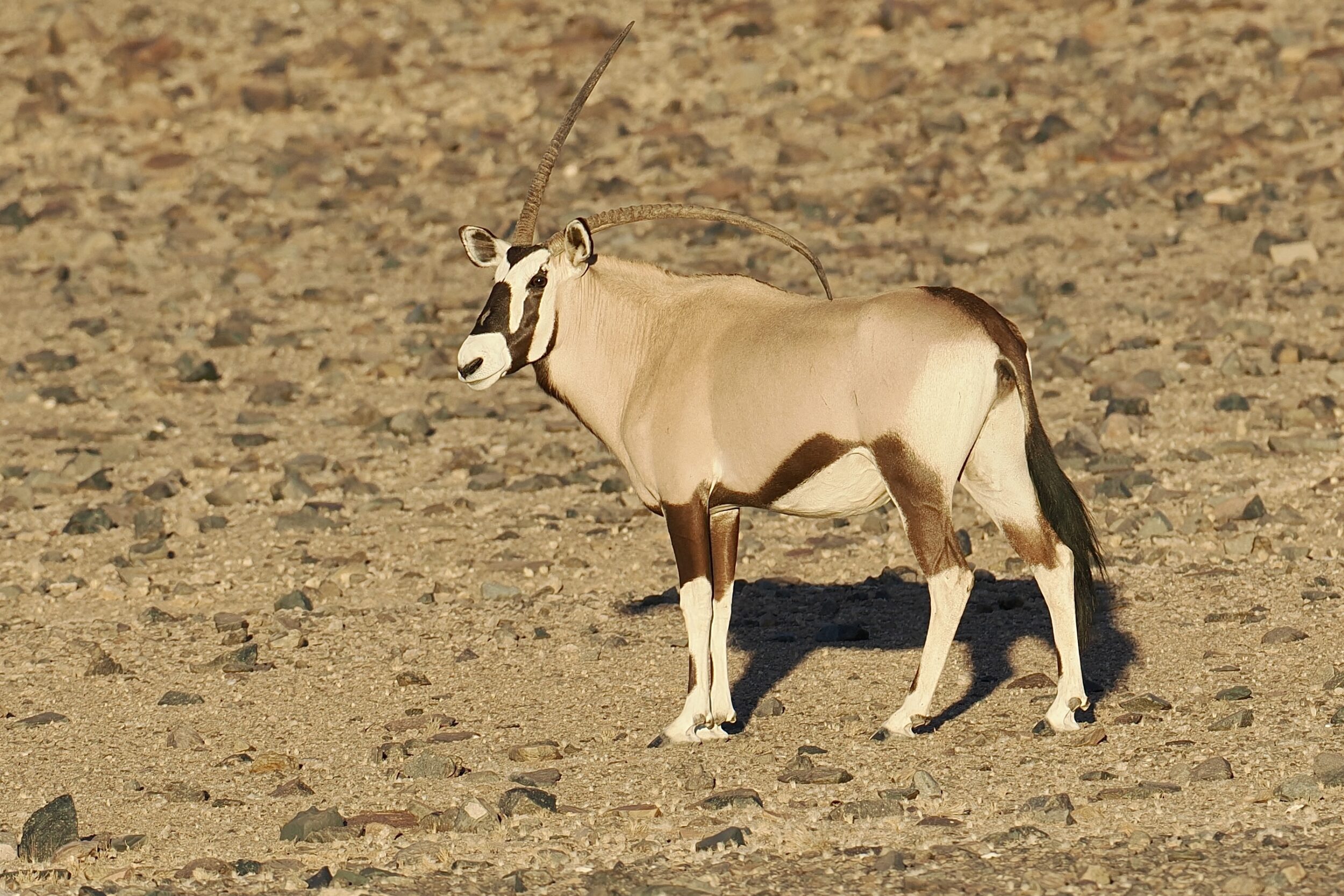
The gemsbok – Oryx gazella – is the largest of four oryx species.
This superbly-adapted desert specialist is Namibia’s suitably majestic, emblematic mammal.
Gemsbok are also found in neighbouring southern African nations, and are sometimes known as “South African oryx” or “African oryx”.
They have striking, long, spear-like horns.
Atop the head of each adult male and female, the pair of horns is usually an example of nigh-perfect symmetry.
Not so, here!
Q: could this deformity cause any serious problem for the pictured individual?
Comments closed