“Old Delhi” is renowned worldwide; arguably, it is the most “happening” urban place on “our” planet.
My beloved and I are among many millions of Westerners who have experienced Old Delhi, directly. (more than once)
Very few 21st century Westerners have visited the Walled City of Lahore.
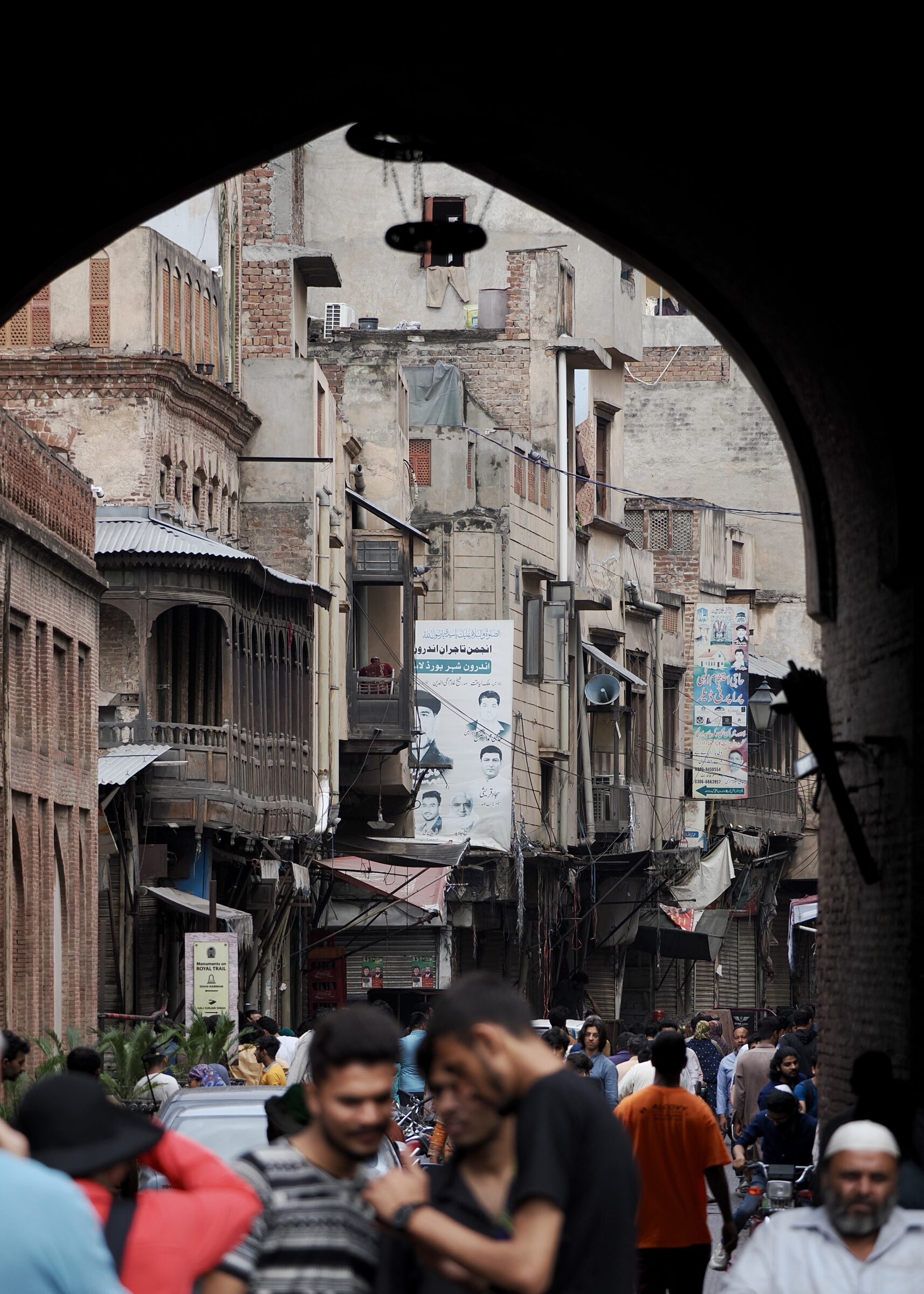
Also known as “old Lahore”, or as the “old city”, it is rather less frenetic than Old Delhi.
It is, however, very much richer in architectural/artistic splendour than is Old Delhi.
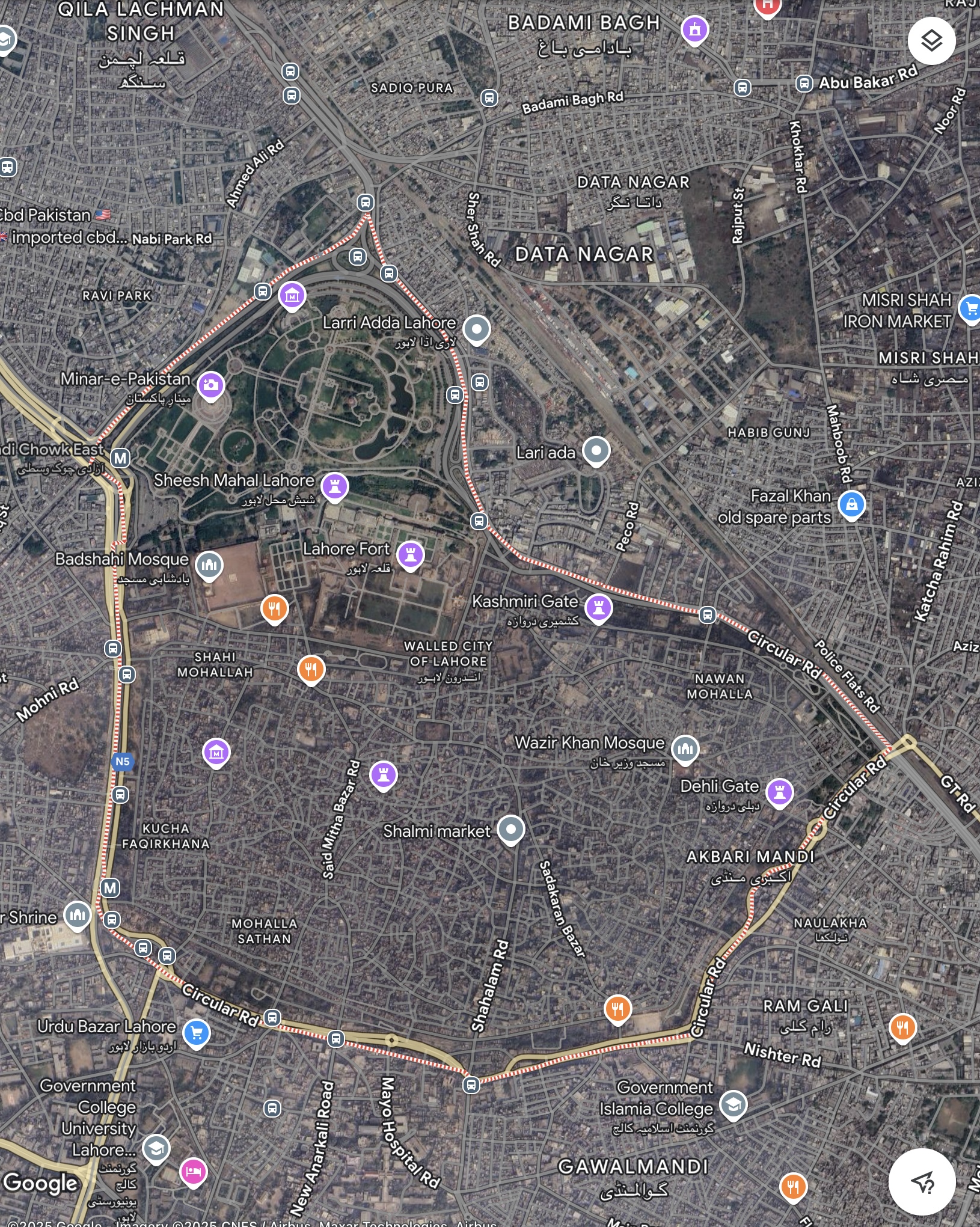
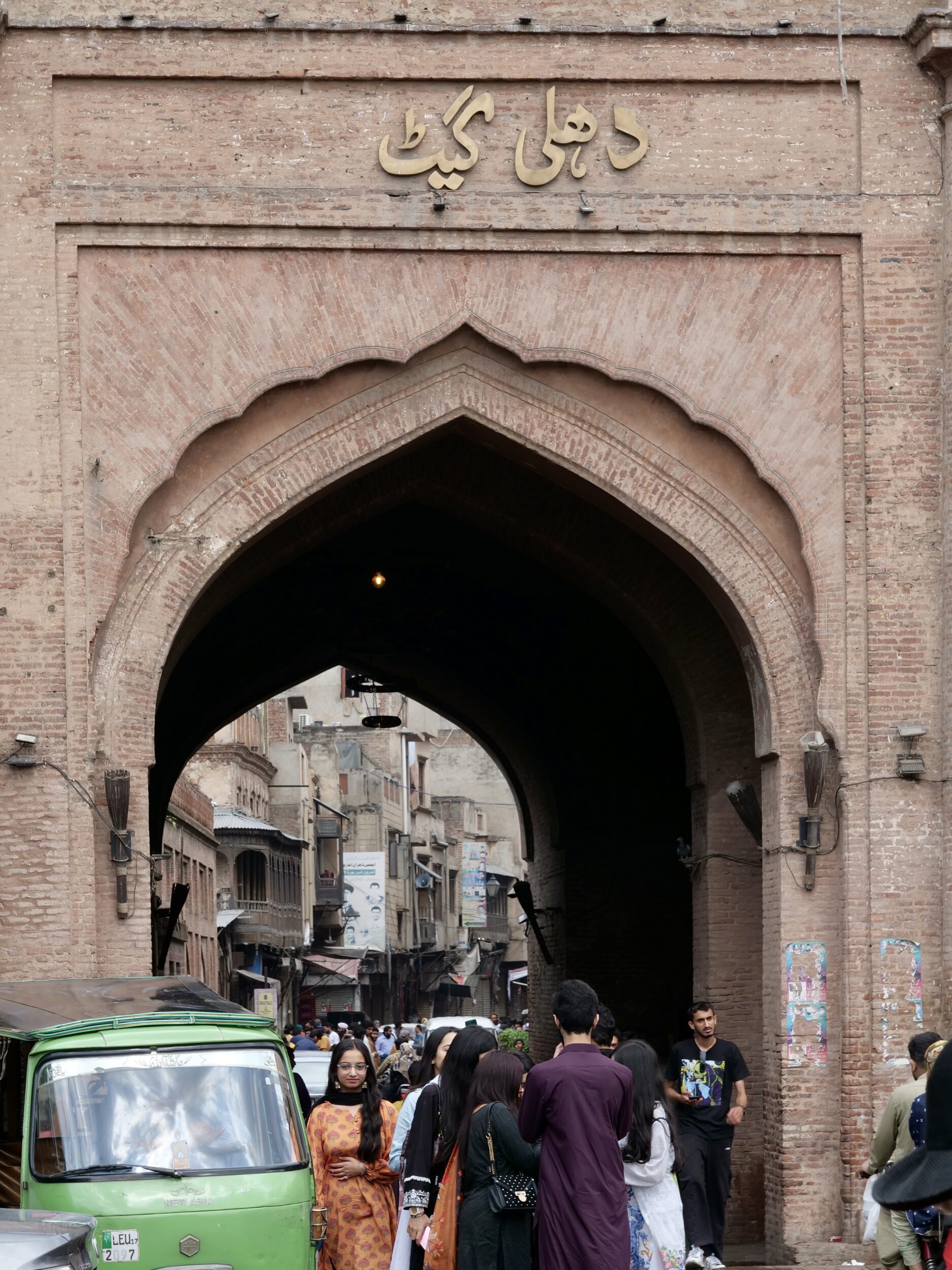
We begin this series at Lahore’s Delhi Gate. (not coincidentally, Old Delhi has a Lahore Gate)
An old Punjabi saying about Lahore is akin to a declaration made by at least two proud Italian cities: that one should see Naples/Venice, then die.
Jinnay Lahore nahi wekheya woh jameya nahin’ (one who hasn’t seen Lahore has not been born yet)
The capital of the Pakistani province of Punjab, Lahore has had the unique distinction of witnessing almost every empire in the subcontinent.
The italicised sentences are the opening observations in an excellent and provocative 2022 essay by a Lahore resident.
This series will include a number of quotations therefrom.
(and – eventually – it will link you to Muhammad Rufay Azhar’s essay)
Suffice for now that Lahore’s history is much more complex/diverse than is readily acknowledged by the currently-presiding “authorities”.
Its location has been a significant urban centre for much longer than is generally recognised.
As the aforementioned essayist notes, Lahore is “well-connected”; right beside its “walled city” is the Grand Trunk Road which has linked the Indian subcontinent and central Asia for 2,500 years.
By road, Delhi is a little more than 500 kilometres away.
As a plane flies, the world’s most spectacular mountains (arguably/inarguably, they are in Pakistan, not Nepal) are similarly-distant, in the opposite direction.
The nearest ocean shore is a deal more than 1,000 kilometres distant, by any means.
The names of Delhi’s Lahore Gate and of Lahore’s Delhi Gate signify that each one’s outer face “looks to” the other city.
Delhi Gate is on the southeastern side of the Walled City of Lahore.
It is one of six “surviving”/restored gates; back when the walled city was, in effect, “Lahore, period” (and really was all-walled) it had thirteen gates.
The “Walled City” covers 256 hectares.
All “official” subcontinental statistics should be treated with a degree of scepticism, but it is certainly the case that “old” Lahore is smaller in area and in current population than is “old” Delhi.
If one accepts that the Walled City of Lahore is currently home to circa 200,000 inhabitants, they thereby comprise only 1.3% of the greater metropolis’s circa 15 million residents.