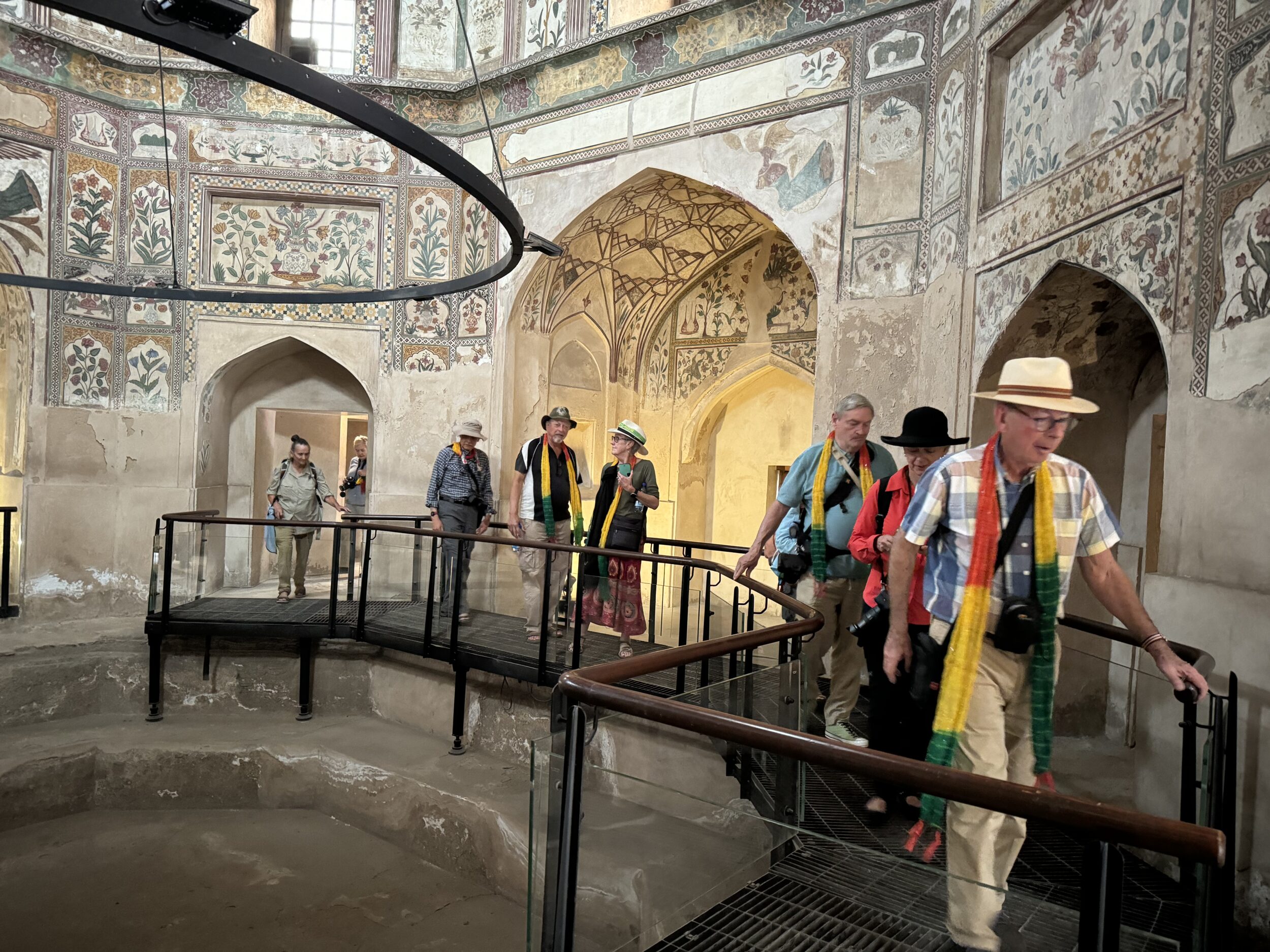
The Shahi Hammam was constructed in the 1630s CE, in conjunction with the nearby Wazir Khan mosque.
Both a “royal” and a “public” bathhouse, the gloriously decorated Shahi Hammam was very much more than an “ablution block”; it was a meeting place, a social hub, and it provided a large portion of the mosque’s income.
However, the Mughal Empire soon declined and fell.
Over the next several centuries both mosque and bathhouse endured a litany of “insults”.
By the dawn of the 21st century, the Shahi Hammam had long since ceased to function as a bath house.
The decaying building had been put to various other uses, its internal spaces “reworked”, and many of its key features (including its formerly-exquisite Mughal-era frescoes) were no longer even visible.
It had become a sad, shabby shadow of its former self.
However, from 2013-15 the Shahi Hammam was meticulously restored.
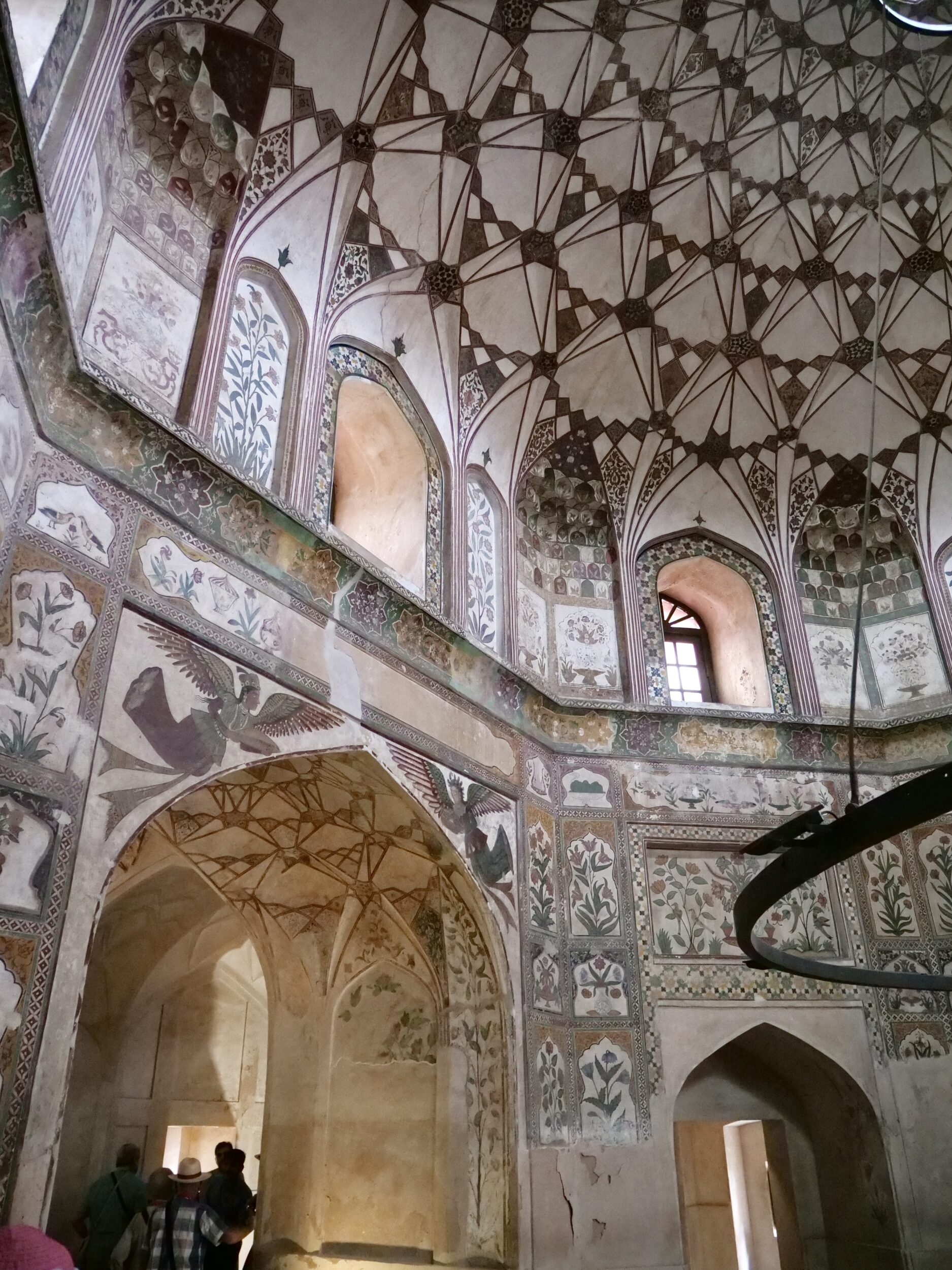
The award-winning result offers a singular experience; the Shahi Hammam is now the only such grand , Mughal-era bathhouse in all of South Asia.
For concise, illustrated overview, click here.
For the whole story – and many more photographs – visit the Shahi Hammam’s website.
This series’ next few chapters will show more, including one very “cheeky” detail.
They will also attempt to correct a couple of common misconceptions about bathhouses and “Islamic” art.