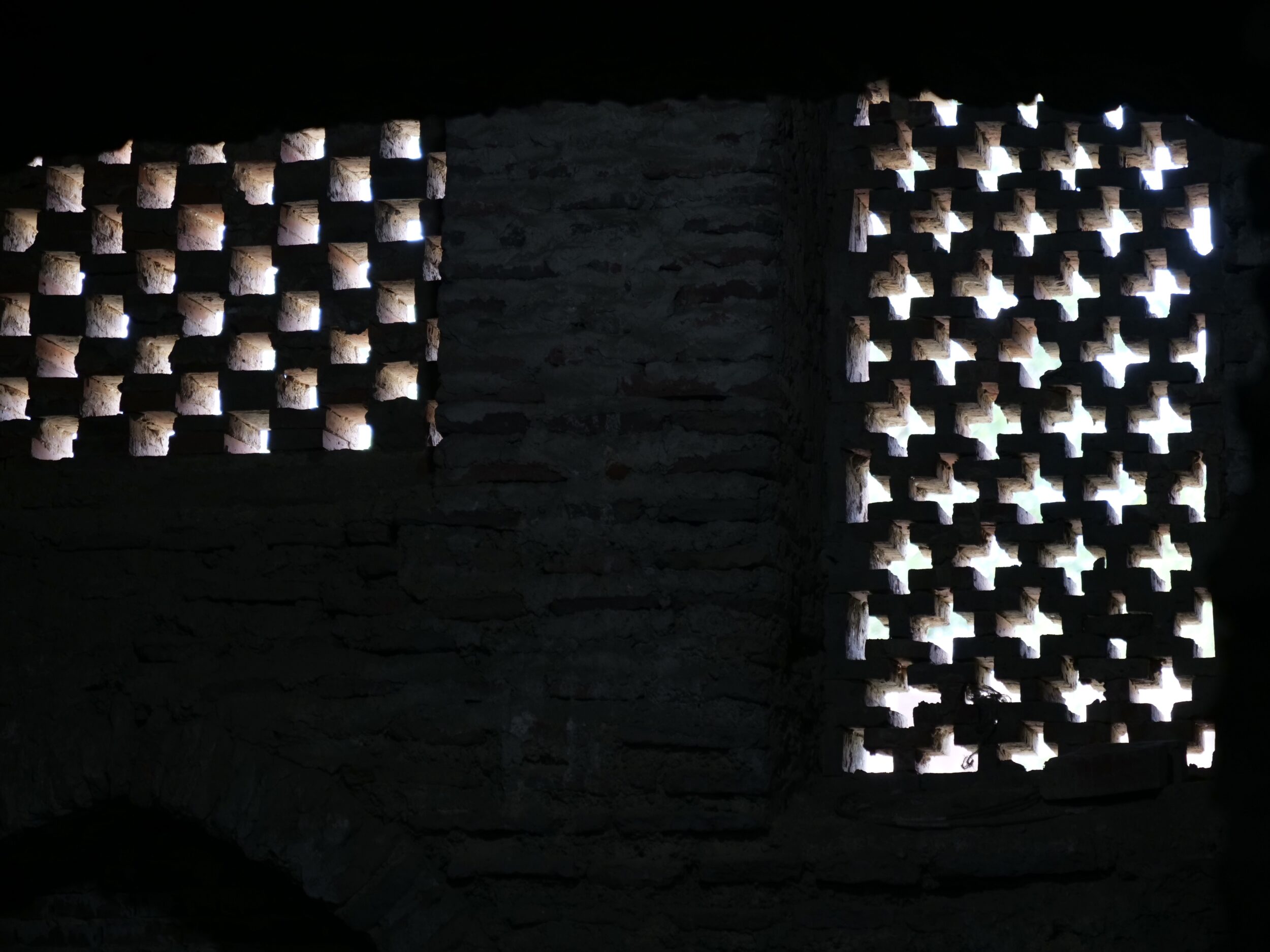
Immediately after admiring Lahore’s picture wall we went “inside” the actual wall.
This was “illegal”, but we did so as honoured guests.
Our chaperone was a senior heritage architect, involved in the ongoing excavation and restoration of Lahore Fort’s summer palace.
Above, you are looking at one of the simpler parts of its elaborate cooling system.
The outermost of the summer palace’s many chambers are literally within the cavity of the fort’s massive outer wall.
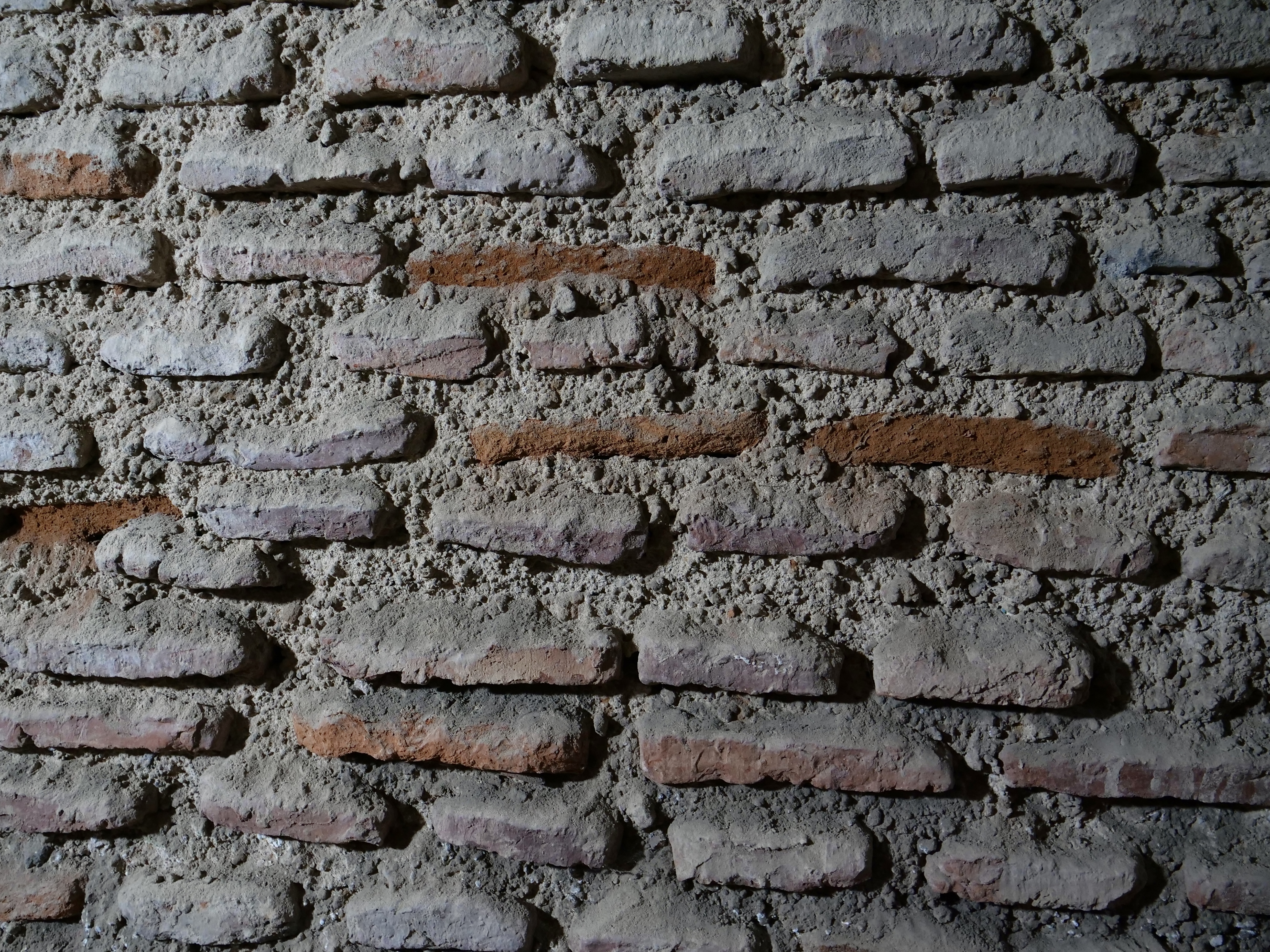
The next two chapters will show you what this particular, then-closed part of the summer palace looked like in May 2024.
Wikipedia description of the summer palace, generally:
Located directly beneath the Sheesh Mahal and Shah Burj quadrangle is the Summer Palace, also known as the Pari Mahal, or “Fairy Palace.” The palace is a labyrinth of chambers that date from the Shah Jahan period.[46] They were used as a residence during hot weather months, as they were cooled by effective ventilation systems that channelled cool breezes into the palace.[23] The palace’s flooring system also helped cool the space – its floors were made of two layers that were separated by a layer of water pumped in from the Ravi River.[23] Cool water perfumed by roses flowed through an elaborate system of 42 waterfalls and cascades throughout the palace.[23]
The palace was historically only accessible from the overlying Sheesh Mahal,[23] though a new entrance was built by the British near Hathi Pul, or “Elephant Stairs.”[47] Its walls were decorated with intricate frescoes and marble inlay that have been severely deteriorate by layers of subsequent white-washing and centuries of dampness.[23] Passage tunnels also exist that lead from the palace to the fort’s exterior where the River Ravi once flowed, suggesting that it may have been part of an escape tunnel designed to allow occupants to flee in case of attack.[23]