Skip to content →

Pelican Yoga Posts

Grand sands (#13 in series: oystercatchers & wet sandy strands)


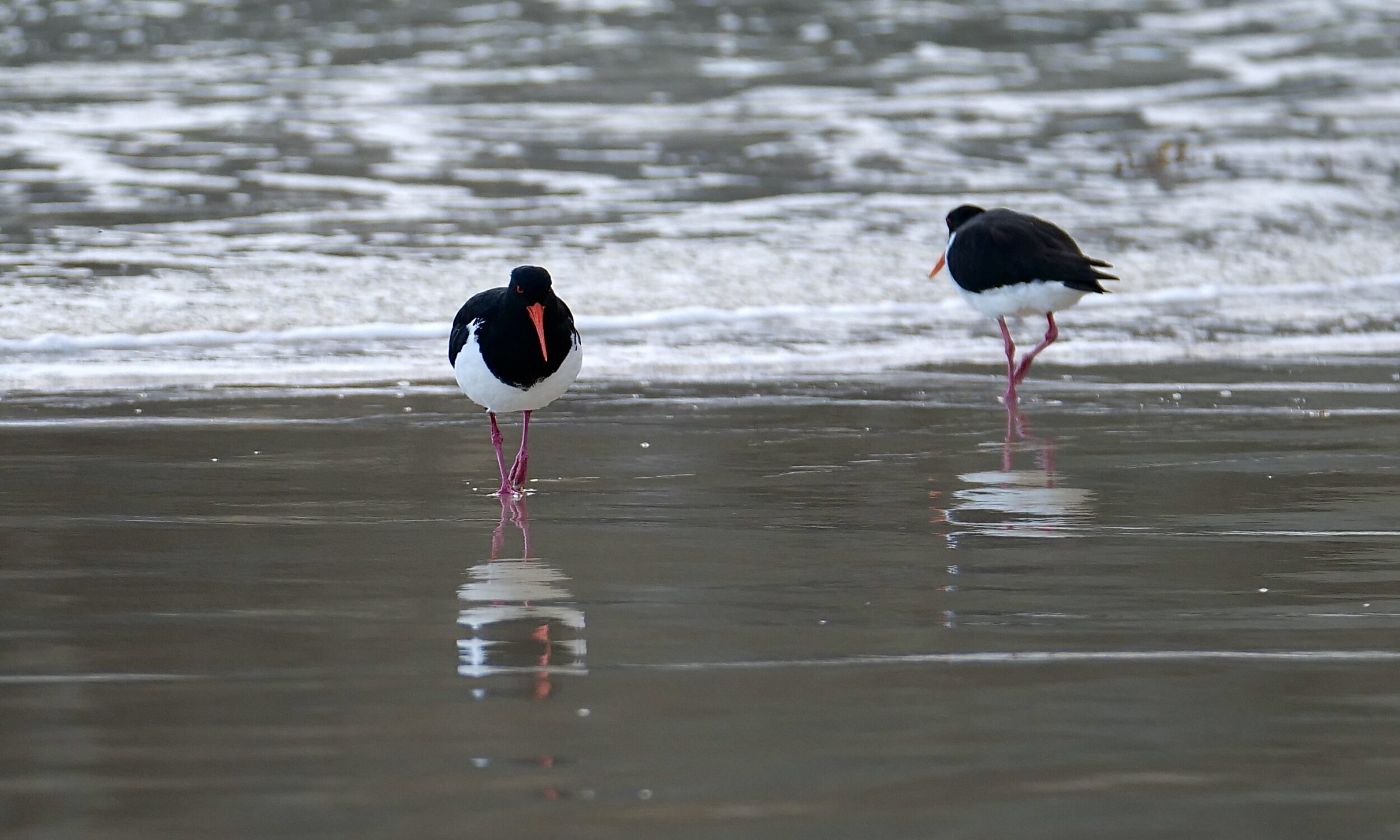
This and the next several chapters in this series all feature wet sand.

Today’s post also has oystercatchers, in “reflective” mode.

Both of the relevant strands are on the northern edge of the Southern Ocean, according to most Australians.

Comments closed

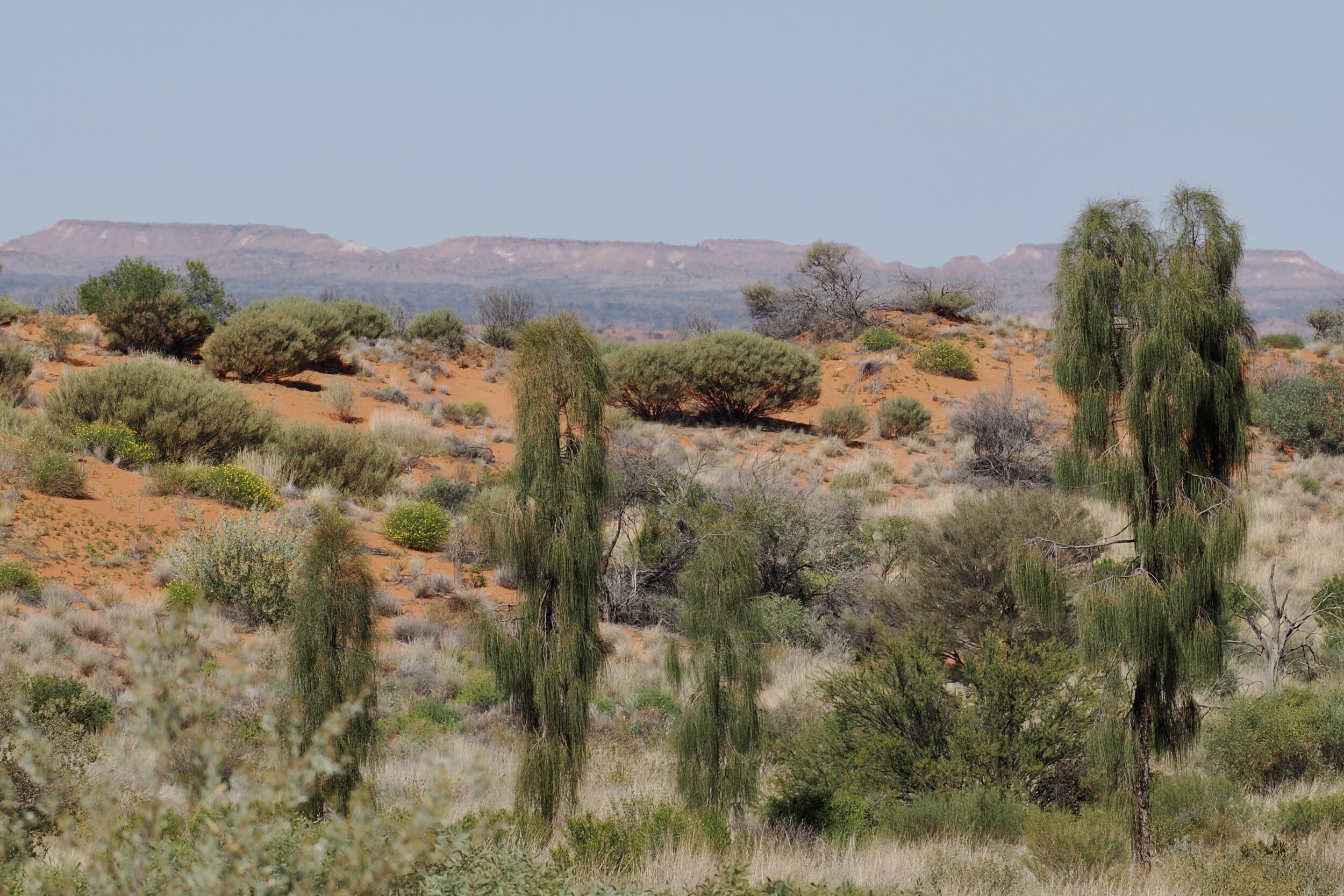
Grand sands (#12 in series: paradoxical sands)


By their very nature, sandy soils are “poor” – low in nutrients and unable to retain much moisture.

Yet in some places where rain often falls and the sun often shines – including some of Amazonia and parts of the world’s largest sand island – rainforest flourishes.

That island is Australian.  (Queensland’s Fraser Island/K’gari)

So too is this post’s sandy, “desert” location, which is circa 900 kilometres distant from any ocean’s shore.

Even an ignoramus would never mistake the Simpson Desert for rainforest, but s/he would almost certainly be hugely surprised to discover just how beautifully vegetated is so much of it. (as are a great many other sandy, “arid” Australian places)

Comments closed

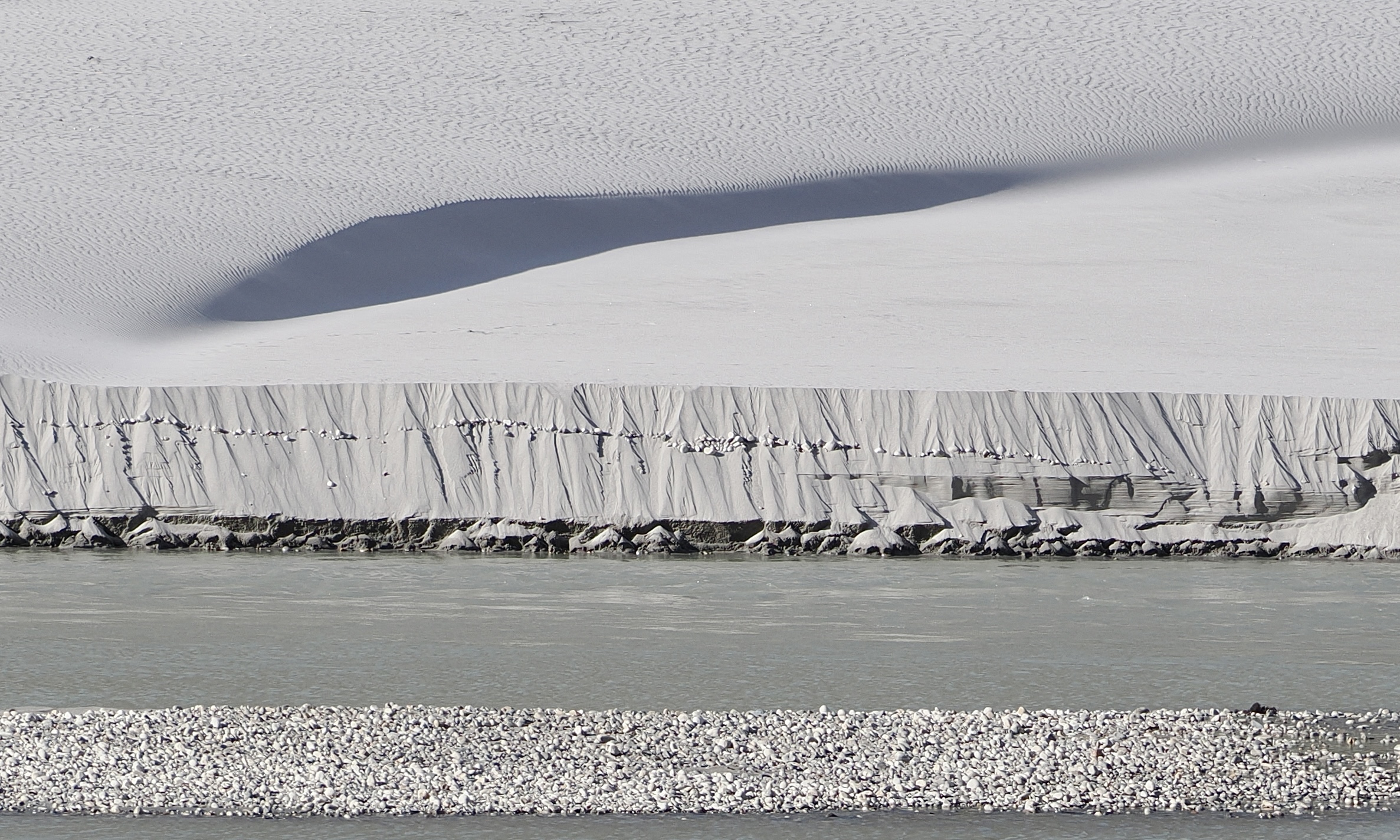
Grand sands (#11 in series: “River of Death”)


As in #10 in this series, you are looking at a photo which illustrates the power of the Shyok River.

By road, we were now 35 minutes further upstream, closer to Khaplu.

At 4.49 pm on 15 May 2024, the fast-flowing, largely glacier-fed river’s flow was relatively low.

The Shyok’s width, depth and flow-rate are hugely variable; the river transported and deposited all of the photograph’s silt, sand, gravel and rocks.

My telephoto lens zoomed in on just a very small portion of what my naked eyes could see in a single glance, with head still.

One translation of the Shyok’s name: river of death. 

Its floods have killed many people, drowned trees and crops too, and destroyed/removed many formerly-arable fields, even some of the houses that had been built above and behind the fields, on what used to be “safe” ground.
Comments closed

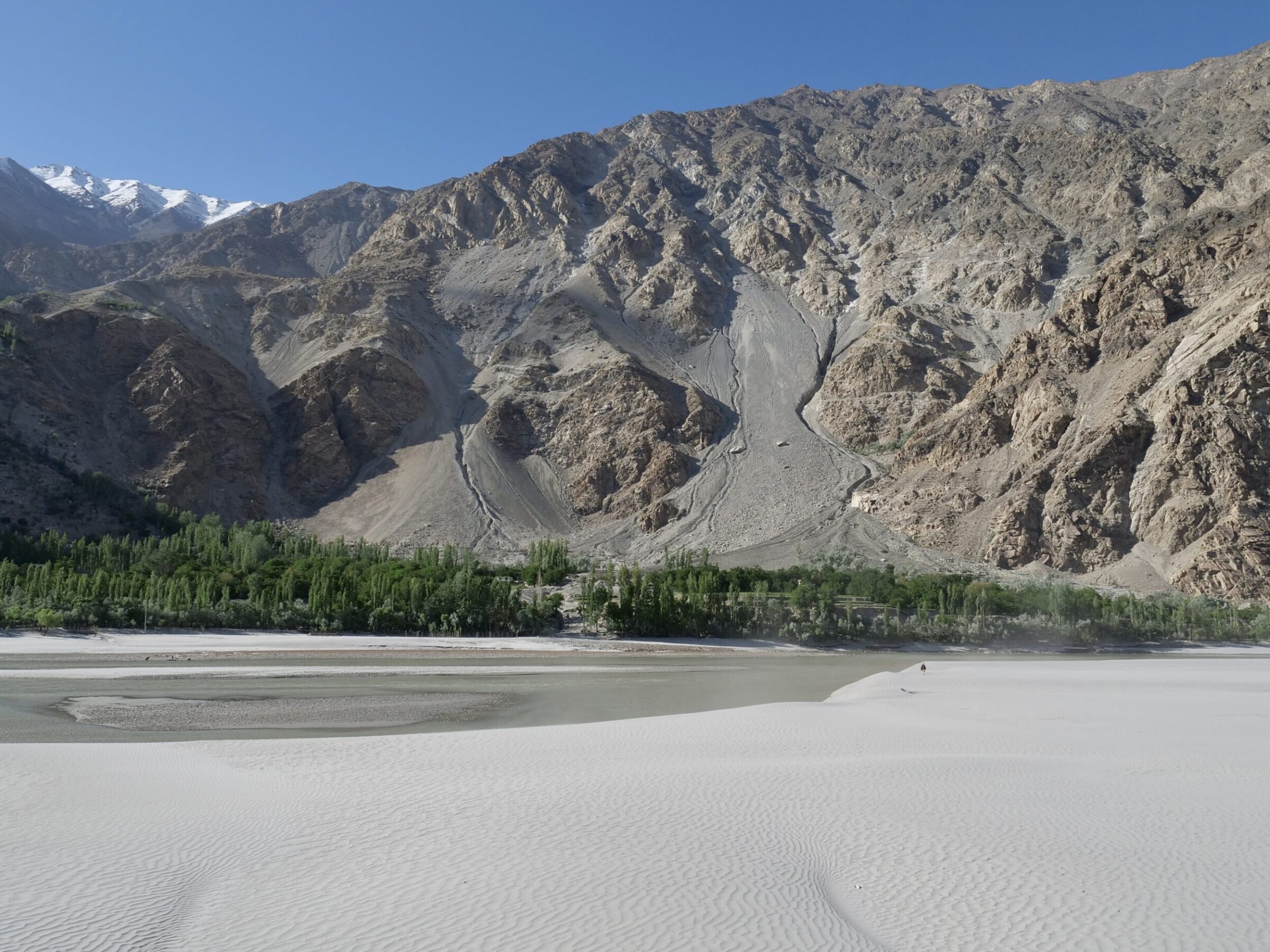
Grand sands (#10: a glorious sandy shore, sans sea)


“Rippled sand + moving water + rock” is one of my favourite natural “recipes”, especially when other humans and human-made structures are not part of the “mix”… or are only a tiny, discreet element.

“Remote” ocean beaches are not the only places that offer such delight.

The pictured location is much more than 1,000 kilometres straight-line-distant from any ocean shore – and there is absolutely no “straight line” (let alone “same-day”) transport route to one.

By definition, when a river flows through a valley that bears its name, that river’s bed is the lowest ground within the local landscape.

The pictured low spot – just a little upstream of where this river flows into one of the world’s most significant rivers – is more than 2,700 metres above sea level.

Comments closed

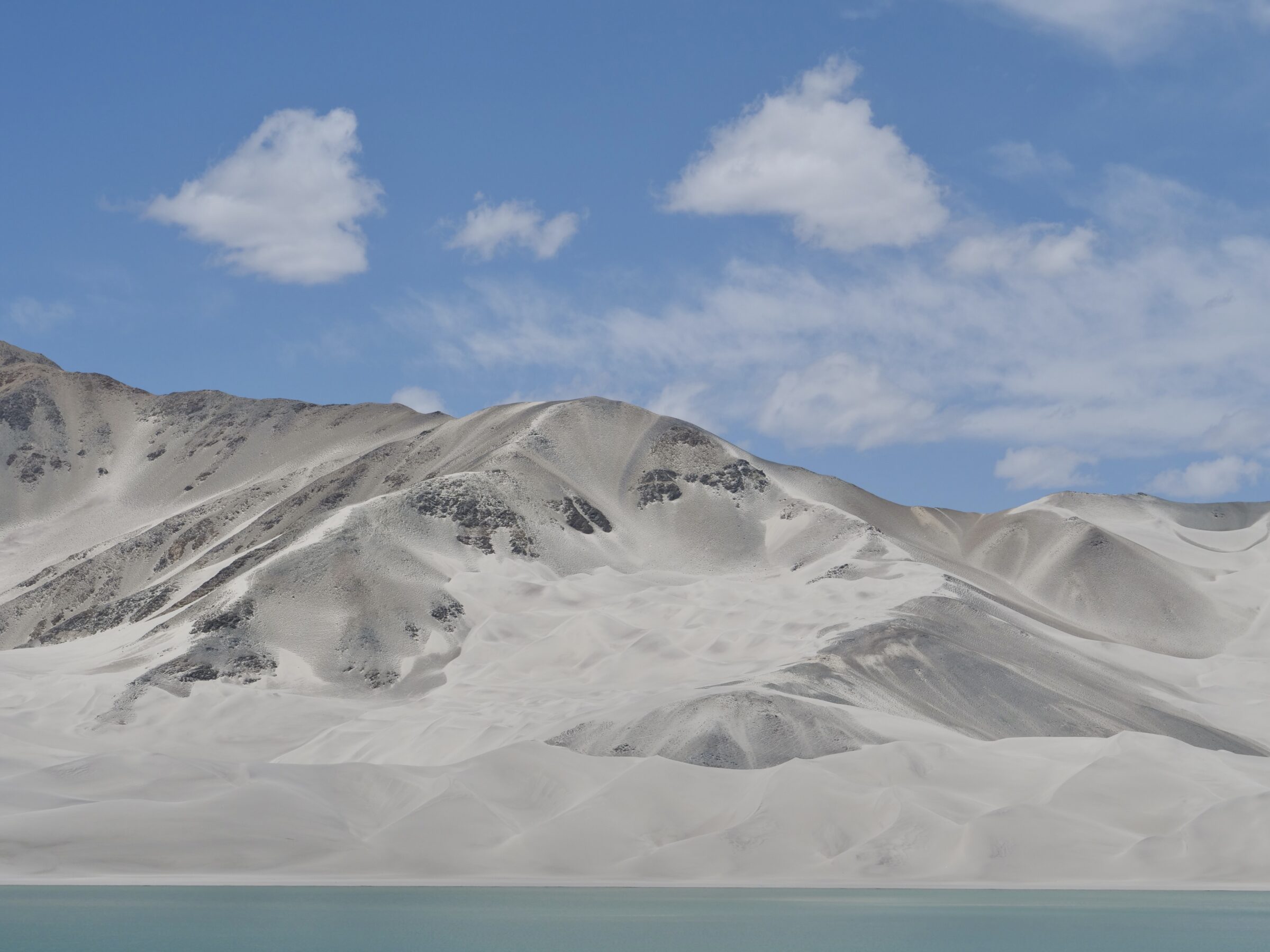
Grand sands (#9 in series: “White Sand Lake”)


“White Sand Lake” is the most common (in English) of many and various names applied to this particular lake and/or its dunes or “dune mountain/s”.

To my knowledge, nowhere else on “our” planet is quite like it.

The alleged altitude of this Chinese lake’s surface is also “many and various”, but it appears to be at least 3,300 metres – approximately 11,000 feet – above sea level.

It sits right beside/below the Karakoram Highway, about 150 kilometres southwest of Kashgar (aka “Kashi”) in Xinjiang,

Comments closed

The greatest percussionist, period? Vale Zakir Hussain (1951-2024)


I do not believe in the notion that any single player/composer/writer/whatever kind of artist is – or ever was the best.

That said, Zakir Hussain was undoubtedly the most influential, most eclectically-inclined, and most ubiquitous hand-drummer/percussionist in human history.

(Jim McGuire took the photo of him)

Zakir Hussain died on Monday, in his adoptive home city of San Francisco.

He was born 73 years earlier,  in what was then Bombay, now Mumbai.

Comments closed

Grand sands (#8 in series: dunes in a basin)


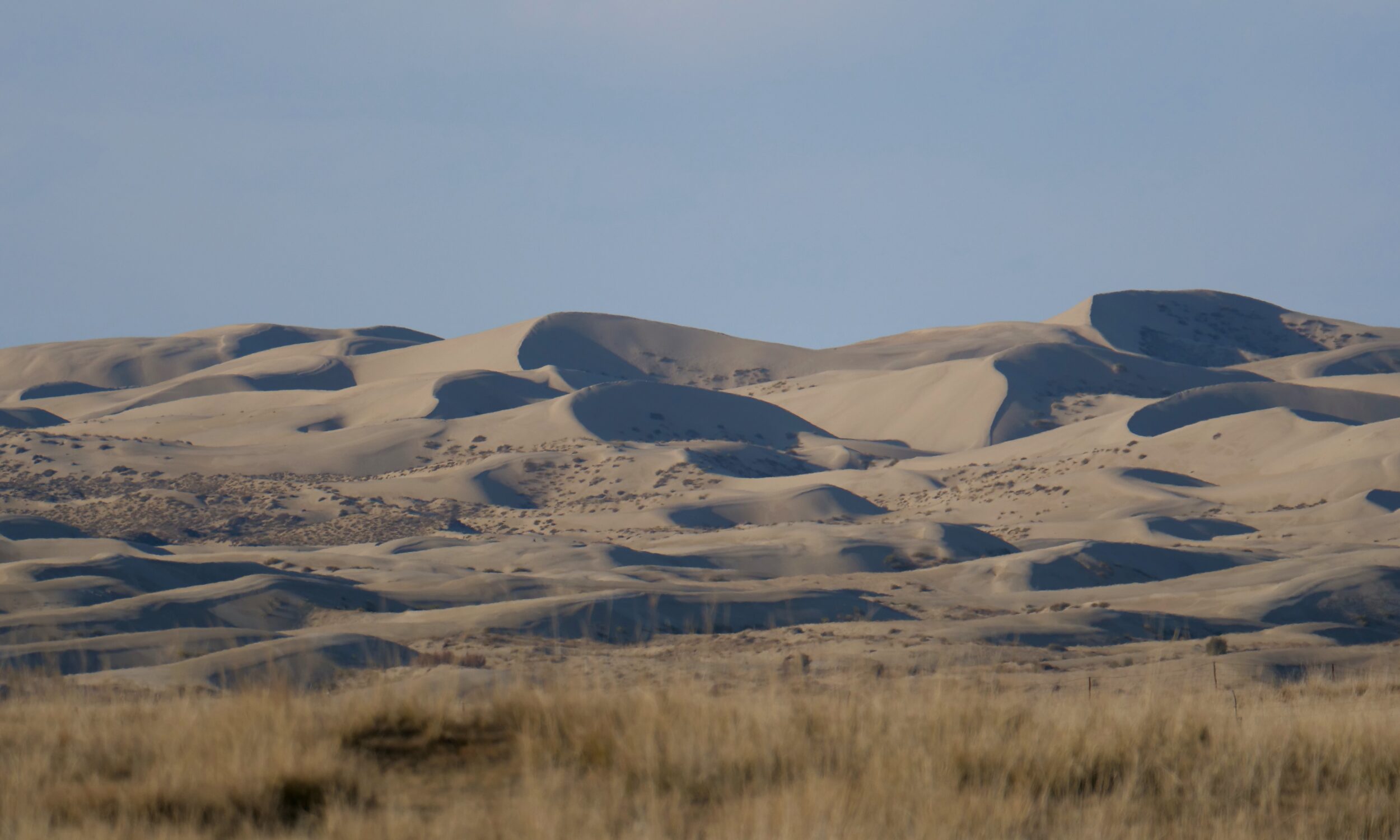
This post’s featured image is far from great, but it does show a particularly surprising place.

I took the photo through “our” vehicle’s tinted window, as we zoomed past the pictured dunes at 5.09 pm on 22 October 2019.

Nearby, was a very large, salty lake.

The nearest ocean shore was circa 1500 kilometres distant, in a straight line.

No “straight line” transport connects to that shore; reaching the nearest ocean beach would require an arduous one-way journey of circa 2,000 kilometres.

Unsurprisingly, this particular vicinity is sparsely populated.

However, when I took the photo we were just 100 or so kilometres distant from a metropolis which is home to at least two million people; we would reach it before nightfall.

Q: where in Africa were we?

Comments closed

Grand sands (#7 in series: seeing red)


In this series’ first six chapters all relevant sands were either on beaches, or in locations still not far from an ocean’s shoreline.

The next several posts take us inland, and to higher altitudes.

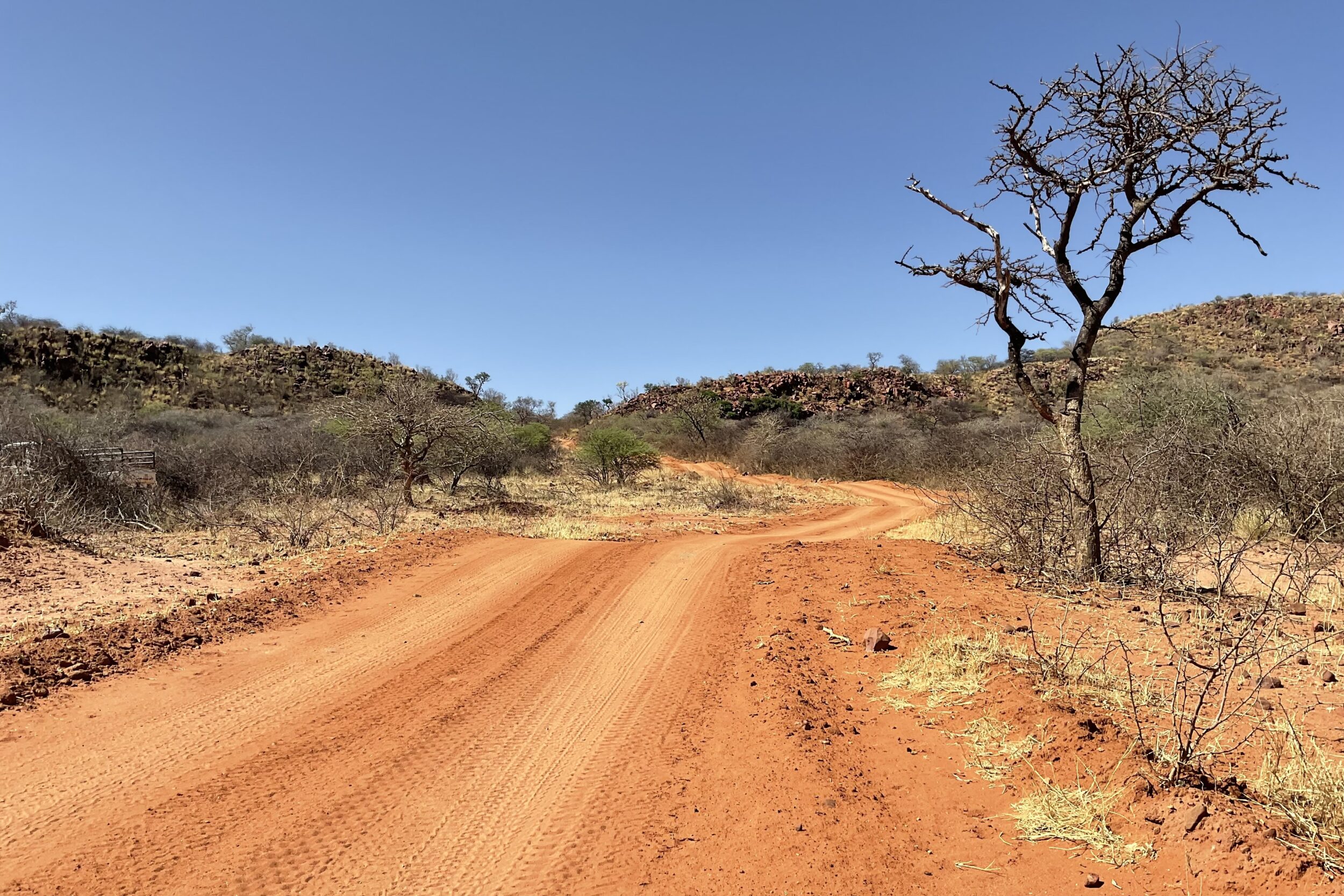
Australians – well, those who have travelled well west of the Great Dividing Range – are familiar with the “red” sands/sandy soils that are a feature of much of our “Outback”.

Q: what makes them red?

Comments closed

Grand sands (#6 in series: questions, with musical bonus)


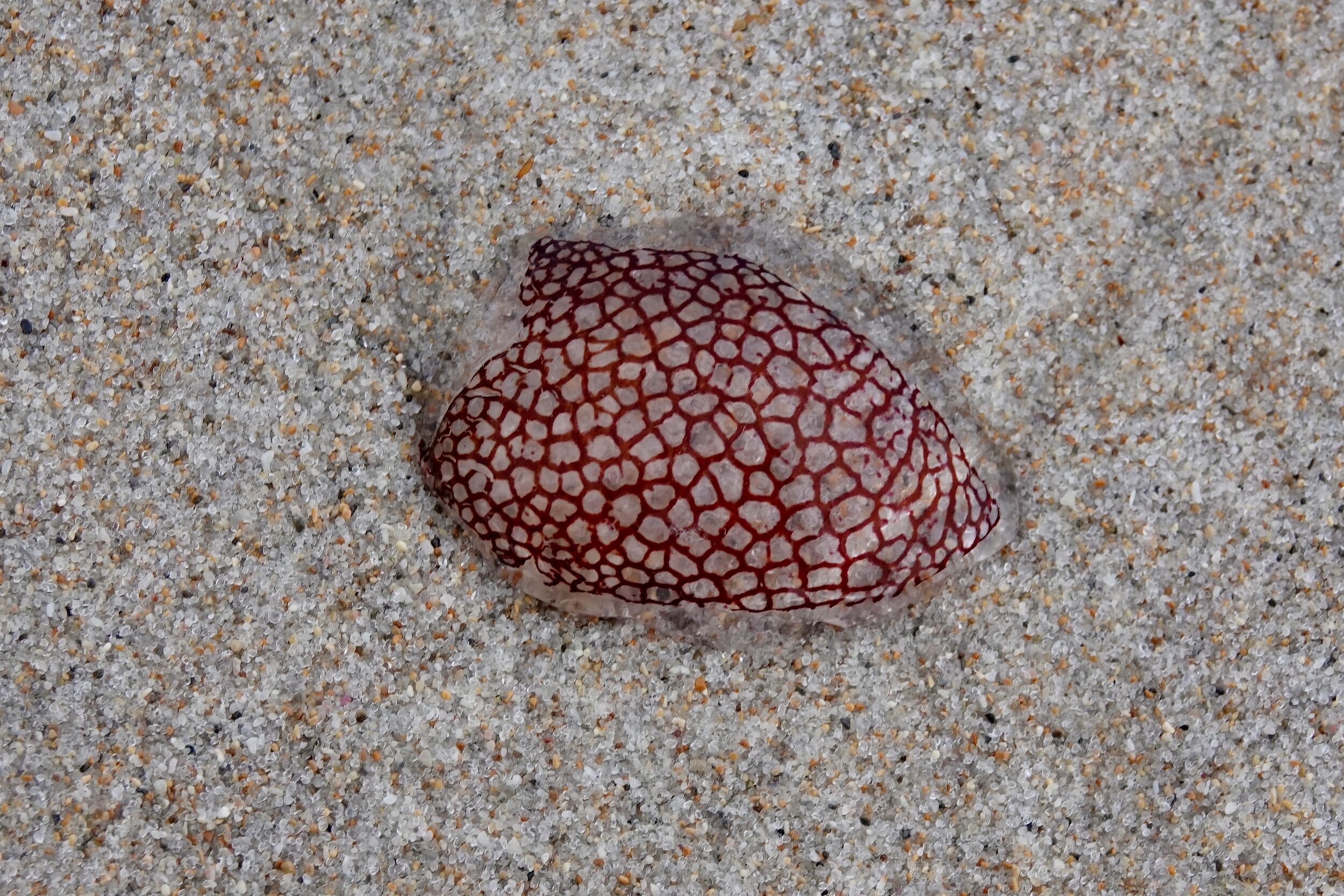
Q #1: what is the pictured jellyfish-like fragment from a (presumably) recently-deceased marine creature?

A: I do not know.

Q #2: upon what has it “washed up”, in very shallow water?

A: sand, obviously.

(on Lights Beach, at eastern end of William Bay National Park, on Western Australia’s south coast)

Bigger question: what is sand, exactly?

Comments closed