Skip to content →

Tag: Pakistan

“Old city”, Lahore (#9 in series: bird men, with bigger birds)


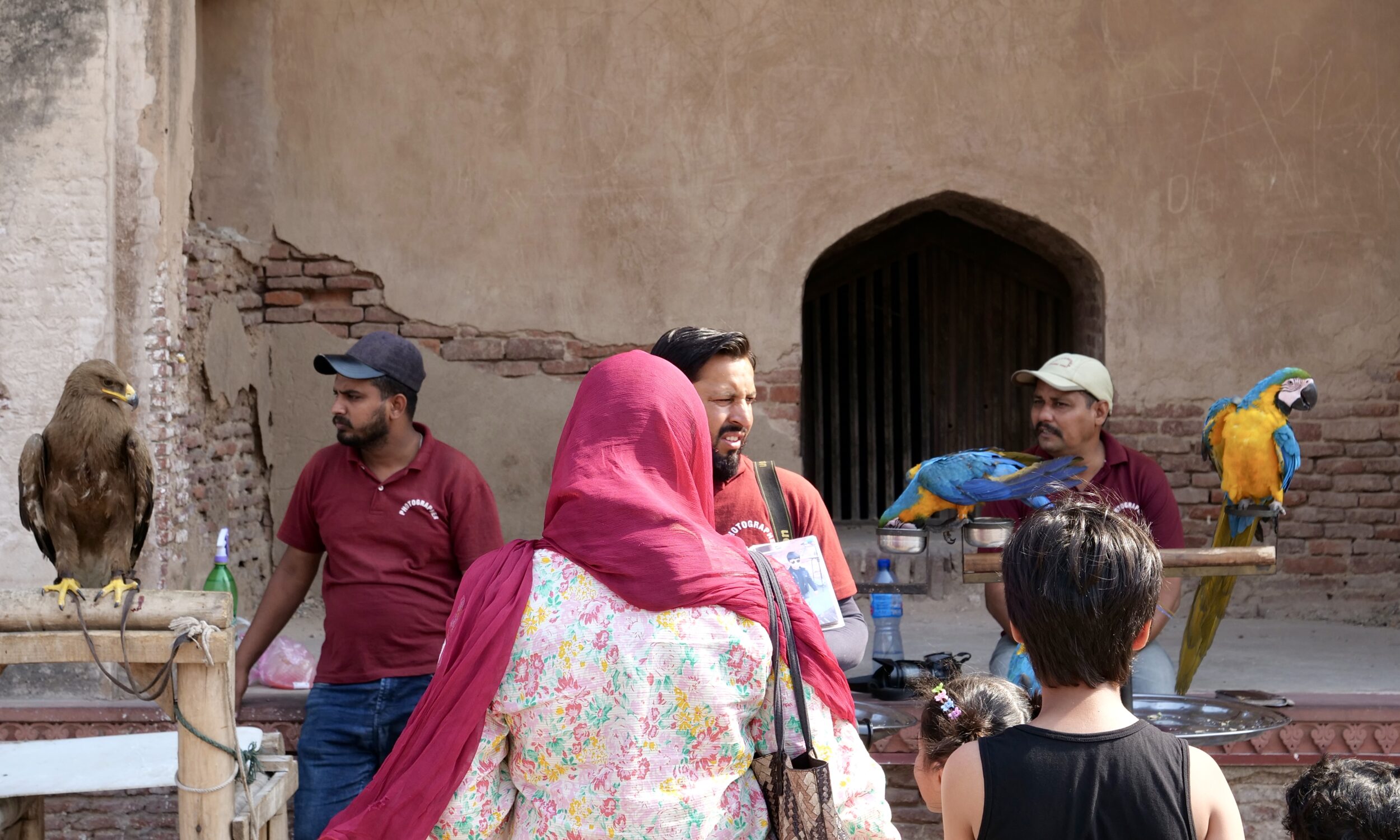
This post’s “bird men” are not selling birds to “benevolent” customers; in this case the feathered captives have zero chance of being freed.

These “bird men” are in the tourism/entertainment business.

In every sense, Lahore Fort is the “big one” among the walled city’s architectural/artistic gems.

It sprawls across 20 hectares; one of its various “Mughal heritage treasures” is the world’s biggest picture wall/mural.

Inevitably, a few non-heritage, merely-opportunistic “attractions” have inserted themselves into this UNESCO World Heritage Site.

Comments closed
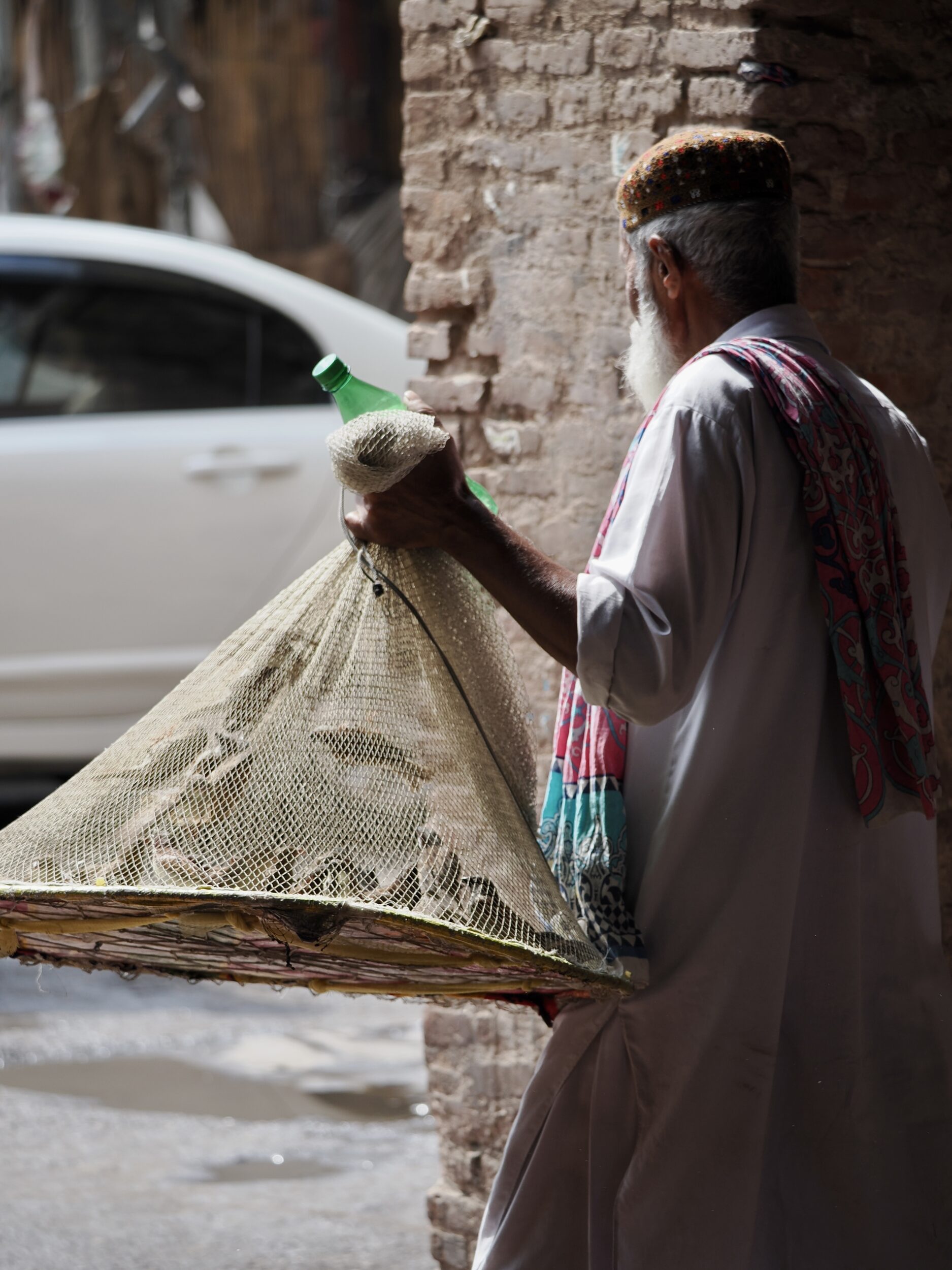
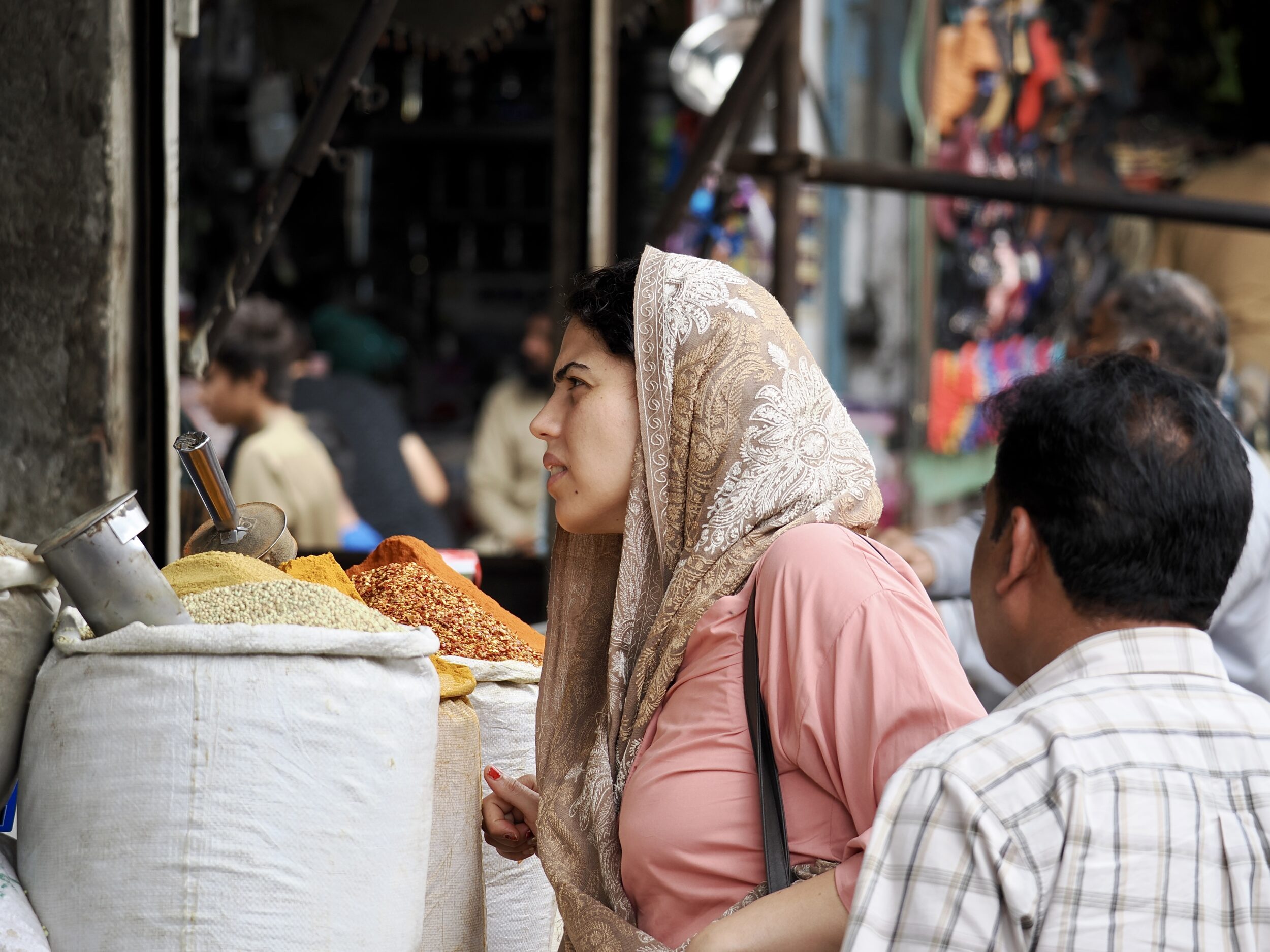
“Old city”, Lahore (#8 in series: bird men)


Cruelty. Benevolence. Illegal. Tolerated. Prosecuted. Unpunished. Accepted. Condemned. Caged. Freed. Virtue. Wrongdoing.

Q: which of the above words apply to the way in which this post’s pictured persons earn their living?

A: all of them…and it is a very safe bet that none of the pictured persons are wealthy.

Comments closed

“Old city”, Lahore (#7 in series: market)


Lahore’s walled city contains some truly extraordinary “built heritage”; two of its mosques ought be on any globetrotter’s “bucket list” and its fort is one of “our” planet’s grandest.

This “old city” is, however, neither a “museum” nor a “theme park”.

Most of it is very “real”, complex, busy and not-immaculate – an urban place in which many people live, work, shop.

It will surprise any visiting westerner who had preconceived Pakistan as a “forbidding” or “unfriendly” destination, and/or as one in which only males are highly-visible, in public.

On Lahore’s streets, adult women are abundantly present, most of them do not hide their faces, and it is not the least bit unusual to see an obviously-confident woman, venturing out in her own right, unchaperoned.

Comments closed

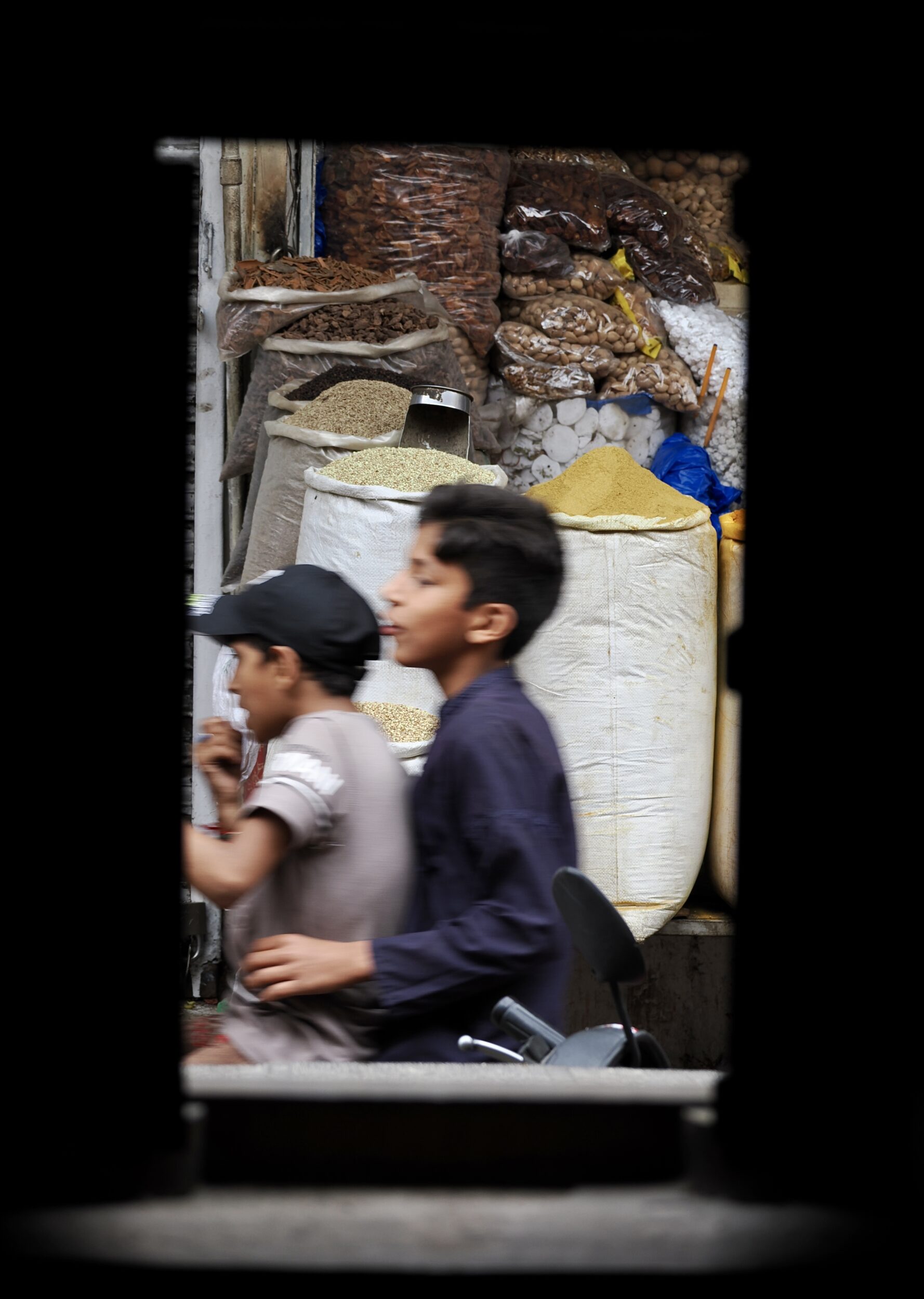
“Old city”, Lahore (#6/in series: inside, looking out)


The featured image’s young boys were zipping along a typically-narrow, lively street.

I was standing just-inside the “Royal Baths” – a meticulously restored building which is one of the walled city’s greatest treasures. (eventually, this series will “explore” the Shahi Hammam)

Presumably, “minimum legal driving age” rules are not rigorously enforced in Lahore!

Comments closed

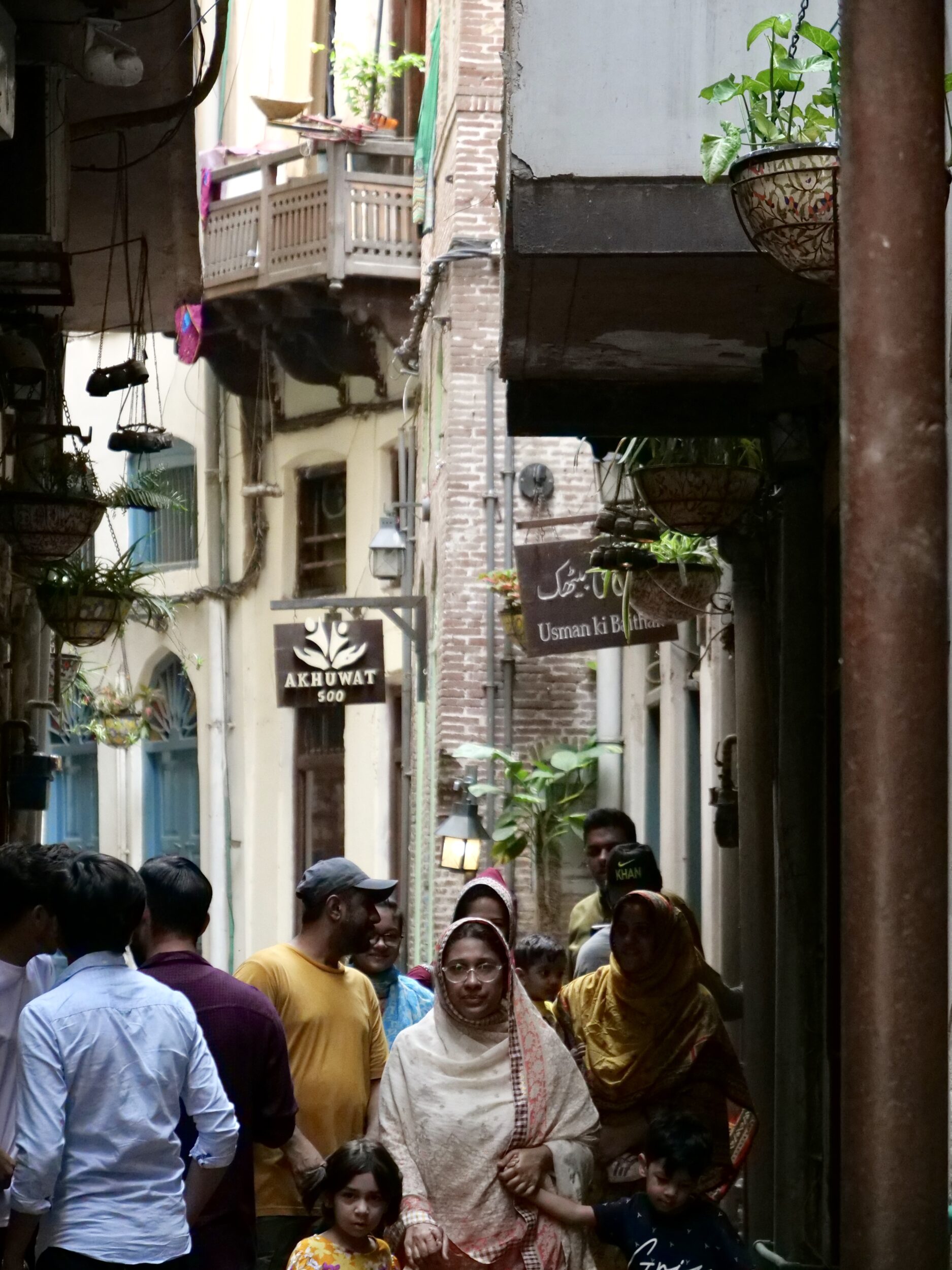
“Old city”, Lahore (#5 in series; petite streets)


Above, you are looking at the meticulously restored/refreshed Gali Surjan Singh, which is now one of the most “upmarket” streets in the Walled City of Lahore.

This is a street where dining and shopping options are abundant.

For obvious reasons, the same is not true of nearby Patli Gali, pictured below.

Nonetheless, precisely because it is allegedly the narrowest “visitor-friendly” street in Lahore’s entire megacity, Patli Gali is a “must see”  for visitors to Lahore’s walled city.

Comments closed

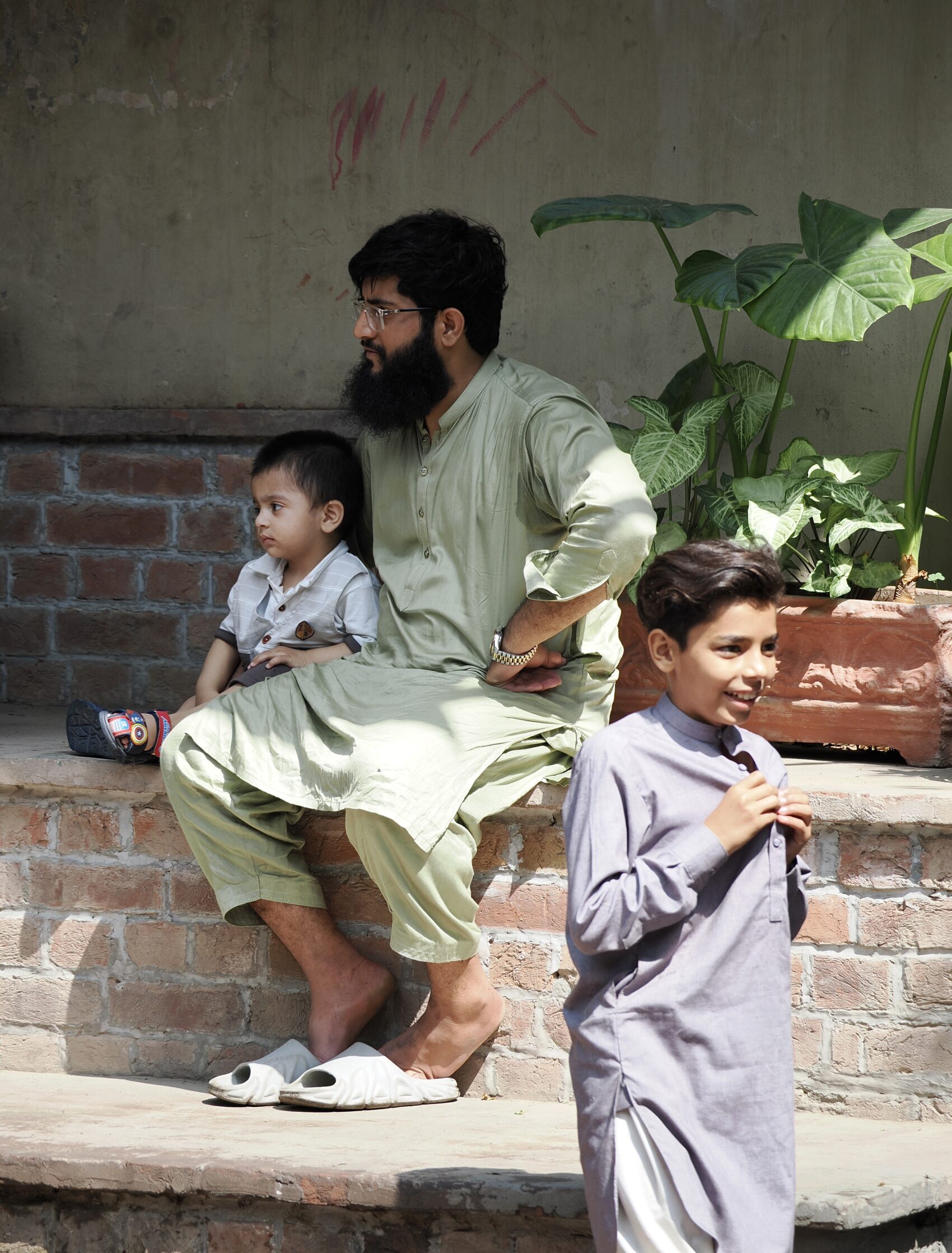
“Old city”, Lahore (#4 in series: watching on/joining in)


As we enjoyed our drum-driven welcome, we visitors/tourists had a little “forest” of our phone-cameras, blazing. (& yours truly’s camera-as-such)

Also blazing were at least as many phone-cameras in local residents’ hands.

Mutual curiosity and bonhomie were abundantly evident.

This little “event” proved enjoyable to all persons present, including those who were not photographing it.

Comments closed

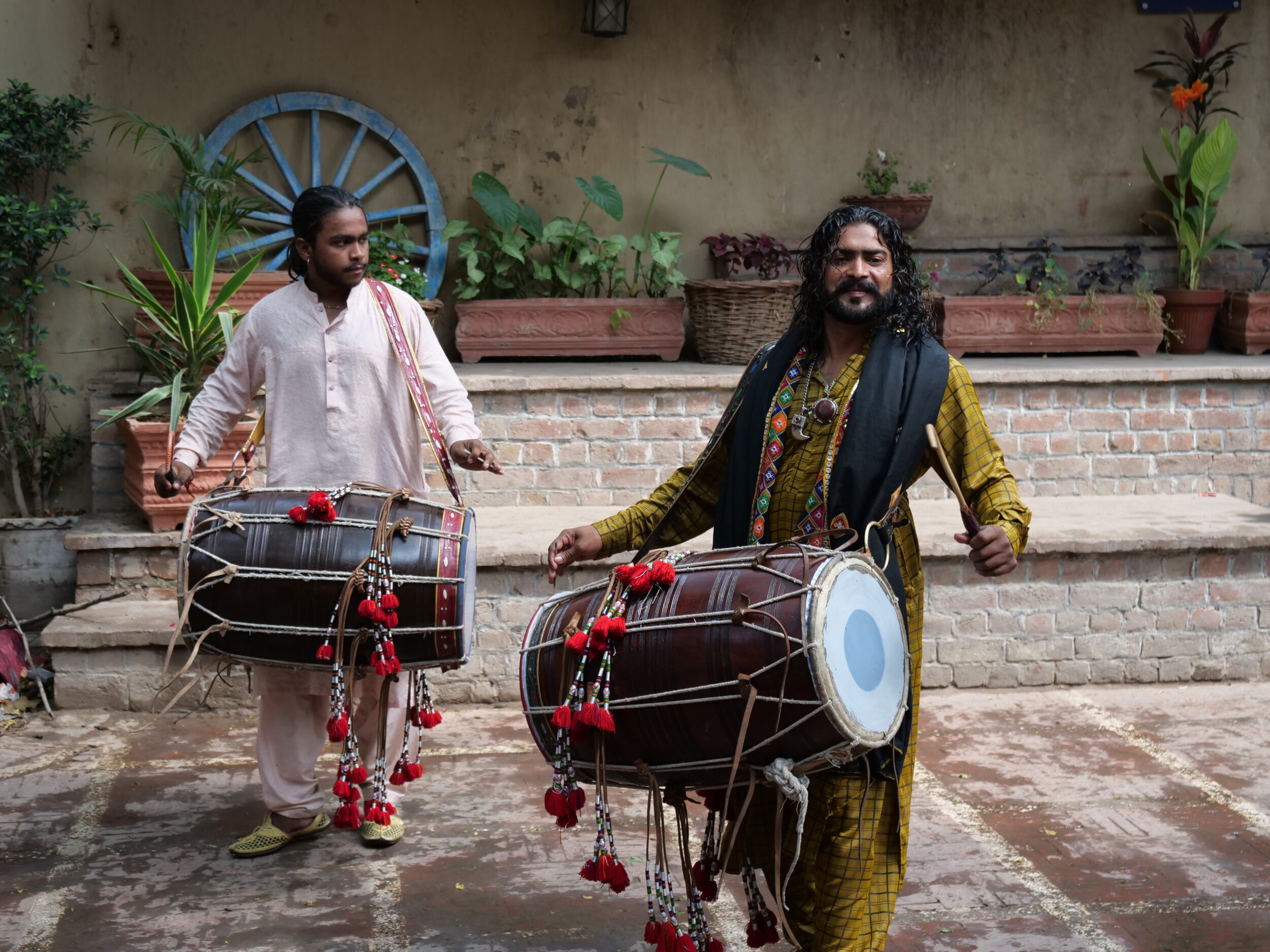
“Old city”, Lahore (#3 in series: let there be drums + musical bonus)


(The musical bonus features a man who was very possibly the greatest tabla player in recorded history. It is hard to imagine that there has ever been a more prodigiously gifted player of any drum.  I am around 99% certain that you have never heard of him, let alone heard him. For the final 49 of his 66 years he lived in Lahore)

Immediately after our more “formal” welcome, we were made even more welcome, more personally, in a courtyard adjacent to Delhi Gate.

Drums and garlands were involved.

Comments closed

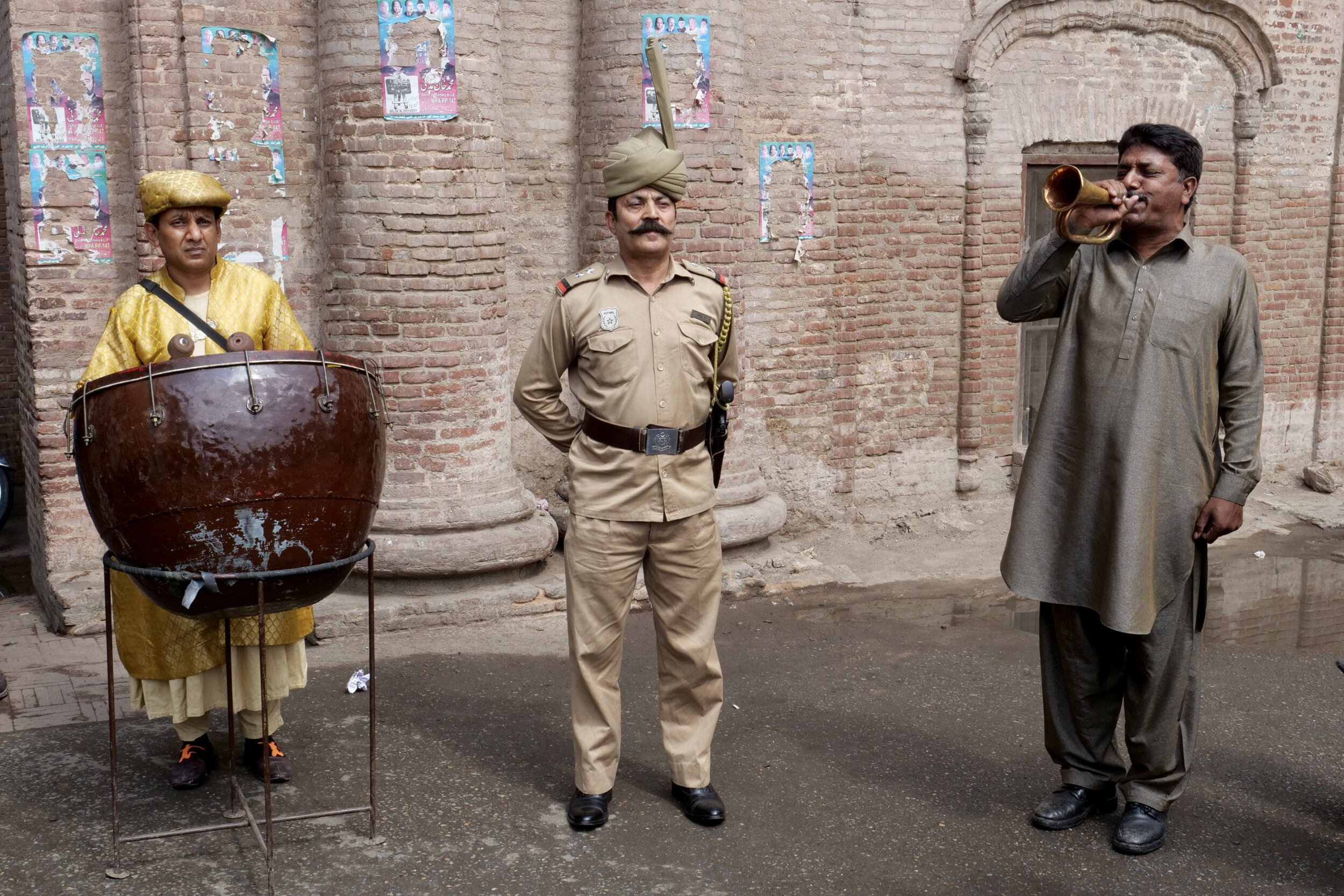
“Old city”, Lahore (#2 in series: an unexpected “ceremonial occasion”)


Over the course of seven fascinating hours, we saw a great many people in Lahore’s “walled city”.

Fellow members of our own group aside, not one of them was another “Western” tourist.

For the foreseeable future, I imagine, very few Westerners are likely to walk through Delhi Gate, and then experience one of the world’s most interesting urban precincts.

Presumably, that explains why our arrival was treated as one deserving of a “formal”, official welcoming ceremony!

Comments closed

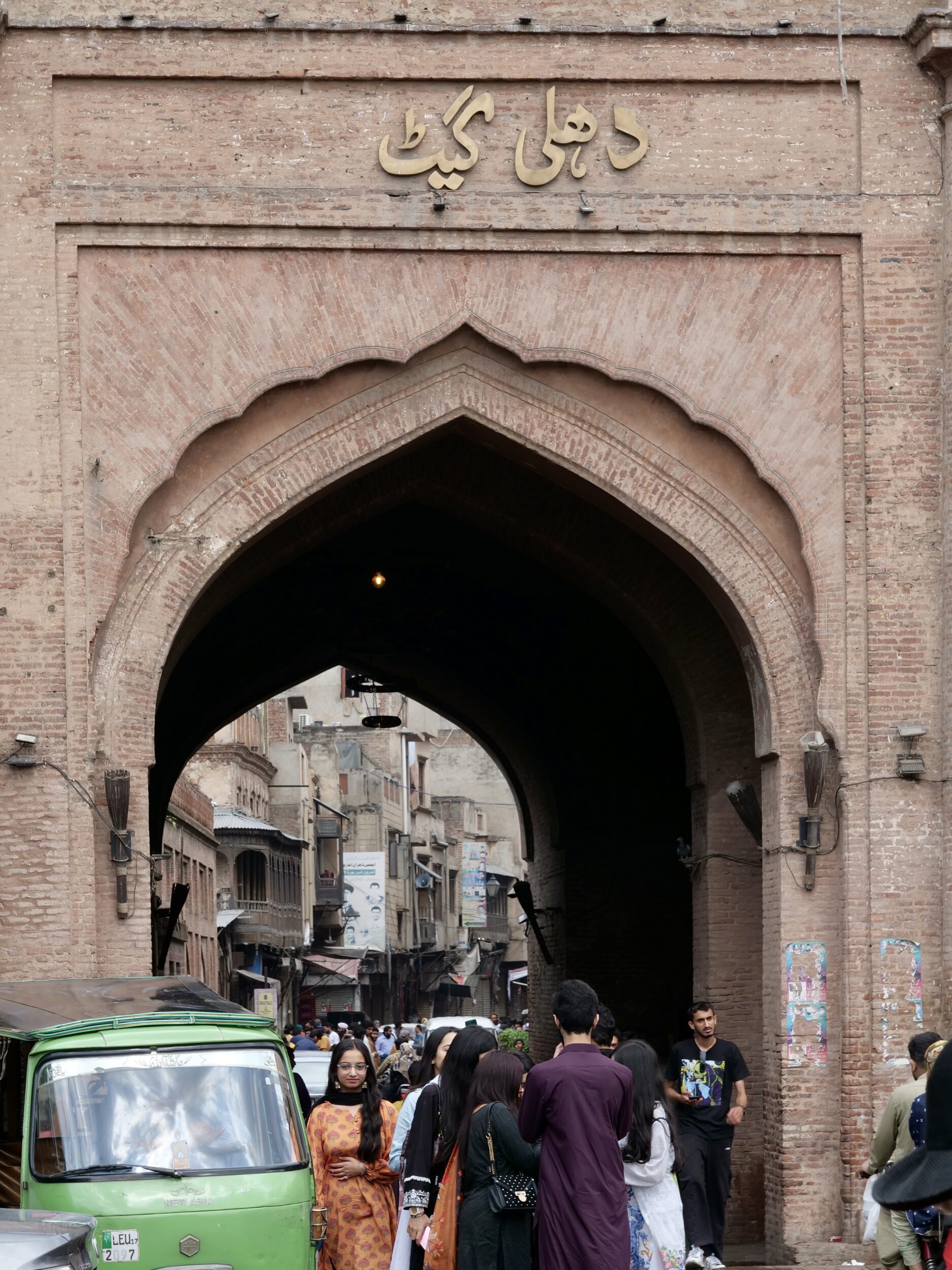
“Old city”, Lahore (#1 in series: Delhi Gate)


“Old Delhi” is renowned worldwide; arguably, it is the most “happening” urban place on “our” planet.

My beloved and I are among many millions of Westerners who have experienced Old Delhi, directly. (more than once)

Very few 21st century Westerners have visited the Walled City of Lahore.

Also known as “old Lahore”, or as the “old city”, it is rather less frenetic than Old Delhi.

It is, however, very much richer in architectural/artistic splendour than is Old Delhi.

We begin this series at Lahore’s Delhi Gate. (not coincidentally, Old Delhi has a Lahore Gate)

An old Punjabi saying about Lahore is akin to a declaration made by at least two proud Italian cities: that one should see Naples/Venice, then die.

Comments closed

Grand sands (#11 in series: “River of Death”)


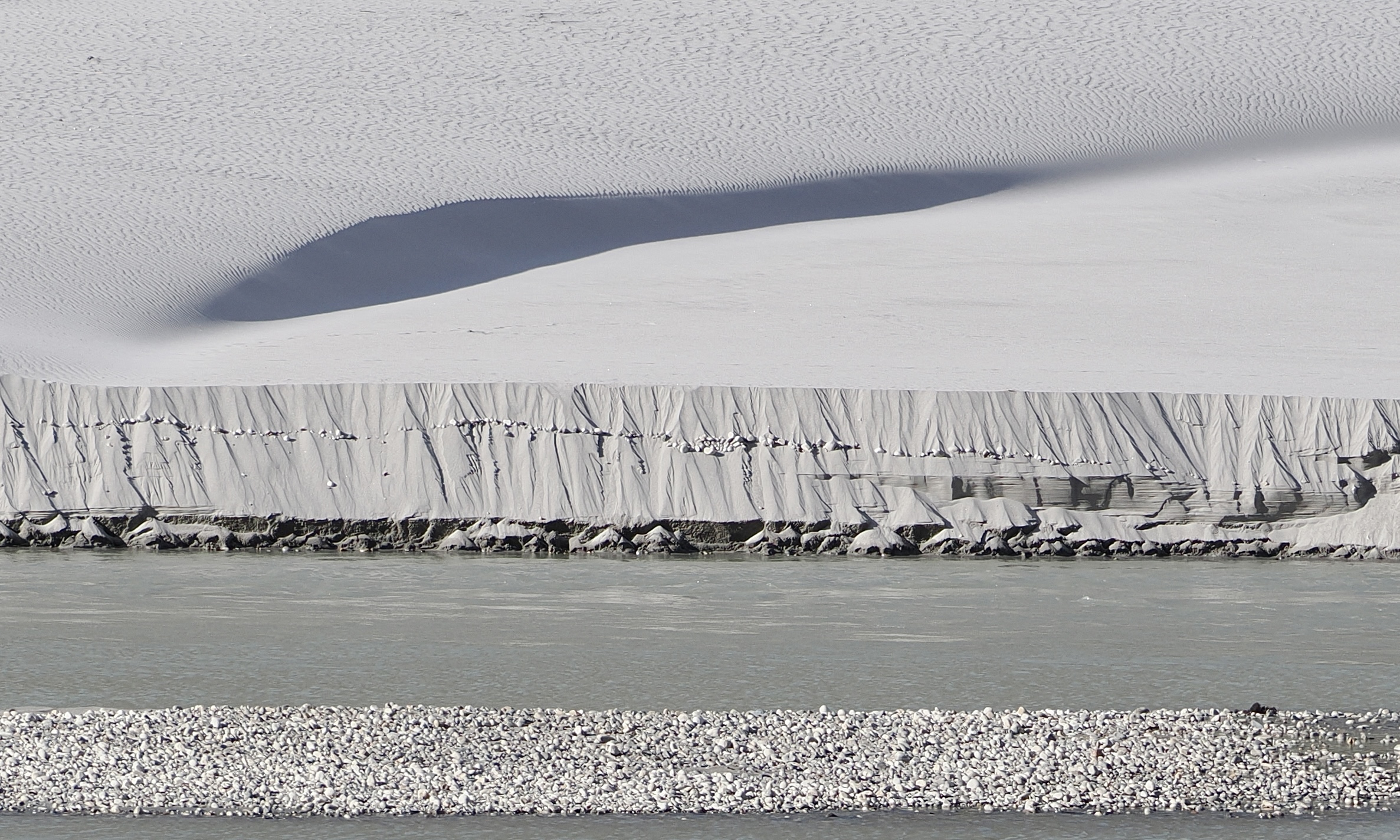
As in #10 in this series, you are looking at a photo which illustrates the power of the Shyok River.

By road, we were now 35 minutes further upstream, closer to Khaplu.

At 4.49 pm on 15 May 2024, the fast-flowing, largely glacier-fed river’s flow was relatively low.

The Shyok’s width, depth and flow-rate are hugely variable; the river transported and deposited all of the photograph’s silt, sand, gravel and rocks.

My telephoto lens zoomed in on just a very small portion of what my naked eyes could see in a single glance, with head still.

One translation of the Shyok’s name: river of death. 

Its floods have killed many people, drowned trees and crops too, and destroyed/removed many formerly-arable fields, even some of the houses that had been built above and behind the fields, on what used to be “safe” ground.

Comments closed