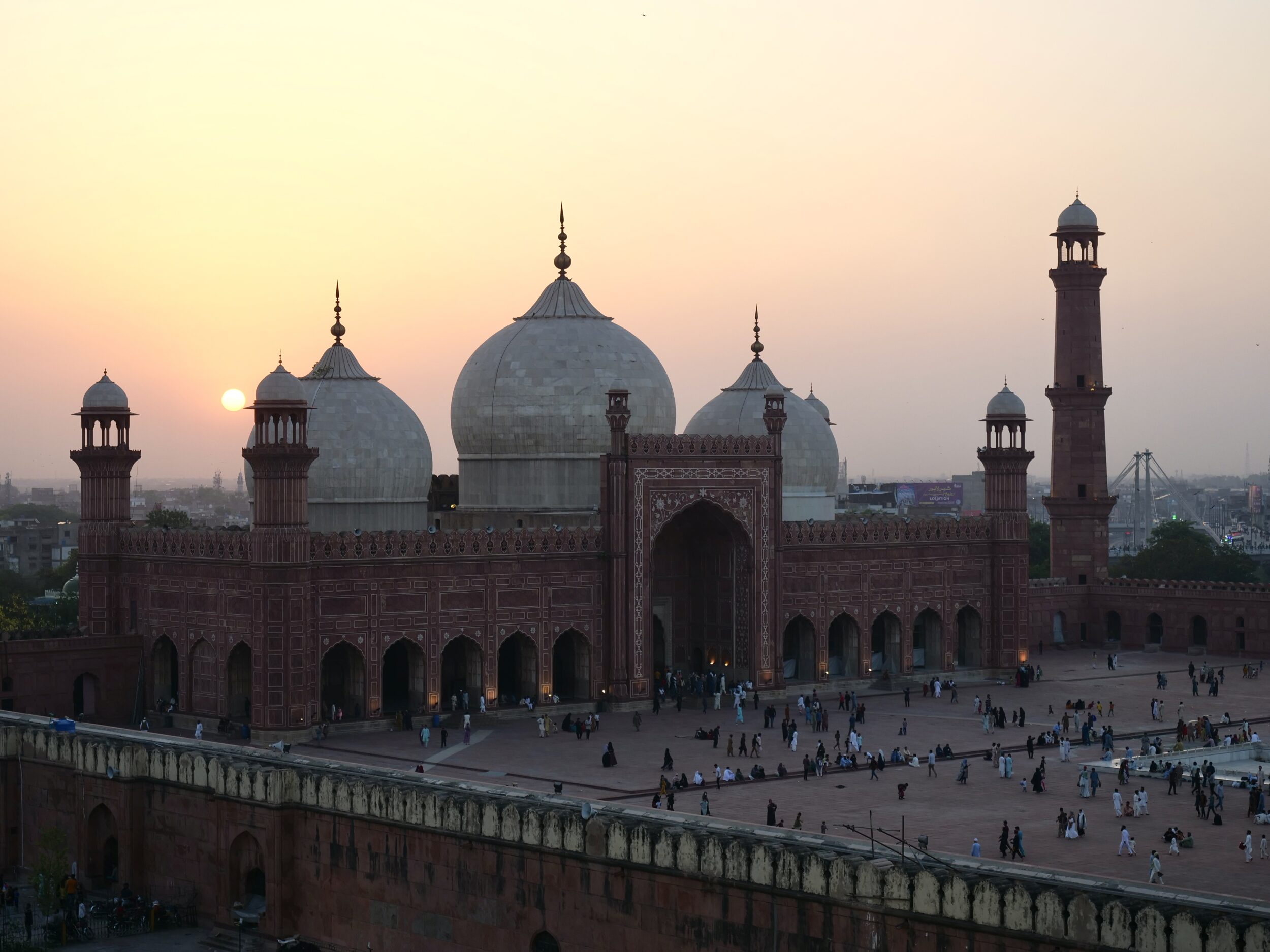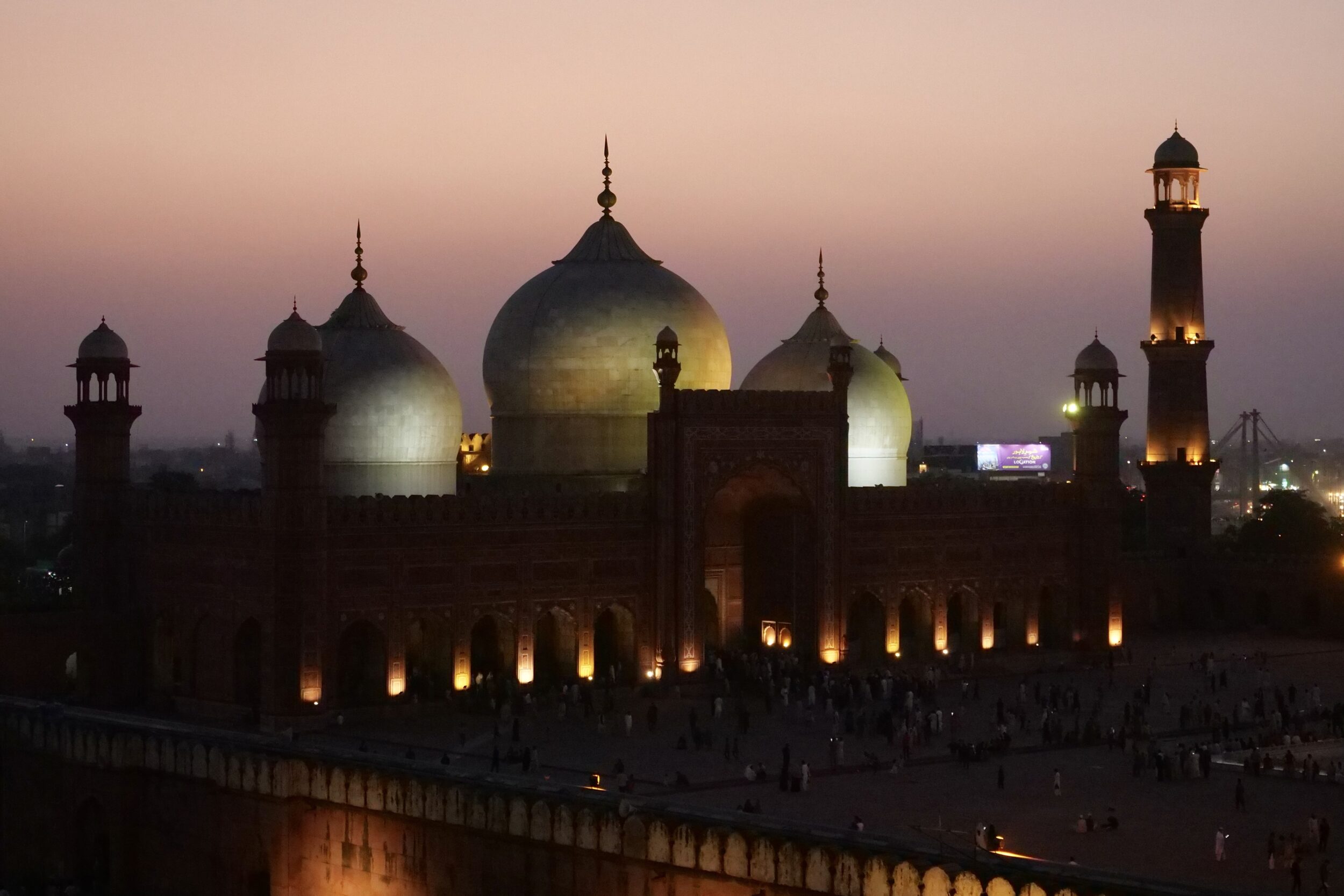
On 12 May 2024 in Lahore sunset was at 6.50 pm.
Shortly thereafter, the relevant lights at Badshahi Mosque were switched on.
This post’s photos were taken within sixty seconds of each other, from Haveli Restaurant’s terrace.
Comments closedNatural splendour, real musics, wines, wordpower
On 12 May 2024 in Lahore sunset was at 6.50 pm.
Shortly thereafter, the relevant lights at Badshahi Mosque were switched on.
This post’s photos were taken within sixty seconds of each other, from Haveli Restaurant’s terrace.
Comments closed
Following its completion in 1673, Lahore’s Badshahi Mosque remained the world’s biggest mosque/masjid for nearly three centuries.
Size-wise, it is now #3 in Pakistan.
Globally, it sits at the lower end of the “top 20”, or has recently lost that status.
Aesthetically, however, Badshahi Mosque is forever unlikely to have more than a very few peers.
Comments closed
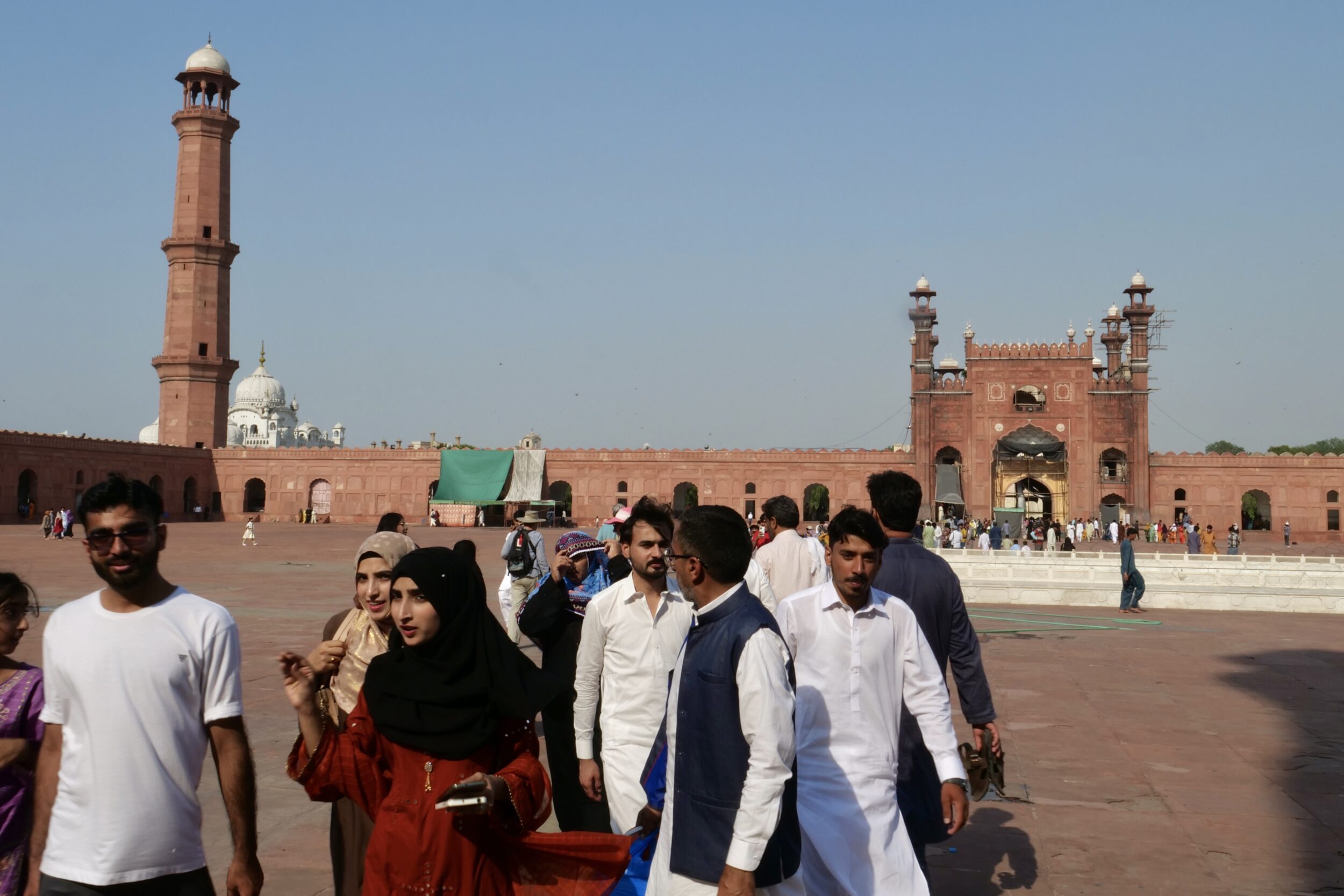
The featured image (immediately above) was taken at 3.47 pm on 12 May 2024; the main building was behind me, as I looked east-ish, across part of Badshahi Mosque’s courtyard.
That paved courtyard’s 25,600 square metres account for most of the mosque’s “footprint”.
Lahore Fort and Badshahi Mosque are almost adjacent.
Their main gates face each other, respectively, from the eastern and western sides of the Hazuri Bagh – a formerly-“royal” garden which is now a well-loved “public” space.
Comments closed
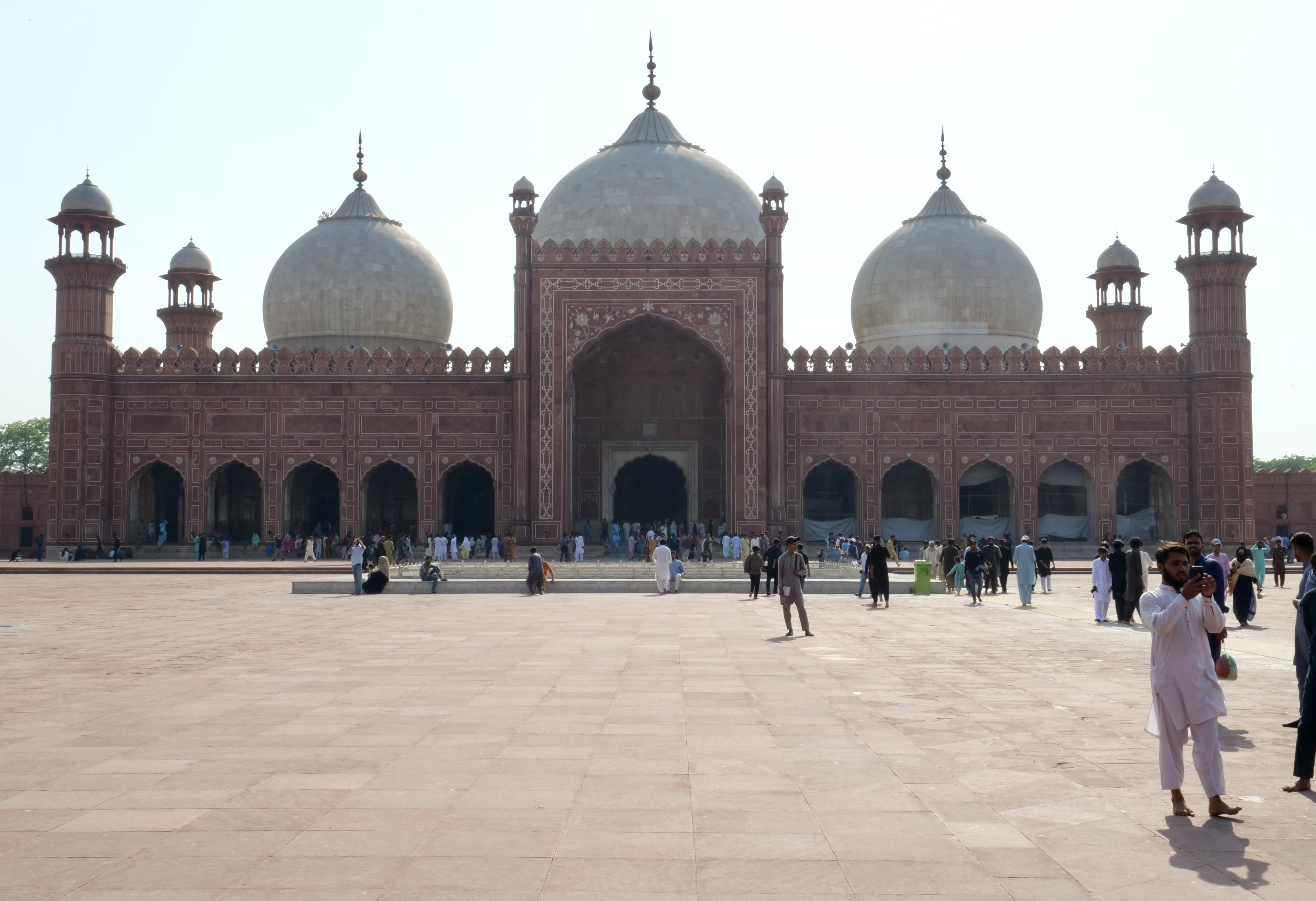
You are looking at Pakistan’s most “emblematic” building.
At the time of its astonishingly swift construction, Lahore’s Badshahi Mosque (“Badshahi Masjid”, to locals) was the world’s largest mosque/masjid.
Construction began in 1671.
It opened two years later.
342 years on, the Mughal Empire’s final large-scale architectural marvel still inspires awe.
Its main building – pictured above – is the key visual presence on every Pakistan 500 rupee banknote.
Comments closed
Lahore Fort’s Sheesh Mahal and Agra’s Taj Mahal were both commissioned by the same Mughal emperor.
Each expressed – mostly, in white marble – his abiding love for his favourite wife.
Shah Jahan (1592-1666) had three wives, but only one marriage was a “love match”.
He renamed his beloved, “Mumtaz Mahal” – “the exalted one of the palace”.
Allegedly, Mumtaz Mahal had a dream/vision of heaven; the Sheesh Mahal was her husband’s attempt to make that dream “real”.
Comments closed
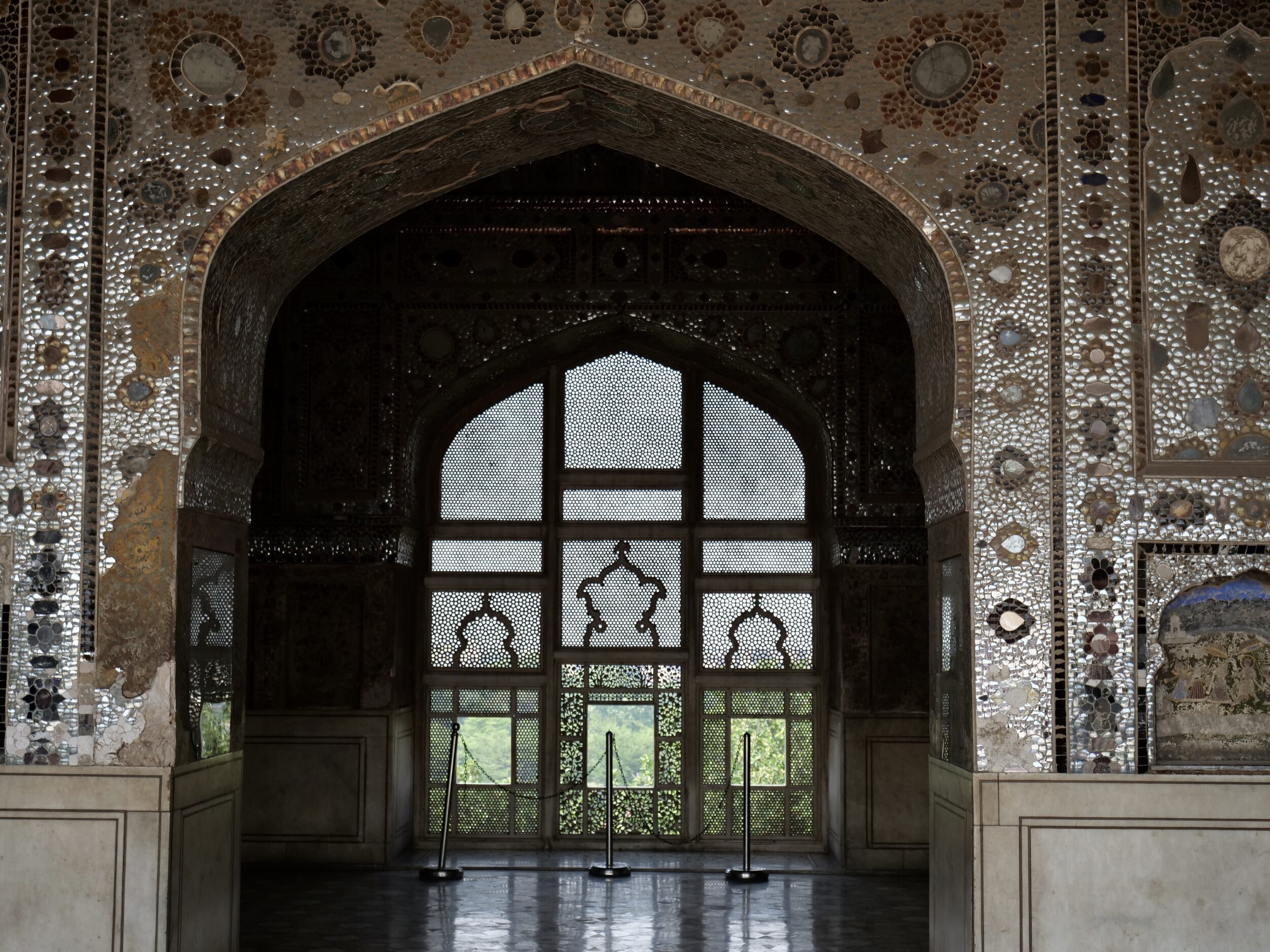
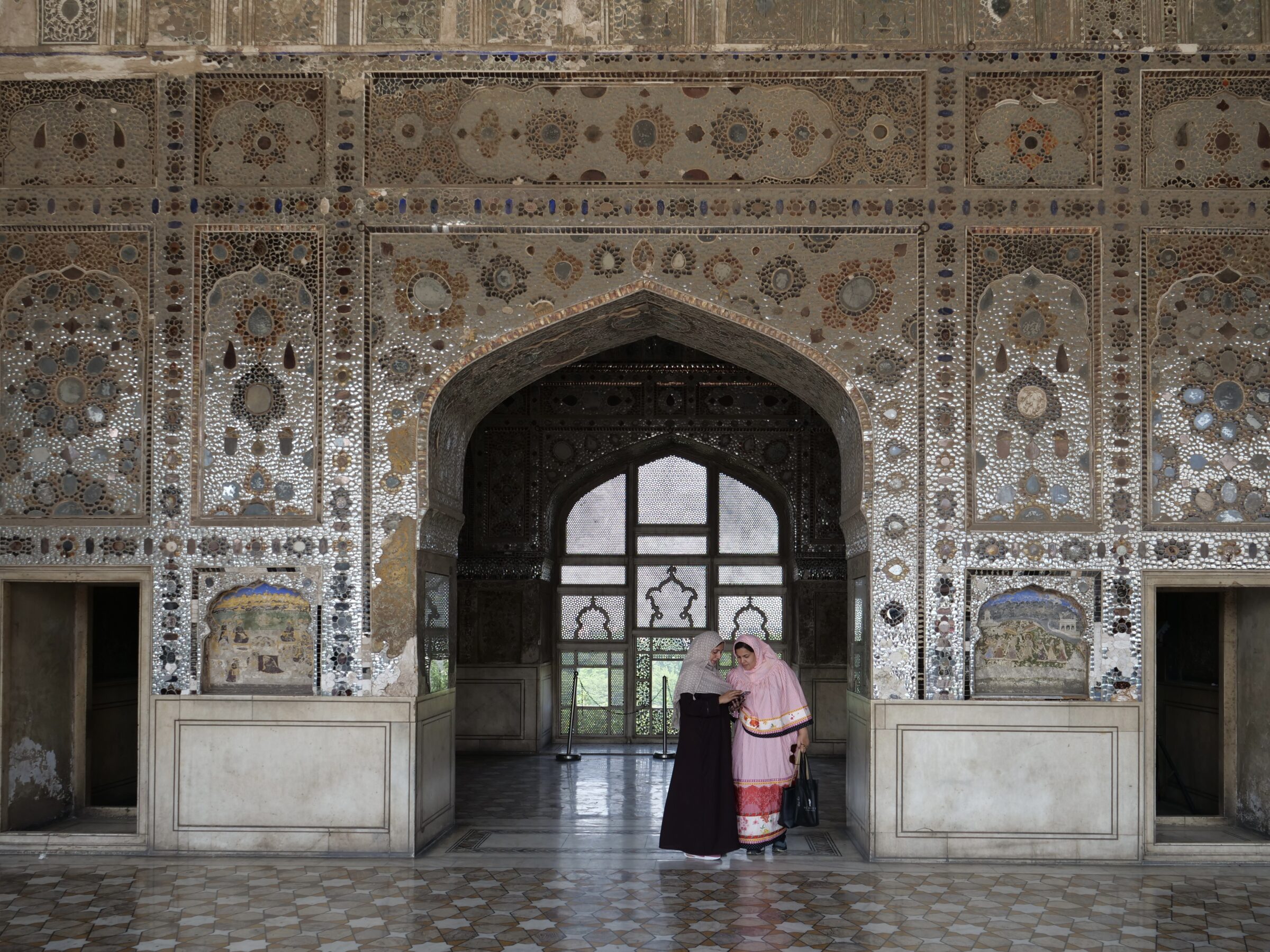
The highly elaborate “mirror work” decorations on its walls and ceilings are the signature feature of the Sheesh Mahal.
Much less “showy”, but at least as beautiful, are the carved marble screens on its northern side.
As well as being lovely to look at – and to look through – these screens are very “practical”.
Comments closed
Popularly known as “the palace of mirrors”, the Sheesh Mahal is the most opulent of Lahore Fort’s “notable monuments”.
It sits directly above the summer palace, in Lahore Fort’s northwestern corner.
The Sheesh Mahal’s glittering splendour is only visible from within what was originally a very “restricted” section of Lahore Fort.
This ornate pavilion/palace was constructed in the 17th century CE, for the exclusive use/pleasure of the imperial family. (plus their invited guests and closest aides)
Comments closed
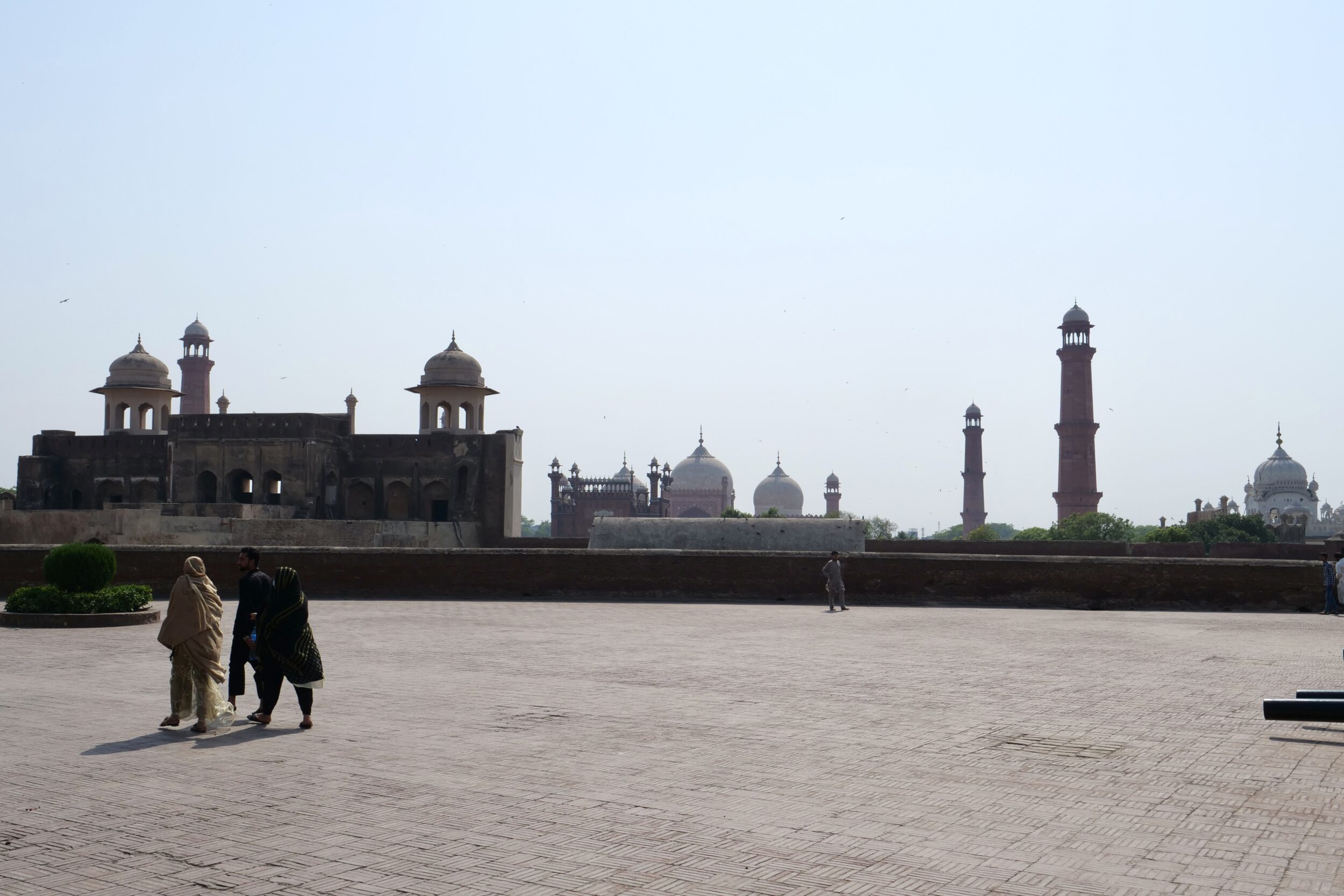
At 3pm on 12 May 2024 we were “upstairs”, in very bright sunshine, making our way to the Sheesh Mahal.
If the “selfie index” is any guide, this “palace of mirrors” is 21st century tourists’ favourite of the 21 “notable monuments” within Lahore Fort.
We’ll reach it in this series’ next (selfie-less) chapter.
Meanwhile, take a close look at the various structures visible in this chapter’s featured image…
Comments closed
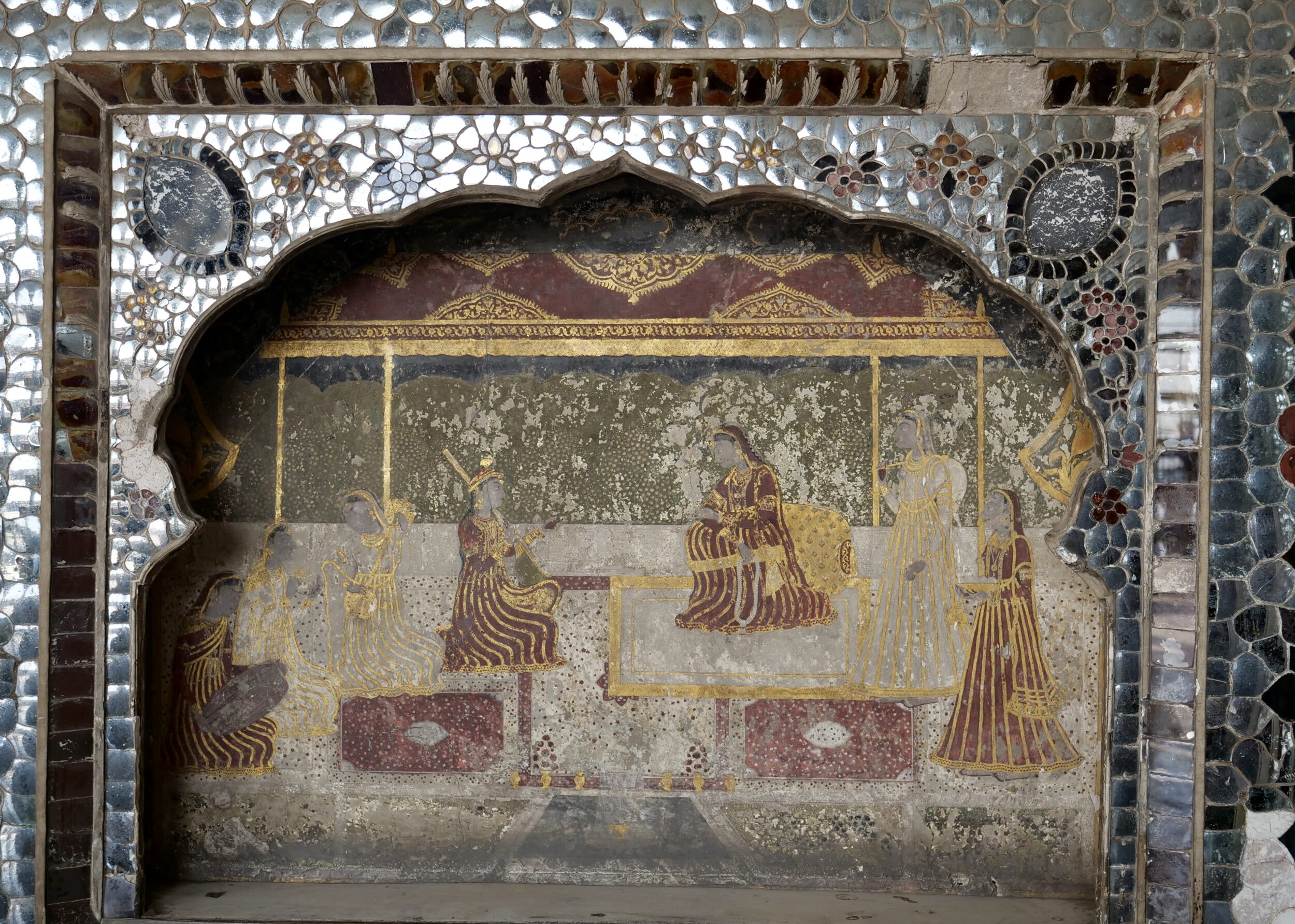
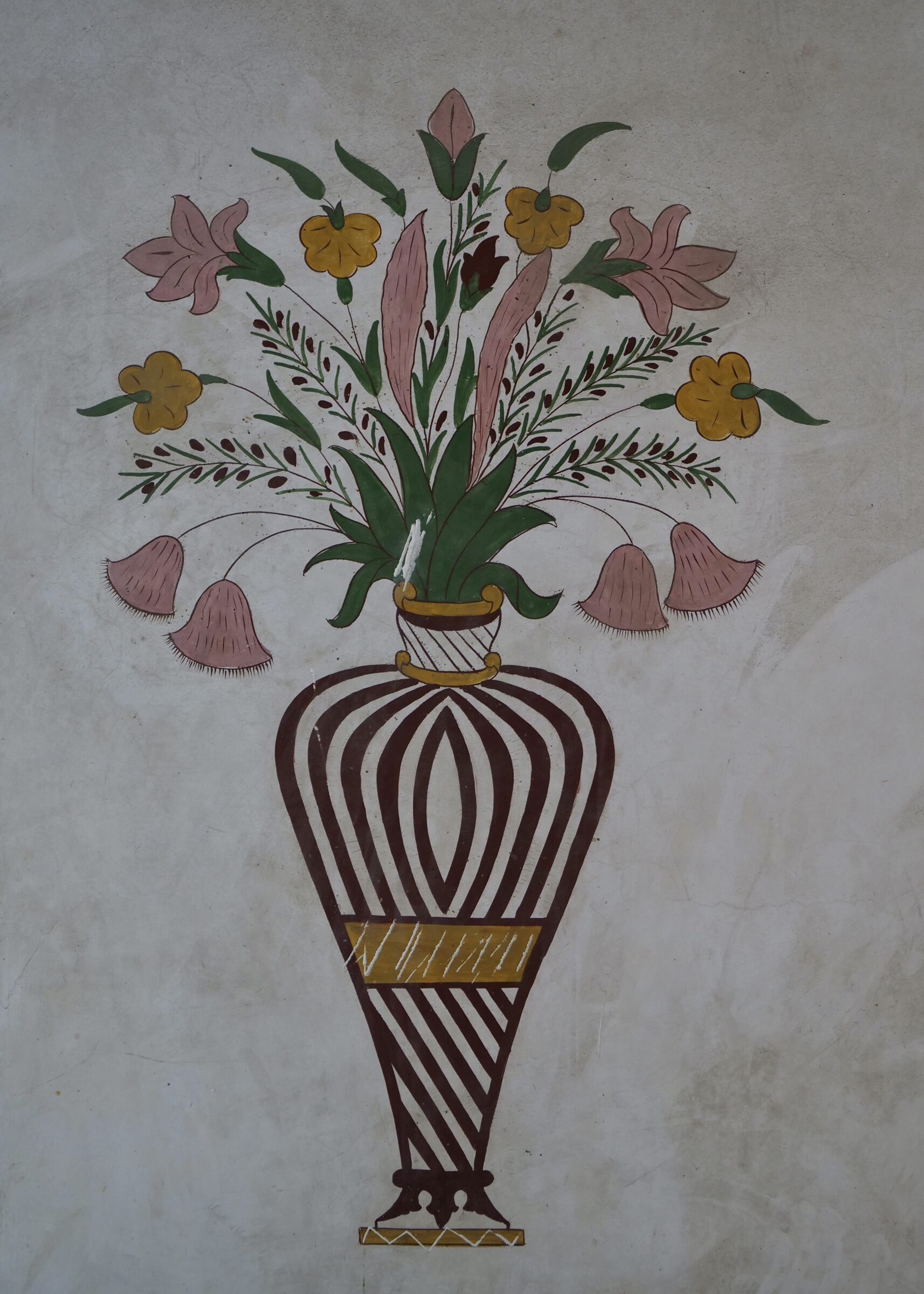
Both of the pictured decorations have been restored, recently.
Nothing more needs to be said.
Comments closed
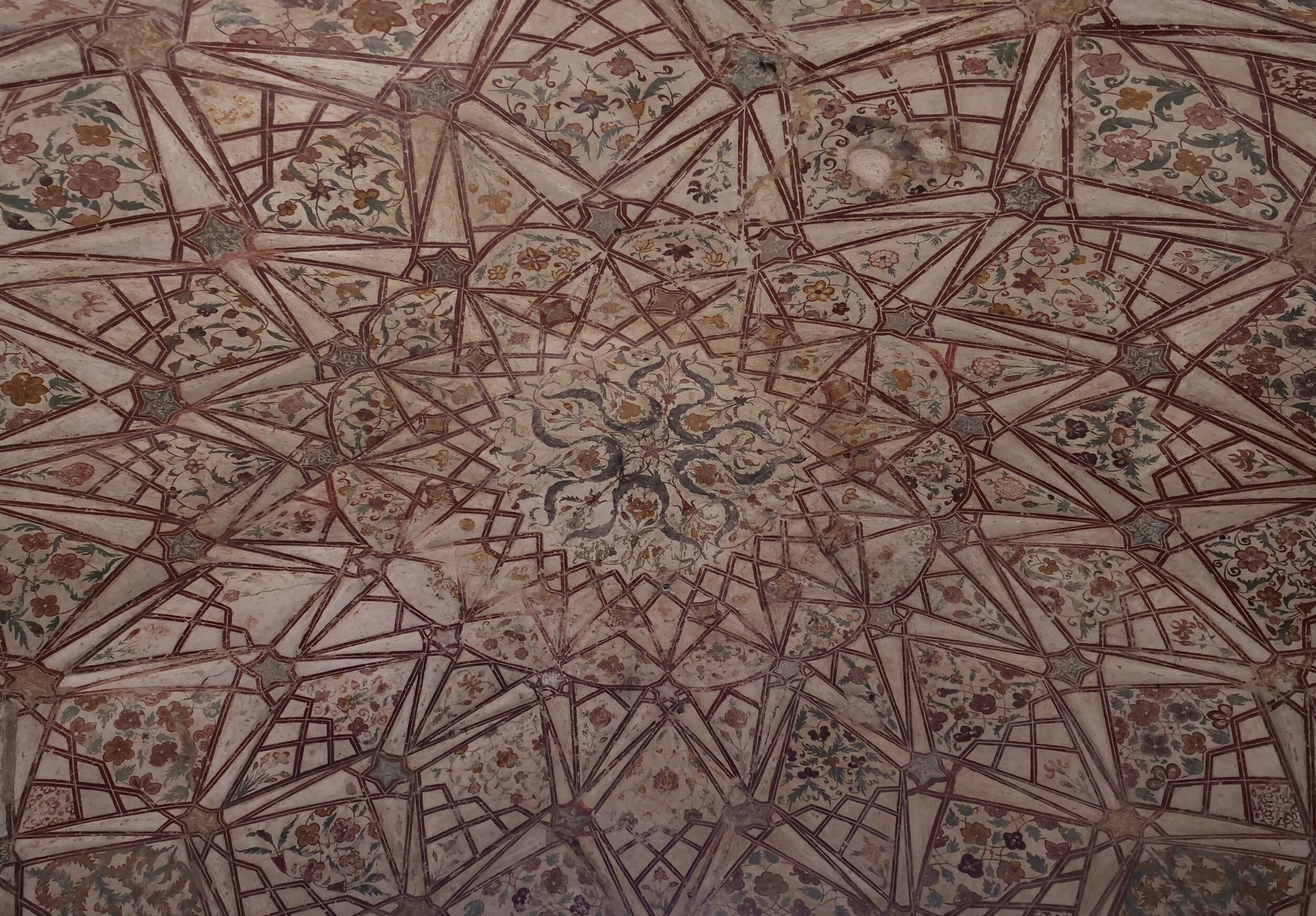
The featured image and the one immediately below both show “faded glory”.
A 21st century restoration effort has rendered 17th century splendour visible again, but a deal of the original’s vibrancy is almost certainly “gone, forever”.
However, the arch in the final image is an example of the “miracles” that dedicated scholars, architects, artists and artisans can achieve, even when the restoration effort’s beginning is a century or more “too late”.
Comments closed