Skip to content →

Tag: Italy

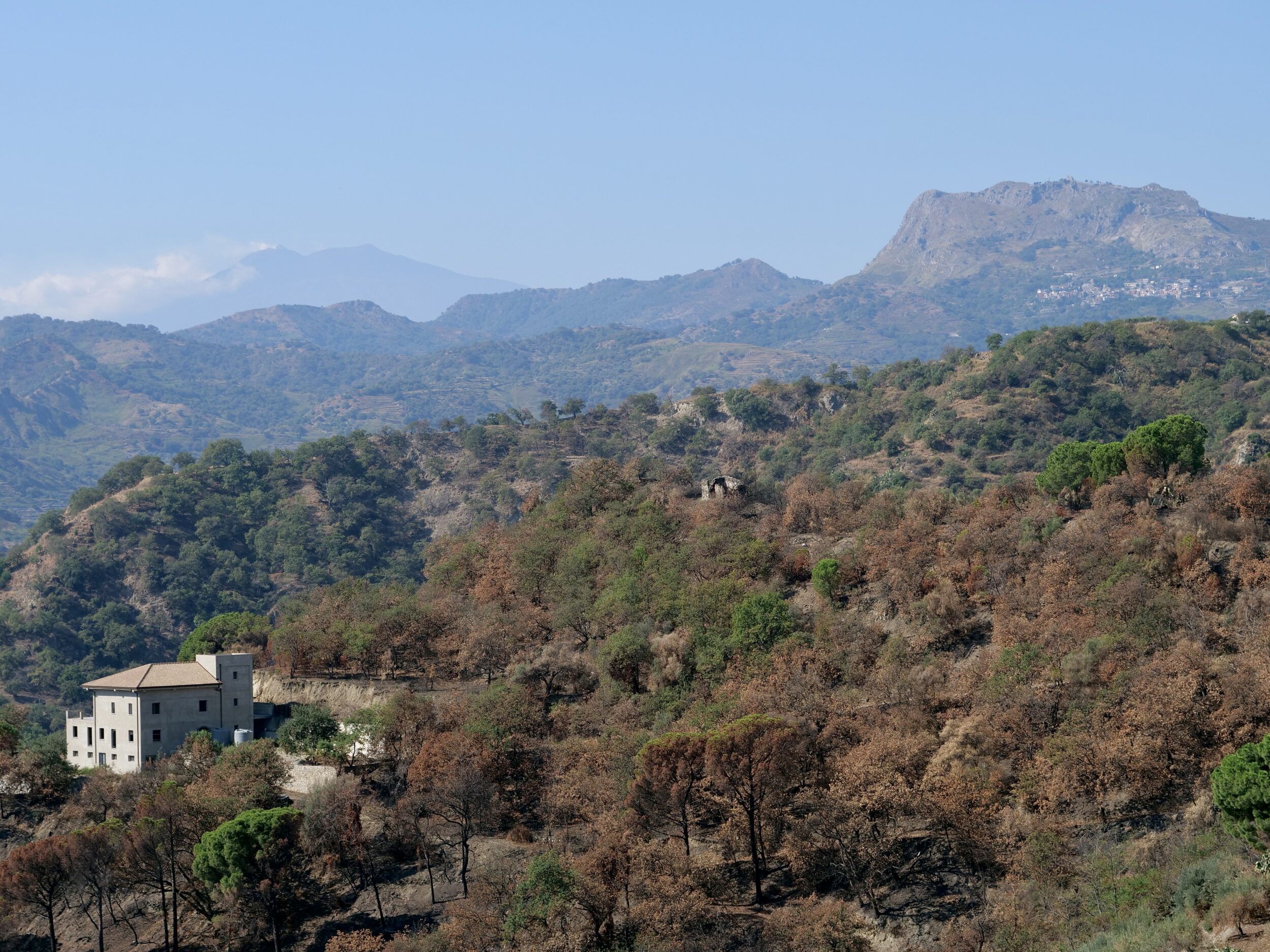
Aspects of Etna (#7 in series: smoking, discreetly)


If it was otherwise unchanged, but lost its biggest, highest mountain, Sicily would still be a mountainous island.

Etna, however, is very much higher and larger than all other Sicilian mountains.

It is also singularly recognisable, singularly influential/consequential, and hugely more dynamic than any other Sicilian peak or range.

Across a surprisingly large area – weather permitting, and provided one is not in some other mountains’ valleys –  one can be looking over Sicilian countryside and not thinking of Etna at all, only to realise, suddenly, “there it is!”

Comments closed
Aspects of Etna (#6 in series: mysterious subterranean lava rock)


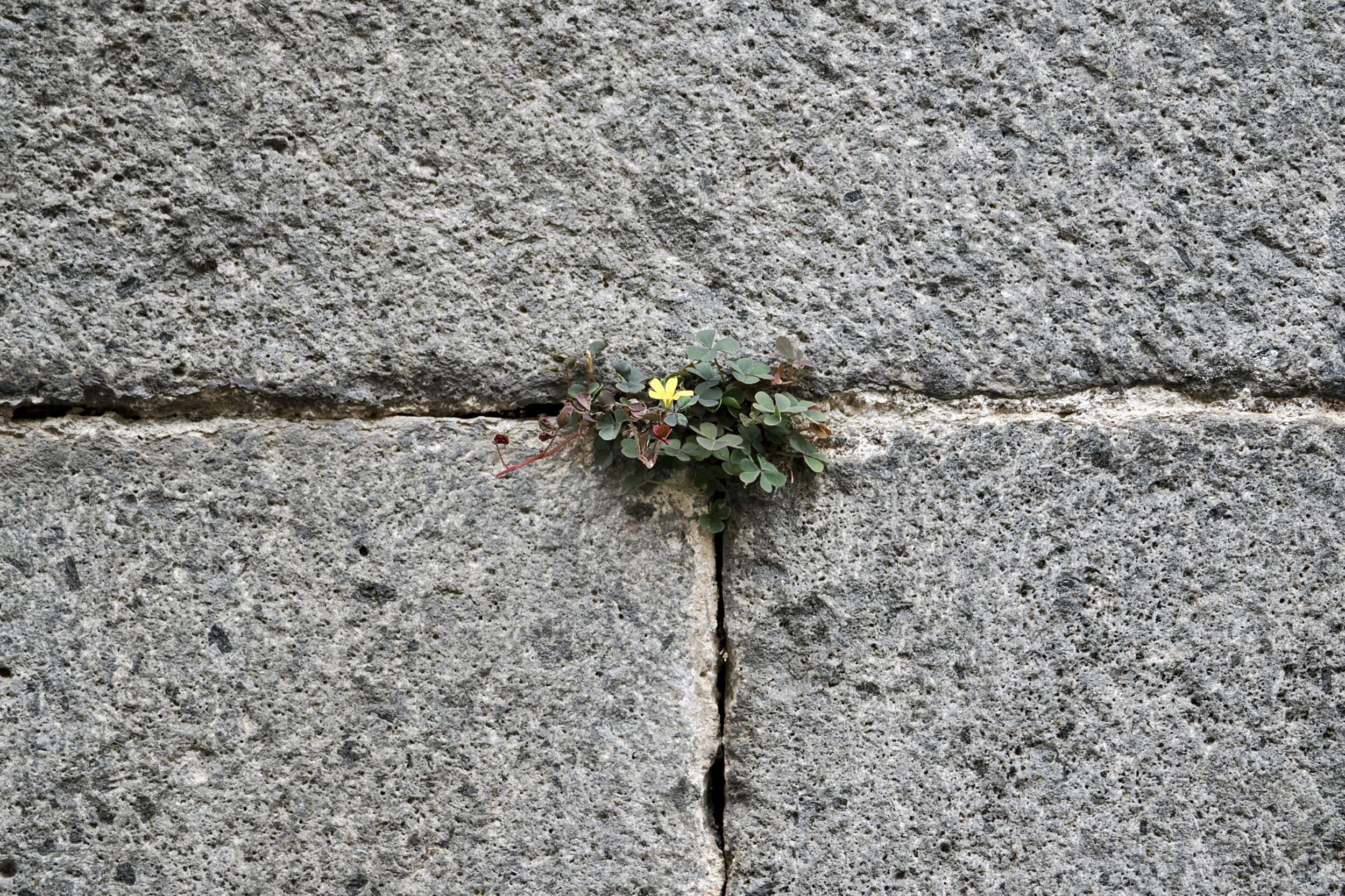
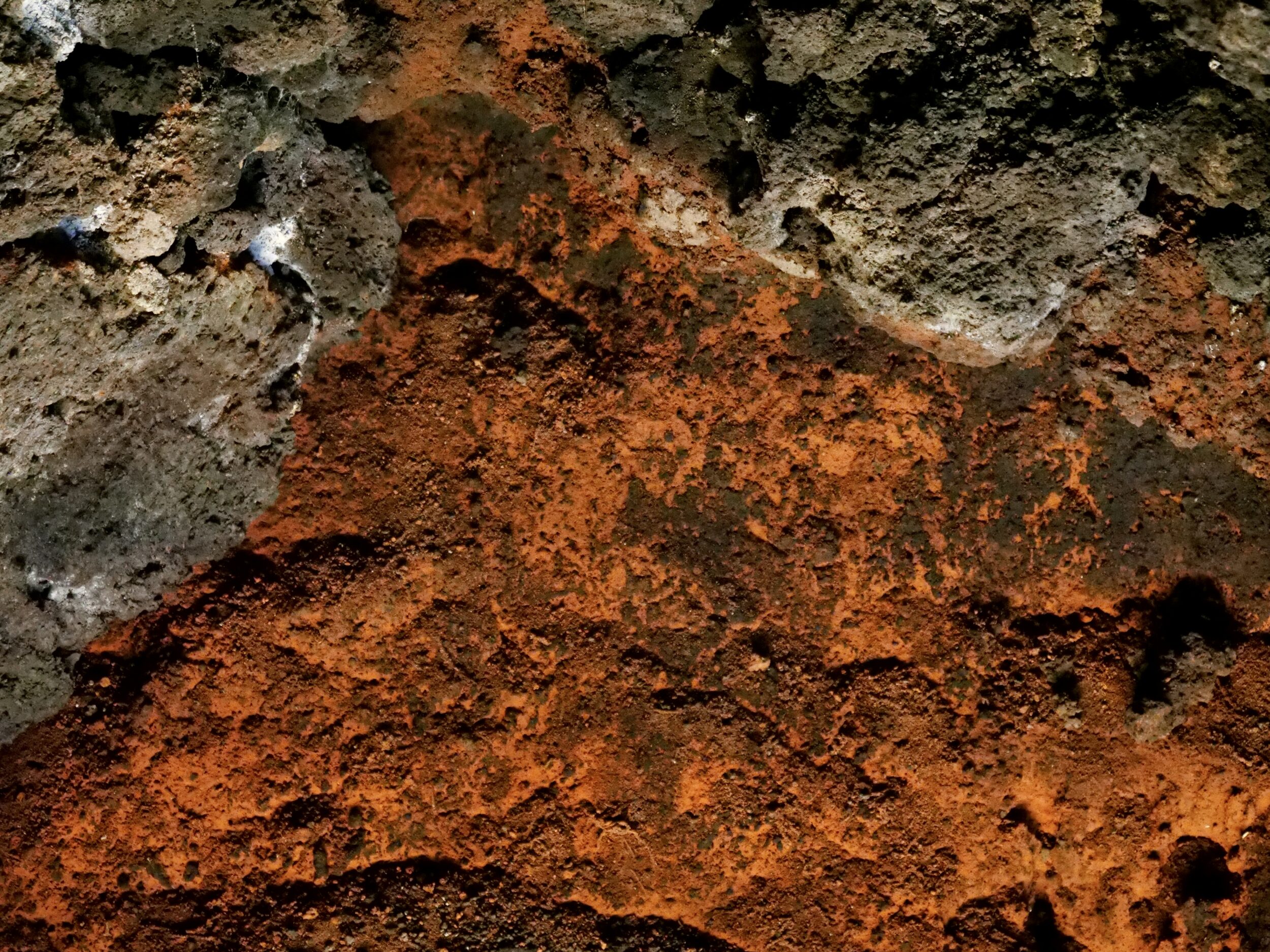
This post’s location is the same as yesterday’s, except that it is looking at a different section of the same winery cellar’s largely “lava rock” wall.

I think that the only human activity which could have given rise to the pictured “splash of colour” is the excavation that created or reshaped the cellar’s walls. (the cellar may or may not be a reshaping of a pre-existing cave)

Thus, newly-exposed to air, iron-rich sections of long-buried lava (from one of Mt Etna’s many eruptions) would begin to oxidise.

Guess why the long-exposed surface of Western Australia’s iron-rich Pilbara region is so very red?

Looking, as I took the photo at 1.18 pm on 02 October 2023, I thought I had probably worked out what was going on.

Now, I am not convinced that my assumption was correct.

Comments closed

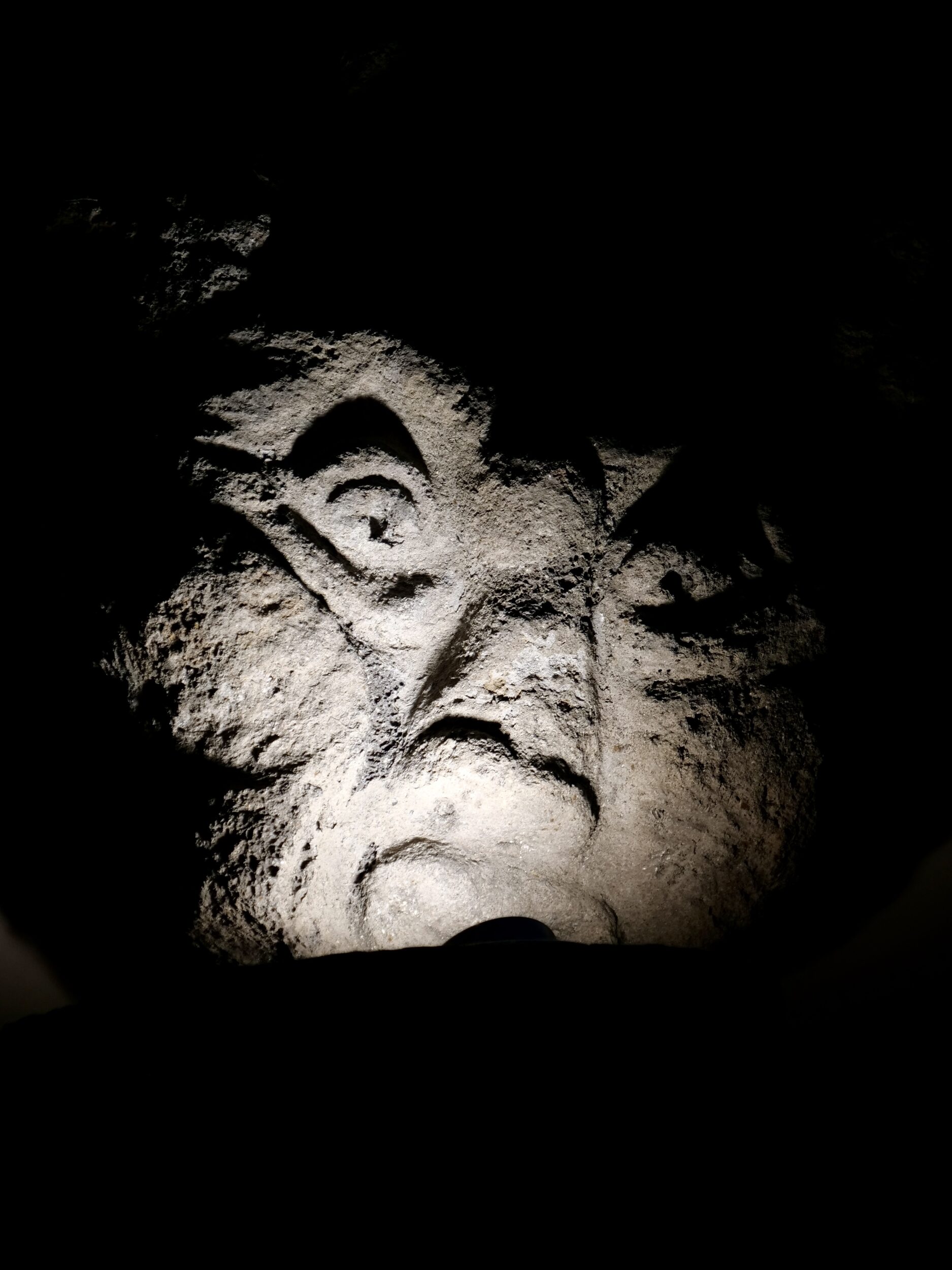
Aspects of Etna (#5 in series: “pagan” subterranean lava rock)


After a very enjoyable morning in Randazzo – engaging with its artisan gelato and granita aspects, as well as its most notable “lava rock” church – we headed to lunch at a nearby winery, in very attractive countryside.

Its cellar was, essentially, a lava rock cave

I do not know whether the cellar was a modified, pre-existing cave, or a cavity largely or entirely made by humans.

In either event, its walls offered more than one surprise…

Comments closed

Aspects of Etna (#4 in series: lava rock)


Doubtless, this post’s subtitle could serve well as the latest addition to “metal” music’s ever-burgeoning array of named sub-genres.

However, this  post’s “lava rock” has no connection to any musical “rock”.

This lava rock was deployed, with “sacred” intent, as a building material.

You are looking at part of a notable Sicilian church’s exterior.

Comments closed

Aspects of Etna (#2 in series: telephoto view)


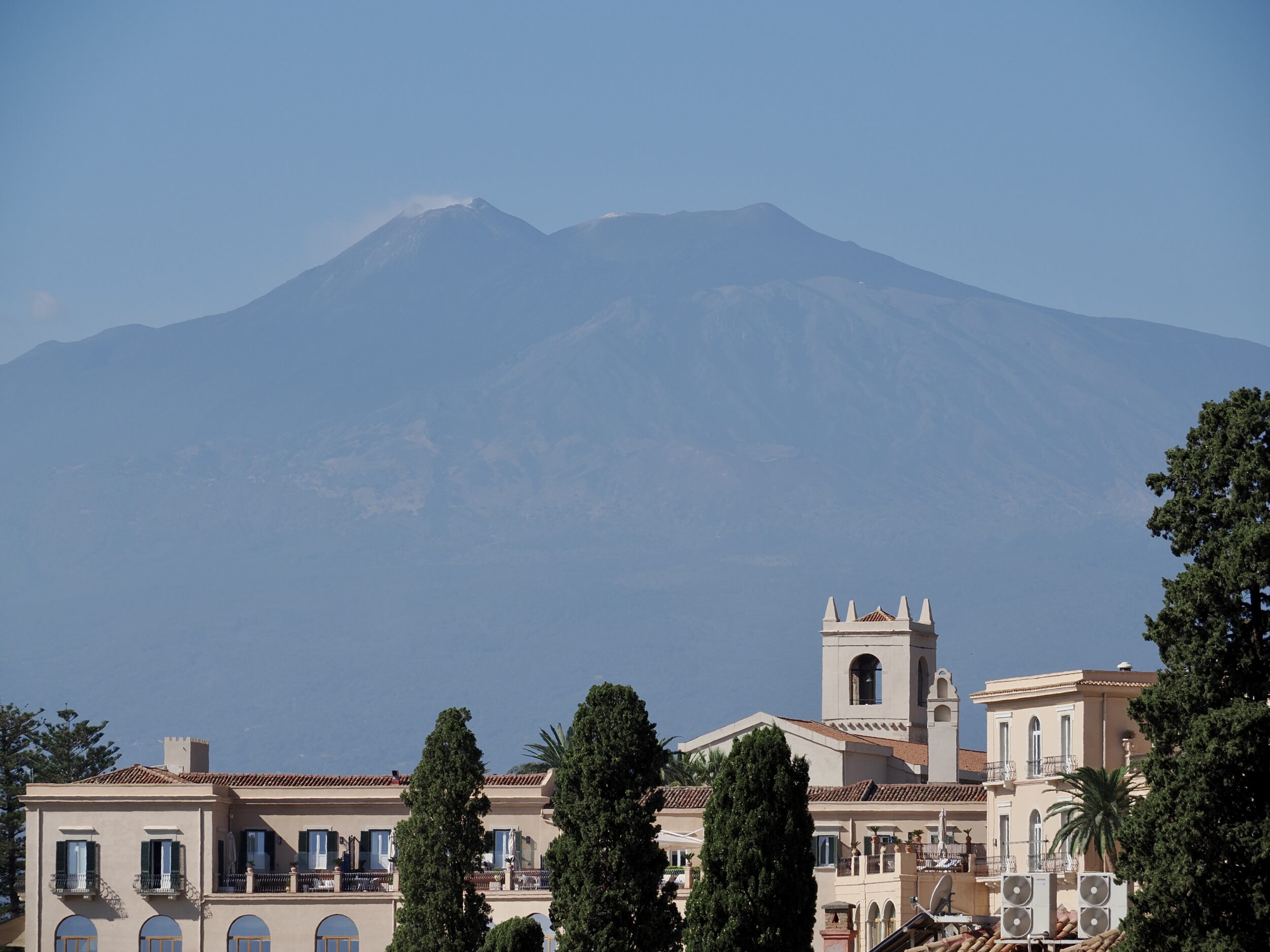
Deploying a longer lens enables one to convey just how dramatically Etna towers over and dominates its vicinity.

This post’s photo involved a 200mm lens; the previous post’s was taken with a 30mm.

(it is generally reckoned that a “regular” 50mm lens delivers the closest approximation to a naked-eyed human’s field of view and sense of scale)

The building common to both images is Taormina’s San Domenico Palace, which is now a hotel.

One Comment

Aspects of Etna (#1 in series: wide-angle view)


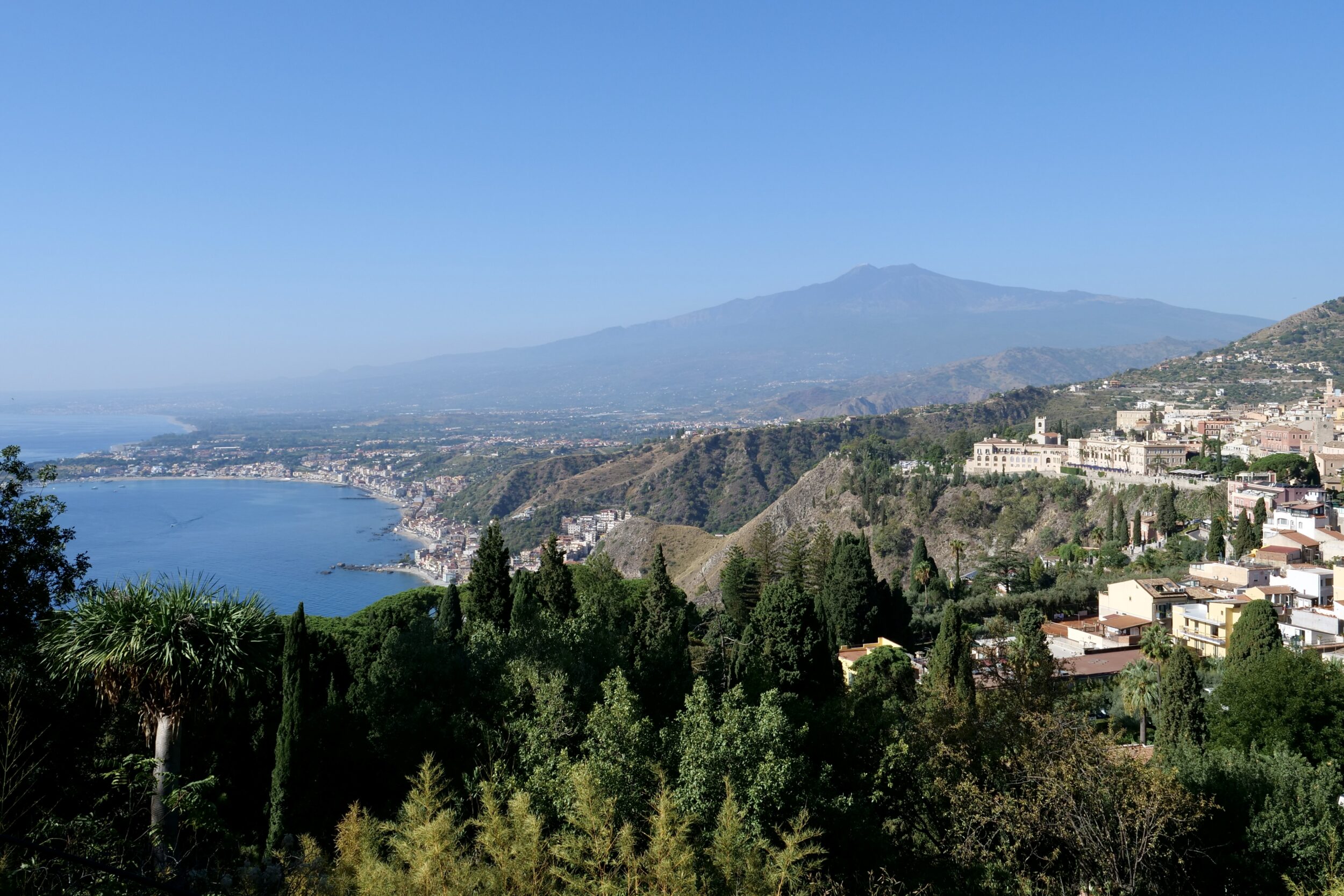
Even from some distance – and via a wide-angle, short lens – Mt Etna is very obviously big.

South of the Alps, Europe-proper has no higher mountain.

Etna is circa 1.5 times higher than Australia-proper’s highest mountain.

Unlike Kosciusko’s, from some vantage points, Etna’s full height is easily viewed, from sea to summit.

Comments closed

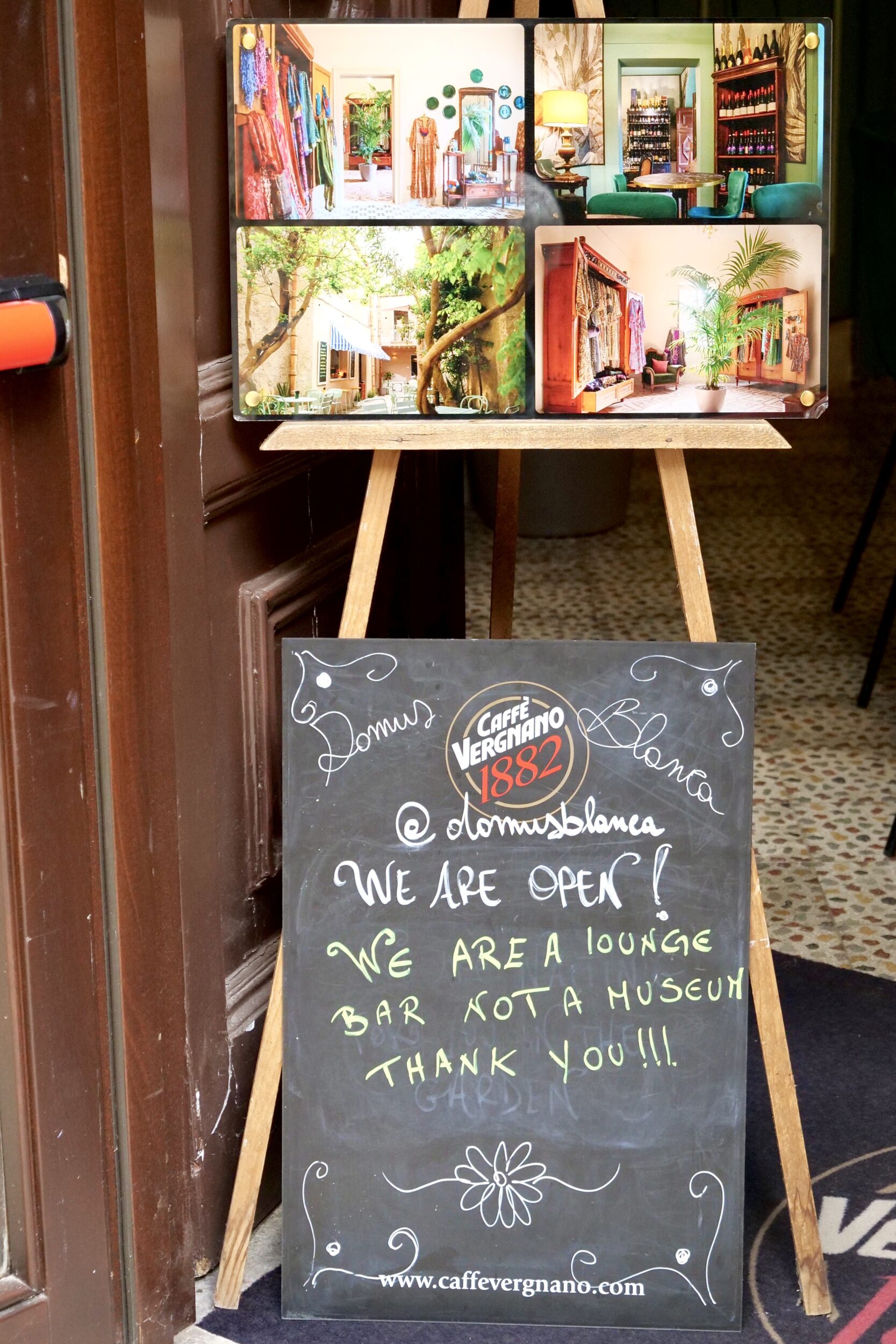
European surprises (#20 & final in single-image teaser series: “not a museum”)


On Sicily’s northwestern corner, Erice sits atop a very steep hill, 750 metres above the Mediterranean.

Highly picturesque and spectacularly-located, it is essentially-medieval, but this village’s history extends very much further – Erice was conquered rather than created by ancient Greeks.

As the photo illustrates, some 21st century visitors to Erice find it difficult to recognise exactly what they are looking at…

Comments closed

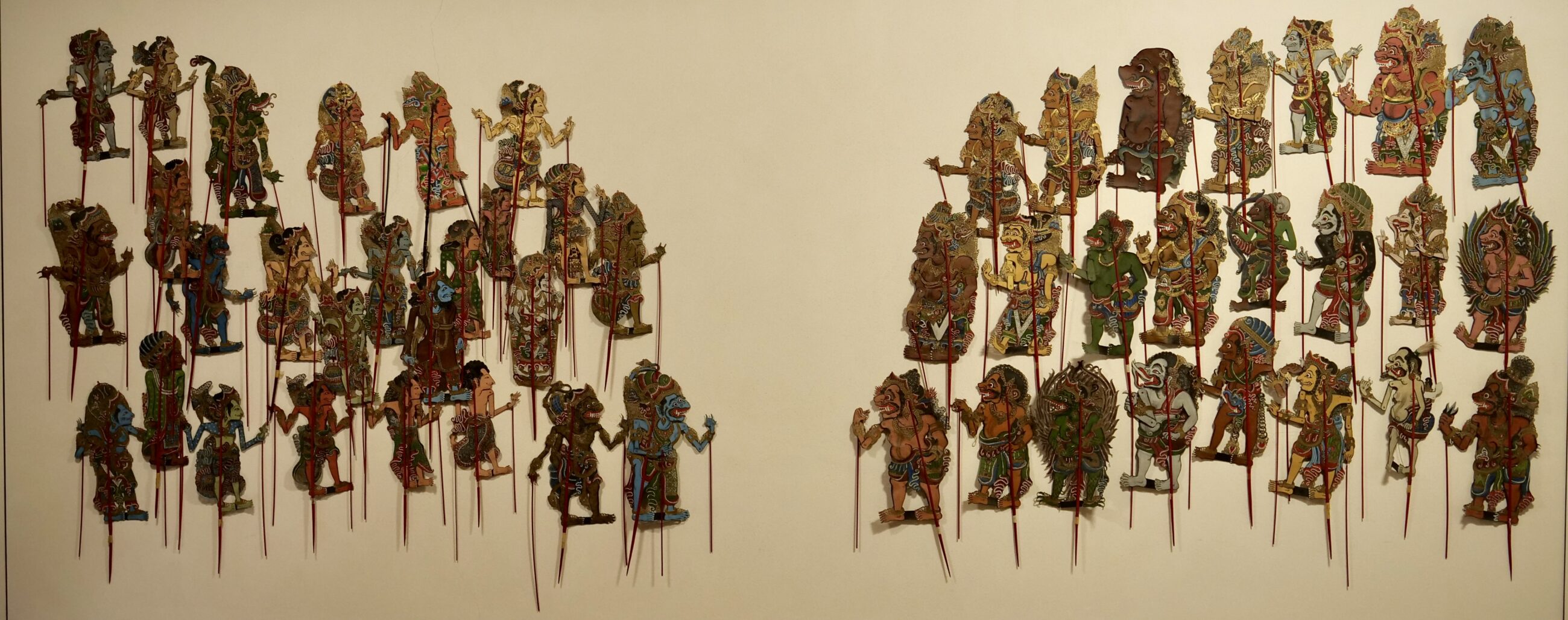
European surprises (#19 in single-image teaser series: wayang, far from Indonesia)


As will be more clear if you zoom in on/enlarge the featured image, it shows a very fine set of Indonesian “shadow” puppets, of the Wayang Kulit  kind.

Italy abounds with museums and galleries.

Not a few of them are excellent.

Some are truly singular, albeit highly likely to be crowded.

Often, they are an “embarrassment of riches” – altogether too much to be comprehended/appreciated properly in the space of a single visit.

Our nicest museum surprise in 2023 was Palermo’s Antonio Pasqualino International Puppet Museum.

Comments closed

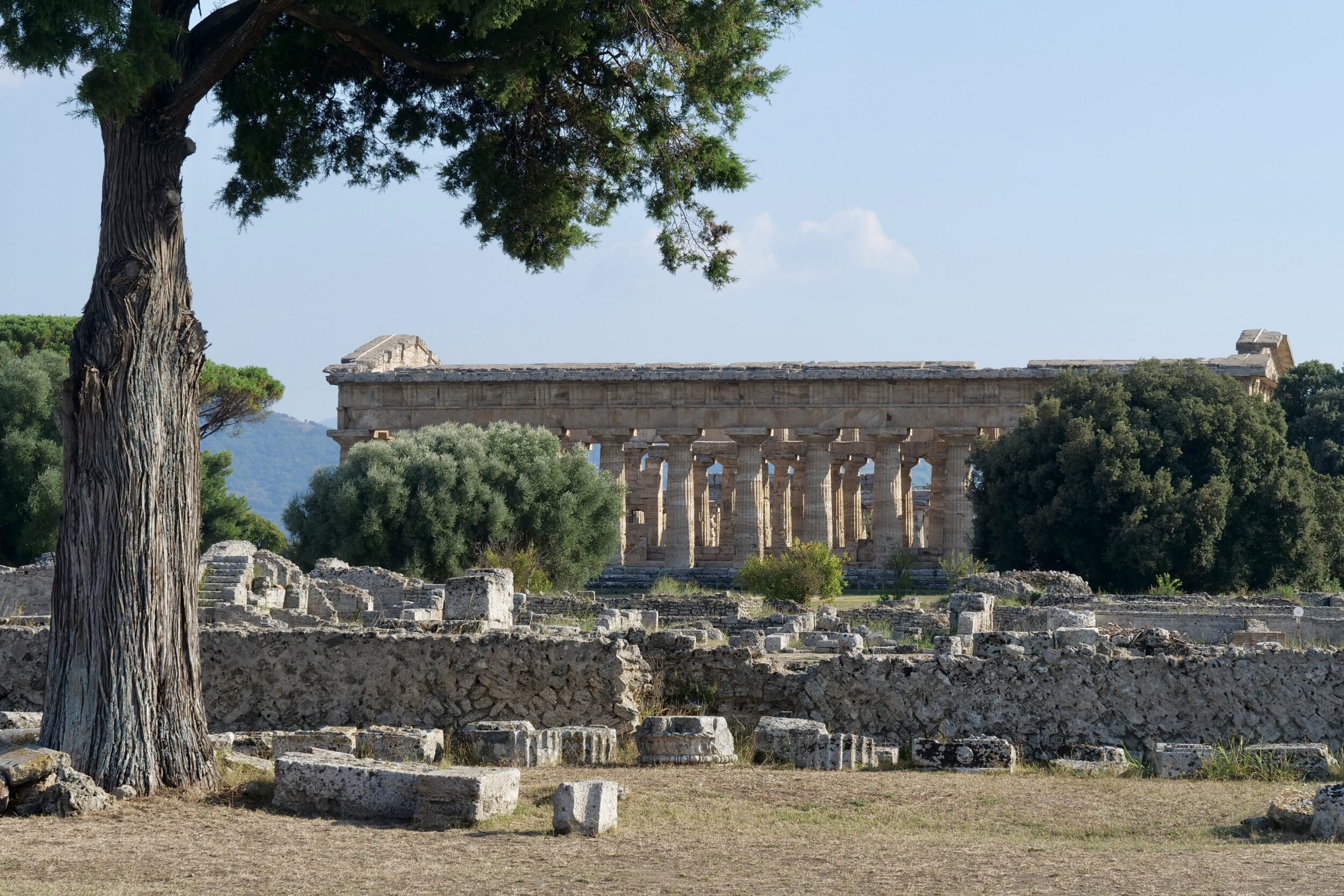
European surprises (#18 in single-image teaser series: great, Greek, not Greece)


You wish to visit one country only, in order to see the world’s best-preserved Doric temples?

They are located in what – 2,500 years ago – was one of the major Greek cities.

You won’t be going to Greece…and if you time your visit carefully, you are likely to be pleasantly amazed by how uncrowded is this very special site.

Comments closed