This series has fewer than 10 remaining chapters.
The next several all look down into water, or through it, or at it.
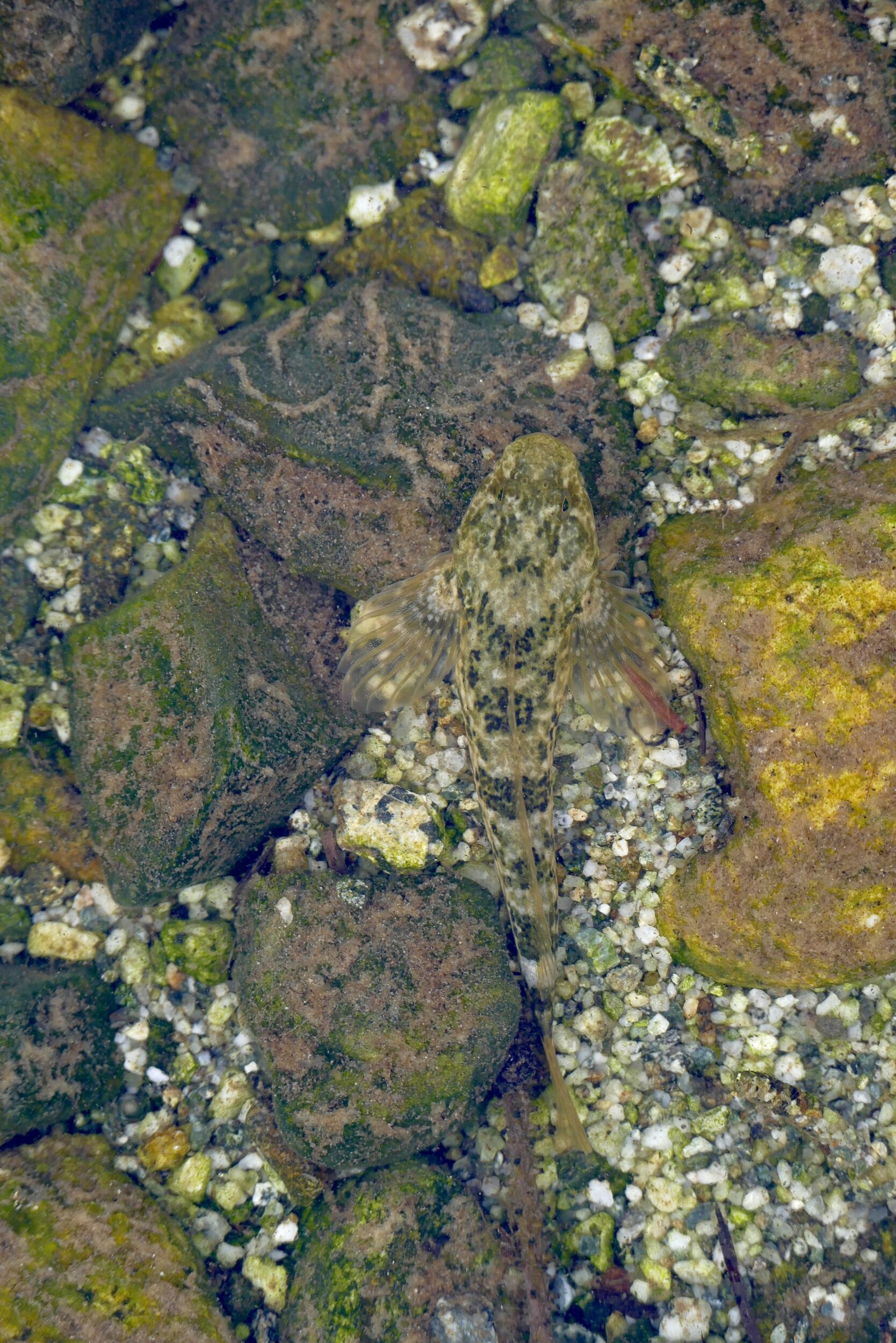
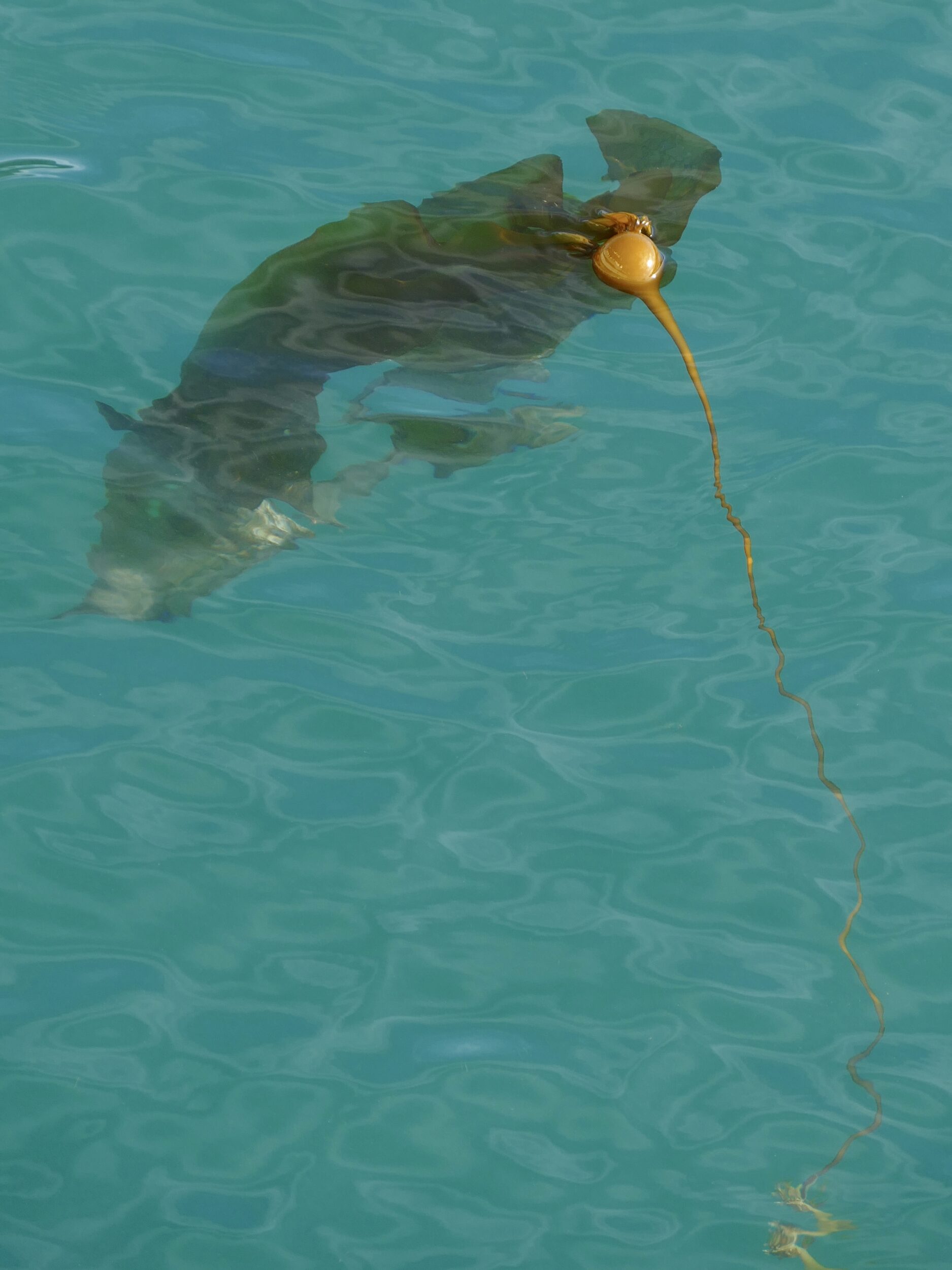
This chapter’s image was the fruit of looking down into a tidal pool in southeastern Alaska.
Leave a CommentNatural splendour, real musics, wines, wordpower
This series has fewer than 10 remaining chapters.
The next several all look down into water, or through it, or at it.
This chapter’s image was the fruit of looking down into a tidal pool in southeastern Alaska.
Leave a Comment
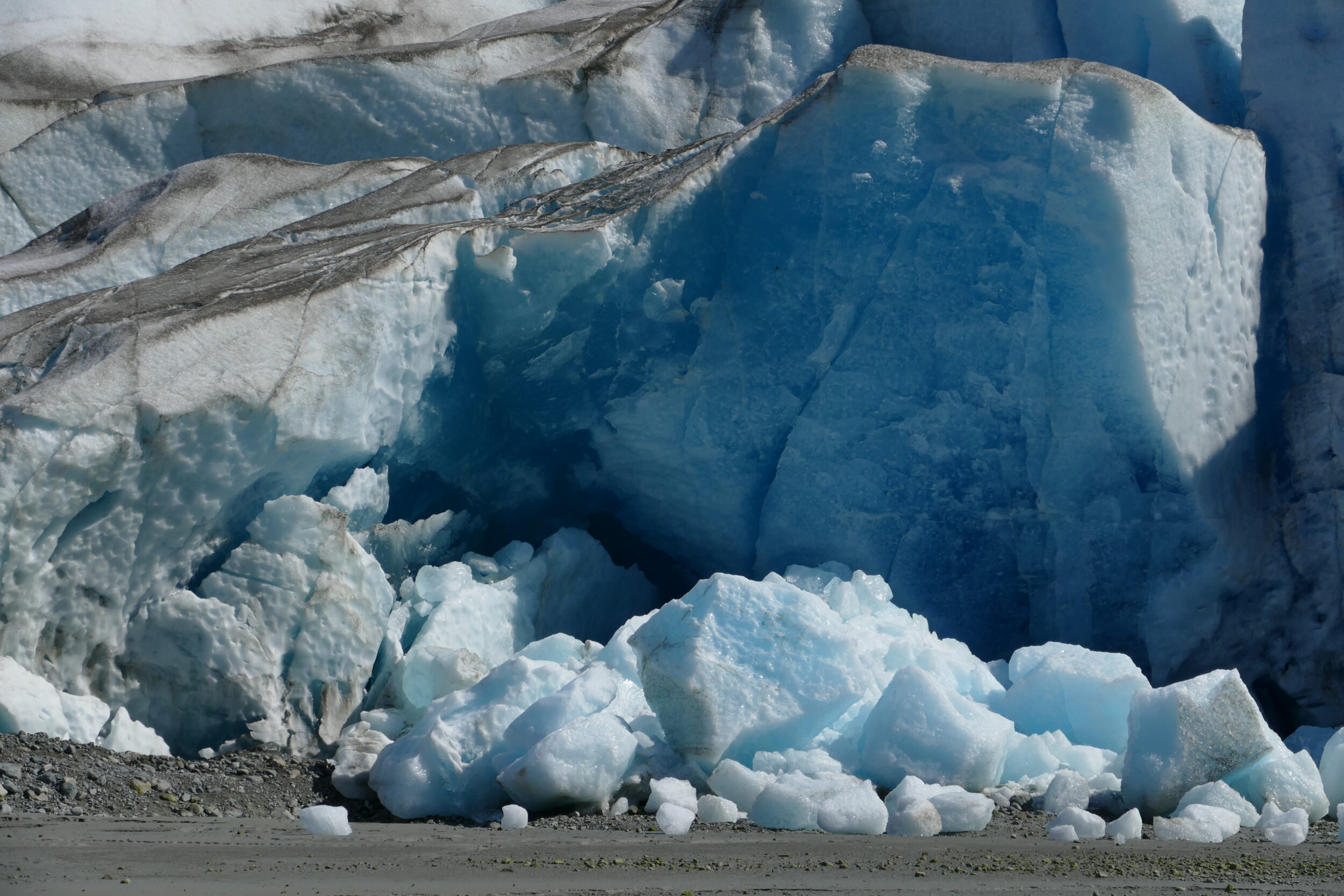
You may be surprised to know that this post’s featured image involved a considerably shorter lens than did the “5A” photo, taken 38 minutes earlier, when we were still offshore.
When I took the above photo, we had for some minutes been strolling along the rather young beach which had formed/emerged as the glacier retreated – and lost its former status as a “tidewater” glacier.
Comments closed
First, please have a close look at this post’s image.
It offers a much closer view than that presented in “4A” of this series.
When I took the “5A” & “5B” images we really were much closer to the same glacier’s snout, but for the “5A” image I also deployed a telephoto rather than a wide angle lens.
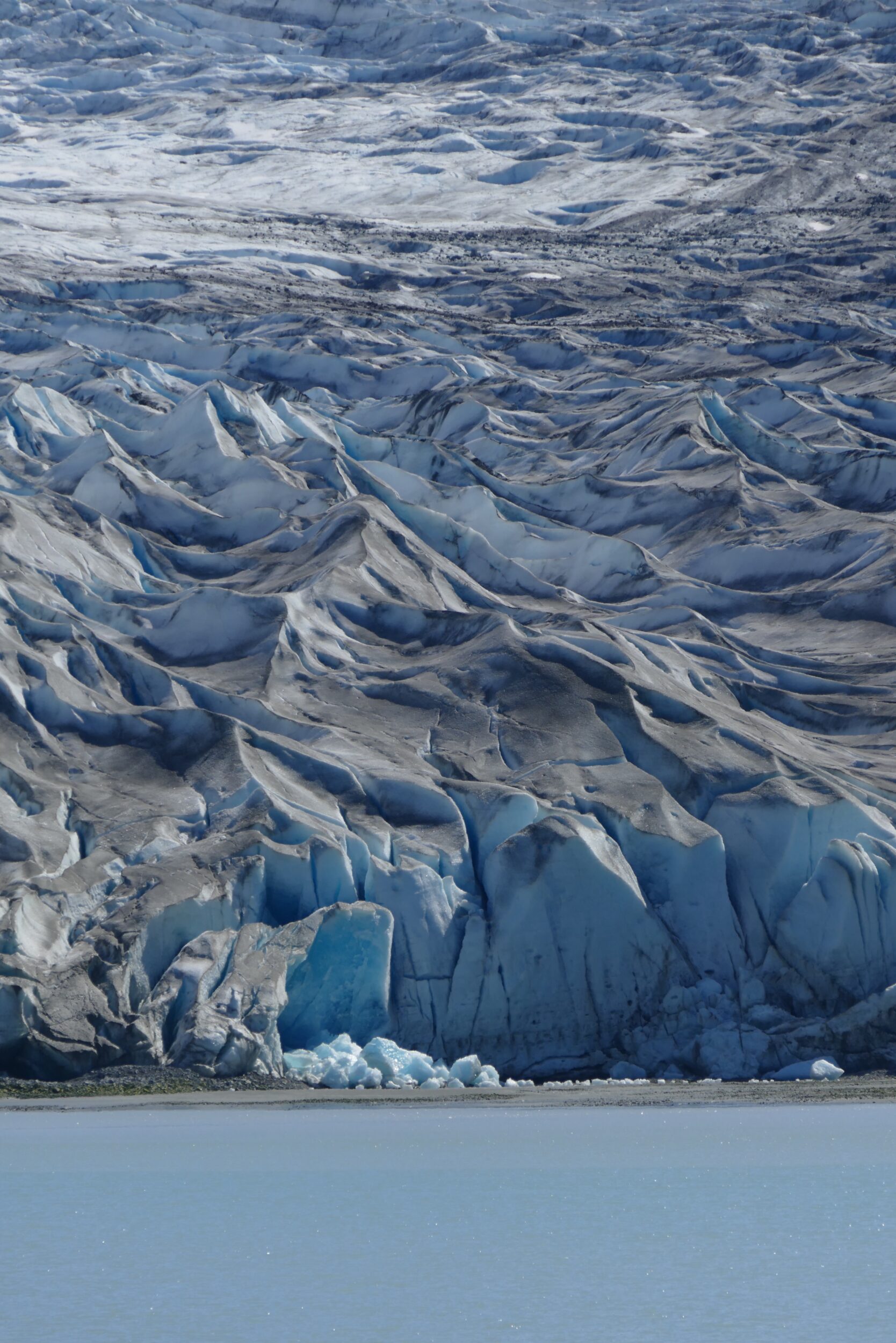
Now, have another look at the “4A”image, which shows all of this glacier’s snout, rather than a small portion thereof.
Comments closed
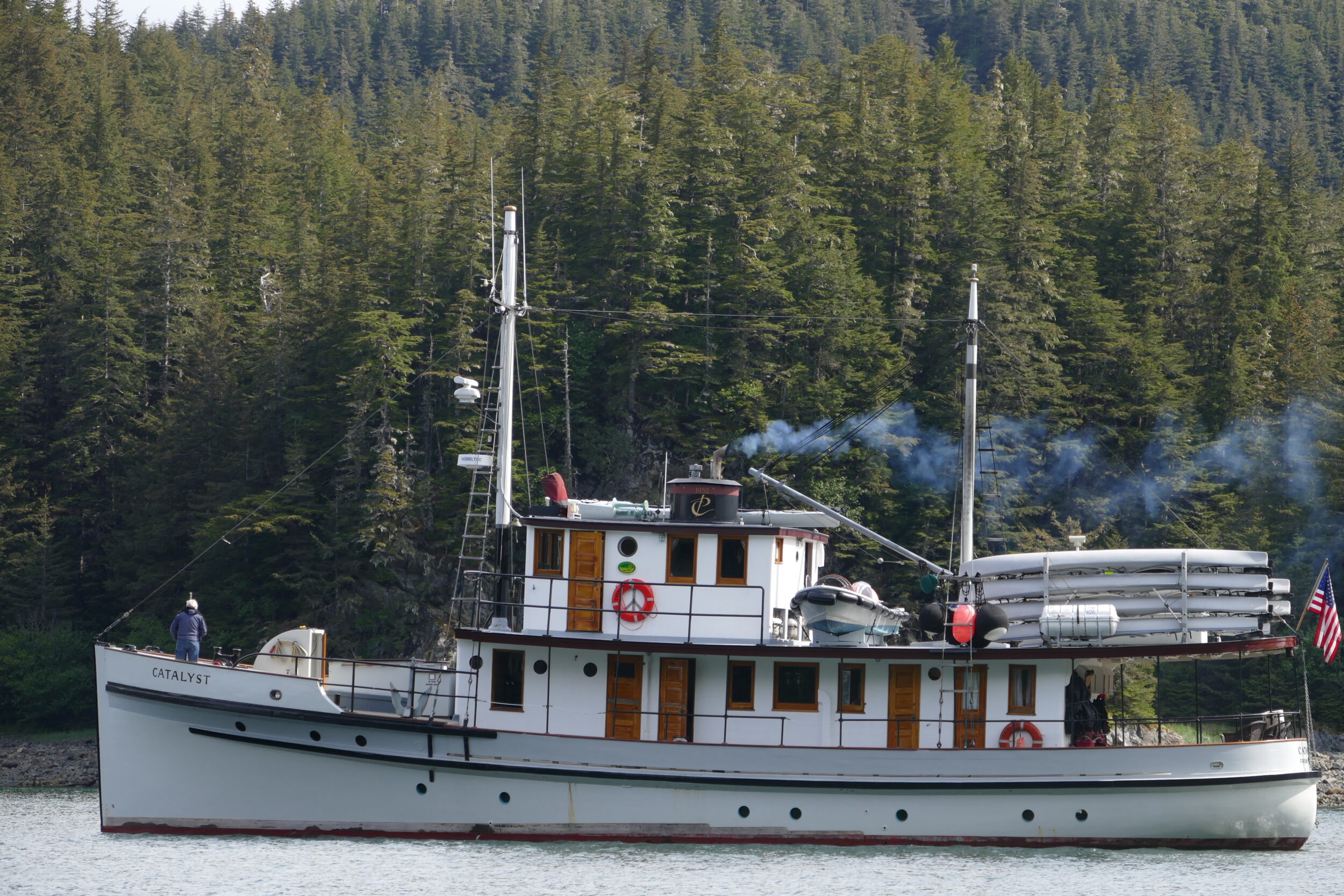
This series’ “4A” image was dominated by several square kilometres of a glacier, but also included what appeared to be a very small boat.
The very same boat is the obviously-substantial star of “4B”.
For eight nights and almost nine days my beloved and I were among the 16 people (12 passengers) who were comfortably accommodated and very well fed on MV Catalyst.
The boat also carried kayaks for us all, and towed the tender that speedily transported us to and from many of Glacier Bay’s glorious shores.
Comments closed
In some places and circumstances a human’s eyes and brain find it nigh-impossible to gauge just how close – or how far away – is whatever you are looking at, intensely.
The absolute (and relative) sizes of things – things-natural and things-manufactured by humans – can likewise remain an almost total mystery, until one is actually in or on the man-made thing, and/or within not very many metres of a landscape feature’s “face”.
One such place and circumstance: Alaska’s Glacier Bay, when “exploring” it by boat.
Comments closedChapter Two is international, and includes a musical bonus – audio of two of my favourite rain songs. (one of them is an “unissued” version)
Comments closedBest viewed after chapter one.
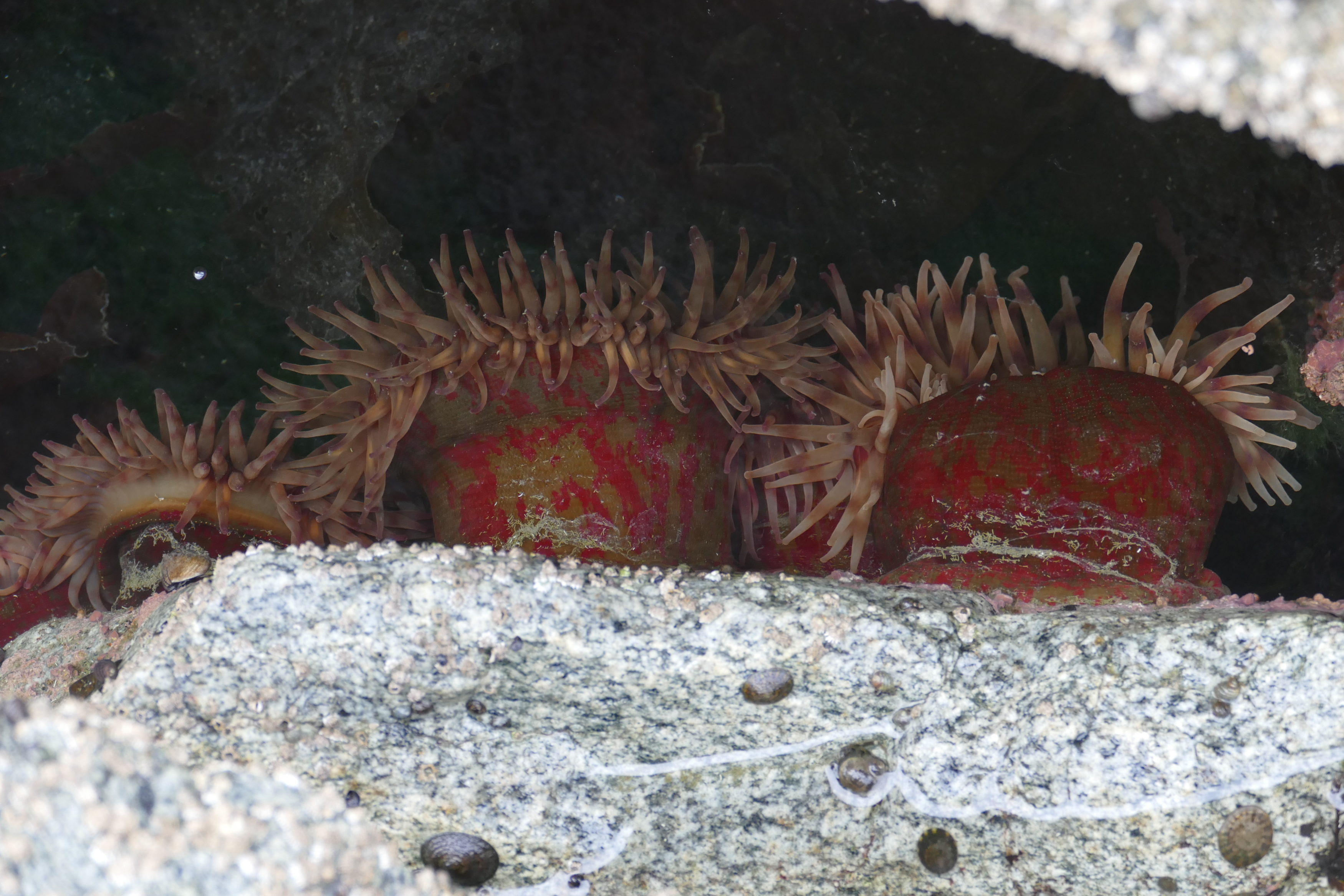
This post’s “stars” are named after terrestrial flowering plants, but sea anemones are carnivorous animals.
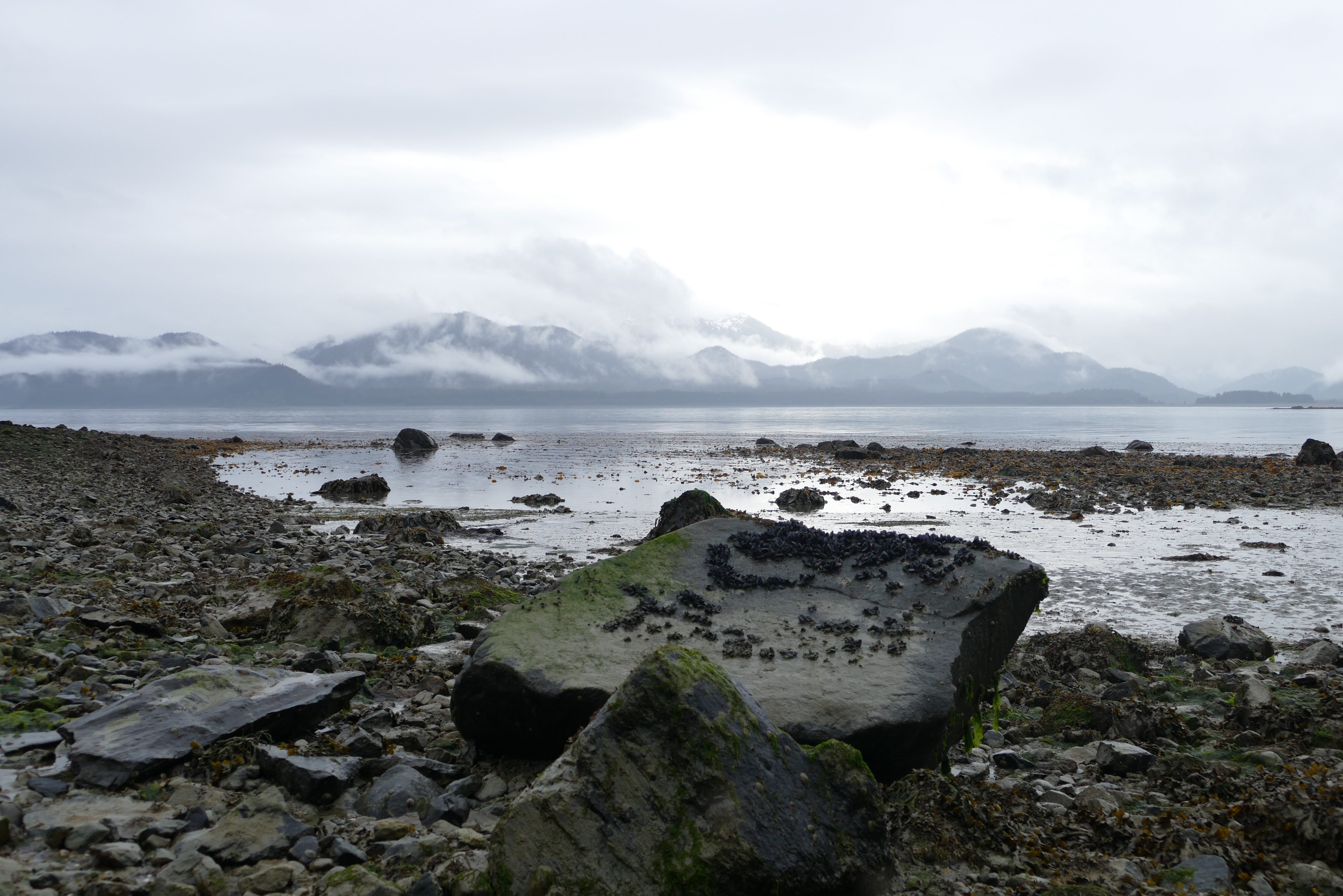
One CommentThis chapter looks at temporarily dry land. Chapter two – coming up in November – looks at softer things that cannot survive quite as far away from the low tide line.
One CommentAll photos copyright Doug Spencer, taken in or near Glacier Bay, southeastern Alaska, May/June 2015 – the first one from “our” sea kayak.
2 CommentsAll photos in this post were taken late May/early June 2015 in Alaska’s Glacier Bay National Park.
These Arctic Terns were perched on little bergs calved off the Margerie Glacier