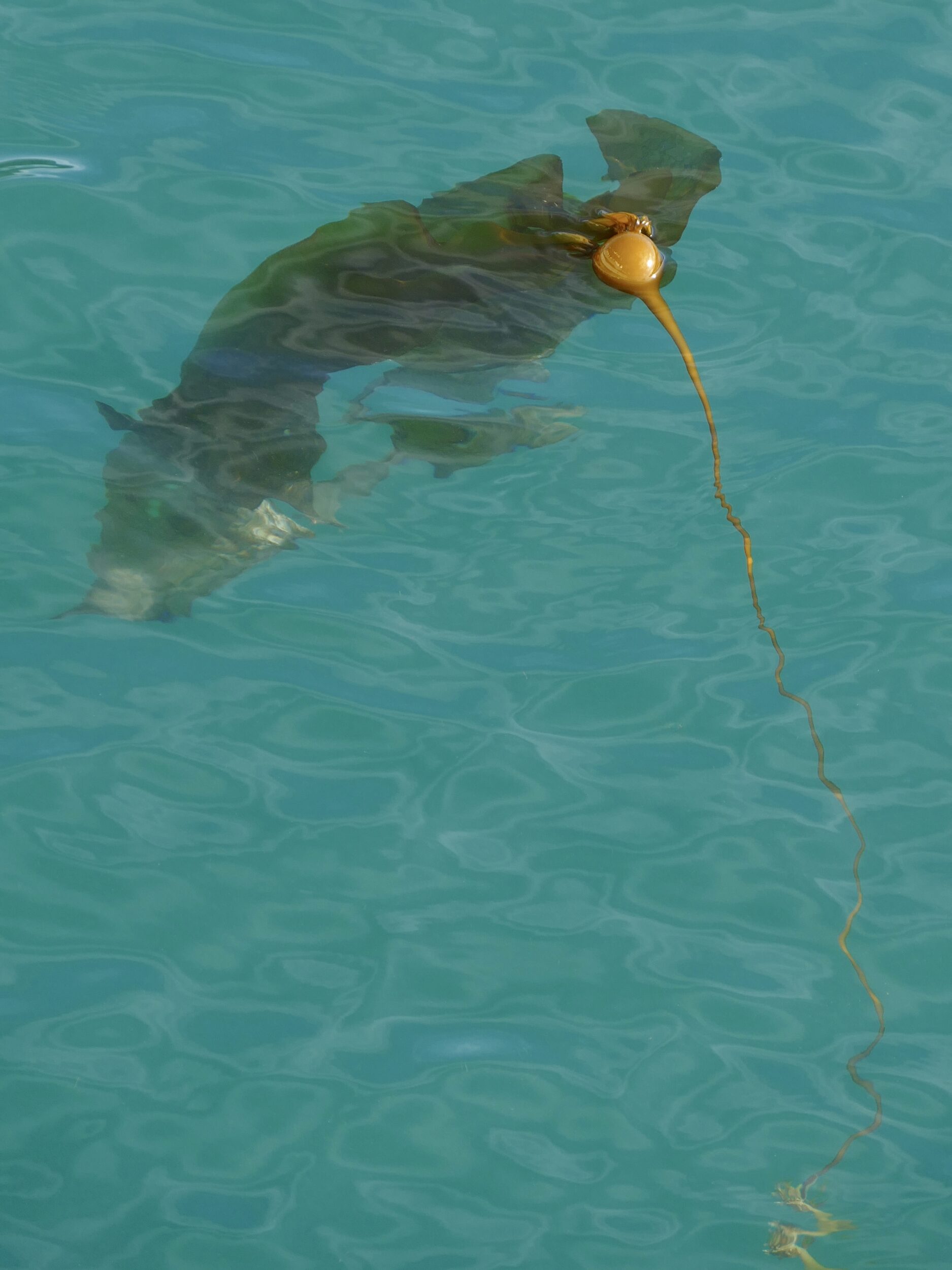
As was true of #41 in this series, I took the featured photograph in southeastern Alaska’s Glacier Bay in June 2015.
Unsurprisingly, kelp “forests” thrive there.
Kelps (and all other seaweed species) do photosynthesise, but – like all other algae – they are not plants.
Algae – even the towering “forests” of giant kelp – have no roots, nor any “complex” vascular structures.
As anyone who has harvested washed-up kelp from a beach knows, a single frond from a kelp “forest” can be massive – much too heavy to float.
So how does a kelp “forest” manage to stay upright, with its fronds positioned high enough in the water column to enable them to “harvest” the necessary sunlight?
You are looking at the answer.
Kelp species grow their own “buoyancy balloons”/“floats”, as explained here.
These gas-filled bladders are known as pneumatocysts.
The larger kelps have the biggest, most spectacular examples.
Click this to discover more, with particular reference to Glacier Bay.
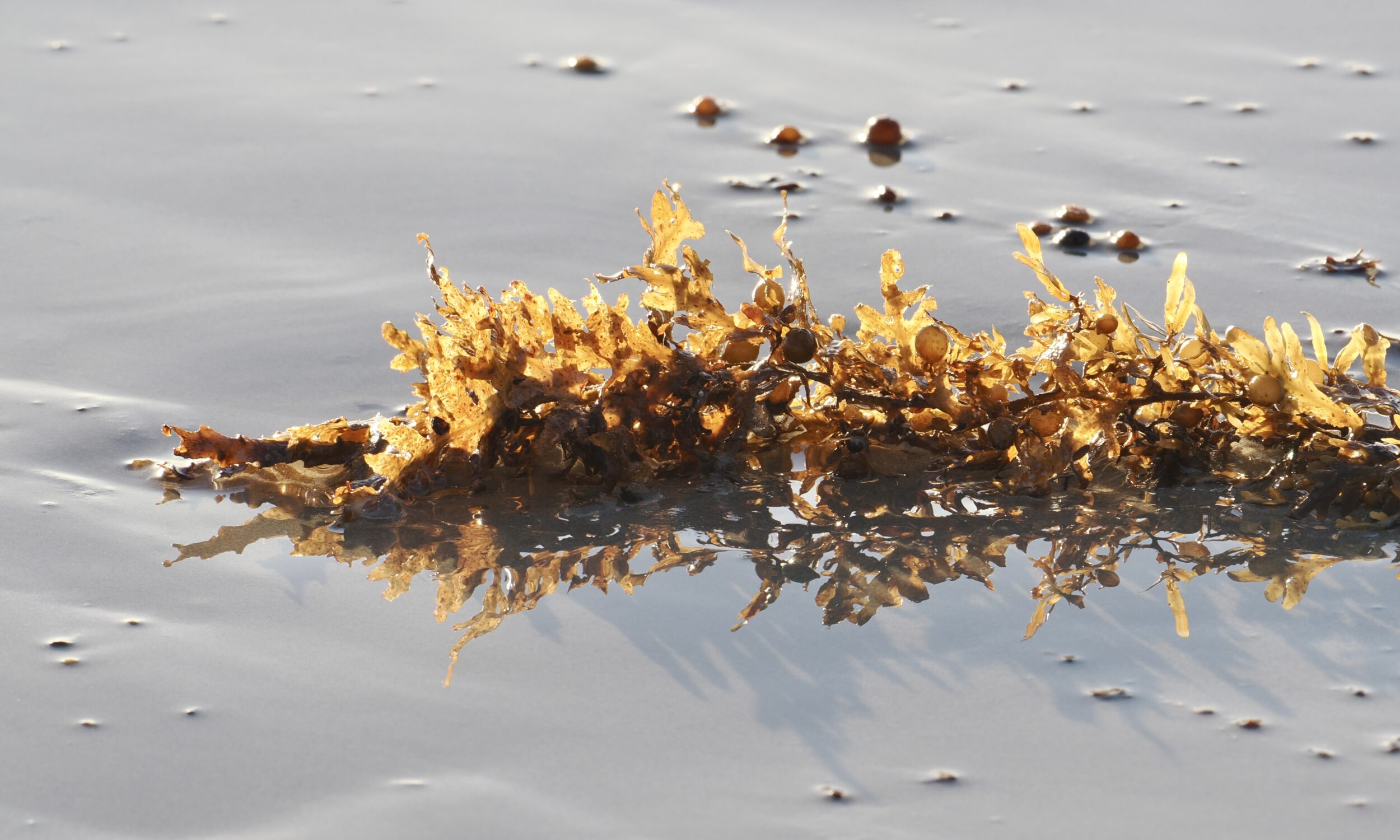
Most other so-called “brown” seaweed species use the same “trick”, in order to position themselves in the upper, sunlit part of the water column.
As illustrated below, those other, more modest-sized “brown” seaweeds grow smaller but more numerous pneumatocysts.