Skip to content →

Tag: Karakoram

Triple K “expedition” (#20 in teaser series: irrigation, Karakoram-style)


This post’s photo was taken less than one minute after the previous post’s.

For the “#19” image I was looking west-ish, back over my shoulder, and up.

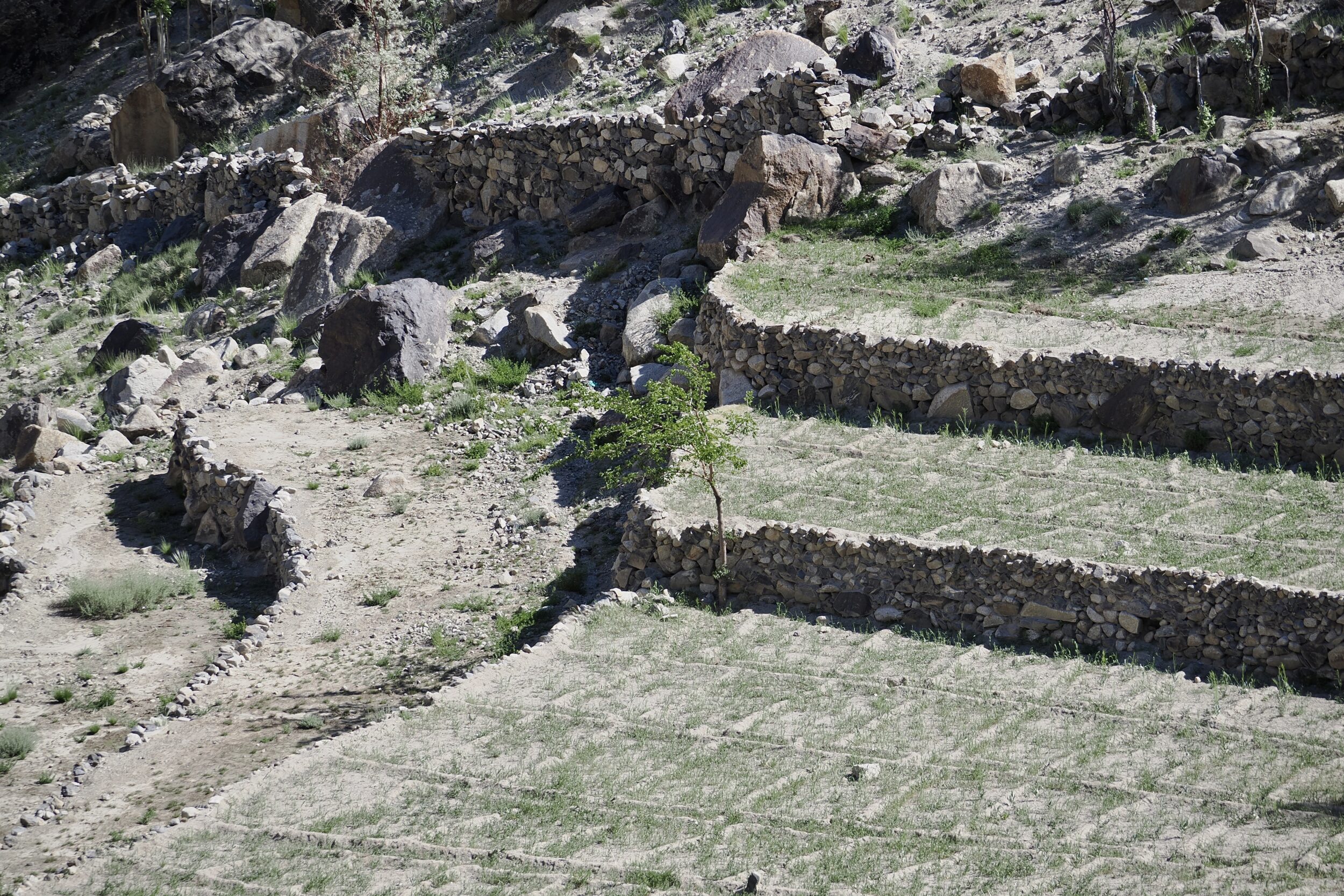
For this post’s photo I looked ahead – east-ish, downhill, and over to the other (non-Indus) side of the road.

Most of Gilgit-Baltistan’s substantial settlements – and agricultural land – are in relatively low places, near rivers that run along the “floors” of deep Karakoram valleys.

Generally, these are places where very little rain falls; often, the average annual total is below 100 mm.

The actual total is hugely variable, from one year to another.

Arable/potentially-arable land is very scarce.

All local agriculture is irrigation-dependent, and requires a prodigious amount of maintenance, almost all which is done manually.

Comments closed
Triple K “expedition” (#19 in teaser series: Karakoram)


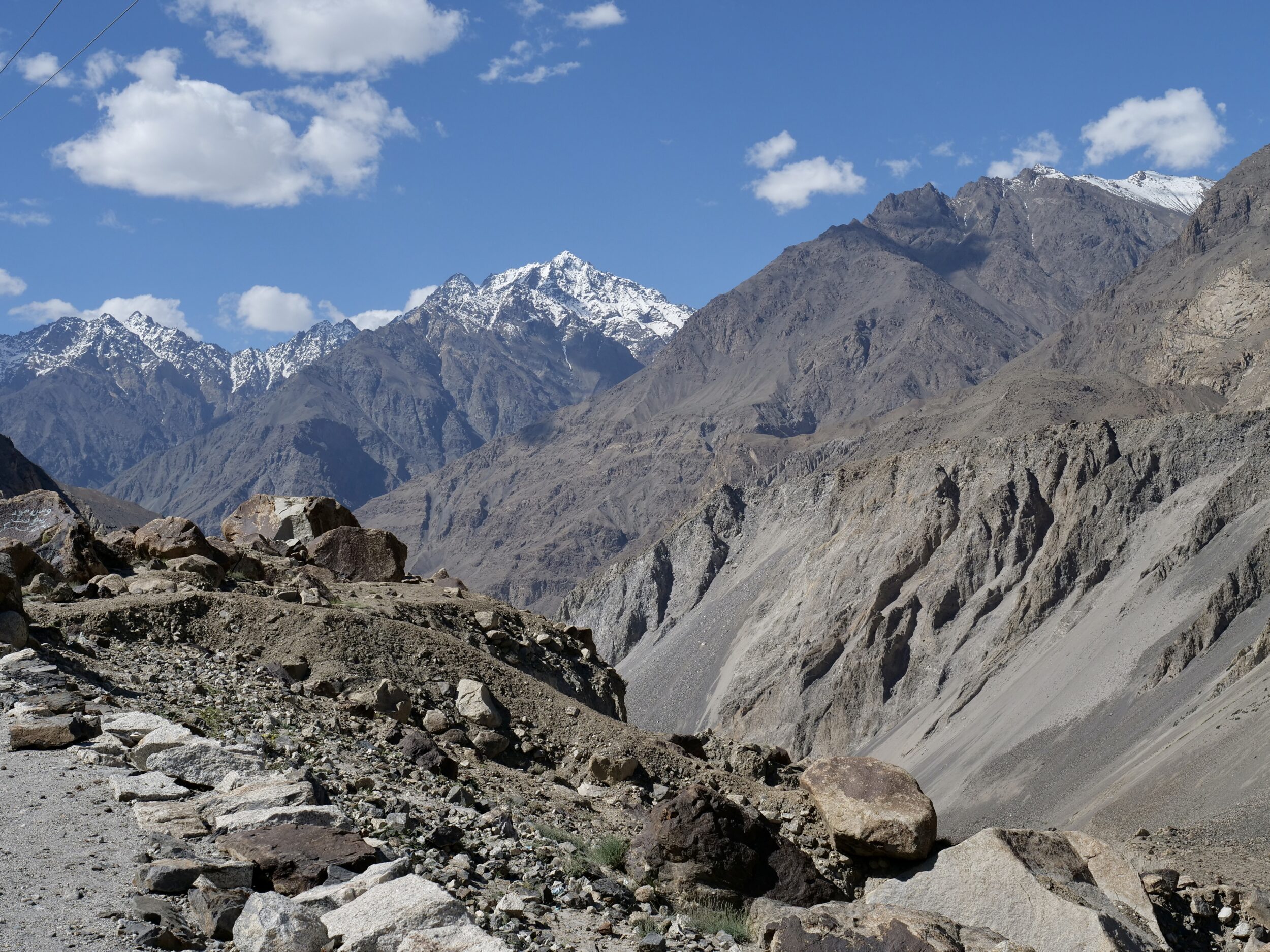
Just before 3pm on 15 May 2024, circa 90 minutes after we left Shangrila Resort, we were roughly halfway through our drive from Skardu to Khaplu.

We stopped for a few minutes, to stretch our legs and “take in” the landscape; in this part of the world it is only very occasionally possible – let alone relatively safe – for a vehicle to stop and park.

By “normal”/global standards, the landscape around/above/below us was “epic”, prodigiously vertiginous, and strikingly stark.

By Karakoram standards, however, it was merely “typical”; my photographic vantage point was not a signposted “lookout”, nor a celebrated “beauty spot”.

Comments closed

Triple K “expedition” (#18 in teaser series: crash-landed, then reborn – as a cafe)


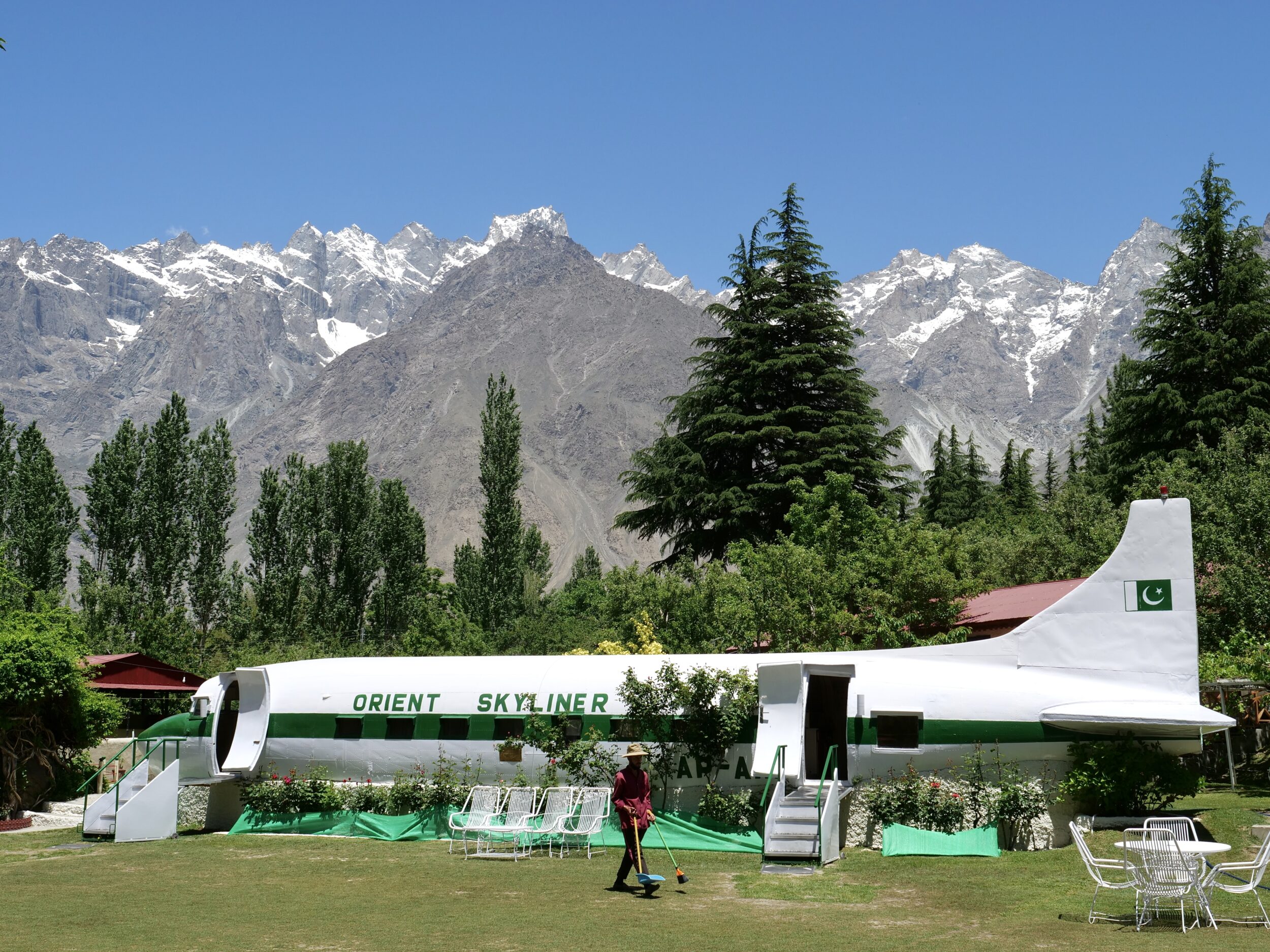
Fixed-wing aircraft have never been able to land at the spectacularly-sited Shangrila Resort.

Nonetheless, one such passenger plane is there, and has for many years been one of the resort’s signature features.

Circa 30 minutes driving distance from Skardu, the resort has a heart-shaped lake, faux-Chinese buildings, and landscaped gardens – all of which are dwarfed by the surrounding Karakoram peaks.

Its most incongruous “attraction” is the resort’s cafe: a 1947-vintage Douglas DC-3.

Comments closed

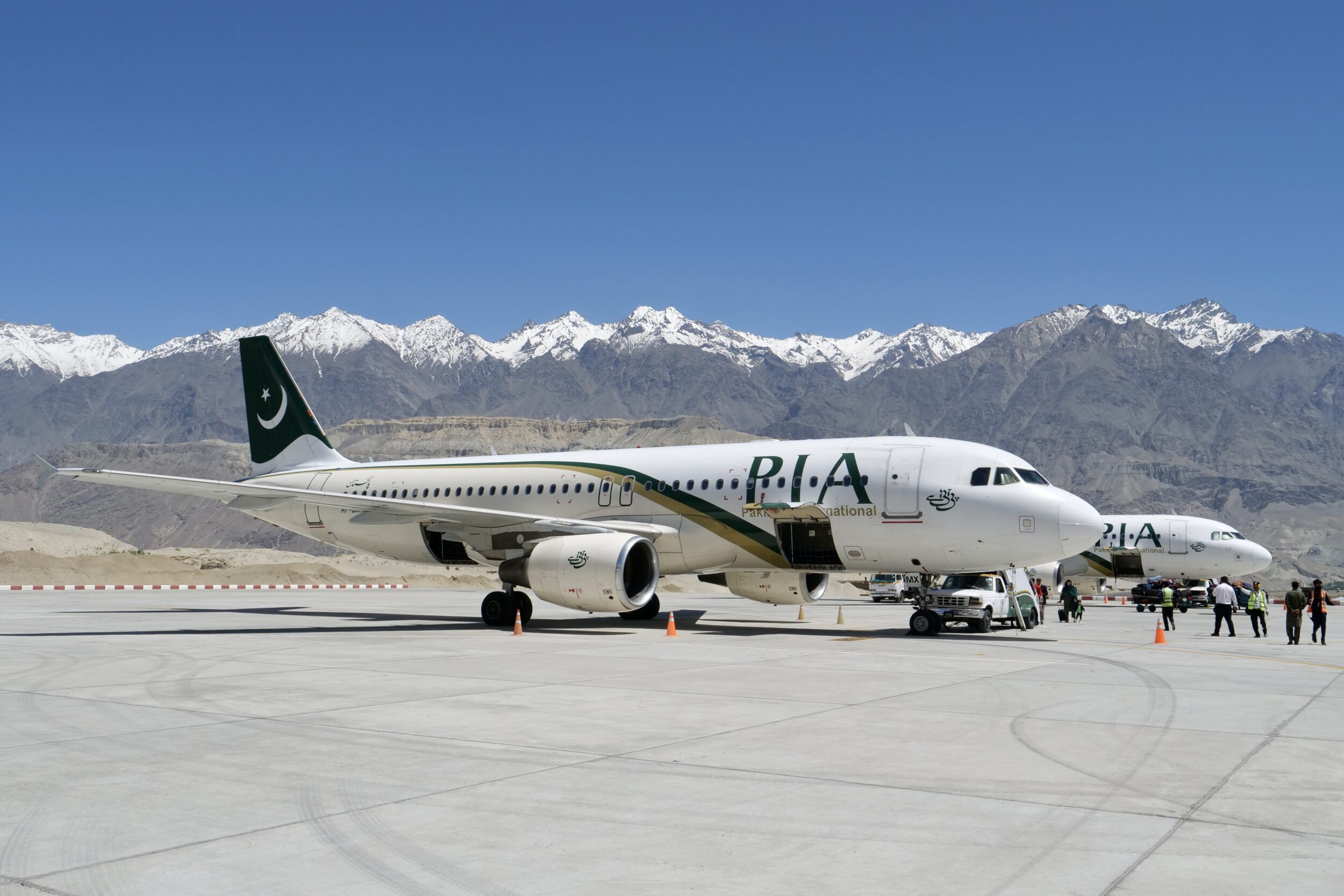
Triple K “expedition” (#17 in teaser series: Skardu “International” Airport)


For most of its visitors, Skardu is the “gateway” to the Karakoram – the world’s second-highest mountain range.

Arguably, the Karakoram is even more spectacular than the Himalaya; having experienced both, I reckon the Karakoram takes the metaphorical “biscuit”, handsomely.

All fourteen of the world’s  “recognised” 8,000 metres+ peaks are in either the Himalaya or Karakoram; my beloved and I have seen at least six of them.

Most of the Karakoram is in Pakistan’s Gilgit-Baltistan region.

At 2,230 metres ASL, Skardu’s airport sits just slightly above the bottom of a deep valley.

The pictured tarmac is two metres higher above sea level than is the Australian continent’s highest peak.

Comments closed

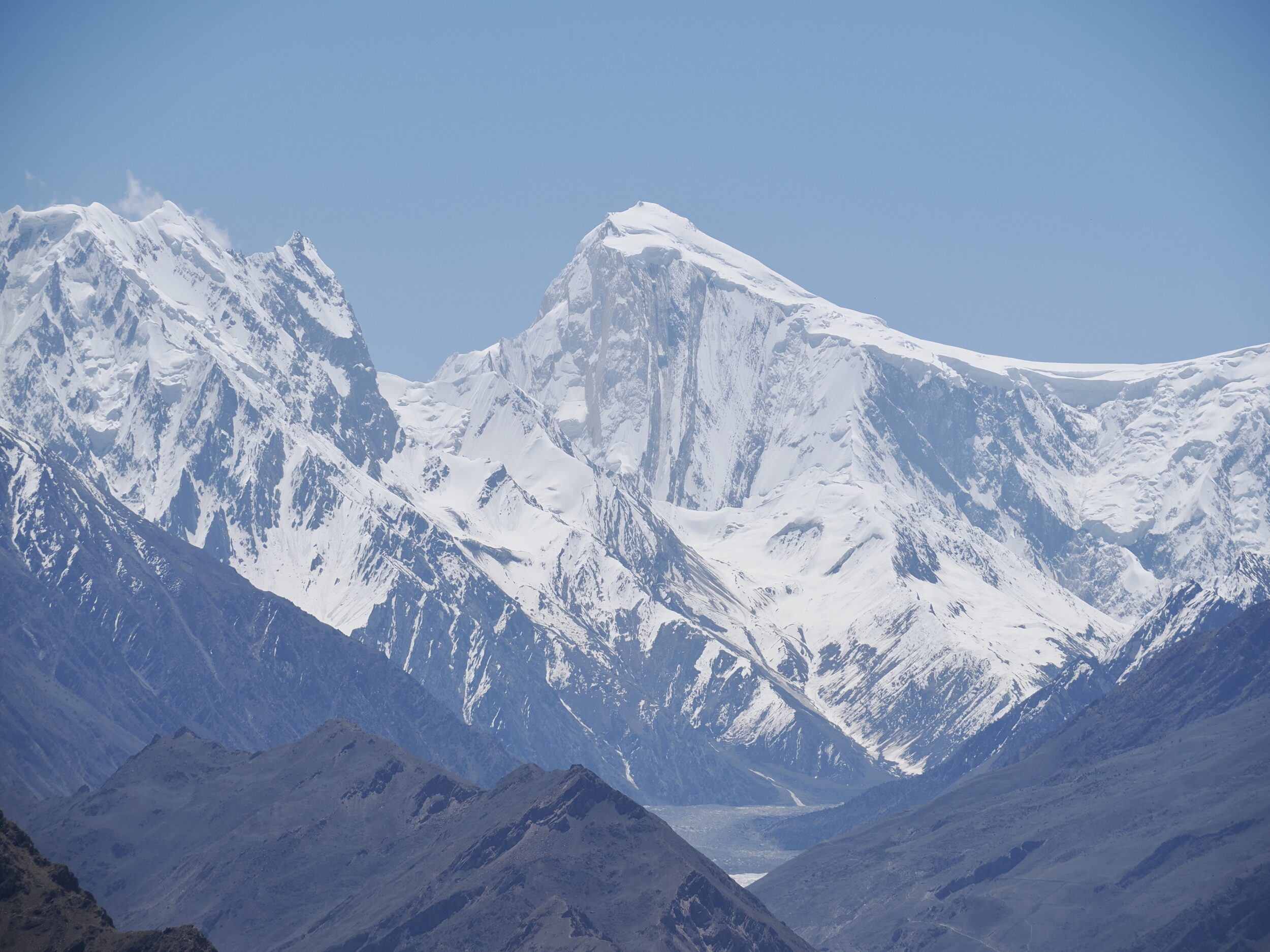
Triple K “expedition” (#1 in teaser series: a relatively modest mountain)


Spantik (aka “Golden Mountain”) soars 7027 metres above sea level.

It is rather more than three times higher than the Australian continent’s highest peak.

In the Karakoram, however, many mountains are mightier than Spantik.

Pakistan has 108 peaks that exceed 7000 metres!

We are just-returned from an unforgettable trip which began in Delhi and concluded in Beijing.

Primarily, however, it was focused on Kashmir, the Karakoram and Kashgar.

Comments closed