Skip to content →

Tag: Karakoram

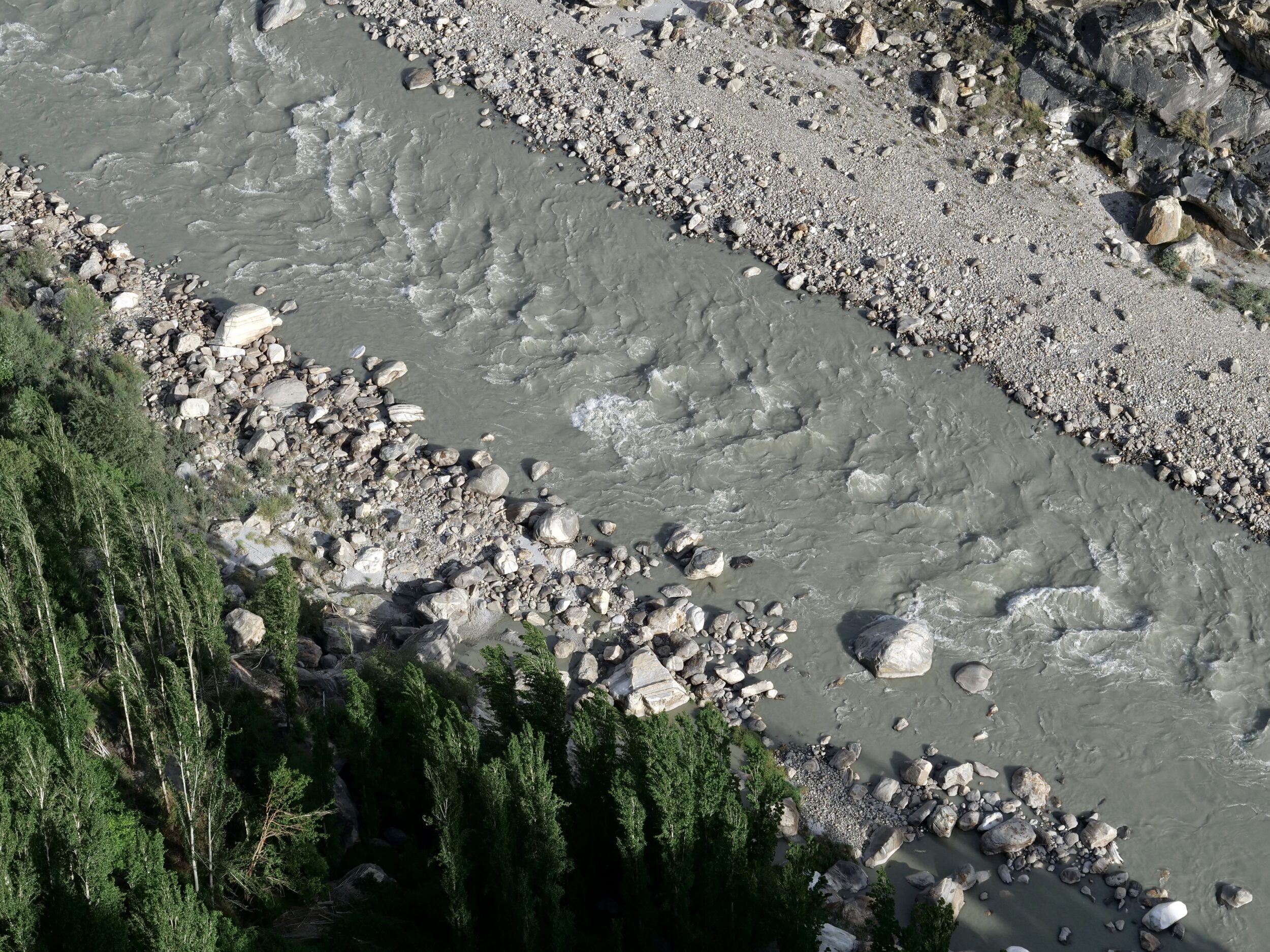
Looking down (#47 in series: on Pakistan’s Hunza River)


The photo above looks down from Atilt Fort’s ramparts to the Hunza River.

Discover more here; more than one thousand years old, the now well-restored fort is the oldest “monument” in Hunza.

The Hunza River is part of the Indus River’s catchment.

Wherever one looks in the Hunza Valley, the vistas are almost unimaginably “epic”.

Among viewpoints that are easily-reached, those on the lower of the Hunza Valley’s almost-parallel rims are especially stupendous, particularly when no clouds obscure any part of its higher rim…and the most colossal of the mountains which tower above it.

At 7,778 metres, Rakaposhi’s is “only” this planet’s 27th highest-altitude peak.

However, as its Wikipedia entry declares:

The mountain is extremely broad, measuring almost 20 kilometres (12 mi) from east to west. It is the only peak on earth that descends directly and without interruption for almost 6,000 meters from its summit to its base.

Leave a Comment

Looking down (#46 in series: on Pakistan’s Shyok River)


Arguably, the world’s most dramatic alpine scenery is in northern Pakistan.

Distinct from the Himalaya-proper, the Karakoram includes the world’s second highest mountain, plus many other peaks which are handsomely more spectacular/imposing than is Everest.

The Karakoram’s rivers are incredibly dynamic, constantly reshaping their valleys.

Essential to human life in this very demanding environment, these rivers also kill people and destroy many man-made structures..

Above and below, you are looking at the Shyok River, several kilometres upstream of its confluence with the Indus.

The Indus drains almost literally all of Pakistan.

Leave a Comment

Looking down (#40 in series: on one of the darkest & fastest of its kind)


The featured image was not shot in monochrome.

Its colour palette is accurate; if my camera had looked straight up rather than almost straight down, the image would have largely been blue, flecked with white and grey.

I took the photo in a “remote” part of northern Pakistan’s Gilgit-Baltistan province in May 2024.

What appears to be a rock is a rock; I have no idea of its mass, but am sure it would weigh at least several tonnes.

In the context of the relevant valley, however, that rock is a speck!

Leave a Comment

Grand sands (#11 in series: “River of Death”)


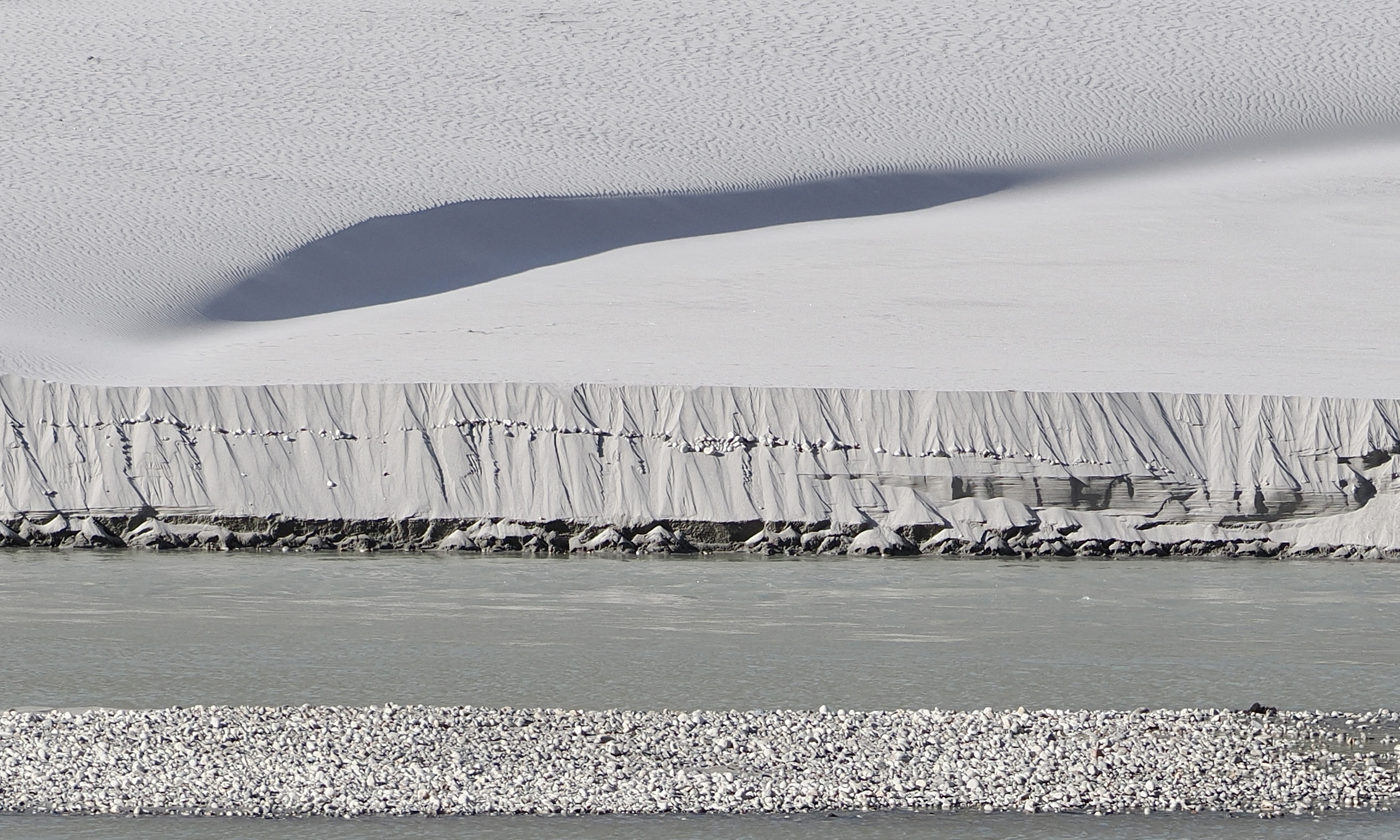
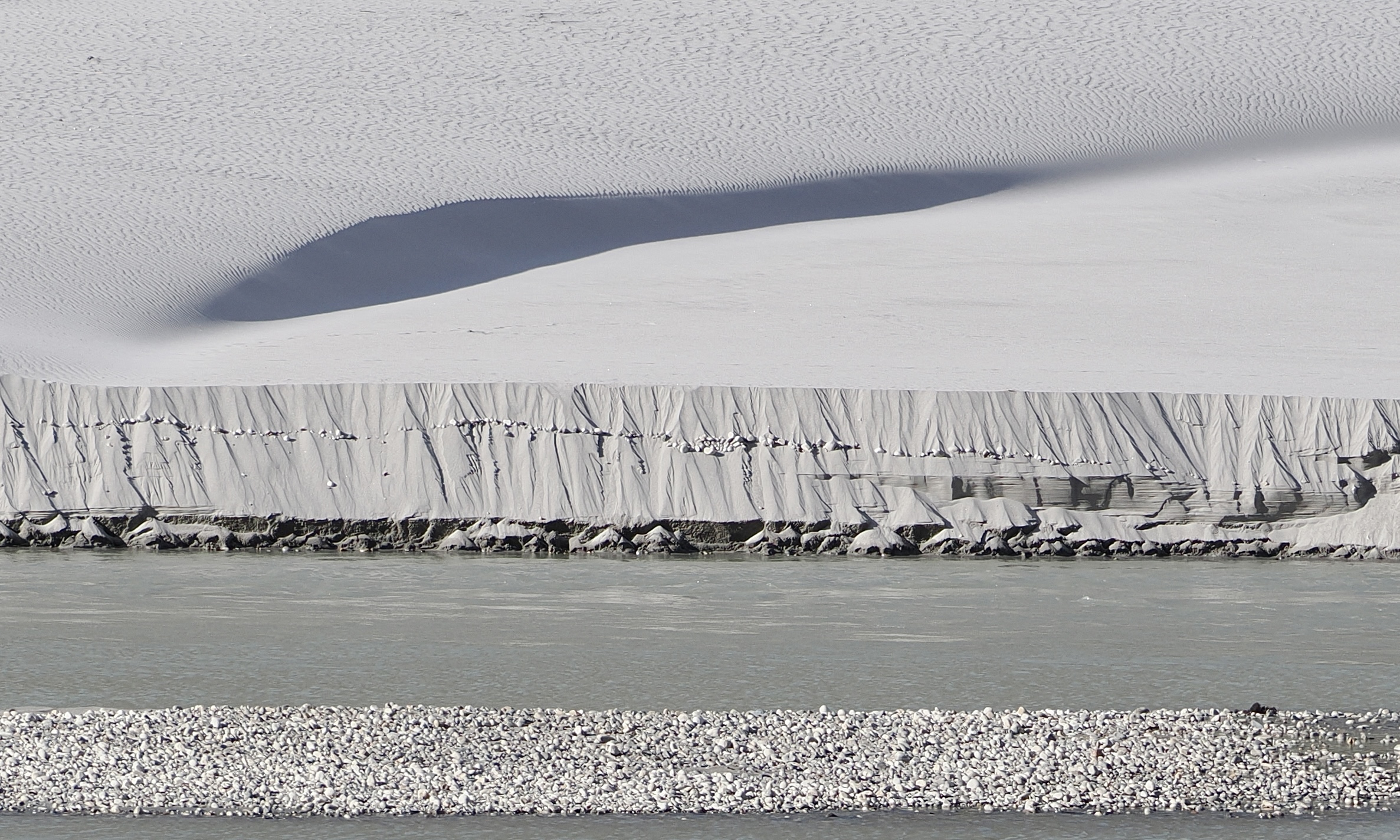
As in #10 in this series, you are looking at a photo which illustrates the power of the Shyok River.

By road, we were now 35 minutes further upstream, closer to Khaplu.

At 4.49 pm on 15 May 2024, the fast-flowing, largely glacier-fed river’s flow was relatively low.

The Shyok’s width, depth and flow-rate are hugely variable; the river transported and deposited all of the photograph’s silt, sand, gravel and rocks.

My telephoto lens zoomed in on just a very small portion of what my naked eyes could see in a single glance, with head still.

One translation of the Shyok’s name: river of death. 

Its floods have killed many people, drowned trees and crops too, and destroyed/removed many formerly-arable fields, even some of the houses that had been built above and behind the fields, on what used to be “safe” ground.

Comments closed

Grand sands (#10: a glorious sandy shore, sans sea)


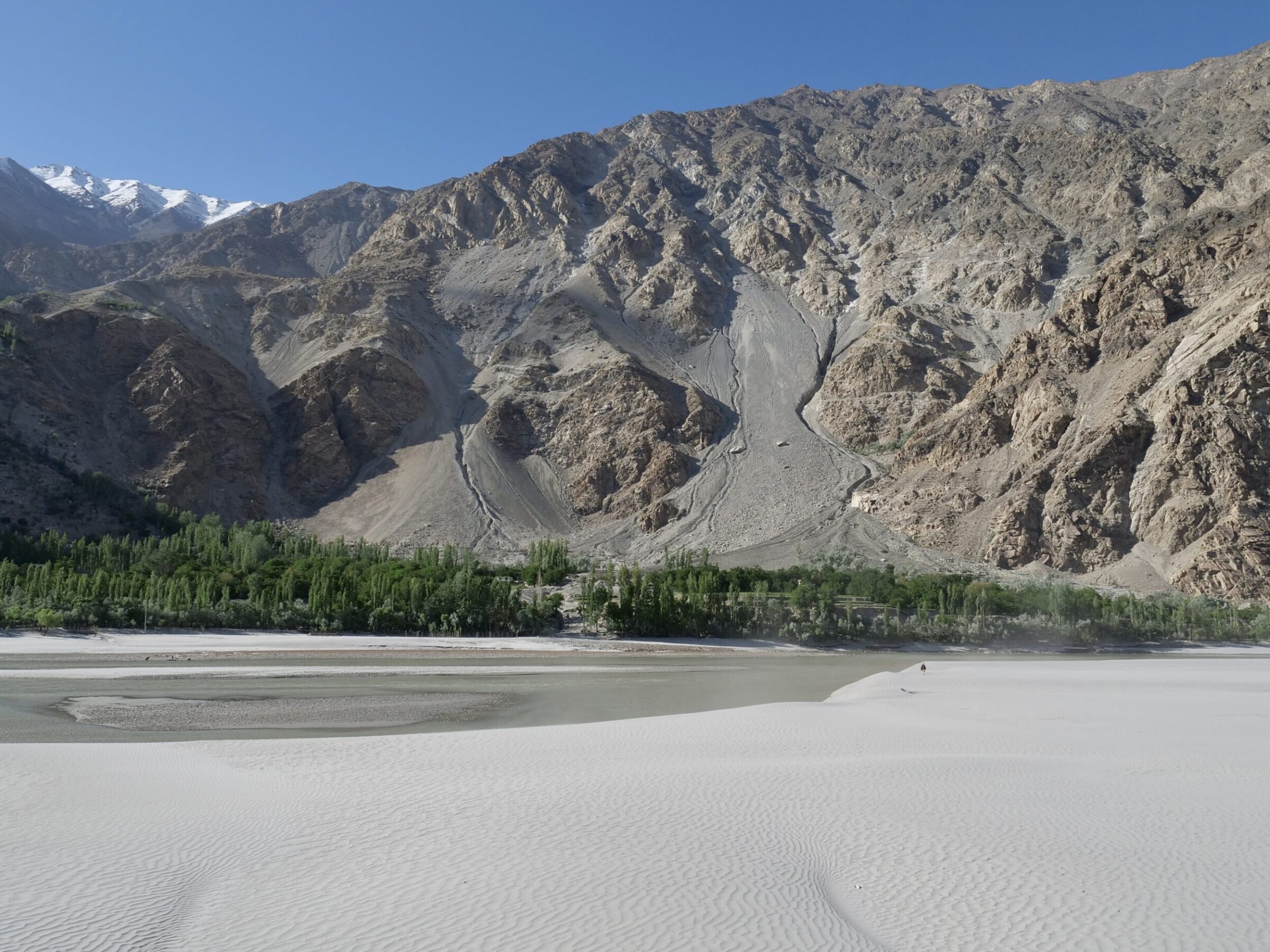
“Rippled sand + moving water + rock” is one of my favourite natural “recipes”, especially when other humans and human-made structures are not part of the “mix”… or are only a tiny, discreet element.

“Remote” ocean beaches are not the only places that offer such delight.

The pictured location is much more than 1,000 kilometres straight-line-distant from any ocean shore – and there is absolutely no “straight line” (let alone “same-day”) transport route to one.

By definition, when a river flows through a valley that bears its name, that river’s bed is the lowest ground within the local landscape.

The pictured low spot – just a little upstream of where this river flows into one of the world’s most significant rivers – is more than 2,700 metres above sea level.

Comments closed

Triple K “expedition” (#35 in teaser series: heading for the border)


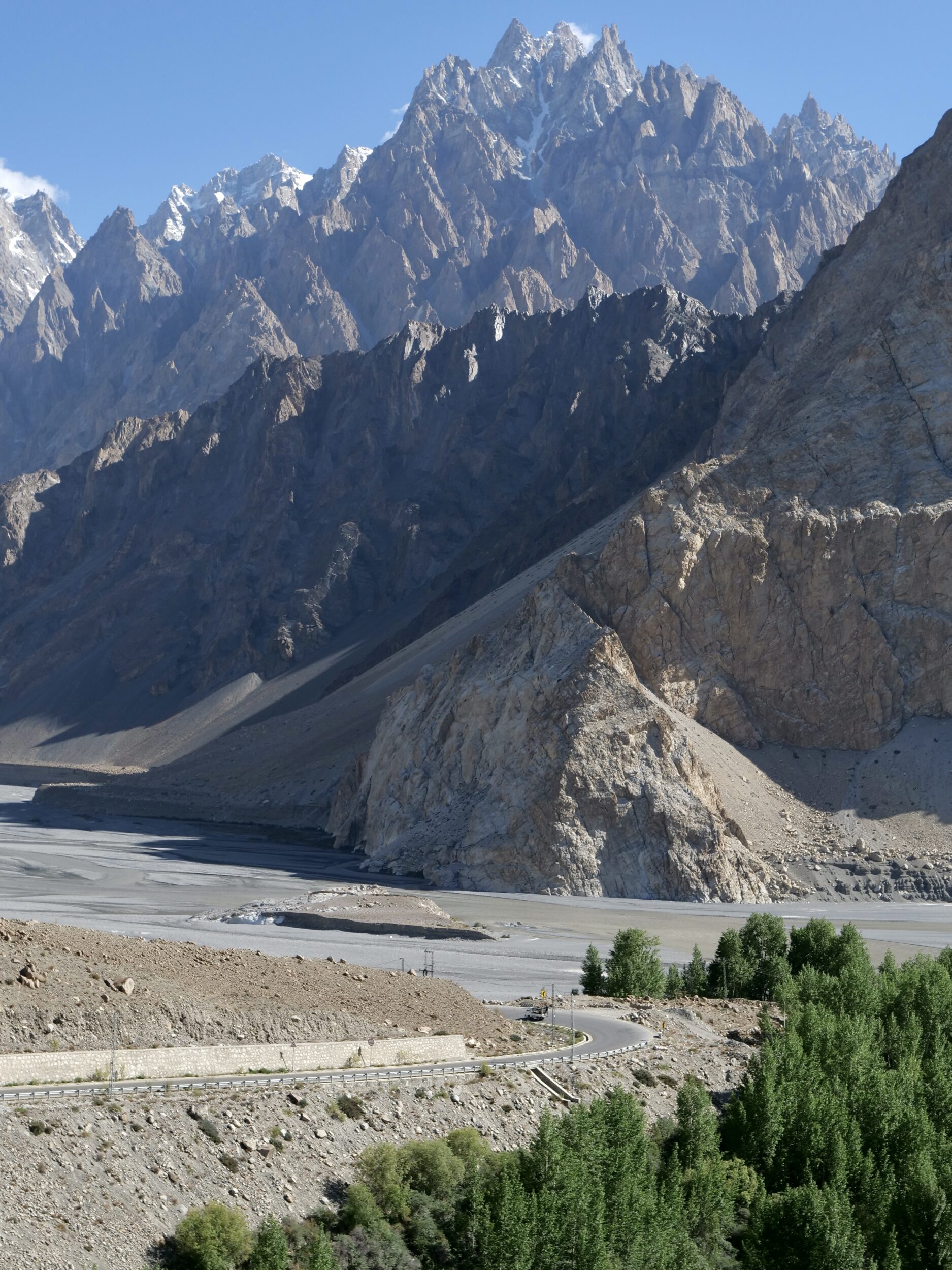
You are looking at the Passu Cones, aka “Passu Cathedral”, or Tupopdan.

These “cones” reach 6,106 metres ASL – a relatively modest altitude, by Karakoram peaks’ standards.

Nonetheless, the Passu Cones are among the more amazing mountains, anywhere.

I took the photo at 8.09 am on 23 May 2024; we had left the Hunza Valley one hour earlier, and were heading along the Karakoram Highway, bound for China.

At that moment the Pakistan/China border was less than 70 kilometres away, but a long way up; the border crossing sits atop the Khunjerab Pass.

Comments closed

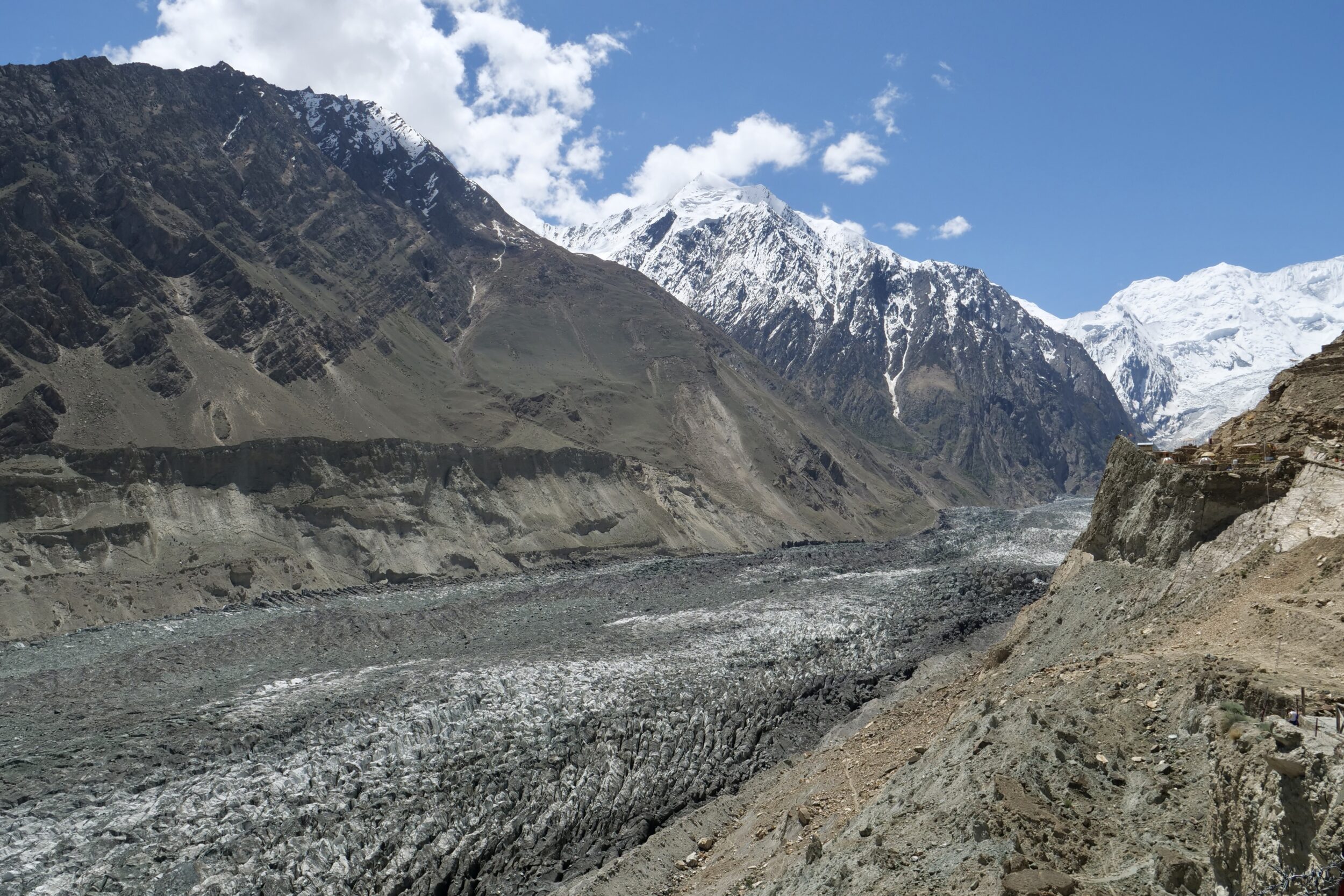
Triple K “expedition” (#34 in teaser series: Hoper Glacier)


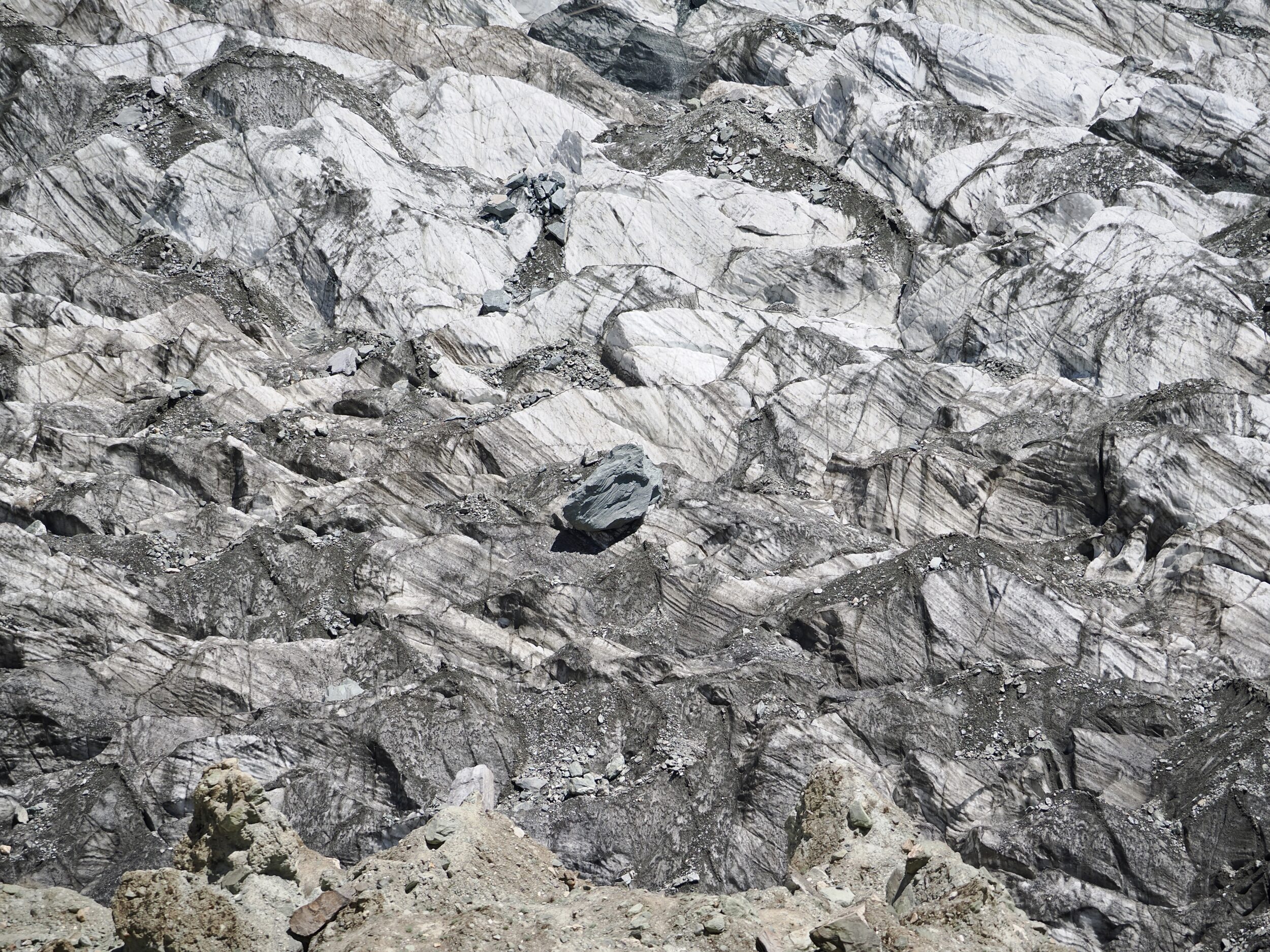
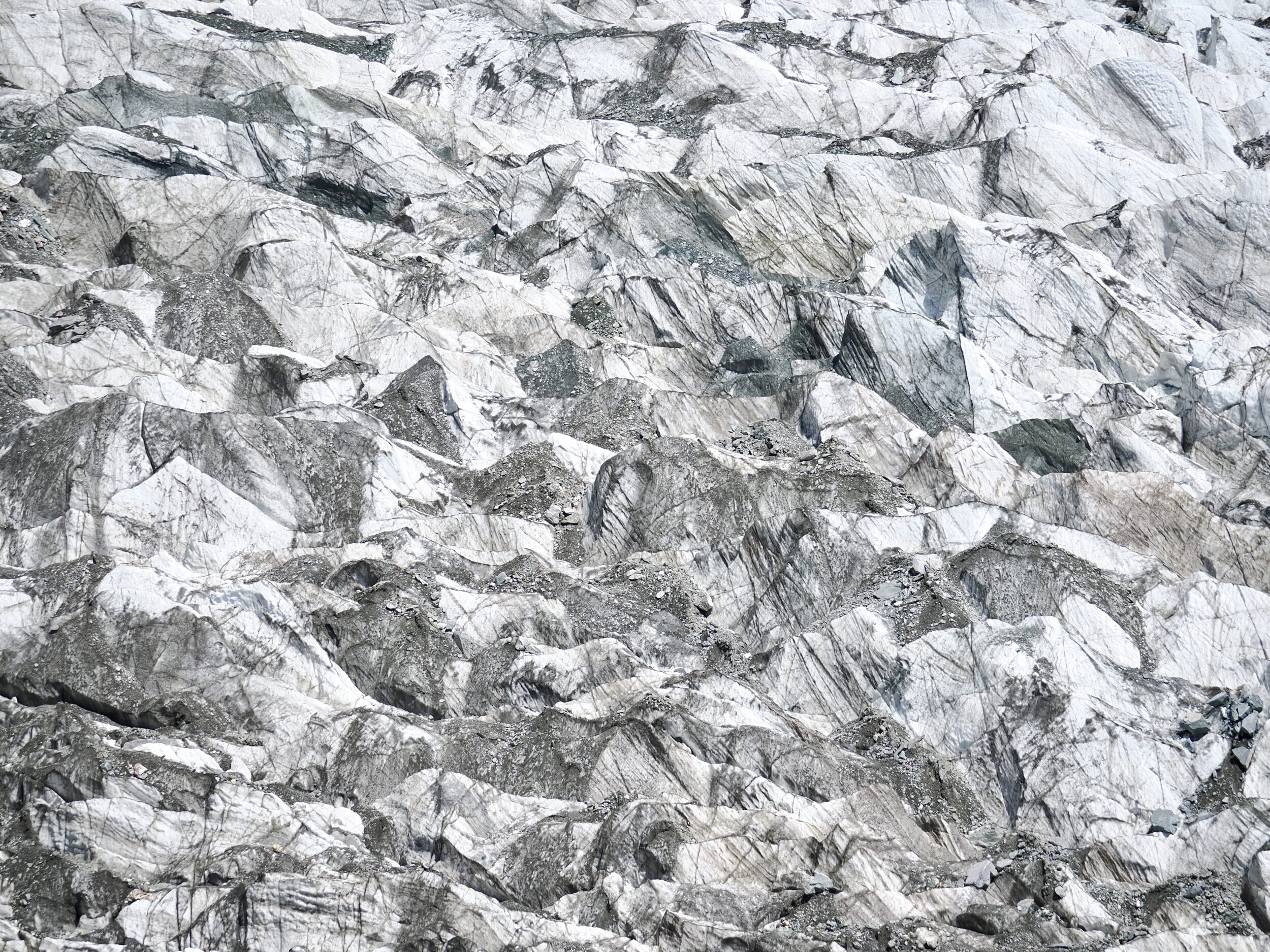
This post reveals the nature of what #33 in this series was also looking at – a glacier’s surface.

This post shows rather more of the same glacier, which is one of circa 7,000 in Pakistan.

Outside polar and near-polar regions, northernmost Pakistan is the most-glaciated place; the Karakoram has several of the world’s longest and biggest, non-polar “rivers of ice”.

You are looking at what is most commonly known as the Hoper Glacier, but sometimes rendered as “Hopper”, “Hopar” and “Hooper”.

It also has another name, altogether: Bualtar Glacier.

Its nickname: “the black glacier”.

Reportedly, the Hoper/Bualtar is currently the world’s second-fastest-moving glacier.

Comments closed

Triple K “expedition” (#33 in teaser series: an artist’s creation?)


…or is that very uneven surface a naturally-eroded rock face?

Did I take the photo through a microscope?

Was I merely a few centimetres away from what my camera “captured”?…or many metres distant?

All will be revealed in this series’ next chapter.

Comments closed

Triple K “expedition” (#32 in teaser series: Hunza Valley)


Among “our” planet’s “settled” places,  the Hunza Valley has very few peers in the “visual splendour” department!

It will get a deal of future attention, here.

However, this “teaser” series has just the one Hunza Valley image.

I took it from Eagle’s Nest which sits 2,850 metres ASL – around 500 metres higher than the (clearly-visible) Hunza River, on the valley floor.

Dominating the photo’s skyline is Rakaposhi; that huge mountain’s peak stands nearly five kilometres taller than the Eagle’s Nest.

Comments closed

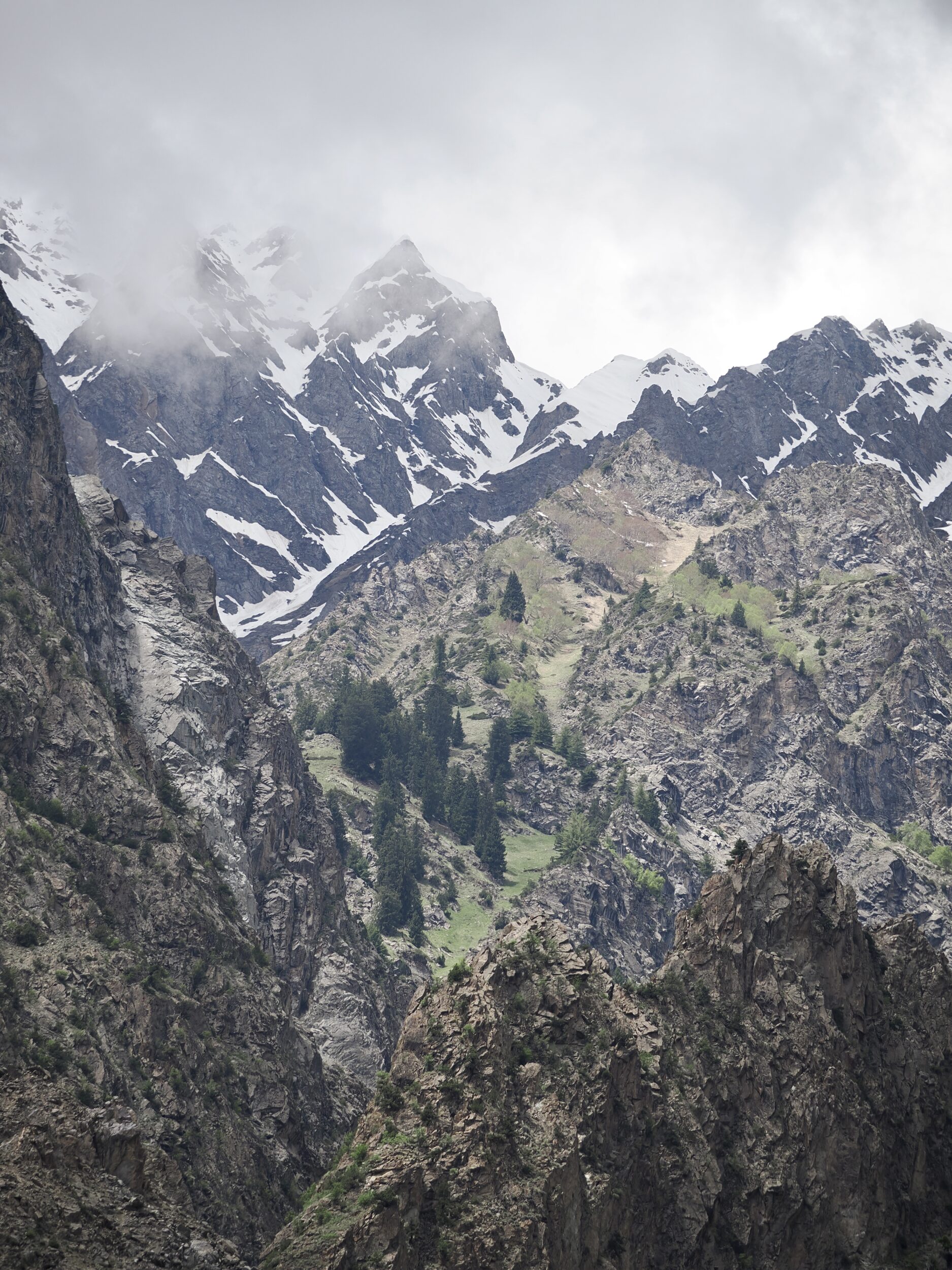
Triple K “expedition” (#31 in teaser series: Karakoram mountain meadows + musical bonus & concert tour alert)


This post’s image does not at all resemble #30’s shot of a “Silk Road” remnant.

Its vantage point, however, was only a few footsteps distant from #30’s; #31’s photo was taken less than a minute later, from the same side of the Karakoram Highway, whilst en route from Gilgit to the Hunza Valley.

Comments closed