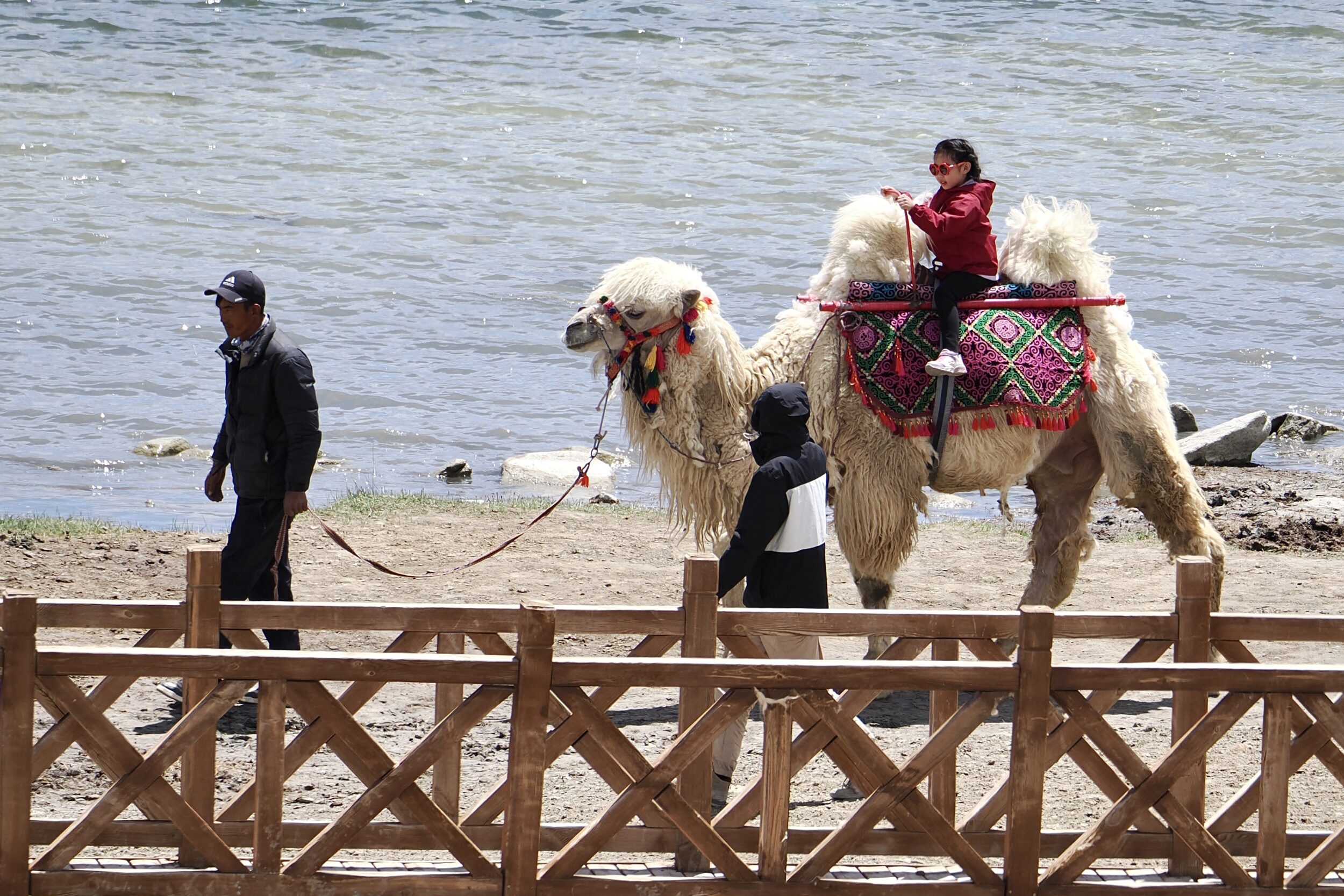
The lake’s gentle shoreline is circa 3,960 metres above sea level – a deal higher than New Zealand’s highest peak.
Circa 190 kilometres west of Kashgar, Xinjiang’s Karakul Lake is probably the most-visited location by tourists who travel the Chinese section of the Karakoram Highway; it offers tented accommodation, al fresco dining with jaw-dropping vistas, and lakeside rides on horses and camels.
The pictured Bactrian camel was nowhere near the upper end of its altitude range; in both military and civilian capacities some are currently working very effectively at well above 5,000 metres.
Camelus bactrianus has become almost entirely a domesticated, “working” species; its circa two million individuals comprise just six percent of the world’s living camels.
The wild Bactrian camel – Camelus ferus – is an entirely separate species, not “descended” from Camelus bactrianus.
Wild Bactrian camels are a declining, endangered species, found only in remote parts of Mongolia and China. It is believed they now number fewer than one thousand individuals.
Camelus bactrianus Is widespread, across central Asia’s high steppes.
Its range extends west to Turkey.
An adult Bactrian camel is very much larger than a dromedary; across their “home turf”, Bactrian camels are the largest local mammals.
Bactrian camels have a prodigious ability to survive both extreme temperatures and very infrequent opportunities to drink. Discover more here.
I took the photo on 24 May 2024.
Comments