Skip to content →

Category: Western Australia

October 30 2023: Darling Range flora, “up close” (#1 in series)


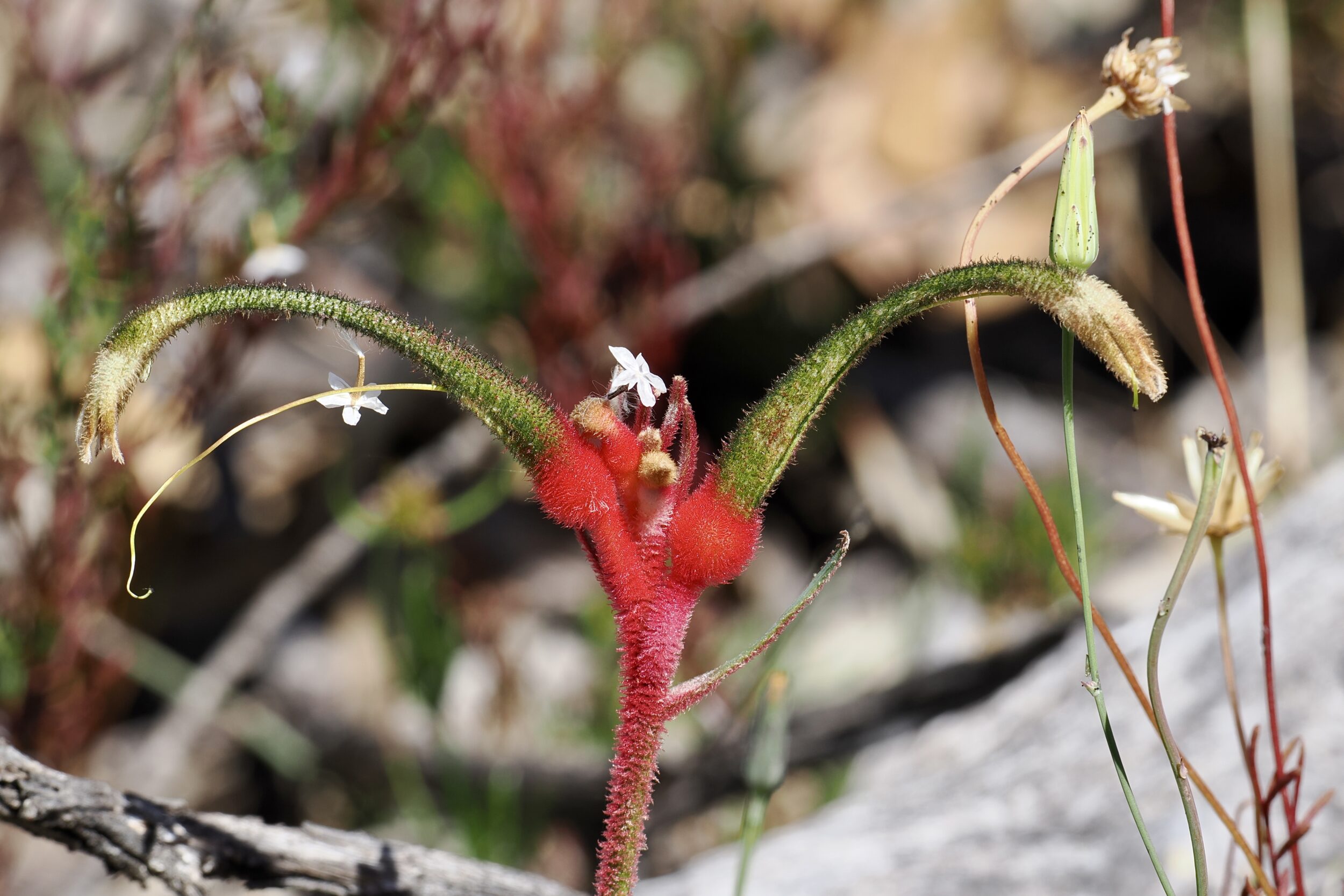
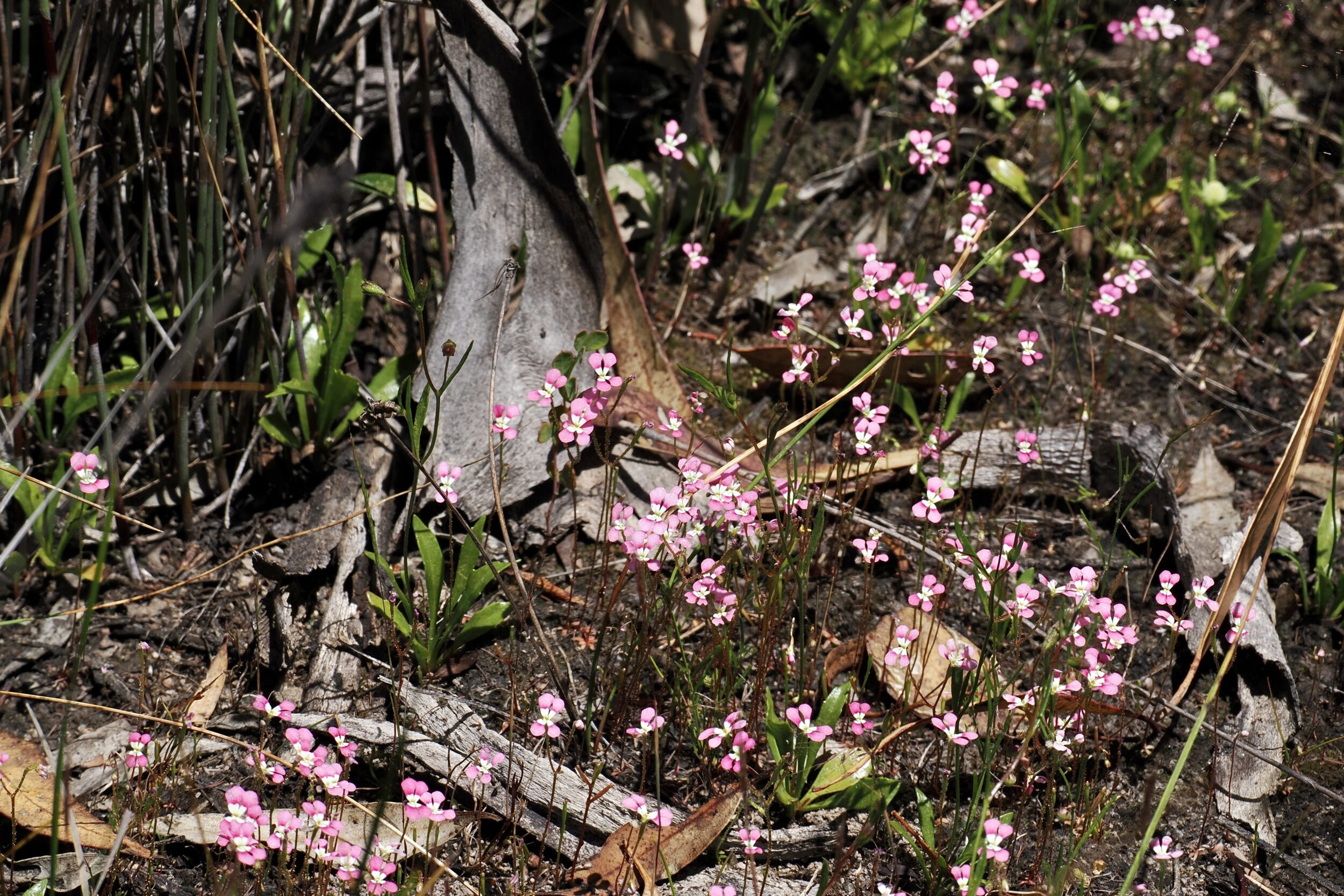
In order to see “just how much is going on”, you really need to get yourself/your camera near to ground level.

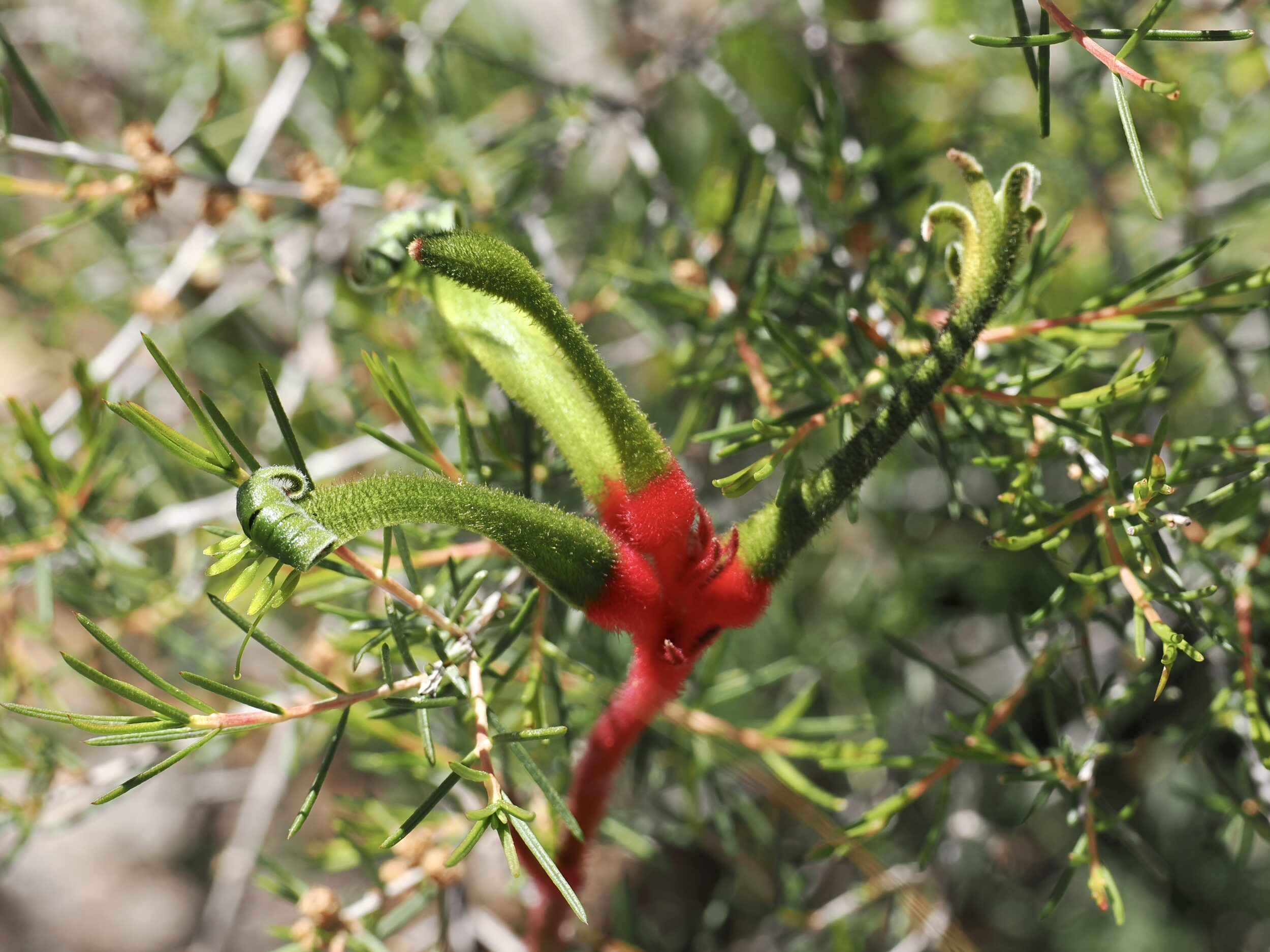
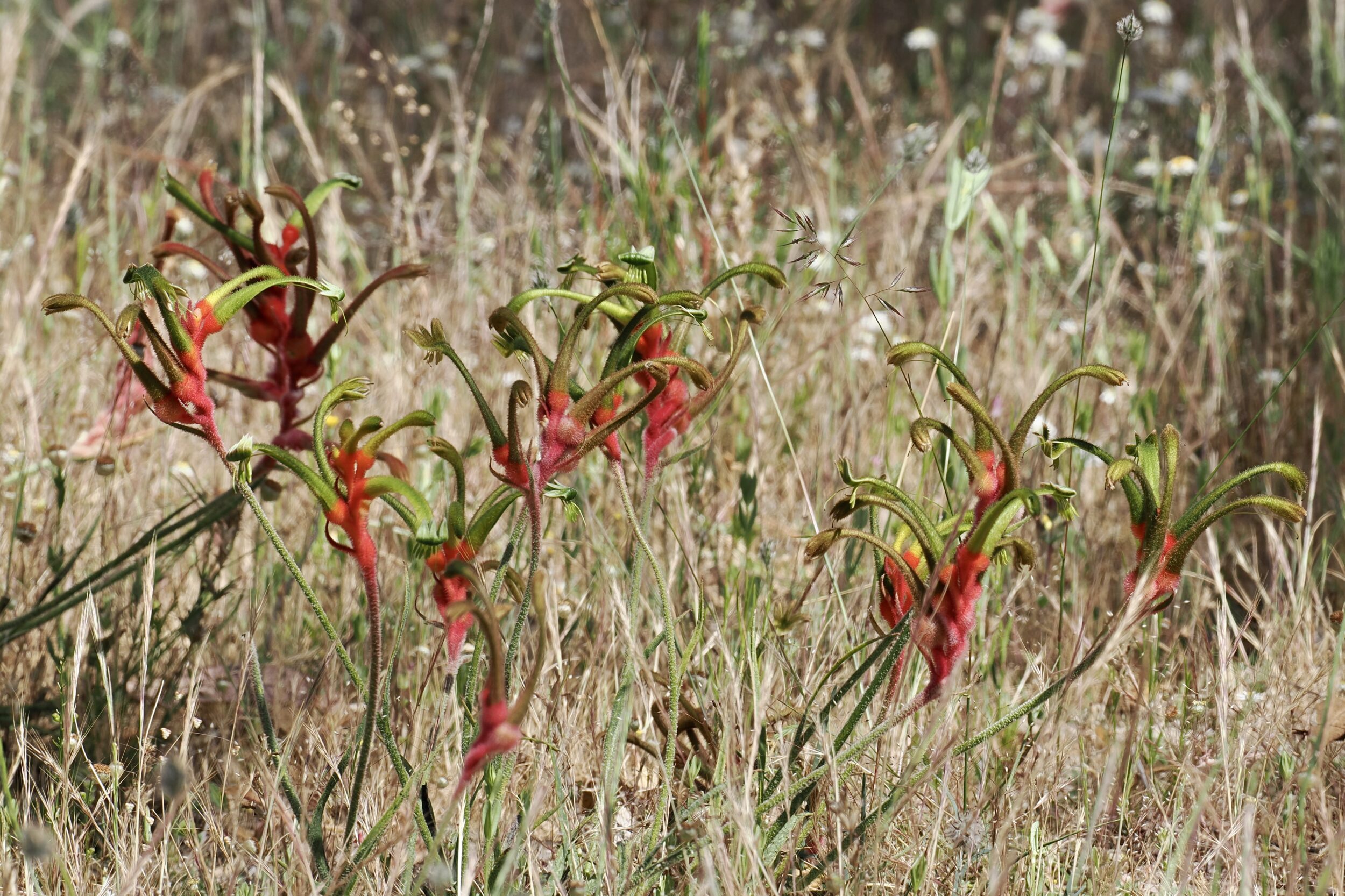
This post’s heroes are (I think) examples of Anigozanthos bicolor, commonly known as “little kangaroo paw” – a petite member of a small genus of bird-pollinated plants which also includes Western Australia’s (rather larger) floral emblem.

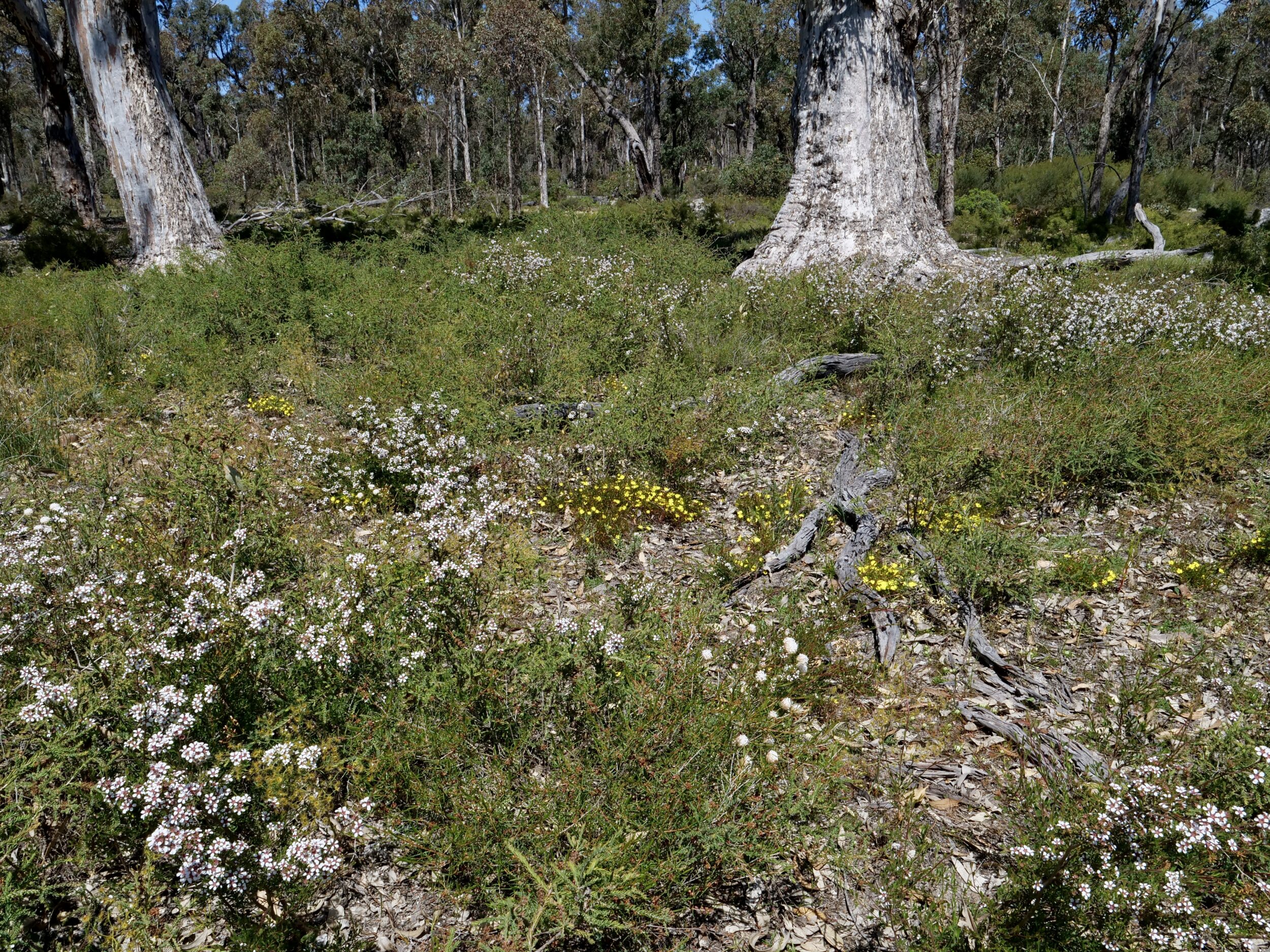
As you can surely see, the “hero” species is but one of many different plants that were flourishing on October 30 2023 in some wandoo woodland on the drier, inland side of the Darling Range, circa 100 kilometres southeast of Perth.

One Comment

“Late” in a very “early” southwest WA spring (2nd of 2 teasers)


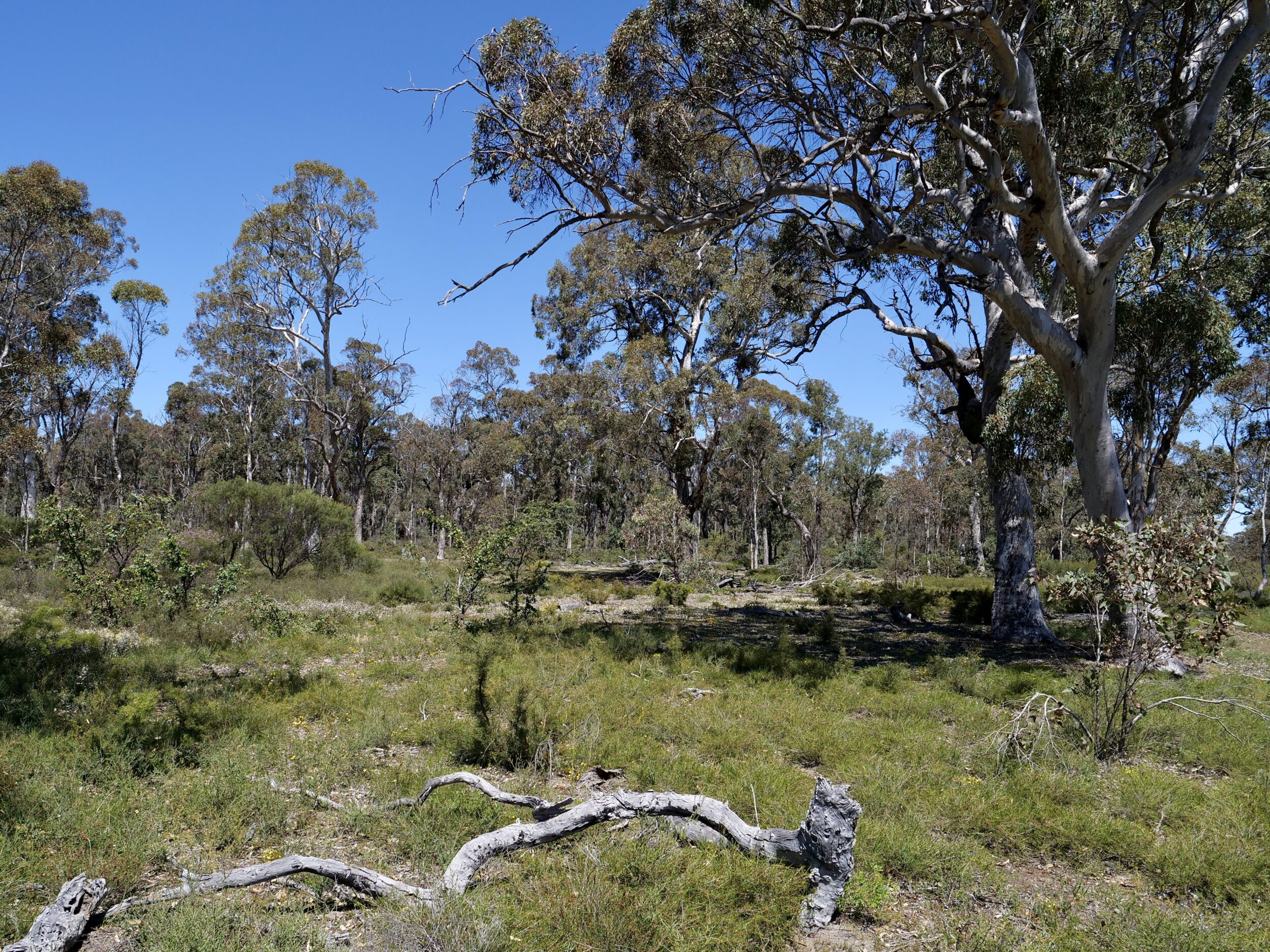
This post’s photo was taken not very many footsteps distant from where I took the preceding post’s featured shot.

As you can see, even a very cursory glance at today’s featured image reveals an abundance of flowering plants, in bloom.

”A marked contrast to the plant life in yesterday’s picture”, you think?

Comments closed

“Late” in a very “early” southwest WA “spring” (1 of 2 teasers)


How do “the seasons” actually work in southwest Western Australia?

In 2023 one could reply, “they don’t, anymore!”

However, even back in the “good old days”, anyone who paid attention already knew that “seasons” in WA had precious little to do with any calendar’s dates, nor with European notions of “four seasons”.

This was already the case long before the coining of terms like “global warming”, “climate change” and “the Anthropocene”.

Comments closed

Australian bee, Western honey bee: as a Cessna is to a 747


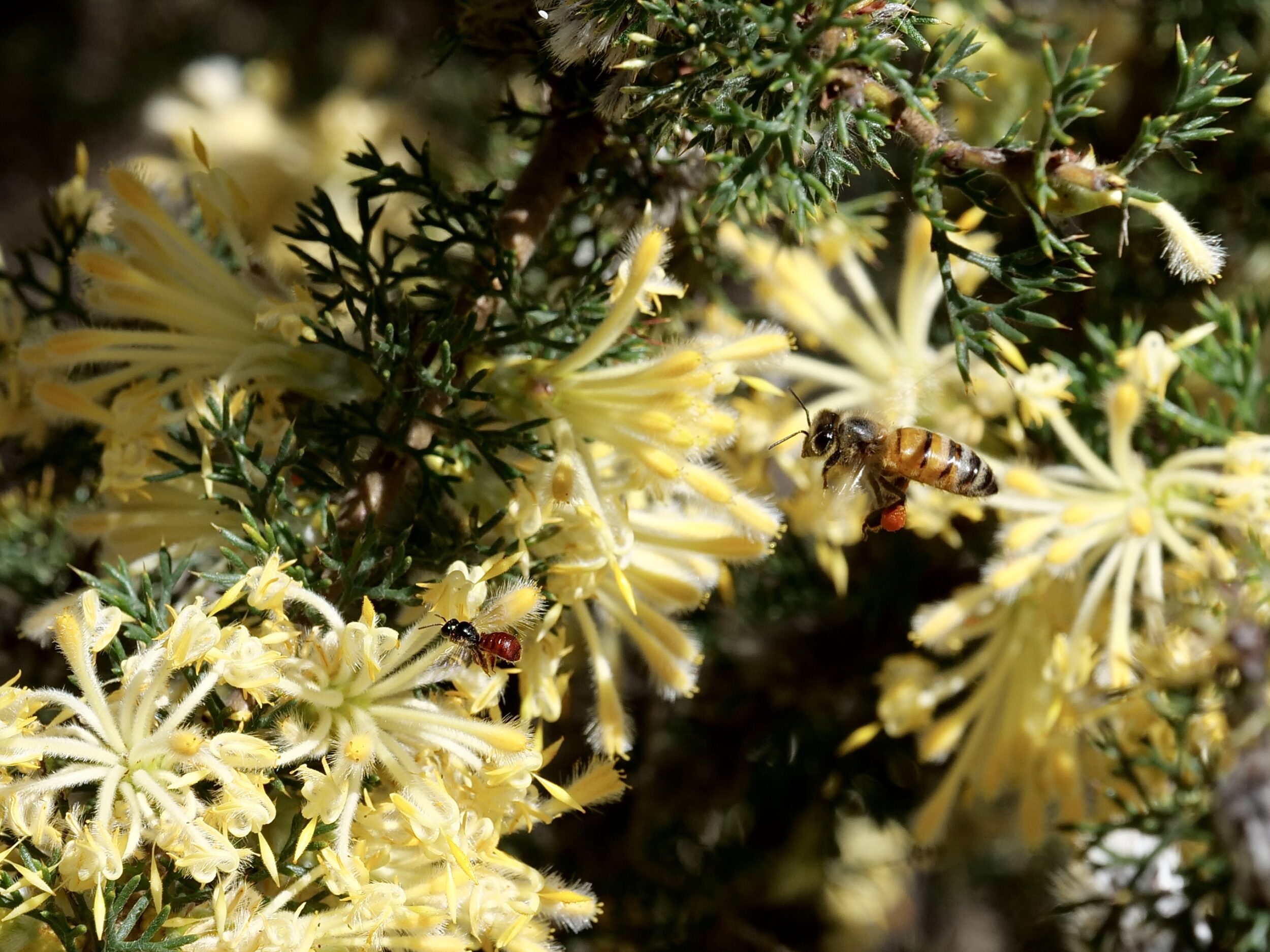
Generally, when Australian humans think of bees, they are thinking of Apis mellifera, the so-called “western” – or “European” – honey bee.

When Australian humans venture outdoors, Apis mellifera is the only bee species that most of them ever notice and/or recognise.

Australia has an estimated two thousand native bee species; circa 1,600 of them have been identified.

Around 800 identified species live in Western Australia; many of them live only in some part/s of Western Australia.

One Comment

Shenton Bushland: flowering


On the afternoon of 26 August 2023 Shenton Bushland was already very colourful, although “peak Springtime flowering” was probably still a few weeks away.

None of this post’s flowers are hard to find at this time of year, providing you are in the right kind of place, within southwest Western Australia.

Shenton Bushland is one of several “right kinds of place” that are less than 20 minutes away from Perth’s CBD.

Comments closed

Donkey, with spider


The “donkey” is an orchid.

The “spider” is an actual spider, on the orchid.

The large orchid is impossible to miss.

However, to enjoy a good look at the tiny spider you should zoom in on/ enlarge the featured image… and then inspect the uppermost part of the donkey orchid.

Comments closed

Teals, Lake Monger


The pictured birds are teals.

These very common dabbling ducks are no less lovely for being “common”.

Probably, this post’s heroines are grey teals, but they just might be chestnut teals, or hybrids.

Comments closed

“Bin Chicken” makes a splash


Our local lake never disappoints.

That said, bird-wise, the least interesting time is during Perth’s cooler, rainier months.

Then, migratory birds have all flown north –  some of them, to far-off places in Eurasia.

Other birds spread out across southwestern WA; with water and food generally-available,  they do not need to congregate around “permanent” bodies of water such as Lake Monger.

Still, as today’s & tomorrow’s posts illustrate, at Lake Monger there is always some avian activity to enjoy…

Comments closed

Kings Park, late August 2023


Perth’s Kings Park is really three parks in one… plus “lookouts”.

The “lookouts” offer sweeping views from the rim of the scarp on Kings Park’s eastern and southern sides.

Looking east, they flatter the adjacent CBD, and look across the Swan Coastal Plain to the Darling Scarp.

Looking south, they show the full splendour of the Swan-Canning estuary, around which Perth’s wealthier suburbs sit.

If you walk (or catch a free bus) from the CBD – or West Perth – into Kings Park, the loveliness of its manicured, “picnic-friendly”, well-treed, grassed parkland is immediately obvious, as you can see in the featured image, above.

Every pleasant, sunny weekend, thousands of people take advantage of Kings Park’s generous supply of that kind of parkland.

However, what makes Kings Park so very special are its two other kinds of “park”:  a superb botanical garden (which showcases WA’s extraordinary flora, conducts internationally significant research, and provides useful information to the general public) and its astonishingly expansive, essentially “natural” bush/woodland section.

Comments closed