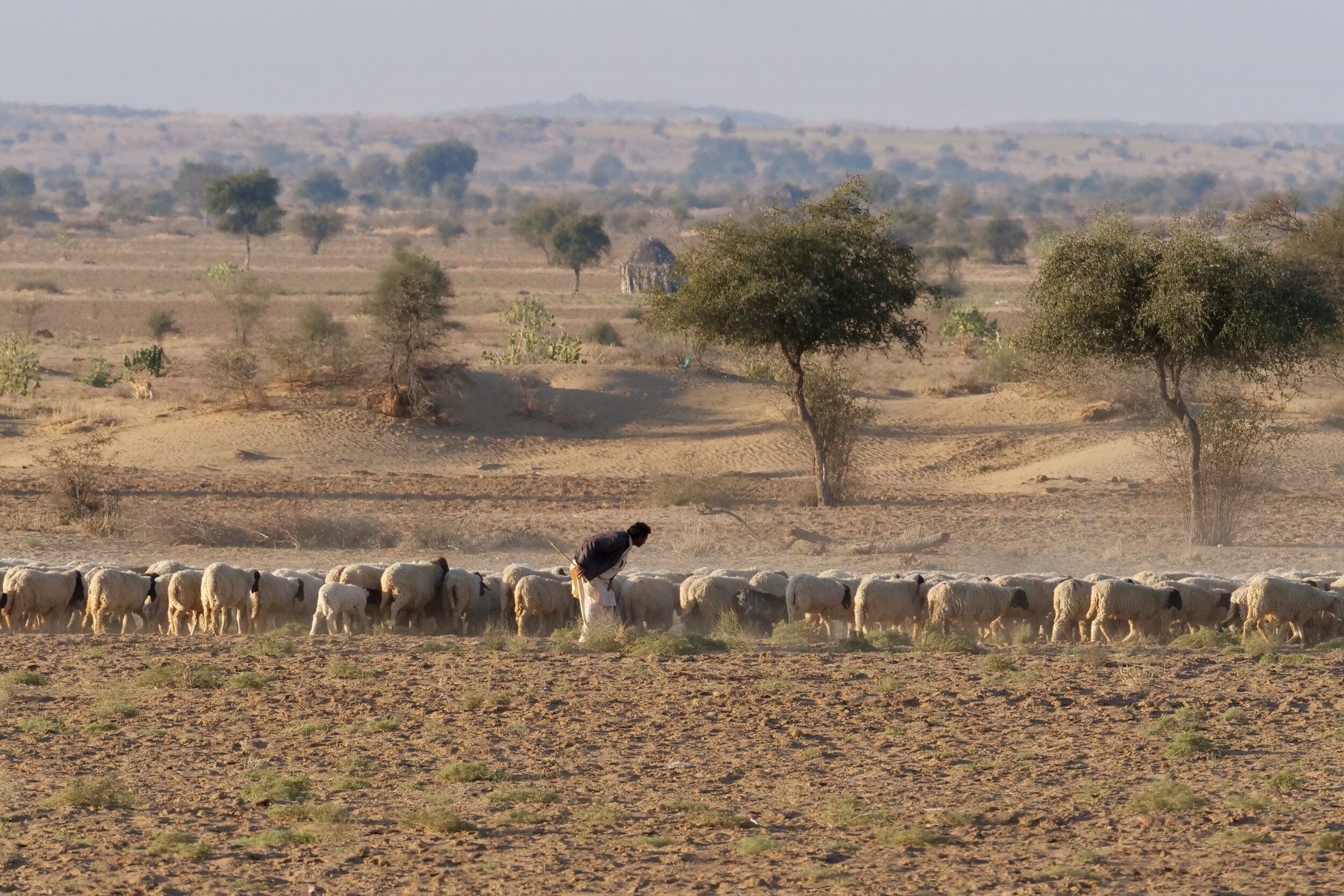
Per hectare, sheep are more populous in Rajasthan’s portion of the Thar Desert than is true of sheep, per hectare, across Australia.
Much the greater portion of the Thar Desert’s circa 264,000 square kilometres is in western India, mostly in Rajasthan. (circa 60% of the Thar Desert is within Rajasthan)
Sheep numbers are highly variable, and hugely difficult to count, accurately.
That said, circa 8 million of Rajasthan’s sheep live in the Thar Desert, as do circa 30 million humans.
On a “per unit area” basis, no other desert on earth goes remotely close to matching those figures.
As this post’s images illustrate, the ways in which Rajasthan’s humans “manage” their livestock (and land) are utterly unlike what Australian humans regard as “normal”.
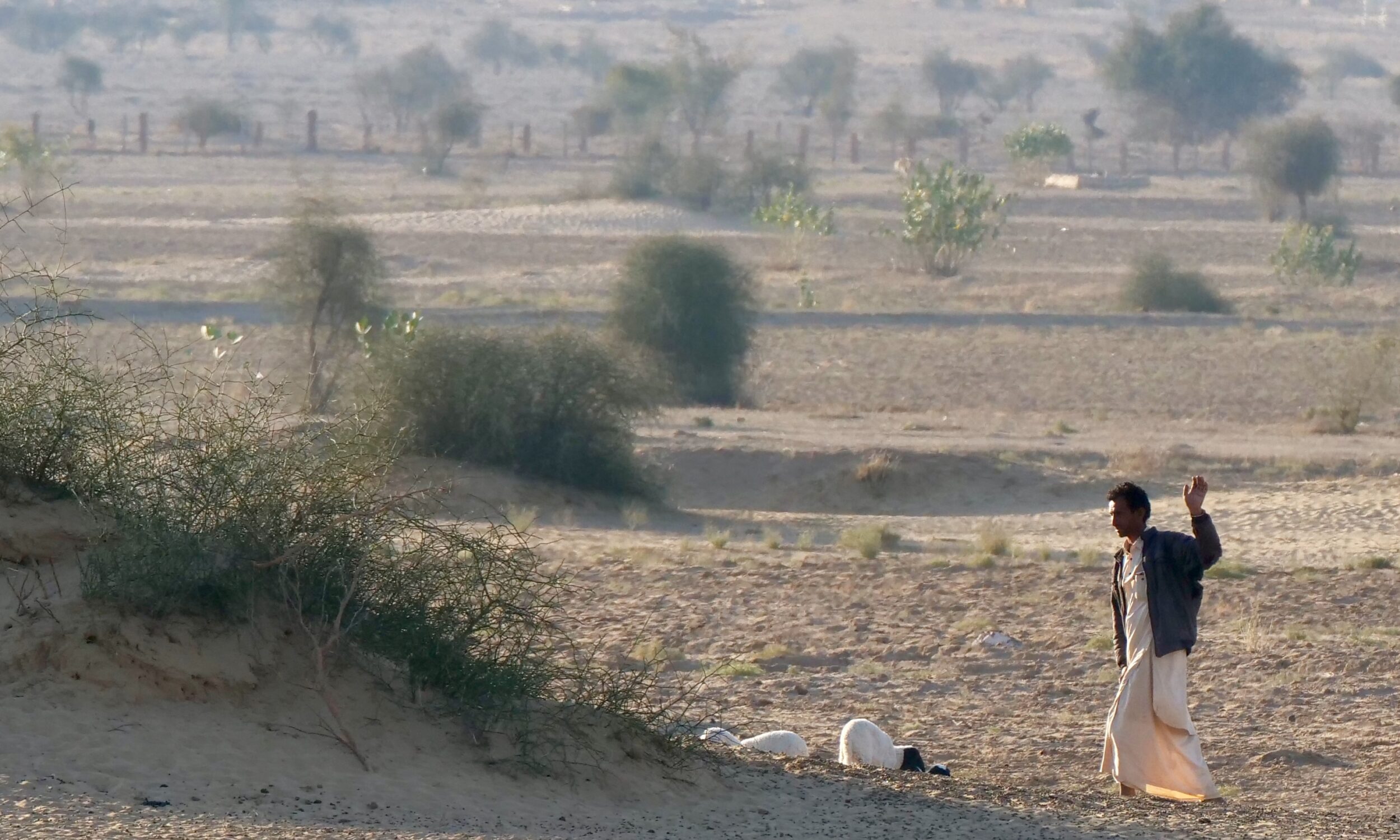
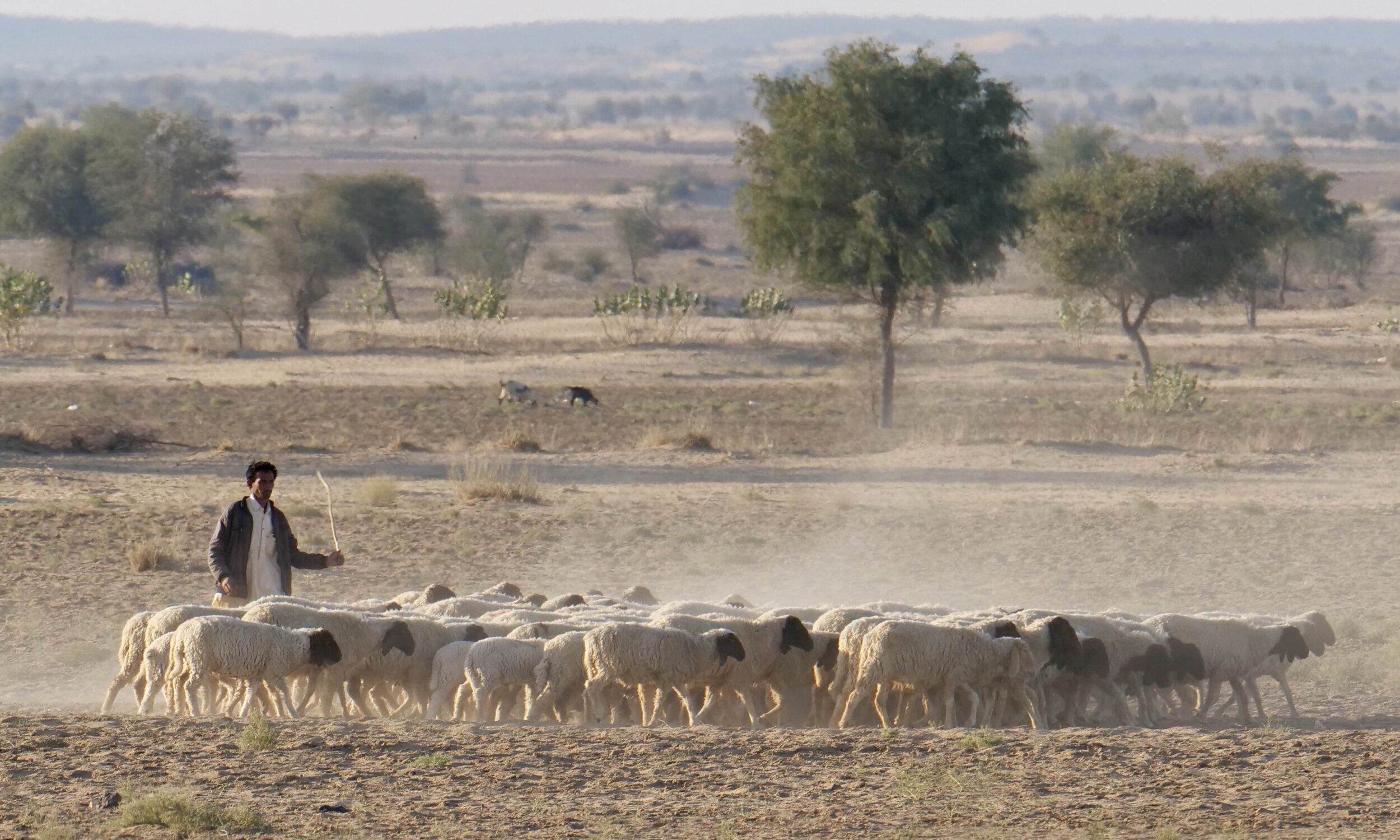
An Australian grazier is mostly unlikely to recognise/know each and every one of the members of his flock/s; outside of shearing time, he usually observes them en masse, from a motorised vehicle.
His Thar Desert counterpart usually walks, and tends a much smaller flock, much more intently.
He knows every one of his sheep, individually.
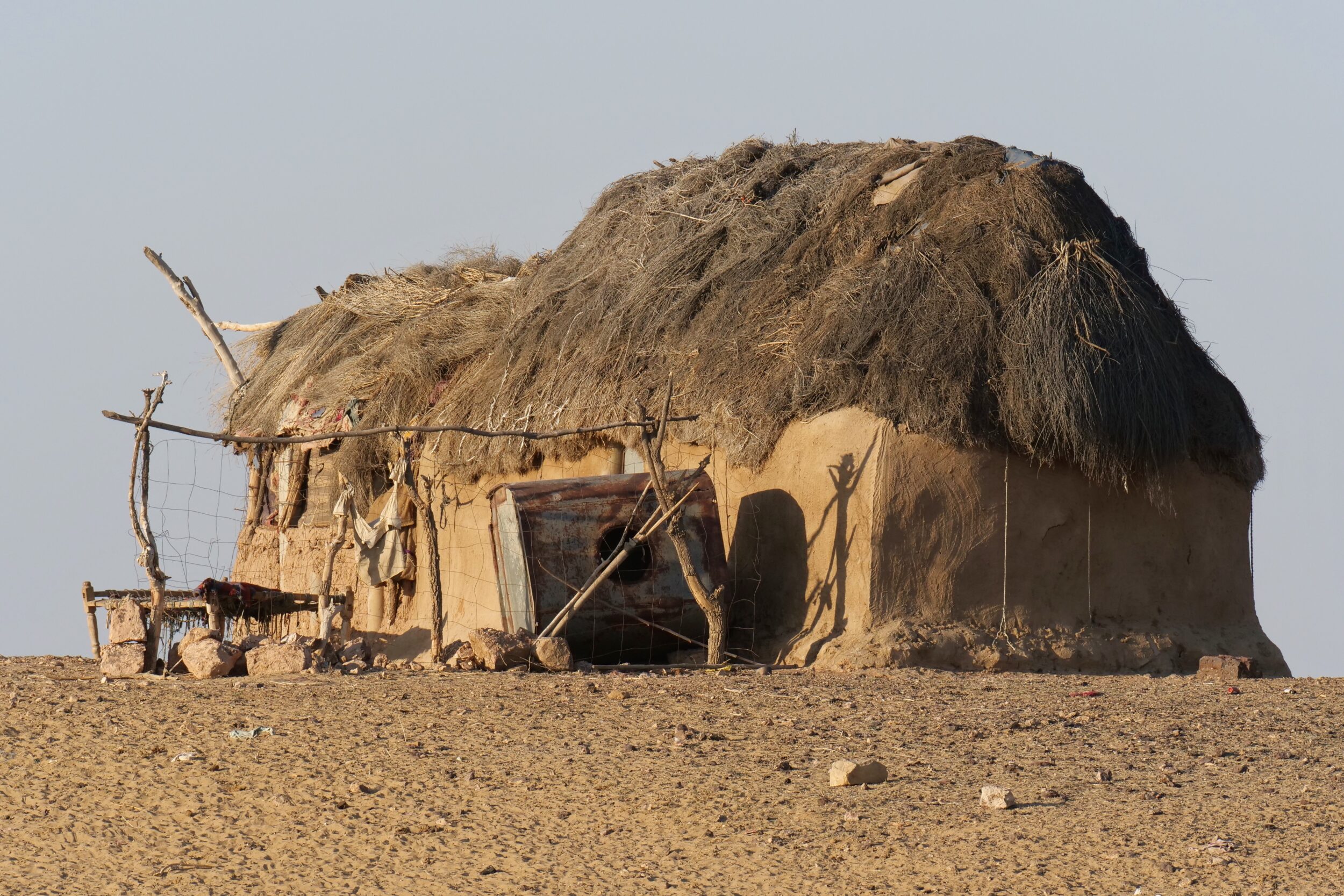
His “homestead” bears no resemblance to those on any Australian sheep “station”, “farm” or “pastoral property”.
Sheep were one of the first animals to be domesticated by humans, at least 12 thousand years ago.
The domestic breeds have become utterly reliant on our husbandry of them; in contrast to at least some kinds of horses, goats, dogs, cats and cattle, domestic sheep are simply unable to survive as feral animals.
You can discover much more at Sheep 101.
This series’ next chapter will feature an animal which many humans regard as “timeless, and as “emblematic” of African and Asian deserts.
In fact, camels are relative “newcomers” to Africa and Asia…and to domestication by humans.
Comments