You can see this post’s species in Australia too, but not with such a spectacular, snow-capped backdrop.
Comments closedNatural splendour, real musics, wines, wordpower
You can see this post’s species in Australia too, but not with such a spectacular, snow-capped backdrop.
Comments closed
The birds pictured above were formerly known as “pied stilts”, and considered an Australasian subspecies of Himantopus himantopus, “yesterday’s heroes” – see #10 in this series.
This post’s heroes are now generally considered members of their own species, Himantopus leucocephalus.
Their “preferred” common name: white-headed stilts.
Each of these three individuals has the full complement of two legs.
Stilts, however, often prefer to stand on one leg, with the other one neatly folded and tucked into their lower feathers.
Comments closed
Two questions arise when considering all three birds in today’s featured image.
The obvious one: “clearly, their wings are not black, so how do they merit their name?”
The other one: “why is Himantopus himantopus in the Guinness Book of Records?”
Comments closed
This post’s Tibetan Plateau location is higher and wilder than was true of #8 in this series.
The Chang Tang – also rendered into English as “Changtang” – is a very harsh environment, mostly grasslands at more than 4,000 metres above sea level, punctuated by mountains.
Much of it is protected in one of the world’s largest national parks, but climate change’s impact – here, mostly negative – is proving particularly extreme, rapid.
Goa – or Tibetan Gazelle – live here in still-considerable, but declining numbers.
Comments closed
Dead yaks reputedly provide rather more than half of the food eaten by Gyps himalayensis, but many members of Homo sapiens have also been devoured.
“Live” humans, fear not!
These very large raptors are scavengers, not hunters.
For countless human generations – via so-called “Tibetan Sky Burials”, in which religious rites are meticulously conducted, but the recently-deceased are not buried – Himalayan Griffon Vultures have done high-altitude humans a valuable service.
Comments closed
For #6 in this series, the number of stripes on the bodies of the featured threesome was self-evident: 3 X 5 = 15.
The number of stripes on today’s heroes is an enormously higher number, not self-evident: 3 X ? = ?…my head hurts…
All members of Equus quagga have many stripes.
Each has his/her own unique pattern.
Comments closed
Funambulus pennanti is a very, very much smaller mammal than is Oryx gazella.
Nonetheless, whereas yesterday’s large African antelopes occupied a tiny portion of the featured image, today’s Asian rodents dominate it.
Many people regard this widespread, very adaptable squirrel species as “particularly cute”.
From an agricultural/human food production/storage point of view, however, five-striped palm squirrels are a serious pest; in Elmer Fudd-speak, these are “weally wascally wodents”.
Comments closed
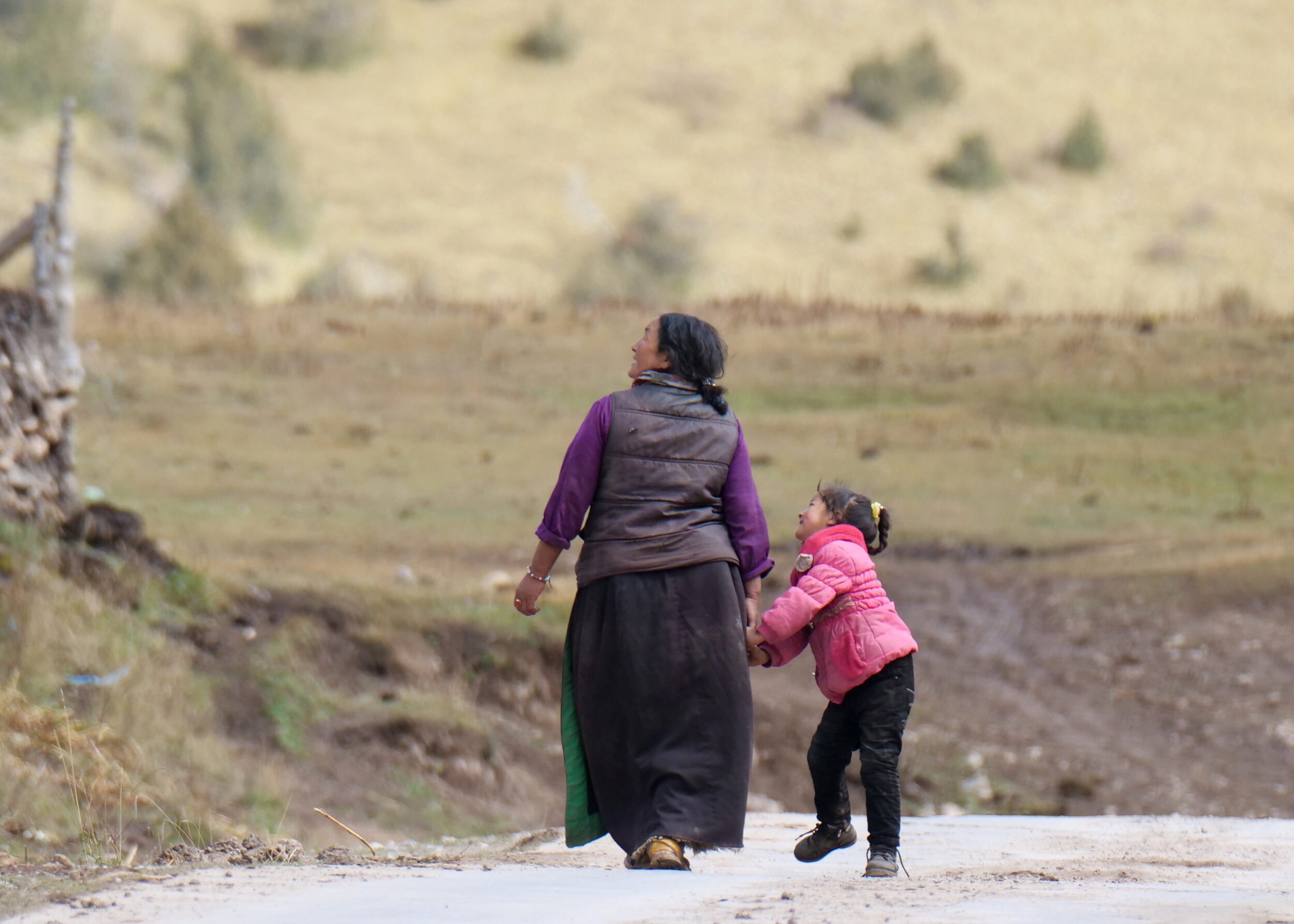
Generally, when it comes to encountering wild animals, humans think, “the closer, the better”
Many wildlife photographers think similarly; they spend large sums of money on huge lenses that prove equally damaging to owners’ bank balances and backs.
Photographers usually try to ensure that the splendid beast/s “fill the frame”.
A shallow depth of field is favoured, thus emphasising the beast’s splendour, and minimising any “distracting” background detail…although “attractive” bokeh is more-than-acceptable.
(if “bokeh” is new to you, click here)
But, but…
One Comment
Nationally-emblematic animals do not respect national boundaries.
The springbok is South Africa’s signature species.
However, a great many thousands of Africa’s circa 2 million-plus springboks live in Namibia.
Comments closed
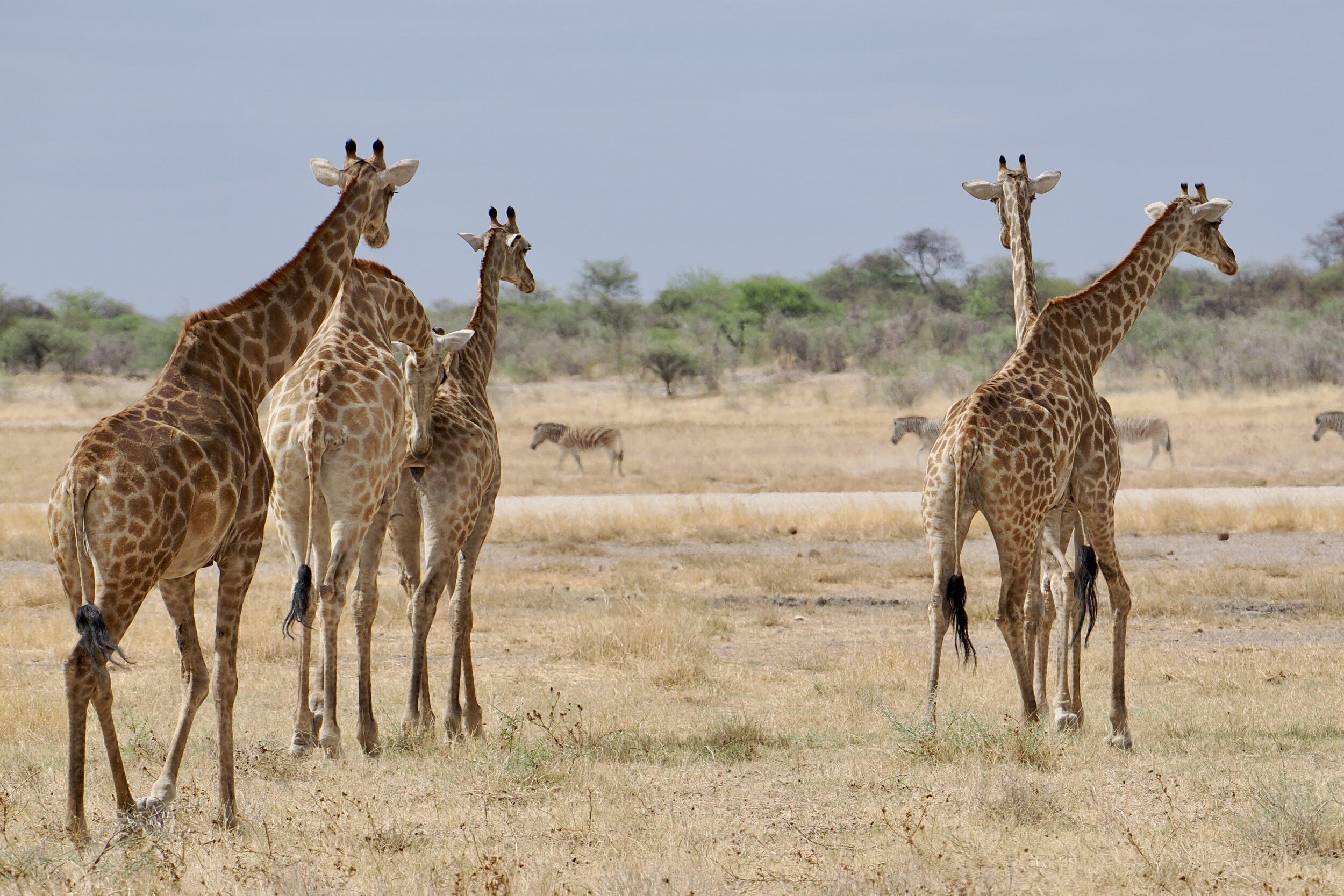
Q #1: what has driven some animals to become so remarkably tall?
Q #2: what drove plants to become taller than they might otherwise be, in open woodlands and savanna?
Look at this post’s featured image, and you may have – in part, at least – answered both questions…
Comments closed