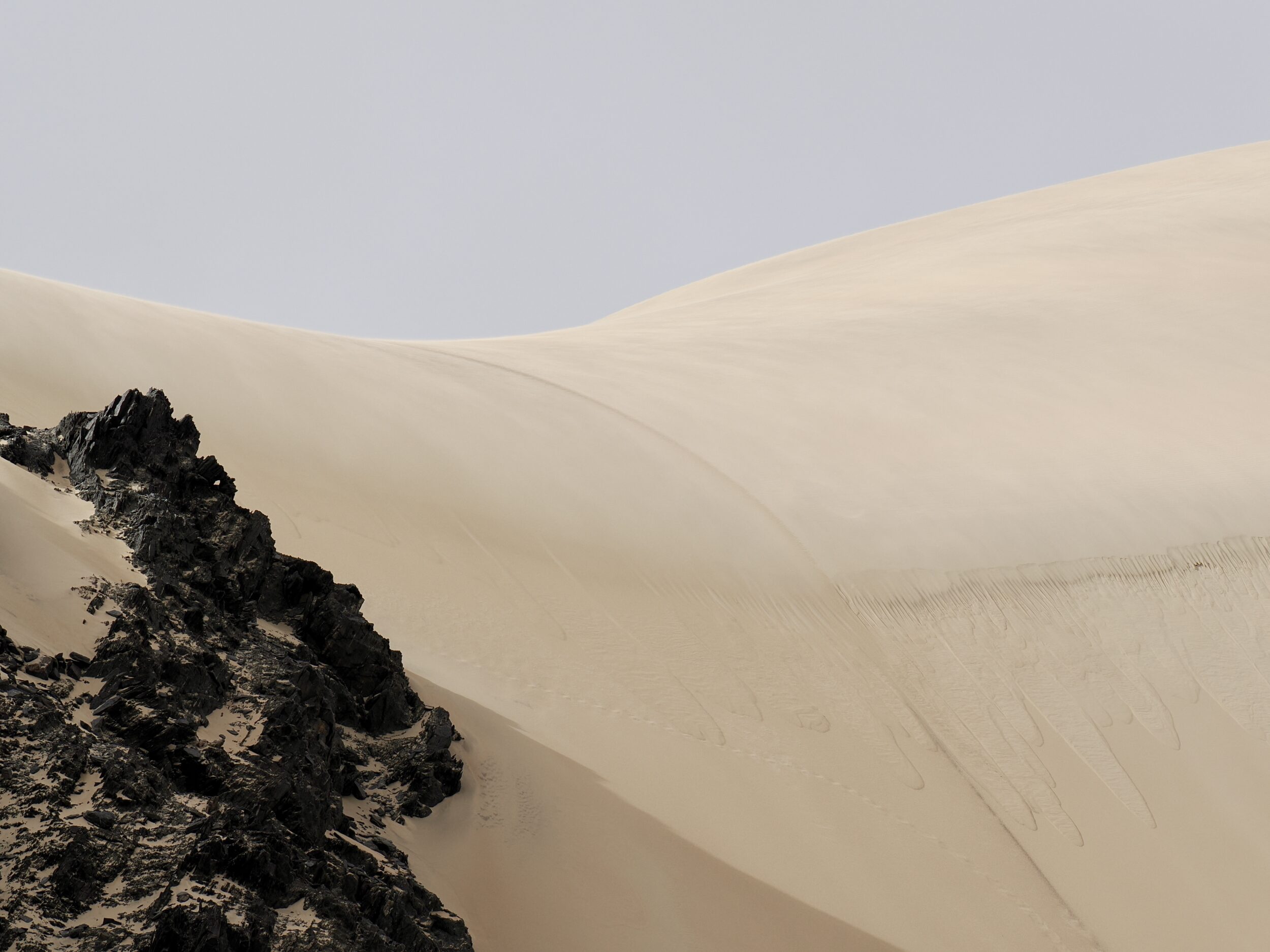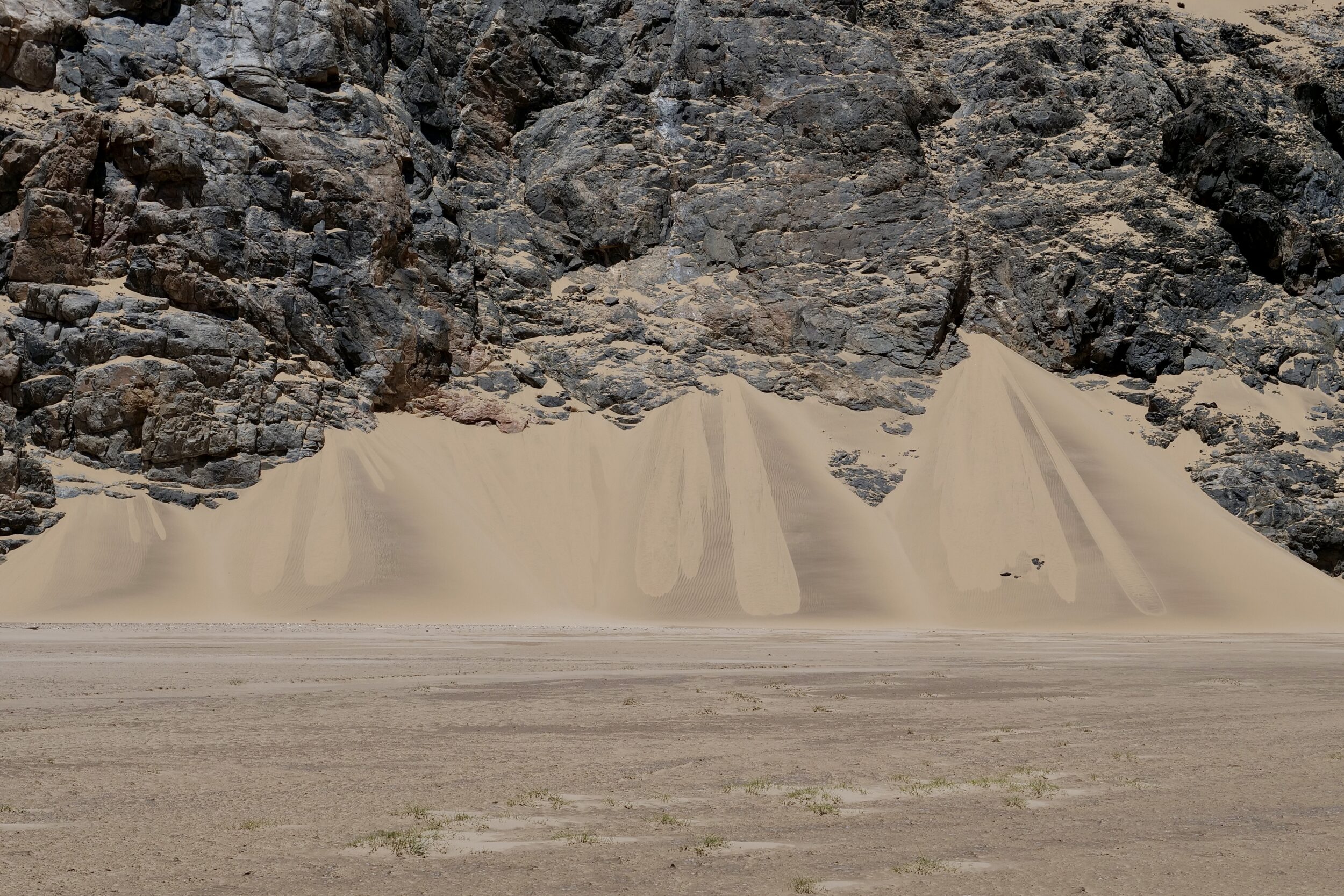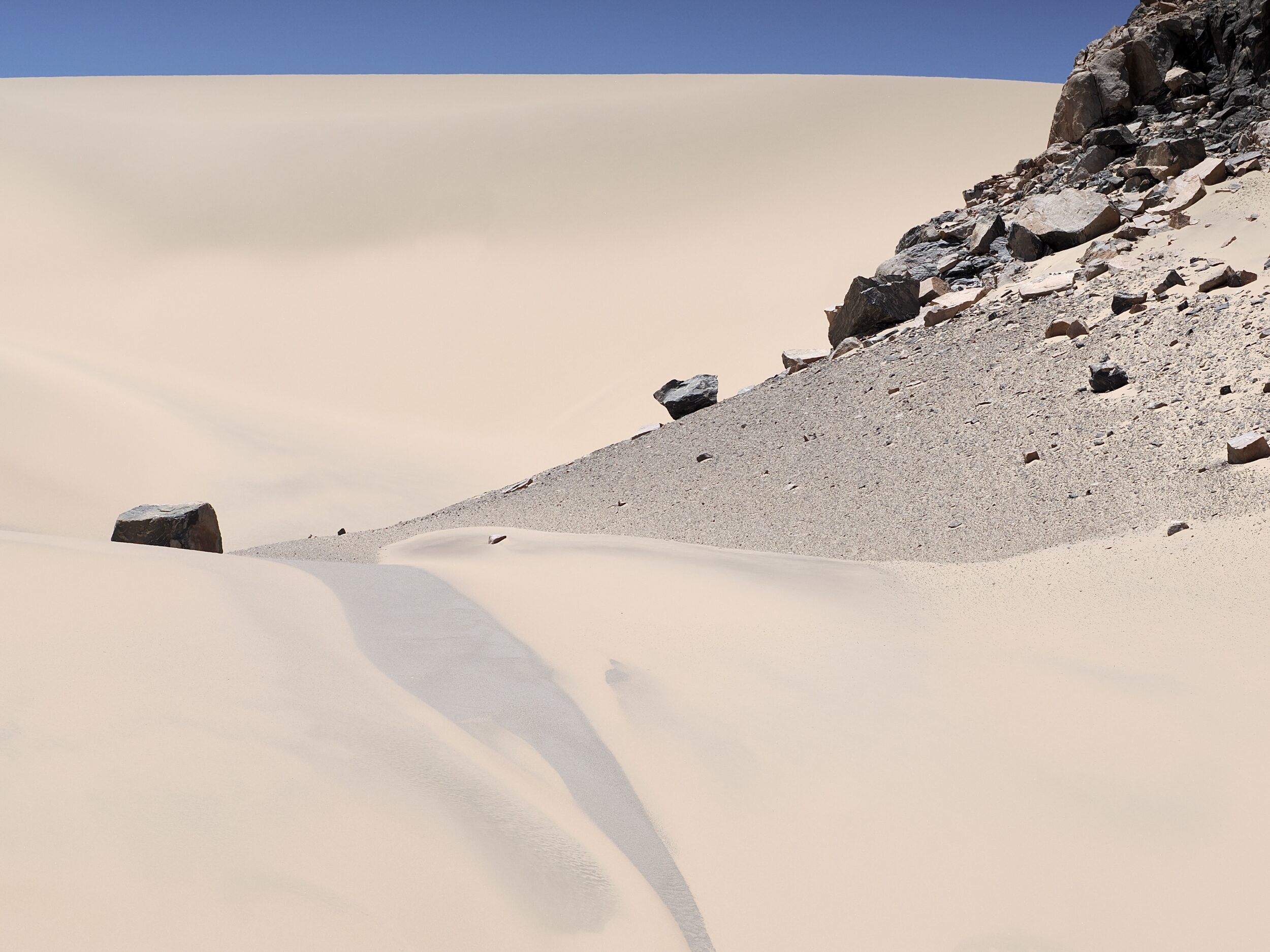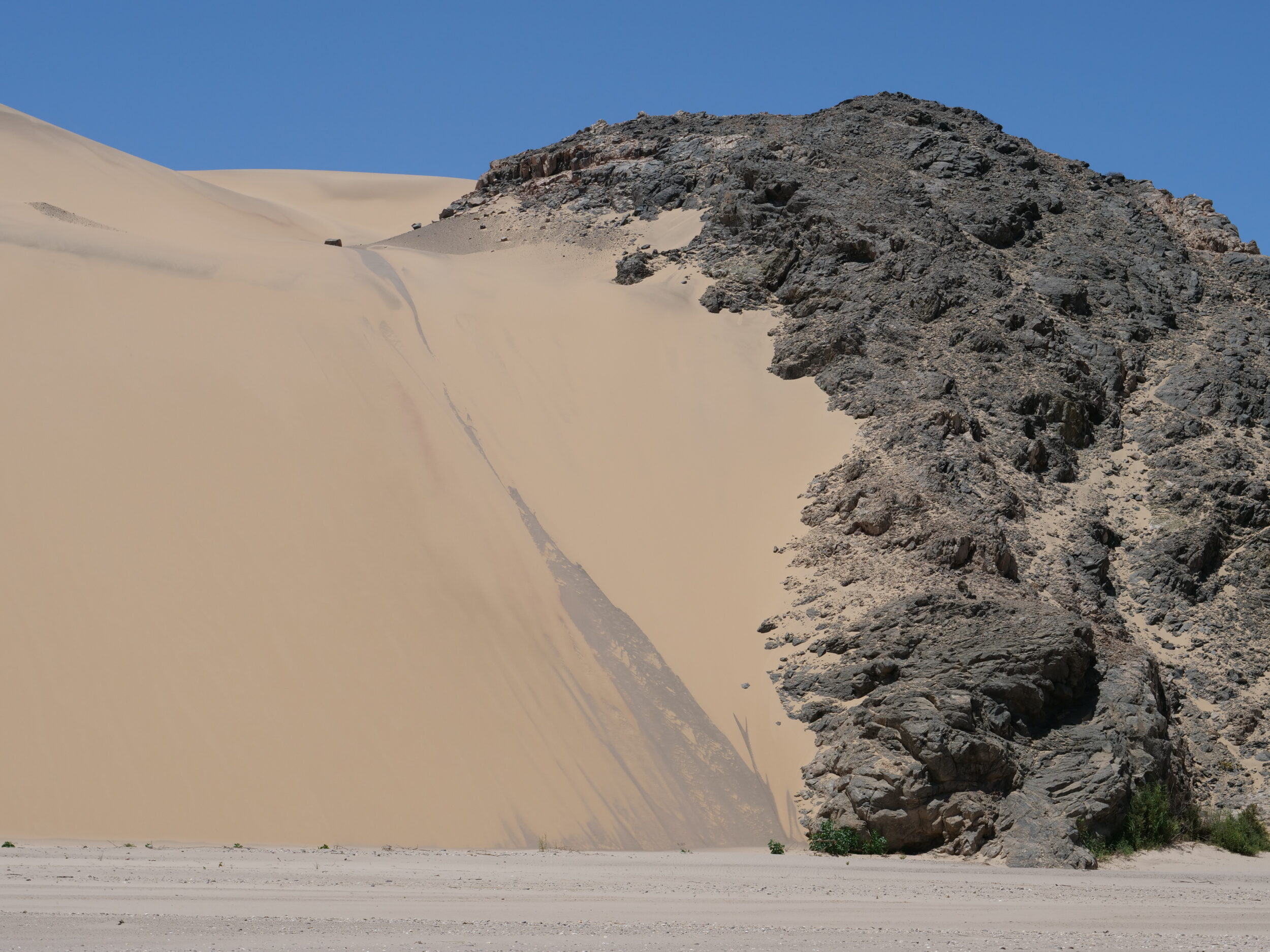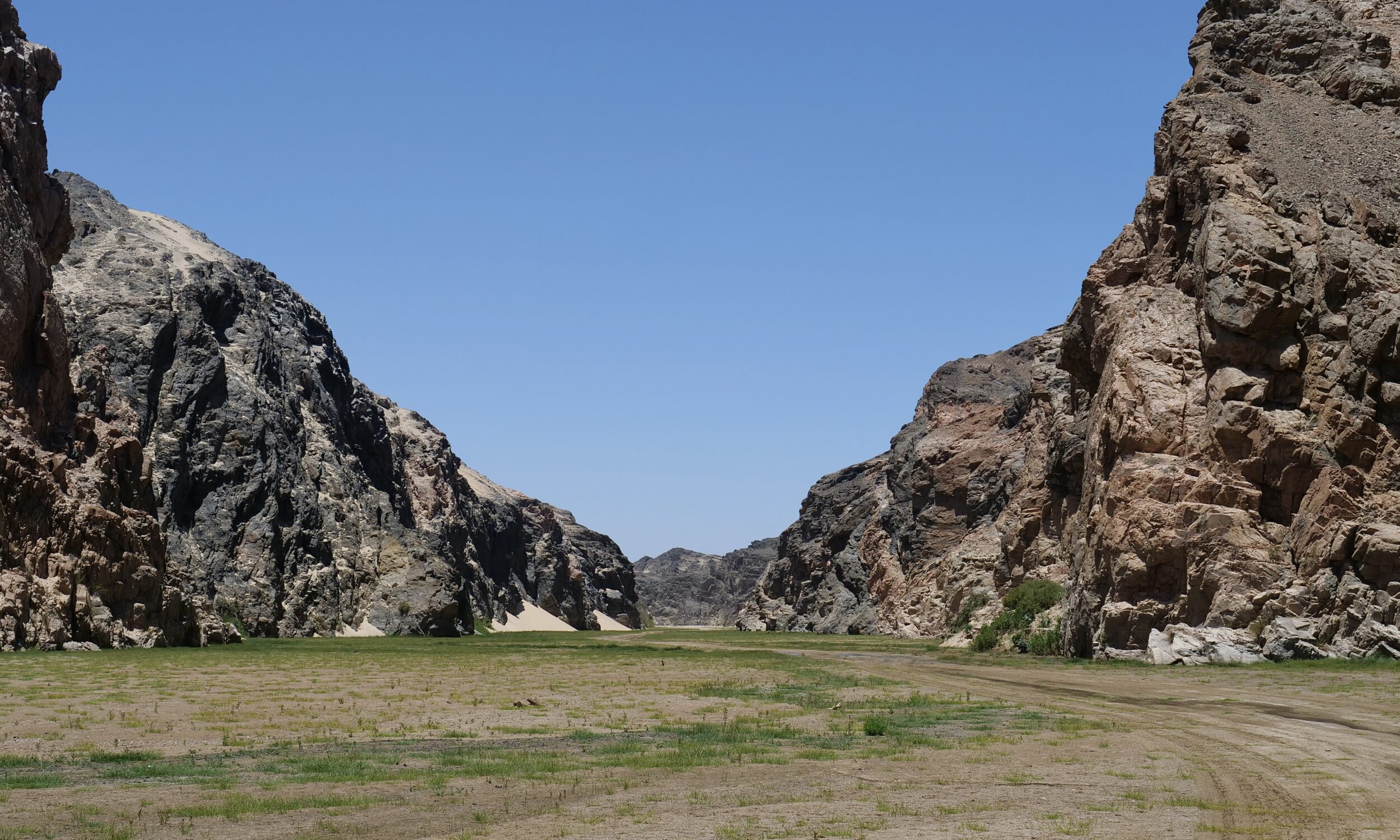
Umpteen times, during our several hours spent in and around the lower reaches of the Hoarusib River, I was amazed and awestruck.
Comments closedNatural splendour, real musics, wines, wordpower
Umpteen times, during our several hours spent in and around the lower reaches of the Hoarusib River, I was amazed and awestruck.
Comments closed
All three images involve the same dune, as viewed from the bed of the Hoarusib – the river the dune was “meeting”, at 9.06/9.07 am on 14 November 2022.
I shot all three within circa 90 seconds, with a 400 mm lens.
You will see more within these images if you enlarge them /zoom in on their details.
Comments closed
See lower image’s caption….
Comments closed
Beyond words…
Comments closed
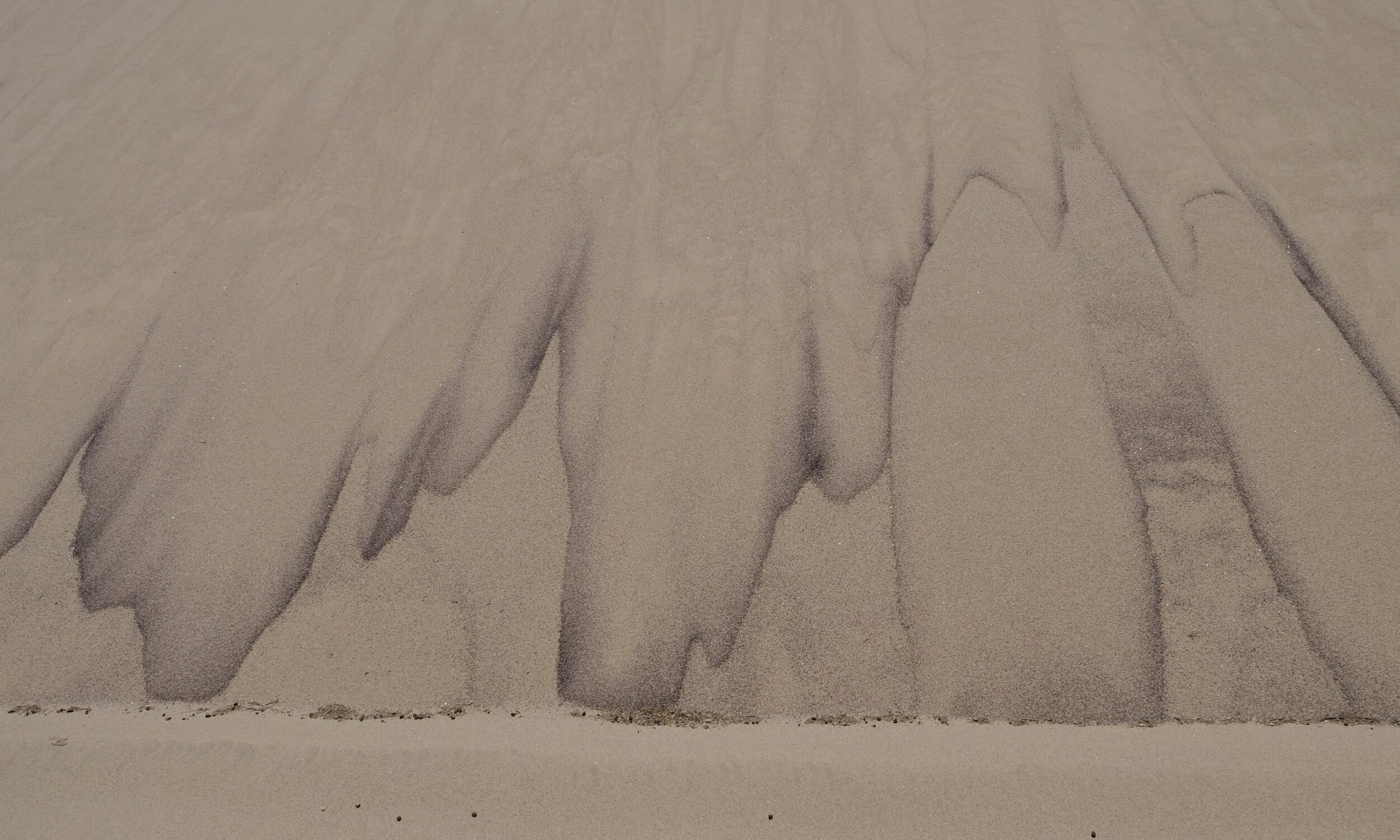
In this part of the Namib – its western edge, adjacent to the Atlantic’s “skeleton coast” – its dunes are often generally-lighter in colour than are those further inland and further south.
Here, also, variations in colour and texture are more readily-evident/common on the dunes’ surfaces.
Their “sands” are not all of the same kind, colour and density; accordingly, winds “sift”, “sort” and shift them, differentially.
The results are oft-exquisite: “sand mandalas”, sans any human role in their creation.
I especially love what happens when shifting sands meet rocks and/or riverbeds; they, too, are far from “uniform”.
Comments closed
For Australian followers of Test Matches across two “major” sporting codes, this post’s subtitle will recall at least several decades of all-too-familiar, unwelcome headlines
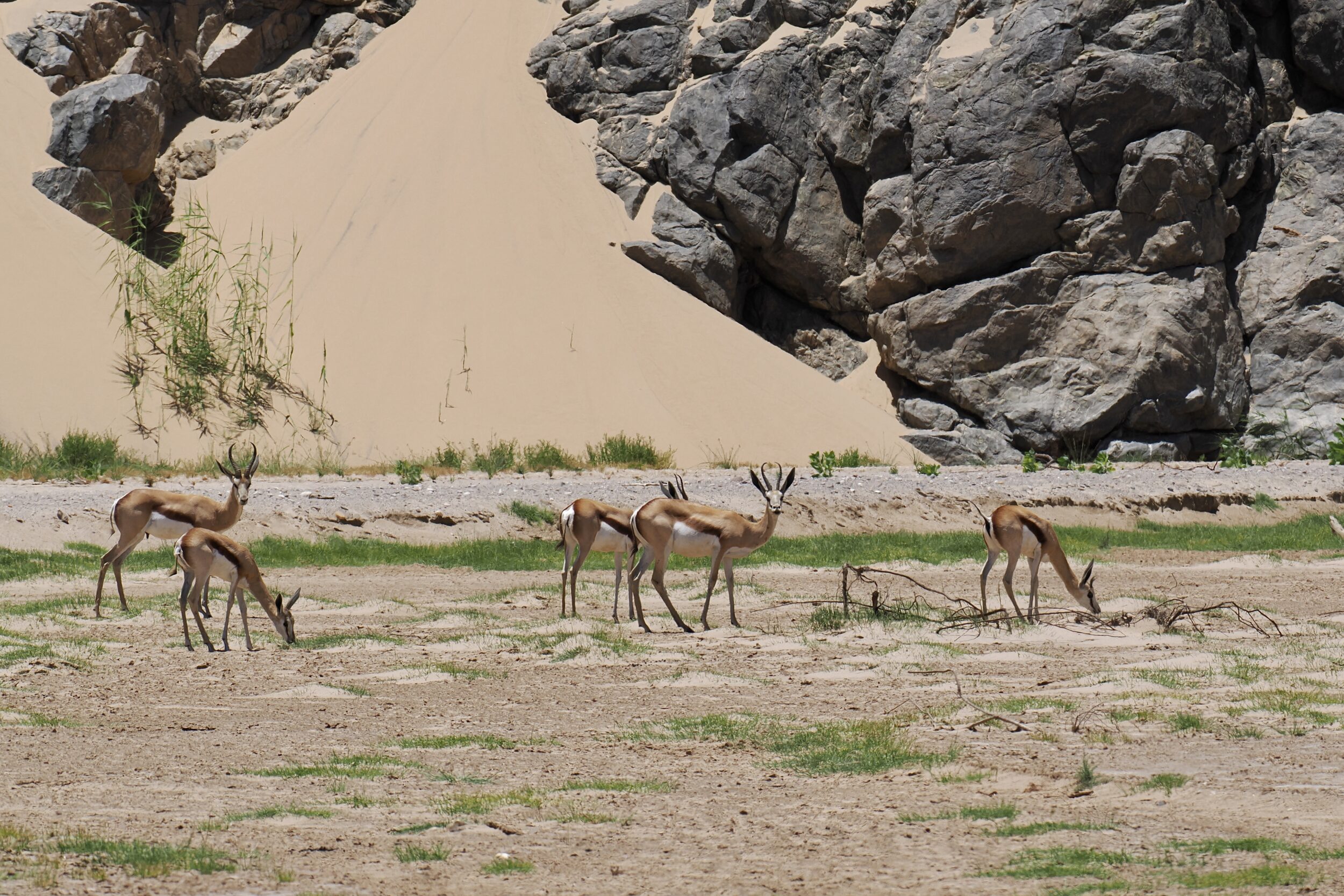
The actual Springbok – Antidorcas marsupialis – is South Africa’s heraldic beast.
However, this charismatic antelope is similarly abundant in Namibia and Botswana, and its range extends into the drier, southwest corner of Angola.
(Namibia’s emblematic mammal returns the compliment; gemsbok also thrive in South Africa and Botswana)
Comments closed
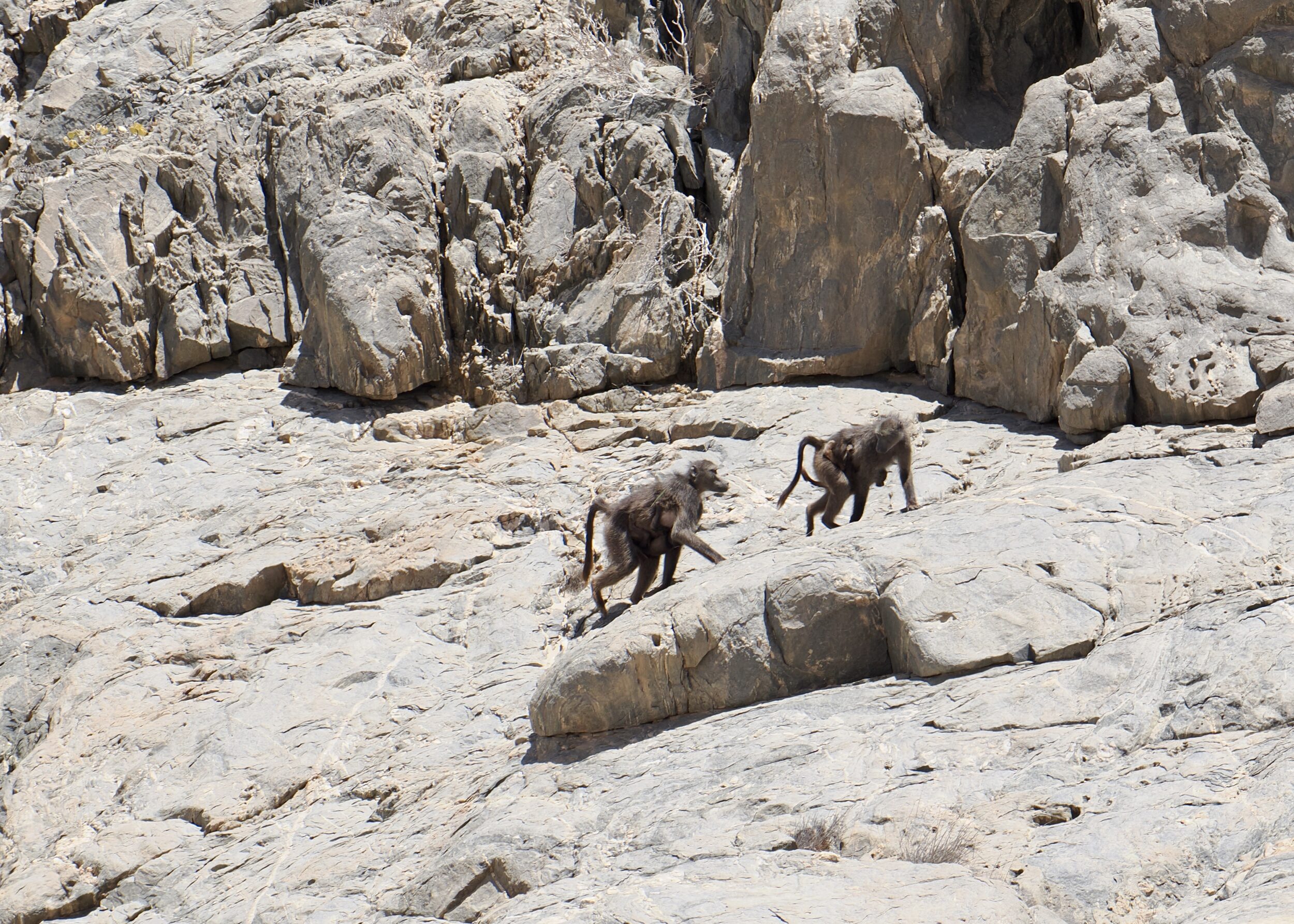
Baboons thrive in many different kinds of environment, across most of Namibia.
However, all of Namibia’s baboons belong to just one species: Papio cynocephalus ursinis, known as Chacma baboons, or Cape baboons.
Click here to discover more.
If you think that there are only two baboons in this post’s image, you are not looking closely enough!
Comments closed
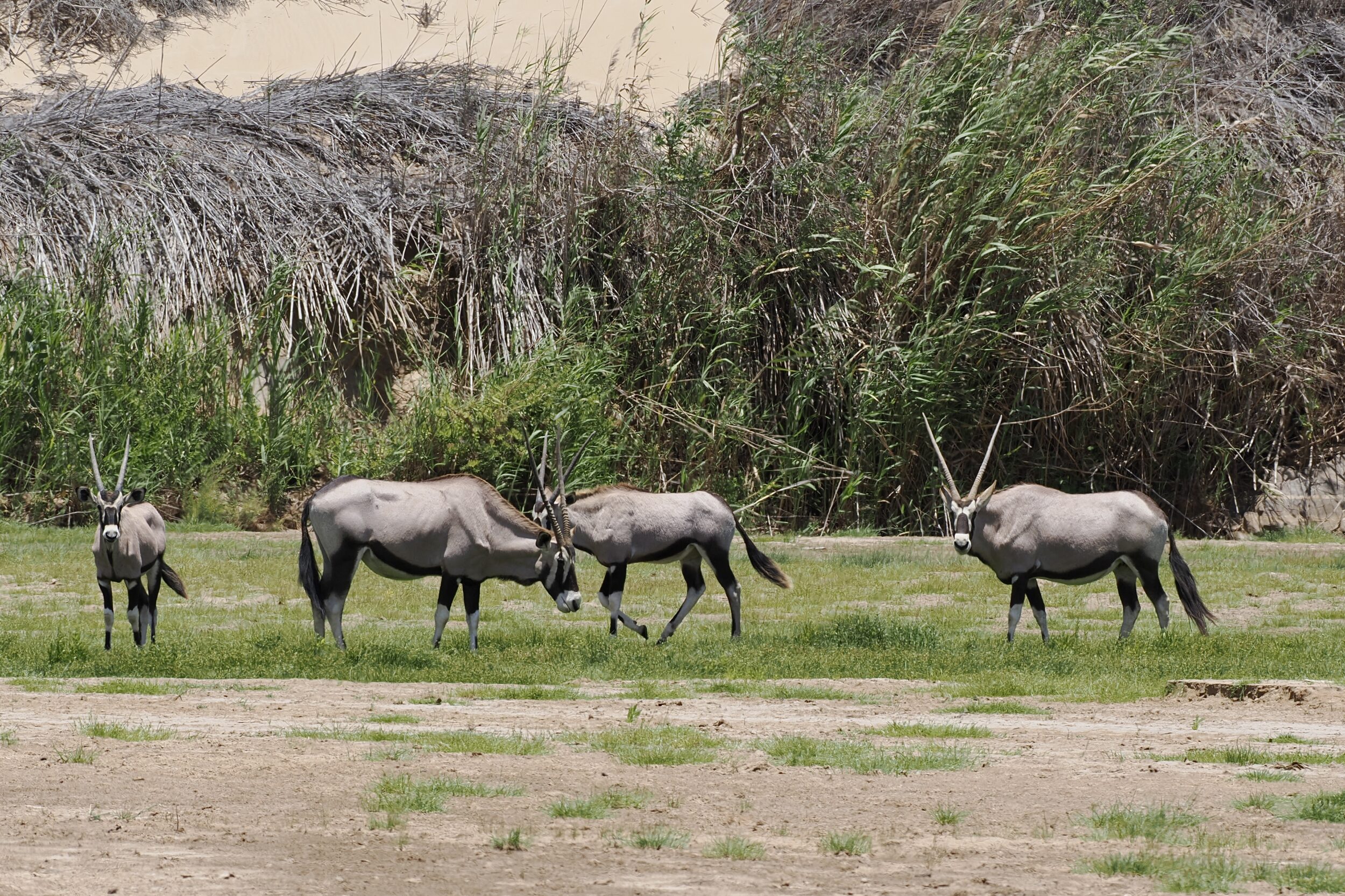
This post’s heroes are superbly adapted to life in a very demanding, arid environment.
Oryx gazella – known locally as “gemsbok”, but labelled as “South African oryx” by many non-African English-speakers – is Namibia’s heraldic beast.
It is the largest oryx species.
Gemsbok are remarkably water-efficient.
Few, if any, other mammals can survive for so long, “between drinks”.
They can also reach/withstand amazingly high body temperatures – temperatures that would prove fatal to other mammals. (this ability reduces water needs and energy expenditure).
The pictured individuals are doing it “very easy”, in a place that offers green grass and mostly-moderate temperatures.
Comments closed
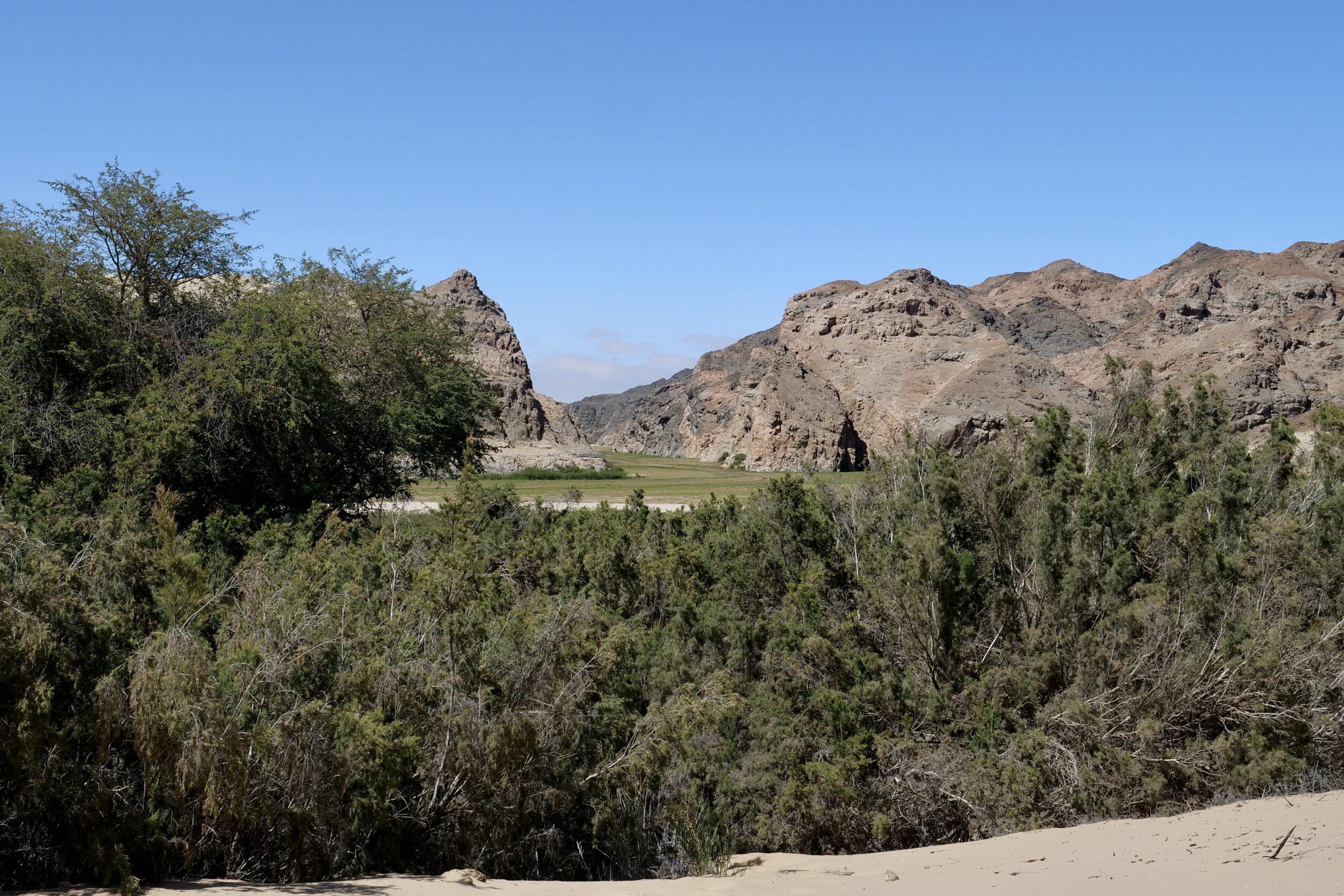
Absolutely nothing “artificial” is going on here, and you are indeed looking at one of the least-rainy places on our planet – a few kilometres in from the “Skeleton Coast”, on the Namib’s western edge.
Presumably/perhaps, there is a rock barrier below the dune on which I stood, at 10.24 am on 14 November 2022.
(dolerite “dikes” are a common landscape feature, above ground, in northern Namibia)
In any event, the “surprising” mini-forest in front of me could not survive on light and fog alone!
Comments closed
For quite some time, in the distant past, the Hoarusib River must have carried a lot more water, a lot more often, and had much more erosive power.
Comments closed