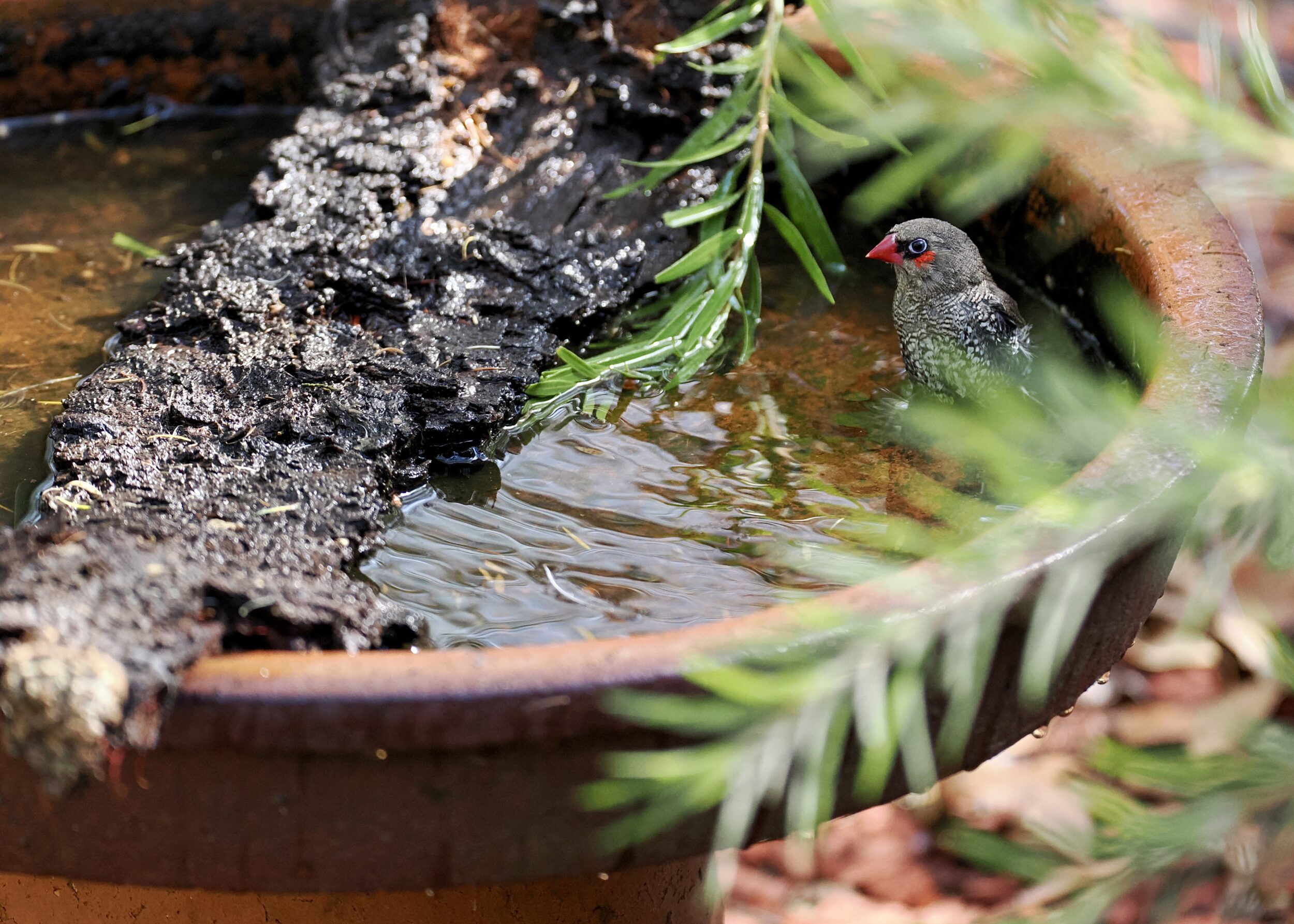
Both photos were taken within a few seconds of each other.
The pictured individual appeared to relish dip #2 even more than it had evidently enjoyed its first immersion, five minutes earlier.
Comments closedNatural splendour, real musics, wines, wordpower
Both photos were taken within a few seconds of each other.
The pictured individual appeared to relish dip #2 even more than it had evidently enjoyed its first immersion, five minutes earlier.
Comments closed
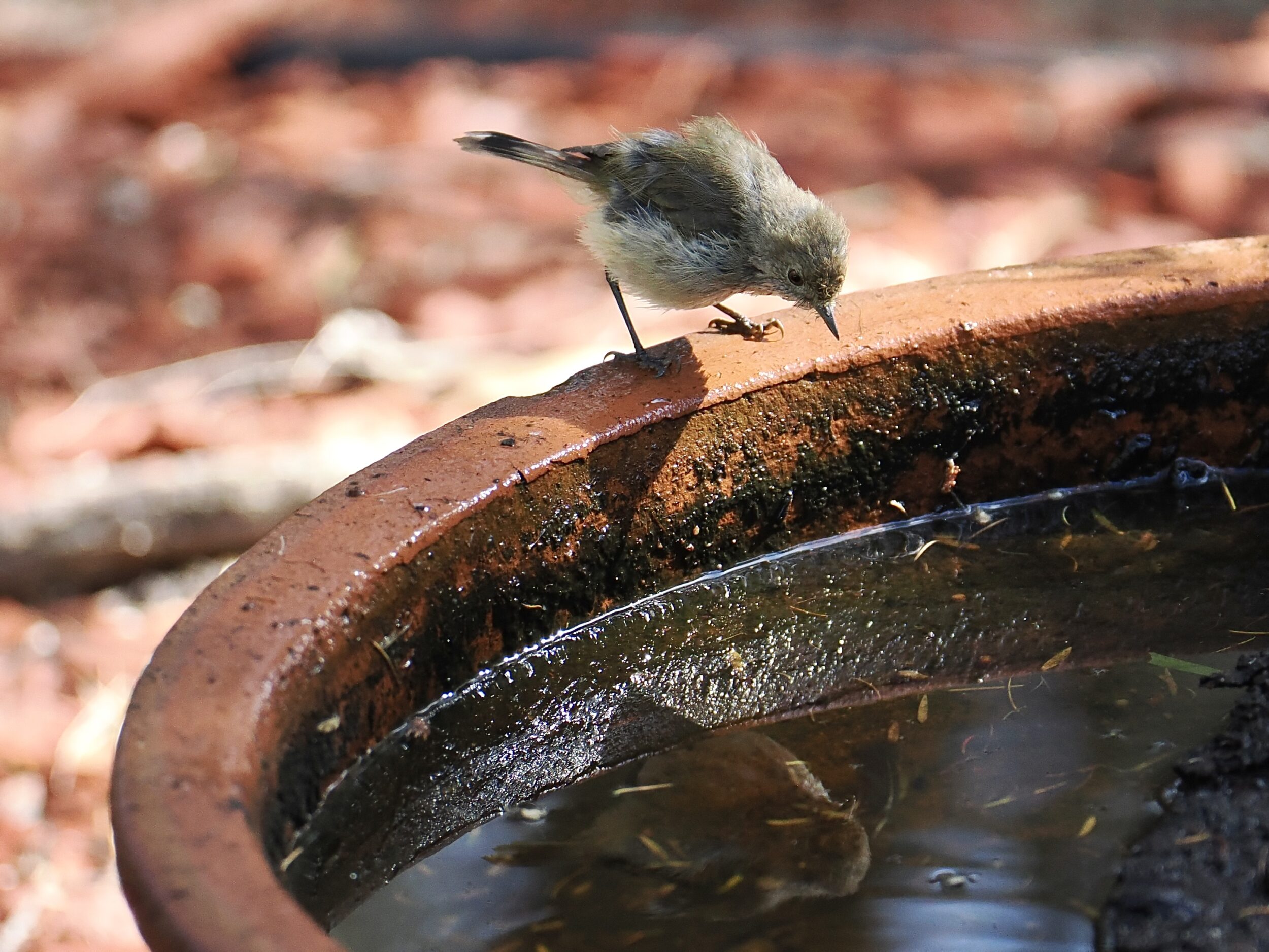
Chapters #39 through #41 feature the same individual; #39’s photo was taken immediately after that morning’s first sighting of him/her.
S/he was so sodden as to be unrecognisable, in terms of species or age.
The featured image, above, was taken three minutes later.
I then assumed that our hero/ine was relishing the morning sunshine’s drying power… and would soon be airborne.
I was wrong.
Comments closed
#40 will answer the headline’s question!
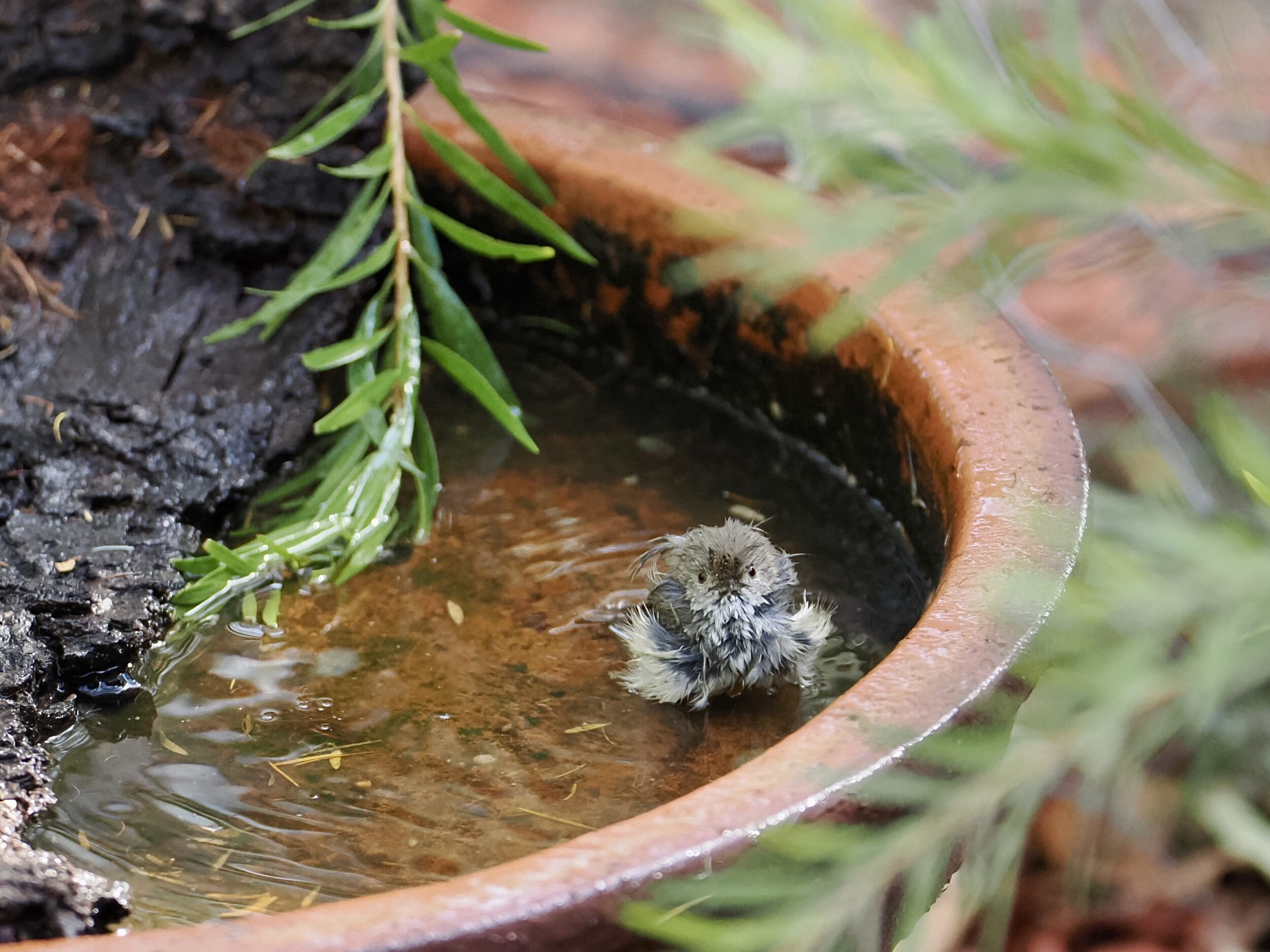
The very tiny star of this and the next two chapters was photographed within a single five minute “window” on the morning of 09 February 2025.
Comments closed
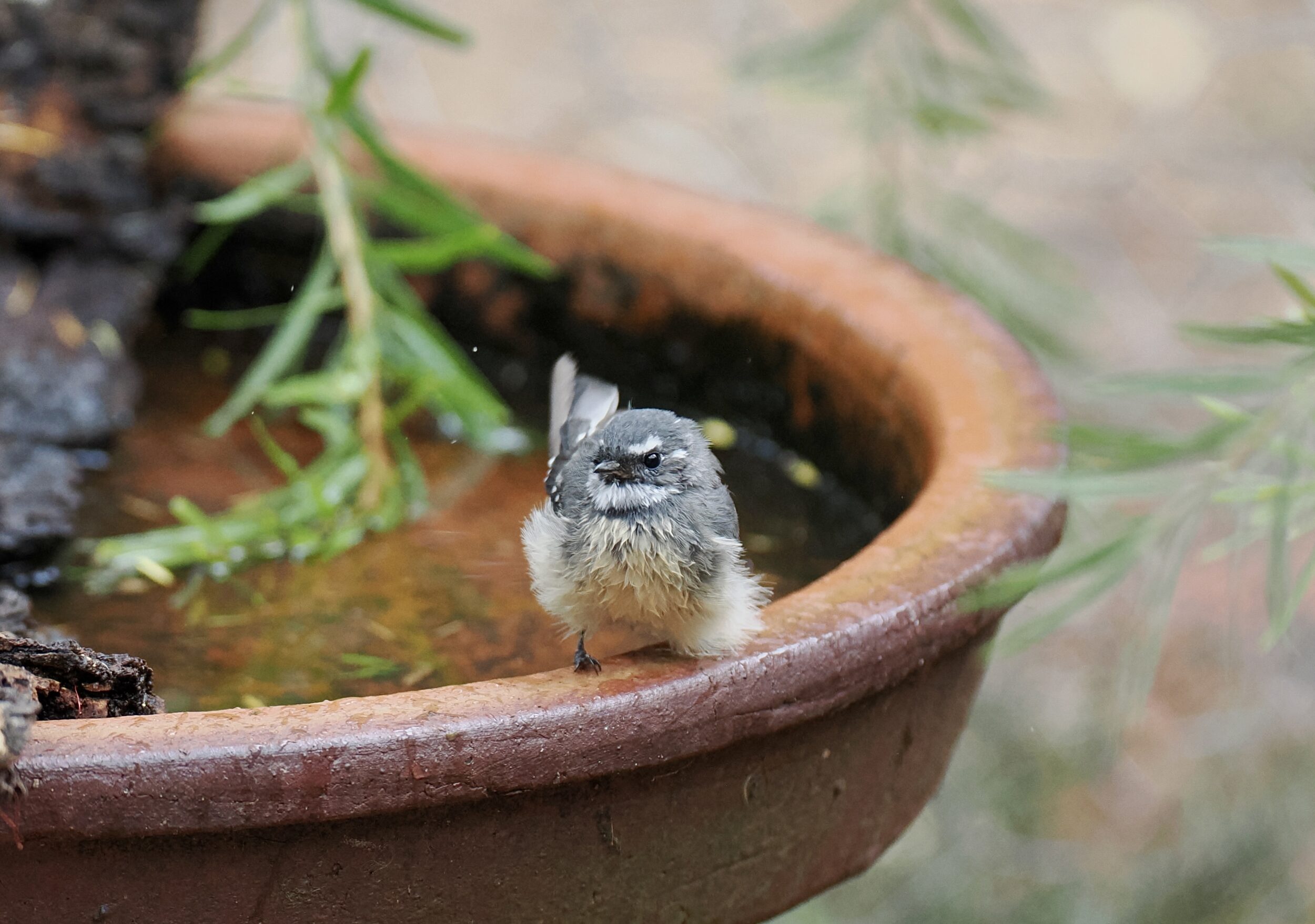
This chapter’s three previously-unpublished photos show the same individual.
They were taken within a single minute, on the morning of 07 February 2025.
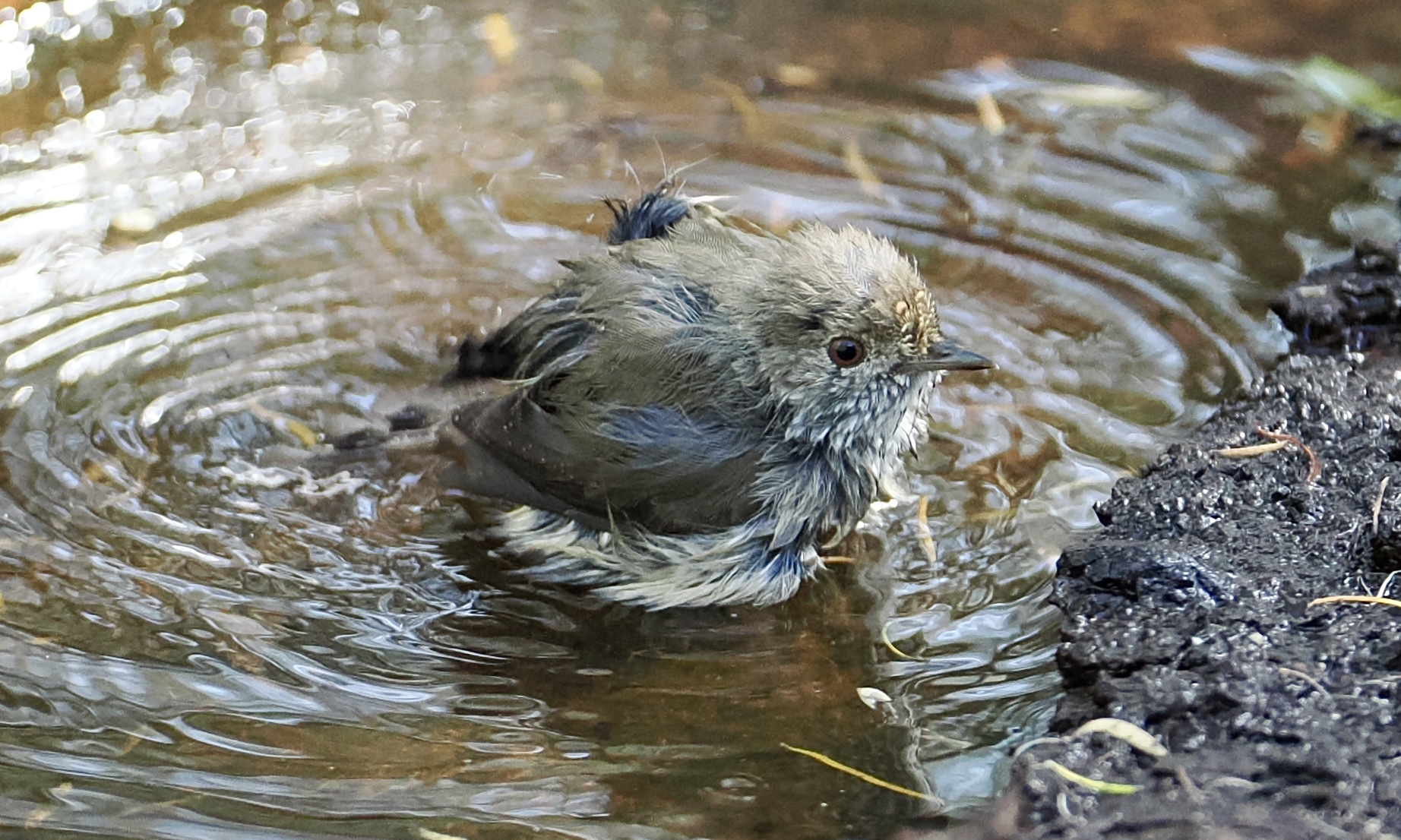
Above and below, this grey fantail had just emerged from what soon proved to be the first of two immersions.
Comments closed
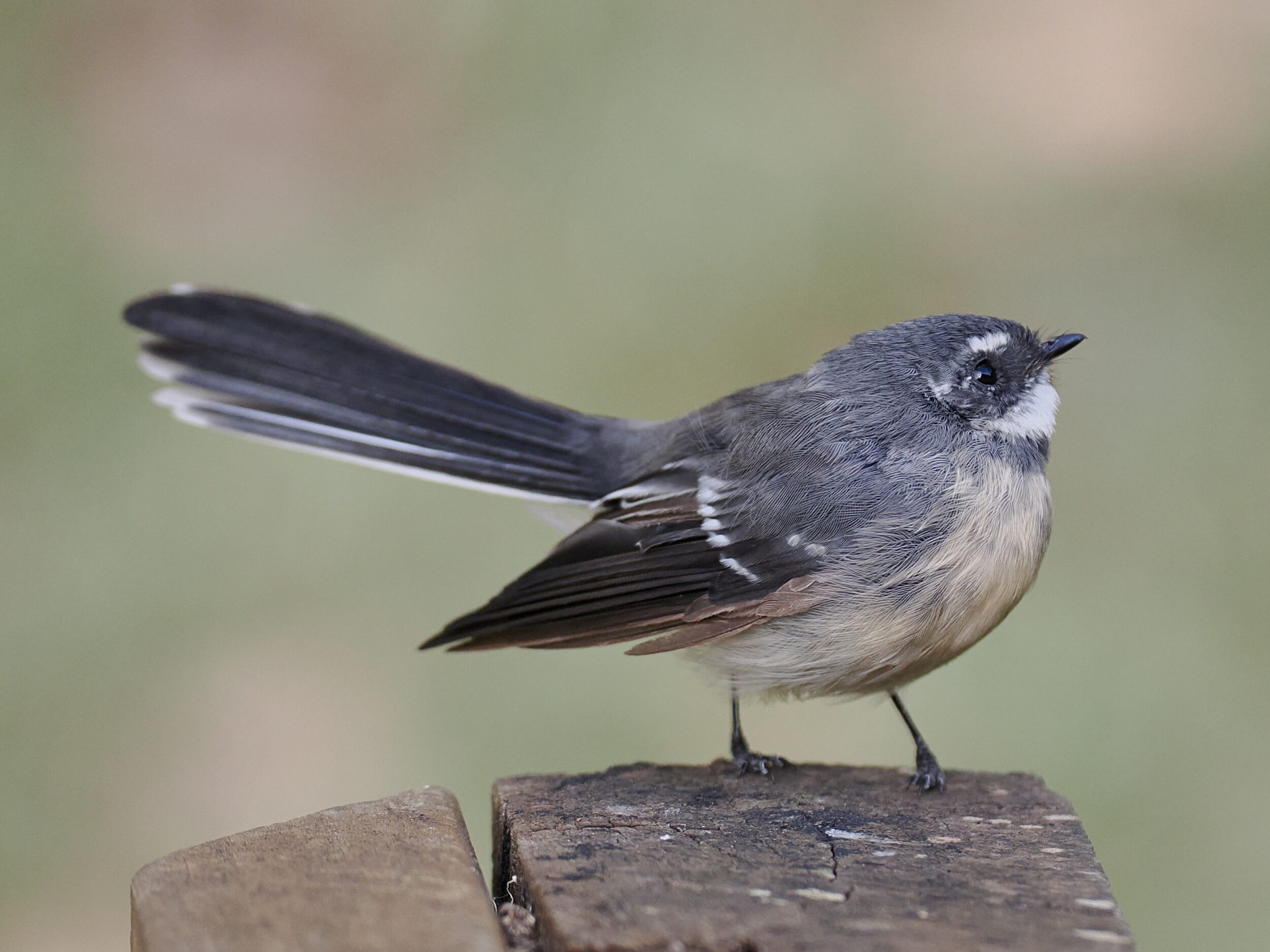
You are looking at a very widely-distributed , small, insectivorous bird.
His or her feathers are not wet, so the bird appears to be a deal bigger/meatier than it really is.
Rhipidura albiscapa – the grey fantail – is very easy to see, across most of non-arid Australia.
I photographed the pictured individual at 5.47 pm on 11 February 2025, near Youngs Siding.
One Comment
The first two hours of daylight at “our” birdbath were sometimes even more frenetic than was the “afternoon rush” depicted in this series’ previous chapter.
After 8.30 am, however, the “morning peak” had passed, and a reclusive, petite bird could bathe, alone, and enjoy at least a semblance of privacy and calm.
Within a not very large radius of where we were staying is all of the pictured species’ habitat
Comments closed
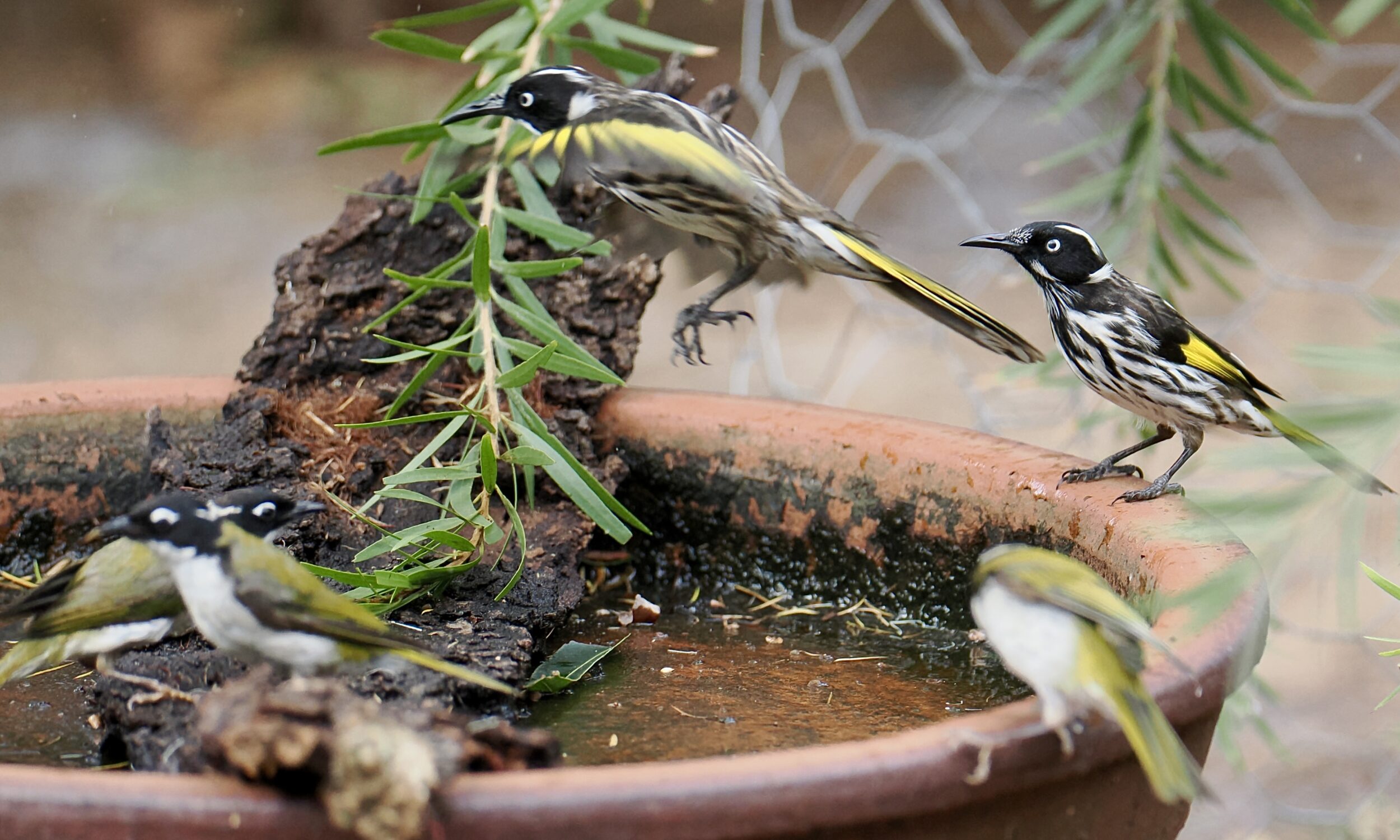
As is true of humans’ bathrooms, bathhouses and drinking venues, other species’ “watering holes” can be a “serene place of refuge” at one time of day, and “mayhem” at another.
On 08 February 2025, 3pm to 4 pm was “peak hour” at the birdbath in front of “our” cottage near Youngs Siding.
It looked sorely in need of an Air Traffic Control Tower!
Comments closed
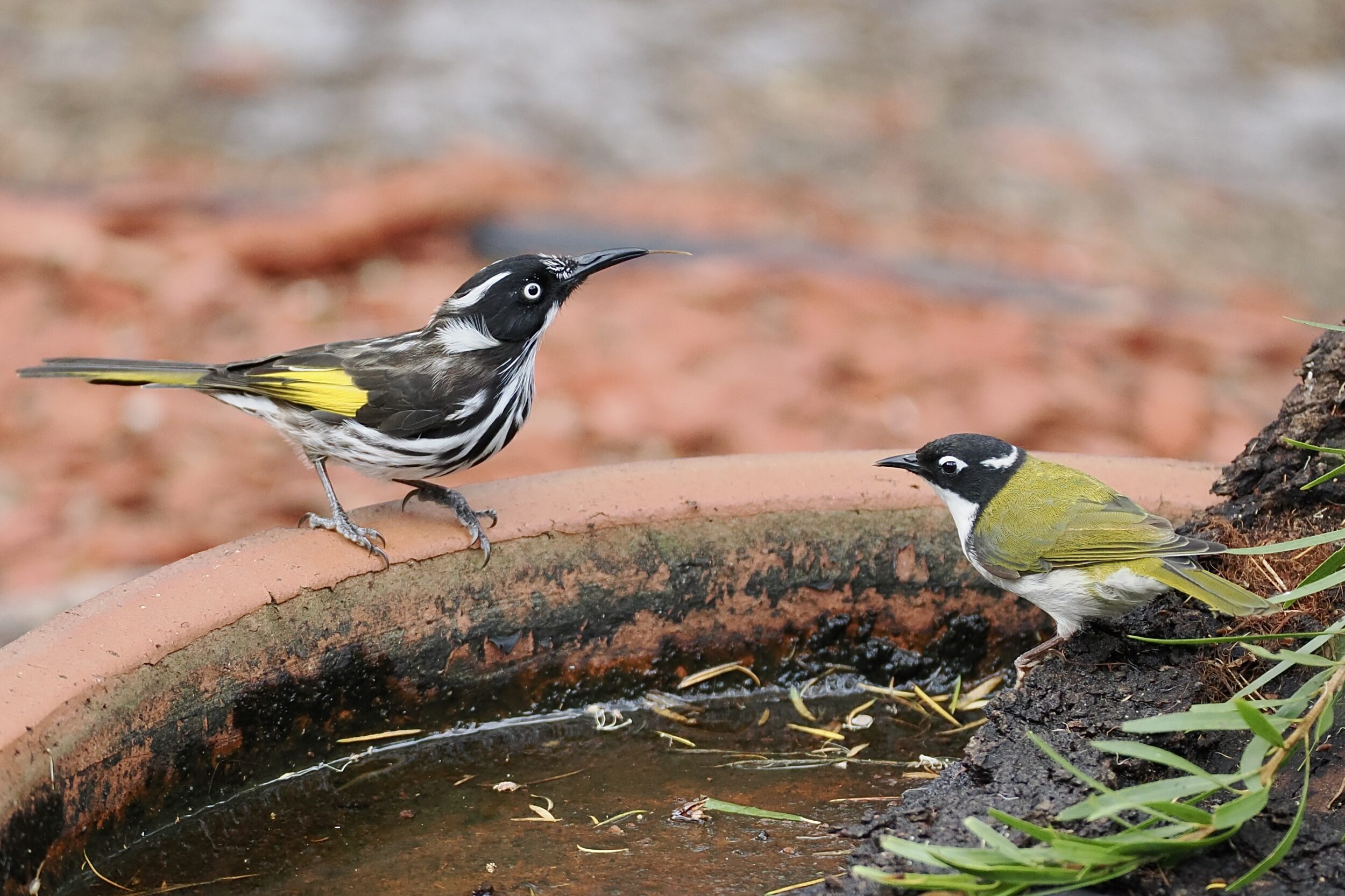
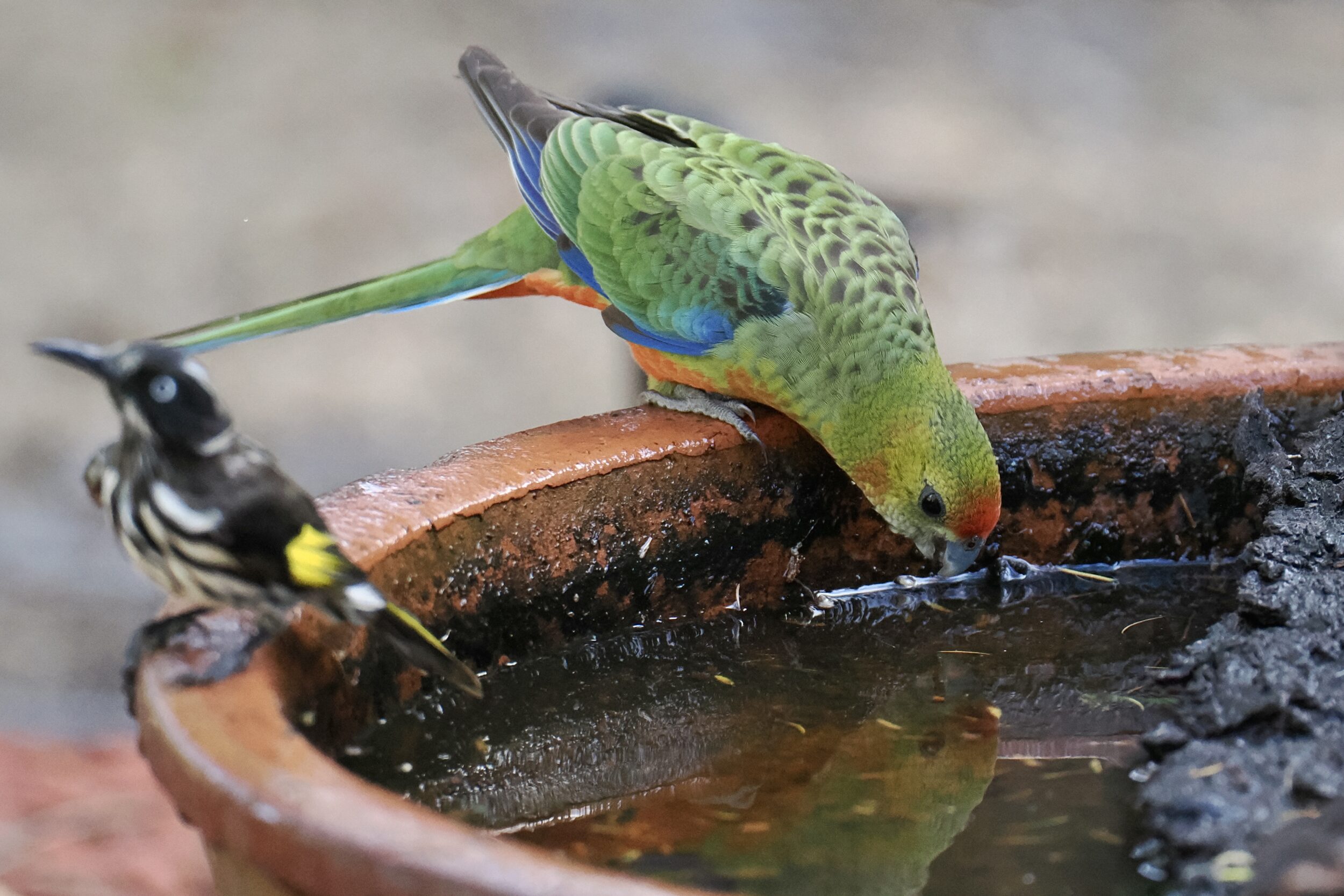
At least between the pictured species, “Two honeyeater species, sharing a birdbath” is a perfectly unremarkable, “normal” event.
On the left – sticking out his or her long, “brush-tipped” nectar-collecting tongue – is a New Holland honeyeater, Phylidonyris novaehollandiae.
On the right is a bird that is very clearly a species in its own right, but was not recognised as such until 2010.
It never really was a subspecies of the (eastern Australian) White-naped honeyeater, Melithreptus lunatus.
At last blessed with a single, “proper” common name – and its own “Latin” species name – Gilbert’s honeyeater, Melithreptus chloropsis, lives only in Western Australia’s southwest.
Comments closed
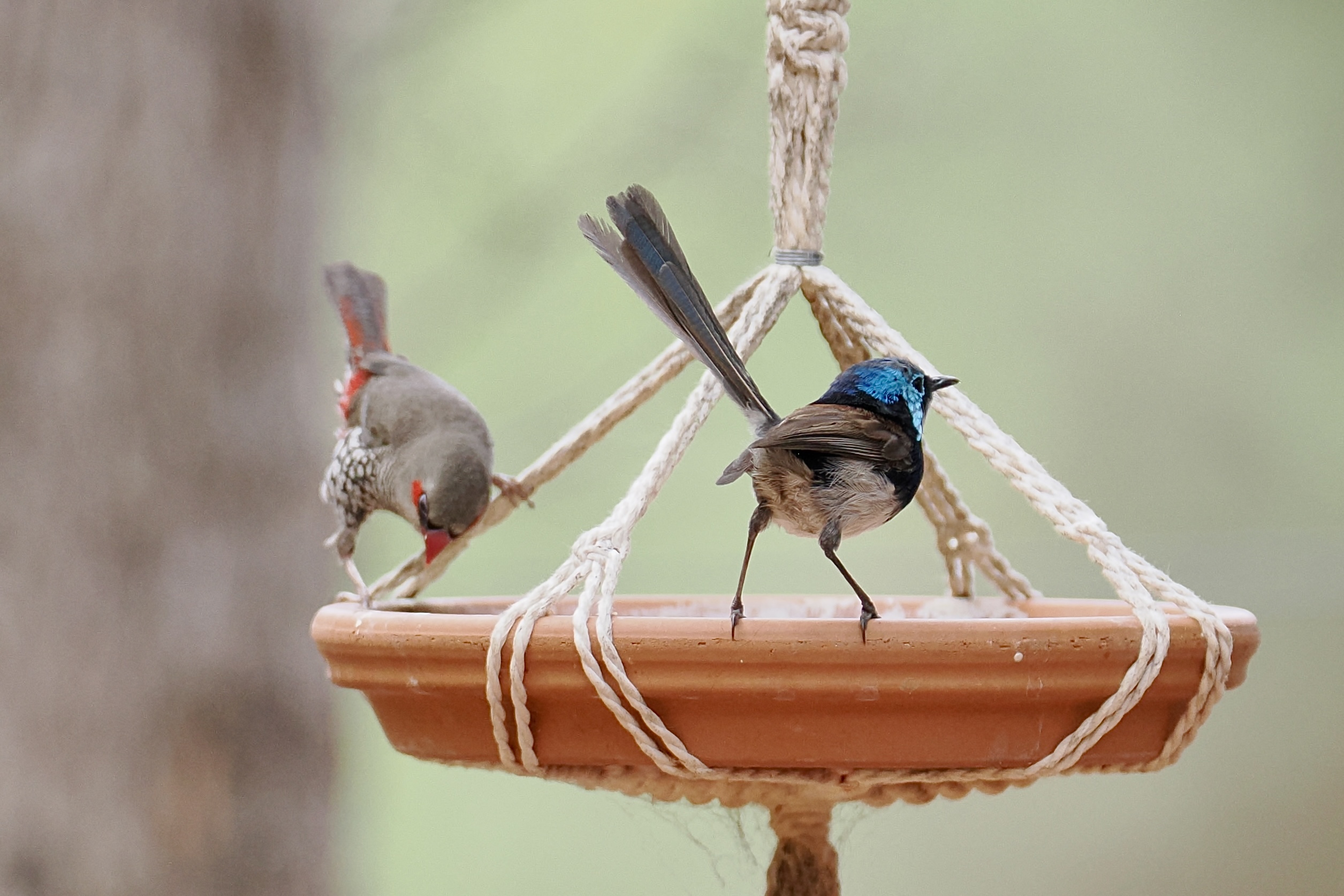
At 3.45 pm on 08 February 2025 we watched a red-eared firetail finch (of whatever gender) and a (definitely-male) red-winged fairywren share the same feeder.
It was the first time in my life that I had seen members of both species within so very few millimetres of each other.
Comments closed
For nearly a fortnight, we watched birds each morning and afternoon, as they came in to drink and/or bathe, to eat, to flaunt.
Most of the time, each particular drinking or bathing “event” involved just one species; when bathing, just one individual was usually in the bath at one time.
Occasionally, however….
Comments closed