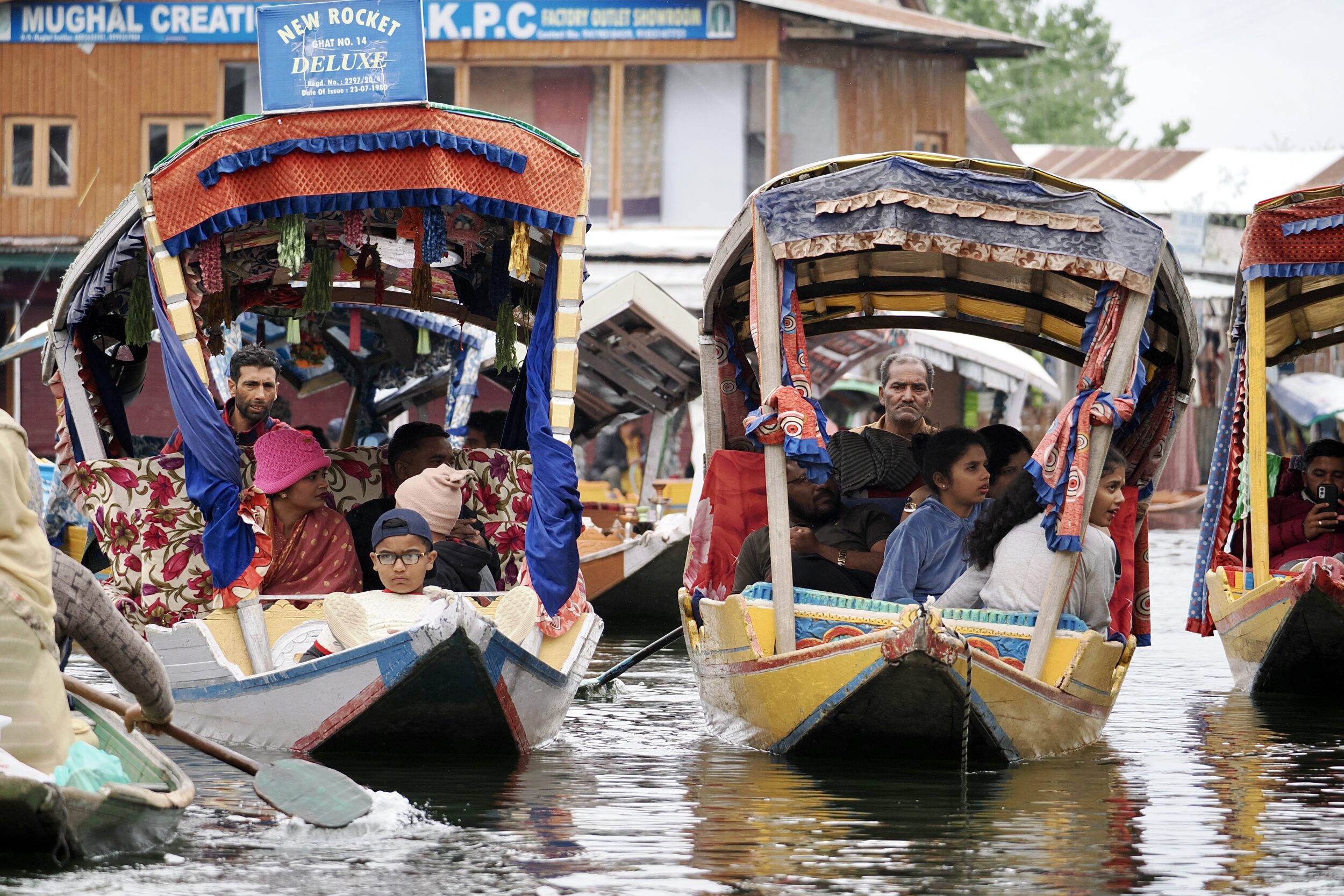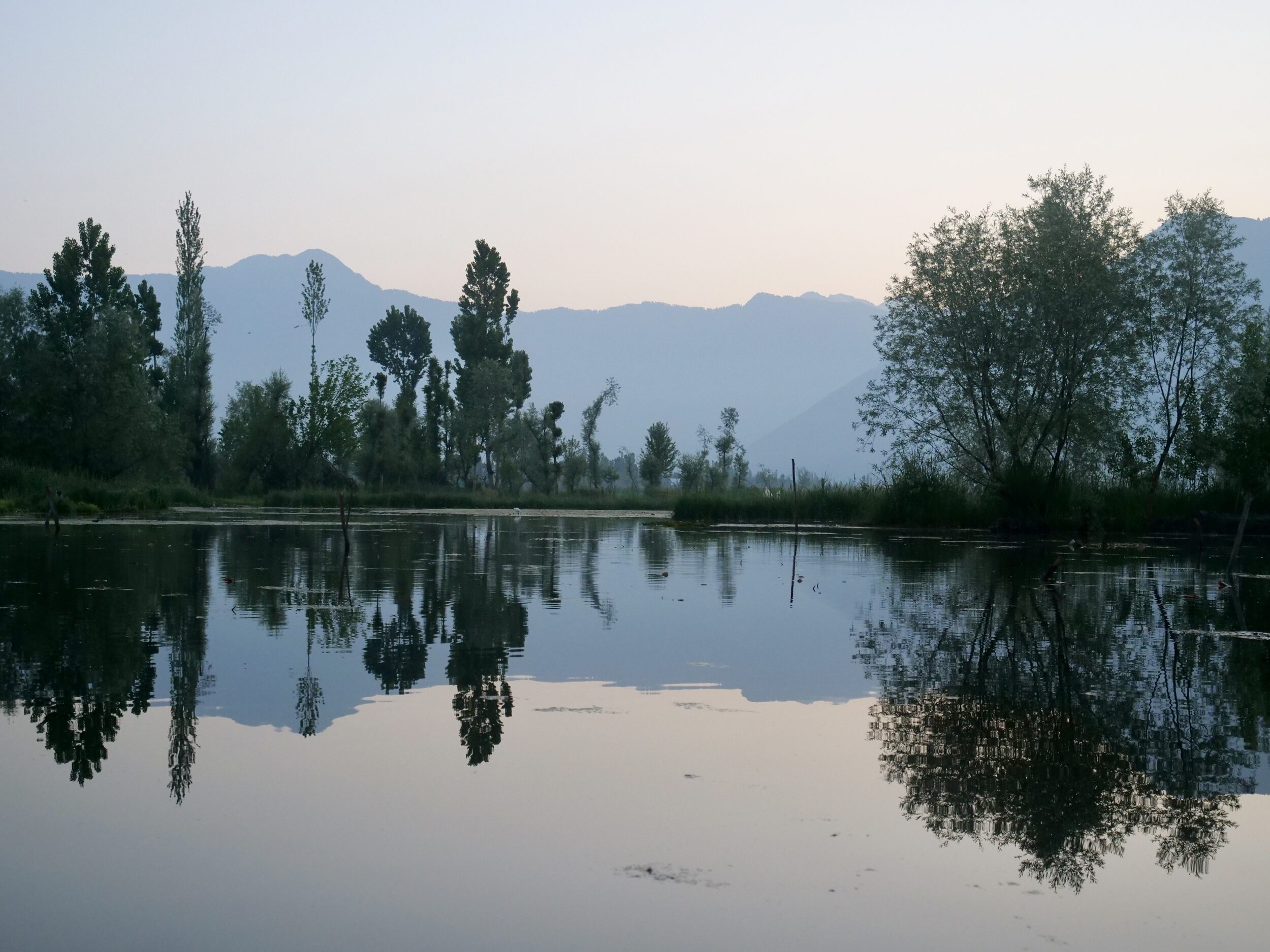
This post’s featured image is “representative” of tourists’ experience of Srinagar’s Dal Lake.
Comments closedNatural splendour, real musics, wines, wordpower
This post’s featured image is “representative” of tourists’ experience of Srinagar’s Dal Lake.
Comments closed
If you get up before sunrise, and then head to somewhere well away from “your” (or anyone else’s) houseboat, it is still possible to “feel the serenity” on the waters of Srinagar’s Dal Lake.
Comments closed
Australian governmental advice says “do not travel” to this destination.
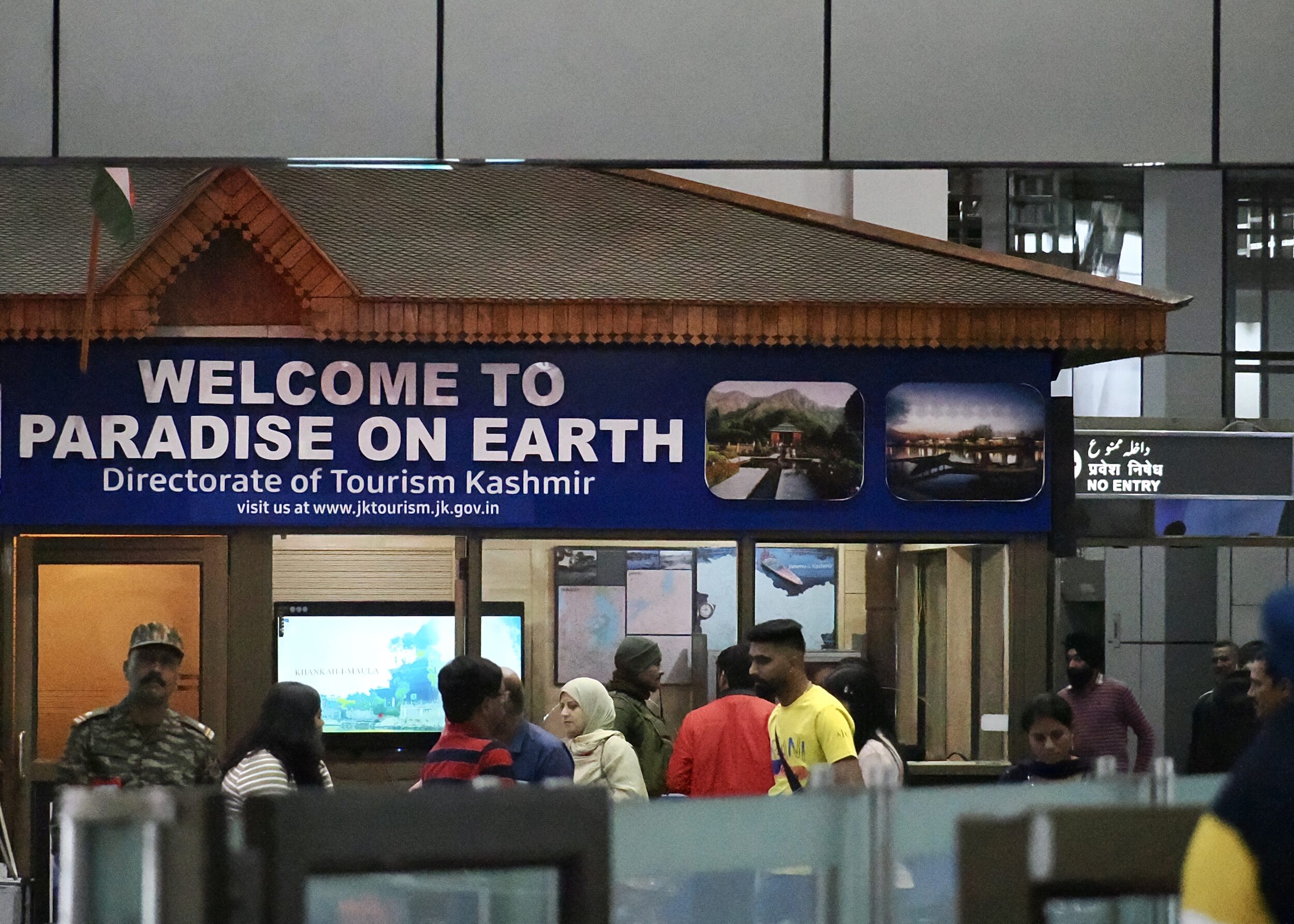
A great many tourists do go there, albeit very few “Westerners”; our group aside, we saw only a handful of “Caucasians”.
Over several days in Indian-controlled Kashmir, we saw many thousands of Indian tourists..and almost as many Indian soldiers and police.
Petty corruption and “checkpoints” are a nigh-constant annoyance – and the two are inextricably entwined – but at no time did we feel “unsafe”.
Comments closed
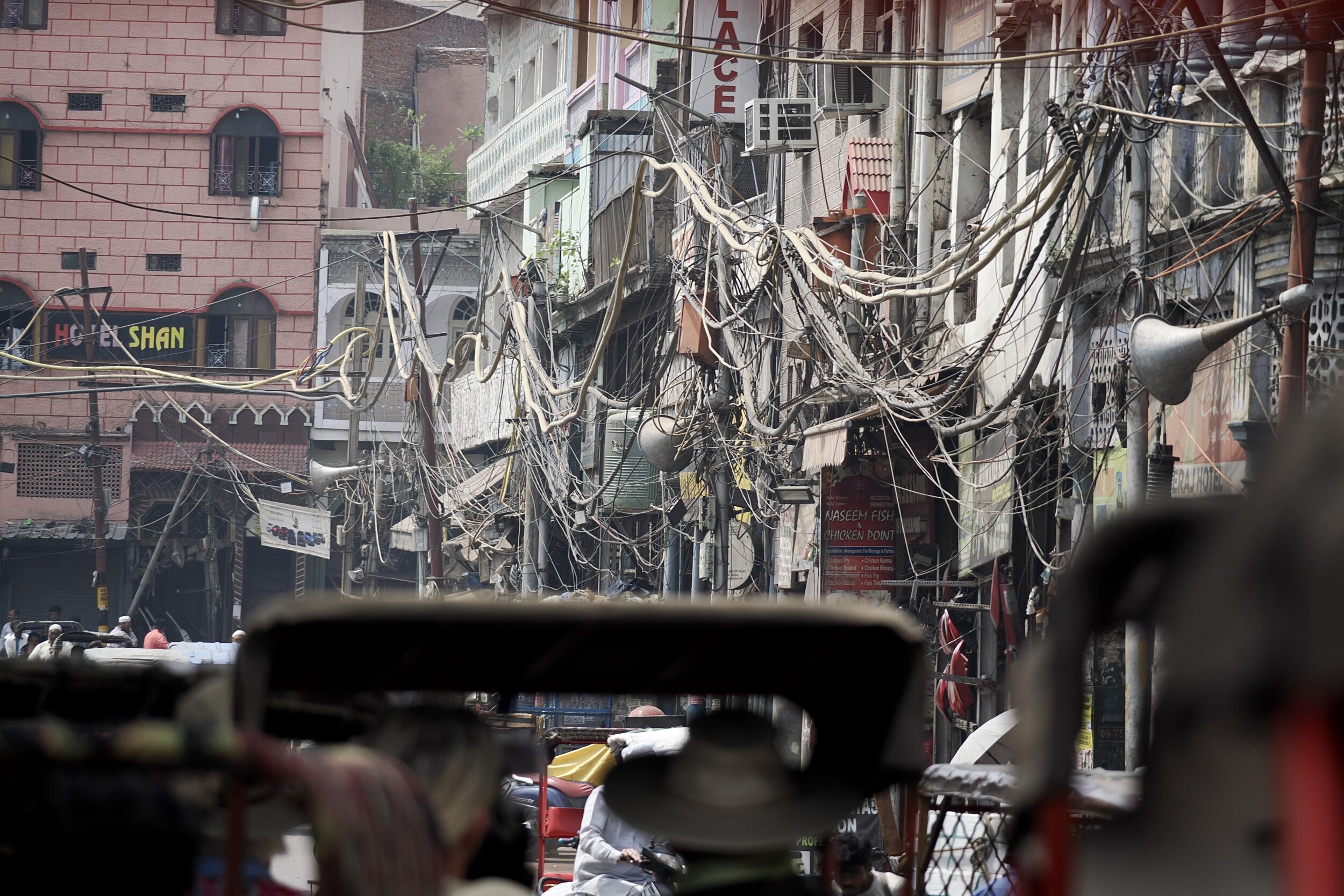
Originally, in the 17th century CE, what is now known as “Old Delhi” was Delhi – a walled, Mughal city.
Now, it is no longer walled, and occupies only a minute proportion of Delhi’s mushrooming metropolis.
As it happens, I have experienced a number of the world’s megacities. (metropolises of more than ten million humans)
In 2024, Old Delhi’s 300,000+ residents probably comprise circa one percent of Delhi’s population.
Various lists of the world’s megacities offer sometimes-ludicrously-divergent rankings and alleged population figures, but most agree that Delhi’s metropolis now has many more human residents than does the entire Australian nation.
Comments closed
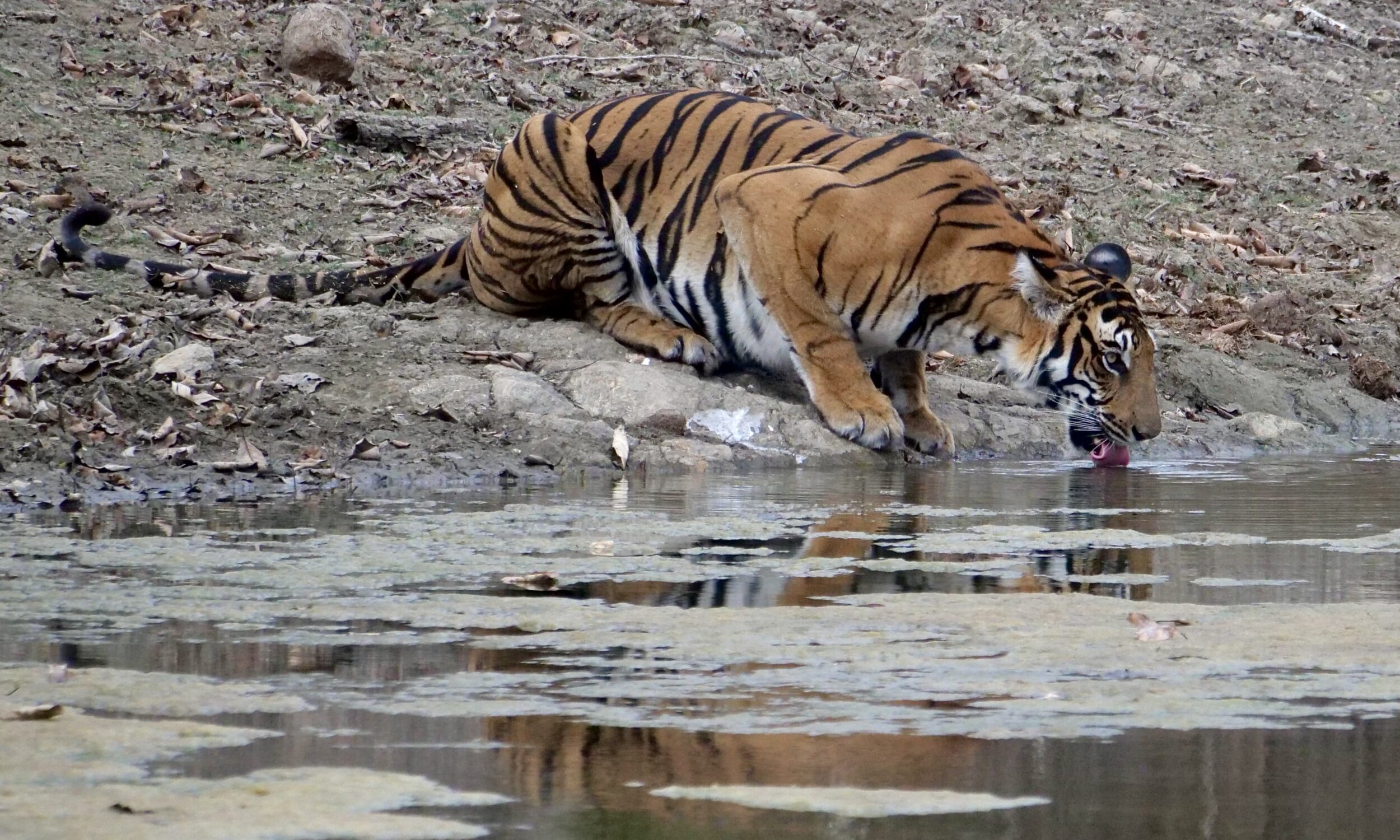
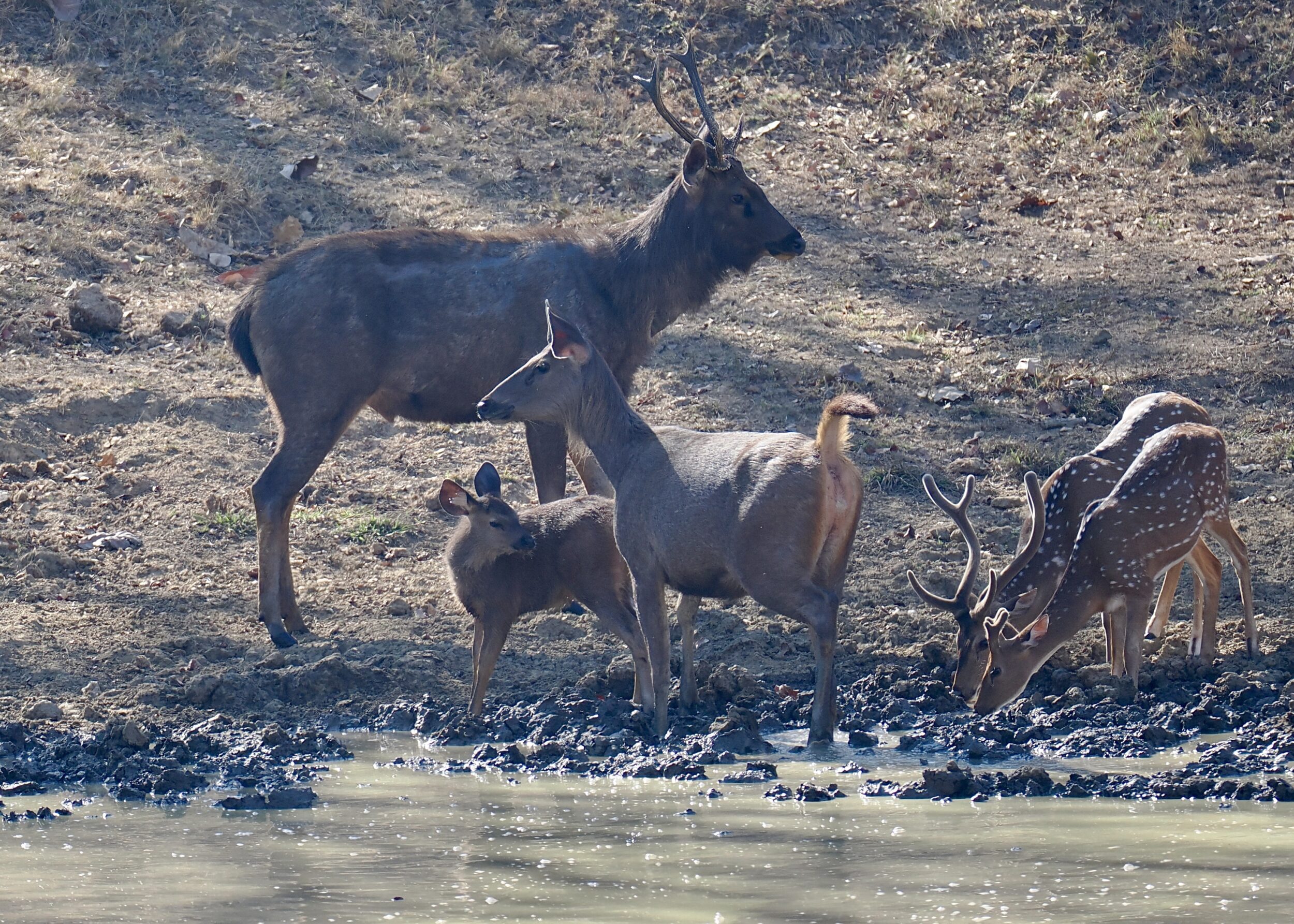
It was late afternoon, on our final “full” day in and around Nagarhole Tiger Reserve.
We were midway through the eighth of our nine Nagarhole wildlife “drives”.
Tiger-wise, time was running out.
We had enjoyed many “close encounters of the wildlife kind”, including one with a very healthy leopard.
On two occasions we had seen a tiger…just, fleetingly.
On more than two other occasions our ears had provided unmistakable evidence that a leopard or tiger was “on the prowl”, nearby.
However, at 4.52 pm on 07 March it appeared likely that we were not going to experience any 2023-vintage, visual “close encounter of the tiger kind”.
I took the featured photo – above – at 4.58 pm.
Comments closed
Imagine an English-speaking tiger, asked to describe the deer in this post’s featured image.
”Delicious”, might be the tiger’s reply.
You are looking at #1 and #2 on the list of species most preyed on by India’s tigers – respectively, sambar and chital/spotted deer.
As you can see, all five deer are definitely not relaxed.
Drinking and having “a good look around” are not simultaneously-possible; the pictured chital are in “eyes down” mode.
The sambar calf is looking at its mother.
However, you can see that the ears of all five deer are open, alert.
If you wish to see tigers (or leopards) in the wild, your ears are your most useful organs.
Big cats’ hunting success is stealth-dependent; they are highly unlikely to make sounds that betray their presence.
Your very quiet self should be focused on hearing the alarm calls which “prey” animals make whenever they notice a predator.
Comments closedThe roadside billboard pictured above is in the foothills of the Nilgiri Hills.
It hopes to lure travellers into what is in fact merely yet another of the world’s millions of franchised purveyors of junk “food”, “soft” drinks, and lousy coffee.
What’s actually on offer is drearily “global”, but the billboard-hyperbole has an unmistakably Indian flavour.
Where else would a brand name even attempt to associate its burgers, pizzas, sandwiches and fizzy drinks with drug “trips” and rock music’s first “supergroup”?
Comments closed
The relevant city’s metropolitan population is approximately “Brisbane’s plus Adelaide’s” – well in excess of four million humans.
It is a safe bet that its “other large mammals’ combined population” would comfortably exceed that of all Australian cities.
What you are looking at would be “inconceivable” within an Australian CBD, but to those who reside in Rajasthan’s capital (and largest) city, this would be an unremarkable sight.
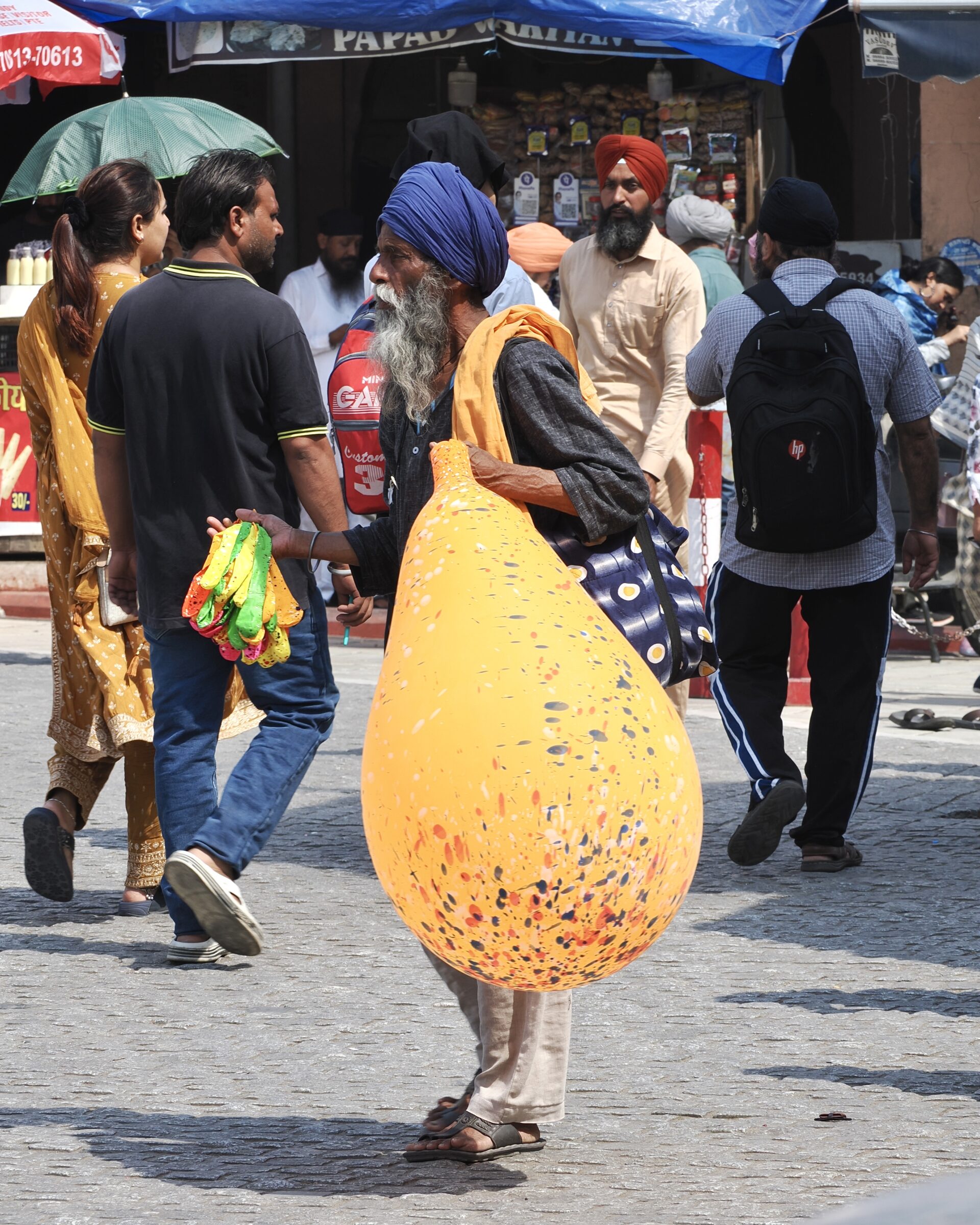
Comments closedWhat is a “quirky moment”?
The answer is largely a matter of the relevant human observer’s/participant’s experience, sensibility, attitude.
One person’s “surprising” or “bizarre” or “amusing” is another’s “to be expected, in this particular context”, “prosaic”, or “unremarkable”
What is happening in the featured image is a case in point.
Comments closed