Skip to content →

Tag: India

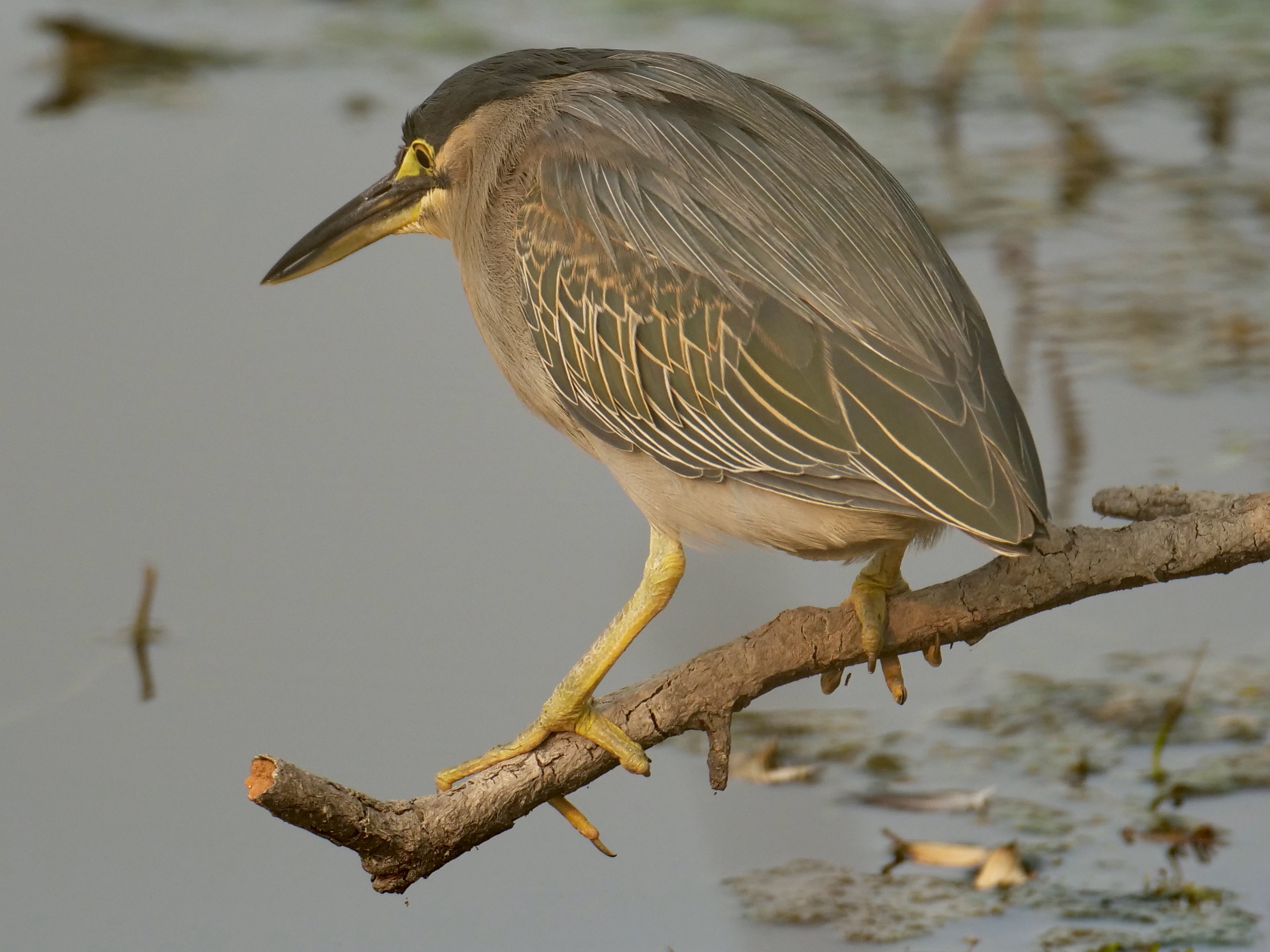
“From behind” (#10 in single-image series: heron, hunting)


A heron (or egret) in hunting mode delivers a fascinating, repeating sequence of events.

For unpredictably short or long periods the heron is a study in concentration and stillness, until that stillness is suddenly shattered by the bird’s speargun-like attack.

The prey – usually a small fish, crustacean, mollusc, amphibian or insect – is swallowed, rapidly.

The sequence then repeats…

For obvious reasons, a photographer cannot “capture” this behaviour from a very close vantage point, directly in front of the heron’s beak/“speargun”.

However, one can sometimes get surprisingly close, “from behind”.

Comments closed

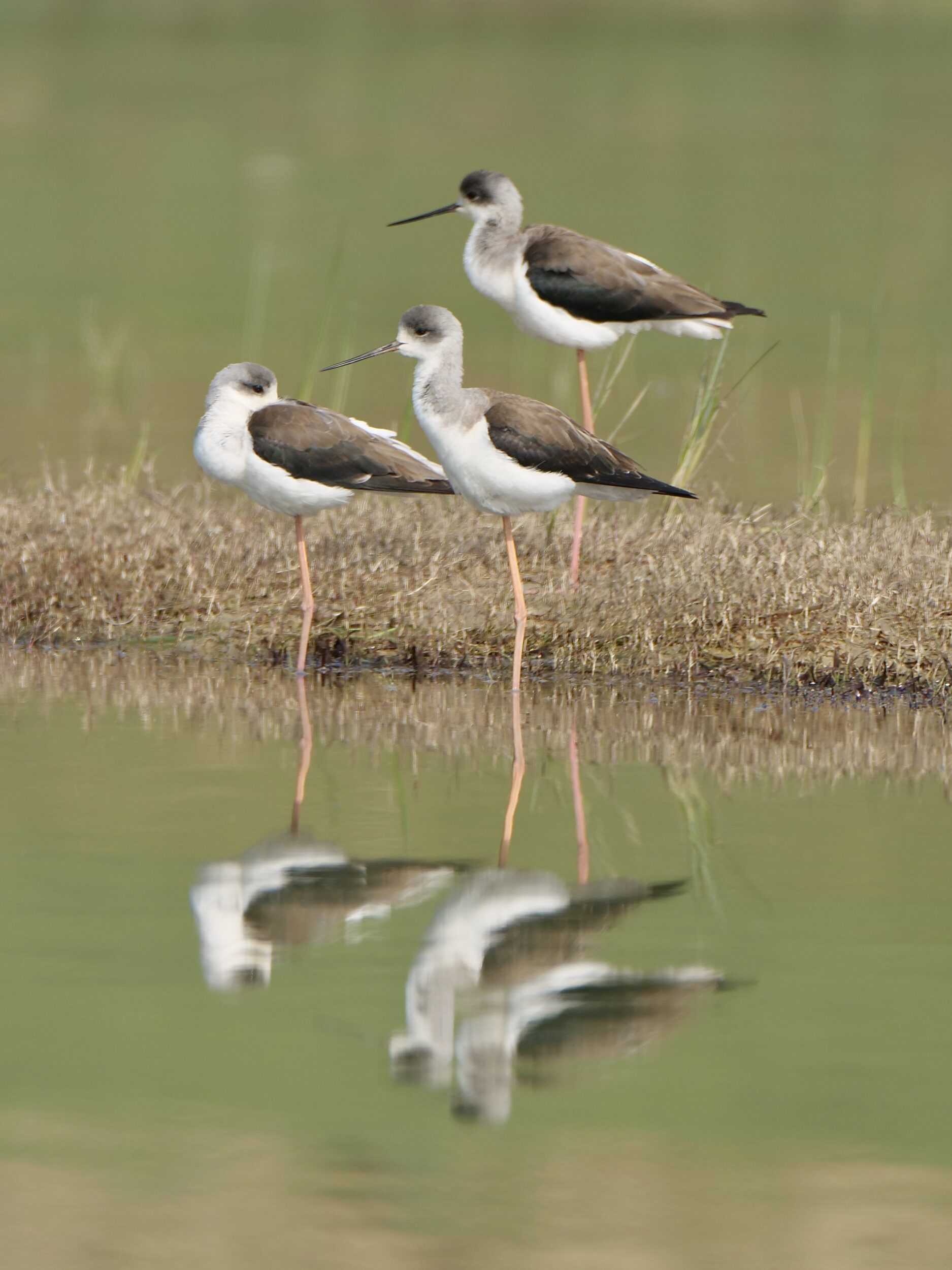
Three of the same, with musical bonus (#10 in series: black-winged stilt)


Two questions arise when considering all three birds in today’s featured image.

The obvious one: “clearly, their wings are not black, so how do they merit their name?”

The other one: “why is Himantopus himantopus in the Guinness Book of Records?”


Comments closed

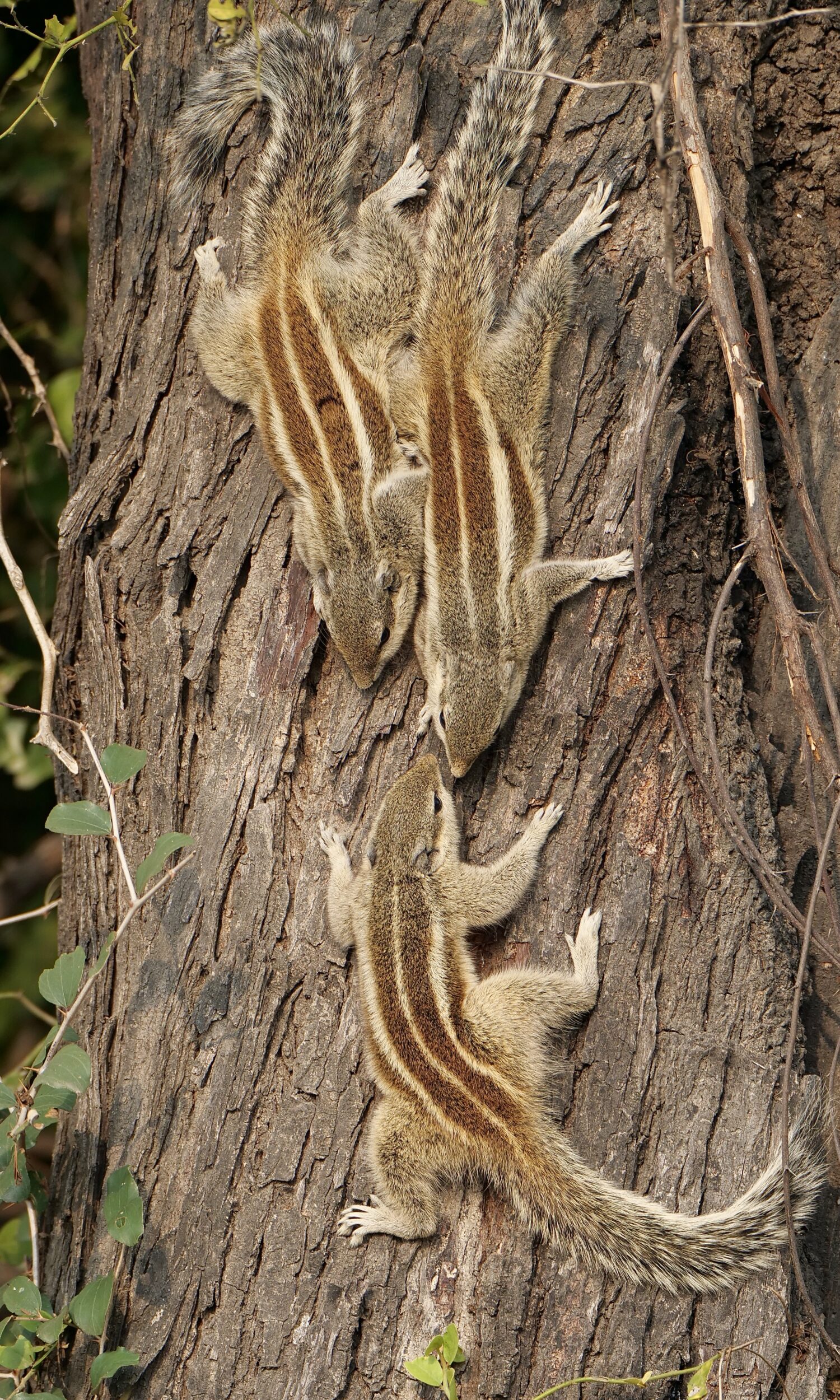
Three of the same (#6 in series: five-striped palm squirrels)


Funambulus pennanti is a very, very much smaller mammal than is Oryx gazella.

Nonetheless, whereas yesterday’s large African antelopes occupied a tiny portion of the featured image, today’s Asian rodents dominate it.

Many people regard this widespread, very adaptable squirrel species as “particularly cute”.

From an agricultural/human food production/storage point of view, however, five-striped palm squirrels are a serious pest; in Elmer Fudd-speak, these are “weally wascally wodents”.

Comments closed

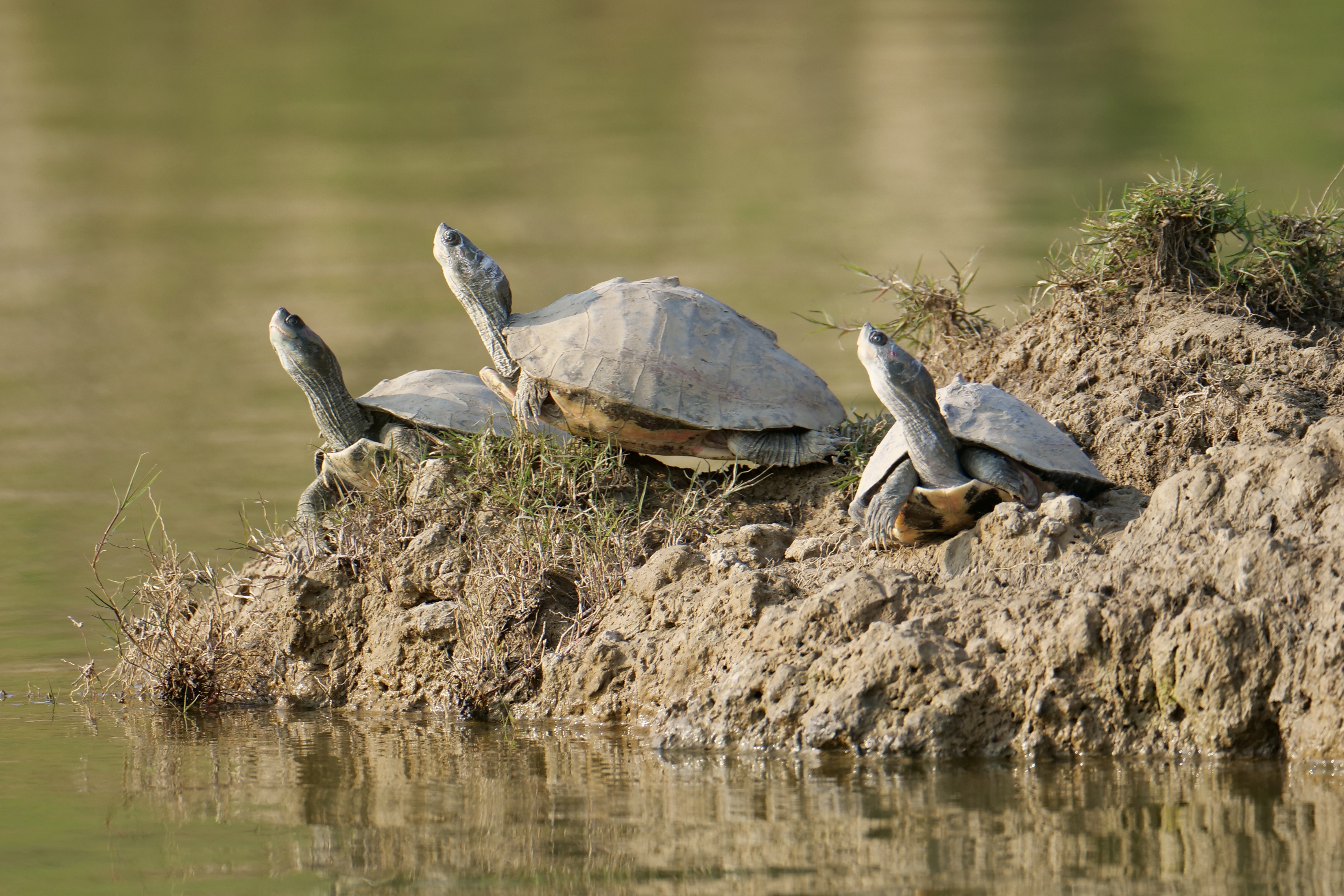
Three of the same (#2 in series: three-striped roofed turtles)


One very rarely sees a reptilian troika.

Unsurprisingly, Batagur dhongoka – this post’s critically endangered species – is this little series’ sole reptile.

The behaviour depicted is characteristic…and it greatly boosts a human’s chances of enjoying a proper look, even taking a reasonable photo…

Comments closed

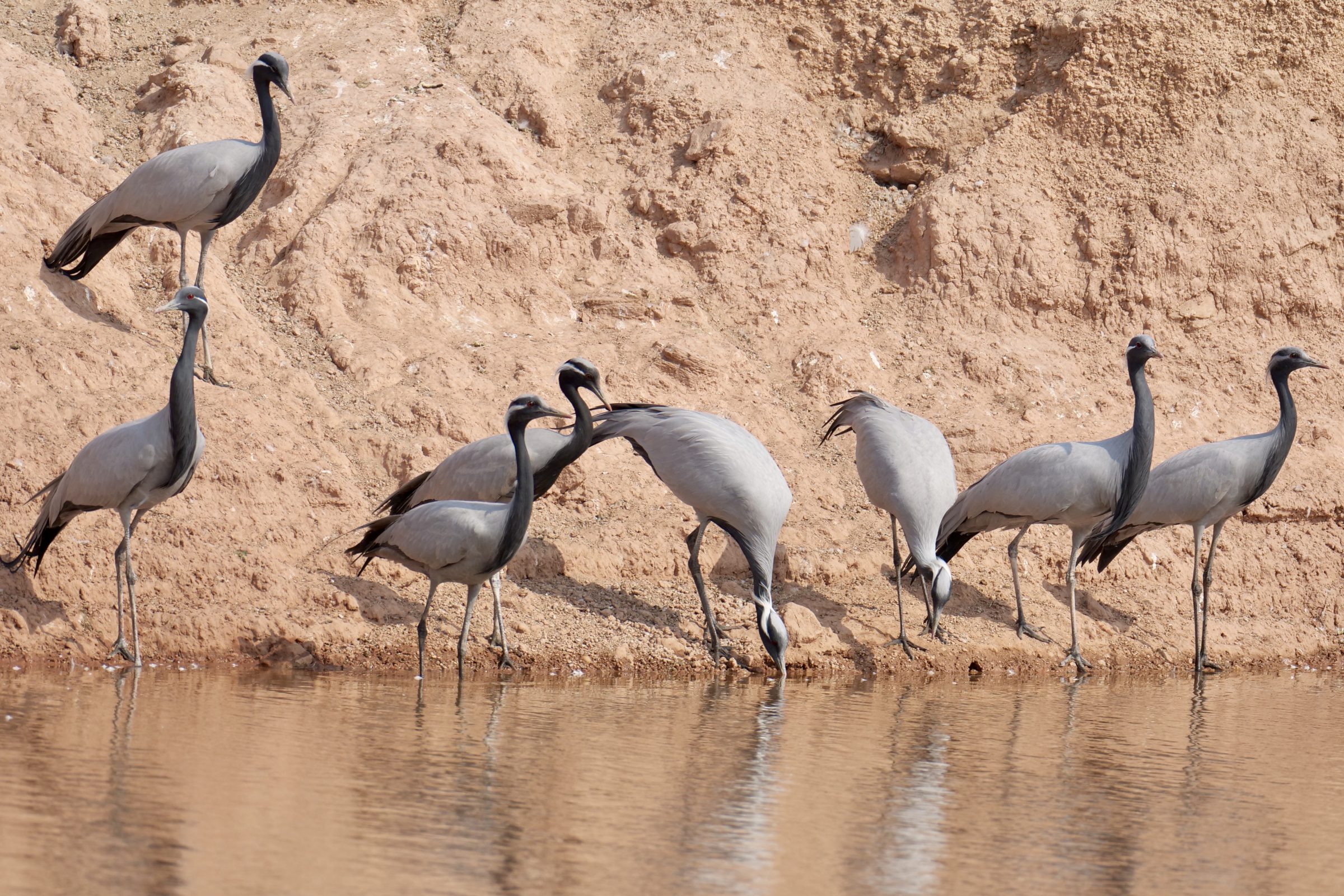
Khichan, Rajasthan: Jains and cranes (2 of 2: “social drinking”)


Imagine the image above, devoid of context, and subjected to a “caption this photo” contest.

A suitably cornball “winner”:
a quiet drink with a few mates.

The featured image was taken with a long lens (560 mm) at 11.12 am on 20 February 2020.

The photo immediately below was taken just a few seconds later, from almost exactly the same vantage point, overlooking a pond/reservoir, a few minutes away from Khichan…

2 Comments

Khichan, Rajasthan: Jains and cranes (1 of 2)


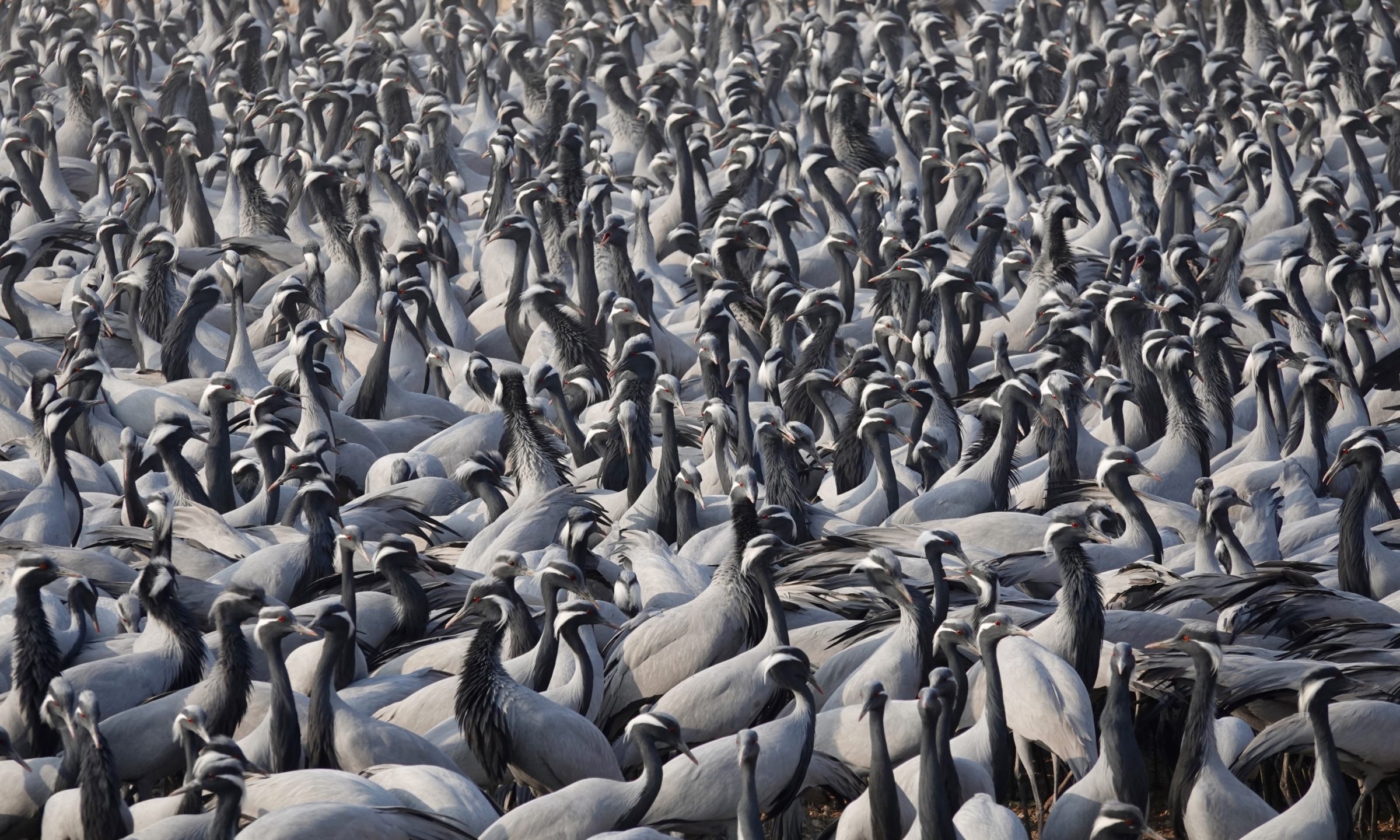
Cranes: in this case, Demoiselle cranes, the world’s smallest crane species,

Jains: adherents of Jainism, an Indian religion which is older than Christianity and Islam.

The practical application of Jainism’s central principle/vow has produced an astounding result.

For Demoiselle cranes (and for human admirers of one of the world’s more elegant birds) Khichan –  a modest village in the Thar Desert – is now the world’s most rewarding destination.

Comments closed

Khichan rooftop (teaser)


Q: why did many expensive lenses cross oceans, and the lenses’ owners then get up so very early on a crisp Rajasthan winter morning?

A: they wanted to secure a “good” position on a rooftop in an unassuming Thar Desert village.

The more meaningful answer has to be seen to be believed…as you will see in Pelican Yoga’s next two, lavishly-illustrated posts.

Comments closed

Revelatory covers (#16 in series): Rhiannon Giddens sings “Calling Me Home”

If the almost-titlepiece of Rhiannon Giddens’ new album were new to your ears, you would probably assume it was a venerable “traditional” song, probably from Appalachia.

Listeners who already knew many traditional Appalachian songs would likely be mightily surprised that they could have hitherto missed such a superb, particularly haunting one.

In fact, Calling Me Home was authored by Alice Gerard; it was titlepiece of her 2002 album, issued in the year of her 68th birthday. (An even better album is Follow the Music, which Alice Gerrard recorded – mostly “live” – in her 80th year)

Comments closed

Word power: Arundhati Roy excoriates Narendra Modi


Direct quote from Indian Prime Minister Modi, crowing, in January 2021:

Friends, it would not be advisable to judge India’s success with that of another country. In a country which is home to 18% of the world population, that country has saved humanity from a big disaster by containing corona effectively.

Arundhati Roy, describing India’s ghastly pandemic reality in April 2021:

The system hasn’t collapsed. The government has failed. Perhaps “failed” is an inaccurate word, because what we are witnessing is not criminal negligence, but an outright crime against humanity.

Comments closed