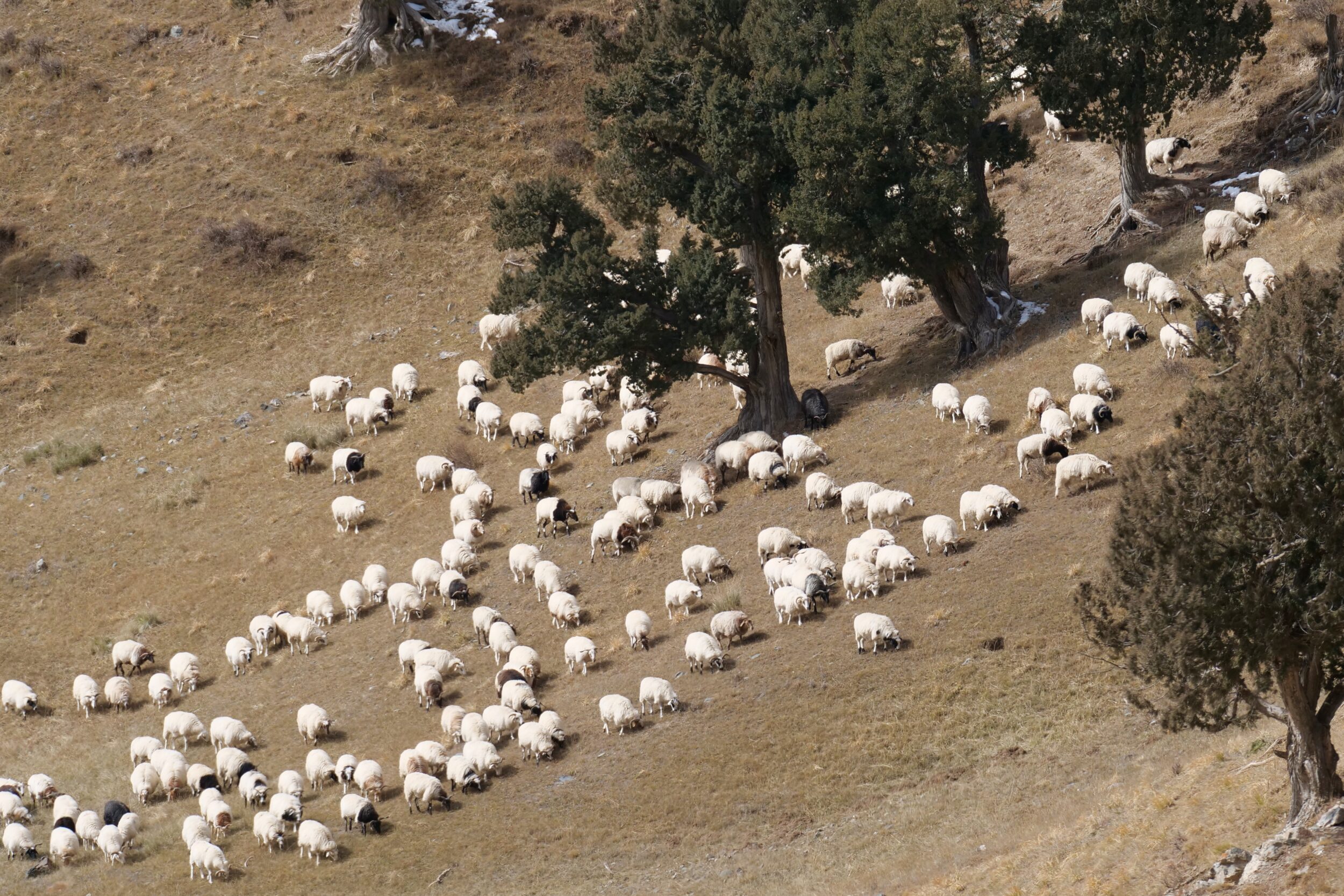
“Alpine transhumance”, according to its Wikipedia entry:
seasonal droving of grazing livestock between the valleys in winter and the high mountain pastures in summer.
Unsurprisingly, if you google for the term, and/or for information on high-altitude pastures, most of what you will find refers to Europe.
Europe’s largest single example of high altitude pasture (in Italy’s South Tyrolean Dolomites) covers 57 square kilometres; it sits between 1,600 & 2,350 metres above sea level.
Most European Alpine pastures are below 2,400 metres; none reach higher than 2,800 metres.
The domesticated sheep pictured above were grazing on grassy slopes at an altitude of more than 4,000 metres.
On the Tibetan Plateau, however, they were not remotely close to Alpine pastures’ “upper limit”!
Transhumance is the biggest single reason – for the last several thousand years – why most of the European Alps’ slopes & valleys at altitudes below 2,000 metres ASL are not forest-clothed.
Even the “floor” of the Tibetan Plateau (aka “Tibet-Qinghai Plateau”) sits at a higher altitude than does all but a tiny portion of the European Alps.
On “the roof of the world” precipitation is generally much lower, the climate generally much more extreme.
If no domesticated livestock had ever grazed there, forests would “naturally” only cover a relatively small portion of the Tibetan Plateau.
Its “grasslands” are almost unimaginably vast, but most are usually very sparsely grassed.
I photographed the grazing sheep at 11.52 am, after a “demanding” & “steep” walk to reach them.
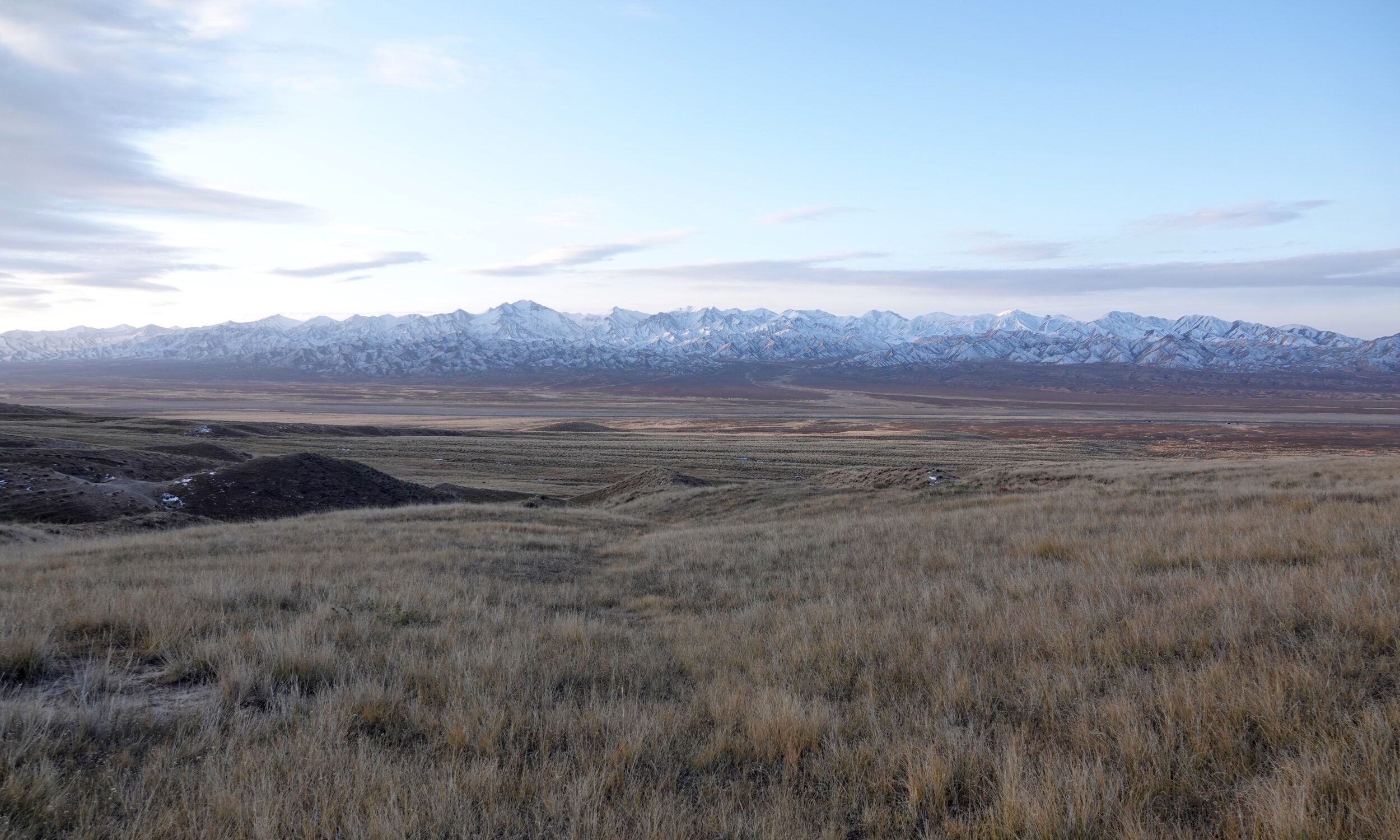
Nearly four hours earlier, whilst standing at the foot of the relatively low mountain slopes on which domesticated sheep (and wild animals) were contentedly grazing, my wide-angle lens looked in the opposite direction, across flatter/ “poorer” grassland, with a more formidable mountain chain on the horizon.
I suggest you zoom in on/enlarge this image in order to gain a proper sense of the mountains’ scale.
A telephoto lens better “captured” those more formidable mountains’ stature.
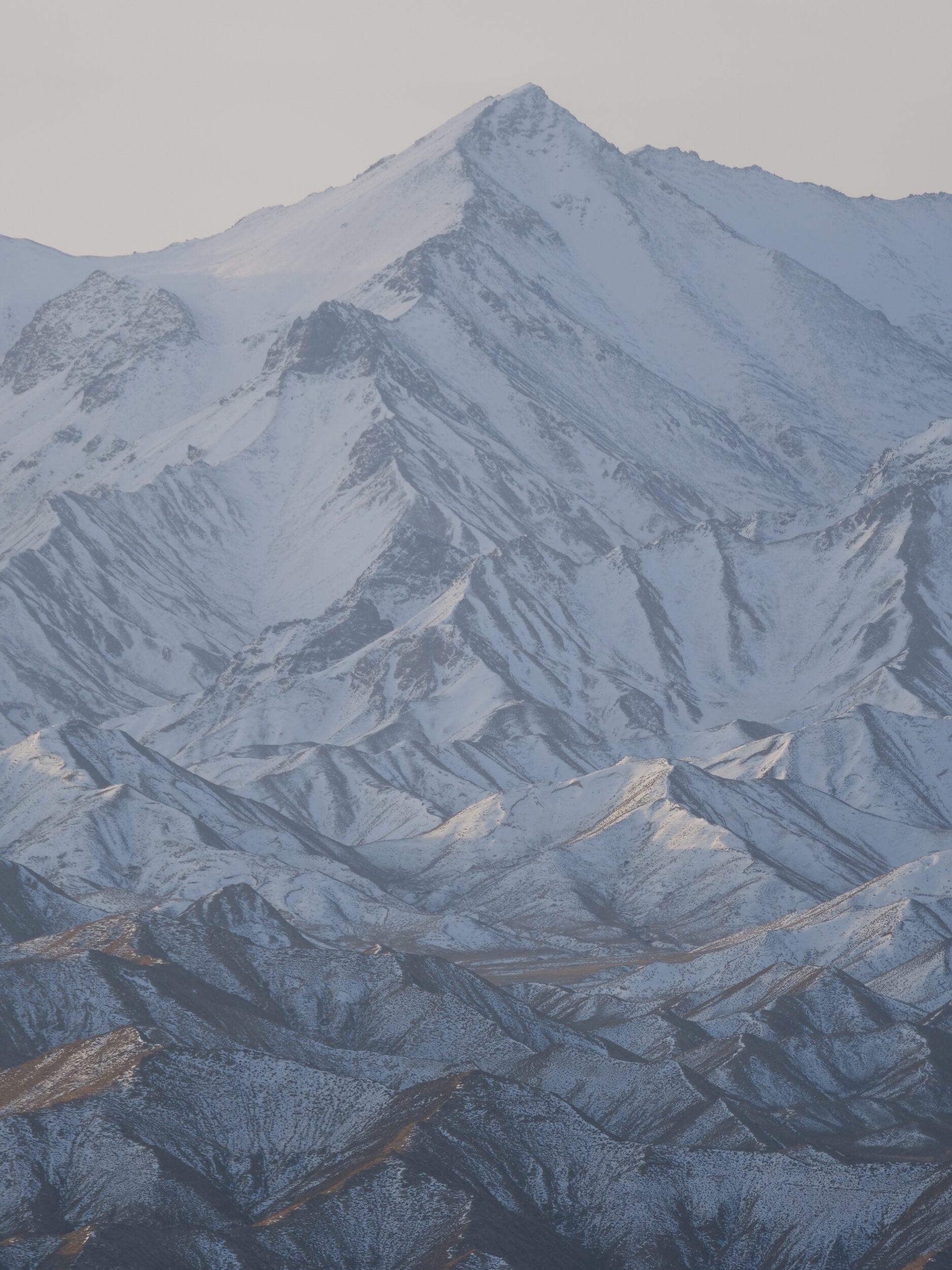
As with the pastures, so with the “more formidable” mountains…by Tibetan Plateau/Tibetan Steppe standards, neither’s altitude was particularly extreme. After all, the northern face of “our” planet’s highest peak rises from this plateau’s edge.
Many of the Tibetan Plateau’s livestock spend a deal of their summers grazing at more than 4,000 metres ASL; more than a few of them reach a deal more than 5,000 metres – higher than do any other domesticated animals.
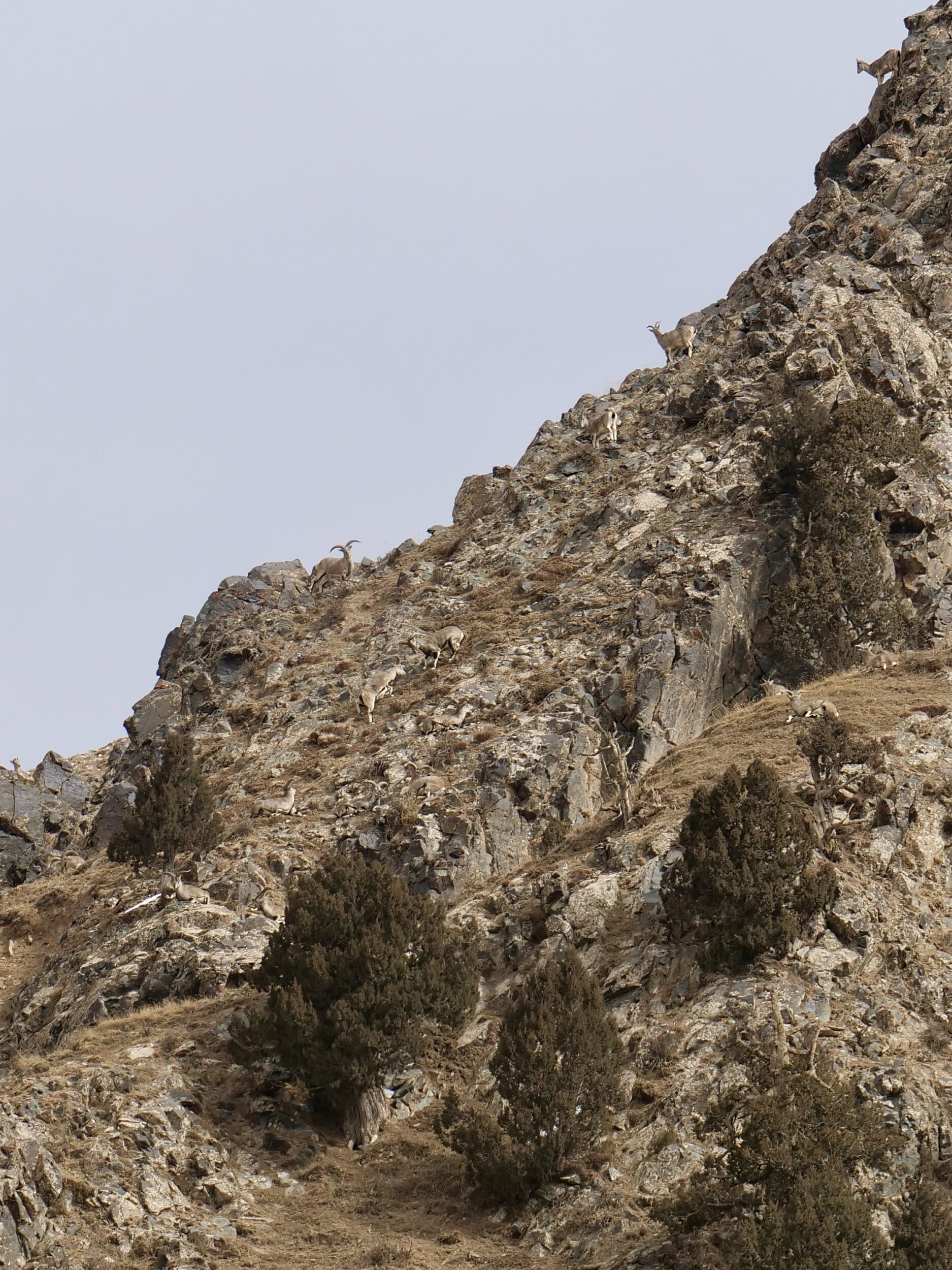
The local wild sheep are much more agile, as was evident on the local ridgetop:
Click here for an interesting FAO overview of “one of the world’s important grazing ecosystems”.
It encompasses about 1.65 million square kilometres.
Comments